Beosin: 36 Major Security Incidents in May Resulting in Over $76 Million in Losses

marsbit發佈於 2026-06-10更新於 2026-06-10

文章摘要

In May 2026, the Web3 ecosystem suffered over $76.15 million in losses across 36 major security incidents, according to Beosin Alert. The primary causes were contract vulnerabilities and private key leaks. The top loss involved the Verus-Ethereum Bridge, which lost $11.58 million due to a cross-chain message validation flaw—a vulnerability type historically responsible for massive losses at Wormhole and Nomad. The Echo Protocol attack, resulting from a private key leak, saw the minting of 1,000 eBTC (nominal value ~$76.7M), with the attacker netting ~$5.13 million due to liquidity constraints. Cross-chain bridges were the hardest-hit category, accounting for $27.995 million in losses. DeFi protocols were the most frequently targeted, with 14 attacks. Ethereum saw the highest chain-specific losses at over $48.76 million, followed by BNB Chain, Monad, and TON, indicating a multi-chain attack landscape. A detailed analysis highlighted three key incidents: 1. **Verus-Ethereum Bridge**: A flaw where the bridge contract verified proof from the Verus chain but failed to validate the underlying asset value, allowing fake outputs. 2. **Trusted Volumes**: A signature parameter defect in its RFQ system allowed an attacker to manipulate authorization checks and drain assets from the Resolver contract. 3. **Private Key Leaks (e.g., StablR)**: Operational failures, including inadequate multi-signature wallet thresholds and lack of timelocks, led to losses exceeding $25 million across...

Author: Beosin

According to monitoring data from the Beosin Alert platform, in May 2026, the total losses from various security incidents amounted to approximately $76.15 million. A total of "36" major hacking incidents occurred, primarily due to contract vulnerabilities and private key leaks. Among these, 17 security incidents were caused by contract/network vulnerabilities, and 10 involved losses due to private key leaks. The code security and operational security of the DeFi ecosystem face severe challenges.

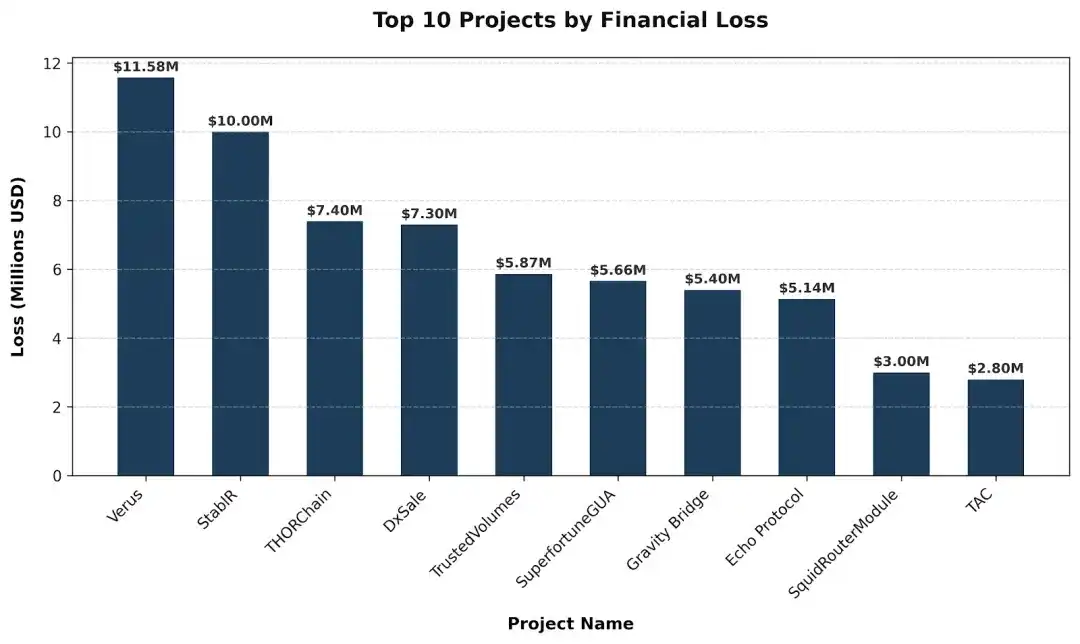
Top 10 Loss-making Protocols in May

The cross-chain bridge connecting the Verus L1 chain and Ethereum, the Verus-Ethereum Bridge, suffered the largest loss of $11.58 million due to a contract vulnerability. Echo Protocol was attacked due to a private key leak, allowing the attacker to mint 1000 eBTC (with a nominal value of approximately $76.7 million). However, due to liquidity constraints, the actual profit was about $5.13 million.
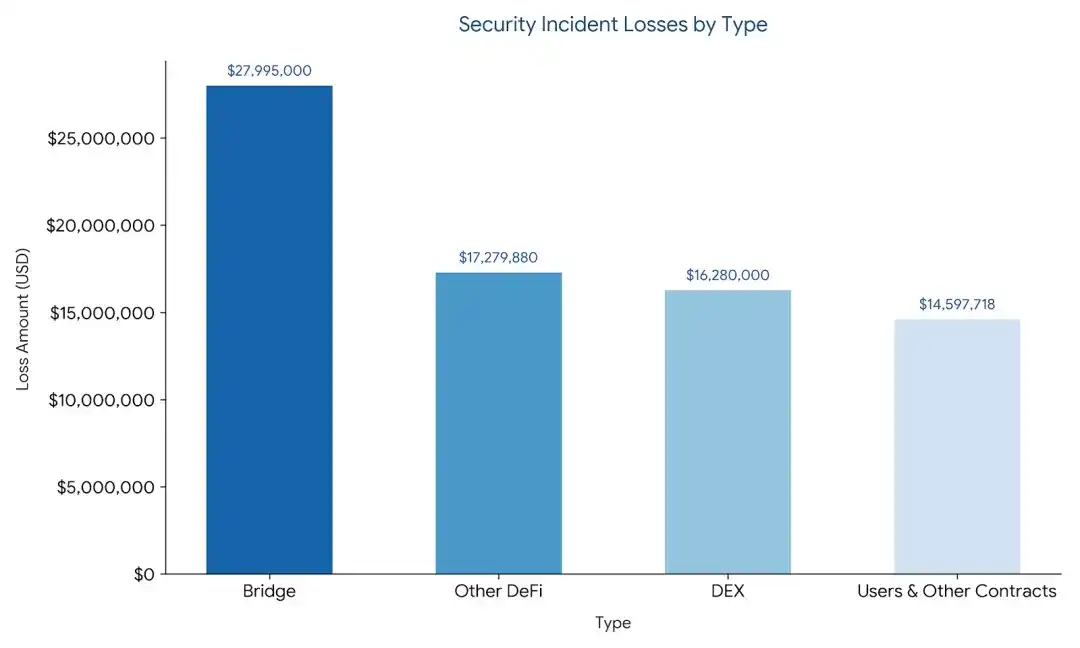
Types of Attacked Projects and Losses by Chain

The targets of attacks encompassed various types such as cross-chain bridges, decentralized exchanges, lending protocols, prediction markets, stablecoins, and ordinary users. Among these, cross-chain bridges suffered the highest total losses, reaching $27.995 million. Projects related to DeFi were attacked the most frequently, with a total of 14 incidents.
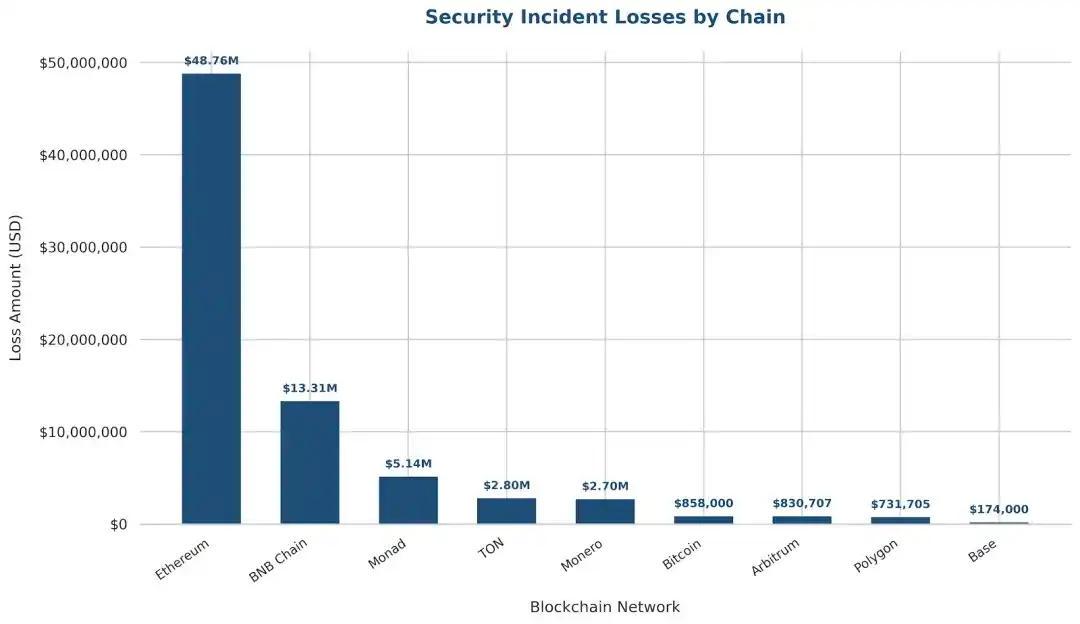
In May, the chain with the highest loss amount was Ethereum, with losses exceeding $48.76 million. Security incidents involving some cross-chain bridges and most DeFi protocols still primarily occurred on Ethereum. This was followed by BNB Chain, Monad, and TON. Additionally, security incidents occurred on Monero and Bitcoin, indicating a multi-chain trend in on-chain attacks.
Analysis of Major Security Incidents

1. Verus: Cross-chain Message Verification Flaw

The operation of the Verus-Ethereum Bridge involves a submitter providing proof data to indicate that a notary-confirmed eligible output exists on the Verus chain. The bridge contract verifies this and releases assets on Ethereum. The vulnerability lies in the fact that the bridge contract on the Ethereum side verifies the proof from the Verus chain but does not check whether the data corresponds to a valid original output. This allows an attacker to construct a fraudulent output that passes verification, enabling them to extract funds far exceeding their deposit.

The vulnerable code section:
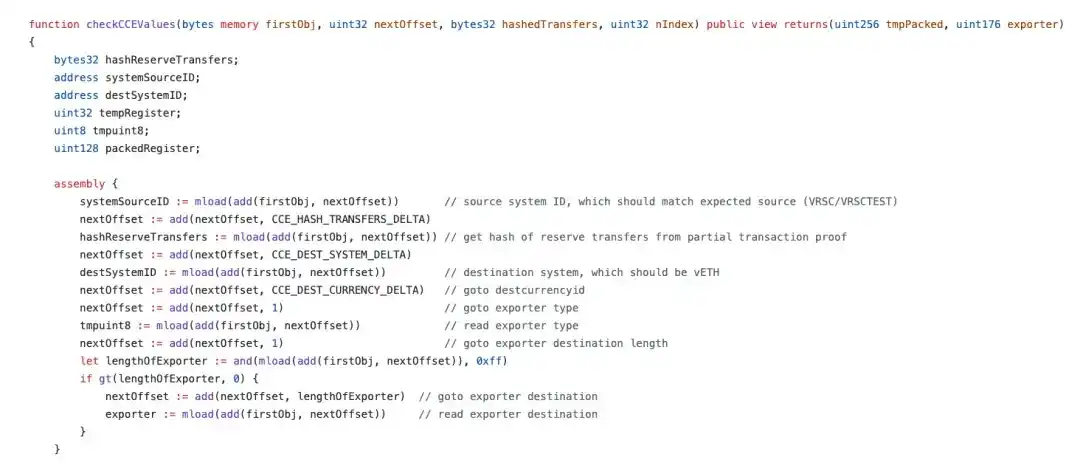
The vulnerability in this incident is of the same type as those that caused the $320 million loss for Wormhole and the $190 million loss for Nomad in 2022, where the bridge verifies the message itself but not the underlying asset value.

2. Trusted Volumes: Signature Parameter Flaw

In this attack, the perpetrator exploited a design flaw in the signature process of TrustedVolumes' Request for Quote (RFQ) mechanism. By customizing signature data during the actual transfer, they set the transferor as TrustedVolumes' Resolver contract, which successfully passed verification, allowing them to transfer assets out of the Resolver contract for profit.

The vulnerable code section:
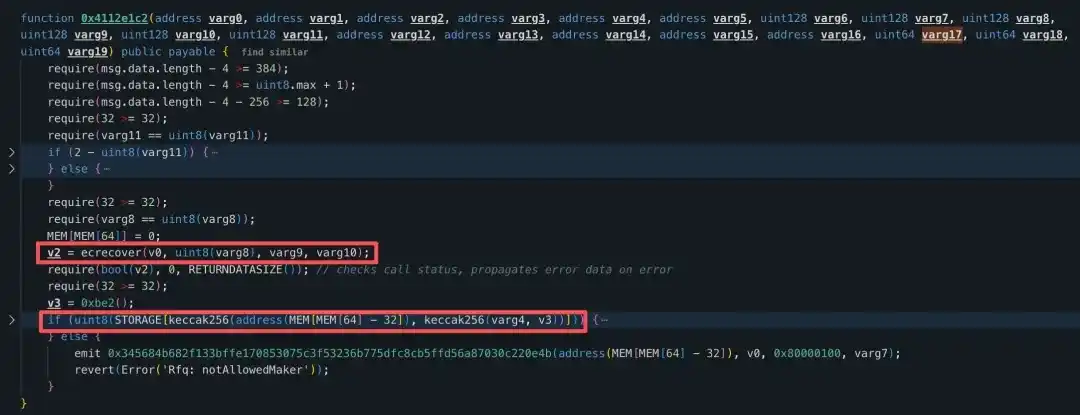
The authorization check referenced `varg4`, while the execution of the fund transfer referenced other parameters. The lack of validation led to a mismatch between the authorized signer domain and the actual debit address.

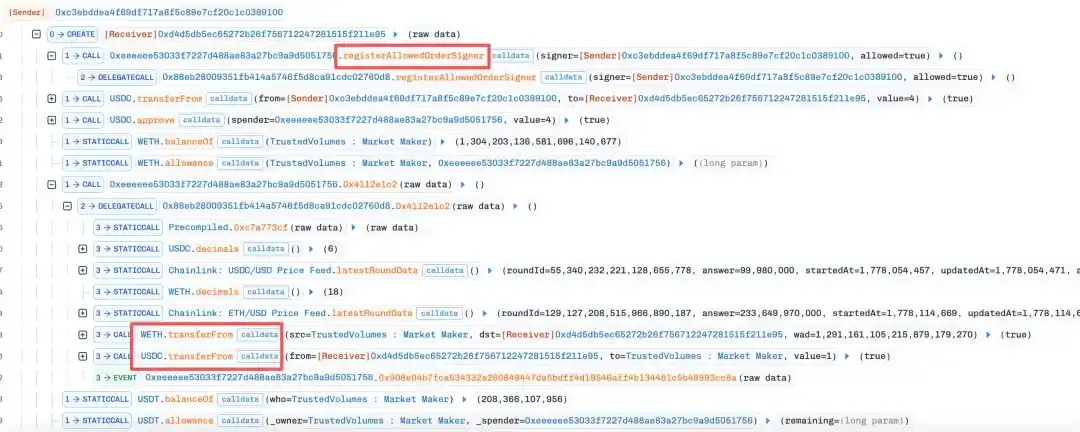
Therefore, the attacker only needed to sign an order with a registered signer address, where `maker = Exploit` (passing signature verification), and other signature parameters (token, amount) could be set to arbitrary values, such as a fake 1:1 order, allowing it to pass the reasonable price check of the price oracle, and subsequently drain assets from the protocol contract:
3. Private Key Leak Incidents, exemplified by StablR

Multiple private key leak incidents occurred in May, resulting in total losses exceeding $25 million. Among them, StablR, as a compliant stablecoin issuer, became a typical lesson in security governance for the stablecoin and DeFi sectors.

StablR launched two compliant stablecoin products: EURR and USDR. The multi-signature wallet controlling EURR minting was `0x8278D2881dBF8F6Fc01c98d196c4b16F1aade5Bc`; the multi-signature wallet controlling USDR minting was `0xF45392bd2D6e6b8C5Dc26BA6c8a12889419B82F3`.

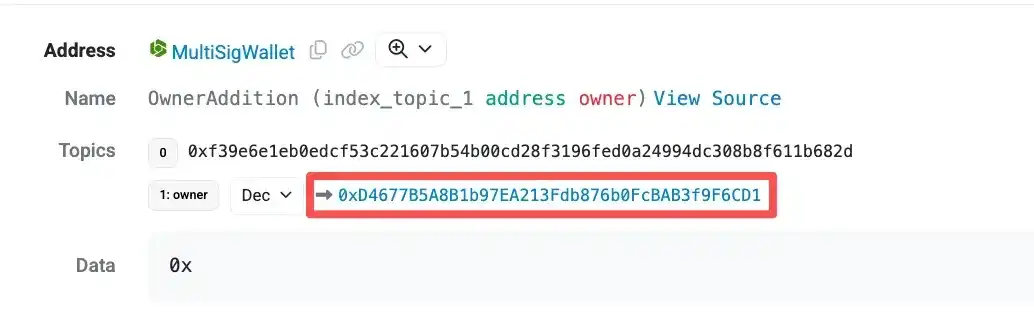
Since transactions from these two multi-signature wallets required only 1 signature, the attacker, by controlling the owner address `0xC73fD562de86d7860EE636C20813Bcb2cF4D550d`, added the address `0xD4677B5A8B1b97EA213Fdb876b0FcBAB3f9F6CD1` to the aforementioned two multi-signature wallets, thereby gaining control over the project's minting authority:
Such incidents are not about code vulnerabilities but rather operational security issues for the project team: failure to securely store private keys for privileged addresses, not using high-threshold multi-signatures for high-value/high-risk operations, lacking timelocks for large minting operations, and the absence of rapid emergency response mechanisms.

Web3 Security Threat Trends

The deepest trend in Web3 security in 2026 is the systemic expansion of the attack surface. Vulnerabilities are emerging simultaneously in code, infrastructure, interoperability, and human processes. Relying solely on a few security audits or tools cannot cover areas like operational security, employee endpoints, cloud infrastructure, and software supply chains. This imposes higher requirements on the continuous operational security of Web3 projects.

Furthermore, attacks targeting old/abandoned contracts are frequent, as vulnerabilities or authorizations within them are easily exploited. Contract developers or operators should re-examine the security of past contracts. For abandoned contracts, funds remaining in them should be processed or transferred promptly, and users should be contacted to revoke unnecessary authorizations. Users should also regularly use blockchain explorers or authorization revocation tools to check and cancel unused contract authorizations.

相關問答

QAccording to Beosin's report, what were the main causes of the significant hacking incidents in May 2026, and what were the respective counts?

AThe main causes were smart contract/network vulnerabilities and private key leaks. There were 17 incidents due to contract/network vulnerabilities and 10 incidents due to private key leaks.

QWhich protocol suffered the largest financial loss in May 2026, as reported by Beosin, and what was the primary cause?

AThe Verus-Ethereum Bridge suffered the largest loss, approximately $11.58 million. The primary cause was a smart contract vulnerability related to a cross-chain message verification defect.

QWhat type of project was attacked the most frequently in May 2026, and which category incurred the highest total loss amount?

ADeFi-related projects were attacked the most frequently, with 14 incidents. Cross-chain bridges incurred the highest total loss amount, at approximately $27.995 million.

QUsing the example of StablR, what operational security failures led to its private key leak incident?

AThe operational security failures for StablR included: not properly securing private keys for privileged addresses, not using a high-threshold multi-signature setup for high-value/high-risk operations (the multi-sig wallets only required 1 signature), lacking a timelock for large minting operations, and having no rapid emergency response mechanism.

QWhat is described as the deepest trend in Web3 security threats for 2026 according to the article's conclusion?

AThe deepest trend is the systemic expansion of the attack surface. Vulnerabilities are now emerging simultaneously in code, infrastructure, interoperability, and human processes, meaning that relying solely on a few security audits or tools is insufficient to cover operational security, employee endpoints, cloud infrastructure, and software supply chains.

你可能也喜歡

你交给Claude的订阅费,光模块公司能拿到多少?

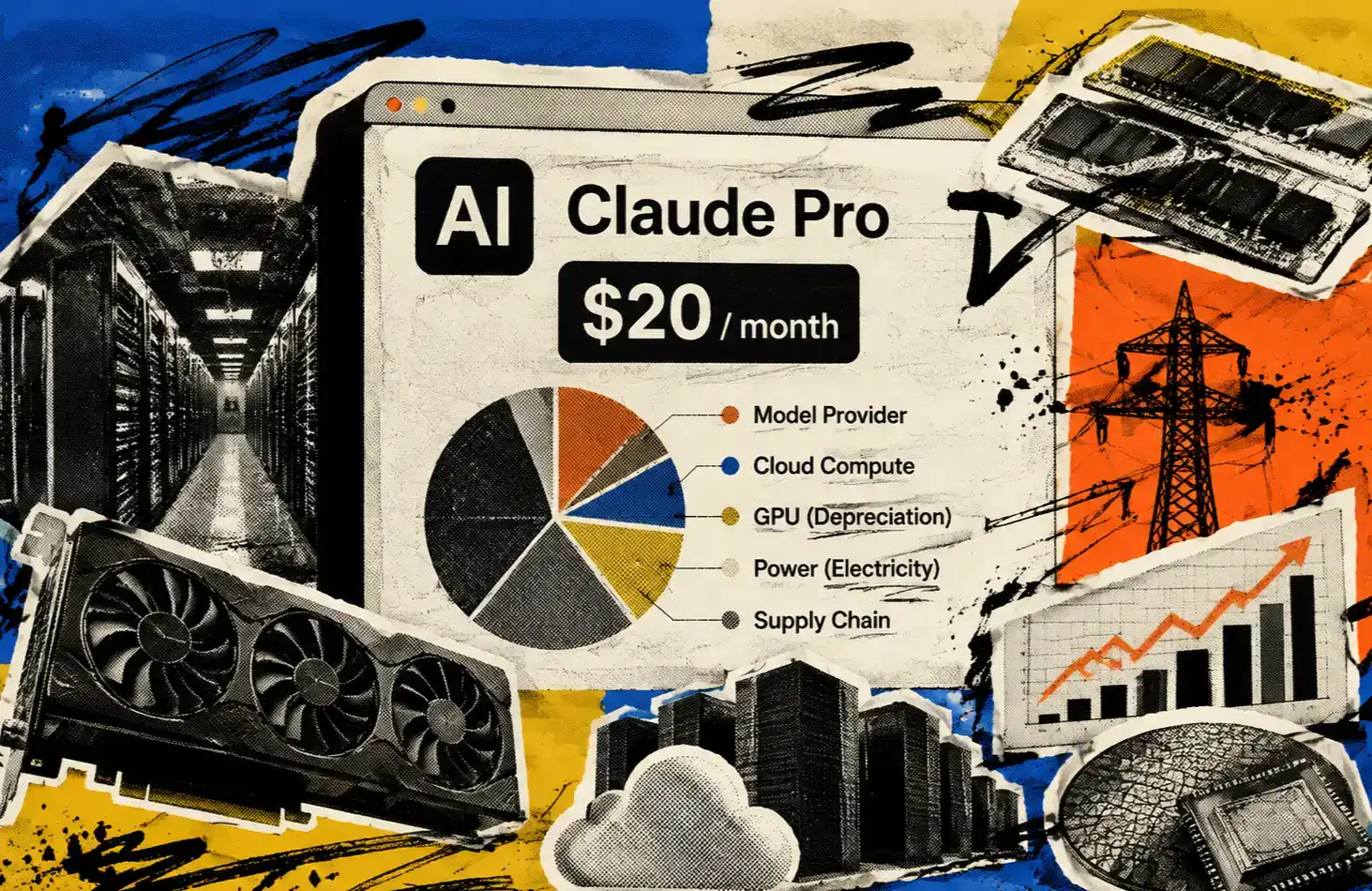
一张将Claude Pro约20美元月费拆解给模型公司、云算力、GPU折旧、电力及供应链的估算图,引发了投资者对AI应用估值逻辑的重新审视。 核心问题在于:用户为AI应用支付的订阅费,有多少能像传统SaaS(软件即服务)那样沉淀为高软件毛利?传统SaaS新增用户成本极低,毛利率可达70%-80%。而AI应用不同,用户每一次调用模型(推理)都会消耗GPU算力、电力和云资源,导致边际成本显著。固定月费背后是随使用量波动的成本链,重度用户的成本可能急剧上升。 因此,AI应用公司要获得高估值,不仅需证明用户付费意愿,更需证明在考虑使用量后,其毛利率能持续改善并接近传统软件公司。当前阶段,AI使用量的增长更直接地转化为对底层基础设施(如英伟达GPU、台积电芯片、HBM内存、电力及数据中心)的需求,这使得基础设施供应商的业绩和估值更早、更确定地得到验证。 支持AI应用高毛利前景的观点认为,当前推理成本高是早期现象。通过模型优化、缓存技术、使用小模型、自研芯片以及提高集群利用率,单位成本有望快速下降。行业已有案例显示,部分模型的单位成本大幅降低。 然而,挑战在于,AI应用正从简单问答转向更复杂、耗能更高的任务(如代码生成、长文档处理)。关键在于,推理成本下降的速度能否超越用户使用量和任务复杂度的增长速度。 总之,该分析图的价值在于提醒市场:在AI应用公司缺乏透明毛利率数据的情况下,不应简单将其收入等同于高毛利SaaS收入。投资者需要关注其成本结构、用户使用行为分层以及效率提升的实际证据。模型公司最终需要证明,即使在重度使用下,订阅收入也能转化为可观的利润。

marsbit8 分鐘前

你交给Claude的订阅费,光模块公司能拿到多少?

marsbit8 分鐘前

OpenAI的Hyperliquid盘前定价生意,为何只撑了半年?

文章讨论了在Hyperliquid平台上两家从事“盘前定价”业务的团队:Trade.xyz和Ventuals的不同命运。 Trade.xyz团队匿名,却成为平台上最大的盘前合约市场,成功抓住了SpaceX上市前的交易机会。其策略聪明之处在于,选择像SpaceX这样上市日期和发行价都已确定的标的,最终价格能与现实市场“锚定”,风险相对可控。 而获得顶级风投Paradigm支持的Ventuals,手握OpenAI和Anthropic这类更稀缺但无明确上市计划的标的,反而在运营九个月后关停。其失败关键在于定价机制存在缺陷:合约价格一半依赖外部非公开的老股报价,另一半则参考其自身价格的均线,形成了一个自我强化的循环。这导致价格长期虚高,缺乏真实市场流动性的支撑和纠错,最终失去市场认可。 Ventuals关停时,其定出的OpenAI(1341.80美元)和Anthropic(1618.90美元)的最终价,甚至被部分内部人士作为估值参考,凸显了未上市公司对流动定价的强烈需求,也暴露了这类定价的脆弱性。 文章指出,为未上市明星公司提供实时交易价格正成为一门热门生意,Coinbase等大机构也已入场。但Ventuals的案例表明,这门生意的核心挑战在于,缺乏一个公开、有效、能持续纠错的市场机制来形成真正公允的价格。在标的公司真正上市前,任何定价都可能面临“悬空”的风险。

marsbit24 分鐘前

OpenAI的Hyperliquid盘前定价生意,为何只撑了半年?

marsbit24 分鐘前

日活冲到行业第二的3-4倍,腾讯WorkBuddy撕开了办公Agent的哪条裂缝?

2026年上半年,腾讯推出的办公智能体(Agent)产品WorkBuddy日活跃用户已达行业第二名产品的3到4倍,其高速增长的核心在于成功吸引了大量非技术岗位用户(如HR、运营、行政)。这与OpenAI同期披露的Codex趋势相似(非开发者增速是开发者的3倍以上),但二者路径截然不同。 WorkBuddy并非预设产品,其前身是代码助手CodeBuddy。转折点在于腾讯内部非技术员工自发用它处理研究、报告等非编码任务。团队洞察到“产物才是目的”,于2026年1月快速推出极简版WorkBuddy,公测前已有超2000名内部非技术员工每日使用。 其成功源于三个关键设计决策: 1. **用自然语言替代技术概念**:用户无需理解Agent、prompt等术语,直接以日常语言下达任务。 2. **预封装场景模板**:内置超20种Skills技能包(如数据处理、竞品调研),开箱即用,无需自建流程。 3. **深度原生集成生态**:深度“住进”腾讯文档、微信等国内高频办公软件,成为现有工作流的一部分,而非独立工具。 这些设计拆除了认知、场景和环境三重门槛。相比之下,Codex和Claude Code从命令行/IDE出发,面向开发者,非技术用户需跨越安装、配置和理解交互逻辑的障碍。尽管OpenAI和Anthropic已开始推出角色插件或简化界面(如Claude Cowork)向非技术用户转向,但交互范式和生态集成的重构需要时间,这为WorkBuddy创造了约半年的领先窗口。 数据显示,WorkBuddy在2026年3月公测后增速迅猛(环比达831%),PC端月访问量领先第二名2.6倍。其定价(个人版起价39元/月)也低于海外同类产品(20美元/月起),在国内市场触及面更广。 WorkBuddy代表“场景封装”路线,追求用户使用路径最短;海外产品则侧重“底层能力”,追求功能最强。当前,WorkBuddy已发布企业版以巩固优势,但面对海外巨头在底层模型能力和快速追赶,其先发优势将面临长期考验。核心差异在于:用户无需懂技术,只需知道自己要什么。

marsbit32 分鐘前

日活冲到行业第二的3-4倍,腾讯WorkBuddy撕开了办公Agent的哪条裂缝?

marsbit32 分鐘前

比特币矿场变AI数据中心:Sangha的“卖身”抉择

2025年12月,Spencer Marr在美国德州为名为Genesis的比特币矿场剪彩。这座规模19.9兆瓦的矿场采用“表后直供”模式,直接从相邻的太阳能农场获取低价电力,实现了低至约32美元/兆瓦时的运营成本,使其在比特币行情下行时仍能盈利。 然而,通电仅半年后的2026年6月,Marr的公司Sangha便通过投行放出消息,考虑出售、合资或引入战略伙伴。其根本原因并非经营不善,而是AI算力需求爆发带来了新的估值逻辑。对于亟需电力与数据中心资源的AI公司而言,Genesis这样一个已通电、有扩容潜力(规划至110.4兆瓦)且电力接入手续齐全的站点,价值远超过其作为矿场的本身。 Sangha的商业模式是项目制,通过设立特殊目的载体(SPV)吸引投资。如今,他们计划在估值高点出售这份“电力资产”,这比自行扩建为AI数据中心更为划算。其推介重点也已从比特币挖矿转向AI计算、高性能计算等多元场景。 这一转变并非个例,Core Scientific等上市矿企也已纷纷转向AI/HPC业务。Sangha的案例凸显了一个趋势:在AI的巨大需求下,拥有稳定、低价电力资源的比特币矿场基础设施,正成为被争抢的稀缺资产。矿工们面临的抉择是:是坚守挖矿,还是将阵地拱手让给AI,换取丰厚的资本回报。

marsbit1 小時前

比特币矿场变AI数据中心:Sangha的“卖身”抉择

marsbit1 小時前

交易

現貨
合約

熱門文章

什麼是 DOGE M

Doge Matrix ($doge m):新一代社區驅動的加密貨幣 介紹 在不斷演變的加密貨幣領域中,新項目不斷湧現,每個項目都旨在吸引投資者和愛好者的興趣。最近進入這一領域的項目之一是 Doge Matrix,代碼為 $doge m。這個項目因其根植於圍繞 Dogecoin 的流行迷因文化而受到關注,並在 web3 空間中確立了自己的地位。本文旨在對 Doge Matrix 進行全面分析,涵蓋其概述、創建者、投資者、功能、時間線和顯著特點。 Doge Matrix ($doge m) 是什麼? Doge Matrix 是一個社區驅動的加密貨幣項目,似乎建立在 Dogecoin 的廣泛吸引力之上,這是一種以柴犬吉祥物和迷因起源而聞名的數字貨幣。雖然 Doge Matrix 的總體目標並未明確定義,但它的特點是致力於利用社區的參與和支持。與傳統加密貨幣通常強調通過底層技術的實用性或內在價值不同,Doge Matrix 將自己定位於擁抱加密貨幣文化現象的空間,特別吸引那些與基於迷因的資產精神共鳴的人。 Doge Matrix 利用 Dogecoin 社區的優勢,作為更廣泛生態系統的一部分,邀請對加密貨幣和數字領域感興趣的用戶參與和互動。 Doge Matrix ($doge m) 的創建者是誰? Doge Matrix 的創建者身份仍然未知。這種缺乏透明度在加密貨幣領域並不罕見,一些項目在未透露其創始人身份的情況下啟動。關於創始團隊的信息缺失可能會引發潛在投資者對項目責任和方向的質疑。 Doge Matrix ($doge m) 的投資者是誰? 目前,沒有公開的資訊詳細說明支持 Doge Matrix 的投資者或投資基金。該項目似乎主要依賴社區支持,而非機構投資。這一模式與該倡議的社區驅動特性相一致,促進了一個由參與者塑造項目方向的環境,而不是由少數財務支持者主導。 Doge Matrix ($doge m) 如何運作? 關於 Doge Matrix 的運作機制的具體細節有些模糊,反映了迷因幣空間中項目的普遍趨勢,即創新功能並不總是清晰表達。儘管如此,Doge Matrix 似乎旨在通過鼓勵用戶參與來利用現有的加密貨幣生態系統,同時利用與 Dogecoin 相關的熟悉文化參考。 其潛在的獨特特徵源於社區互動,而非技術進步,強調代幣持有者之間的共享經驗和合作。雖然具體的創新尚未明確說明,但該項目似乎創造了一個社區成員可以互動、分享想法並推動項目潛力的空間。 Doge Matrix ($doge m) 的時間線 回顧該項目的時間線,顯示出一些定義其迄今為止旅程的重要事件: 2024年11月25日:Doge Matrix 達到其歷史最高價,標誌著其早期歷史中的一個重要里程碑。 2025年1月1日:相反,Doge Matrix 達到其歷史最低價,顯示出加密貨幣通常伴隨的波動性,特別是在項目生命周期的早期階段。 持續進行中:該項目仍在積極交易並得到其社區的支持,儘管具體的未來里程碑或目標尚未披露。 關於 Doge Matrix ($doge m) 的要點 社區焦點 Doge Matrix 的核心是對社區參與的承諾。該項目基於成員之間的合作和共同目標而蓬勃發展,強調集體努力的重要性。與通常有明確領導結構的集中式項目不同,Doge Matrix 目前展示了一種更靈活的治理方式,每位社區成員的聲音都很重要。 波動性 加密貨幣市場以其波動性而聞名,Doge Matrix 也不例外。其價格歷史反映出高低價值之間的顯著波動,這是許多新加密貨幣的典型特徵,但也強調了投資新興代幣所面臨的風險。 缺乏詳細信息 Doge Matrix 最引人注目的特點之一是關於其技術基礎和運作機制的詳細信息稀缺。這種模糊性使得潛在投資者在參與該項目之前必須進行徹底的盡職調查。 結論 總之,Doge Matrix ($doge m) 展示了一波新興的加密貨幣項目,這些項目在很大程度上依賴於社區參與和文化相關性。儘管在某些具體方面(如明確的領導、定義的目標和詳細的功能)有所欠缺,但該項目成功地在加密社區中引起了興趣,利用了迷因文化的既有吸引力。與任何加密貨幣投資一樣,理解固有風險並進行全面研究對於潛在參與者至關重要。Doge Matrix 是加密行業動態且有時不可預測的本質的提醒,標誌著不斷的演變和對社區驅動倡議的熱情。

547 人學過發佈於 2025.02.03更新於 2025.02.03

什麼是 DOGE M

什麼是 $M

理解 Mantis ($M):跨鏈互操作性的新時代 在不斷演變的 Web3 和加密貨幣領域,新項目努力提供創新的解決方案,旨在提升用戶體驗並擴展去中心化金融生態系統中的功能可能性。其中一個引起關注的項目是 Mantis ($M),這是一個基於跨鏈互操作性和基於意圖的結算原則的開創性協議。本文深入探討 Mantis 的基本方面,包括其核心功能、創建者、投資支持、創新特徵和關鍵里程碑。 Mantis ($M) 是什麼? Mantis 被描述為一個 多域意圖結算協議,簡化了跨鏈互動,使得用戶能夠在各種區塊鏈平台上無縫執行複雜的金融交易。該協議通過三個主要層次運作: 意圖表達:用戶可以使用由 DISE LLM 提供的自然語言來表達其交易目標,這是一種先進的 AI 語言模型。例如,用戶可能會表達希望以 1% 的滑點容忍度將以太坊 (ETH) 交換為索拉納 (SOL)。 執行:這一層利用一個解決者網絡,競爭以滿足用戶的意圖。交易通過如需求一致 (CoWs) 和訂單流拍賣 (OFAs) 等機制執行,確保用戶需求得到最佳滿足。 結算:利用跨區塊鏈通信 (IBC) 協議,Mantis 實現原子跨鏈交易,使用戶能夠在包括以太坊、索拉納和宇宙等各種支持的鏈上操作。 Mantis 被設計為為閒置資產引入 原生收益生成,並利用加密證明來保持整個過程中交易的完整性。 創建者與開發團隊 Mantis 由 Composable Foundation 構思,這是一個以研究為驅動的組織,以其對區塊鏈互操作性解決方案的重視而聞名。該基金會與包括哈佛大學和里斯本大學在內的著名學術機構合作,為 Mantis 的架構和功能提供廣泛的研究和開發支持。 Composable Foundation 致力於促進區塊鏈領域的創新,使 Mantis 成為滿足多個區塊鏈網絡間日益增長的互操作性需求的強大解決方案。 投資者與支持 儘管有關個別投資者的具體細節尚未公開披露,但 Mantis 享有來自多個實體的實質支持,包括: 來自 IBC 支持鏈的生態系統補助金,支持協議在去中心化金融生態系統中的增長和整合。 與基礎設施提供商的戰略夥伴關係,增強 Mantis 的網絡能力和部署策略。 通過 Composable Foundation 的財庫提供的資金,確保持續的財務支持以應對持續的開發和運營成本。 這些合作努力反映了利益相關者對增強跨鏈功能和 Mantis 基礎設施創新潛在效用的重要性達成共識。 主要創新 Mantis 通過幾項開創性創新來提升其功能和效用: 鏈無關意圖:用戶可以從任何支持的鏈發起交易,同時在另一條鏈上結算。這種靈活性賦予用戶權力,促進不同平台之間的互動。 AI 驅動的界面:DISE LLM 的整合使得用戶能夠使用自然語言進行複雜的 DeFi 操作,從而簡化互動,並使區塊鏈技術對更廣泛的受眾變得可及。 跨域 MEV 捕獲:Mantis 通過解決者之間的競爭創建了一個內部市場,以獲取最大可提取價值 (MEV)。這一創新方法允許在複雜交易中實現更高的效率和價值提取。 模組化結算層:該協議支持多種驗證方法,包括零知識證明和樂觀滾動,提供一個靈活的框架,可以適應新興的區塊鏈技術。 歷史時間表 Mantis 的發展標誌著幾個關鍵里程碑,描繪了其軌跡和增長: | 年份 | 里程碑 | |————|————————————————————————-| | 2022 | 在 Composable Foundation 的研究部門內進行初步概念開發。 | | 2024 第三季 | 啟動測試網,實現索拉納和以太坊之間的橋接能力。 | | 2025 第一季 | 預計代幣生成事件 (TGE) 與主網啟動同時進行。 | | 2025 第二季 | 預期整合 DISE LLM 並擴展跨鏈能力。 | | 2025 下半年 | 計劃通過進一步的 IBC 升級支持超過 15 條鏈。 | 這個時間表概述了 Mantis 的演變,從概念討論到積極實施和未來增長階段。 生態系統增長策略 Mantis 的生態系統增長策略包括幾項旨在鼓勵用戶參與和開發者參與的舉措: 信用系統:用戶可以通過提供流動性和參加推薦計劃來獲得協議信用。這些信用可在未來兌換獎勵,促進強大的用戶社區。 模組化軟件開發工具包 (SDK):這個工具包使開發者能夠基於意圖驅動模型利用 Mantis 的基礎設施創建應用程序,從而促進其生態系統內的創新。 治理模型:隨著協議的成熟,$M 代幣持有者將在協議治理中擁有發言權,允許他們對提議的升級和變更進行投票,從而增強社區參與和去中心化。 Mantis 代表了跨鏈架構領域的一個重大進展。通過無縫整合先進的 AI 算法和強大的結算框架,Mantis 努力解決多鏈生態系統中的碎片化問題。其創新方法優先考慮改善用戶體驗,同時遵循去中心化和安全性的基本原則,為未來區塊鏈技術的互操作性設立了新標準。 隨著 Mantis 繼續其增長和實施之旅,它承諾成為 Web3 和去中心化金融競爭格局中值得密切關注的項目。憑藉其跨越界限和提升用戶參與的重點,Mantis 預計將成為未來加密貨幣領域發展的重要組成部分。

45 人學過發佈於 2025.03.18更新於 2025.03.18

什麼是 $M

如何購買M

歡迎來到HTX.com!在這裡,購買MemeCore (M)變得簡單而便捷。跟隨我們的逐步指南,放心開始您的加密貨幣之旅。第一步:創建您的HTX帳戶使用您的 Email、手機號碼在HTX註冊一個免費帳戶。體驗無憂的註冊過程並解鎖所有平台功能。立即註冊第二步:前往買幣頁面,選擇您的支付方式信用卡/金融卡購買:使用您的Visa或Mastercard即時購買MemeCore (M)。餘額購買:使用您HTX帳戶餘額中的資金進行無縫交易。第三方購買:探索諸如Google Pay或Apple Pay等流行支付方式以增加便利性。C2C購買:在HTX平台上直接與其他用戶交易。HTX 場外交易 (OTC) 購買:為大量交易者提供個性化服務和競爭性匯率。第三步:存儲您的MemeCore (M)購買MemeCore (M)後,將其存儲在您的HTX帳戶中。您也可以透過區塊鏈轉帳將其發送到其他地址或者用於交易其他加密貨幣。第四步:交易MemeCore (M)在HTX的現貨市場輕鬆交易MemeCore (M)。前往您的帳戶,選擇交易對,執行交易,並即時監控。HTX為初學者和經驗豐富的交易者提供了友好的用戶體驗。

1.2k 人學過發佈於 2025.07.02更新於 2026.06.02

如何購買M

相關討論

歡迎來到 HTX 社群。在這裡,您可以了解最新的平台發展動態並獲得專業的市場意見。 以下是用戶對 M (M)幣價的意見。

活动图片