Compiled & Edited By: Deep Tide TechFlow
Guest: Nate (Host of Endicott Invests)
Host: Steven Fiorillo
Original Title: The Neocloud Discussion with Nate Endicott: NBIS, IREN, CRWV
Podcast Source: steven fiorillo
Broadcast Date: May 24, 2026
Editor's Note
Nebius, CoreWeave, and IRON, these three 'NeoCloud' companies, are perhaps the most certain yet longest overlooked link in Nvidia's GPU computing power chain today. This conversation invites Nate, host of Endicott Invests, to systematically deconstruct the differences in their business models, debt structures, client profiles, and team DNA.
Nate's core judgment is that the computing power shortage will last at least 3 to 5 years. Hyperscale cloud providers are physically unable to build data centers fast enough themselves. Neo cloud companies are not targets for replacement but necessary supplements. He gives a revenue guidance for Nebius for 2030 of 5 GW × $10/MW = $50 billion (against its current market cap), nearly 14 times Wall Street's consensus of $3.677 billion.
A more critical signal is that Nebius has already raised prices for H100 / B200 by 30%—70% from June 1st, meaning the bearish narrative that 'GPUs depreciate fast, squeezing margins' is being overturned by reality.
Key Quotes
Market Space and Cycle Judgment
- "I've never been more bullish than I am now. AI's current penetration rate is equivalent to the internet in 1996. Big companies are still playing with small toys like [websites], 20 years later every company has a website. AI is the same, we are at the very bottom left of the S-curve."
- "Everyone wants to know what the maintenance mode looks like. I'll tell you, it looks like Microsoft, Amazon, Google leveling off their capital expenditures to maintain their current scale, while all other companies are increasing spending to build infrastructure."
- "TSMC wouldn't raise capital expenditure to this level for a one or two-year boom cycle, nor would Micron. They have the highest visibility on cycles. Their expansion is telling the market this is not a short cycle."
Differentiation Among the Three Neo clouds
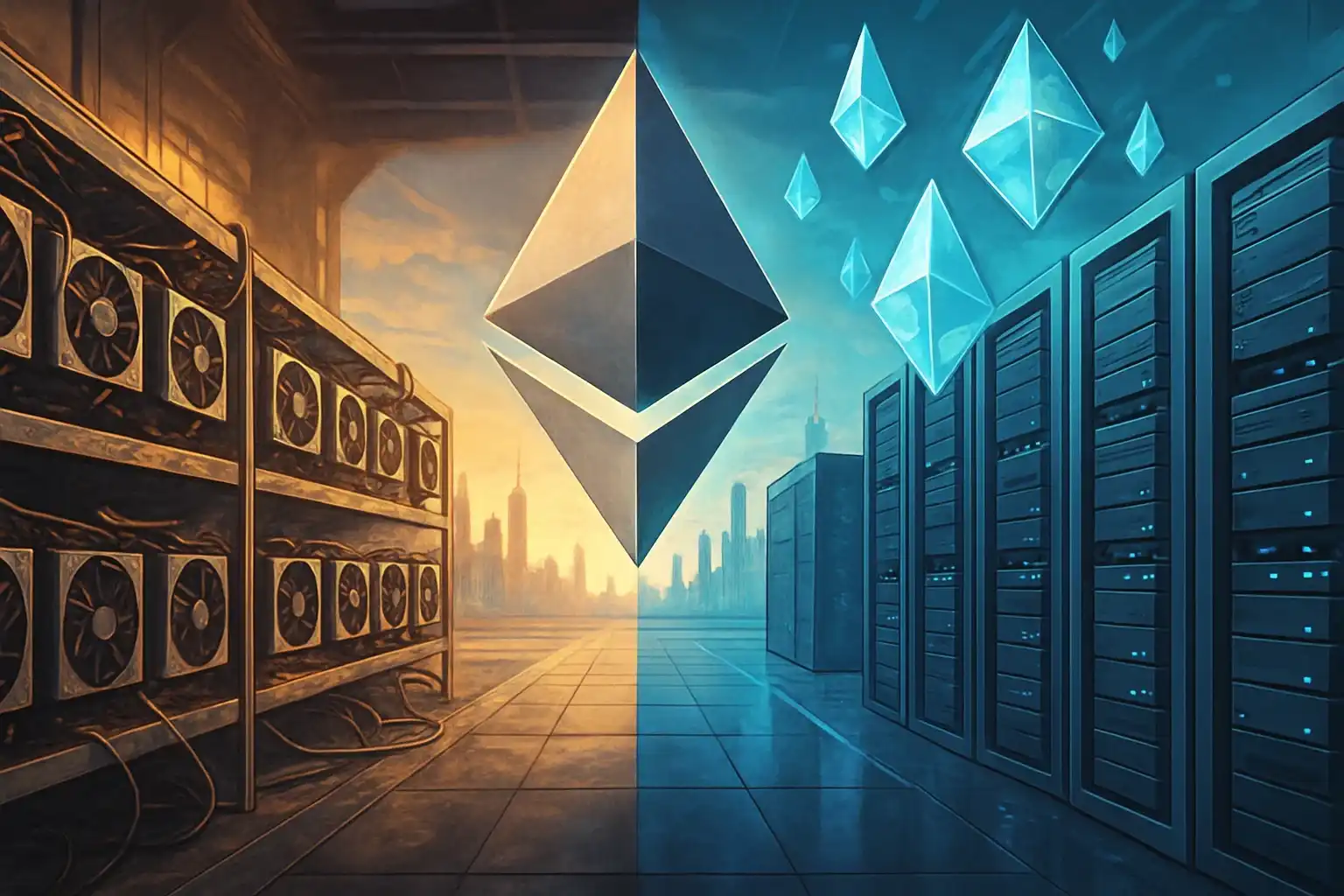
- "CoreWeave is the OG who entered the market earliest, starting from mining Ethereum in 2017. After the 2018 crash, it pivoted to providing computing power to Microsoft and early OpenAI. Current activated power exceeds 1 GW, focusing on training, so it has the highest unit price and revenue."
- "IRON was originally a Bitcoin miner, transitioning to GPU last year. Its moat is land and power, securing 4.5 GW of signed power capacity, the largest among the three. However, it has only secured Microsoft as one major client so far, and the second major deal has been delayed, which is unusual."
- "Nebius is between the two and is the only player betting on the software stack. Arkady has publicly stated four or five times, '[We] want to become the fourth hyperscale cloud service provider.' Recent acquisitions like Egen AI and Clarif AI are aimed at building the 'token factory' inference platform."
Nebius Team and History
- "I value the team most in investments. IRON's founders are two Australian salesmen; CoreWeave's founder has a moderate technical background. Only Nebius is a team of engineers who have worked together for 20 years, with the CEO being a mathematician himself. This DNA determines company culture and product direction."
Moat, Pricing Power, and Profit Margin
- "Nebius mentioned in last quarter's earnings that they have four customers competing for every GPU. Starting June 1st, H100 and B200 prices for new customers increased by 30–70%, directly passing on the cost of memory and GPU price increases downstream, which will actually improve gross margin."
- "Their GPU depreciation cycle is 5 years. H100/B100 has been in service for nearly 5 years, but prices are still rising. Any price increase after depreciation is 100% net profit. That's a great deal."
- "Hyperscalers cannot simply replicate Neo cloud. AWS's data centers are designed for low-intensity cloud services; rack weight-bearing capacity, cooling, and network configurations are different. They can't just shut down cloud services and switch to AI workloads overnight."
Future Growth Sources and Methodology
- "Nebius disclosed last quarter that contract revenue from customers other than Microsoft and Meta grew 3.5 times quarter-over-quarter. This indicates that mid-sized enterprises, not hyperscalers, have started purchasing computing power on a large scale. The market focuses entirely on giants, overlooking the second wave of demand."
- "There's a rough formula for estimating Neocloud revenue: 1 MW = $10 million annualized revenue. Nebius's guidance for 2030 is 5 GW, corresponding to $50 billion in revenue."
- "Nebius also has four subsidiaries adding valuation increments: it holds 25% of ClickHouse (worth about $50 billion based on a $200 billion valuation in January), 83% of Avride (autonomous delivery robots), Toloka, and TripleTen. These are additional chips for a 'sum-of-the-parts' valuation and also a source of collateral for cheap debt."
Secondary Opportunity: Network Layer
- "The most underestimated signal in Nvidia's earnings this time was the network business exceeding expectations. You can't build racks without firewalls, switches, and wireless access points (WAPs). Arista Networks is the pure-play in the network layer; after acquiring Splunk, Cisco has 42–44% of revenue coming from services and security. Both paths can work."
Steve: Should we start by explaining 'what is a GPU'?
Nate: I hope with the size of my Nvidia position, I at least know what a GPU is. I'm often asked how to choose between CoreWeave and Nebius. My standard answer is, I invested in Nebius because I'm not sure who will win, but I prefer Nebius's financial structure, especially the debt part.
Steve: I'll disclose upfront, I hold Nebius, not CoreWeave or IRON. I want to learn more from you. My initial logic was simple: computing power is insufficient, RPOs (Remaining Performance Obligations) are huge; AWS, Google Cloud, Azure, plus Oracle, definitely need overflow; Neo cloud companies also have large contract backlogs, though not as large as the giants'. Then looking at balance sheets, I felt Nebius was much better than CoreWeave, and then looked at long-term growth. Please go through the three one by one.
Nate: Disclosure first: I have a preference for Nebius, with a position over 50%. My investment style is highly concentrated, similar to when I bet on Palantir. But at the industry level, I think every company will win because demand and computing power bottlenecks exist. I initially viewed Nebius as a 12–24-month swing trade, now held for almost a year, upgraded to a 3–5–10-year long-term hold because my understanding of the magnitude of computing power demand keeps being refreshed.
Neo cloud refers to specialized GPU cloud suppliers sandwiched between Hyperscalers (AWS, GCP, Azure, Oracle) and lab/enterprise clients. This category exists fundamentally because Hyperscalers are physically unable to build power, cooling, networking, and GPU clusters fast enough. CoreWeave is the OG, started mining Ethereum in 2017, pivoted after the 2018 crash to supply computing power to Microsoft and early OpenAI. IRON is also from a Bitcoin mining background, transitioning to GPU early last year. I'll talk about Nebius separately; their engineering depth is astonishing. There are also smaller players like Cipher, WULF, Galaxy with small market caps, but these three are the main ones.
I particularly want to talk about Nebius because I value the team. CEO Arkady is a mathematician. In 1993, he built Yandex in Russia, earlier than Google. In 2003, Google offered $130 million to acquire it, he refused, and it IPO'd the same year at an $8 billion valuation, reaching a market cap of $30 billion at its peak in 2022. This experience shows Arkady is a serious, visionary leader and a top mathematician. Yandex developed into a Russian Google between 2003 and 2022, doing search, autonomous driving, various businesses, and built its own data center in Finland, operational around 2012–2013. When the Russia-Ukraine war broke out in 2022, Arkady and the entire company stated opposition, decided to sell Russian assets, relocate out of Russia, and relist on NASDAQ. The whole company and engineering team moved to the Netherlands. So you'll see a two- to three-year gap in Nebius's stock chart, the period it was delisted. Investing in Nebius is investing in a mathematician who said no to Google, said no to his own country, and moved to another country for relisting. All engineers moved with their families; this culture and sense of mission are what I also valued when investing in Palantir.
Steve: I knew none of this history. I mainly looked at GPU direction, financials, balance sheet, future EPS, and revenue growth. CoreWeave looked interesting, but I hated its debt pile. As my judgment on the AI implementation cycle kept shifting later, I'm now considering investing in all three.
Nate: The reason I talked about the background first is that most people don't know. They sold Russian assets for about $5.5–6 billion and used that money to build new data centers by the end of 2024.
Steve: What are the main differences between the three?
Nate: Three dimensions. CoreWeave entered earliest, has the highest activated power and revenue, focuses on training, so OpenAI training GPT-5-like tasks go to CoreWeave. IRON is between training and inference. Nebius focuses on inference. Inference has better sustainability, training has higher unit prices, so CoreWeave gets a premium.
In terms of power scale: CoreWeave has activated over 1 GW; IRON has secured 4.5 GW, possessing the largest moat in land and power, but oddly, it has only secured Microsoft as one major client, and the second major deal is delayed. All three have Microsoft contracts. CoreWeave also has OpenAI; Nebius also has Meta; IRON currently only has Microsoft. For IRON holders, the next contract is the key catalyst; the longer it's delayed, the stranger it is.
Regarding differentiation: CoreWeave is scale + ClusterMAX Platinum certification; IRON is cheap renewable energy + vertical integration (own land and power); Nebius is the software stack, their 'token factory' inference platform is the core direction. Recent acquisitions of companies like Egen AI and Clarif AI for token optimization and model optimization are to push towards the hyperscaler direction. Arkady has repeatedly emphasized in past calls wanting to be the 'fourth Hyperscaler,' or the fifth if you count Oracle.
Nebius disclosed last quarter that contract revenue from customers other than Microsoft and Meta grew 3.5 times quarter-over-quarter, a very bullish signal. The reason is, the further downstream you go, the more customers need software service layers, the higher the margin. Contracts with Microsoft and Meta are for bare metal; hyperscalers have their own container orchestration systems and software, only buying computing power, resulting in lower margins. Downstream mid-sized enterprises need the software stack, which gives Nebius greater profit elasticity.
Nebius also has four subsidiaries adding valuation. ClickHouse is a data analysis and labeling platform, comparable to Databricks, with a $200 billion valuation in a January funding round. Nebius holds 25%, worth about $42 billion; from a private market perspective, it could double or triple in the next three years, potentially making Nebius's stake worth $100–150 billion (assuming zero dilution, actual dilution might be 15–18%). Avride does autonomous delivery robots, deployed on campuses like Columbus, partnering with Uber. Nebius holds 83%, with a valuation range of $5–8 billion. TripleTen (education platform) and Toloka (data labeling) are smaller, in the hundreds of millions of dollars range, contributing limited valuation but adding optionality. So, Nebius's valuation should be viewed as GPU cloud business plus the sum-of-the-parts valuation of subsidiaries. CoreWeave only has top-tier computing power; IRON's computing power is in the earliest stages but has the largest land and power lock-in, with AI cloud revenue only $20–30 million; Nebius is in the middle, with revenue exceeding IRON but less power, requiring continuous self-build. Permit approvals in New Jersey, Pennsylvania are a major hassle, and capital expenditure is high.
Steve: We just got all the financials, including Nvidia from two days ago, plus hyperscaler earnings (except Oracle). Combining Jensen Huang's comments, Nvidia data, memory (Micron, SanDisk), and TSMC's situation, how do you interpret this data's impact on Neo cloud?
Nate: I've never been more bullish. Our use of AI is still very early. Every company will have a website in 20 years; AI will follow the same path. We are currently at the early adopter stage equivalent to the internet in 1996. Add in robotics, autonomous driving, we are at the very bottom left of the S-curve. I believe Neo cloud is absolutely in an explosive phase for the next 3 years. Having GPUs means 10x growth because clients just want computing power. Only after 5 years will the software stack and service quality decide the winners; Nebius's layout is preparation for that phase.
As for whether memory and GPU price increases will squeeze Nebius's gross margin, yesterday Nebius directly announced a 30–70% price increase for H100 and B200 for new customers effective June 1st, fully passing on the cost. Nebius's medium-term EBIT margin guidance is 15–20%, with an EBITDA margin of 40% by year-end. I don't focus much on EBITDA, but EBIT is operating margin; this data can be referenced.
Steve: All clues point to computing power; CPUs, GPUs are insufficient. The highest visibility is TSMC and Micron; servers need memory, chips need to be manufactured. TSMC's biggest client is Nvidia, whose biggest clients are Microsoft, Amazon, Alphabet, Oracle. TSMC's significant capital expenditure expansion this year isn't for a one or two-year cycle; neither is Micron's. If they are expanding production, it means my previous judgment was wrong. I've revised my AI cycle target twice and am about to revise it a third time. When ChatGPT came out, I judged Nvidia for 18–24 months; a year and a half ago adjusted to 24–36 months; now I'm asking myself, will this slow down before 2030? I'm not sure. Alphabet said this year they're spending $190 billion on capex, and more next year. They won't let up even in 2028.
Nate: I agree with your judgment. I initially viewed Nebius as a swing trade. Now, as my understanding of the market deepens, seeing the capital expenditure growth curve and changes in discourse. Now people are discussing Hyperscalers, but the next step is the entire Fortune 500, S&P 2000, every mid-sized company saying 'I also need computing power, I also need agent training.' This is the real early stage. Nebius is already collaborating with Shopify, Cloudflare, CrowdStrike. The next wave is 'every company needs computing power,' equivalent to 'every company needs a website.' Executives and VPs now think, let the giants spend hundreds of billions first to figure out what works, then follow. Nebius's 3.5x non-hyperscaler contract growth is exactly this signal.
Steve: I used to use the RAM cycle model to understand GPUs; now I think the GPU thing won't stop, memory won't either, capital expenditure acceleration won't either. Giants won't double or grow 50–60% every year, but continuing to grow 10–20% annually is entirely possible. Overlaying Nvidia data with token economics, I have to believe CoreWeave, Nebius, IRON revenues will expand significantly further.
Nate: There's a simple formula for computing power conversion: 1 MW = $10 million annualized revenue, 100 MW = $1 billion. Bare metal is cheaper, others more expensive, but this is the baseline. So Nebius's guidance of 5 GW for 2030 corresponds to $50 billion in revenue. But even the analyst consensus of $3.677 billion, compared to about $500 million revenue last year, is still a 100x growth over 5 years. Next year's market consensus expects 550% year-over-year growth, the year after 219% (according to 17 analysts). CoreWeave is similarly exaggerated: 147%, 97%, 58%, absolute values in the tens of billions of dollars.
Regarding the bearish narrative of GPU depreciation, Nebius's last quarterly report clearly stated there are four customers competing for every GPU.
Steve: I have an original theory. Jensen mentioned at some conference that many clients are still using H100s from five or six years ago. I guess after Hyperscalers get the next-gen Vera Rubin, they will lease out old GPUs, not discard them. Same for Nebius and CoreWeave. This computing power ultimately flows to non-tech companies like Coca-Cola, Walmart.
Nate: Good point. Nebius's depreciation cycle is 5 years. H100/B100 is nearing 5 years, but prices are still rising. Any price increase after depreciation is 100% net profit.
Steve: What is the most misunderstood point about this sector?
Nate: "Hyperscalers can replicate Neo cloud." AWS was designed for cloud services in the early 2000s; requirements for computing intensity, cooling, network configuration are far lower than AI workloads. AWS can't simply shut down cloud services and switch to AI workloads overnight. Racks need to be reconfigured to handle higher heat and higher loads. Nebius, CoreWeave, IRON designed data centers from the ground up for next-gen AI workloads. Hyperscalers have experience and capital but cannot simply replicate. That's the biggest misconception. The second is Michael Burry's argument that 'GPUs will soon be obsolete,' which has been overturned by the market and reality; Nebius raised prices 30% yesterday. Giants will definitely compete, but in the next 3 years, it's irrelevant. After 5 years, software and services will be key, which is why I like Nebius's software stack layout. For the next 3 years, blindly buying any Neo cloud will outperform the market.
Steve: Who is most likely to win among the three? After all, clients overlap.
Nate: Long-term 5-year view: Nebius. IRON founders are two Australian salesmen; CoreWeave's founder has a moderate technical background. Only Nebius is a team of engineers who have worked together for 20 years, the CEO is a mathematician; culture and product direction are determined by this DNA. But a more likely outcome is a three-way split like AWS/GCP/Azure, 40/40/20 or 35/35/30. Short-term 2-year view: CoreWeave first, because it has Platinum certification, RPO close to $100 billion. Nebius around $40 billion, IRON's specific number I'm not sure. Another structural difference: IRON is all self-owned and operated data centers, weak in software; CoreWeave uses a colocation model, multiple companies sharing the same data center, impacting margin; Nebius is in between, self-build & operate + colocation. Nebius guides 75% self-owned and operated by 2030, gradually eroding IRON's moat while preserving margin. Near-term, IRON has land and power advantage, but 5–10 years out, it's Nebius.
Steve: Must only one win, or can all three grow revenue and EPS?
Nate: All three will grow. I'm bullish on all until at least 2030. After 2030, possibly even more bullish, when the whole world understands how to use AI, that's when the real race starts. All three will win; even smaller ones like Cipher, WULF, Galaxy will win.
Steve: Last question: Beyond computing power, where is the next wave of opportunity?
Nate: Nvidia's earnings showed the network business smashed expectations; that's the signal. My heavily weighted stock is Arista Networks.
Steve: Heartbreaking, I'm a Cisco shareholder.
Nate: I like Arista's vendor-agnostic approach. The capital expenditure conversion lag for network business is longer than for Neo cloud and GPU companies, but the earnings clearly showed networking exceeding expectations, while GPU barely met or slightly exceeded.
Steve: Networking is already a major part of Nvidia's revenue; you're right. You can't build racks without firewalls, switches, and WAPs. I'm more familiar with Cisco than Arista because I've negotiated with them. Cisco has already transformed from a hardware company; 42–44% of quarterly revenue comes from services and security. It also acquired Splunk and others; in security products, Cisco Umbrella is strong, hardware also tied to subscriptions. Both will rise. Non-technical people don't know how big the switch business is. No one runs Ethernet at home now, but offices must have switches because signals degrade beyond 300 feet, so enterprises need a main data center plus multiple IDF wiring closets. Data centers need more racks with terminated Ethernet lines. The network opportunity is larger than imagined.
Nate: Arista Networks is also up 100%. A safer answer is 'the next Micron, the next Memory, the next Neocloud.' If you believe in AI infrastructure, Nebius, Micron, Arista, Cisco, Nvidia, ASML will all win. For the network layer, I'm heavily invested in Arista personally.