Author: Alice, Deep Tide TechFlow
Original Title: Crypto and AI Need Female Executives
Recently, an interesting phenomenon has been observed in the AI industry: more and more female executives are stepping into the spotlight.
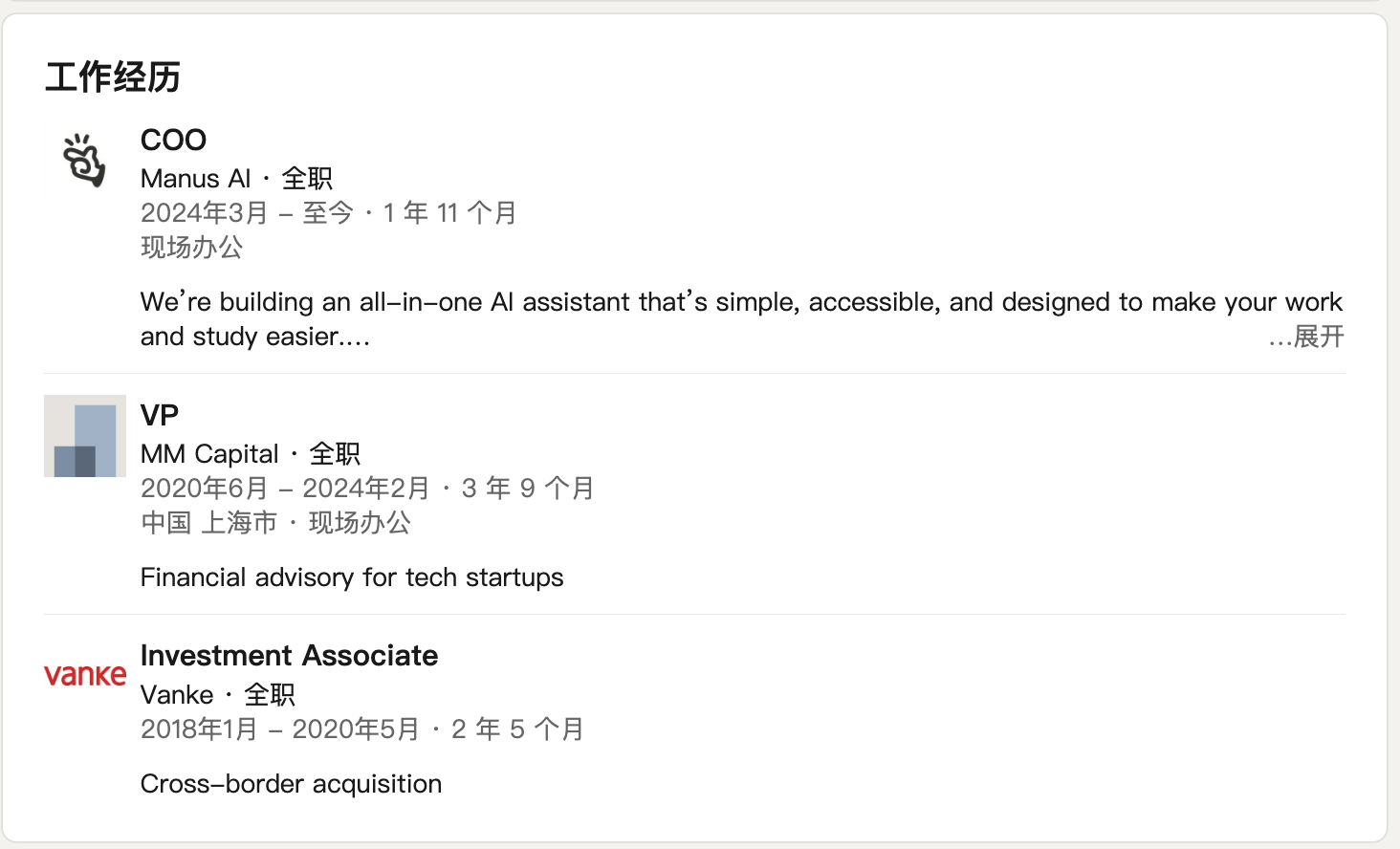
On December 30th, Meta announced it would acquire Manus for $2 billion, bringing 90s-born COO CZ Chen into the public eye. With an undergraduate degree from Shanghai University of Finance and Economics and a master's from Columbia University, she began her career in 2018, working at Vanke and FA institutions before making her final leap to Manus in 2024, achieving financial freedom.
On January 9th, at MiniMax's bell-ringing ceremony, standing alongside 36-year-old founder Yan Junjie was a 94-born woman, Yun Yeyi.
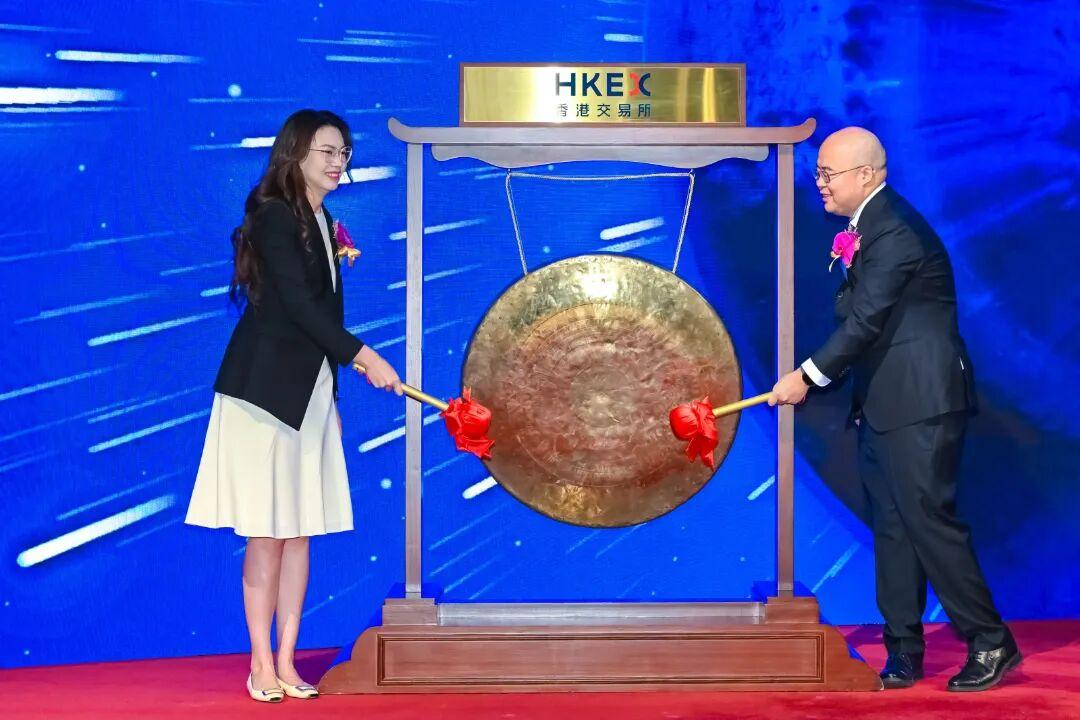
This 31-year-old COO now has a net worth of HKD 4.8 billion.
What is Yun Yeyi's background?
She studied electronic engineering at Johns Hopkins University, with minors in economics and mathematics. After graduating in 2017, she joined SenseTime, rising from financing manager to assistant to CEO Xu Li, and then to director of the new business department, witnessing SenseTime's journey from unicorn to Hong Kong listing.
In 2022, when Yan Junjie decided to leave SenseTime to found MiniMax, Yun Yeyi followed almost without hesitation.
Her value goes beyond just following.
MiniMax's prospectus shows that Yun Yeyi handles almost everything except technical R&D: products, commercialization, board matters, operations, management... Her annual salary is $1.479 million, more than all other executive directors combined, a figure that speaks for itself.
It's not just in China; globally, female influence in the AI circle is undeniable.
Daniela Amodei, with a background in English literature, worked at Stripe and OpenAI before co-founding Anthropic with her brother Dario in 2021. As president, she focuses on daily operations and commercialization, driving the marketization of Claude products.
Lila Ibrahim, former Intel executive, joined DeepMind in 2018 as its first COO, responsible for daily operations, partnerships, social impact, external affairs, and government relations.
Mira Murati, the Albanian-born former CTO of OpenAI, came to the U.S. on a scholarship at 16. From the Tesla Model X team to OpenAI, she eventually left to found Thinking Machines Lab, now valued at $9 billion...
This scene feels familiar.
From 2017 to 2021, the golden age of crypto was star-studded, with one bright spot being female CMOs and COOs.
The most well-known is undoubtedly Binance co-founder and CMO He Yi (now co-CEO). From Shanghai to Tokyo, then from Malta to Paris and Dubai, every strategic move involved her, helping the company become the world's largest cryptocurrency exchange.
Lisa Loud, from Apple engineer to PayPal's Canadian market head, jumped to BitMEX as CMO in 2017. BitMEX later became the world's largest crypto derivatives trading platform.
Cynthia Wu, COO of Matrixport, former vice president of product development at HKEX, brought traditional finance experience to crypto financial services, helping the company become one of Asia's largest digital asset service platforms.
......
Once, crypto was the world's asset focus, and the spotlight naturally fell on these female executives at the center stage.
But the tide receded, and the protagonists changed.
Now, AI is the focus of the spotlight, so we see Daniela Amodei on the Forbes rich list and Yun Yeyi radiant at MiniMax's listing ceremony.
Fundamentally, Crypto and AI are strikingly similar: "both cutting-edge and rustic."
Cutting-edge is reflected in the technology itself: blockchain reconstructs trust mechanisms, AI reconstructs productivity—both are underlying technologies that can change the world.
Rustic is reflected in the founder profile: mostly technical backgrounds, fluent in code but unfamiliar with marketing, especially government and public relations.
This is where female COOs/CMOs add value. They are the bridge between technical geniuses and the external world, capable of deep dialogue with technical teams and telling compelling stories to investors and users.
Daniela Amodei transformed AI safety philosophy into executable business strategies, helping Claude break through in the shadow of ChatGPT. Yun Yeyi brought MiniMax from the lab to the C-end market. He Yi long served as the chief customer officer, personally answering user questions and building trust.
When a product moves beyond the pure technical stage and increasingly targets the C-end, the advantages of female executives become more apparent.
After all, PR and products require not adversarial thinking but empathy.
From another perspective, capable female executives vote with their feet. They go where they can施展才华 and create value. If they start leaving an industry, it indicates the disappearance of commercial certainty.
The crypto industry's current problem is obvious: a lack of talent that can transform technology into products accepted by the masses. Mass adoption and positive externalities remain empty talk. Observing any emerging industry reveals this pattern: when female executives with technical understanding, business acumen, and narrative skills begin to rise, the industry truly shifts from technology-driven to commercialization and mass adoption.
Their emergence marks the true maturity of an industry.
The AI circle has already undergone this transition. Female executives like Daniela Amodei and Yun Yeyi are driving productization, bringing AI from lab algorithms into daily life and the business world.
As for the crypto industry, if it can't retain "elites who can speak human language," it deserves to remain stuck in the mud of PVP.
The flow of talent is the industry's weather vane.
Where they go, value is created; where they leave, bubbles often burst.