Bitcoin At Risk? Simon Dixon Alleges BlackRock’s Hidden Takeover Plan

bitcoinist發佈於 2025-10-06更新於 2025-10-06

文章摘要

In an interview with Bitcoin Archive’s Archie, early Bitcoiner and Bank to the Future co-founder Simon Dixon characterized the current...

Trusted Editorial content, reviewed by leading industry experts and seasoned editors. Ad Disclosure

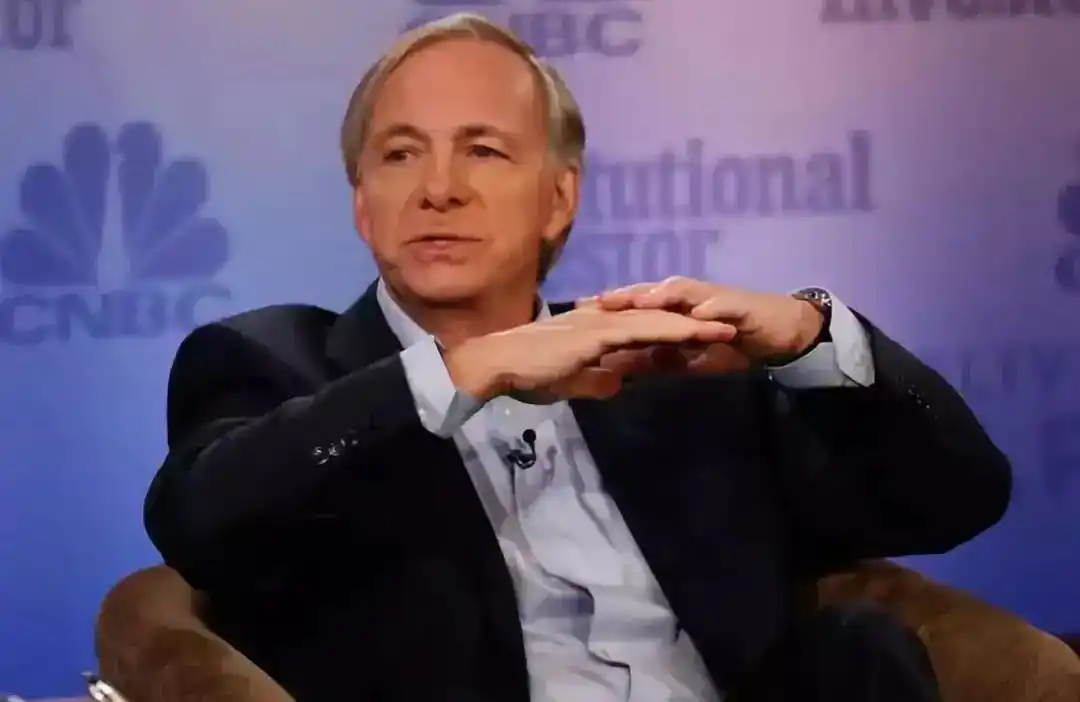
In an interview with Bitcoin Archive’s Archie, early Bitcoiner and Bank to the Future co-founder Simon Dixon characterized the current moment as nothing less than “the Wall Street attack phase,” arguing that institutional finance is assembling the plumbing and incentives to pull customer coins into custodial wrappers—and, in crisis, separate investors from their bitcoin. “People underestimate what Wall Street is willing to do to take your Bitcoin,” he said. The essential defense, in his view, is unambiguous: “Bitcoin is money you can own, money you can spend, and money that has a fixed supply with a monetary policy that nobody can change.”

How BlackRock Is Allegedly Trying To Control Bitcoin

Dixon framed the last 14 years of Bitcoin’s history as a series of counter-attacks, from exchange failures to regulatory squeezes, culminating now in what he described as a two-tier system: bitcoin held in Wall Street custody—via ETFs, pensions, corporate treasuries and bitcoin-backed loans—and bitcoin held in self-custody. The danger, he argued, is not price manipulation forever, but engineered liquidity events designed to vacuum up coins from leveraged or custodial holders. “They can’t change the long-term price. The fixed supply is the fixed supply,” he said. “But they can do elaborate schemes to steal your Bitcoin.”

At the core of his thesis is the scale and reach of the modern asset-management complex. Dixon pointed to BlackRock’s centrality—its index weight across “20,000 companies,” its Aladdin risk platform used by large asset managers, and its proximity to policymaking—as symptomatic of a broader “financial-industrial complex.”

In Dixon’s telling, that complex has already rebuilt the crypto industry in its own image: first by presiding over (or benefiting from) a parade of high-profile implosions and banking disruptions like FTX and Celsius, then by shepherding a pro-ETF, pro-tokenization framework that channels retirement savings, insurance float and corporate balance sheets into custodial bitcoin exposure. “Through this tax efficiency plus individuals thinking about inheritance, we have essentially given the asset managers full control,” he claimed. The net effect, he warned, is the consolidation of coins into a few systemically important pools.

Archie challenged the causal chain between the 2022–2023 enforcement wave and spot ETF approvals, noting that Grayscale had to sue to win its conversion. Dixon acknowledged that “you have to take a few leaps” when reconstructing opaque policy sequences, but insisted the net result is plain: the industry was discredited and de-banked, only for a tightly regulated, Wall-Street-led version to emerge. He cited his inside view as a major creditor in the Celsius Chapter 11 as formative, saying that bankruptcy taught him how quickly “Bitcoin IOUs” become indistinguishable from the legacy system’s risks. “Anybody that’s left Bitcoin on an exchange and received a Bitcoin IOU… realizes the importance of the ability to self-custody,” he said.

The conversation repeatedly returned to leverage. Archie drew a distinction between the margin chains and rehypothecation that blew up in 2021–2022 and the long-duration, corporate-finance tools used by publicly listed “bitcoin operating companies,” arguing these are “night and day” in terms of systemic fragility. Dixon’s reply was that the real risk emerges when individually sensible structures are linked into a pipeline—ETFs and index funds directing flows, corporate debt and dividend commitments denominated in fiat, stablecoin credit interlacing with bitcoin-backed loans, distressed buyouts rolling assets into the largest public vehicles, and mining equities sitting inside the same index-fund complex.

“When you combine all of these different products together… you can then do this margin process,” he said. He sketched a scenario in which a severe drawdown triggers margin cascades and bankruptcy proceedings that deliver even more coins into a few custodial honeypots. “All you need to do to protect yourself when that event happens is own bitcoin in self-custody,” he said.

Beyond market structure, Dixon placed Bitcoin in a wider macro and geopolitical frame. He argued the United States is pursuing “fiscal dominance”—debt-financed spending that inflates away obligations—while a multipolar currency order accelerates. In that transition, he expects both gold and bitcoin to be instrumentalized. “Bitcoin is going to be placed at the very, very center of a future and upcoming currency war,” he said, asserting that the same financial-industrial network that shapes rates and credit will not hesitate to “engineer some kind of pump and dump cycle that resets the chessboard.” Whether or not readers accept that framing, his prescription does not waver: self-custody first.

Dixon also laid out a personal rule set forged across cycles: buy on a fixed cadence, hold coins in self-custody, and think in multi-year horizons. “Most people come in for number-go-ups,” he said, “but until they go through a disaster, then they realize that the money you can own and money you can spend is the real utility.” He urged viewers to build the operational competence of self-custody now—keys, inheritance planning, and disciplined accumulation—rather than outsourcing it to product wrappers that trade convenience for counterparty risk. “Everybody has to do it,” he said. “The skill of self-custody is something everyone has to do.”

Archie added two caveats for balance: allocate only capital you can leave untouched for at least four years, and remember to upgrade quality of life rather than “bask in the warmth of your UTXOs” indefinitely. Dixon agreed, stressing that the point of reducing financial anxiety is to live better, not to hoard at all costs. Still, he closed with urgency: “There will never be another five years like the five years ahead… In the next five years, you need to accumulate as much bitcoin as is humanly possible,” he said, adding his standard disclaimer—“not financial advice.”

At press time, BTC traded at $123,896.
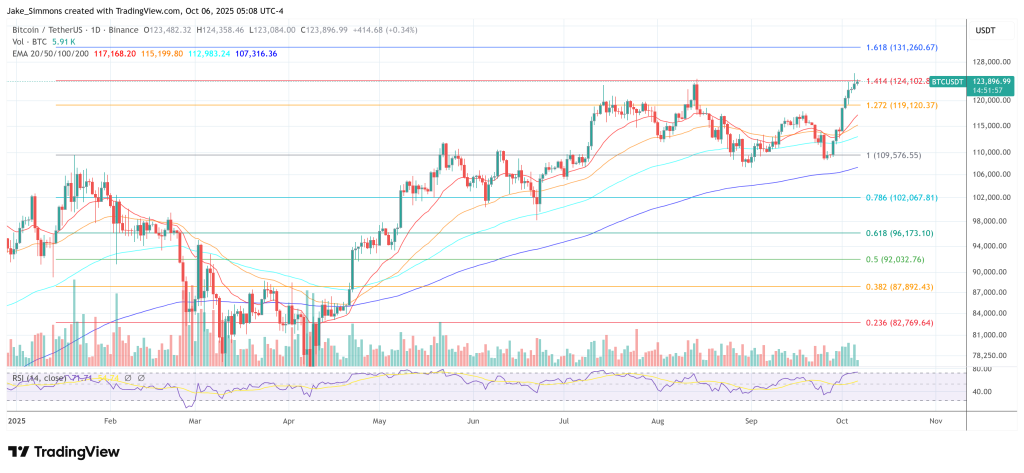
Bitcoin price
BTC hovers below $124,000, 1-day chart | Source: BTCUSDT on TradingView.com
Featured image created with DALL.E, chart from TradingView.com
Editorial Process for bitcoinist is centered on delivering thoroughly researched, accurate, and unbiased content. We uphold strict sourcing standards, and each page undergoes diligent review by our team of top technology experts and seasoned editors. This process ensures the integrity, relevance, and value of our content for our readers.

Jake Simmons has been a Bitcoin enthusiast since 2016. Ever since he heard about Bitcoin, he has been studying the topic every day and trying to share his knowledge with others. His goal is to contribute to Bitcoin's financial revolution, which will replace the fiat money system. Besides BTC and crypto, Jake studied Business Informatics at a university. After graduation in 2017, he has been working in the blockchain and crypto sector. You can follow Jake on Twitter at @realJakeSimmons.

你可能也喜歡

解读大航海时代投资机遇,景顺长城基金发布《2026年中国企业出海报告》

景顺长城基金发布《2026年中国企业出海报告》,指出在当前全球产业链重构背景下,“出海”已成为中国企业的“必选项”和新增长引擎。报告认为,出海行情并非昙花一现,而是可能持续影响A股投资的长期趋势。 报告分析了中国企业出海的版本迭代:从早期赚取加工费的“产品出口”(出海1.0),演进至当前包含产能、经营能力及服务输出的“出海2.0”。后者具体体现在资本品投资高增长、消费品品牌拓展、服务业(如创新药BD、大模型Token)加速出海以及供应链深度嵌入全球AI产业链。 中国企业出海的底气源于多重系统性优势:庞大的工程师红利、完善且低成本的基础设施以及完整的产业链集群效应。这些优势在光模块、创新药等行业已转化为全球竞争力。 针对具体投资机遇,报告重点提及: 1. **资本品**:如工程机械、电力设备(变压器、电网配电设备等),凭借成本与服务优势,正快速进入“一带一路”及全球市场。 2. **科技与高端制造**:新能源车需注重海外本地化;AI应用(大模型、云服务等)及光模块企业展现出非线性增长潜力。 3. **消费与医药**:消费品牌正从“链价比”优势转向品牌溢价;创新药在肿瘤、减重等大适应症领域孕育着巨大的市场机会。 报告也指出,出海之路面临地缘政治、合规、文化等多重挑战,成功的企业需具备前置合规、本地化运营及构建海外核心能力等关键素质。

marsbit3 分鐘前

解读大航海时代投资机遇,景顺长城基金发布《2026年中国企业出海报告》

marsbit3 分鐘前

GitHub,被 AI 打穿了

2026年2月9日,GitHub发生大规模服务中断,核心数据库集群因“缓存重写风暴”过载,导致网站、API、Actions及Copilot等服务瘫痪。事故根源是一个配置改动(缓存刷新时间从12小时改为2小时),但背后是平台面临的结构性挑战。 2026年前三个月,GitHub发生至少8次重大事故,故障原因各异但相互关联。深层原因是AI Agent的爆发式使用导致负载性质剧变。数据显示,2026年单周代码提交量达2.75亿次,按此推算全年将达140亿次,是2025年的14倍。AI贡献的提交量和PR数量在数月内增长数十倍。这些不眠不休的AI“用户”以远超人类的速率提交代码、创建仓库,使GitHub的负载模式从可预测的人类节奏转变为持续高压的自动化洪流。 同时,AI Agent(尤其是Agentic工作流)消耗的计算资源远超预期,使GitHub基于座位的Copilot订阅模式严重亏损。GitHub不得不实施限流,并于6月1日全面转向按用量计费。 为应对挑战,GitHub宣布需按当前规模的30倍重新设计架构,而非简单扩容,重点包括解耦服务、增强故障隔离、改进流量管控等。行业如Stripe、AWS也面临类似问题。 本质上,GitHub正从“人类协作平台”转变为“AI工作流的输出管道”。这不仅是基础设施的压力测试,也引发对其商业模式和核心身份的重塑。频繁的事故报告和高透明度,是平台在重建过程中争取社区耐心的方式。这次停机事件标志着软件开发在AI时代的一次深刻转折。

marsbit43 分鐘前

GitHub,被 AI 打穿了

marsbit43 分鐘前

交易

現貨
合約

熱門文章

什麼是 BITCOIN

理解 HarryPotterObamaSonic10Inu (ERC-20) 及其在加密空間中的地位 近年來,加密貨幣市場見證了迷因幣的流行激增,吸引了不僅是交易者的注意,還有尋求社區參與和娛樂價值的人士。在這些獨特的代幣中,有一個有趣的項目 HarryPotterObamaSonic10Inu (ERC-20),它將文化參考融入加密貨幣的織造中。本文深入探討 HarryPotterObamaSonic10Inu 的關鍵方面,探索其機制、以社區為驅動的精神,以及其與更廣泛的加密生態的互動。 HarryPotterObamaSonic10Inu (ERC-20) 是什麼? 正如其名所示,HarryPotterObamaSonic10Inu 是一種建立在以太坊區塊鏈上的迷因幣,按照 ERC-20 標準分類。與強調實用性或投資潛力的傳統加密貨幣不同,這項代幣依賴於娛樂價值和其社區的力量。該項目旨在促進一個讓互動用戶可以聚在一起、分享想法和參與受不同文化現象啟發的活動的環境。 HarryPotterObamaSonic10Inu 的一個顯著特點是其 交易零稅。這一引人注目的元素旨在鼓勵交易和社區參與,無需擔心可能會阻礙小型交易者的額外費用。該幣的總供應量定為十億個代幣,這一數字標示其意圖在社區內保持較大的流通量。 HarryPotterObamaSonic10Inu (ERC-20) 的創建者 HarryPotterObamaSonic10Inu 的起源有些神秘;對創建者的具體資訊尚不清楚。這個代幣的開發缺乏可識別的團隊或明確的藍圖,這在迷因幣領域並不罕見。相反,該項目是自然產生的,其進展主要依賴於社區的熱情和參與。 HarryPotterObamaSonic10Inu (ERC-20) 的投資者 關於外部投資和支持,HarryPotterObamaSonic10Inu 亦保持模稜兩可。該代幣並未列出任何已知的投資基金或顯著的組織支持。相反,該項目的生命力來自其草根社區,通過集體行動和參與在加密空間促進其增長和可持續性。 HarryPotterObamaSonic10Inu (ERC-20) 如何運作? 作為一種迷因幣,HarryPotterObamaSonic10Inu 主要在傳統的資產價值框架之外運作。以下是幾個定義該項目運作方式的獨特方面: 零稅交易:由於交易沒有稅費,使用者可以自由地買賣該代幣,而不必擔心隱藏成本。 社區參與:該項目依賴於社區互動,利用社交媒體平台創造話題並促進參與。討論、內容分享及互動是幫助擴展其影響力和加強支持者忠誠度的重要元素。 無實用性:需要指出的是,HarryPotterObamaSonic10Inu 在金融生態中並不提供具體的實用性。相反,它被定義為主要用於娛樂和社區活動的代幣。 文化參考:該代幣巧妙地融入了流行文化中的元素,以吸引興趣,與迷因愛好者和加密追隨者建立聯繫。 HarryPotterObamaSonic10Inu 範例展示了迷因幣如何與更傳統的加密貨幣項目運作不同,作為創新的社會構造進入市場,而非實用資產。 HarryPotterObamaSonic10Inu (ERC-20) 的時間線 HarryPotterObamaSonic10Inu 的歷史標誌著幾個值得注意的里程碑: 創建:這個代幣源於一個病毒式的迷因,捕捉了許多加密愛好者的想像力。具體的創建日期目前並不清楚,凸顯其自然興起。 上架交易所:HarryPotterObamaSonic10Inu 已經在多個交易所上架,使社區更容易存取和交易。 社區互動倡議:持續進行旨在增進社區互動的活動,包括比賽、社交媒體活動和來自粉絲和支持者的內容創作。 未來擴展計劃:該項目的路線圖包括推出 NFT 收藏品、周邊商品及相關電子商務網站,進一步與社區互動並嘗試為其生態系統增添更多維度。 關於 HarryPotterObamaSonic10Inu (ERC-20) 的關鍵點 以社區為驅動的特質:該項目優先考慮集體意見和創意,確保用戶參與在其發展過程中居於核心地位。 迷因幣分類:它代表了以娛樂為基礎的加密貨幣的典範,與傳統投資工具大相徑庭。 與比特幣無直接關聯:儘管在代碼名稱上有相似之處,HarryPotterObamaSonic10Inu 是獨特的,並不與比特幣或其他已建立的加密貨幣存在關係。 協作焦點:HarryPotterObamaSonic10Inu 旨在為持有者創造一個共享故事和協作的空間,提供創意和社區聯結的途徑。 未來前景:向超越其初步主題擴展至 NFT 和周邊商品的雄心,描繪了該項目潛在進入數字文化的更主流途徑。 隨著迷因幣繼續吸引加密貨幣社區的想像力,HarryPotterObamaSonic10Inu (ERC-20) 由於其文化聯繫和以社區為中心的方式而脫穎而出。儘管它可能不符合以實用性為導向的代幣的典型模式,其本質在於支持者間培育的快樂和友誼,突顯了在日益數字化的時代中,加密貨幣的演變特性。隨著該項目的持續發展,觀察社區動態如何影響其在不斷變化的區塊鏈技術格局中的軌跡將是重要的。

2.2k 人學過發佈於 2024.04.01更新於 2024.12.03

什麼是 BITCOIN

如何購買BTC

歡迎來到HTX.com!在這裡,購買Bitcoin (BTC)變得簡單而便捷。跟隨我們的逐步指南,放心開始您的加密貨幣之旅。第一步:創建您的HTX帳戶使用您的 Email、手機號碼在HTX註冊一個免費帳戶。體驗無憂的註冊過程並解鎖所有平台功能。立即註冊第二步:前往買幣頁面,選擇您的支付方式信用卡/金融卡購買:使用您的Visa或Mastercard即時購買Bitcoin (BTC)。餘額購買:使用您HTX帳戶餘額中的資金進行無縫交易。第三方購買:探索諸如Google Pay或Apple Pay等流行支付方式以增加便利性。C2C購買:在HTX平台上直接與其他用戶交易。HTX 場外交易 (OTC) 購買:為大量交易者提供個性化服務和競爭性匯率。第三步:存儲您的Bitcoin (BTC)購買Bitcoin (BTC)後,將其存儲在您的HTX帳戶中。您也可以透過區塊鏈轉帳將其發送到其他地址或者用於交易其他加密貨幣。第四步:交易Bitcoin (BTC)在HTX的現貨市場輕鬆交易Bitcoin (BTC)。前往您的帳戶,選擇交易對,執行交易,並即時監控。HTX為初學者和經驗豐富的交易者提供了友好的用戶體驗。

5.4k 人學過發佈於 2024.12.12更新於 2026.06.02

如何購買BTC

什麼是 $BITCOIN

數字黃金 ($BITCOIN):全面分析 數字黃金 ($BITCOIN) 介紹 數字黃金 ($BITCOIN) 是一個基於區塊鏈的項目,運行於 Solana 網絡,旨在將傳統貴金屬的特徵與去中心化技術的創新相結合。雖然它與比特幣同名,常被稱為「數字黃金」,因其被視為價值儲存工具,但數字黃金是一個獨立的代幣,旨在於 Web3 生態系統中創造一個獨特的生態系。其目標是將自己定位為一個可行的替代數字資產,儘管有關其應用和功能的具體細節仍在發展中。 什麼是數字黃金 ($BITCOIN)? 數字黃金 ($BITCOIN) 是一個專門為 Solana 區塊鏈設計的加密貨幣代幣。與比特幣提供廣泛認可的價值儲存角色不同,這個代幣似乎更專注於更廣泛的應用和特徵。值得注意的方面包括: 區塊鏈基礎設施:該代幣建立在 Solana 區塊鏈上,以其處理高速和低成本交易的能力而聞名。 供應動態:數字黃金的最大供應量上限為 100 萬兆代幣(100P $BITCOIN),儘管有關其流通供應的詳細信息目前尚未披露。 實用性:雖然具體功能尚未明確說明,但有跡象表明該代幣可能被用於各種應用,可能涉及去中心化應用(dApps)或資產代幣化策略。 誰是數字黃金 ($BITCOIN) 的創建者? 目前,數字黃金 ($BITCOIN) 的創建者和開發團隊的身份仍然是 未知 的。這種情況在許多創新項目中是典型的,特別是那些與去中心化金融和迷因幣現象相關的項目。雖然這種匿名性可能促進社區驅動的文化,但也加劇了對治理和問責制的擔憂。 誰是數字黃金 ($BITCOIN) 的投資者? 可用的信息顯示,數字黃金 ($BITCOIN) 沒有任何已知的機構支持者或知名的風險投資。該項目似乎運行在一個以社區支持和採用為重點的點對點模型上,而不是傳統的資金籌集途徑。其活動和流動性主要位於去中心化交易所(DEXs),如 PumpSwap,而不是已建立的集中交易平台,進一步突顯其草根方法。 數字黃金 ($BITCOIN) 如何運作 數字黃金 ($BITCOIN) 的運作機制可以根據其區塊鏈設計和網絡特徵進行詳細說明: 共識機制:通過利用 Solana 的獨特歷史證明(PoH)結合權益證明(PoS)模型,該項目確保高效的交易驗證,促進網絡的高性能。 代幣經濟學:雖然具體的通縮機制尚未詳細說明,但巨大的最大代幣供應量暗示它可能適合微交易或尚待定義的利基用例。 互操作性:存在與 Solana 更廣泛生態系統的整合潛力,包括各種去中心化金融(DeFi)平台。然而,關於具體整合的詳細信息仍未明確。 重要事件時間表 以下是關於數字黃金 ($BITCOIN) 的重要里程碑時間表: 2023:該代幣首次在 Solana 區塊鏈上部署,並以其合約地址為標誌。 2024:數字黃金獲得曝光,因其在去中心化交易所如 PumpSwap 上可供交易,允許用戶以 SOL 進行交易。 2025:該項目見證了零星的交易活動和社區主導參與的潛在興趣,儘管截至目前尚未記錄到任何顯著的合作夥伴關係或技術進展。 關鍵分析 優勢 可擴展性:基於 Solana 的基礎設施支持高交易量,這可能增強 $BITCOIN 在各種交易場景中的實用性。 可及性:每個代幣潛在的低交易價格可能吸引零售投資者,促進更廣泛的參與,因為存在分割所有權的機會。 風險 缺乏透明度:缺乏公眾已知的支持者、開發者或審計過程可能引發對該項目可持續性和可信度的懷疑。 市場波動性:交易活動在很大程度上依賴於投機行為,這可能導致價格波動和投資者的不確定性。 結論 數字黃金 ($BITCOIN) 在快速發展的 Solana 生態系統中,作為一個引人入勝但模糊的項目出現。雖然它試圖利用「數字黃金」的敘事,但其與比特幣作為價值儲存工具的既定角色的脫離,突顯了對其預期實用性和治理結構更清晰區分的需求。未來的接受度和採用率可能取決於解決當前的不透明性,並更明確地定義其運營和經濟策略。 注意:本報告涵蓋截至 2023 年 10 月的綜合信息,並且在研究期間可能發生了進展。

83 人學過發佈於 2025.05.13更新於 2025.05.13

什麼是 $BITCOIN

相關討論

歡迎來到 HTX 社群。在這裡,您可以了解最新的平台發展動態並獲得專業的市場意見。 以下是用戶對 BTC (BTC)幣價的意見。

活动图片