ZachXBT flags USDC freeze – Why 16 exchange wallets were hit

ambcrypto发布于2026-03-26更新于2026-03-26

文章摘要

ZachXBT's investigation revealed that USDC issuer Circle froze at least 16 exchange-linked hot wallets on March 23, 2026, disrupting transactions across bridges and settlements. These compliance actions, which extended beyond intended targets, raised concerns about systemic reliability and targeting accuracy. The number of blacklisted USDC addresses has grown to 596, reflecting deeper regulatory integration. This has shifted USDC's role from neutral infrastructure to a controlled settlement layer. Consequently, USDC outflows declined 0.9% weekly, with liquidity rotating toward USDT, which now holds 58.29% dominance. The incident exposed centralized control risks, fragmenting trust and reshaping stablecoin capital allocation.

Stablecoins anchored market liquidity, with total supply near $315.85 billion and USD Coin [USDC] accounting for about $78.7 billion.

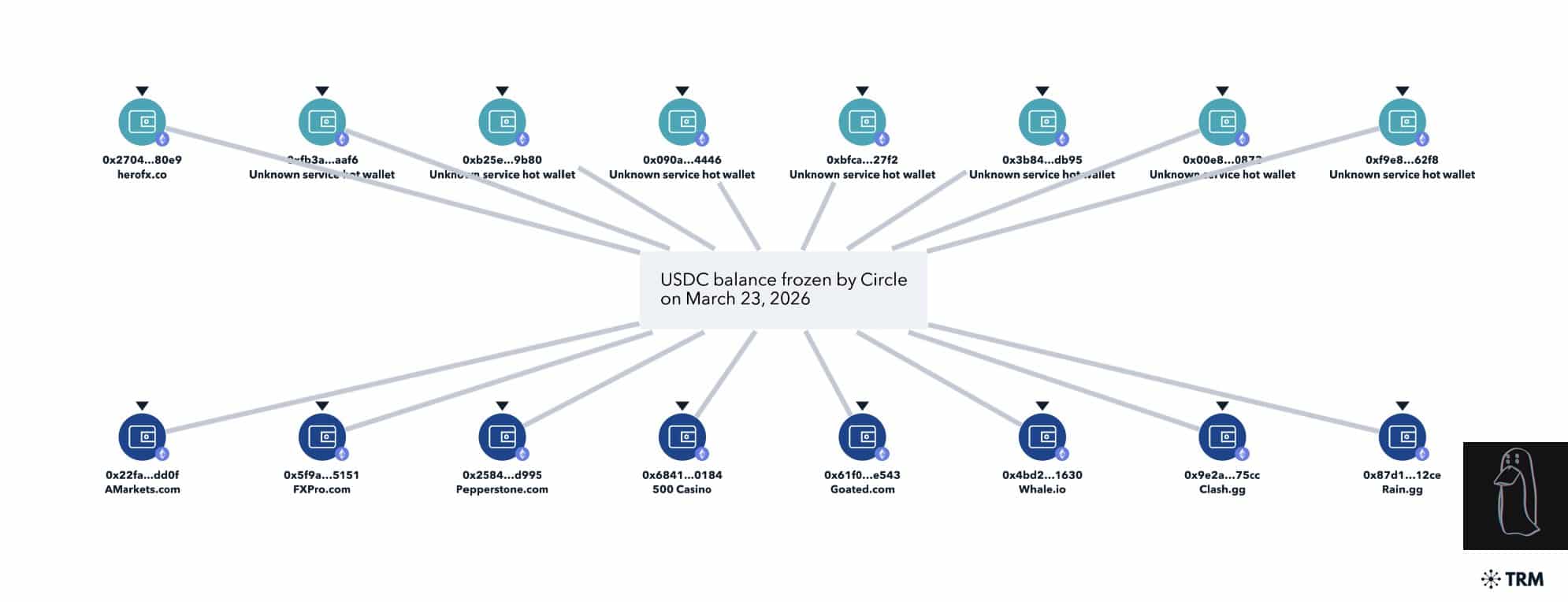
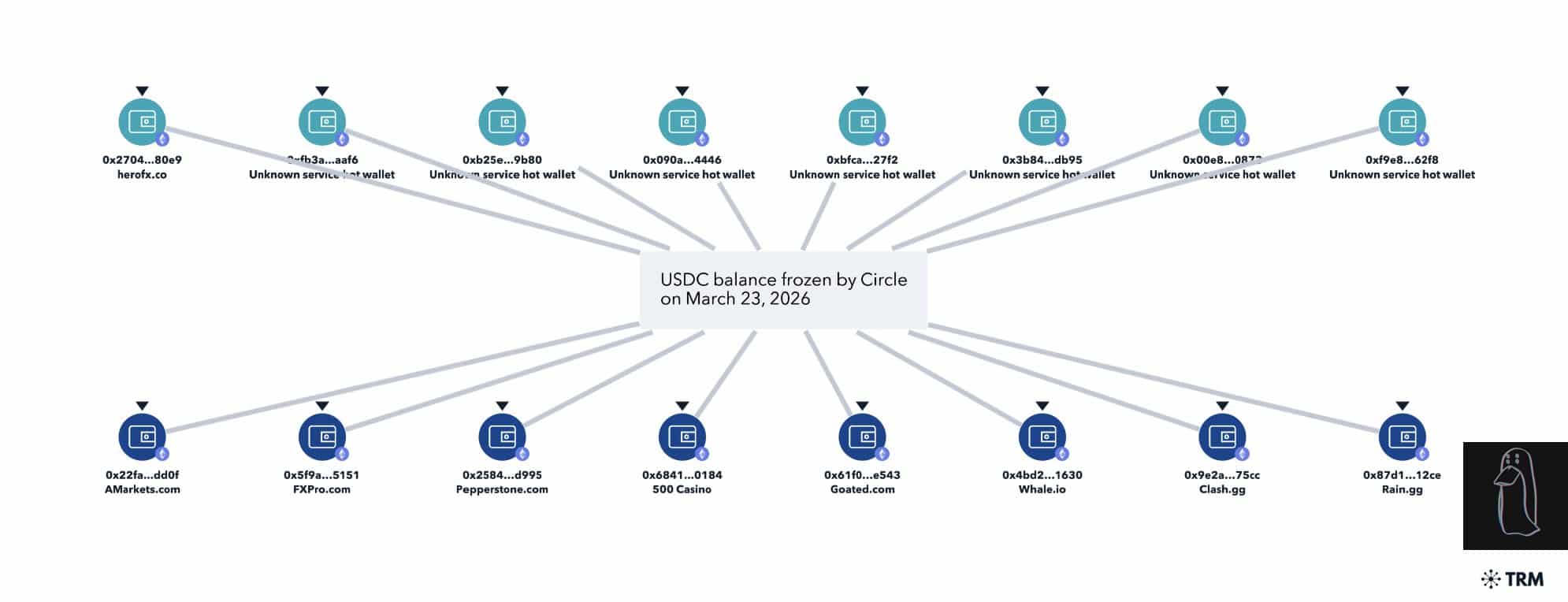
USDC wallet freezes drew scrutiny after on-chain investigator ZachXBT flagged multiple exchange-linked wallets affected on the 23rd of March 2026.

However, recent USDC wallet freezes disrupted that expectation, as compliance actions extended beyond intended targets. Reports suggested at least 16 unrelated hot wallets were frozen, disrupting transactions across bridging and settlement flows.

That shift set up a broader concern. Focus moved from isolated enforcement to systemic reliability risks.

This raised a key question: Why were operational exchange wallets affected?

USDC wallet freezes spill into exchange and bridge flows
Source: ZachXBT/ X

ZachXBT noted that several frozen wallets showed normal operational activity, raising concerns around targeting accuracy.

Reports suggested that exchange-linked hot wallets were flagged alongside intended addresses, extending the impact beyond enforcement targets.

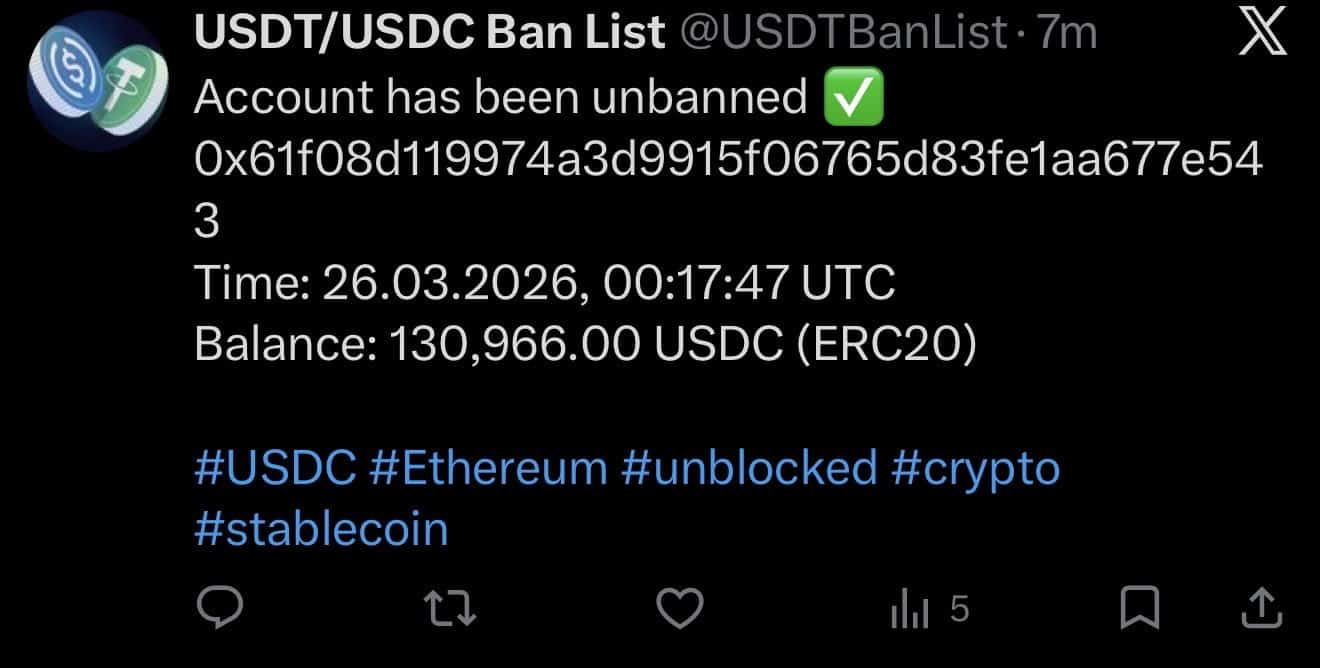
Circle later reversed some freezes, including the Goated wallet, indicating a correction rather than a final decision.

That sequence showed how compliance actions can misfire when applied across interconnected wallet systems.

USDC blacklist count hits 596 as compliance tightens

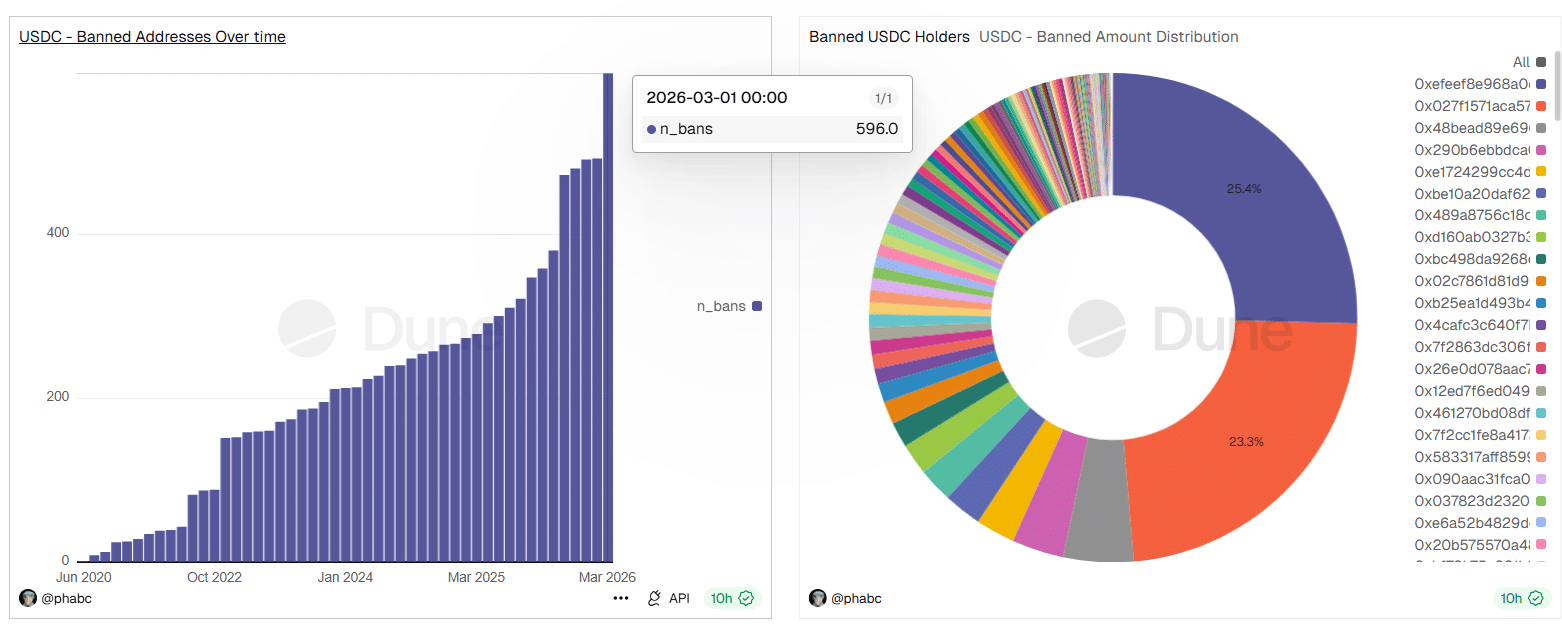
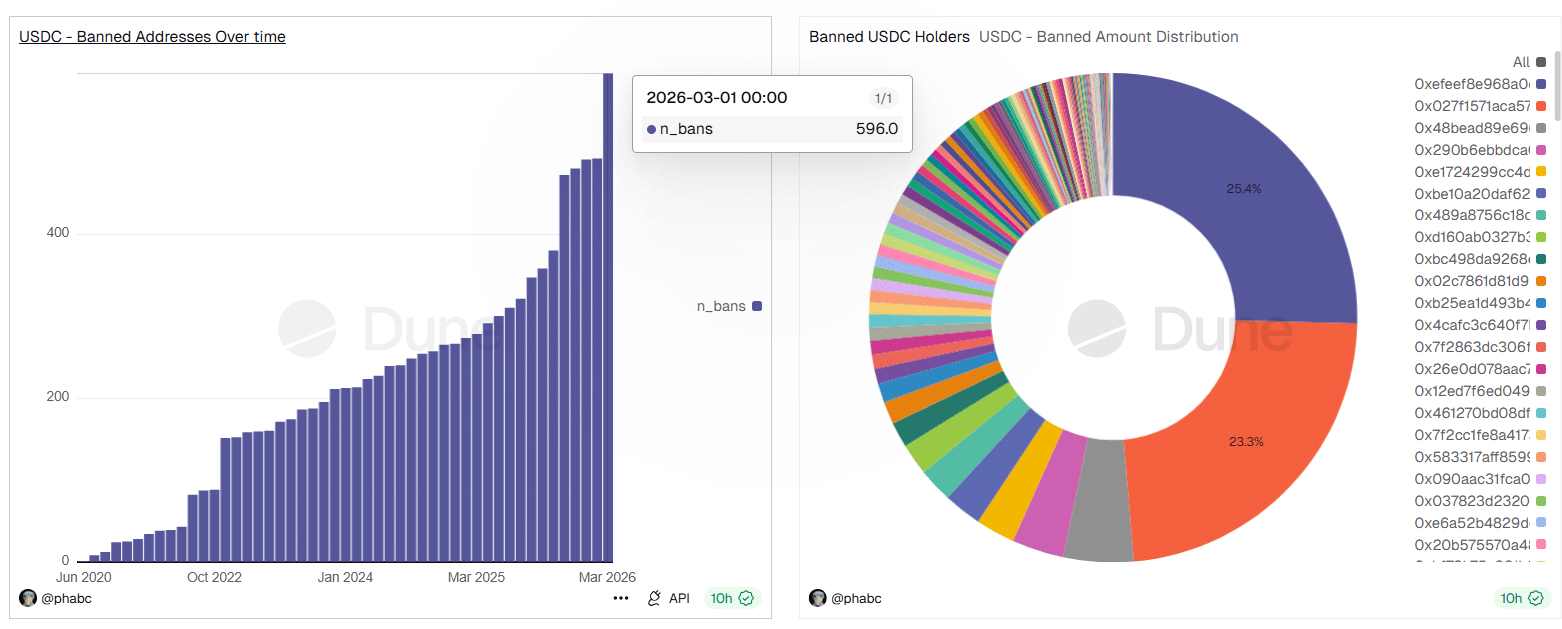
USDC’s control structure became clearer as enforcement activity increased across the network. Blacklisted addresses reached 596, reflecting steady growth rather than isolated actions.
Source: Dune

That move aligned with deeper regulatory integration into stablecoin infrastructure, rising from near zero levels in 2020.

On top of that, distribution data showed concentration among a few large holders. This amplified the impact of each freeze.

When key wallets were affected, liquidity disruptions extended beyond individual users into broader market flows. That explained settlement failures across exchanges and bridges.

This left traders focused on a structural shift. USDC operated less like neutral infrastructure and more like a controlled settlement layer.

USDC outflows drive liquidity shift toward USDT dominance

The market reaction showed a subtle shift beneath stable price action. USDC held near $78.7 billion, yet declined 0.90% weekly, signaling selective capital movement.

At the same time, total stablecoin supply rose 0.04%, showing funds rotated rather than exited.

By contrast, Tether [USDT] expanded its lead to 58.29% dominance at $184.1 billion, absorbing redirected liquidity.

That move reflected a search for perceived stability rather than a rejection of stablecoins entirely.

Confidence remained, yet behavior shifted. Partial reversals exposed operational strain, while unintended freezes raised concerns around exposure.
Source: X

This implied trust weakened at the margins, which could fragment liquidity and reshape capital allocation across stablecoin ecosystems.


Final Summary

  • USD Coin [USDC] freezes expose centralized control risks, with rising blacklists and failed settlements weakening neutrality and shaping liquidity flows.
  • Tether [USDT] absorbs rotation with 58% dominance, signaling trust shifts rather than exits, as stablecoin liquidity fragments across ecosystems.


相关问答

QWhat did on-chain investigator ZachXBT report regarding USDC wallet freezes on March 23, 2026?

AZachXBT flagged multiple exchange-linked wallets that were frozen, noting that several showed normal operational activity, which raised concerns about targeting accuracy.

QHow many exchange hot wallets were reportedly frozen in the USDC compliance action, and what was a key consequence?

AAt least 16 unrelated hot wallets were frozen, disrupting transactions across bridging and settlement flows and extending the impact beyond the intended enforcement targets.

QWhat was the total number of blacklisted USDC addresses mentioned in the article, and what does this reflect?

AThe number of blacklisted addresses reached 596, reflecting a steady growth in enforcement activity and deeper regulatory integration into stablecoin infrastructure.

QHow did the market react to the USDC freezes in terms of capital movement between stablecoins?

AWhile the total stablecoin supply increased slightly by 0.04%, USDC saw a 0.90% weekly decline in supply, with liquidity rotating toward Tether (USDT), which expanded its dominance to 58.29%.

QWhat broader concern did the USDC freezes raise about the nature of the stablecoin's operation?

AThe freezes raised concerns that USDC is operating less like neutral infrastructure and more like a controlled settlement layer, weakening trust and potentially fragmenting liquidity across ecosystems.

你可能也喜欢

年薪百万抢电工,Meta急到自己办技校

AI竞赛正面临新的瓶颈:工地。美国正面临严重的电工、建筑工等技术工人短缺,这已成为微软、Meta、OpenAI等公司快速建设超大规模AI数据中心(如OpenAI耗资160亿美元的“星际之门”项目)的“头号障碍”。 尽管AI公司愿支付高薪(如电工年薪可达24-28万美元),远超传统行业,但熟练技工仍供不应求。麦肯锡预测,美国在2023-2030年间需额外培养13万名电工和24万名建筑工,而劳工统计局预计每年仍有8万个电工岗位空缺。这种短缺导致项目延迟,每月可能造成数百万美元的收入损失。 AI数据中心建设复杂,需应对巨大功耗(一座设施耗电堪比数十万户家庭)、复杂的配电系统以及高密度散热(需液冷技术)等挑战,因此亟需大量技术娴熟的工人。 为此,科技巨头开始亲自下场培养人才。例如,Meta投入1.15亿美元建立建筑工人培训学校,提供免费培训及生活补贴,以快速输送工人上岗。OpenAI则与建筑工会合作,提前锁定熟练劳动力。同时,企业也将招聘目光投向高中生,鼓励年轻人投身技工行业。这些举措已见成效,Z世代对技工职业的兴趣显著上升。 然而,更深层的挑战在于电力。AI数据中心用电量正以惊人速度增长,已推高部分地区的电价。此外,数据中心建设是项目制的,建设期需要成千上万的工人,但建成后仅需少量常驻人员。这意味着未来可能面临熟练工人短期过剩、并流向其他行业压低薪资的风险。如何实现劳动力与电力资源的长期平衡,仍是悬而未决的问题。

marsbit22分钟前

年薪百万抢电工,Meta急到自己办技校

marsbit22分钟前

OpenAI 不靠最贵的模型卖钱了

OpenAI近期调整了API定价策略,旗舰模型GPT-5.6 Luna降价80%,Terra降价20%,而顶级模型Sol未降价但新增了更快的“Fast”模式。此次调整的核心并非单纯的价格战,而是标志着OpenAI首次引导用户根据任务需求选择不同模型,而非一味追求最强模型。官方建议复杂任务可由Sol进行规划,再由Luna等成本更优的模型执行。 此举与Anthropic近期推出半价替代旗舰的Claude Opus 5策略相似,显示硅谷领先公司正形成默契:旗舰模型(如Sol、Fable)的角色正从直接盈利转向树立技术品牌和探索上限,而商业化走量和利润则主要由中端及性价比模型(如Luna、Opus)承担。这类似于汽车等行业“旗舰立形象,走量车型赚利润”的模式。 更深层的变化在于成本下降的驱动力。OpenAI透露,此次降价部分得益于由Sol模型自身参与优化底层生产内核,实现了效率提升与成本降低,开启了“模型优化模型”的自我加速循环。 行业竞争焦点正从“谁最聪明”的单项性能比拼,转向为企业提供基于任务重要性、出错成本、规模等因素的“模型组合”最优解,追求整体ROI。这类似于云计算按数据冷热使用不同存储的策略。 OpenAI的长期战略日益清晰:其真正目标并非依靠单一模型的高毛利,而是通过极低的调用成本构建庞大的开发者生态与调用量,形成类似操作系统或云平台的渗透率与用户粘性。当API调用成本低至可被忽略,AI将如水电般无缝嵌入所有业务流程,其发展也将从追求智能巅峰的“产品时代”,进入驱动全面自动化与效率的“基础设施时代”。

marsbit22分钟前

OpenAI 不靠最贵的模型卖钱了

marsbit22分钟前

交易

现货
活动图片