The Securities and Exchange Commission publishes crypto custody guide

cointelegraph发布于2025-12-13更新于2025-12-13

文章摘要

The U.S. Securities and Exchange Commission (SEC) has published a crypto custody guide outlining best practices and risks for storing digital assets. The bulletin compares self-custody with third-party custody, warning investors to understand policies like asset rehypothecation and commingling. It also details the pros and cons of hot wallets (internet-connected, vulnerable to hacking) and cold wallets (offline, but riskier if keys are lost). The move signals a shift from the SEC’s previously hostile stance under former Chair Gary Gensler. The crypto community welcomed the guide as a transformative step, with some noting the agency is now educating rather than opposing the industry. This follows recent SEC approval for DTCC to begin tokenizing traditional financial assets.

The United States Securities and Exchange Commission (SEC) published a crypto wallet and custody guide investor bulletin on Friday, outlining best practices and common risks of different forms of crypto storage for the investing public.

The SEC’s bulletin lists the benefits and risks of different methods of crypto custody, including self-custody versus allowing a third-party to hold digital assets on behalf of the investor.

If investors choose third-party custody, they should understand the custodian's policies, including whether it “rehypothecates” the assets held in custody by lending them out or if the service provider is commingling client assets in a single pool instead of holding the crypto in segregated customer accounts.
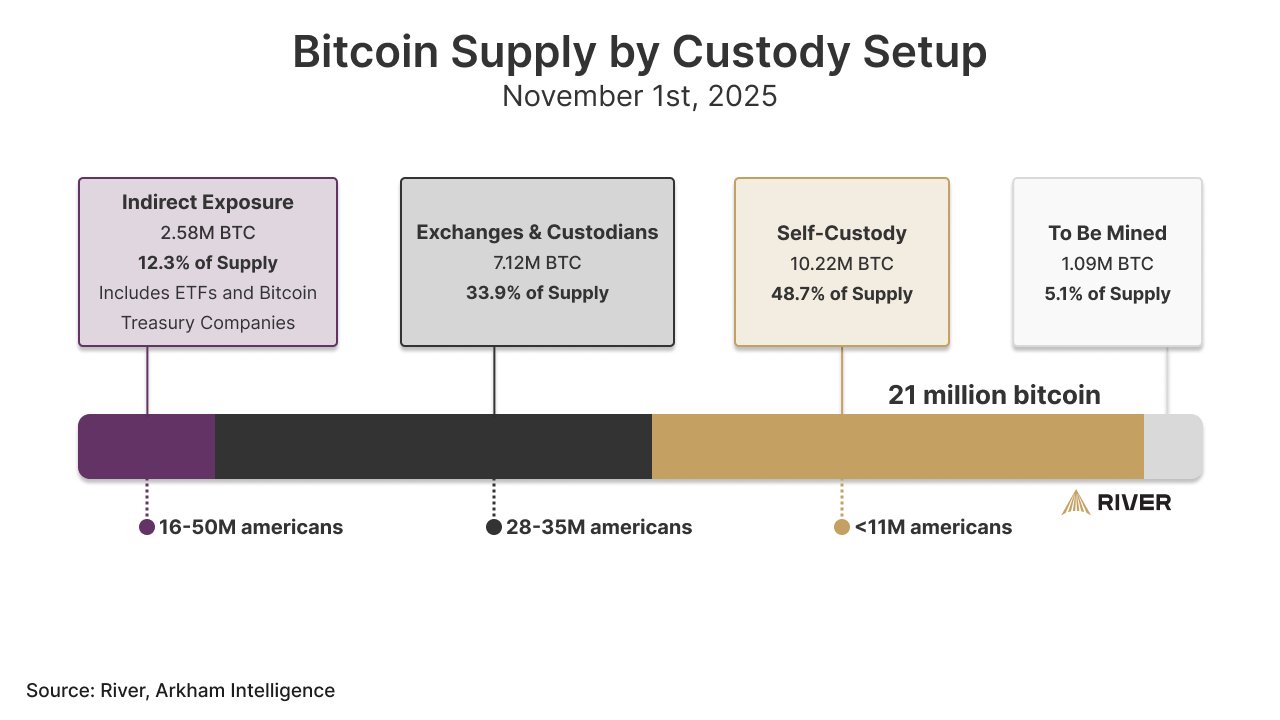
The Bitcoin supply broken down by the type of custodial arrangement. Source: River

Crypto wallet types were also outlined in the SEC guide, which broke down the pros and cons of hot wallets, which are connected to the internet, and offline storage in cold wallets.

Hot wallets carry the risk of hacking and other cybersecurity threats, according to the SEC, while cold wallets carry the risk of permanent loss if the offline storage fails, a storage device is stolen, or the private keys are compromised.

The SEC’s crypto custody guide highlights the sweeping regulatory change at the agency, which was hostile to digital assets and the crypto industry under former SEC Chairman Gary Gensler’s leadership.

Related: SEC sends warning letters to ETF issuers targeting untamed leverage

The crypto community celebrates the SEC guide as a transformational change in the agency

“The same agency that spent years trying to kill the industry is now teaching people how to use it,” Truth For the Commoner (TFTC) said in response to the SEC’s crypto custody guide.

The SEC is providing “huge value” to crypto investors by educating prospective crypto holders about custody and best practices, according to Jake Claver, the CEO of Digital Ascension Group, a company that provides services to family offices.
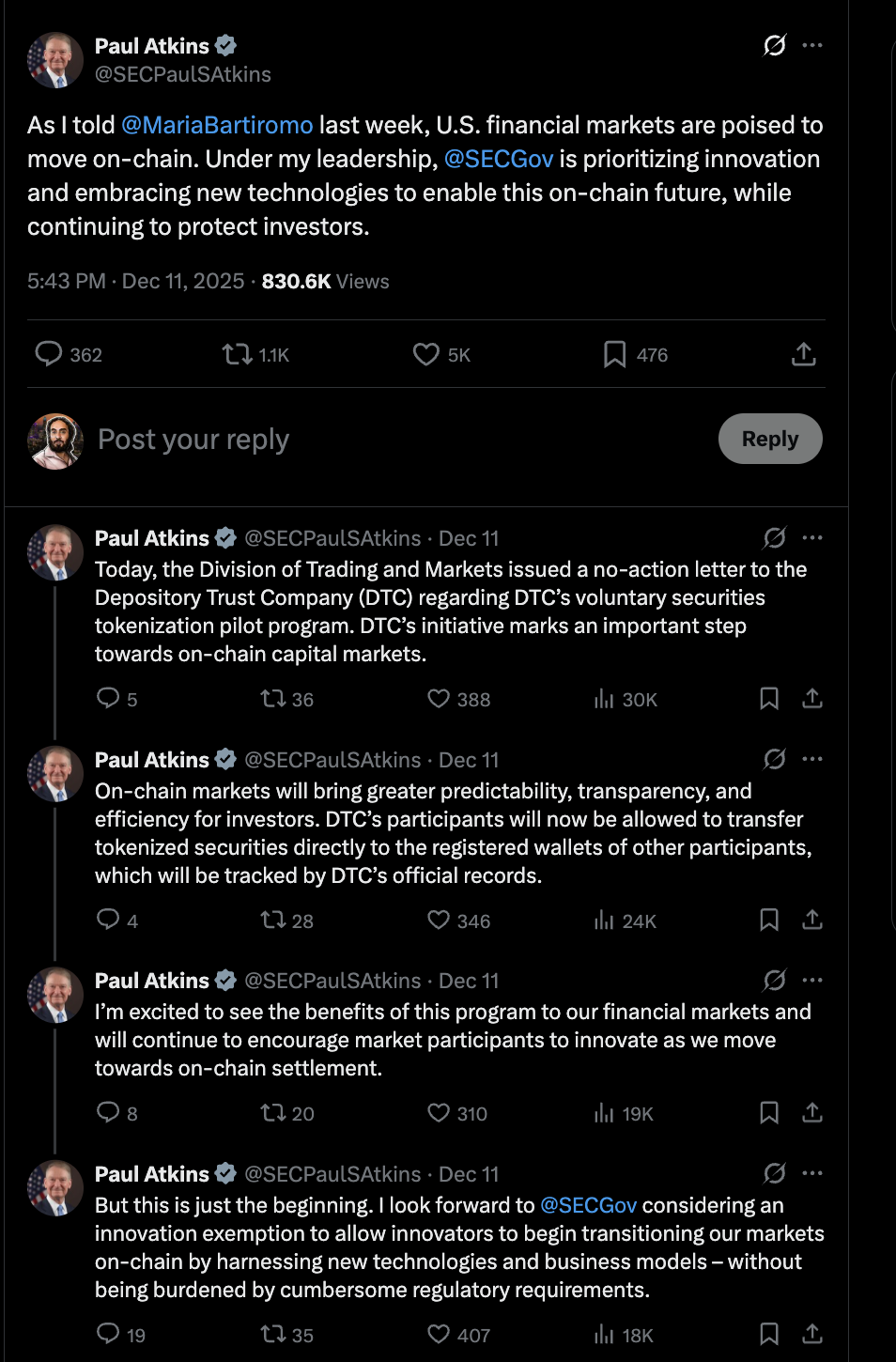
Source: Paul Atkins

SEC regulators published the guide one day after SEC Chair Paul Atkins said that the legacy financial system is moving onchain.

On Thursday, the SEC gave the green light to the Depository Trust and Clearing Corporation (DTCC), a clearing and settlement company, to begin tokenizing financial assets, including equities, exchange-traded funds (ETFs) and government debt securities.

Magazine: How Neal Stephenson ‘invented’ Bitcoin in the ‘90s: Author interview

你可能也喜欢

交易

现货
合约

热门文章

链上借贷市场深度研报:当链下信用遇上链上清算

链上借贷市场正从DeFi的边缘赛道跃升为核心基础设施。截至2026年初,链上借贷协议总锁仓价值(TVL)已达643亿美元,占DeFi全赛道TVL的53.54%,成为去中心化金融生态中体量最大、商业模式最成熟的细分领域。

124人学过发布于 2026.04.16更新于 2026.04.16

链上借贷市场深度研报:当链下信用遇上链上清算

什么是 OPG

I. 项目介绍1. Opengradient 是什么?OpenGradient 是专为 AI 打造的去中心化高性能可验证计算基础设施。它旨在实现用户拥有的便携式智能,让构建者能够使用可审计的开源 AI 模型,并在链上托管模型、运行安全推理、部署智能体与应用。通过将区块链的安全性与 AI 的优化能力相结合,OpenGradient 解决中心化 AI 的黑箱问题和区块链在复杂计算上的局限性,实现真正的主权 AI 基础设施。2. Opengradient 是如何运作的?OpenGradient 采用独特的混合 AI 计算架构。该架构针对 AI 工作负载的特点设计,将执行与验证分离。推理节点(Inference Nodes):使用 GPU 和 TEE(可信执行环境)节点执行模型推理,直接向用户返回结果,支持快速路径,延迟接近中心化 API。全节点(Full Nodes):负责共识、使用 CometBFT 机制验证密码学证明(TEE 证明、ZKML 证明或签名),结算支付并记录账本。数据节点(Data Nodes):通过 TEE 安全获取外部数据并提供证明。存储层:依托去中心化存储(如 Walrus)处理模型文件和大型证明,仅在链上记录 blob ID,确保高效性。3. Opengradient 的创造者是谁?OpenGradient 由 Matthew Wang(CEO & Co-Founder) 和 Adam Balogh(CTO & Co-Founder) 共同创立。Matthew Wang 拥有量化研究和软件工程背景,曾就职于 Two Sigma、Google、Facebook 和 NASA;Adam Balogh 曾担任 Palantir Artificial Intelligence Platform 的技术负责人,并拥有 Google、Amazon 等公司的工程经验。团队汇集了来自 Google、Meta、Palantir 等顶尖机构的全球人才,总部位于纽约。项目获得 a16z crypto、Coinbase Ventures 等知名机构支持,以及 Balaji Srinivasan、Illia Polosukhin、Sandeep Nailwal 等行业领袖的战略背书。4. Opengradient 的代币经济学$OPG 是 OpenGradient 网络的经济层代币,总供应量固定为 10 亿枚。$OPG 用于支付推理费用、模型货币化、质押安全、应用访问及治理。代币分配比例与解锁机制如下:生态系统(40%)TGE 解锁 10%,剩余 30% 在 60 个月内线性释放;基金会(15%)TGE 解锁 33.33%,剩余在 48 个月内线性释放;核心贡献者(15%)12 个月 cliff 后,36 个月线性释放;投资者与顾问(10%)12 个月 cliff 后,36 个月线性释放;质押奖励(10%)在 96 个月内线性释放;流动性与启动(6%)TGE 100% 解锁;空投(4%)TGE 100% 解锁。5. 时间线及关键里程碑2024 年 10 月 6 日:正式发布 OpenGradient,推出 Model Hub、OG SDK 等产品,并公布路线图。2024 年 10 月:DevNet 上线,开发者开始构建链上 AI 应用。2025 年:测试网启动;完成种子轮融资,总额约 950 万美元。2026 年 4 月 21 日:$OPG 代币 TGE。II.代币基本信息代币符号:OPG(OpenGradient)III. 相关链接官网:https://www.opengradient.ai/区块链接:https://basescan.org/token/0xFbC2051AE2265686a469421b2C5A2D5462FbF5eB社交媒体:https://x.com/opengradient注意:项目简介来自于官方项目团队所发布或提供的的信息资料,可能存在过时、错误或遗漏,相关内容仅供参考且不构成投资建议,HTX不会承担任何依赖这些信息而产生的直接或间接损失。​

236人学过发布于 2026.04.20更新于 2026.04.27

什么是 OPG

相关讨论

欢迎来到HTX社区。在这里,您可以了解最新的平台发展动态并获得专业的市场意见。以下是用户对A(A)币价的意见。

活动图片