The Playground of Whales: Why Retail Investors Are Fleeing DeFi

比推发布于2026-01-27更新于2026-01-27

文章摘要

The article "Whales' Playground: Why Retail Investors Are Fleeing DeFi" argues that the era of decentralized finance as a tool for financial democratization has ended. Despite lower transaction costs on Layer 2 solutions and Ethereum mainnet, retail participation is declining due to several key issues: 1. **Low Gas Trap**: Cheap gas fees have turned DeFi into a high-effort, low-reward environment where users perform repetitive tasks for minimal airdrop rewards, resembling "digital labor." 2. **Unpredictable Rules**: Project teams frequently change rules retroactively (e.g., altering token distribution criteria or locking periods), undermining the "Code is Law" principle and leaving users vulnerable to arbitrary decisions. 3. **Lockup Traps**: High APY incentives often require long-term staking (1-4 years), but users risk illiquidity, token devaluation, and exploitation by whales who exit early. 4. **Risk-Reward Mismatch**: Low returns (5-10%) come with high risks: smart contract exploits, phishing, stablecoin depegging, and rug pulls. Retail investors bear disproportionate risk compared to potential gains. The author concludes that DeFi has become a playground for whales and predatory projects, advising retail investors to exit meaningless interactions, avoid lockups, and preserve capital by investing in core assets like Bitcoin instead.

Author: Chen Xiaomeng

Original Title: The Playground of Whales: Why Retail Investors Are Fleeing DeFi


The era of DeFi that once championed financial empowerment has effectively come to an end.

A few years ago, we were complaining that the $50+ gas fees on the Ethereum mainnet were barring retail investors. Now, Layer 2s have become ghost chains, and even the mainnet's gas fees have dropped to almost negligible levels after upgrades.

The barrier is gone. We expected a狂欢 (carnival) for retail, but instead, we got a silent mass exodus.

Why? Because everyone has finally woken up to the reality:

In this market, we worry ourselves sick ("carry the heart of selling white powder"), but only earn the meager profits of "selling flour."

I. The Low Gas Trap: From Noble Chain to Sweatshop
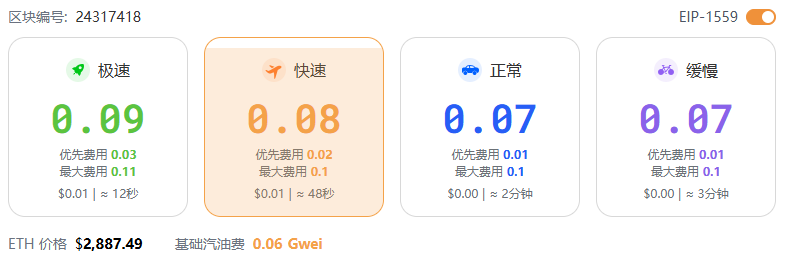
When gas was expensive, it at least filtered out low-quality interactions, forcing you to carefully consider every move. Now that gas is cheap, DeFi has turned into a massive electronic assembly line.

Because interaction costs are low, projects assume you should perform a massive number of interactions. So, for that tiny potential airdrop expectation, retail investors are forced to become proficient on-chain laborers: bridging, swapping, staking, providing LP... mechanically repeating these actions hundreds of times a day.

But this doesn't lead to higher returns. Instead, low gas has become a tool for projects to infinitely inflate their activity metrics.

This is on-chain manual labor.

II. The Capricious Dictator: Code is No Longer Law

"Code is Law" was once DeFi's most captivating narrative. But now, DeFi protocols not only have backdoors in their code, but the project teams' words have also become a sickle that can fall at any moment.

This is the current pain point retail investors hate the most—the uncertainty of the rules.

Project teams have long learned how to be ruthless. They invented undeliverable "points systems," like a carrot dangling in front of a donkey, luring you to constantly invest funds and time. After you've diligently farmed points for half a year, eagerly awaiting the payout, the project suddenly releases an announcement:

  • "For the fairness of the community, we will strictly crack down on Sybil attacks."

  • "Our VE model needs to be modified."

  • "For the development of the community, we have added a 45-day cooldown period."

Yesterday you were their cherished early supporter; today, because your IP address changed slightly, or your funds were withdrawn a day early, you are labeled a Sybil. The right to explain the rules belongs solely to the project team; they change them as they please.

This feeling is like going to work for a boss who promised daily wages. After you finish the job, the boss suddenly says, "For the long-term development of the company, we're withholding your pay. We'll see about paying you next year based on your performance."

In traditional business, this is called fraud. In DeFi, it's called DAO governance.

III. The Lock-up Prisoner: Capital Hunting Under High APY
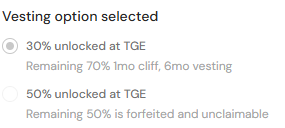
To maintain token prices, current DeFi protocols are obsessed with making users lock up their funds. Various Ve models keep emerging, often requiring periods of one year, two years, or even four years.

Projects lure you with extremely tempting APY. It looks like high returns, but the outcome is already scripted:

  • Liquidity Drain: Your principal is locked up, frozen and immobile.

  • Whale Front-Running: Project teams, early investors, and whales often have special vesting schedules for their tokens, or they can hedge their profits off-chain.

  • Price to Zero: By the time you can unlock, you might find that while you earned a 50% return in token terms, the token price has already dropped by 90%.

The essence of lock-ups is retail investors using their liquidity to provide exit liquidity for the whales. You covet the interest; they have their eyes on your principal.

IV. Extreme Mismatch of Risk and Reward

Let's do a realistic calculation.

Current DeFi protocols, excluding the shady meme coins that could rug pull at any moment, offer stablecoin yields around 5% – 10% for mainstream top protocols. This seems higher than banks, but what are the underlying risks?

  • Smart Contract Vulnerabilities: Hackers could drain the pool at any time.

  • Front-end Hijacking: Phishing sites are everywhere.

  • Depegging Risk: Algorithmic stablecoins or bridged assets can go to zero instantly.

  • Project Rug Pulls: Even projects with billions in TVL can disappear with the funds overnight.

Earning 5% yield while bearing 100% risk of total capital loss. This is the classic case of high risk, low reward. This level of return doesn't even cover the mental anguish you suffer while operating. Comparatively, simply buying and holding Bitcoin, or even using centralized exchange savings products, offers far better value for effort than messing around on-chain.

Conclusion: Refuse to Become On-Chain Fuel

DeFi innovation has stalled, but the methods of extraction have evolved.

At this stage, for most retail investors with less than $100,000 in capital, DeFi has lost its golden attributes. It is no longer a wilderness of opportunity but a playground meticulously designed by whales and unscrupulous project teams.

Every button, every rule, every suggestion to lock up funds here is designed to诱骗 (induce) you to hand over your chips.

So, perhaps the best strategy now is only one: Admit that current DeFi is indeed not working. Stop those meaningless interactions. Stop locking up funds for meager returns. Protect your principal. Convert it into truly valuable core assets, and then watch coldly from the sidelines as the whales battle each other.

Stop being an on-chain laborer. Your time and capital deserve a better destination.


Twitter:https://twitter.com/BitpushNewsCN

Bitpush TG Group:https://t.me/BitPushCommunity

Bitpush TG Channel: https://t.me/bitpush

Original Link:https://www.bitpush.news/articles/7606244

相关问答

QAccording to the article, why are retail investors leaving DeFi despite lower transaction fees?

ARetail investors are leaving because the low fees have turned DeFi into a high-effort, low-reward environment where they must engage in massive, repetitive interactions for minimal potential airdrop rewards, while project teams and whales benefit disproportionately.

QWhat does the article criticize about the 'Code is Law' principle in current DeFi?

AThe article criticizes that 'Code is Law' is no longer valid because project teams now have backdoors in their code and can arbitrarily change rules (like retroactive Sybil checks or modifying tokenomics), making their announcements the true 'law' and creating extreme uncertainty for users.

QHow do lock-up mechanisms in DeFi protocols disadvantage retail investors, as described in the article?

ALock-up mechanisms trap retail investors' capital for long periods (1-4 years) with high APY promises, but ultimately lead to illiquidity, allow whales to dump their tokens first, and often result in significant token depreciation by the time retail can unlock, effectively making them provide exit liquidity for large players.

QWhat is the risk-reward mismatch the article identifies for users of mainstream DeFi protocols?

AThe mismatch is that users earn only 5-10% yields on stablecoins but are exposed to 100% principal risk from smart contract exploits, front-end hacks, asset de-pegging, or project rug pulls, making the potential returns not worth the high risk and stress compared to simpler alternatives like holding Bitcoin.

QWhat final strategy does the article suggest for retail investors with less than $100,000 in capital?

AThe article suggests they should承认现在的 DeFi 确实不行了 (admit that DeFi, as it is now, is not working), stop meaningless interactions and lock-ups, protect their principal by converting it into core valuable assets (like Bitcoin), and simply observe the 'whales playing in their playground' from the sidelines.

你可能也喜欢

美股“科技动量股”创史上最大单日涨幅,但暴跌结束了吗?

美股科技动量股在7月21日出现历史性强劲反弹。摩根士丹利TMT动量因子单日涨幅超12%,创有记录以来最大单日涨幅;高盛相关动量指数也录得近年来最强单日表现。半导体板块是主要推动力,费城半导体指数大涨4.6%,美光、英特尔等个股涨幅显著。 此次反弹发生在此前动量股累计暴跌33%、触及严重超卖之后,很大程度上由空头被迫平仓回补的“逼仓”行情驱动。市场分析指出,跌得深是反弹猛的基础逻辑。 然而,反弹的内部结构引发疑虑。成交量低于均值,市场广度偏弱,上涨主要依赖少数重仓股,并非全面复苏。BTIG策略师警告反弹已触及关键阻力区,建议逢高减仓,并指出极端波动和个股分化是市场全面回调的信号。 另一方面,高盛和瑞银则认为动量抛售已近尾声,持仓得到出清,且缺乏新的基本面利空催化剂,是逐步增加相关敞口的机会。但他们也建议通过审慎方式分批建仓。 市场接下来的焦点转向密集的财报季,尤其是科技巨头的资本开支指引。同时,债券市场隐忧浮现,美债收益率因油价等地缘因素走高,若长期收益率持续上升可能对股市构成冲击。 总体而言,此次反弹虽然力度惊人,但成色受到质疑,其可持续性将取决于财报表现与宏观环境变化。

链捕手49分钟前

美股“科技动量股”创史上最大单日涨幅,但暴跌结束了吗?

链捕手49分钟前

Agent 赛马结束,超级工作台上位

过去一个月,腾讯、阿里、字节三家巨头不约而同地开始调整其AI战略:他们并未发布新的Agent(智能体),反而着手缩减和整合现有的众多Agent产品。腾讯将QClaw业务并入其战略级产品WorkBuddy;阿里计划将多款办公智能体整合进“千问办公”,由钉钉统一主导;字节则将其AI编程产品TRAE SOLO更名为TRAE Work,转向工作流协同。这标志着行业对Agent发展的共识正在形成:分散探索阶段结束,资源开始向统一入口集中。 此前,各大厂曾效仿早期互联网,在各个部门和场景广泛布局Agent,导致产品功能重叠、资源分散、成本高昂。随着技术壁垒因开源工具而降低,竞争核心转向算力效率与市场聚焦。当下的调整类似于PC时代的浏览器和移动时代的超级App,预示着AI时代正进入以“超级工作台”统一入口的新阶段。 这一转变背后是市场重心的深刻转移:AI的最大市场并非最初的程序员群体,而是更广阔的数十亿职场人的通用办公场景。超级工作台的目标是成为员工处理邮件、文档、数据、审批等日常工作的首要AI入口,从而掌握企业数据和系统API的调度权。 这并非要取代现有的企业软件(如ERP、CRM),而是通过引入“Skills”(标准化能力接口)让软件能力无缝接入工作台。软件的前端交互界面重要性下降,其价值将转向按能力调用和结果付费。Agent本身也从独立产品,逐渐演变为一种底层能力,最终像电力和网络协议一样,无处不在却又隐于无形。 行业正从Agent作为明星产品的第一阶段,快速迈向其作为统一工作入口的第二阶段,并终将进入其化为无形基础设施的第三阶段。

marsbit1小时前

Agent 赛马结束,超级工作台上位

marsbit1小时前

交易

现货
活动图片





