Original|Odaily Planet Daily (@OdailyChina)
Author|Wenser(@wenser2010 )

For a long time, the insurance industry has held a "ballast" position within the economic system with its monopolistic stance. However, with the emergence of prediction markets, this status quo may be about to change.
In early June, the NBA Finals concluded, with the Knicks ultimately defeating the Spurs 4-1 to win the championship, bringing joy or sorrow to countless participants in game predictions. Among the happiest might be Andy Freedman, the owner of the Upper East Side bar The Jeffrey in New York. Before the series began, he launched a marketing campaign promising "free drinks for all customers if the Knicks win Game 1," and simultaneously hedged the risk by investing $5,000 on the prediction market platform Kalshi. Ultimately, the Knicks won the first game. The Jeffrey bar used the prediction payout to cover the beverage costs, the bar customers enjoyed the benefit of free drinks, and the story ended with a "triple win."
This is just one example of how prediction market platforms function in risk hedging and property insurance. In a context where events like the World Cup attract hundreds of billions of dollars in participation, the real-world insurance industry is also encountering a "barbarian at the gate."
Can Prediction Market Platforms Also "Buy Insurance"? Believe It or Not?
Yes, you read that correctly. To some extent, prediction market platforms including Kalshi and Polymarket have already begun encroaching on the business territory of insurance companies, covering not only conventional marketing but also areas like sports insurance and weather-related disasters.
When Prediction Markets Steal Sports Insurance Clients: Kalshi Partners with Game Point Capital
In February of this year, professional sports insurance broker Game Point Capital announced a partnership with Kalshi, whereby the latter would provide hedging for NBA teams' performance bonuses (such as playoff advancement bonuses).
As a specialized company issuing hundreds of millions of dollars in sports insurance annually, Game Point Capital's change of approach was clearly not merely to cater to the development of the prediction market industry but was based on a comprehensive consideration of business and costs.
From a market demand perspective, sports insurance has always existed. It is understood that because championship bonuses are typically paid by the teams themselves, professional sports teams usually purchase insurance in advance to cover this expense. Given the large sums involved, teams have traditionally turned to conventional insurance companies for support—such as Lloyd's, Munich, Swiss, and other traditional U.S. insurers.
From an insurance cost perspective, prediction market platforms offer more advantageous pricing. It is reported that the pricing provided by Kalshi is significantly lower than traditional over-the-counter markets (e.g., 6% for a certain bonus hedge vs. the traditional 12-13%). It is estimated that through this partnership, the platform could handle tens of millions of dollars in hedging funds, which is a direct example of prediction markets entering the traditional insurance and reinsurance fields. Kalshi CEO Tarek Mansour described it as "a better way to hedge risk and insure," emphasizing that "the pricing method will be more transparent."
When Prediction Markets Become a "House Price Hedge Tool": Polymarket Teams Up with Parcl to Open a "New Model for Flipping Houses"
In January of this year, the on-chain real estate platform Parcl announced a partnership with Polymarket, introducing Parcl's daily home price index into Polymarket's new real estate prediction markets. The initial markets will focus on major U.S. cities (New York, Los Angeles, Miami, Austin, etc.). Users can predict the rise, fall, or whether specific city home price indices will reach certain thresholds on a monthly, quarterly, or annual basis.
The announcement caused the Parcl project token PRCL to surge over 100% that same day. For Americans unable to afford homes due to high prices, they can now participate in "house flipping" transactions without actually purchasing property. Joel Berner, a senior economist at Realtor, believes, "Beyond speculating on house prices, homeowners and potential buyers can also use these markets to protect their market interests."
For sellers worried about price declines, they can buy "Under" (price falling) on Polymarket; if prices indeed fall later, the corresponding profits can partially offset actual property losses, serving as an insurance effect. For buyers, or those planning to purchase a home, if they are concerned about price increases, they can predict "Over" (price rising), and the corresponding profits can be used to cover the increased purchase cost.
When NBA Games Are Linked to Free Drinks: The Cross-Marketing of a New York Bar and Kalshi
In early June, Kalshi officially announced that New York bar The Jeffrey had placed a $5,000 bet predicting "the Knicks win Game 1" and promoted the offer—"If the New York Knicks win, then all customers' bills will be on the house." Notably, the wording used in Kalshi's official statement—"place a $5,000 hedge on Kalshi" (Odaily Planet Daily note: Insure $5,000)—strongly emphasized the insurance value of prediction markets.
In this official press release, Kalshi also revealed greater ambition—to become a "small business insurance provider," offering services such as sports event predictions, weather condition predictions, and import/export policy change predictions to small businesses like hotels and inns affected by seasonal sports events, clothing stores and restaurants impacted by weather-dependent foot traffic, and other commercial venues, as well as small businesses reliant on imported goods, thereby enabling insurance hedging. Kalshi Business Lead Nicolas Hull stated, "Small businesses face real-world risks every day—issues related to weather, politics, sports, the economy, and more. Traditional insurance is both expensive and inefficient, unable to effectively address these operational risks. Kalshi changes this: we provide a liquid, transparent market platform where any business can take action against risks affecting their operational outcomes. This marks a fundamental shift in how small businesses manage risk."

Various cases demonstrate that the insurance value of prediction markets can be widely applied across multiple fields, not limited to sports events and brand marketing. In practical application cases, traditional sports betting has already seen successful precedents.
Old Wine in New Bottles, but the New Bottles Are Better: The Insurance Value of Prediction Markets Lies in Transparency and Liquidity
In 2018, home appliance brand Vatti created a sensational marketing campaign with the gimmick "full refund if France wins the World Cup." Although it ultimately ended in a farce with issues like "tight timelines, cumbersome procedures, and coupons substituting for cash," it left a deep impression on many regarding "freebie marketing."
Coincidentally, similar things have been done before.
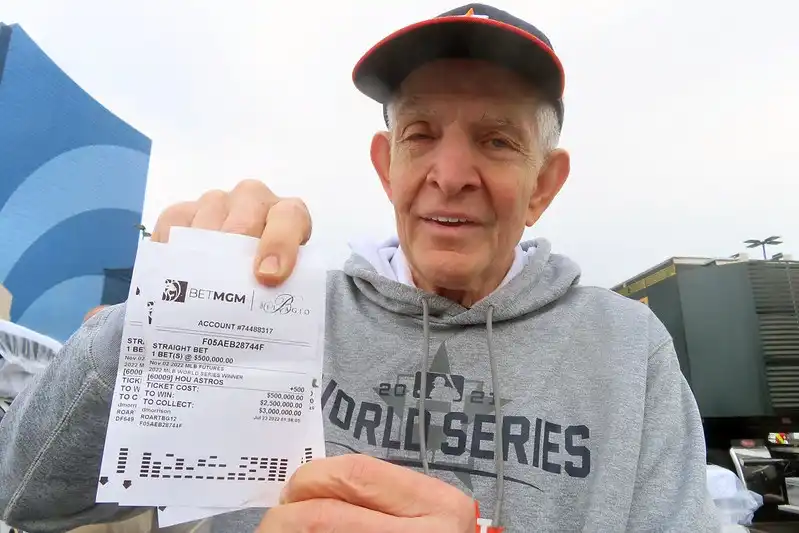
In 2017, Houston furniture industry magnate Jim McIngvale (AKA "Mattress Mack") staged a massive "refund marketing" campaign worth $12 million, centered on the gimmick "Houston Astros win the championship."
Five years later in 2022, "Mattress Mack" repeated the trick, launching a similar campaign. From May to July that year, he invested a total of $10 million across six different betting companies in Louisiana, Iowa, Las Vegas, etc., again predicting "Astros win the championship," and explicitly stated he would "return every penny" of the winnings to the 3,000 customers who participated in his furniture chain's promotion earlier. (Odaily Planet Daily note: Reportedly, the promotion targeted customers purchasing furniture worth over $3,000, offering full refunds or even double refunds depending on participation timing).
Ultimately, the 71-year-old "Mattress Mack" triumphed again, winning $72.6 million, setting a record for sports betting winnings at the time.
However, compared to sports betting, the "insurance" function of prediction markets has seen significant updates.
First, the monetization of information. This brings two major benefits: (1) A wider market scope. Compared to the single-option, narrow-domain betting of the past, prediction markets offer a broader "range of choices"; (2) More flexible exit options. Compared to betting activities where one can at most get a refund, prediction market events reflect the potential impact of news changes more directly, facilitating immediate decision-making for participants.
Second, the neutral role of the platform. Unlike the "platform," "house," or "big players" in sports betting events, prediction market platforms exist as neutral entities; they only provide trading channels and do not directly act as counterparties to trading users.
Third, transparency of trading information. Odds in sports betting are typically determined by the backing company based on its own algorithms and internal information. Many companies even adopt a "copy trading" model, directly using odds changes from other major platforms. Odds fluctuations and order trade information are extremely opaque, and event adjudication standards are often controversial or subject to insider trading (similar to last-minute bets).
Fourth, participant access systems. In the United States, the vast majority of sports betting operators adopt a "ban or bankrupt" mode of operation, a business model that "restricts high-win-rate clients from trading while encouraging losers and ordinary players to trade." In 2024, legendary gambler Billy Walters, "Spanky" Kyrollos, and former casino executive Richard Schuetz co-founded a non-profit advocacy organization called American Bettors Voice (ABV). Its core proposition is to oppose the "ban or bankrupt" model, demanding reasonable regulation of betting limits to ensure market fairness.
Compared to traditional sports betting, the insurance value of prediction markets is undoubtedly more attractive and secure. SIG CEO Jeff Yass previously mentioned in a Forbes interview: "Prediction markets allow parties to share risk more efficiently based on specific parameters. For example, when homeowners in Florida face hurricane risk, they can choose to buy a contract that 'certainly pays off.' This contract is based on the latest meteorological data, and the homeowner receives insurance protection when wind speeds exceed a specified threshold. Compared to buying annual insurance, this method can more effectively address potential property loss risks."
Of course, at present, the insurance value of prediction markets is not yet fully developed or widely promoted, and they still face the following issues:
- Insufficient liquidity. A wide range of choices does not mean sufficient market trading depth.
- Blurred regulatory boundaries. Whether platforms like Kalshi and Polymarket can sustainably perform insurance functions awaits recognition from regulatory bodies.
- Decentralized democratic risks. The previous incident on Polymarket's weather prediction event, where someone used a hairdryer to influence the observation machine for profit, serves as an example. Sometimes, event adjudication standards can be affected by unpredictable external forces, and platform determination rules may contain various loopholes.
Nevertheless, the first step has been taken. Whether the insurance industry acknowledges it or not, prediction market platforms threaten not only sports betting platforms but also many traditional insurance business companies.
Recommended Reading
Not Speculation but a Necessity: The 4 Unique Values of Prediction Markets
The Prediction Markets Are Coming For Risk Markets and Insurance