Original | Odaily Planet Daily (@OdailyChina)
Author | Azuma (@azuma_eth)

In 2014, just one year after being introduced to the concept of cryptocurrency, CZ made the most daring investment of his life — he sold his apartment in Shanghai and "all-in" on approximately 1,500 BTC at a three-digit price. Twelve years later, if CZ had never sold, this investment could have yielded hundreds of millions of dollars in profits (peak returns of approximately $189 million).
Compared to his subsequent achievements of founding Binance and rising to become the industry leader, the returns from this investment are insignificant to CZ. But from an external perspective, this idealistic "all-or-nothing" move remains one of CZ's most talked-about actions.
Yet, it is lamentable that even someone as resolute and decisive as CZ once missed, in a highly dramatic fashion, an investment with potential profits a hundred times greater than "selling a house to buy Bitcoin."
Rewind 1555 Days: That Aborted Acquisition
November 9, 2021, was a sleepless night for the cryptocurrency industry.
Just the day before, the then high-flying FTX suspended withdrawals due to a liquidity crisis. Panic quickly spread through the community, and the damp smell of an impending storm began to permeate the market... The rest of the story is well-known: FTX collapsed, triggering a domino effect that plunged the market into a prolonged winter lasting several years.
In a parallel universe, the story could have taken a different turn. In the early hours of November 9, SBF and CZ issued statements announcing that FTX had preliminarily reached an acquisition agreement with Binance.
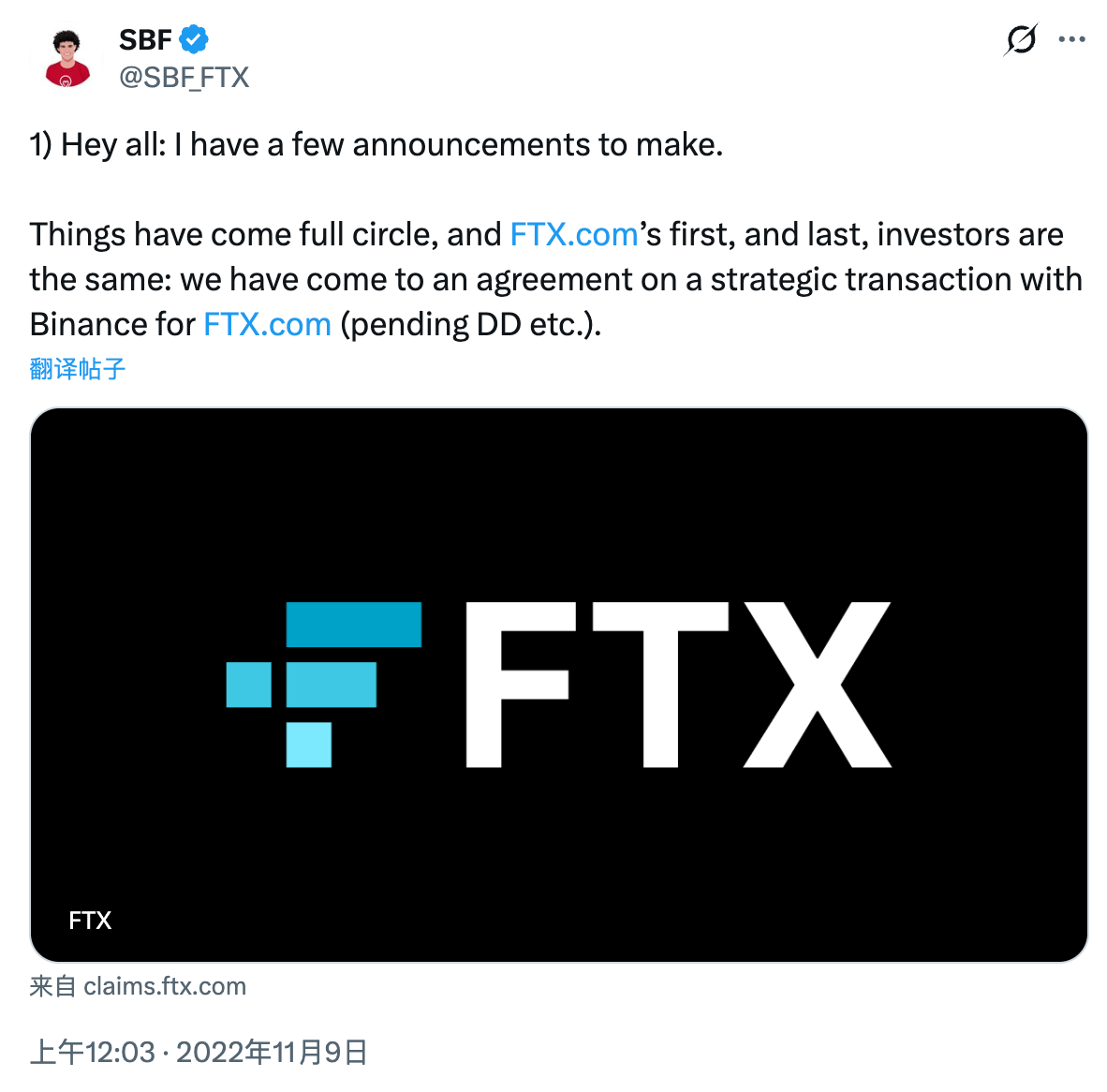
SBF: Hey everyone, I have some news to share. Things have come full circle. FTX's first and last investors are the same — we have reached a strategic transaction agreement with Binance (pending due diligence).
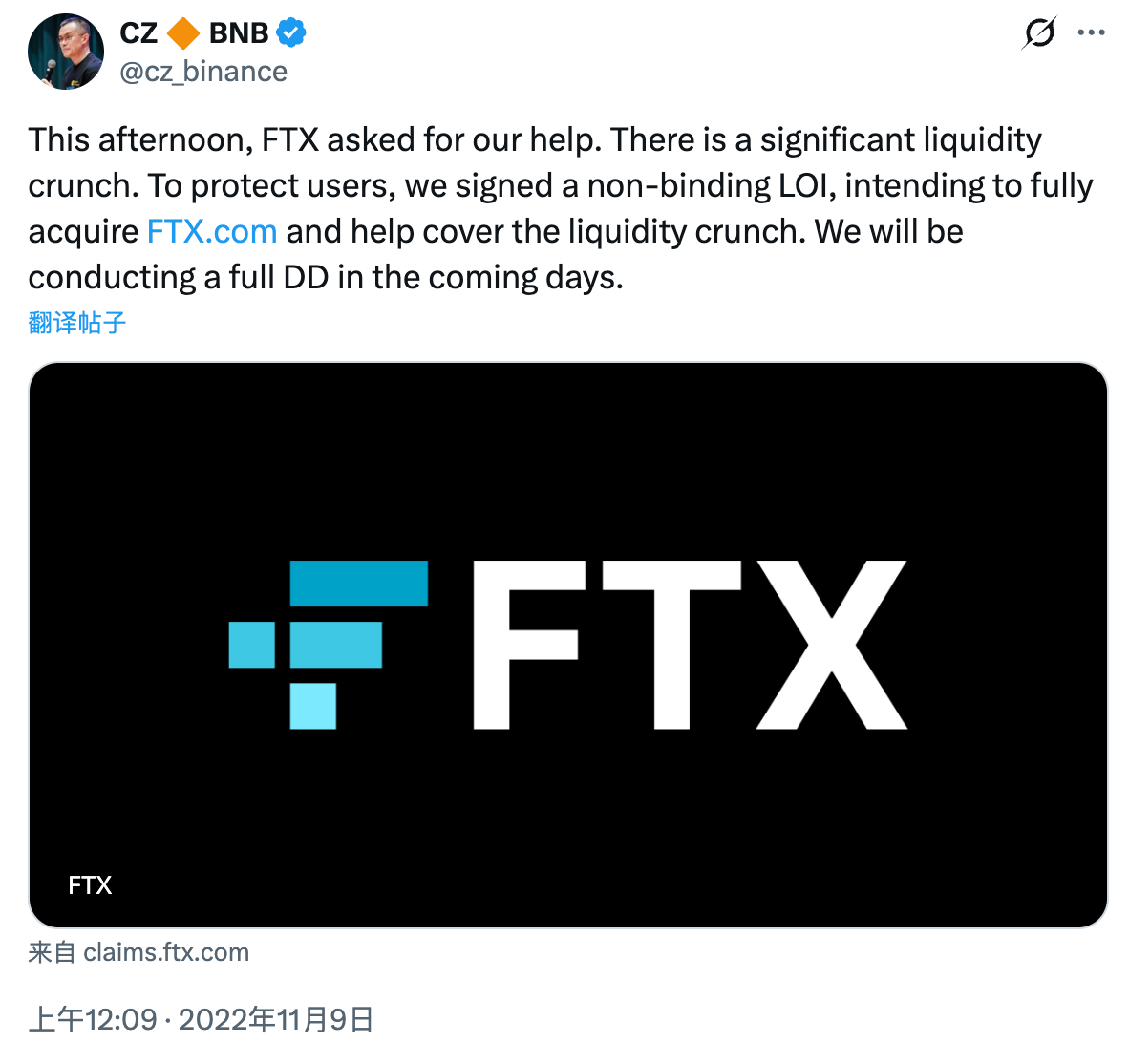
CZ: This afternoon, FTX asked us for help. The exchange is currently facing a severe liquidity crunch. To protect users, we signed a non-binding Letter of Intent, intending to fully acquire FTX to help address the liquidity crisis. We will conduct full due diligence in the coming days.
However, the acquisition ultimately fell through. Just one day later, Binance officially announced it was abandoning the acquisition, citing "issues beyond our control," which became the final straw that broke FTX's back.
Did CZ ever seriously consider acquiring FTX? Was the hastily concluded acquisition farce a genuine attempt to help or merely a ploy to gauge the opponent's "health bar"? This may forever remain a mystery. From the outcome, CZ personally defeated his biggest competitor at the time, solidifying Binance's position as the industry's top player.
But no one could have predicted that a seemingly insignificant "side bet" in FTX's asset portfolio at the time would rapidly appreciate in value over the next few years, now worth far more than the sum of all other assets involved in that aborted acquisition.
From a "Side Bet" to the Center of AI
In April 2022 (the official announcement date; the deal was actually completed in 2021), FTX made its most important investment in the AI field — leading a $580 million funding round for AI startup Anthropic with a $500 million investment, initially acquiring a 13.56% equity stake, which was later diluted to 7.84% as Anthropic completed multiple funding rounds.
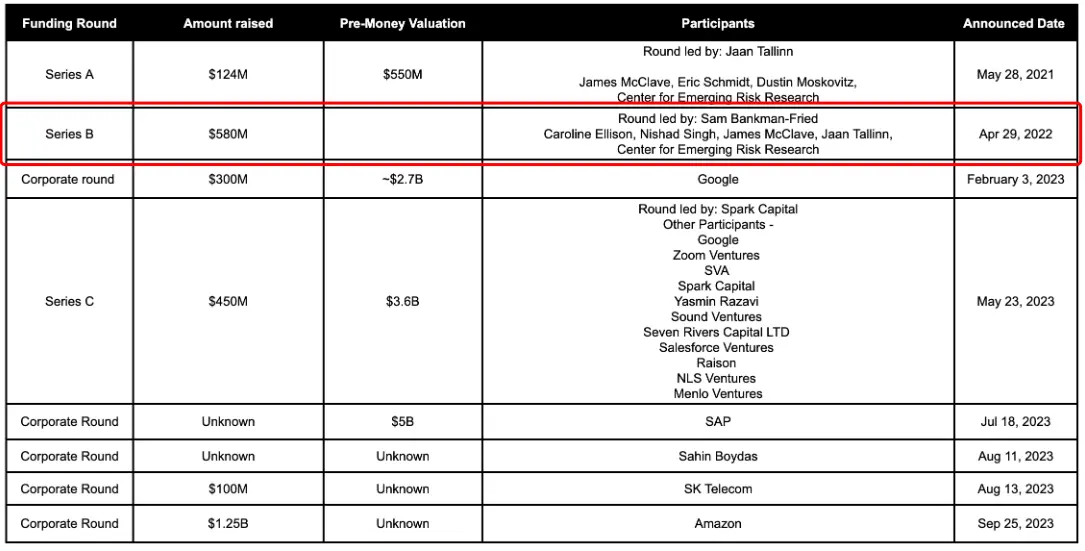
That was an era when AI's potential had not yet exploded. Just six months later (in late November 2022, the same month FTX collapsed), OpenAI's ChatGPT was released, irreversibly ushering the world into the "Age of Exploration" for AI. Anthropic, with its Claude series of products (especially the programming-oriented Claude Code), repeatedly amazed the world, gradually becoming one of the most prominent companies in the AI era.
As Claude continued to evolve, Anthropic's valuation also soared. Capital frantically waved cash, desperate to secure a spot on Anthropic's journey to an IPO. The latest market rumor is that Anthropic is in the final stages of a new large funding round, expected to exceed $20 billion (originally planned to raise $10 billion, but investor demand far exceeded expectations, potentially doubling the final amount), with a valuation possibly as high as $350 billion. The deal could be completed as early as this week.
At the latest valuation of $350 billion, FTX's former stake in Anthropic would be worth approximately $27.44 billion, enough to cover the reserve shortfall that led to its bankruptcy multiple times over... But history has already happened, and the outcome is set.
It's hard not to acknowledge that SBF was a rare venture capital genius (besides Anthropic, he also invested in the now-hot Cursor in its seed round), but he was clearly not a qualified business operator, especially lacking in risk control. CZ's profile is the opposite: he is an absolute master at operating a business, and Binance's dominance is inseparable from his many correct strategic decisions. But CZ often admits he is not a traditional investor solely pursuing returns; he doesn't trade cryptocurrencies and prefers to be a builder in the industry.
A Messy Ending: This Should Have Been the Best Intersection of Crypto and AI
You might wonder, what happened to those FTX shares in the end?
The outcome is straightforward. After FTX's bankruptcy, all assets, including the Anthropic equity, were handled by the FTX bankruptcy estate. In February 2024, the court approved the estate's request to sell these shares; in March and June of the same year, the FTX estate sold 29.5 million shares for $884 million and 15 million shares for $450 million, respectively, totaling over $1.3 billion in sales.
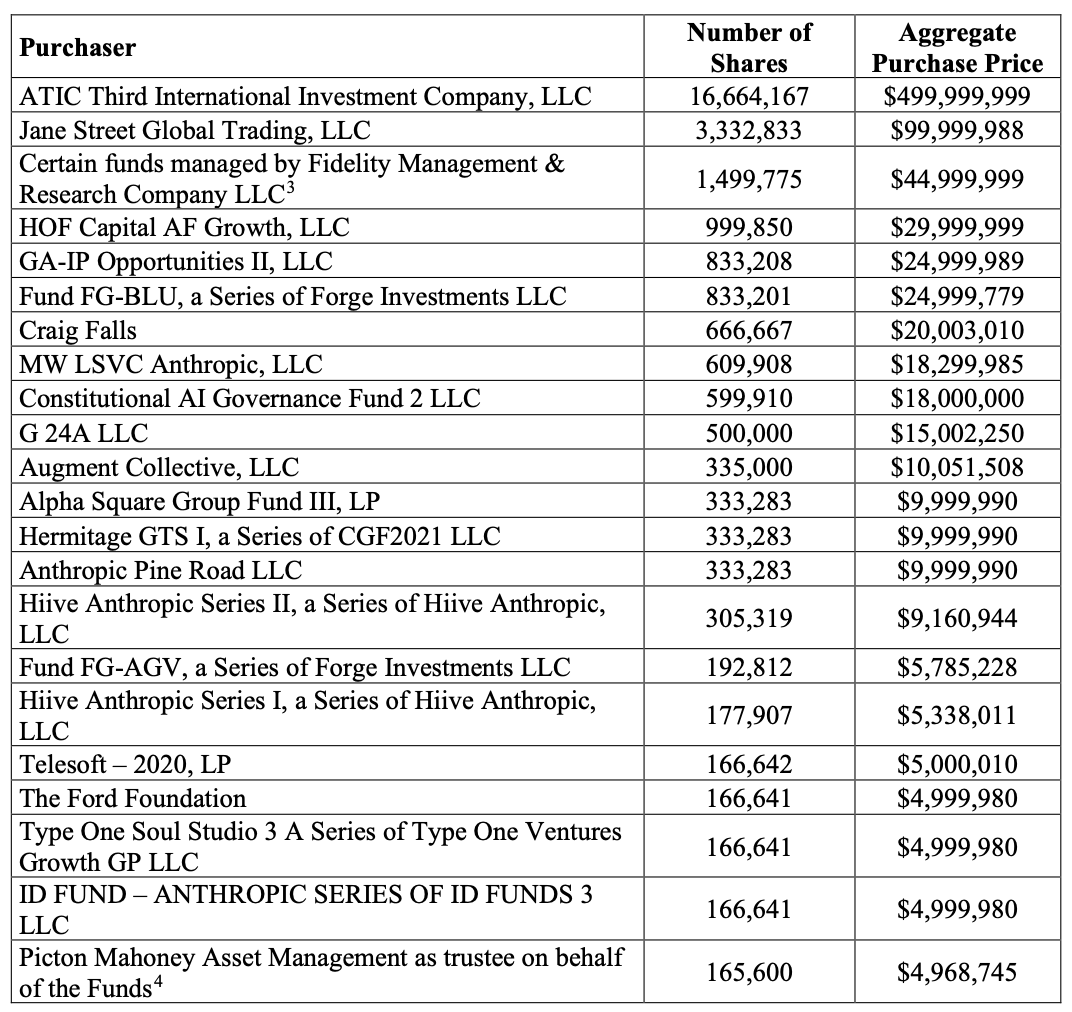
As for the buyers of these shares, they were primarily ATIC Third International Investment from Abu Dhabi, and traditional financial institutions from Wall Street like Jane Street and Fidelity. In other words, no crypto companies got a piece of the pie.
Whether these shares were deliberately sold cheaply or if there was利益输送 (benefit transfer) under the guise of bankruptcy liquidation is no longer important to the crypto industry.
This should have been the best intersection of Crypto and AI. In another timeline, whether these shares were held by SBF or CZ, if the leading enterprises of the crypto world had some influence in the development of the most successful company in the AI world, there could have been more innovative attempts around Crypto + AI, leading to unexpected fruits.
The one slapping his thigh in regret isn't just CZ.