# User Retention的所有文章

在 HTX 新闻中心浏览与「User Retention」相关的最新资讯与深度分析。潘盖市场趋势、项目动态、技术进展及监管政策,提供权威的加密行业洞察。

Data Review: How Much Profit Did Prediction Markets Reap from a Single World Cup?

**How Much Did the 2026 World Cup Boost Prediction Markets? A Data Review.** The 2026 World Cup provided a major, temporary boost to leading prediction markets, according to an analysis of Kalshi, Polymarket, and predict.fun. During the tournament, total nominal trading volume reached $543.38 billion on Kalshi, $209.88 billion on Polymarket, and $10.92 billion on predict.fun. While Kalshi maintained an overall lead, Polymarket narrowed the gap significantly in World Cup-specific markets. All platforms saw daily trading volumes roughly double or more during the event compared to pre-tournament levels, but activity largely retreated to baseline shortly after the final. Fee revenue also surged. Kalshi's weekly fees peaked at over $100 million in the fourth week, totaling $473.2 million for the tournament. Polymarket's weekly fees stabilized around $20 million, totaling $111.4 million. Predict.fun saw its weekly fee income rise from a pre-tournament $159k to a peak of $755k, with a six-week total of $3.48 million. Post-tournament, daily fee income declined for all three. Analysis of Total Value Locked (TVL) showed Polymarket's deposits remained flat around $4.4-$4.8 billion during the World Cup and later fell, suggesting the event spurred high-frequency trading but not long-term capital commitment. In contrast, predict.fun's TVL saw a clear inflow during the tournament's knockout stages, rising to a peak near $25 million before easing. The data confirms that mega-sports events can generate massive, concentrated trading volume and revenue for prediction platforms. However, the post-tournament pullback indicates this growth is largely event-driven and doesn't automatically translate into sustained higher activity. The World Cup validated sports as a core trading category and helped users develop repeated trading habits, setting the stage for the next phase of competition focused on user retention and creating consistent trading demand.

Odaily星球日报07/27 12:14

Data Review: How Much Profit Did Prediction Markets Reap from a Single World Cup?

Odaily星球日报07/27 12:14

After Collaborating with 35+ DeFi Projects, Pink Brains Discovers the New 2026 KOL Marketing Rules

After collaborating with over 35 leading DeFi projects on marketing over three years, Pink Brains identifies a key shift for effective marketing in 2026: prioritizing the user journey over traditional campaign tactics. The most effective marketing mirrors how users actually behave—starting with discovery on social platforms like X (formerly Twitter), followed by data-driven verification on sites like DefiLlama, and finally, participation with small test funds. Success hinges on genuine, verifiable mechanisms, not just marketing hype. Current user interest centers on several key themes: new DeFi trends (RWA, perps, crypto x AI), meaningful airdrops requiring real contributions, real yield from protocol revenue, and tokens with value capture mechanisms directly tied to product usage. Case studies like Hyperliquid's HYPE (with its aggressive buyback program) and Venice's VVV (linking demand to AI compute) exemplify how strong tokenomics foster user retention. New trading venues like prediction markets, collectibles platforms, and GambleFi are also gaining traction, driven by verifiable activity. The article outlines common mistakes in DeFi KOL marketing, such as using creators unfamiliar with the product, generic messaging, or relying on a few top-tier KOLs. Instead, effective strategies align with different KOL types—educators, content creators, airdrop hunters, and niche experts—for various stages of the user journey. Ultimately, long-term user retention depends on a combination of a genuinely useful product, responsive support, community-aligned tokenomics, and strategic community building. The core takeaway is that sustainable growth stems from products whose value is validated by data and real-world utility, not just promotional efforts.

marsbit06/03 10:23

After Collaborating with 35+ DeFi Projects, Pink Brains Discovers the New 2026 KOL Marketing Rules

marsbit06/03 10:23

Base's Growth Dilemma: Why Did Everything Go Right, But Users Still Leave?

Based on the Japanese philosophical concept of "basho" (a field or place that shapes its inhabitants), this analysis explores why Base blockchain, despite initial explosive growth, is now facing a significant user exodus. Launched by Coinbase in 2023, Base quickly became the fastest-growing Layer 2 (L2) solution, reaching a peak of 1.72 million daily active addresses and $5.6 billion in TVL by late 2025. Its immense distribution power from Coinbase's 100 million users created strong belief it would solve Ethereum's user adoption problem. However, after confirming a token launch in September 2025, active addresses plummeted by 73% to 458,000 by March 2026. The analysis attributes this to Base building a mere "location" for transactions rather than a "basho"—a meaningful context where users form identities and relationships. Its bet on a tokenized creator economy via Zora also failed; 99.7% of created tokens became inactive. The core issue is that financial incentives can attract users but cannot fabricate a genuine reason to stay. Unlike a "third place" (e.g., a community square), which people return to for non-transactional reasons, Base was designed for extraction, leading users to leave once incentives dried up. The piece contrasts Base with chains like Arbitrum and Hyperliquid, which, despite also seeing declines, retained users through unique community identity and experiences rather than mere speculation. The conclusion is that the entire L2 model is cooling, and sustainable growth requires building an irreplaceable ecosystem that shapes user identity—something that cannot be engineered through incentives alone. Base's pivot to a self-custody trading app is a rational retreat, admitting its original vision to create a social, habitable chain failed to materialize.

marsbit04/02 06:07

Base's Growth Dilemma: Why Did Everything Go Right, But Users Still Leave?

marsbit04/02 06:07

From 100,000 Losses to Tens of Red Envelopes: Why Are Crypto Enthusiasts Turning to 'Yuanbao Wool'?

Amidst a significant downturn in global financial markets and cryptocurrency prices in early February, many crypto traders, facing substantial losses, have turned to a seemingly more reliable source of small gains: the "Yuanbao Cash Redemption" event. This campaign by Yuanbao, backed by Tencent, offers cash红包 (red envelopes) typically ranging from a few to tens of RMB for simple tasks like referrals and product interactions, providing a psychological escape from market volatility. In contrast, the traditional crypto airdrop landscape has become increasingly fraught with risk and disappointment. The article highlights cases like Infinex, where users invested significant time and money (e.g., over $11,900 and 406 days of engagement) only to face heavy losses during token generation events, with some unable to even recoup costs. This has led to frustration, silent resignation, or even public维权 (rights protection) efforts. The core issue is framed as a shift in the purpose of airdrops: from rewarding early users to merely serving as a growth hack for project teams seeking exits or funding, often with unreliable token promises. Web2 companies like Tencent can offer cash rewards with certainty due to strong cash flow and legal frameworks, whereas Web3 airdrops often come with high costs (time, effort, capital), risks like sybil attacks, unlock periods, and rule changes, resulting in lower effective returns. Both Web2 and Web3 use airdrops for user acquisition, but long-term retention depends on product-market fit and user experience. While Yuanbao leverages Tencent's experience in converting user growth into retention (e.g., WeChat Red Packets), Web3 projects struggle post-airdrop, with many failing to sustain engagement. The conclusion emphasizes that beyond token incentives, Web3 must focus on product functionality and user value to achieve genuine retention.

比推02/04 13:27

From 100,000 Losses to Tens of Red Envelopes: Why Are Crypto Enthusiasts Turning to 'Yuanbao Wool'?

比推02/04 13:27

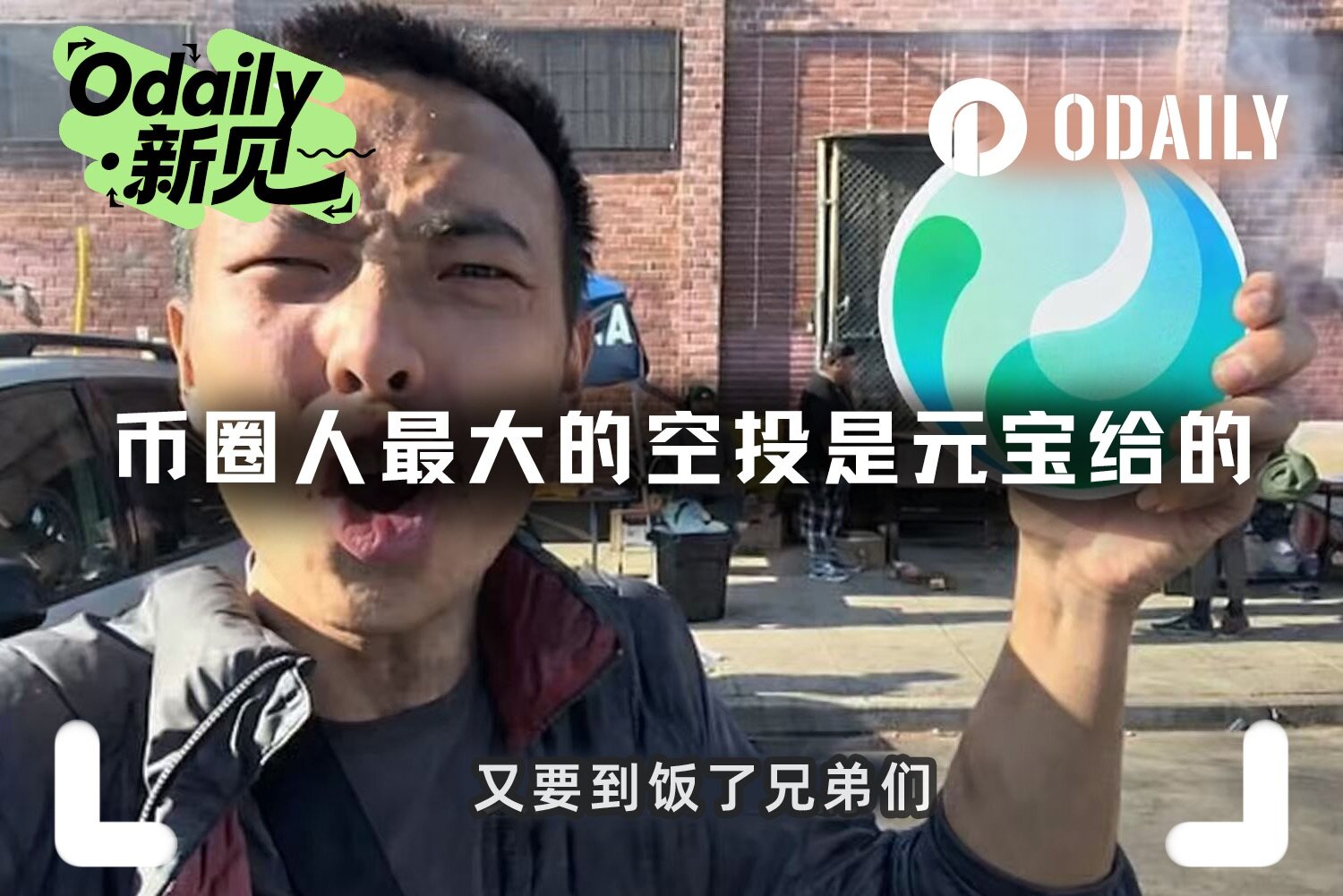
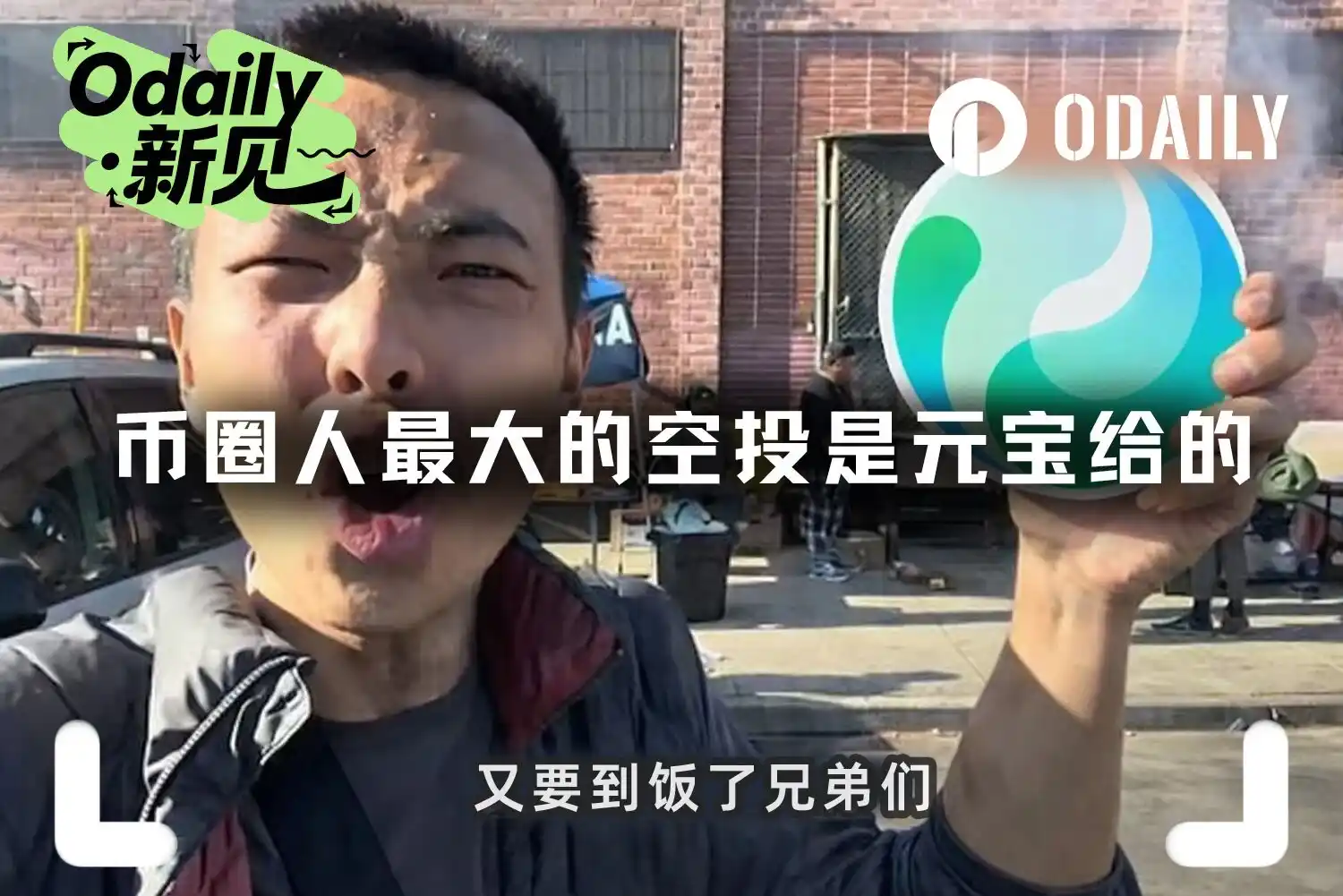
The Biggest Airdrop for Crypto Enthusiasts Comes from Yuanbao

The article "The Biggest Airdrop for Crypto Enthusiasts is Given by Yuanbao" discusses the recent trend of cryptocurrency traders turning to a Web2 cash reward campaign by Tencent's AI product Yuanbao, following significant market losses in both traditional finance and crypto markets. In early February, global markets experienced sharp declines, with Bitcoin dropping below $75,000 and Ethereum and Solana also seeing substantial losses. This led to widespread liquidations, leaving many crypto investors seeking alternative ways to cope with losses. Yuanbao's cash红包 (red envelope) campaign, offering small but guaranteed cash rewards for simple user interactions, became a popular distraction. The author contrasts this with typical crypto airdrops, which often involve high costs (time, research, opportunity costs, and potential financial losses) and uncertain returns. Examples include Infinex, a decentralized perpetual trading platform, where some users faced significant losses despite long-term participation, and other projects where promised rewards were not delivered. The piece highlights a structural shift in crypto airdrops: from sharing future value with early users to becoming a growth tool for project exits or funding, often resulting in reduced rewards and user frustration. Unlike Web2 campaigns like Yuanbao's, which are backed by reliable cash flow and legal frameworks, crypto airdrops lack certainty and often fail to retain users post-distribution. The conclusion emphasizes that while airdrops can drive user acquisition, long-term retention depends on product-market fit, user experience, and ecosystem integration. The article suggests that Web3 projects should focus on improving post-airdrop strategies to enhance user retention, rather than relying solely on token incentives.

Odaily星球日报02/04 03:56

The Biggest Airdrop for Crypto Enthusiasts Comes from Yuanbao

Odaily星球日报02/04 03:56

The Biggest Airdrop for Crypto Enthusiasts is Given by Yuanbao

The article "The Biggest Airdrop for Crypto Enthusiasts is Given by Yuanbao" discusses the recent trend of crypto investors turning to Yuanbao, a Web2 platform by Tencent, for cash red packet rewards amid a severe market downturn. Starting February 1st, Yuanbao’s cash reward campaign attracted widespread participation, with crypto community members shifting from trading to actively engaging in Yuanbao’s referral-based tasks to earn small but guaranteed cash payouts. This comes as global financial markets, including crypto, experienced significant losses, with Bitcoin dropping below $75,000 and Ethereum and Solana also declining sharply. On January 31st, the crypto market saw over $2.56 billion in liquidations. The author contrasts Yuanbao’s straightforward, no-cost cash rewards with the high-risk, often disappointing airdrops in the crypto space. While crypto airdrops typically offer tokens that require selling to realize gains—and often come with hidden costs like time, research, and potential losses—Yuanbao provides immediate, tangible cash benefits. A case study highlights an Infinex user who lost over $11,900 after a 406-day participation, receiving tokens worth far less than invested. The piece argues that crypto airdrops have evolved from rewarding early users to serving as exit strategies for projects, with declining returns and increased risks. Unlike Web2 companies like Tencent, which use reliable cash incentives backed by strong cash flow and legal frameworks, Web3 projects often fail to deliver on promises, leading to user frustration and attrition. Finally, the article touches on the challenge of converting airdrop-driven user growth into long-term retention. While airdrops can boost initial engagement, sustainable growth depends on product-market fit, user experience, and ecosystem integration. Tencent’s experience with WeChat Red Packet is cited as a successful model, whereas many Web3 projects struggle with post-airdrop user retention. The conclusion emphasizes that beyond token rewards, Web3 projects must focus on product functionality and user value to achieve lasting growth.

marsbit02/04 03:50

The Biggest Airdrop for Crypto Enthusiasts is Given by Yuanbao

marsbit02/04 03:50

活动图片