# Network Effect的所有文章

在 HTX 新闻中心浏览与「Network Effect」相关的最新资讯与深度分析。潘盖市场趋势、项目动态、技术进展及监管政策,提供权威的加密行业洞察。

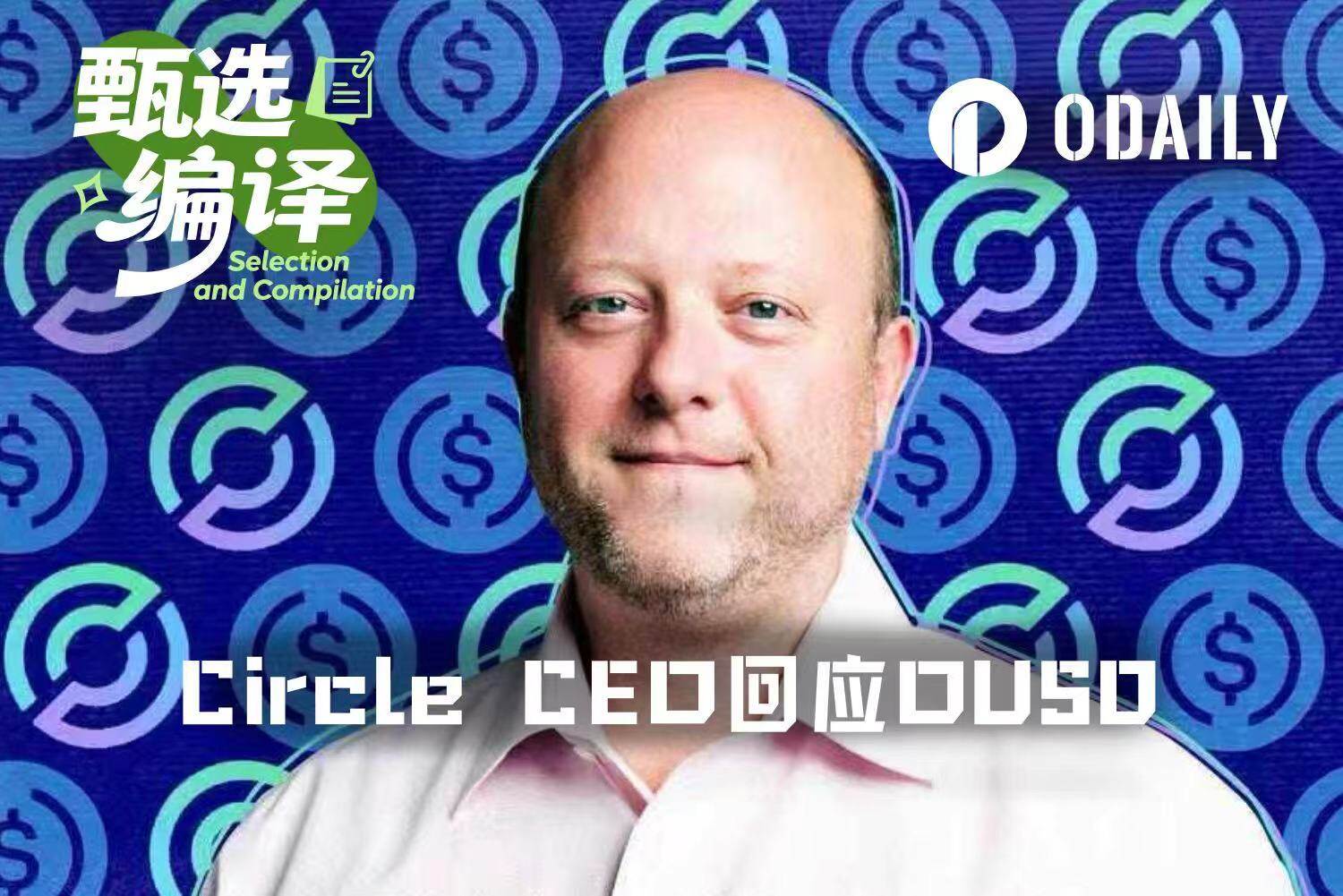
Circle CEO Responds to OUSD Challenge: Stablecoin Market Is 'Winner-Takes-All', Consortium Model Doomed to Fail

Circle CEO Jeremy Allaire addresses market concerns following the announcement of the Open USD (OUSD) stablecoin project backed by 140 global companies. Allaire argues the stablecoin market exhibits "winner-takes-all" dynamics due to powerful network effects. He cites USDC's near-decade lead in three key areas: 1) **Application Integration & Protocol Development**: Thousands of integrated services and protocols (like CCTP) create utility and lock-in for developers and users. 2) **Liquidity Network Effects**: A deeply embedded, globally distributed liquidity infrastructure across primary and secondary markets, built over years. 3) **Regulatory Integration**: Extensive licensing and compliance groundwork ensuring USDC's acceptance in major markets like Europe and Japan. Allaire challenges OUSD's proposed advantages. He contends that promises of free redemption, while appealing, face market realities where such models can become exit routes for other stablecoins. He also questions the feasibility of fully distributing all revenue to an alliance, stating it would "starve" the critical infrastructure investments needed for scale and utility. Furthermore, he expresses skepticism about large alliance governance models, noting they often lead to slow decision-making and misaligned incentives. While welcoming OUSD to the ecosystem, Allaire reaffirms confidence in USDC's dominant position, backed by its long-term infrastructure investments and strong partnerships, including its ongoing collaboration with Coinbase.

marsbit07/02 04:04

Circle CEO Responds to OUSD Challenge: Stablecoin Market Is 'Winner-Takes-All', Consortium Model Doomed to Fail

marsbit07/02 04:04

Circle CEO Responds to OUSD Challenge: Alliance Model Doomed to Fail, It's a 'Winner-Takes-All' Game

Circle CEO Jeremy Allaire addresses the challenge posed by the new Open USD (OUSD) stablecoin project, backed by 140 global companies. He argues that the stablecoin market exhibits "winner-take-all" characteristics, where USDC's near-decade-long lead in application integrations, global liquidity, and regulatory compliance secures its dominant position. Allaire outlines three key network effects underpinning USDC's strength: 1) Extensive integration as an internet protocol layer, 2) Deep, globally distributed liquidity networks, and 3) Deep integration with global policy and regulatory frameworks. He cites data showing USDC facilitated 80% of on-chain USD stablecoin transaction volume in Q1 2026. He directly counters OUSD's proposed advantages: 1) "Free minting and redemption" may not be sustainable against market realities, which USDC addresses via contractual mechanisms. 2) "Sharing all revenue" risks starving the infrastructure of necessary investment for growth and reliability. 3) A "consortium model" often leads to slow innovation and poor coordination compared to focused, independent operators like Circle. Allaire reaffirms Circle's strong partnership with Coinbase and notes that Circle continues to collaborate with many OUSD founding members. He concludes by welcoming OUSD to the ecosystem while expressing confidence in USDC's entrenched network advantages and continued expansion.

Odaily星球日报07/02 04:00

Circle CEO Responds to OUSD Challenge: Alliance Model Doomed to Fail, It's a 'Winner-Takes-All' Game

Odaily星球日报07/02 04:00

Open Systems Will Ultimately Prevail: Why Ethereum Is the Next Linux?

The article "Open Systems Will Ultimately Prevail: Why Ethereum Is the Next Linux?" argues that Ethereum, like Linux before it, will triumph over closed, proprietary systems in finance due to its open, permissionless, and credibly neutral nature. It draws a historical parallel: just as the open internet defeated corporate private networks and Linux outcompeted proprietary Unix systems, open financial infrastructure like Ethereum will surpass private blockchains. The core advantage lies in the "bazaar" development model (as described in Eric Raymond's "The Cathedral and the Bazaar"), where decentralized, permissionless innovation by a global community of developers outpaces the controlled "cathedral" approach of centralized entities. This model fosters rapid innovation, as seen with Ethereum standards like ERC-20 and applications like Uniswap, which were built without needing permission. Ethereum's key, irreplicable strength is its credible neutrality: transparent, equally applicable, immutable rules that allow anyone to participate. This ensures sovereign independence, meaning no single entity (company, government) can control or change its core rules—a critical feature for global financial infrastructure. In contrast, private blockchains and consortium chains (like SWIFT or various bank-led projects) suffer from platform risk, central control, and an inability to attract broad developer ecosystems, leading to frequent failures. The article notes that major institutions (e.g., BlackRock, JPMorgan, Coinbase, Robinhood) are already building on Ethereum or its Layer 2 networks, recognizing its security, developer ecosystem, and network effects. While critics argue finance requires accountable, controlled systems, the response is that compliance (KYC, regulations) can be built at the application layer on top of a neutral settlement layer like Ethereum, just as secure commerce was built on the open internet via HTTPS. Ultimately, the thesis is that attempting to build walled-garden, proprietary financial networks is a flawed strategy that stifles innovation. The winning approach is to build applications on top of open, credibly neutral infrastructure like Ethereum, which is poised to become the foundational settlement layer for global finance.

Foresight News06/22 10:28
Open Systems Will Ultimately Prevail: Why Ethereum Is the Next Linux?

Foresight News06/22 10:28

a16z Crypto Partner: Cash Flow is the Moat

Cash Flow as the Moat: A Playbook for Crypto Founders Historically, the most enduring businesses have been built by positioning themselves within the "flow of funds"—facilitating the creation and transfer of value in a network and extracting a portion of it. Cryptocurrency is the first modern technology natively built for this purpose. For startups, failing to architect products and businesses to leverage these principles means missing a major opportunity. Blockchains are inherently network businesses. Each transaction settles on a shared ledger, and every new participant strengthens the underlying network for all. Well-designed network tokens amplify this by aligning users, developers, and validators around growing the network, with value flowing back to contributors in a transparent feedback loop. This model is not new; companies from railroads and Standard Oil to Google, Meta, and AWS have thrived by inserting themselves into critical flows of value (goods, attention, compute). Financial markets make it even clearer: firms like Visa and major market makers generate immense revenue not by predicting markets but by being in the path of transactions. The combination of fund flow and network effects creates one of the most durable business structures. The high margins in traditional finance (payments, custody, lending, FX) represent prime targets. Crypto founders have the opportunity to build the next version—programmable, instant, global, and natively in the flow of funds. The frontier extends beyond finance to areas like computing/GPUs, AI training data, energy, robotics, and space—markets without entrenched intermediaries, ripe for building new, efficient value rails on programmable infrastructure. Founders should ask: Are you in the flow of funds today? Does your revenue scale 10x with the value of activity on your platform? Where in your target market are profit margins highest relative to value created? The opportunity is clear: embed your startup into the new flows of value and let the network effects accumulate.

marsbit06/12 02:38

a16z Crypto Partner: Cash Flow is the Moat

marsbit06/12 02:38

Public Chain Moat Only 3/10? Alliance DAO Founder's Remarks Ignite Crypto Community Debate

Alliance DAO founder qw (@QwQiao) sparked intense debate in the crypto community by claiming that Layer 1 blockchains have "limited moats," rating them only 3/10 in terms of sustainable competitive advantage. This triggered strong reactions from key industry figures. Dragonfly Capital partner Haseeb strongly disagreed, arguing that Ethereum’s decade-long dominance despite well-funded challengers proves its strong moat. Others, like Multicoin’s Kyle Samani and researchers from Ethereum and Circle, questioned whether liquidity alone constitutes a real moat, with some calling it fleeting and unreliable. In response, qw elaborated on his moat rating framework, giving traditional giants like Microsoft, Apple, and Visa perfect scores (10/10) based on revenue models and infrastructure, while rating top crypto projects around 5/10. He notably rated Bitcoin at 9/10, citing its unique founding story and Lindy effect, but deducted a point due to uncertainties around security and quantum threats. The debate expanded into what truly constitutes a moat in crypto. Critics argued qw’s framework overemphasizes current revenue and undervalues network effects, trust, and technological ethos. Defenders of blockchain moats pointed to elements like developer ecosystems, brand strength, switching costs, and application diversity as core defensive attributes. The article concludes that the crypto industry is still young and small compared to traditional finance and tech giants. Rather than fixating on abstract moat concepts, the priority should be solving real user needs at scale, driving adoption, and expanding overall market reach.

marsbit12/13 03:06

Public Chain Moat Only 3/10? Alliance DAO Founder's Remarks Ignite Crypto Community Debate

marsbit12/13 03:06

活动图片