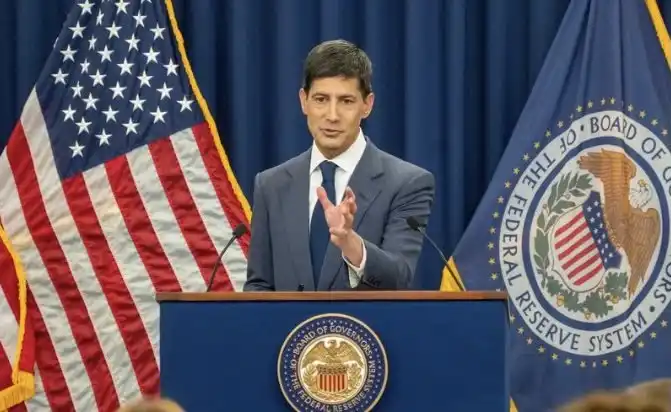
US financial regulators signalled a shift from coordination to execution on crypto oversight on Thursday, 29 January.
Senior officials from the Securities and Exchange Commission [SEC] and the Commodity Futures Trading Commission [CFTC] outlined plans to advance joint rulemaking using existing authority.
The remarks came during a rescheduled SEC–CFTC harmonization meeting, where both agencies emphasised regulatory clarity, reduced duplication, and a more coordinated approach to overseeing crypto asset markets.
Regulators move beyond coordination rhetoric
Speaking at the event, Michael S. Selig said the CFTC would begin exercising oversight of the crypto market without waiting for Congress to finalize market structure legislation.
He described the moment as a transition toward implementation. Staff have been directed to draft rules and revisit existing proposals that have contributed to regulatory uncertainty.
Selig said the CFTC would work jointly with the SEC on “Project Crypto.” This is a framework aimed at harmonizing oversight across agencies.
The initiative is designed to establish a shared crypto asset taxonomy. Also, it is to clarify jurisdictional boundaries and reduce overlapping compliance requirements.
Joint taxonomy and jurisdictional clarity
A central focus of the meeting was developing a common classification framework for digital assets. Selig said he agreed with Paul S. Atkins that most crypto assets trading today are not securities.
This position would mark a departure from years of regulatory ambiguity.
Selig added that CFTC staff have been instructed to work with their SEC counterparts on the joint codification of a crypto asset taxonomy as an interim measure. At the same time, Congress continues to work on broader legislation.
The aim, he said, is to draw clearer jurisdictional lines and avoid leaving market participants “trapped in uncertainty.”
Rulemaking plans span derivatives, collateral, and software
Beyond taxonomy, Selig outlined several areas where the CFTC plans to move forward with rulemaking.
These include developing rules to support the use of tokenised collateral, creating pathways to onshore perpetual crypto derivatives. Also, the rule will clarify the treatment of leveraged and margined retail crypto trading.
He also announced plans to withdraw earlier proposals that restricted certain event contracts and to begin rulemaking on prediction markets.
In addition, the CFTC will explore whether innovation exemptions or safe harbours are appropriate for software developers and non-custodial systems operating in the decentralized finance space.
Harmonization aimed at reducing regulatory friction
Both agencies framed harmonization as a practical exercise rather than a blurring of statutory boundaries.
Selig said substituted compliance and aligned requirements could allow firms to operate more efficiently without compromising market integrity. This is particularly as crypto markets span products traditionally overseen by different regulators.
While recent congressional action has advanced market structure legislation, regulators stressed that the execution phase would proceed independently, using existing authorities to modernise oversight as innovation continues.
Final Thoughts
- US regulators signalled a move from coordination to implementation, with the SEC and CFTC outlining concrete steps toward joint crypto rulemaking.
- Planned actions span asset classification, derivatives, tokenised collateral, and software treatment, indicating regulatory execution will move ahead of final legislation.