Eric Trump Goes to War With Big Banks Over ‘Anti‑American’ Crypto Lobbying

bitcoinist发布于2026-03-05更新于2026-03-05

文章摘要

Eric Trump has publicly criticized major U.S. banks, including JPMorgan Chase, Wells Fargo, and Bank of America, accusing them of pursuing an "anti-American" agenda by lobbying against crypto and stablecoins. He claims these institutions are trying to block Americans from earning higher yields on savings—often 4–5% in crypto platforms—to protect their low-interest monopoly and prevent deposit flight. According to Trump, banks are supporting bills like the Clarity Act to restrict yields and rewards on stablecoins, undermining competition and consumer freedom. He argues this contradicts American ideals and reflects the banking industry's panic over losing dominance in digital finance. The conflict centers on the GENIUS Act, which allowed stablecoins but banned interest payments, and the proposed Clarity Act, which aims to further limit yields.

Eric Trump lashed out against Big Banks for targeting Crypto and stablecoins, essentially not letting Americans make as much money as they could be.

An “Anti-American” Crypto Agenda

In a post on social network X on March 4, following his father Donald Trump’s message accusing banks of “undermining” the GENIUS Act, Eric Trump subsequently called out big banks like JPMorgan Chase, Wells Fargo and Bank of America.

He claims these banks are actively blocking Americans from “getting higher yields on their savings” and preventing “any rewards or perks from being given to customers,” arguing this is happening because they are “desperately targeting crypto/stablecoins, where platforms plan to offer 4–5% yields or rewards.” He goes as far as saying this stance betrays America’s freedom ideals:

The ABA and other lobbyists are spending millions trying to ban or restrict those yields via bills like the Clarity Act, crying “fairness” and using words like “stability”—when it’s really about protecting their low-rate monopoly and preventing deposit flight. his is anti-retail, anti-consumer, and straight-up anti-American.

The Greatest Hypocrites

In a different post from the same day, Eric Trump doubled down, accusing Big Banks of “doing everything they can to block the crypto industry” and branding them institutions that have “held a monopoly and screwed their customers for years.”

As Eric Trump sees it, this comes as a sort of tantrum, the last-ditch effort of a scared institution to keep control of Americans’ savings:

They are the greatest hypocrites and are in mass panic given they know they are losing the digital finance race!

The GENIUS Act vs. The Clarity Act

Both Donald and Eric Trump’s rants respond to a broader context: two flagship Trump-era bills are being weaponized against each other by the TradFi institutions.

The GENIUS Act, last year’s “big win” for payment stablecoins, legalized fully‐backed dollar tokens while explicitly banning issuers from paying interest on customer balances, a compromise that pushed yield into exchanges, fintech apps and DeFi protocols instead of killing it outright.

Now the banking lobby wants the CLARITY Act to finish the job: they are demanding a blanket prohibition on “yields, rewards or inducements” for stablecoin holders, closing the GENIUS loophole that still lets platforms compete with near‐zero bank accounts.

This is the fight the Trumps are now front running: an active opposition against those that are trying to make sure digital dollars can never pay ordinary savers more than the legacy system does.
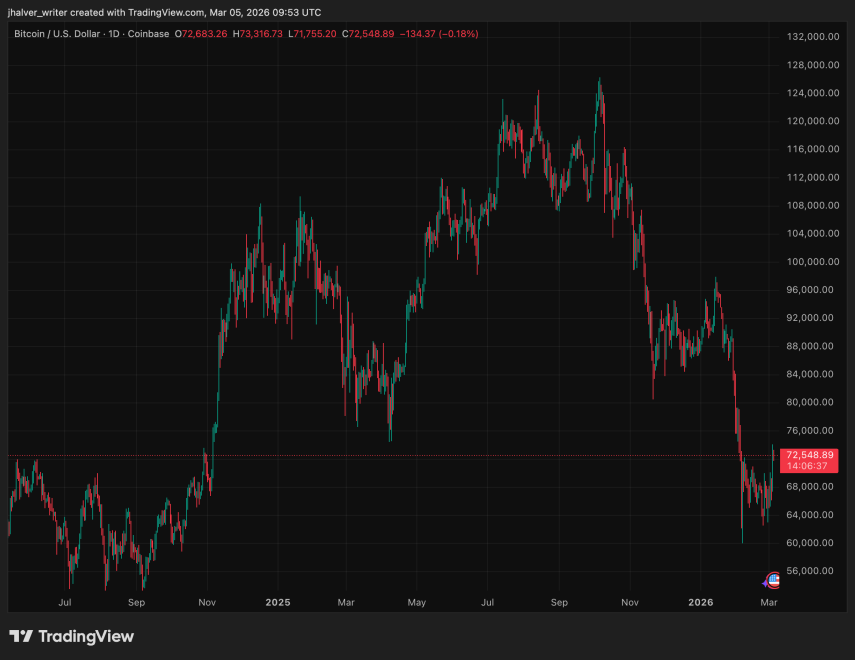
BTC’s price trends to the downside on the daily chart. Source: BTCUSD on Tradingview

Cover image from ChatGPT, BTCPUSD chart from Tradingview

相关问答

QWhat did Eric Trump accuse big banks like JPMorgan Chase, Wells Fargo, and Bank of America of doing?

AEric Trump accused big banks of actively blocking Americans from getting higher yields on their savings and preventing rewards or perks from being given to customers, claiming they are desperately targeting crypto and stablecoins to protect their low-rate monopoly.

QWhich two acts are central to the conflict between the Trump family and big banks regarding crypto and stablecoins?

AThe GENIUS Act and the Clarity Act are central to the conflict, with the GENIUS Act legalizing fully-backed dollar tokens but banning interest on customer balances, while the Clarity Act seeks to prohibit yields, rewards, or inducements for stablecoin holders.

QWhy does Eric Trump label the actions of big banks and their lobbyists as 'anti-American'?

AHe labels them as 'anti-American' because he believes they are undermining America's freedom ideals by protecting their monopoly, preventing deposit flight, and restricting consumers from earning higher yields through crypto and stablecoins.

QWhat does Eric Trump claim is the real motivation behind the banking lobby's support for bills like the Clarity Act?

AHe claims the real motivation is to protect their low-rate monopoly and prevent deposit flight, rather than genuine concerns about fairness or stability.

QHow does Eric Trump describe the big banks' response to the rise of digital finance?

AHe describes it as a mass panic and tantrum, accusing them of being hypocrites who are desperately trying to block the crypto industry because they are losing the digital finance race.

你可能也喜欢

从韩国到美国:多亏了AI,蓝领越来越吃香了

人工智能正在重塑劳动力市场,传统四年制大学学位的吸引力下降,而电工、焊工等技术型蓝领职业的需求和薪酬显著上升。数据显示,美国职业学校收入大幅增长,同时AI导致的白领裁员创下新高。供需两端变化推动年轻人重新规划职业路径,调查显示多数Z世代认为蓝领工作在AI时代更具就业保障。 职业教育热度近半年急剧攀升,年轻人主动寻求不易被AI替代且有实际用工需求的职业,技术岗位招聘甚至比程序员更困难。专家指出,这既是经济计算,也源于对高额学位债务和纯屏幕工作的反思。技术职业薪资中位数已追平或超越许多需要学位的工作,且提供边学边赚的学徒路径及创业可能。韩国半导体高中毕业生就业率极高,进入三星等企业可获得丰厚薪酬。 美国面临结构性技术工人短缺:大量婴儿潮一代即将退休,而新一代劳动力数量不足,缺口达数百万。同时,数据中心等基建扩张推高了相关技术工种需求。为此,摩根大通、Meta等企业正投资巨额资金开展培训项目。 尽管市场信号明确,但社会对职业教育的传统偏见仍构成“认知差距”。产业界需主动推广,让公众认识到技术职业不仅收入稳定,还是通向创业的快速路径,以真正缓解人才短缺。

marsbit35分钟前

从韩国到美国:多亏了AI,蓝领越来越吃香了

marsbit35分钟前

交易

现货
活动图片





