Crypto Under Fire: Why South Korea’s Bithumb Penalty Is A Warning Shot To Exchanges Worldwide

bitcoinist发布于2026-03-16更新于2026-03-16

文章摘要

South Korea's Financial Intelligence Unit (FIU) has imposed a six-month partial business suspension and a fine of 36.8 billion won (approximately $24–26 million) on Bithumb, one of the country's largest cryptocurrency exchanges. The penalties are due to serious breaches of Anti-Money Laundering (AML) and Know Your Customer (KYC) regulations, including dealings with unregistered overseas virtual asset service providers and inadequate customer due diligence. The exchange’s CEO received a reprimand, and its reporting officer faces a six-month suspension. This action is part of a broader regulatory crackdown following a system error at Bithumb in February that miscredited Bitcoin holdings. The move aligns with South Korea's efforts to strengthen crypto oversight in line with FATF standards. Similar enforcement trends are emerging globally, as seen in major penalties against exchanges like Binance in the U.S. and regulatory actions in Canada, Australia, and France. The case underscores increasing regulatory scrutiny on crypto exchanges worldwide and highlights the growing importance of robust compliance to mitigate counterparty risks.

South Korea’s Financial Intelligence Unit (FIU) has imposed a 6-month partial business suspension and 36.8 billion won fine on one the biggest Korean crypto exchanges, Bithumb.

A New Governance Hit On A Crypto Exchange

According to Korean outlet News1, the FIU has finalized heavy sanctions against Bithumb for serious Anti‐Money Laundering (AML) and Know Your Costumer (KYC) breaches, including dealings with unregistered overseas virtual asset service providers and weak customer due diligence under the Specific Financial Information Act.

The measures include a six‐month partial business suspension, focused on restricting certain virtual asset transfers, especially to external wallets for new users, and an administrative fine in the tens of billions of won (around $24–26 million). Alongside this, the CEO was issued a reprimand warning and the exchange’s reporting officer faces a six-month suspension.

This decision follows a wider supervisory campaign launched after Bithumb’s “ghost Bitcoin” system error this past February, which saw hundreds of thousands of BTC briefly mis‐credited and triggered full‐scale inspections across Korean exchanges. As reported by Bitcoinist, the FIU preliminarily notified Bithumb of the suspension on March 9.

Bithumb’s case mirrors previous Korean penalties against rivals like Upbit and Korbit, which have already faced multi‐million‐dollar fines and partial suspensions over widespread KYC and AML failures.

A Worldwide Trend

Recently, South Korea has been moving at a rapid speed to align its crypto oversight with the Financial Action Task Force (FATF) standards, expanding its Travel Rule implementation and treating major exchanges more and more like systemically important financial institutions, as seen by the recent proposal of the Digital Assets Basic Act, an umbrella bill that packages a wide range of crypto policy measures, from stablecoin rules to crypto exchange‐traded funds.

Globally, the pattern is no different. From Binance’s record multi‐billion‐dollar AML and sanctions settlement in the US to Canada’s nine‐figure fine against Cryptomus and targeted audits in Australia and France, regulators worldwide seem to be converging on a “no more excuses” approach to crypto AML.

For traders, the actionable takeaway is that jurisdiction and compliance profile now directly affect counterparty risk: platforms with weak AML controls risk sudden suspensions, tightened withdrawal rules, or liquidity shocks that can spill over into prices and funding conditions. In today’s climate, trading on exchanges that cut corners on AML rules might mean an extra hidden risk of being suddenly hit by regulators.
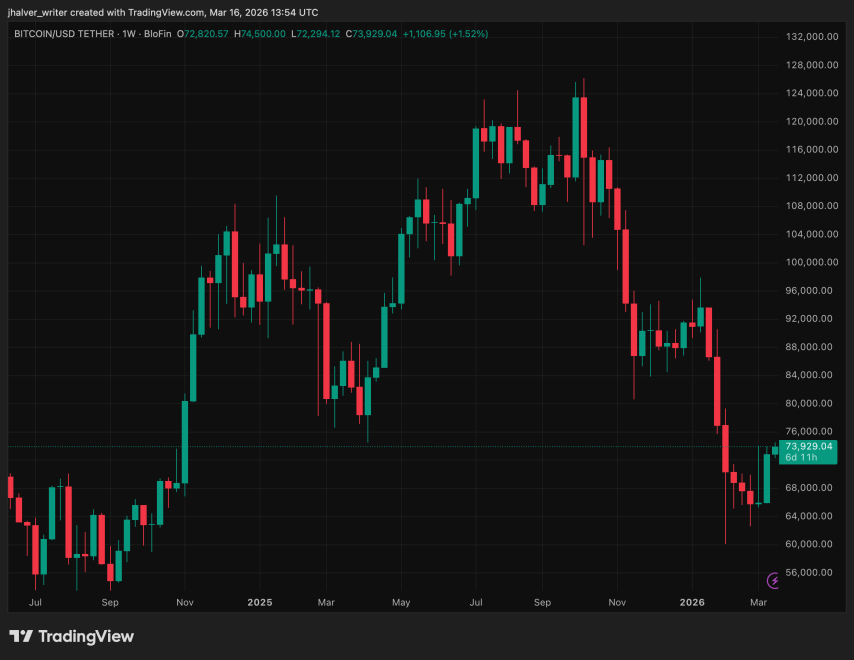
BTC’s price almost reaches $74K on the daily chart. Source: BTCUSDT on Tradingview

Cover image from Perplexity, BTCUSDT chart from Tradingview

热门币种推荐

相关问答

QWhat penalties did South Korea's FIU impose on Bithumb and for what reasons?

ASouth Korea's FIU imposed a 6-month partial business suspension and a 36.8 billion won (approximately $24-26 million) fine on Bithumb due to serious Anti-Money Laundering (AML) and Know Your Customer (KYC) breaches, including dealings with unregistered overseas virtual asset service providers and weak customer due diligence under the Specific Financial Information Act.

QWhat triggered the wider supervisory campaign that led to Bithumb's penalties?

AThe wider supervisory campaign was triggered by Bithumb's 'ghost Bitcoin' system error in February, where hundreds of thousands of BTC were briefly mis-credited, which prompted full-scale inspections across Korean exchanges.

QHow does South Korea's recent regulatory approach align with global standards?

ASouth Korea is rapidly aligning its crypto oversight with the Financial Action Task Force (FATF) standards, expanding its Travel Rule implementation and treating major exchanges more like systemically important financial institutions, as seen in the proposed Digital Assets Basic Act.

QWhat are the global examples of similar regulatory actions against crypto exchanges mentioned in the article?

AGlobal examples include Binance's record multi-billion-dollar AML and sanctions settlement in the US, Canada's nine-figure fine against Cryptomus, and targeted audits in Australia and France.

QWhy is trading on exchanges with weak AML controls considered risky for traders according to the article?

ATrading on exchanges with weak AML controls is risky because platforms risk sudden suspensions, tightened withdrawal rules, or liquidity shocks that can spill over into prices and funding conditions, adding an extra hidden risk of regulatory action.

你可能也喜欢

STRC股息收益率维持在12%的战略框架下,因股价低于面值

纳斯达克上市公司Strategy执行主席迈克尔·赛勒于8月1日确认,其STRC系列A无期限可变利率优先股的股息率将维持在12.00%直至2026年8月。STRC于2025年7月以9%的利率发行,经过连续七次月度上调,于2026年7月1日达到12%。 该股息的“棘轮”机制规定,每当STRC股价跌破95美元,股息率将永久性上调0.5%,旨在将股价推回100美元的面值,以减少波动并为公司通过“随时发行”计划增发STRC、筹集资金购买比特币提供支持。然而,该机制效果不及预期。截至7月31日,STRC股价收于89.46美元,仍低于面值约10-11%,尽管其股息率已达历史最高。 竞争压力加剧了困境。竞争对手Strive发行的优先证券提供约13%的收益率并每日派息,吸引了投资者需求,导致STRC与SATA之间的价差扩大至历史高位。持续的折价迫使Strategy暂停了通过ATM计划发行新的STRC证券,限制了其通过此渠道增持比特币的能力。 分析人士警告,“棘轮”结构具有长期风险,因其义务只会单向增加。此外,约83%的流通STRC股票由散户持有,他们在市场下跌时可能更易恐慌性抛售。有律师事务所已就比特币价格低于公司平均成本时,Strategy能否维持优先股股息支付展开调查。 为应对担忧,Strategy建立了流动性储备,可覆盖约26个月的股息和利息支付,并于6月底通过了“数字信贷资本框架”,授权动用20亿美元进行优先股和普通股回购,同时启动了比特币变现计划,以便在认为有利时出售比特币补充储备,但公司强调并无出售义务。

cryptonews.ru37分钟前

STRC股息收益率维持在12%的战略框架下,因股价低于面值

cryptonews.ru37分钟前

交易

现货

热门文章

如何购买S

欢迎来到HTX.com!我们已经让购买Sonic(S)变得简单而便捷。跟随我们的逐步指南,放心开始您的加密货币之旅。第一步:创建您的HTX账户使用您的电子邮件、手机号码注册一个免费账户在HTX上。体验无忧的注册过程并解锁所有平台功能。立即注册第二步:前往买币页面,选择您的支付方式信用卡/借记卡购买:使用您的Visa或Mastercard即时购买Sonic(S)。余额购买:使用您HTX账户余额中的资金进行无缝交易。第三方购买:探索诸如Google Pay或Apple Pay等流行支付方法以增加便利性。C2C购买:在HTX平台上直接与其他用户交易。HTX场外交易台(OTC)购买:为大量交易者提供个性化服务和竞争性汇率。第三步:存储您的Sonic(S)购买完您的Sonic(S)后,将其存储在您的HTX账户钱包中。您也可以通过区块链转账将其发送到其他地方或者用于交易其他加密货币。第四步:交易Sonic(S)在HTX的现货市场轻松交易Sonic(S)。访问您的账户,选择您的交易对,执行您的交易,并实时监控。HTX为初学者和经验丰富的交易者提供了友好的用户体验。

3.3k人学过发布于 2025.01.15更新于 2026.06.02

如何购买S

相关讨论

欢迎来到HTX社区。在这里,您可以了解最新的平台发展动态并获得专业的市场意见。以下是用户对S(S)币价的意见。

活动图片