With Bitcoin losing the $80,000 price mark, the broader cryptocurrency market has shifted heavily into a bearish phase, raising speculation about the beginning of a bear market. While BTC’s price was showing weak signals, selling pressure heightened, which seems to have led to the sudden pullback during the weekend.
No New Money, More Bitcoin Sellers
Bitcoin’s recent pullback has sent a shockwave across the crypto space, with other major assets following the downward trend. Currently, the flagship asset is coming under serious pressure with investors’ sentiment beginning to shift, several metrics turning bearish, and the market structure weakening.
Following the pullback, Ki Young Ju, a popular market expert and founder of the CryptoQuant platform, has shed light on the current BTC’s downside move and the market dynamics. In the analysis, the founder found that persistent selling continues to outweigh demand, with little sign of fresh capital stepping in to stabilize the market.
While new purchasers are mostly on the sidelines, on-chain and market flow statistics indicate that current holders are driving the decline. Thus, the price is now fragile since each wave of selling encounters narrow bid support rather than significant accumulation.
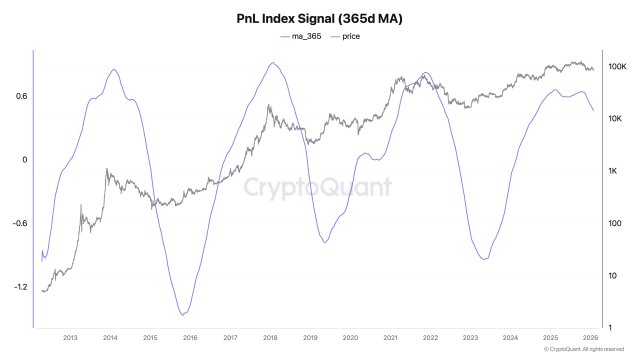
Ki Young Ju has drawn attention to the Bitcoin Realized Cap, which appears to have flatlined, suggesting that no new capital is flowing into BTC. It is worth noting that when the market cap falls in that environment, it is not a bull market.
Currently, the founder highlighted that early holders are sitting on big realized gains, which is attributed to the Bitcoin Spot Exchange-Traded Funds (ETFs) and MicroStrategy (MSTR) buying. While they have been taking profits since the beginning of last year, strong inflows kept BTC near the $100,000 level. However, those inflows have now dried up.
Within the period, MSTR was one of the major drivers of this rally. Nonetheless, the market won’t have a -70% collapse like in previous cycles unless Saylor drastically reduces his holdings. In the meantime, the bottom is still unclear because selling pressure is still present, but this bear market is probably going to create a broad sideways consolidation.
Reduced Selling Volume Meets Sharp Decline
As Bitcoin’s price wanes, selling continues to seem to be shrinking, with each day smaller than the last. In a post on X, CW, a market expert and data analyst, revealed that BTC net selling volume on January 31 was half of that on the 30th. However, the decline was even bigger than the previous day.
The decline was larger, but the cumulative selling volume was much smaller when compared to the drop. In addition, on-chain data shows that large holders or whales are heavily buying BTC. Interestingly, while these deep-pocket players are buying, retail investors are choosing to dump their holdings.
Until a bullish rally begins, whales will encourage selling and liquidate high-leverage retail future investors. For now, Bitcoin’s short-term price trajectory remains constrained by the current volatile market conditions.