A ghost chain is a blockchain that is technically running but has very little on-chain activity and development activity.
Over the past decade, there have been many shiny new blockchains that have burst onto the scene. They managed to capture the public’s attention, attracting capital inflows, but have fizzled away eventually.
This fizzle can be due to a lack of funding, community conviction, or the failure to address real issues.
A decline in upgrades and communication regarding the future vision, a failure to keep hold of the influx of initial users due to questionable utility, or a security mishap that leads to a significant loss due to hacks and exploits can devastate investor sentiment.
Compounded over time, a steady decline in usage and trading volume can see a functional chain that is hardly being used at scale.
The chains that have stood the test of time are the ones high up in the crypto assets list. None of the dozens of so-called Ethereum killers that seized the public imagination have managed to knock Ethereum off its pedestal in the crypto ecosystem.
A closer look at the current top Layer 1 tokens
Owing to its reliability and security, and combined with Layer-2 solutions that address speed, Ethereum is the dominant base layer blockchain. It dominates the DeFi sectors due to liquidity and security and also processes over half of all stablecoin activity.
XRP is optimized to be a cross-border settlement layer by using its On-Demand Liquidity network to convert fiat into XRP, send it globally, and convert it back to fiat within seconds.
Solana has exceptional throughput and is a hub for trading. Low-cost, high-speed settlements mean that Solana is a leader in real-world asset tokenization.
TRON is the primary Tether [USDT] settlement layer, with over 75% of USDT transfers occurring on this network. TRON’s high throughput also makes it a highly active DeFi chain by transaction volume.
And of course, the Bitcoin network has the strongest security among them all. The asset itself is primarily used as a store of value and a hedge against inflation and also acts as institutional-grade collateral.
Cardano has a more unique role in the crypto ecosystem. Its focus is on sustainability, security, and rigorous, peer-reviewed development methodology. As a result, it is well-suited for institutional compliance and enterprise requirements.
Factors critics point at to throw “ghost chain” shade at Cardano
Earlier in June, TapTools, the Cardano ecosystem’s primary blockchain explorer, began shutting down. The exit of senior executives took valuable technical know-how away.
This knowledge could not be replaced quickly enough to allow the platform to continue to be operated responsibly. It was worrisome.
Founder Charles Hoskinson warned that more dApps and DeFi on Cardano would die in the second half of the year. Treasury and community governance systems were unable to react fast enough to help save struggling projects.
Amid worsening market sentiment, the pressure on smaller projects with limited revenue could add to the concerns swirling around the Cardano ecosystem.
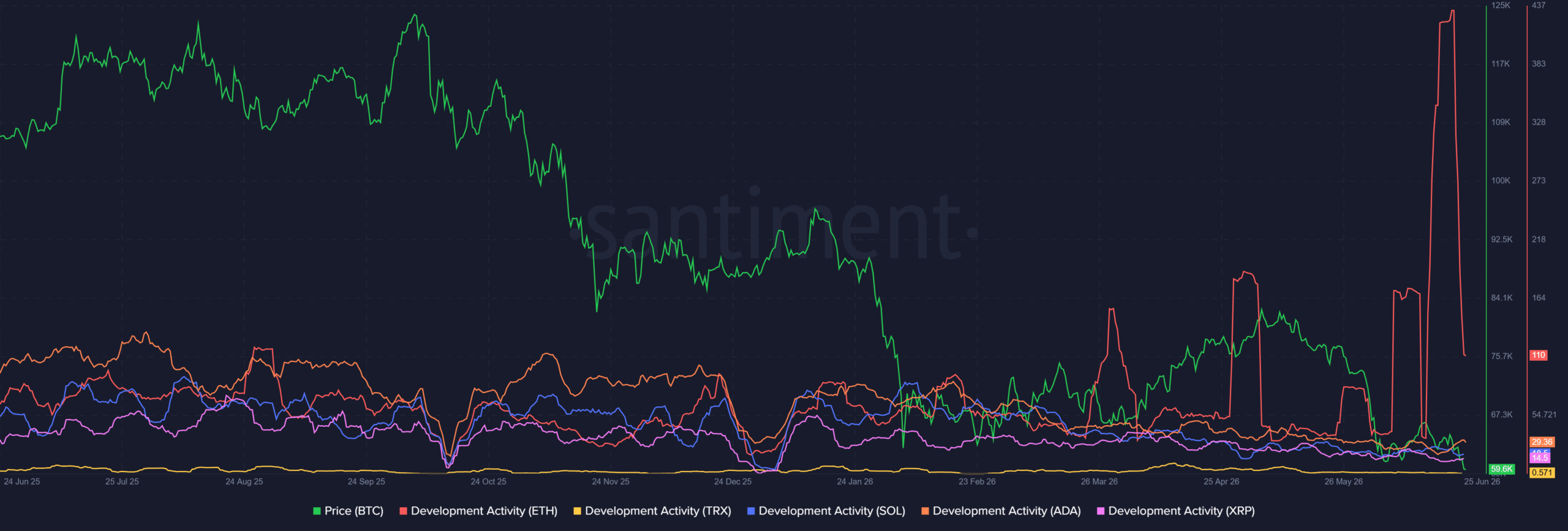
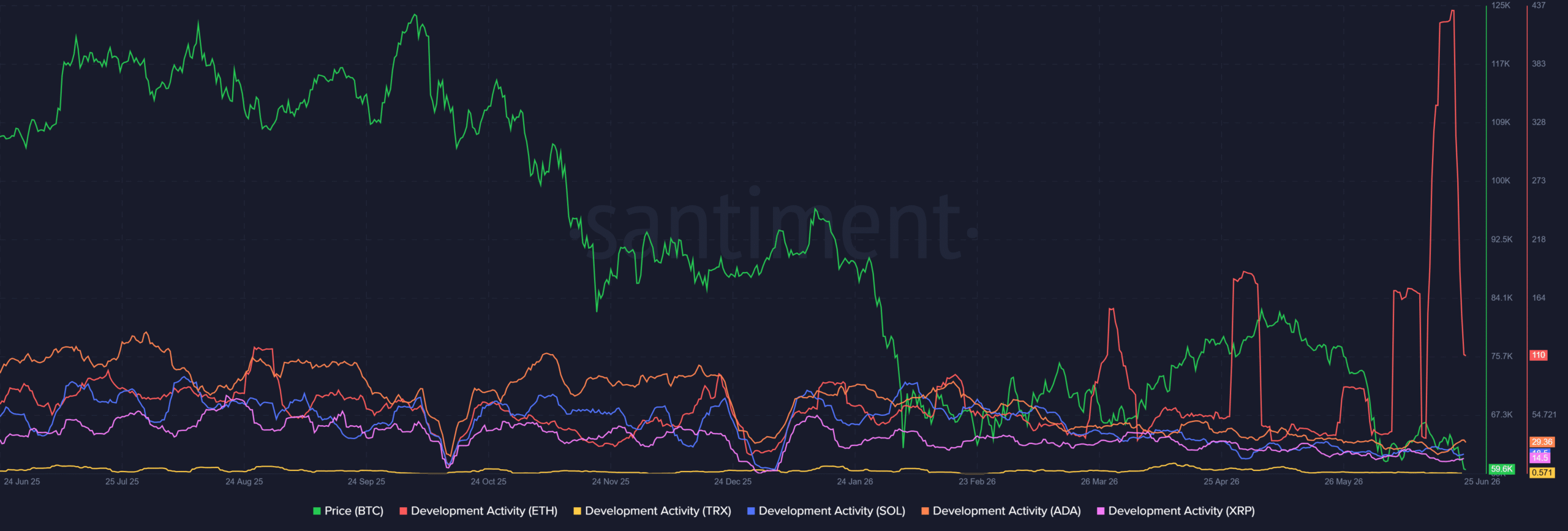
On the bright side, the developmental activity statistics for Cardano were strong. Santiment data showed that it was only second on the list of the prominent Layer 1 networks discussed earlier, in terms of developmental activity.
Yet, Cardano has far fewer dApps, numbering only 34, compared to Solana’s 442 and Ethereum’s 1564, according to blockchain data platform Moralis.
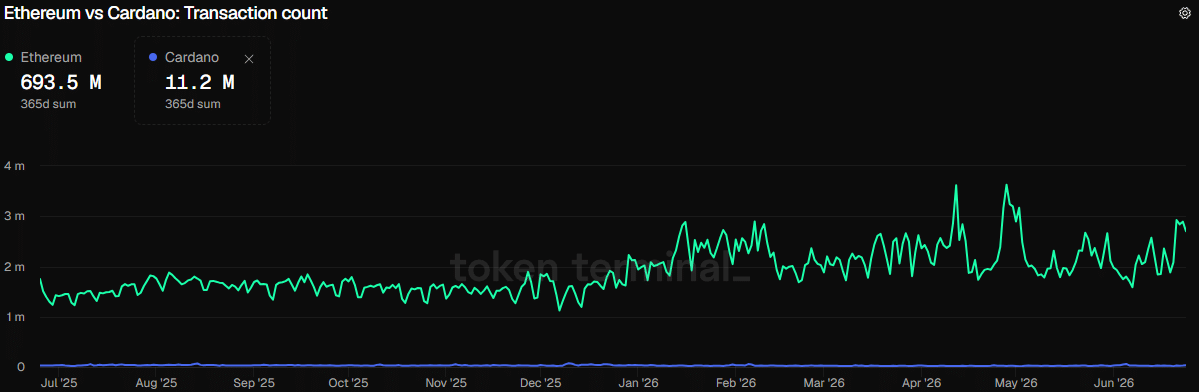
Yet, the transaction count comparison between Ethereum and Cardano showed a massive gulf. Solana was one of the leaders on this front, with 103.2 billion transactions over the past year, according to Token Terminal data.
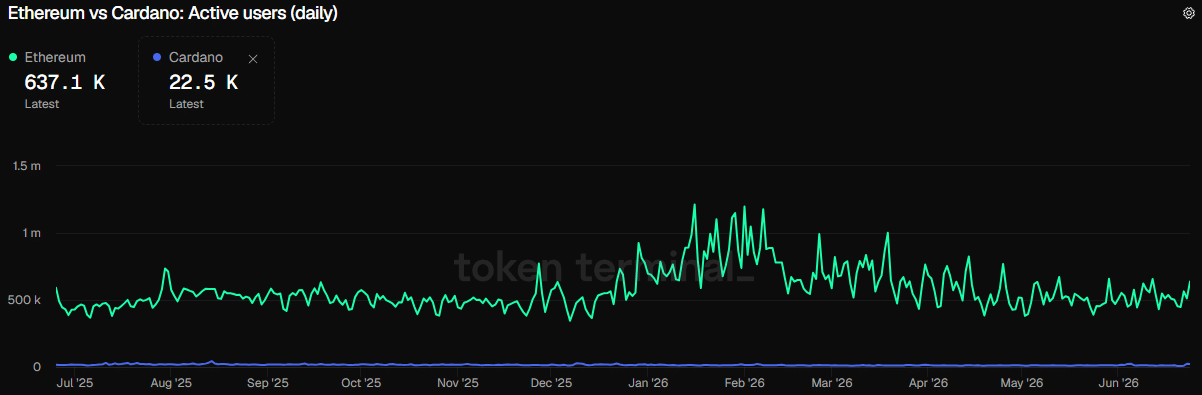
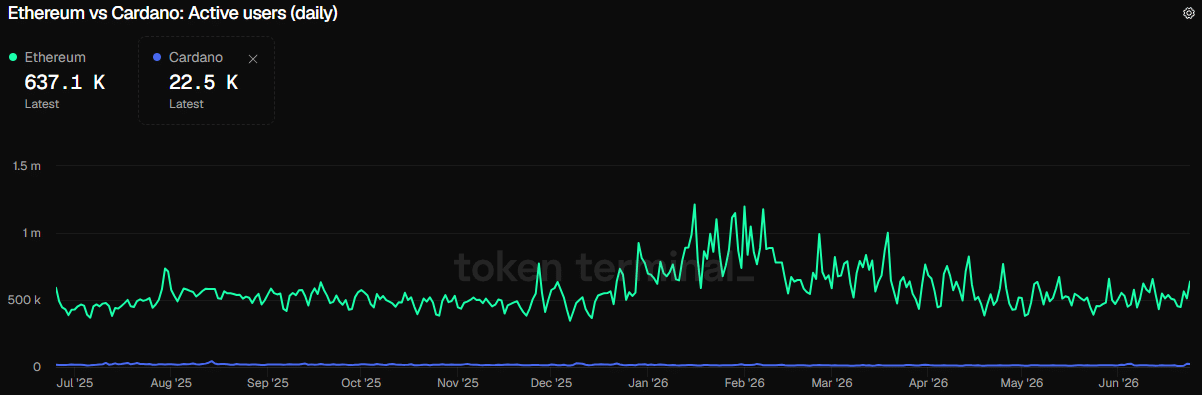
Similarly, the daily active users also showcased a giant gap in the numbers on the two chains. On this front, TRON was the winner, with 3.9 million active users, much higher even than Ethereum.
Explaining the vast gulf between Cardano and the other leading blockchains
While the extreme difference in on-chain activity can be alarming at first, it is not reason enough to conclude Cardano is a ghost chain. The network uses an Extended Unspent Transaction Output (EUTXO) model.
Batcher protocols scoop up the open orders on the blockchain, aggregating them into an optimized transaction that can be submitted to the Cardano ledger.
Effectively, the difference of a factor of 50 that we saw in a couple of metrics examined can be explained by the EUTXO model. Batching capabilities of the network offer advantages in determinism and security, but also underestimate on-chain activity.
In the past, blockchains that failed to fill a niche and dominate a segment of the market have withered away. The established survivors were doing relatively well, but it remains to be seen if they can keep their status in the years to come.
Final Summary
- The blockchain trilemma means that various Layer 1s have to make their own tradeoffs. The dominant chains have managed to seize a niche for themselves.
- The Cardano network activity was much lower than its peers, but this alone was not reason enough for critics to brand it a “ghost chain.”