Bitcoin price has gained 15% in the past 13 days, and during this timeframe, traders’ bearish bets in BTC futures were liquidated in excess of $530 million compared to bulls.
⠀
After rallying to $19,000 on Jan. 12, Bitcoin reached its highest price since the FTX exchange collapse on Nov. 8. The move was largely fueled by the United States Consumer Price Index (CPI) expectation for December, which matched consensus at 6.5% year-over-year — highlighting that the inflationary pressure likely peaked at 9% in June.
⠀
Furthermore, on Jan. 11, FTX attorney Andy Dietderich said $5 billion in cash and liquid cryptocurrencies had been recovered — fueling hopes of partial return of customer funds in the future. Speaking to a U.S. bankruptcy judge in Delaware on Jan. 11, Dietderich stated that the company plans to sell $4.6 billion of non-strategic investments.
⠀
Let’s look at derivatives metrics to understand whether professional traders are excited about Bitcoin’s rally to $19,000.
⠀
Margin use increased as Bitcoin price rallied to $18,300 and above
⠀
Margin markets provide insight into how professional traders are positioned, and margin is beneficial to some investors because it allows them to borrow cryptocurrency to leverage their positions.
⠀
For instance, one can increase exposure by borrowing stablecoins to buy Bitcoin. On the other hand, Bitcoin borrowers can only short the cryptocurrency as they bet on its price declining. Unlike futures contracts, the balance between margin longs and shorts isn’t always matched.
⠀
⠀
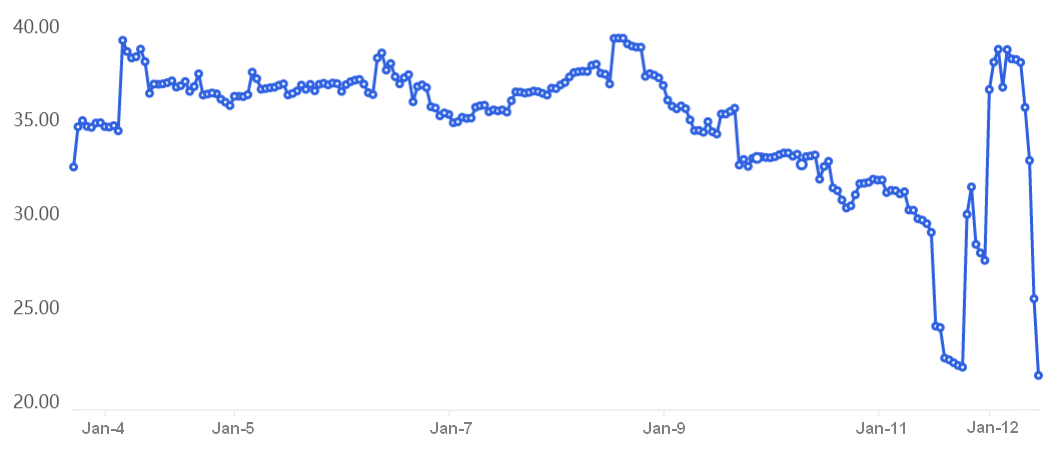
The above chart shows that OKX traders’ margin lending ratio firmly increased on Jan. 11, signaling that professional traders added leverage longs as Bitcoin rallied toward $18,300.
⠀
More importantly, the subsequent 2% correction on Jan. 12 that led Bitcoin to a $17,920 low marked the complete margin reversal, meaning whales and market makers reduced their bullish positions using margin markets.
⠀
Presently at 21, the metric favors stablecoin borrowing by a wide margin, indicating that bears are not confident about opening Bitcoin margin shorts.
⠀
Futures traders ignored the Bitcoin price pump
⠀
The long-to-short metric excludes externalities that might have solely impacted the margin markets. In addition, it gathers data from exchange clients’ positions on the spot, perpetual and quarterly futures contracts, thus offering better information on how professional traders are positioned.
⠀
There are occasional methodological discrepancies between different exchanges, so readers should monitor changes instead of absolute figures.
⠀
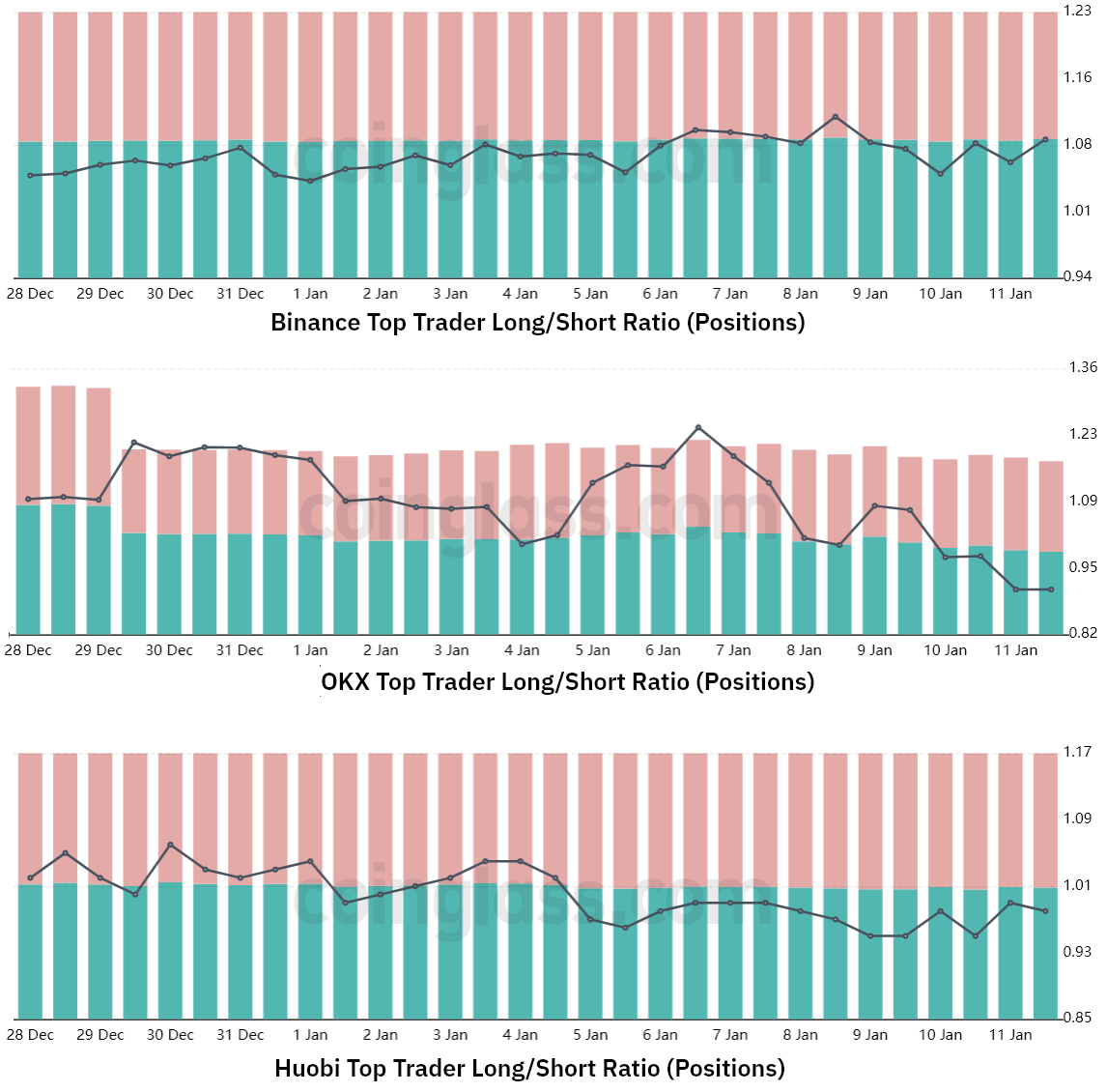
Exchanges' top traders Bitcoin long-to-short ratio. Source: Coinglass
⠀
Even though Bitcoin broke above the $18,000 resistance, professional traders have kept their leverage long positions unchanged, according to the long-to-short indicator.
⠀
For instance, the ratio for Binance traders stood firm at 1.08 from Jan. 9 until Jan. 12. Meanwhile, top traders at Huobi reduced their leverage longs as the indicator moved from 1.09 to the present 0.91. Lastly, at crypto exchange OKX, the long-to-short slightly increased favoring longs, moving from 0.95 on Jan. 9 to the current 0.97.
⠀
Traders using futures contracts were not confident enough to add leveraged bullish positions despite the price increase.
⠀
Bitcoin price could retest $17,300
⠀
While the margin data shows that sizable leverage was used to push Bitcoin above $18,000, it suggests that the situation was only temporary. Most likely, those professional traders deposited more margin and consequently reduced their leverage after the event. In essence, the metric looks very healthy because it indicates that margin markets are not overbought.
⠀
As for the top trader’s long-to-short, the absence of demand for leverage longs using futures contracts is somewhat concerning, but at the same time, it leaves room for additional purchasing power.
⠀
From a derivatives standpoint, even if Bitcoin retests $17,300, the bulls should not be concerned because the derivatives indicators show little demand from short sellers and no excessive leverage from buyers.