This year hasn’t been kind to Bitcoin miners as the invasion of Ukraine in February 2022 triggered a global energy crisis, pushing mining costs through the roof.
”“
In addition, the collapse of Luna in June tanked Bitcoin’s price to a two-year low, wiping out the little profitability miners had left.
”“
After a challenging summer with skyrocketing electricity prices, miners welcomed winter scarred by the FTX fallout and even more uncertain prices.
”“
The 2022 crisis hit both large and small mining operations. Large, publicly-listed mining companies were the ones hit the worst, as a hugely profitable 2021 led many to take on debt and embark on expensive expansion projects.
”“
The struggle miners have been through isn’t anecdotal – on-chain data shows an incredibly stressful year, according to CryptoSlate’s analysis.
”“
Miner revenue per Exahash has been dropping sharply since the beginning of the year. Revenue denominated in USD has seen significantly more volatility, spelling trouble for those that decided to sell their BTC holdings.
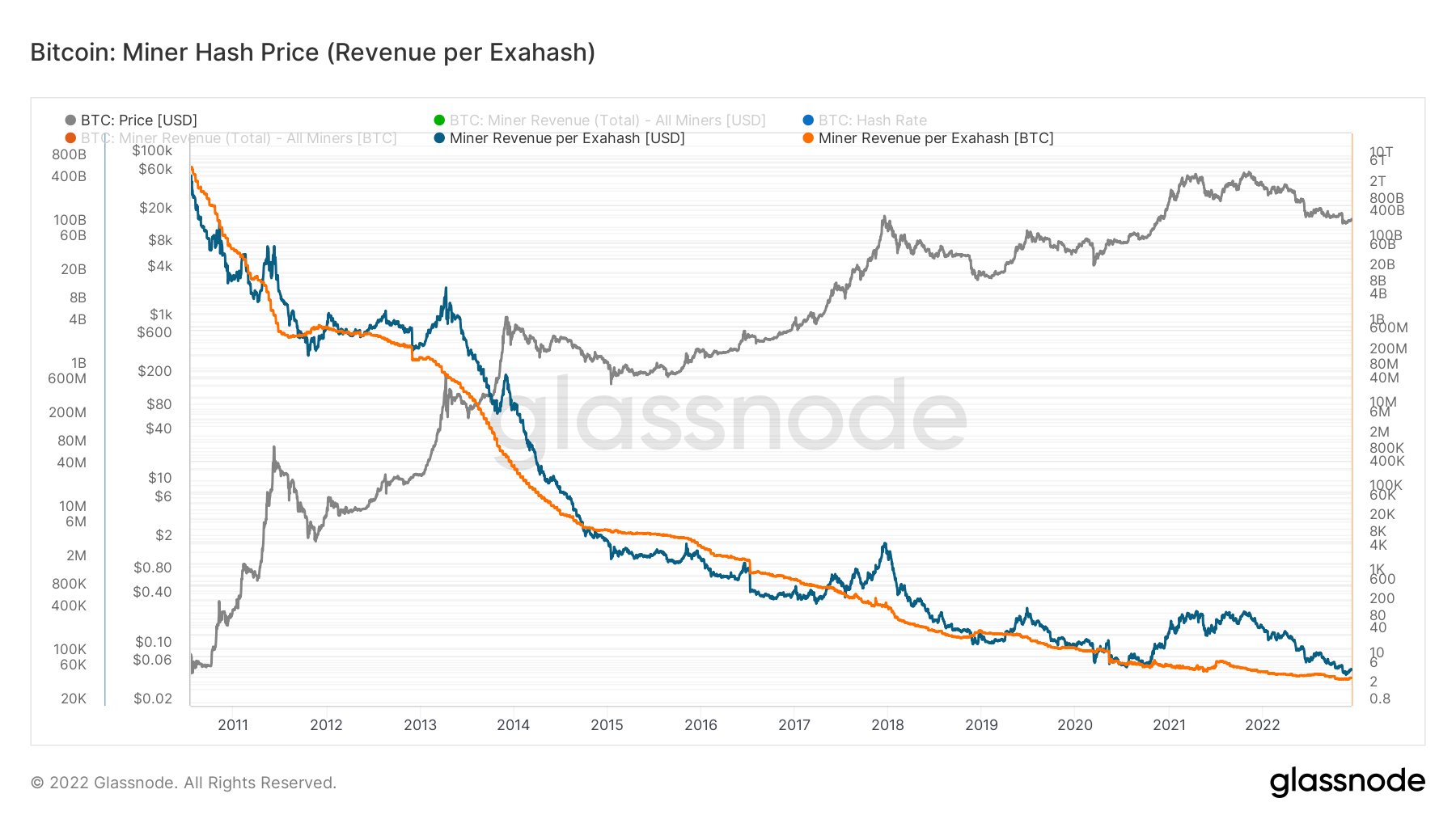
Graph showing miner revenue per Exahash (Source: Glassnode)
”“
Looking at hash ribbons further confirms this trend. The metric analyzes the 30-day moving average and the 60-day moving average of the Bitcoin hash rate to determine when miners capitulate. When the 30-day MA drops below the 60-day MA, capitulation begins as Bitcoin becomes too expensive to mine. When the trend reverses, Bitcoin mining returns to being profitable.
”“
Since the beginning of the year, the market has seen three instances of these moving averages crossing — in June, July, and August. And now, the beginning of December saw the fourth reversal of moving averages, indicating another capitulation has begun.
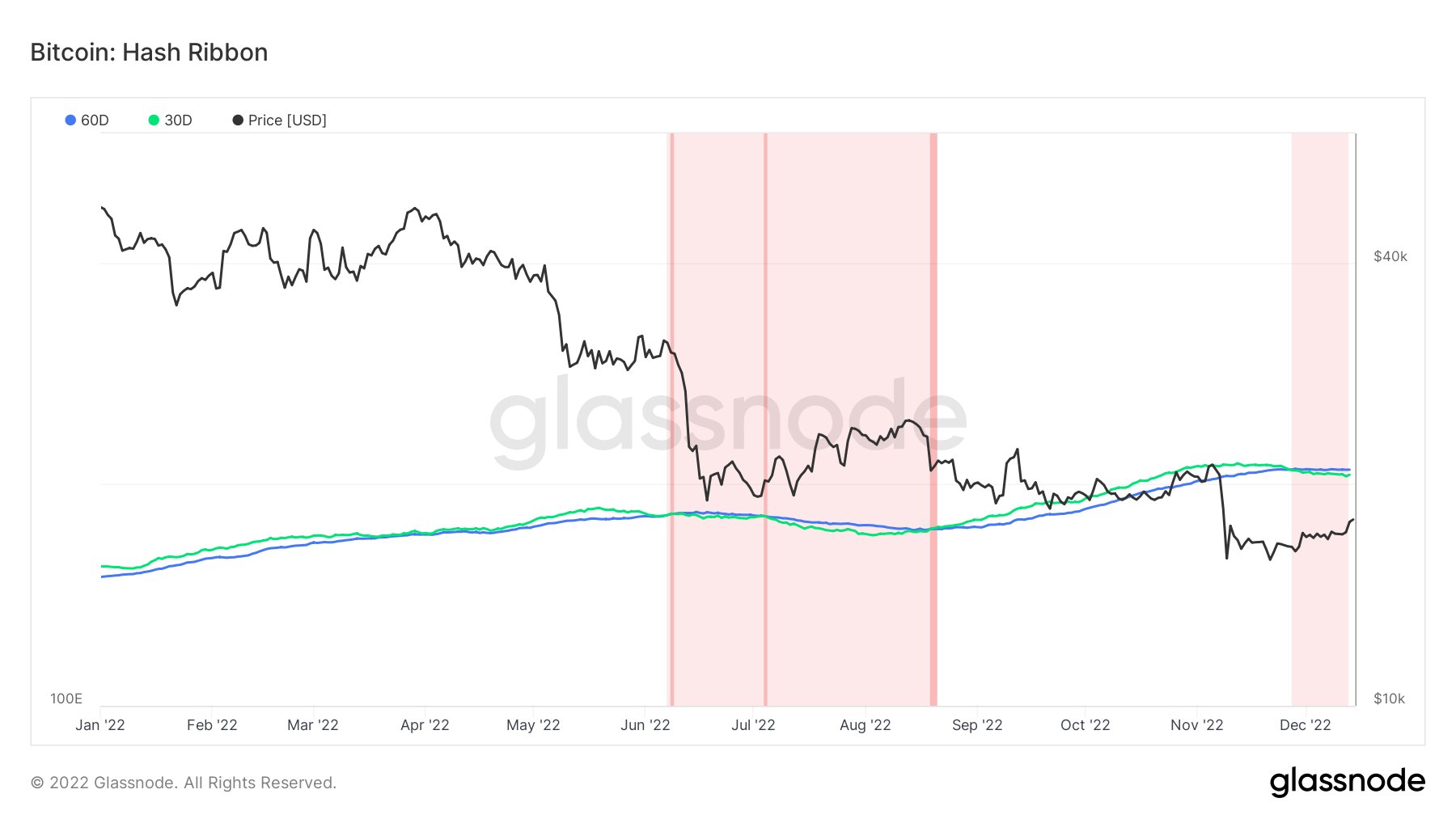
Graph showing Bitcoin hash ribbons in 2022 (Source: Glassnode)
”“
On-chain data clearly shows miners have been capitulating en masse throughout the year. However, this doesn’t mean that they have been selling all their BTC.
”“
Data analyzed by CryptoSlate shows that there has actually been a notable decrease in the amount of BTC miners have been selling since the beginning of the year.
”“
Looking at the number of outgoing transactions from miner wallets in 2022 reveals a decreasing selling pressure. Outside of a short-lived spike in outgoing transfers in mid-November, the trend has been steadily declining.
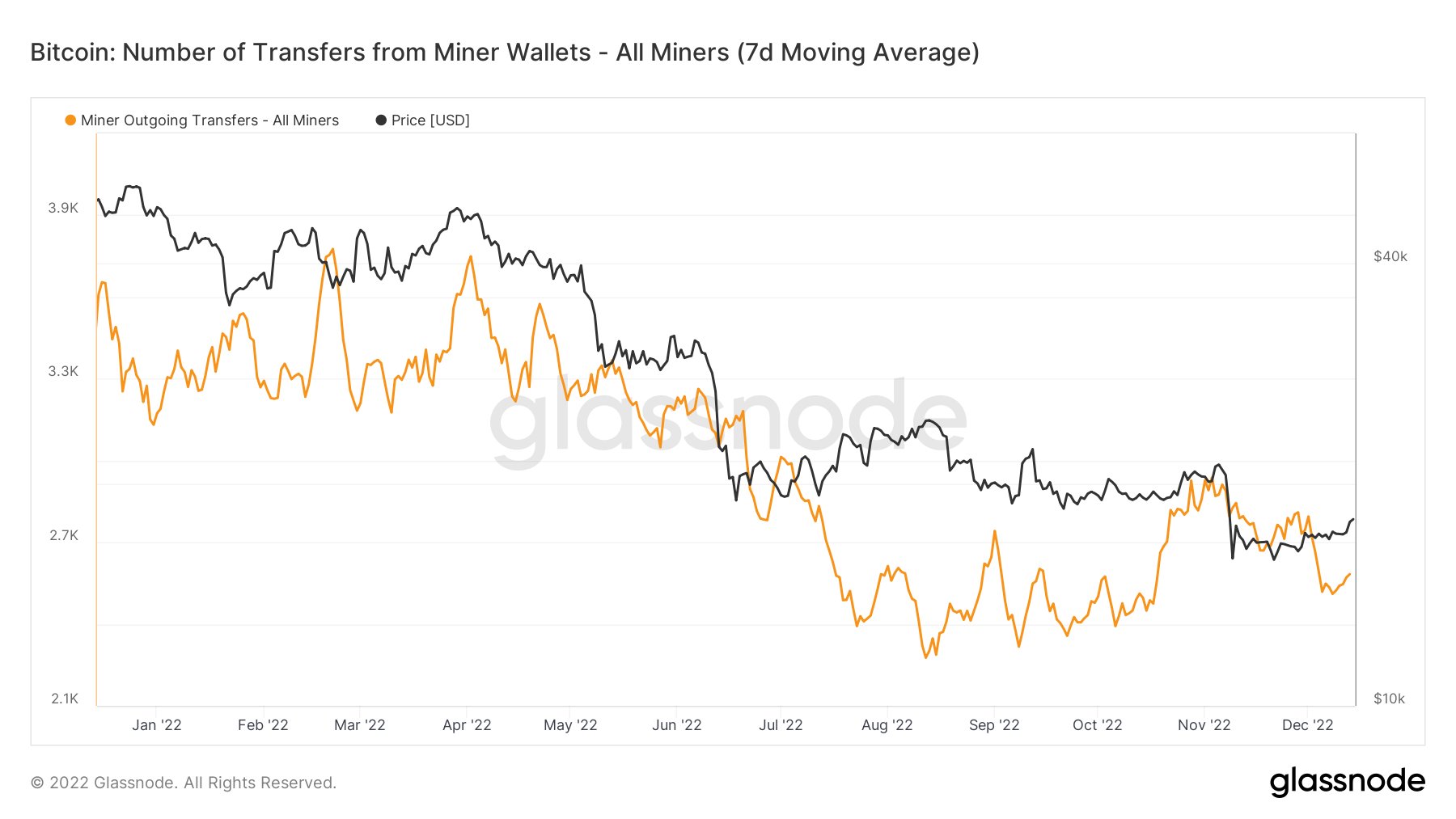
Graph showing the number of outgoing transfers from miner wallets in 2022 (Source: Glassnode)
”“
Transfers from miner wallets to exchanges further confirm this trend.
”“
Since the beginning of the year, miner transfers to all exchanges have been decreasing. Miners sent a total of around 57,000 BTC to exchanges in 2022, with 18,500 going to Binance and around 12,500 going to Coinbase.
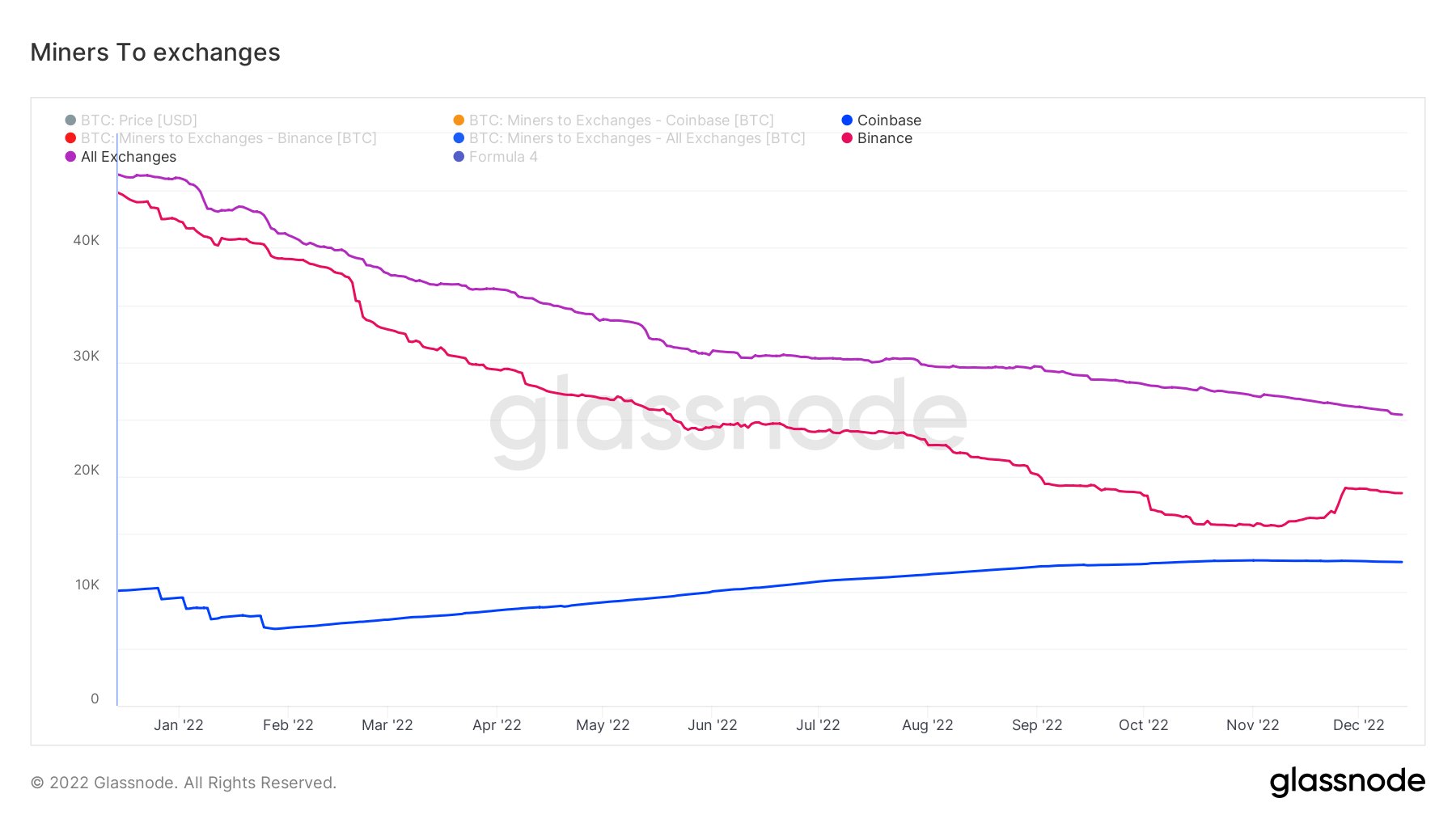
Graph showing transfers from miner wallets to exchanges in 2022 (Source: Glassnode)
”“
Diving deeper into Bitcoin’s hash rate reveals that the strength of the network hasn’t been compromised. The selling pressure driven up by rising electricity prices and skyrocketing hardware costs hasn’t affected the hash rate. In fact, Bitcoin’s hash rate is currently climbing back to the yearly high it recorded in mid-November — in spite of Bitcoin’s dropping price.
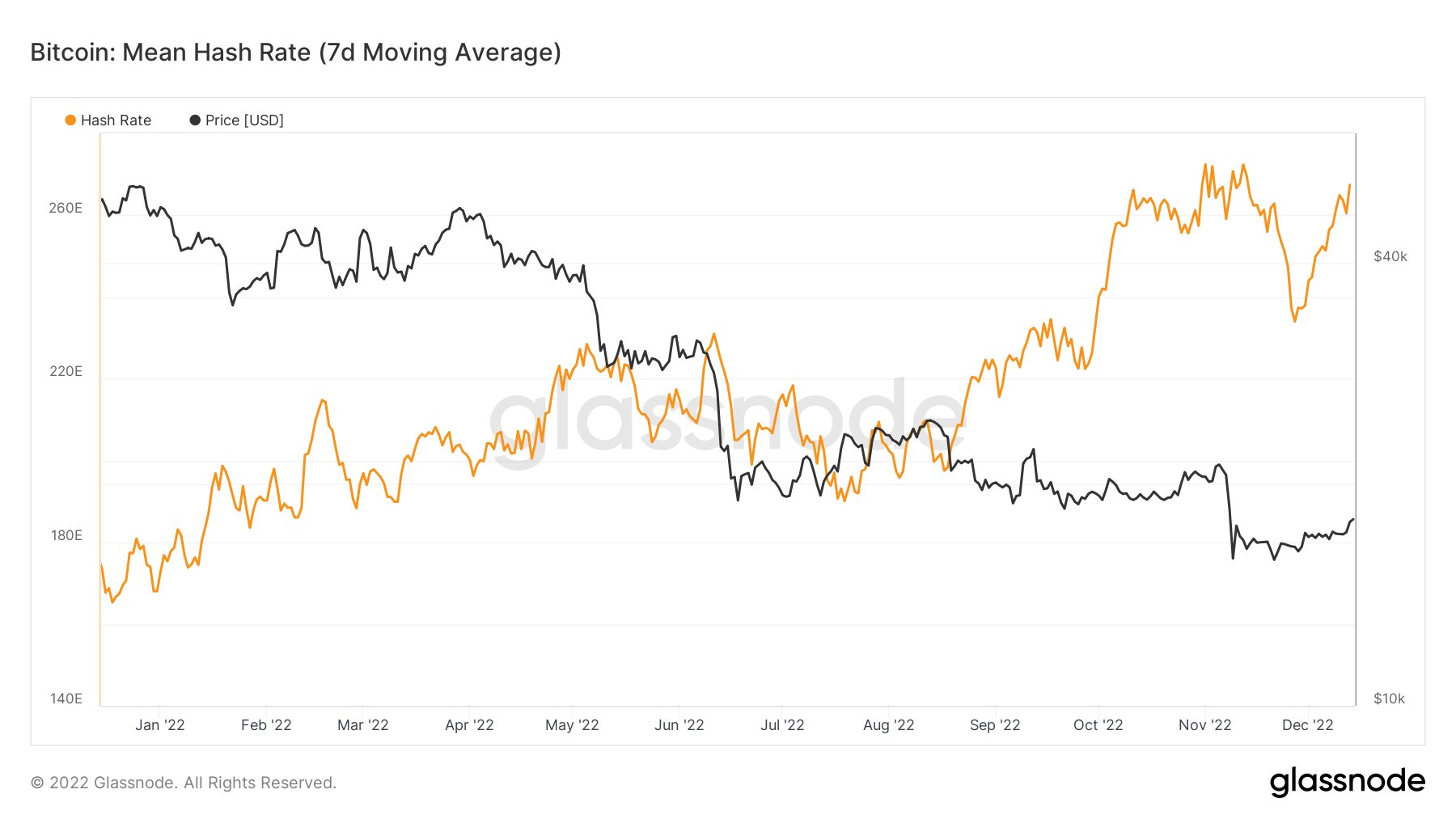
Graph showing Bitcoin’s price and hash rate in 2022 (Source: Glassnode)