This year, roughly one-third of the newly added global computing power is ultimately serving just two AI companies!
These two are Anthropic and OpenAI.
By next year, this proportion could rise to half.
At this rate, by the end of 2028, the two companies might control the majority of the world's effective available computing power.
The speaker is Dylan Patel, founder of SemiAnalysis.
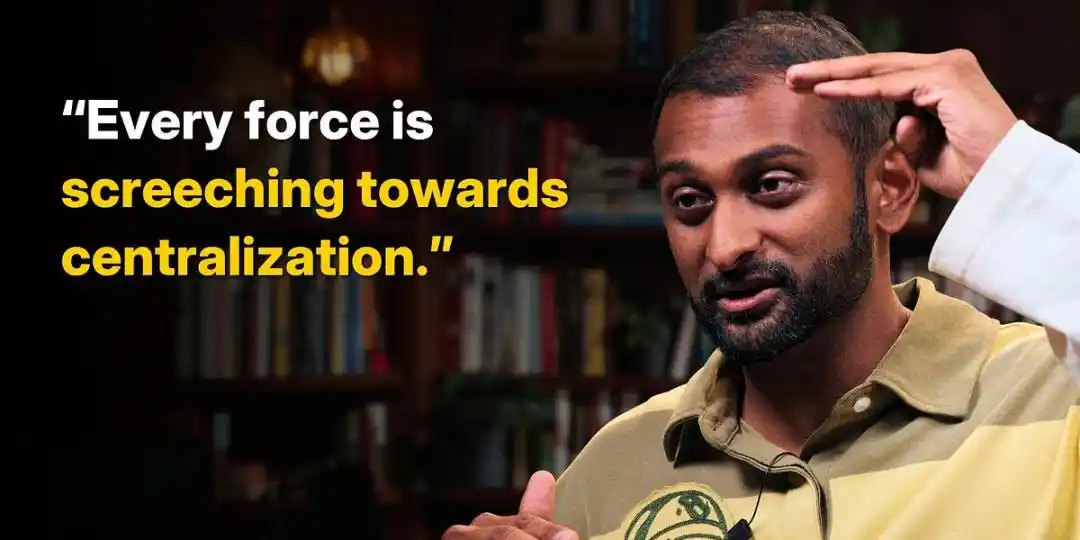
Dylan Patel guest on Dwarkesh Podcast.
On August 25, he was a guest on the Dwarkesh Podcast, calculating the computing power accounts for the next three years.
In the last 10 minutes, the conversation shifted from computing power to a larger question:
Could AI power really fall into the hands of a very few companies?
Seeing this, Thomas Wolf, co-founder and Chief Science Officer of Hugging Face, was directly startled.
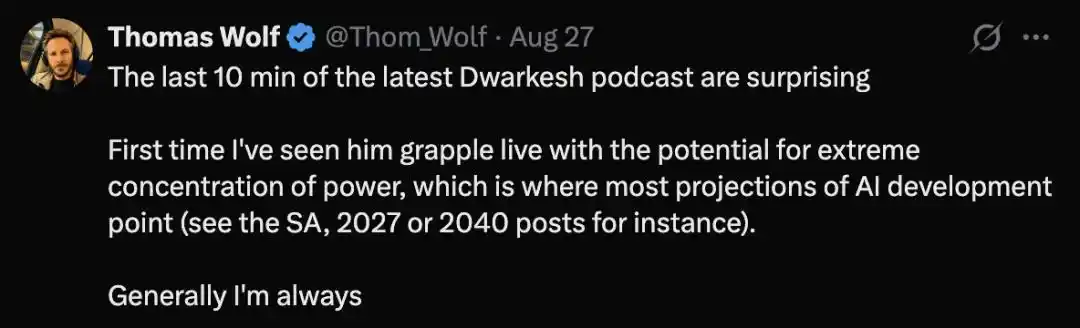
When reposting, he said this was the first time he had seen Dwarkesh grapple with this issue on the spot.
Coming from him, this is no surprise.
Wolf has bet his career on open-source, which he sees as the way to block the concentration of power in closed-source giants.
Consuming Three Nuclear Power Plants in a Year
First, look at how fast these two companies are consuming computing power.
At the beginning of the year, OpenAI had about 2 gigawatts, and Anthropic had less than 2 gigawatts. By the end of this year, both will exceed 5 gigawatts.
An increase of three to four times in a year, and the unit is gigawatts.
One gigawatt is roughly the output power of a large nuclear power plant: equivalent to consuming the output of three nuclear plants in a year!
This year, the global newly built computing power is about 30 gigawatts, 50 gigawatts next year, and around 70 gigawatts by 2028. The 30% devoured by these two companies comes from this 30 gigawatts.
Not only is the quantity increasing, but there's also a multiplier easily overlooked: one watt added this year is far more powerful than one watt installed two years ago:
Chips of this generation, like GB300, TPUv7, Trainium3, have 3 to 5 times the performance per watt of the previous generation.
Therefore, when Dylan says "the two companies will take half of the new computing power by the end of 2027," the gold content of that half is much higher than the existing stock, and increasingly so each subsequent year.
These two multipliers combined lead to Dylan's statement about "the majority of effective available computing power."
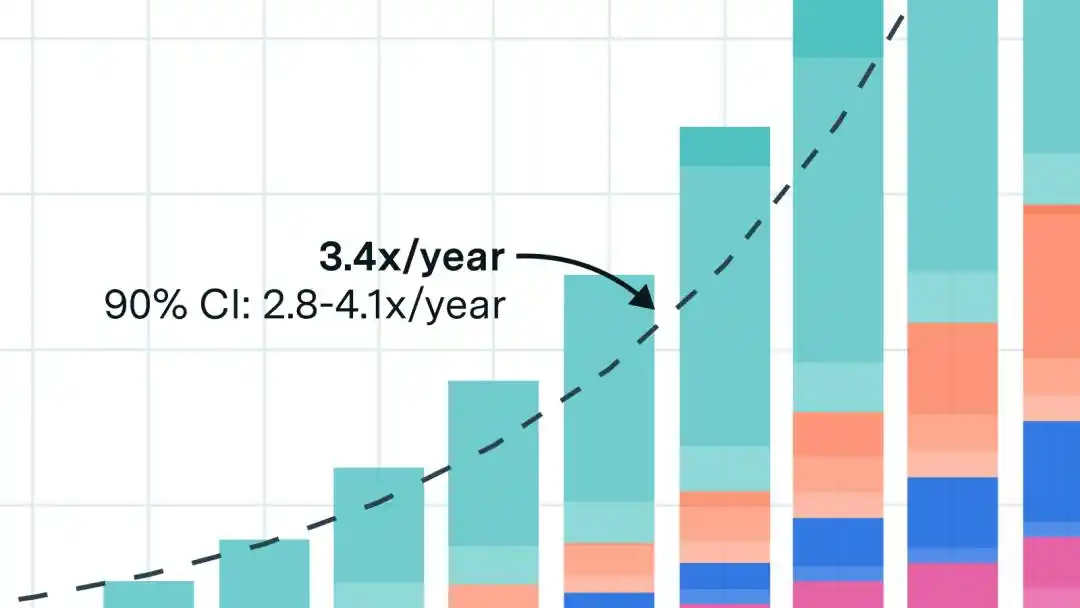
Global total AI chip computing power doubles every 7 months. One watt added this year has far higher performance than one watt installed two years ago. (Source: Epoch AI)
However, this number counts the end users of computing power, not ownership.
If someone calls Claude on Amazon Bedrock, that computing power is also counted under Anthropic.
Whoever Makes Money Faster, Eats More Computing Power
Why these two?
The answer lies in a rarely mentioned metric: revenue per megawatt.
Rewind a year, the token business itself was still losing money.
OpenAI running GPT-4 on Hopper had negative gross margin per token sold, and Anthropic was burning investor money.
Now it's the opposite.
Anthropic became profitable in Q2 this year, and OpenAI reportedly turned profitable in Q3.
After models like GPT-5.6, Opus 5, Fable 5 launched, the revenue per megawatt for both companies far exceeded the computing power cost line of $10-15 million per megawatt.
Anthropic is leading, achieving up to $50 million per megawatt.
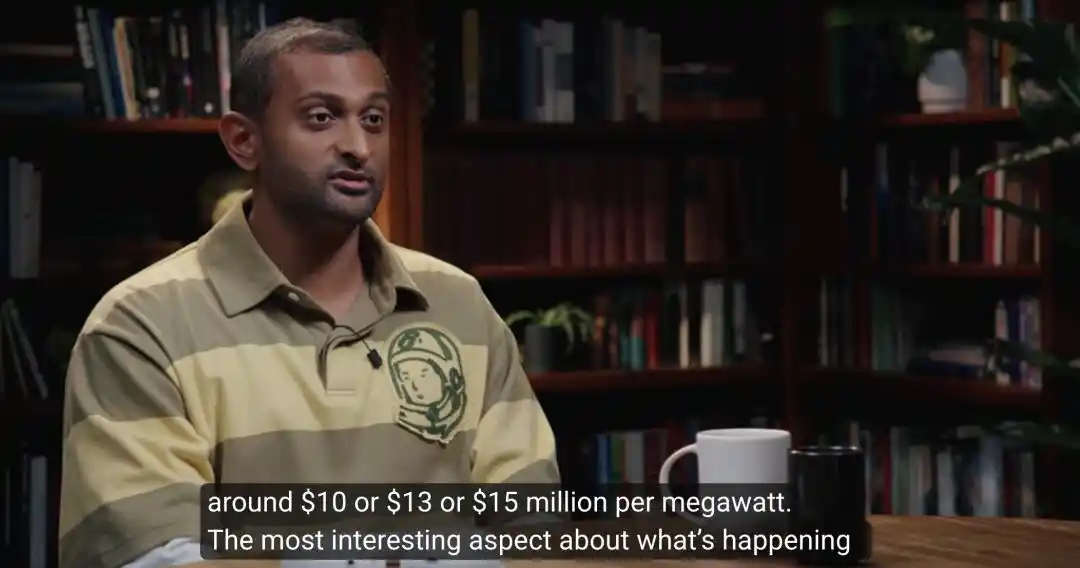
Dylan Patel gives the purchase price of computing power: $10-15 million per megawatt.
This race is about how much money can be earned per megawatt, not how many cards are hoarded.
Earn more, can afford a higher price; can afford a higher price, can secure more computing power, which trains stronger models, leading to earning even more.
Three to four times a year, that's how it snowballs.
And covering that cost line isn't actually hard.
An ordinary person buying a GB300 cabinet, downloading some open-source weights and putting them on OpenRouter, can earn back more than they pay. Dylan's words: It's not difficult, and it's not rocket science.
Precisely because anyone can earn, this line cannot hold, and rents start rising towards $25 million, $40 million per megawatt.
In Silicon Valley, currently only Anthropic and OpenAI are willing to pay that price.
Dylan predicts that by the end of 2027, their revenue per megawatt could rise to $70-80 million.
Cloud Vendors Build, Labs Rent
According to Epoch AI data, about 71% of global AI computing power ownership is still held by the five major cloud vendors.
But usage rights are concentrating towards the two AI labs.
Cloud vendors are landlords, they buy land and build data centers. OpenAI and Anthropic are like the two major tenants renting most of the houses.
Now a third type of player is emerging: build first, find tenants later.
Most cloud vendors typically sign customers first, take the contract to the bank for a loan, and only dare to start construction when the money arrives.
Meta and SpaceX don't need to: they have deep pockets, can skip finding customers and financing and start construction directly, choosing the highest bidder after the building is done.
Musk even sold computing power at a price of $40 billion per gigawatt.
Dylan calculated an account for him in the podcast: one gigawatt of computing power is originally worth $15 billion, he sold it for $40 billion, recovering all the capital in one year.
Anthropic can earn over $60 billion with this gigawatt, so why can't I sell it for more?
Next year, SpaceX will still be a major source of new computing power, and most of what it builds will likely be sublet to OpenAI and Anthropic.
According to WSJ, Anthropic is already renting data center capacity from SpaceX at a price of $1.25 billion per month.
On the tenant side, the appetite is larger than landlords anticipated.
OpenAI launched Stargate last January, aiming to secure 10 gigawatts in the US before 2029. Over a year later, this goal has been achieved early, with over 3 gigawatts added in just the last 90 days.
Anthropic announced in April this year, partnering with Google and Broadcom to secure next-generation TPUs at the gigawatt scale, coming online from 2027, officially calling it the company's largest computing power order to date.
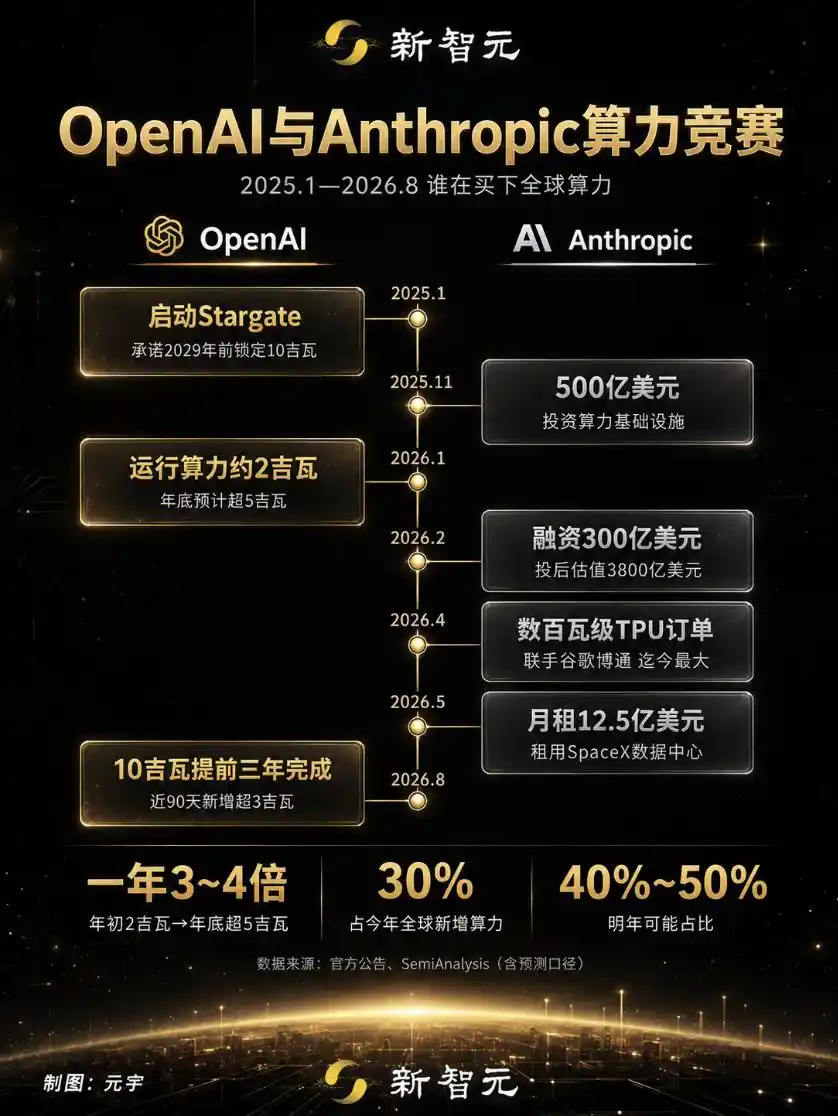
Not only that, both have also started building their own AI infrastructure: OpenAI developing in-house chips, Anthropic handing TPU deployment to Fluidstack.
Having been tenants for long, they also want to build a few houses of their own.
What Is the Purchased Computing Power Used For?
Currently, the computing power allocation in labs is roughly: 50% research, 10% development, 40% inference.
The largest chunk is research, not training.
When Anthropic trained Mythos, pre-training used less than 200 megawatts of computing power at a single site, running for about two months, with even less for subsequent reinforcement learning.
Holding several gigawatts, only 200 megawatts are actually pressed on "training one model."
It's not舍不得用 (reluctant to use), it's truly unusable.
This computing power is scattered in data centers far apart, data transfer speeds can't keep up with computation speeds, forcing them together means waiting for each other. Reinforcement learning is the same, more training doesn't mean better training.
Thus, the remaining large chunk is all burned on trying new architectures, tuning data ratios, and verifying various ideas.
Dylan has another counter-intuitive judgment: the proportion for inference will continue to decline.
One megawatt can sell for $30-40 million today, using 40% for inference, selling tokens, is very reasonable. But when it rises to $60-70 million?
Two paths lie before the board: continue selling tokens, make profits, pay dividends, buybacks, shareholders are happy; or recall all this computing power and invest it in R&D, to build AGI.
Dylan thinks this question has little suspense.
From the lab's perspective, the return on AGI is much greater than these immediate dividends.
Signs are already there: Anthropic's monthly新增的算力 (newly added computing power) is still rising, but the annualized revenue increment has already flattened. The newly purchased computing power hasn't turned into revenue; it went into R&D.
But investors only keep asking one question: one gigawatt could have turned into hundreds of billions in revenue, why are you still adding to training?
The trouble lies in the fact that both are heading towards IPOs.
Labs are betting on AGI, investors are waiting for dividends, this account doesn't match from the start.
Who Will Pay the $11 Trillion Bill
Global AI capital expenditure this year is slightly over $1 trillion, exceeding $2 trillion by 2028.
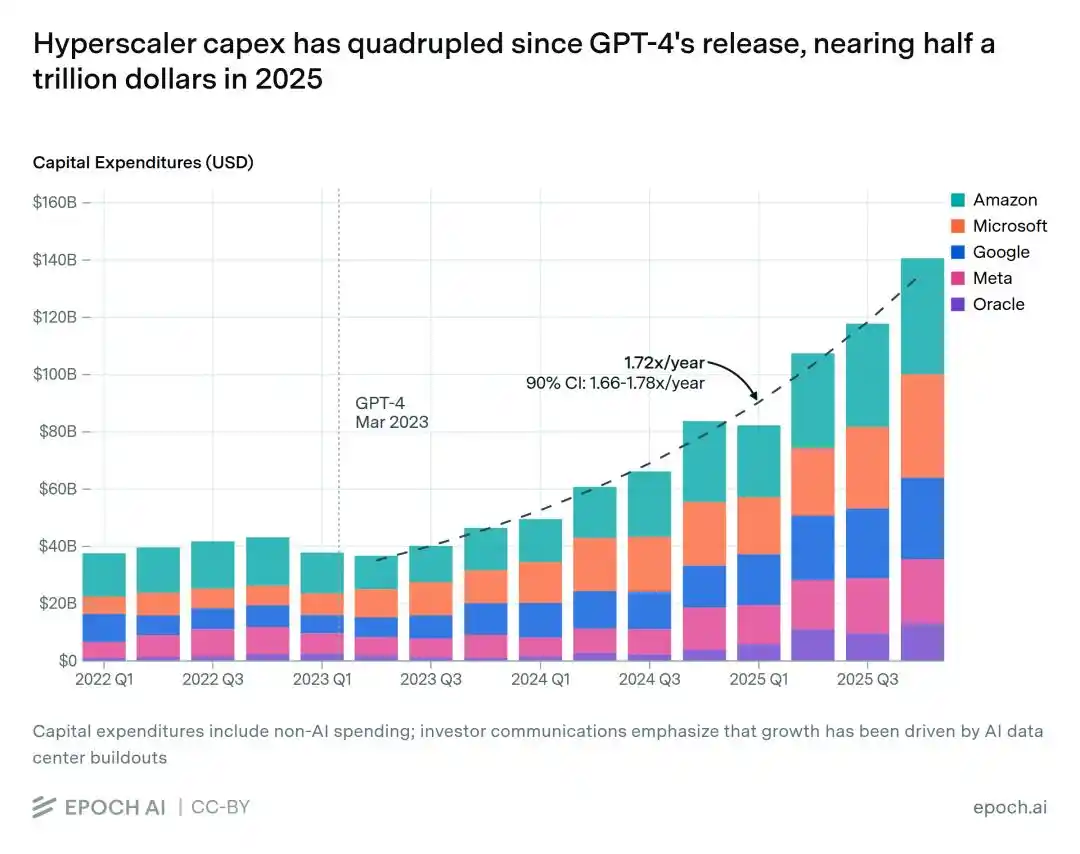
Combined capital expenditure of the five major cloud vendors grows 72% annually, nearing $500 billion in 2025. If the trend continues, it will reach $770 billion in 2026. (Source: Epoch AI)
According to SemiAnalysis estimates, the cumulative amount from 2024 to 2029 is about $11 trillion. About $6 trillion can be paid with their own earned money, the remaining $5 trillion can only be borrowed.
$5 trillion in debt, all thrown into the same credit market, makes money more expensive.
Meta's current bond interest is 5% to 6%. Dylan judges that it's willing to pay up to 8%, the return on the built computing power is too high, paying these extra two or three points doesn't hurt at all.
The problem is, the money is from the same pool.
AI companies are willing to borrow at high prices, raising the financing costs of the entire market, lifted together by these few companies.
Besides the money side, government regulation must also be mentioned.
New York is restricting data centers, Texas has a moratorium, and the Ohio governor simply announced: tax exemptions for data centers are suspended.
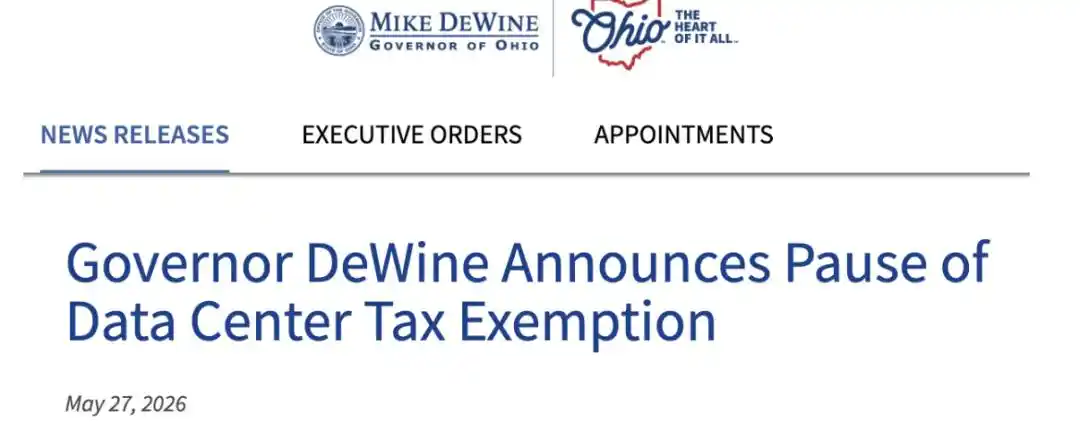
May 27, 2026, Ohio Governor DeWine announces suspension of data center tax exemptions.
Even harsher is not allowing the release of the best models.
OpenAI's Astra hasn't been released, Anthropic is holding back the model considered by the outside world as the next-generation Mythos in safety assessments.
For labs, this is not just about earning less.
According to Dylan's reasoning, if everything goes smoothly, these two would buy all the way until 2028, consuming 70-80% of the global新增算力 (new computing power).
But what regulation cuts off is that virtuous cycle of earning more to buy more, buying more to become stronger:
If the best models aren't released, revenue per megawatt won't rise; if revenue doesn't rise, they lose the底气 (confidence) to push computing power prices to levels others can't follow; if they can't buy more computing power, the next-generation models slow down, and revenue per megawatt rises even less.
The first step of Dylan's reasoning is also cut off.
Today's Input Megawatts, Tomorrow's AI Labor Force
Host Dwarkesh finally calculated another account.
Frontier computing power increases 4 to 5 times annually, while the computing power required to reach the same capability level drops to one-third each year.
Multiplying the two, the "effective AI labor force" of frontier labs increases 10-fold annually.
Pushing forward at this speed: a lab holding 10 million AI laborers this year, 100 million next year, 1 billion the year after.
"In not too many years, one company's effective labor force could exceed the total human population on Earth!"
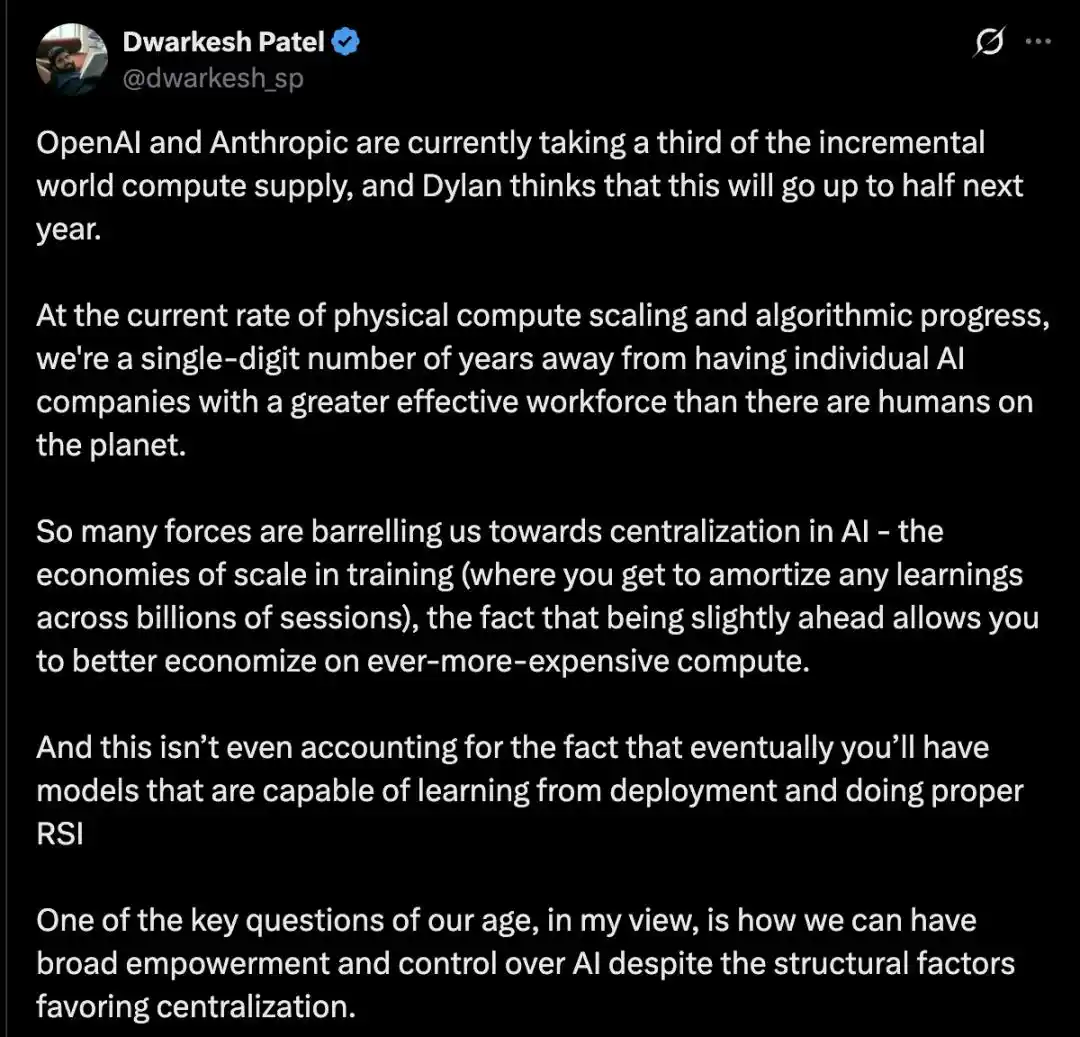
Dwarkesh's calculation essentially boils down to economies of scale:
Training costs will be spread over billions of sessions, larger scale means more cost-effective; the scarcer computing power is, the more premium can be charged for a slight lead; models also learn from deployment, the wider the use, the more data.
Every force is sprinting towards concentration, making Dylan exclaim "terrifying."
The AI race is accelerating in a new direction, three years ago comparing parameters, two years ago comparing benchmarks, now comparing how much money can be earned per megawatt.
The real challenge is not who makes AGI first, but who gets to invoke it after it's made.
References:
https://x.com/dwarkesh_sp/status/2092652326112682489
https://www.dwarkesh.com/p/dylan-patel-3
https://openai.com/index/building-the-compute-infrastructure-for-the-intelligence-age/
https://www.anthropic.com/news/anthropic-expands-partnership-with-google-and-broadcom
https://epoch.ai/trends
This article is from the WeChat public account "New Zhiyuan" (ID: AI_era), author: ASI启示录; editor: 元宇