NEAR implements AI payment through staking

cryptonews.ru发布于2026-07-31更新于2026-07-31

文章摘要

NEAR AI, a platform for confidential computing and autonomous AI agents, has introduced a new way to pay for AI computational resources using staking of NEAR tokens. Instead of a monthly subscription paid by credit card, users can lock up a certain amount of NEAR tokens to receive monthly compute credits, with the credit amount dependent on the staked sum. The tokens are not spent or deducted; they remain in the user's ownership and can be returned to their wallet after unstaking. Users can increase or decrease their staked NEAR based on their usage of AI services. The mechanism supports 43 models available on NEAR AI, including solutions from Anthropic, OpenAI, and Google, and is designed for confidential query processing and autonomous AI agent operation. This new mechanism is the first practical application of the "AI money" concept previously proposed by NEAR, which aims to directly link the use of AI services to the cryptoasset underlying the network.

$NEAR AI — a platform for confidential computing and launching autonomous AI agents — has introduced a new way to pay for AI computational resources through staking $NEAR tokens. Instead of a monthly subscription paid with a bank card, users can lock a certain amount of $NEAR and receive computational credits each month. The credit volume depends on the amount staked.

The tokens are not deducted or spent in the process. They remain in the user's possession and can be returned to the wallet after unstaking. The user can increase or decrease the amount of staked $NEAR depending on their AI service usage.

The mechanism supports 43 models available on $NEAR AI, including solutions from Anthropic, OpenAI, and Google. It is designed for confidential query processing and the operation of autonomous AI agents.

The new mechanism is the first practical application of the "AI money" concept previously proposed by $NEAR. Its idea is to directly link the use of AI services with the cryptoasset underlying the network.

Image: Magnific

end-content

热门币种推荐

相关问答

QWhat is the new AI payment method introduced by NEAR AI, and how does it work?

ANEAR AI introduced a payment method for AI computational resources using staking of $NEAR tokens. Instead of traditional monthly subscriptions, users lock a certain amount of $NEAR in staking. Based on the staked amount, they receive corresponding computational credits to use AI services each month. The staked tokens are not spent and remain in the user's possession, available to be withdrawn from staking and returned to their wallet.

QWhat happens to the staked $NEAR tokens? Are they spent when using AI services?

ANo, the staked $NEAR tokens are not spent or deducted when using AI services. They remain in the user's ownership. After unstaking, they can be returned to the user's wallet. The user can adjust the staked amount based on their usage needs for AI services.

QWhich AI models are supported by NEAR AI's new payment mechanism?

AThe new payment mechanism on NEAR AI supports 43 models, including solutions from Anthropic, OpenAI, and Google.

QWhat is the primary concept behind this new payment system, and how is it described by NEAR?

AThe new payment system is the first practical application of the "AI money" concept proposed by NEAR. This concept aims to directly link the use of AI services with the native crypto asset (in this case, $NEAR) that underpins the network.

QWhat are the key features or design goals of the NEAR AI platform mentioned in the article?

AThe NEAR AI platform is designed for confidential computing and running autonomous AI agents. Its new staking-based payment mechanism is specifically geared towards confidential processing of requests and supporting the operation of these autonomous AI agents.

你可能也喜欢

通过掷骰子离线保管比特币密钥:并非人人愿意为之

文章探讨了通过投掷骰子生成比特币钱包种子短语的安全方法及其现实挑战。核心观点如下: **1. 骰子提供物理熵源** 骰子结果由众多微小变量决定,理论上虽可预测,但实践中无法被攻击者复制或计算,从而提供高质量的随机性。每个六面骰子投掷约产生2.585比特熵,50次投掷即可满足典型12词助记词(128比特熵)的安全需求。 **2. Coldcard漏洞事件凸显手工熵源的价值** 近期Coldcard硬件钱包因固件漏洞导致其内部随机数生成器存在缺陷,致使约1128枚比特币被盗。但那些**完全**通过足量骰子投掷生成种子短语的用户未受此漏洞影响,因为他们的主密钥未使用有缺陷的生成器。 **3. 重要警示:手工种子并非万能保护** 安全研究员指出,即使用户使用骰子生成了安全的种子,若他们使用了Coldcard的其他功能(如生成纸钱包、克隆密钥、共享签名密钥、密码等),这些**衍生密钥**仍可能调用有漏洞的随机数生成器,从而存在风险。安全种子不保证设备生成的所有秘密都安全。 **4. 手工生成熵源的现实局限性** 尽管数学上可靠,但该方法对大多数用户并不友好: * **过程繁琐易错**:需投掷50-99次,精确记录,任何输入错误都会导致钱包完全不同。 * **引入新风险**:用户可能在记录、转换过程中泄露信息,或使用有偏的骰子/投掷方式。 * **用户体验差**:难以想象大规模推广需要用户手动投掷近百次骰子。安全措施需适应现实生活场景和普通用户的知识水平。 **5. 给用户的建议** 受影响的Coldcard用户应: * 更新固件至最新版。 * 检查是否使用过有漏洞的功能生成了次级密钥或密码,如有则需立即更换。 * 考虑采用多签方案,使用不同厂商的设备分散风险。 **结论**:手工投掷骰子生成熵源是技术娴熟用户的一个有效安全选项,但其过程复杂、容易出错,不适合作为主流用户的默认方法。长远目标是依赖安全、透明且无需专业知识的硬件/软件随机数生成方案。

cryptonews.ru1小时前

通过掷骰子离线保管比特币密钥:并非人人愿意为之

cryptonews.ru1小时前

交易

现货

热门文章

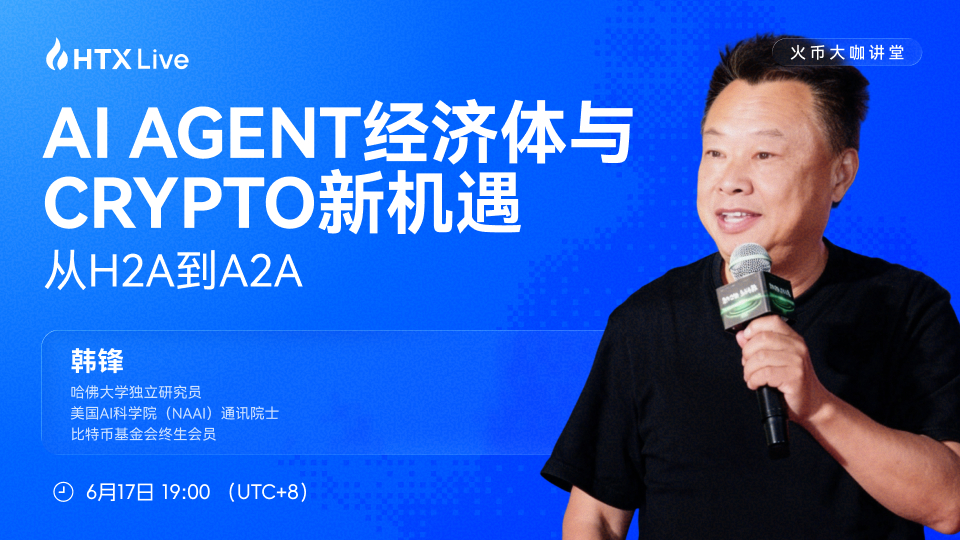
从H2A到A2A:AI Agent经济体与Crypto新机遇

6月17日,哈佛大学独立研究员、美国AI科学院(NAAI)通讯院士、比特币基金会终身会员韩锋做客火币HTX《大咖讲堂》第三期,以《从H2A到A2A》为主题,分享了其对Agent经济、Crypto基础设施及数字社会未来发展的思考。

504人学过发布于 2026.07.01更新于 2026.07.01

从H2A到A2A:AI Agent经济体与Crypto新机遇

美股TradFi:传统金融在AI IPO浪潮下的稳健锚点

2026年,美股IPO市场重回高热度。本文梳理即将上线或受关注的热门赛道龙头,分析具备投资潜力的交易标的及其逻辑,并探讨宏观趋势与相关风险。

2.5k人学过发布于 2026.07.08更新于 2026.07.08

美股TradFi:传统金融在AI IPO浪潮下的稳健锚点

相关讨论

欢迎来到HTX社区。在这里,您可以了解最新的平台发展动态并获得专业的市场意见。以下是用户对AI(AI)币价的意见。

活动图片