One year of the GENIUS Act: Progress, gaps, and what comes next

ambcrypto发布于2026-07-19更新于2026-07-19

文章摘要

One year after the GENIUS Act became law, key implementation rules for stablecoins remain unfinished. Regulators missed a July 18 deadline to finalize core standards covering issuer reserves, capital, liquidity, custody, and risk management. Agencies like the OCC, Federal Reserve, and FDIC are still drafting these rules and gathering public feedback on proposals. This regulatory uncertainty complicates planning for issuers like Circle and Paxos, even as the stablecoin market has grown to over $310 billion. Despite the delays, regulators aim to enforce the Act by January 18, 2027. Institutional adoption is gaining momentum, with firms like BlackRock and JPMorgan launching stablecoin-related products. Lawmakers, including Senator Cynthia Lummis, stress the urgency of completing the framework and passing further legislation like the CLARITY Act to solidify U.S. leadership in digital assets. Finalizing the remaining rules will be crucial for determining the pace of broad institutional adoption of regulated stablecoins in the United States.

A year after President Donald Trump signed the GENIUS Act into law, regulators still have not completed its implementation. However, regulators have yet to implement it. Agencies were required to finalize implementing rulemakings no later than the 18th of July.

As a result, the OCC, Federal Reserve, FDIC, Treasury Department, and other agencies continue drafting key regulations. Those rules cover issuer reserves, capital requirements, liquidity, custody, risk management, and state-level regulatory designations.


Source: CHAPMAN

Meanwhile, agencies continue gathering public feedback. Customer identification proposals remain open until the 21st of August. The FDIC will close its anti-money laundering consultation on the 4th of August.

Those consultations show regulators are still refining compliance standards. Still, agencies still plan to enforce the GENIUS Act by the 18th of January, 2027.

Until they complete the remaining rules, stablecoin issuers and financial institutions must prepare for a framework that still lacks several implementation details.

Key rules remain unfinished

That regulatory uncertainty continues because agencies have yet to finalize several core operating standards. Although federal agencies proposed rules throughout 2026, they failed to complete them by the 18th of July.

As a result, reserve eligibility, liquidity requirements, custody standards, and risk management frameworks remain under review. Meanwhile, issuers continue operating under statutory baselines and interim regulatory frameworks.

That approach has supported market activity, helping the stablecoin sector expand to roughly over $310 billion. Even so, unresolved liquidity and custody protocols still complicate capital planning, redemption processes, and operational resilience.
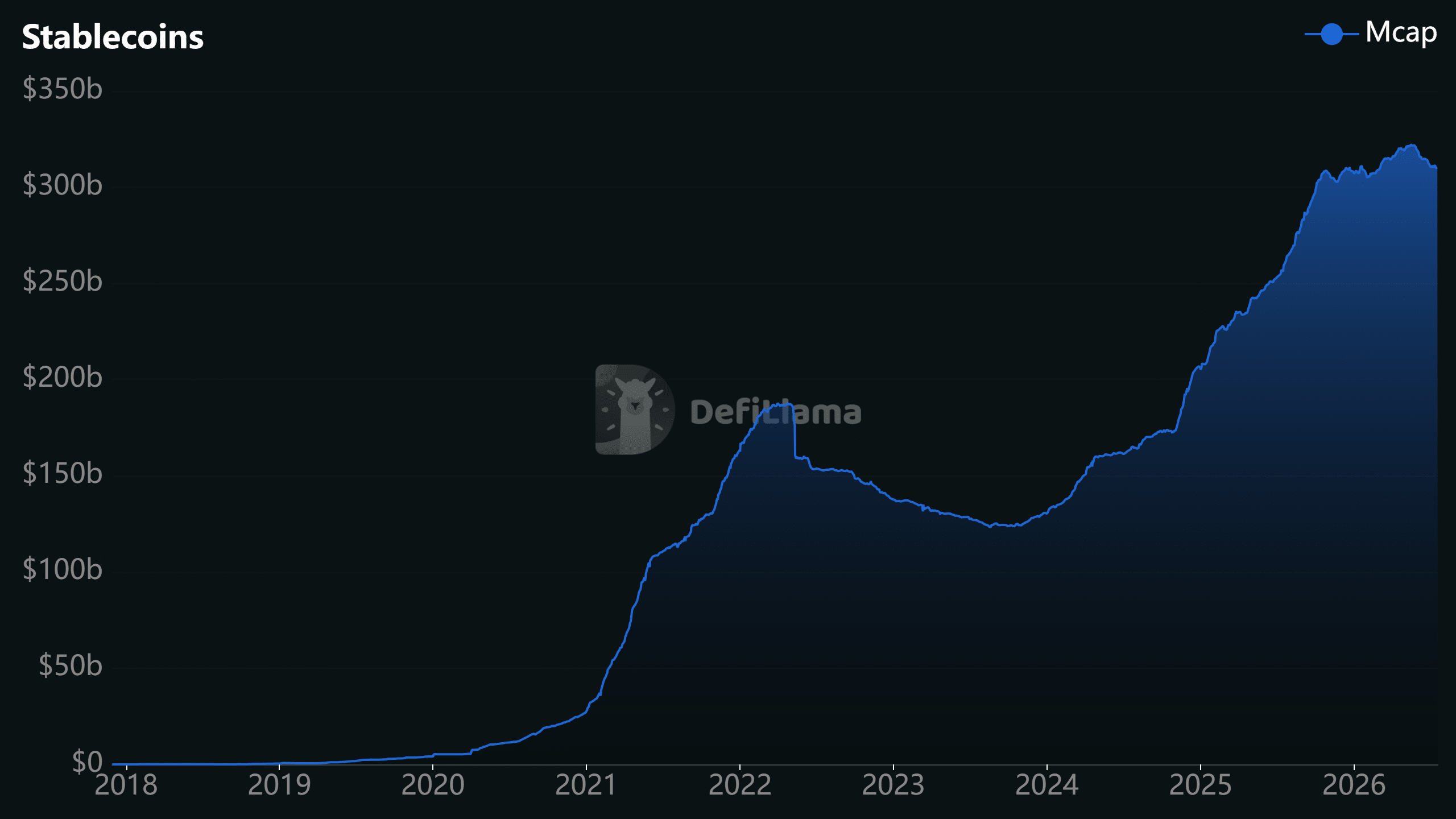
Source: DeFiLlama

Therefore, until these regulatory standards are finalized, issuers like Circle and Paxos will be forced to navigate innovation against evolving compliance regulations. This is as the market waits for a fully defined federal regulatory framework.

Institutional adoption gains momentum

Banks are still assessing their options for stablecoin strategies as they wait for the regulatory body to issue its final rulemaking. Meanwhile, Congress is running out of time with less than six months until the GENIUS Act goes into effect on January 18th, 2027.

Senator Cynthia Lummis echoed that urgency, calling the GENIUS Act “an important first step.” She also urged her fellow lawmakers to support the CLARITY Act, which would further solidify U.S. leadership in the development of digital assets.
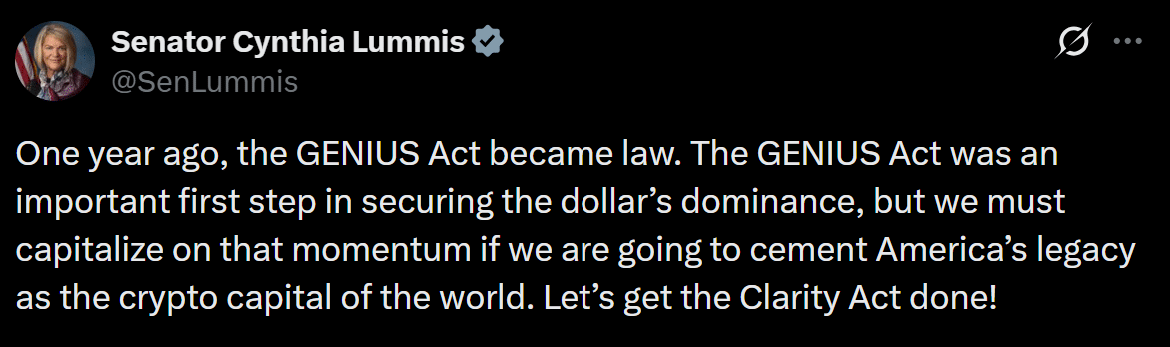
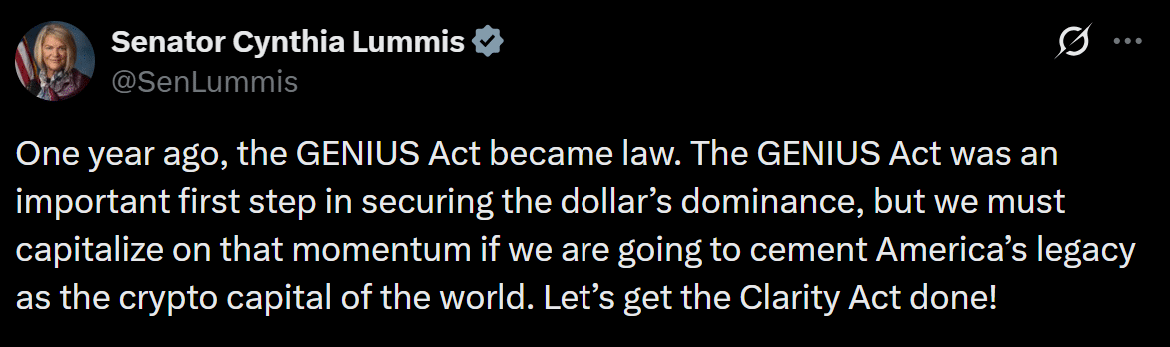
Source: X

Even before regulators finalize the remaining rules, the GENIUS Act has already encouraged institutional participation. Since lawmakers enacted the framework, institutions such as BlackRock and JPMorgan have launched or filed stablecoin reserve funds.

Meanwhile, Visa introduced a platform serving 15,000 institutions, while the first bank-issued on-chain dollar entered the market. Completing the remaining rules will determine how quickly regulated stablecoins achieve broad institutional adoption in the United States.


Final Summary

  • Stablecoins remain in regulatory limbo until agencies finalize the GENIUS Act’s remaining implementation rules.
  • Stablecoins could gain broader institutional adoption as the GENIUS Act and CLARITY Act advance regulatory certainty.


热门币种推荐

相关问答

QWhat is the current status of the GENIUS Act implementation one year after it was signed into law?

AOne year after being signed into law, the GENIUS Act's implementation is incomplete. Regulators have missed the July 18th deadline to finalize key implementing rules, leaving several core operating standards under review.

QWhich major US financial agencies are mentioned as still drafting regulations for the GENIUS Act?

AThe article mentions that the OCC, Federal Reserve, FDIC, Treasury Department, and other agencies are continuing to draft key regulations covering areas like issuer reserves, capital requirements, liquidity, custody, and risk management.

QWhat are some specific regulatory areas that remain unfinished under the GENIUS Act framework?

AKey unfinished regulatory areas include final rules for reserve eligibility, liquidity requirements, custody standards, and risk management frameworks.

QDespite the regulatory uncertainty, what positive market development is noted regarding stablecoins?

ADespite the regulatory uncertainty, the stablecoin sector has expanded to roughly over $310 billion, and the GENIUS Act has encouraged institutional participation from firms like BlackRock and JPMorgan.

QWhat upcoming deadline and related legislative act does Senator Cynthia Lummis highlight?

ASenator Cynthia Lummis highlights the urgency with less than six months until the GENIUS Act goes into effect on January 18, 2027, and urges support for the CLARITY Act to further solidify U.S. leadership in digital assets.

你可能也喜欢

Gate 研究院:加密金融产品掀起“华尔街化”浪潮,是竞争还是融合?

2009年比特币的创世区块暗含对传统金融体系的批判,其理想是建立去中心化、去中介、去银行的点对点金融系统。然而十七年后,比特币现货ETF获批、贝莱德等巨头发行相关产品、CME推出受监管衍生品、RWA(真实世界资产)和代币化国债市场快速增长等现象,显示传统金融正系统性地介入加密资产的发行、定价、托管和分销环节,引发了加密市场是否“华尔街化”的讨论。 文章认为,这并非单方面的吞并,而是加密体系与传统金融的双向融合与互补。加密领域提供无许可开放性、24小时交易和可编程结算,但缺乏合规通道、机构级托管和主流分销网络;传统金融则拥有牌照、信任、资金和渠道,但受限于交易时间、跨境门槛和结算效率。双方正朝彼此的核心优势靠拢。 这种融合体现为两条路径:一是以Gate为代表的加密交易所,逐步从提供代币化美股、CFD差价合约,发展到接入真实股票、港股、韩股交易,成为连接加密账户与传统券商基础设施的前端入口;二是以Robinhood为代表的传统券商,通过收购加密交易所、推出股票代币和建设自有Layer 2,将加密资产和链上代币化产品整合进其平台。两者的共同目标是争夺下一代综合金融账户的入口,让用户在一个界面内交易多种资产。 同时,RWA和链上国债作为资产层的融合正在加速。尽管规模尚小,但代币化国债等产品为链上提供了低波动收益资产,并吸引JP摩根、贝莱德等传统机构参与,测试未来资本市场的底层结算方式。 最终,加密与华尔街并非谁征服谁,而是在共同塑造一个更高效、全球化的统一资本市场。用户未来或将在同一个账户中自由交易比特币、股票、ETF、链上国债等多种资产,体验无缝的跨资产配置。去中心化的理想仍在底层协议中延续,而在应用层,一个融合了双方优势的新金融形态正在形成。

marsbit17分钟前

Gate 研究院:加密金融产品掀起“华尔街化”浪潮,是竞争还是融合?

marsbit17分钟前

给AI喂“噪声”也能涨分,这项工作让噪声实现正迁移

这篇发表于ICML 2026的研究提出了一种名为“半监督噪声自适应(SSNA)”的新方法,其核心思想是:迁移学习中,用于辅助训练的“源数据”可以不是真实的图像或文本,而是**完全没有语义的随机噪声**。 传统迁移学习需要大量有标签的源数据,但在隐私、版权等限制下,真实数据往往难以获得。SSNA框架(NAF)打破了这一限制。研究者为每个目标类别(例如CIFAR-10的10个类)生成一组对应的高斯分布噪声样本,并为每个噪声类预先指定一个目标类别编号(但编号本身无意义)。 NAF通过三个步骤实现“正迁移”: 1. **利用少量真实标签**:使用目标域中极少的标注样本进行基础监督学习,建立噪声与真实类别间的初步联系。 2. **在噪声域构建判别结构**:训练模型将同类噪声聚集、异类噪声分离,形成清晰的类别结构。 3. **跨域对齐**:将噪声域中学习到的类别结构(分布)与目标域的对齐,从而将判别性知识迁移到真实数据上。 实验表明,在每类仅有4个标注样本的极端少样本设定下,NAF相比仅使用标注数据的基线方法(ERM)在多个数据集上取得显著提升(如CIFAR-10提升12.35%)。研究还发现,关键因素在于噪声域中是否形成了**可分离的类别结构**,而非噪声数量多少。当把所有噪声压缩为一点(无结构)时,性能会大幅下降。 这项工作的意义在于,它揭示了迁移学习中可迁移的知识可能不限于数据的“语义内容”,**表征空间的“组织结构”本身也是一种有效的知识**。这为无法获取真实源数据的场景提供了一种低成本、保护隐私的替代方案。

marsbit23分钟前

给AI喂“噪声”也能涨分,这项工作让噪声实现正迁移

marsbit23分钟前

交易

现货

热门文章

加密市场宏观研报:《GENIUS Act》法案取得重大进展,BTC突破历史新高,后市全新展望

2025年5月22日,比特币价格正式突破11万美元大关,创下历史新高。在政策面、宏观经济、资金面与投资者结构共同作用下,一场结构性牛市浪潮正在展开。而此轮上涨背后的核心驱动,是美国《GENIUS稳定币法案》的实质性进展以及多项利好的叠加。本文将从政策端突破、宏观环境转向、链上与ETF资金结构、交易行为演化,以及重点受益赛道五大维度,全面解析此轮BTC再创新高的深层逻辑,并前瞻下半年市场的潜在趋势。

1.8k人学过发布于 2025.05.22更新于 2025.05.22

加密市场宏观研报:《GENIUS Act》法案取得重大进展,BTC突破历史新高,后市全新展望

如何购买GENIUS

欢迎来到HTX.com!我们已经让购买Genius(GENIUS)变得简单而便捷。跟随我们的逐步指南,放心开始您的加密货币之旅。第一步:创建您的HTX账户使用您的电子邮件、手机号码注册一个免费账户在HTX上。体验无忧的注册过程并解锁所有平台功能。立即注册第二步:前往买币页面,选择您的支付方式信用卡/借记卡购买:使用您的Visa或Mastercard即时购买Genius(GENIUS)。余额购买:使用您HTX账户余额中的资金进行无缝交易。第三方购买:探索诸如Google Pay或Apple Pay等流行支付方法以增加便利性。C2C购买:在HTX平台上直接与其他用户交易。HTX场外交易台(OTC)购买:为大量交易者提供个性化服务和竞争性汇率。第三步:存储您的Genius(GENIUS)购买完您的Genius(GENIUS)后,将其存储在您的HTX账户钱包中。您也可以通过区块链转账将其发送到其他地方或者用于交易其他加密货币。第四步:交易Genius(GENIUS)在HTX的现货市场轻松交易Genius(GENIUS)。访问您的账户,选择您的交易对,执行您的交易,并实时监控。HTX为初学者和经验丰富的交易者提供了友好的用户体验。

733人学过发布于 2026.04.29更新于 2026.06.02

如何购买GENIUS

相关讨论

欢迎来到HTX社区。在这里,您可以了解最新的平台发展动态并获得专业的市场意见。以下是用户对GENIUS(GENIUS)币价的意见。

活动图片