Author: Protos
Compiled by: Luffy, Foresight News
On Monday morning, Michael Saylor heavily promoted that he had more cash on hand to support dividends, attempting to reassure the market, but the STRC price saw almost no boost. The core issue in the market is not the reserve funds but the collapse of investor confidence.
As the publicly traded company holding the largest amount of Bitcoin globally, Strategy raised an additional $450 million in cash reserves last week by diluting common shareholder equity. The company's total cash now stands at $3 billion, a 17% increase from the $2.55 billion disclosed on July 5th.
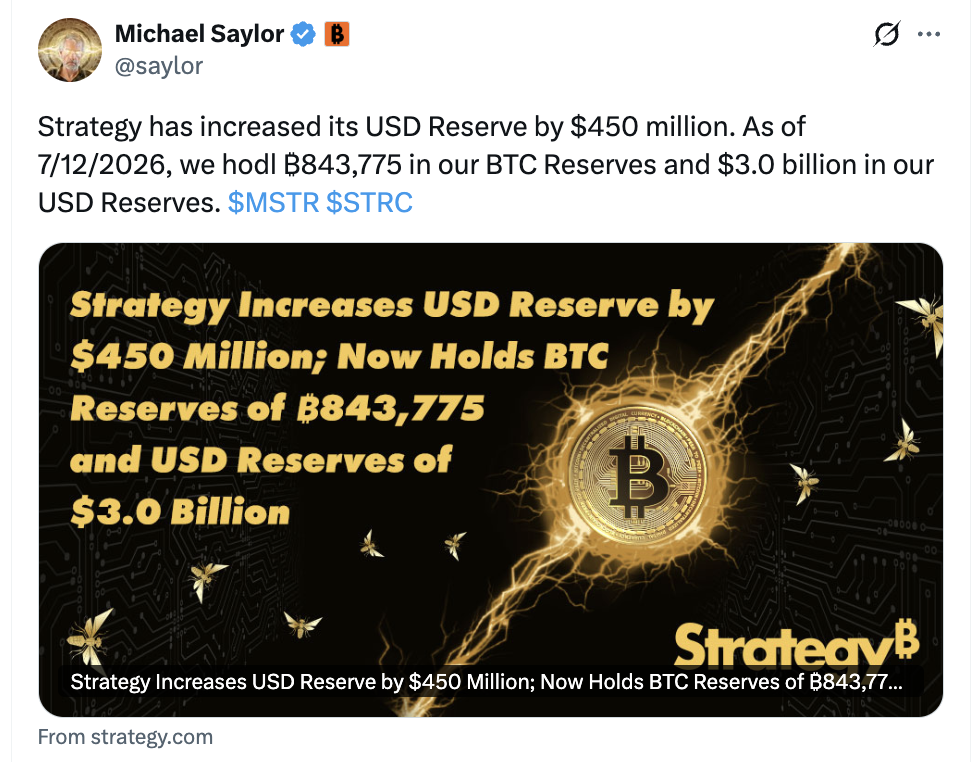
Ample cash should have brought a sense of security to the market, but STRC preferred stock investors, who rely on this cash for semi-monthly dividend payments, are not convinced. As of early Monday trading, the STRC price fell to $86.60, down 1% from Friday's closing price.
The expansion of the company's cash reserves theoretically supports dividend payments for a longer period. In any other financial product, this would be a significant confidence-boosting positive. Yet, STRC's stock price fell instead of rising. This enterprise faces a deep-seated problem that cannot be solved, no matter how much cash it has.
The Market is Completely Unresponsive to Positive News
Strategy originally designed STRC with the hope that its price would experience long-term stable fluctuations. Ironically, its sharp rises and falls frequently make financial headlines. Strategy periodically adjusts the dividend rate, publicly stating its goal is to stabilize the stock price within the par value range of $99 to $100, but this target has never been achieved.
When the stock price falls, Strategy increases dividends to attract buyers and push the price towards the $100 par value; when the price is too high, the company issues more shares to suppress gains. Ironically, since the product's issuance, the dividend rate has been raised from 9% to the current 12%, yet the STRC price has consistently trended downward.
Even with cash on hand sufficient for 20 months of dividend payments and a yield far exceeding most junk bonds, STRC still trades today at a 13% discount to its par value.
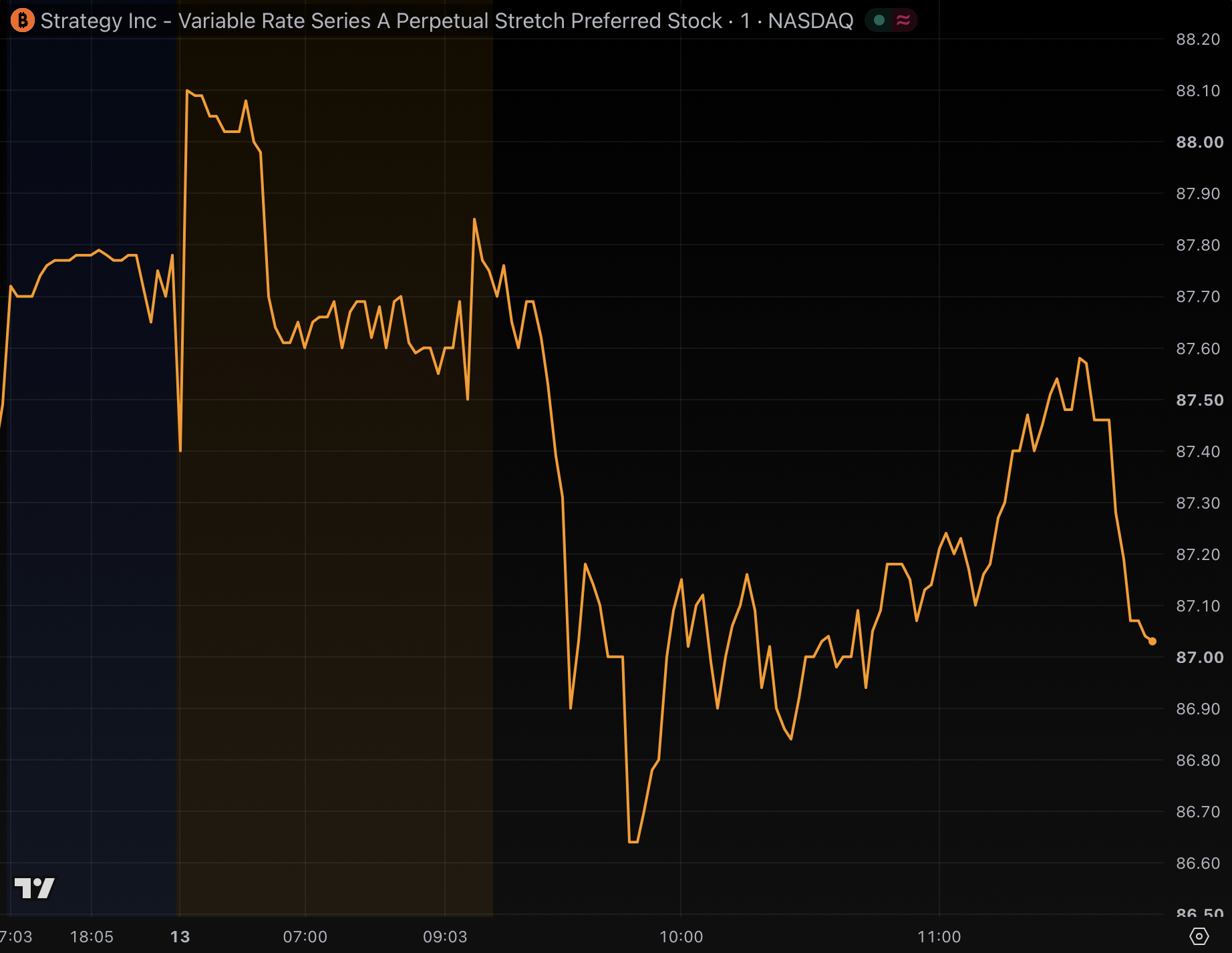
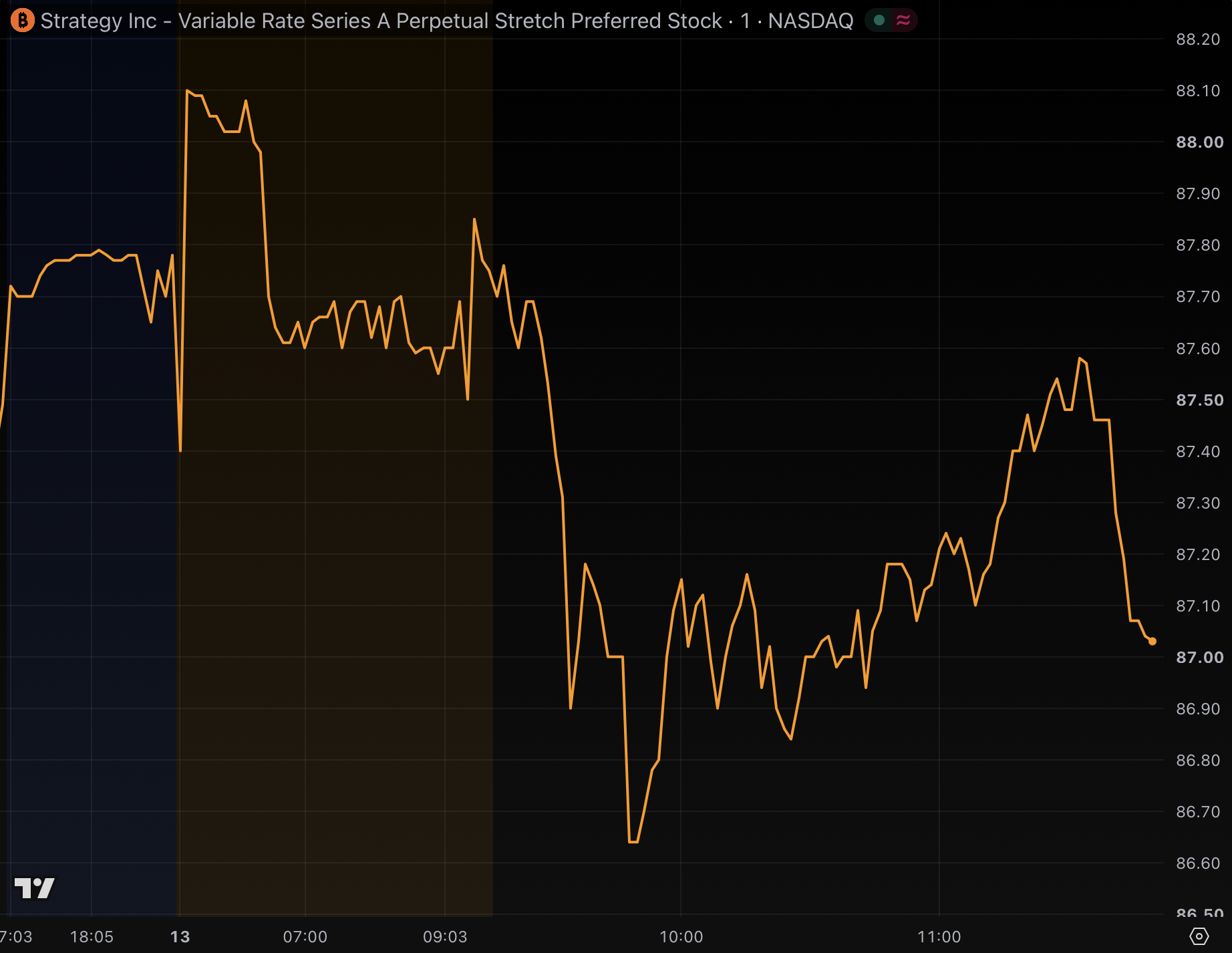
STRC price chart, timeframe from Friday close to Monday noon. Source: TradingView
After the company's cash reserves expanded by 17%, STRC's current price is actually lower than before the cash expansion.
The underlying logic is far simpler than cash scale, equity dilution ratio, or leverage calculations. The root of the problem is a lack of market trust. The broader Bitcoin market has not entered a bull run, failing to increase the valuation of the company's massive Bitcoin treasury assets. The only reason investors were willing to pay a premium to buy STRC back to par value was their belief in management's long-term commitment to dividend payments. Now, however, the market has ample reason to doubt management's sincerity in fulfilling its obligations.
The essence of preferred stock is a contractual promise: to pay dividends on time, adhere to issuance terms, and fulfill all commitments in the prospectus. Investor decisions also heavily rely on the performance guidance and forward-looking judgments provided by management. Investors bearish on STRC do not doubt the existence of the $3 billion in cash, nor are they unable to calculate how long these funds can support dividend payments. Instead, they no longer trust the person making the payment promises — Michael Saylor.
Saylor Repeatedly Changes Promises, Eroding Market Trust
Strategy founder Saylor has repeatedly overturned expectations he previously communicated to the public in the past. Each reversal has significantly diminished the market's trust in him.
Last summer, the company promised investors it would not issue additional MSTR common shares below 2.5 times price-to-book value (mNAV) unless for paying interest and preferred stock dividends. However, just days later, the company quietly amended the promise, adding an exception clause: management could proceed with issuance unrestricted if it deemed it beneficial. Subsequently, the company sold hundreds of millions of dollars worth of stock below the 2.5x mNAV threshold.
Another more representative case: For years, Saylor repeatedly stated publicly that the company would never sell Bitcoin, as evidenced in various interviews and social media posts. But from late June to early July, Strategy sold a total of 3,588 Bitcoins and was approved for a quota exceeding $1 billion for future sales. There are many similar instances of such contradictory actions.
In early 2026, Saylor assured the market that even if Bitcoin entered a bear market, the company would rely on debt financing for liquidity and would not sell Bitcoin. He stated in a CNBC interview that during a bear phase, the company would only need to refinance existing debt. Just months later, instead of choosing debt restructuring, the company raised dividend funds by selling Bitcoin.
Furthermore, Saylor significantly lowered performance expectations, making it difficult for investors to believe any of his subsequent forecasts. Last December, Strategy slashed its fiscal year 2025 earnings per share guidance from $80 to less than $19, directly wiping out 76% of the expected profit.
Even with Cash Backing, STRC is Far from a Capital-Guaranteed Investment
Saylor once compared STRC to a high-interest savings account or a money market fund product. However, in June, STRC once fell to a historical low of $71.25, causing holders paper losses of over one-third. This bears no comparison to insured bank deposits or money market funds.
Saylor previously claimed the STRC price would stabilize at $100, yet reality saw it drop to $71.25, causing widespread investor losses. It's difficult for the market to believe his predictions about the product's stable performance anymore.
STRC is neither a deposit nor a money market fund. It has no independently segregated Bitcoin assets as collateral and offers no right of free redemption. Investors wishing to sell their STRC at the $100 price can only find other traders to take over; the company itself will not step in to repurchase and support the price.
Management's history of repeatedly breaking promises predates the company's Bitcoin accumulation phase. In 2000, the U.S. SEC sued Saylor and two other executives, accusing the company of inflating revenue and profits and violating accounting standards. Saylor ultimately paid over $8 million to settle the civil lawsuit.
More than two decades later, the market is once again wary of Saylor. This time, the company's addition of 17% to its cash reserves aimed to stabilize STRC at its $100 par value, but the positive news proved completely ineffective: on Monday morning, the stock price still traded at a 13% discount to $100 and even fell slightly from Friday's close. No amount of cash can compensate for the long-term erosion of market trust.