Trump’s crypto empire generates $1.4B in 2025: WLFI, TRUMP under scrutiny

ambcrypto发布于2026-07-01更新于2026-07-01

文章摘要

Former President Donald Trump's cryptocurrency holdings have become the primary revenue source for his business empire, generating over $1.4 billion in 2025. Key contributors were the sale of WLFI tokens and his TRUMP memecoin. This financial success coincides with major U.S. regulatory initiatives like the GENIUS and CLARITY Acts, raising significant scrutiny over potential conflicts of interest. Critics argue that favorable crypto regulations could directly benefit Trump's commercial ventures. Concurrently, regulatory enforcement by agencies like the SEC has decreased sharply as focus shifts to creating new market frameworks. While markets remain driven by traditional fundamentals, the intertwining of Trump's crypto wealth with policymaking is expected to lead to increased ethics oversight and stricter disclosure requirements for the industry going forward.

President Donald Trump’s latest financial disclosure signals a fundamental shift in his business empire. This comes after his cryptocurrency investments overtake traditional ventures as his largest revenue source.

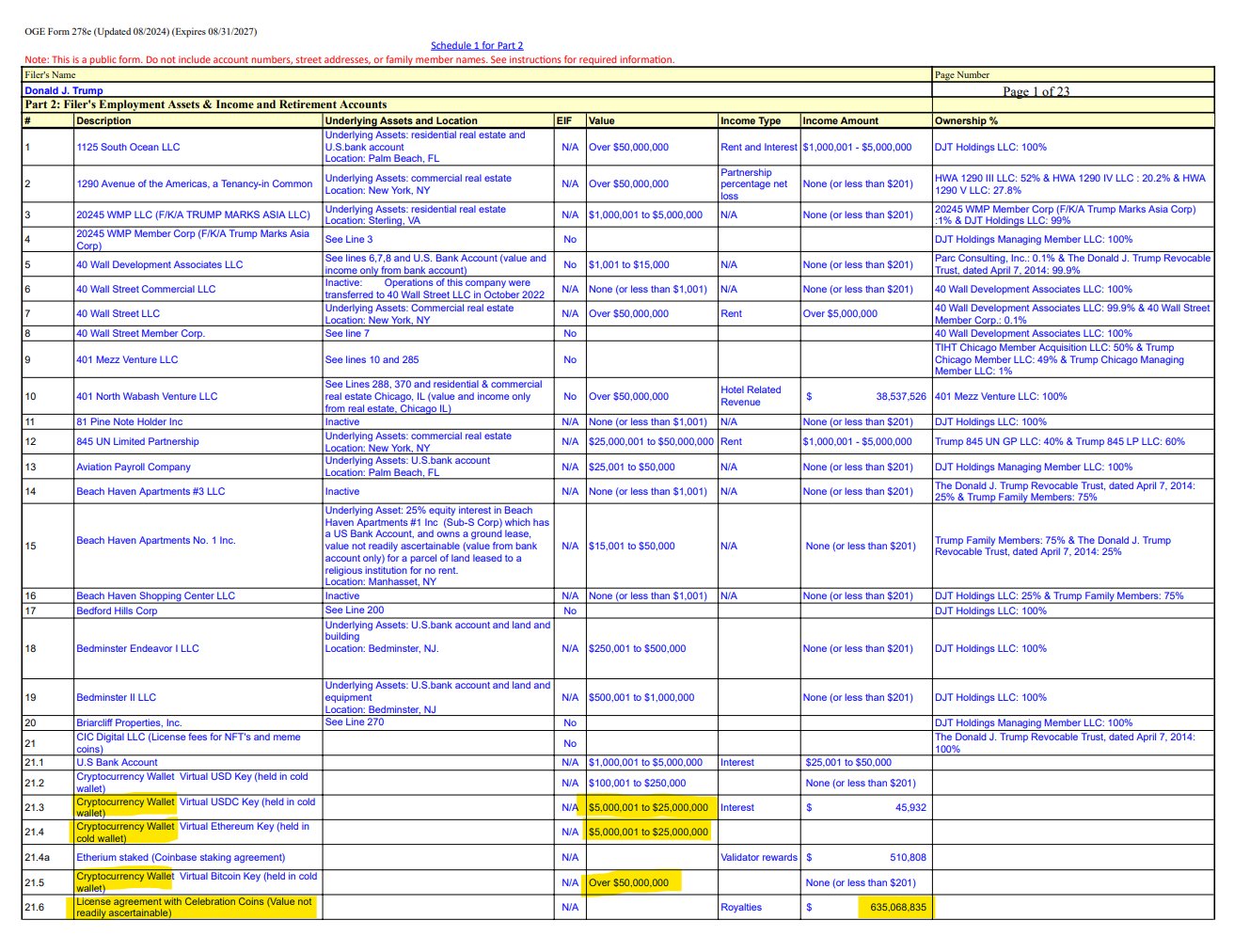
That transition stems from the rapid expansion of family-backed crypto projects, which generated more than $1.4 billion in reported income during 2025.

Of that, nearly $600 million came from the sale of tokens by World Liberty Financial [WLFI]. And even though the price of Official TRUMP [TRUMP] memecoin fell from $74.24 at its peak to $1.67 at one point, it still managed to generate approximately $636 million.
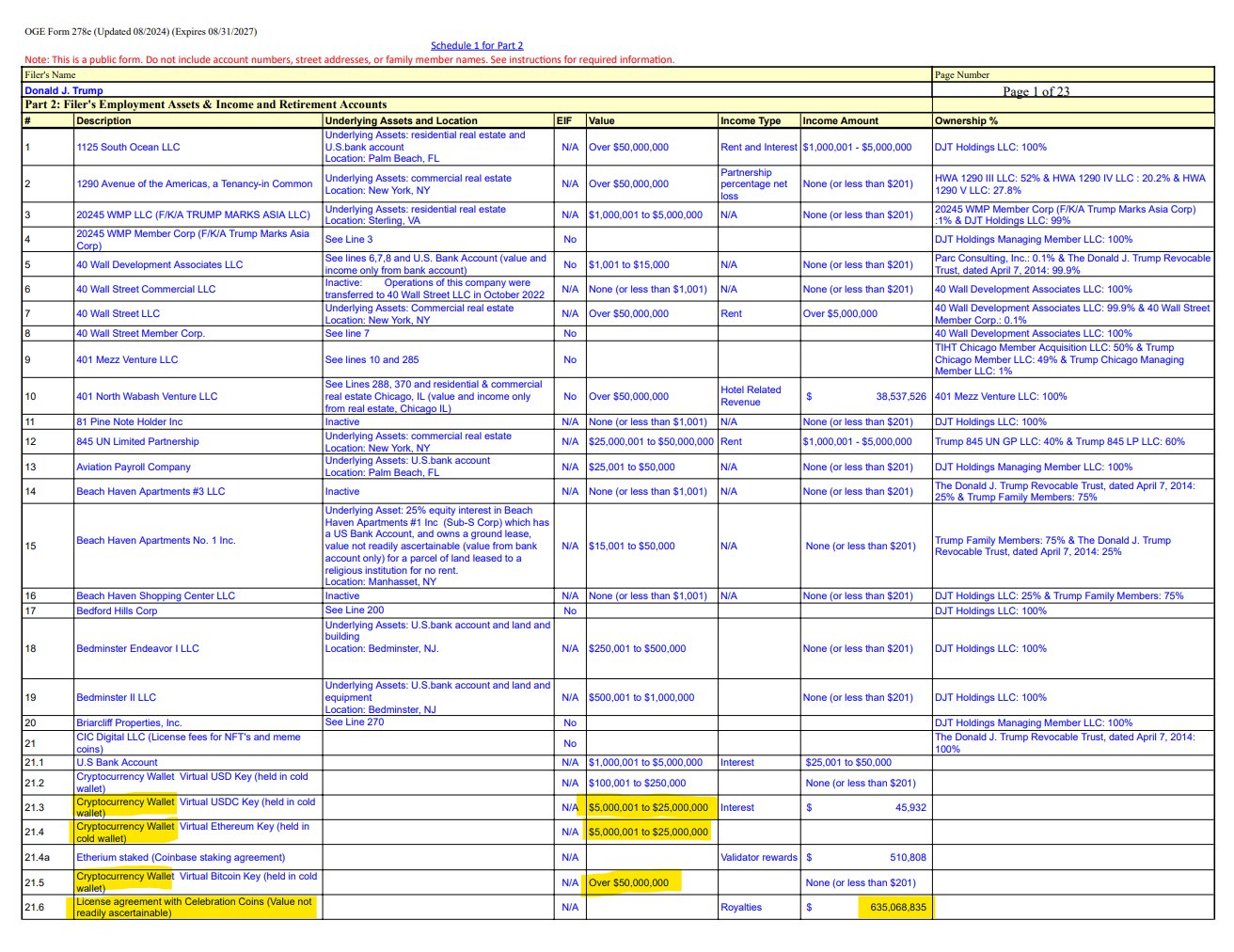
Source: Office of Government Ethics

Other types of equity sales furthered crypto earnings. Altogether, the data points to the conclusion that earning money is no longer dependent solely upon the value of his crypto assets.

Rather, the main drivers of Trump’s increasing digital assets include license agreements, token sales, and equity transactions.

Crypto wealth and policy collide under growing scrutiny

Trump’s crypto success has now shifted attention beyond profits toward policymaking. That focus emerged because his business interests expanded alongside major regulatory reforms.

Meanwhile, the administration also created an executive order, the GENIUS Act. It was followed by the CLARITY Act, and both acts support clearer rules for stablecoins, as well as a larger digital asset marketplace.

Those disclosures have since become central to the debate, as they link the president’s commercial interests to an industry undergoing significant regulatory reform.

That overlap intensified concerns because friendlier regulations could strengthen businesses tied to the president. AMBCrypto earlier reported that Trump leverages the CLARITY Act in broader negotiations, stalling its 4th of July passage amid housing bill disputes.

As scrutiny increased, lawmakers proposed stronger ethics safeguards and disclosure requirements. This will result in increasing oversight of the policies and laws regarding cryptocurrency going forward.

Markets test the impact of crypto policy shifts

Political scrutiny has now shifted toward how regulators oversee the cryptocurrency industry. Beginning in 2022, the political spotlight began focusing on regulators’ supervision of the digital assets sector.

At that time, enforcement activities were decreasing rapidly due to increasing activity for rule-making from U.S. federal agencies.

According to Cornerstone Research, enforcement by the SEC regarding cryptocurrencies decreased approximately 60 percent in 2025, with CFTC enforcement action for virtual currencies dropping to almost zero.
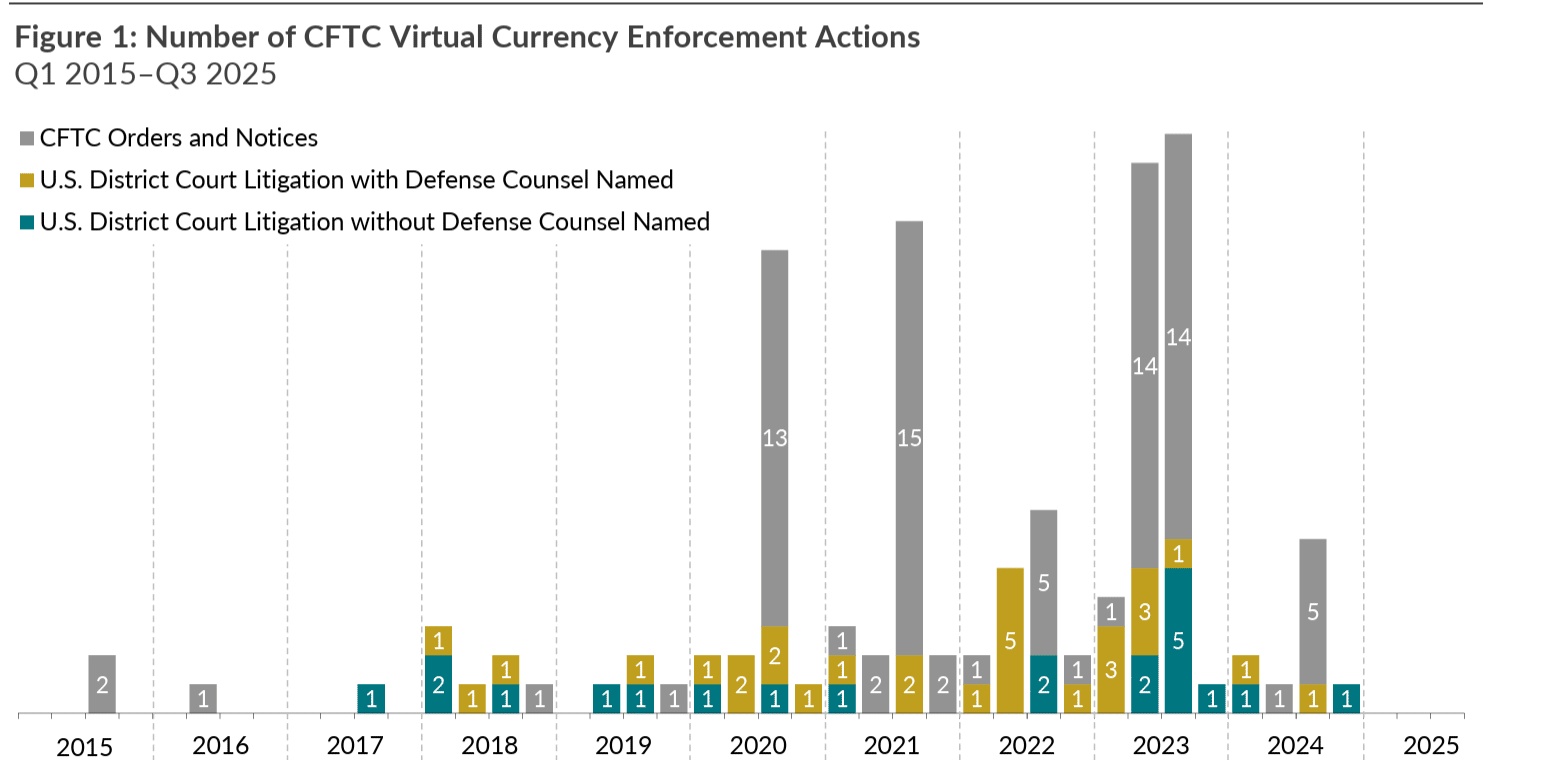
Source: Cornerstone Research

The transition in both areas was reflective of an emerging focus for regulators on developing frameworks for stablecoins and implementing structural changes in digital asset markets.

However, investors largely continued following interest rates, ETF flows, and broader macroeconomic conditions instead. That distinction suggests markets still prioritize fundamentals over politics.

Going forward, mounting ethics scrutiny could reshape regulatory standards and strengthen institutional accountability across future crypto oversight.


Final Summary

  • Trump’s crypto empire now extends beyond business into U.S. digital asset policy.
  • Crypto regulation now faces greater scrutiny as ethics and innovation increasingly collide.

热门币种推荐

相关问答

QWhat was the total reported income generated by Trump's family-backed crypto projects in 2025, and what were the two main sources?

ATrump's family-backed crypto projects generated more than $1.4 billion in reported income during 2025. The two main sources were: nearly $600 million from the sale of World Liberty Financial (WLFI) tokens, and approximately $636 million from the Official TRUMP (TRUMP) memecoin.

QAccording to the article, what are the main drivers of Trump's increasing digital assets, moving beyond simple asset value?

AThe main drivers of Trump's increasing digital assets are license agreements, token sales, and equity transactions. The article states that earning money is no longer dependent solely on the value of his crypto assets.

QHow did U.S. regulatory enforcement actions in the cryptocurrency sector change in 2025, according to Cornerstone Research?

AAccording to Cornerstone Research, enforcement by the SEC regarding cryptocurrencies decreased by approximately 60 percent in 2025. Furthermore, CFTC enforcement action for virtual currencies dropped to almost zero in the same year.

QWhy has Trump's crypto success shifted attention toward policymaking and regulatory reforms?

AAttention has shifted toward policymaking because Trump's business interests expanded alongside major regulatory reforms. There is concern that friendlier regulations could strengthen businesses tied to the president, creating an overlap between his commercial interests and an industry undergoing significant regulatory change.

QWhat are the two legislative acts mentioned in the article that support clearer rules for the digital asset marketplace?

AThe two legislative acts mentioned are the GENIUS Act, an executive order, and the CLARITY Act. Both acts support clearer rules for stablecoins and aim to foster a larger digital asset marketplace.

你可能也喜欢

MSX美股每日观察:阿里巴巴 FY2027年Q1财报:AI云收入增速创新高,AI云已经跑通盈利闭环

【MSX美股每日观察】阿里巴巴发布FY2027年第一季度财报。本季度总营收2689.53亿元,同比增长9%,略超市场预期。但经调整净利润为207.15亿元,同比下降38%,不及预期;调整后每ADS收益8.52元,同比下降42%。利润下滑主要受AI投入加大及两项一次性费用影响:计提欧盟罚款准备金5.5亿欧元及商誉减值44.58亿元。 业务结构方面,公司重组为四大板块: 1. AI云与算力服务收入484.37亿元,同比大增45%;经调整EBITA达56.28亿元,同比增长133%,利润率提升至12%,显示该业务已跑通盈利闭环。 2. 阿里巴巴电商集团收入2058.62亿元,同比增长4%。内部呈现分化:中国即时零售收入强劲增长45%,而传统电商收入下降8%,国际电商微降1%。电商集团整体经调整EBITA仅微降1%。 3. 其他业务收入288.03亿元,同比增长1%。 4. AI实验室与应用收入33.38亿元,同比增长16%,当期亏损138.61亿元,处于“以利润换用户”阶段。 现金流方面,单季资本开支激增75%至676.78亿元,导致自由现金流净流出446.70亿元。但经营活动现金流净额仍同比增长11%,现金消耗属战略投入。 核心观察点在于:AI云业务实现收入与利润同步高速增长,规模效应显现;电商通过即时零售增长对冲了传统业务下滑;当前巨大的资本开支是为AI未来投入,其成功与否取决于AI云盈利改善能否跑赢算力折旧。

Odaily星球日报35分钟前

MSX美股每日观察:阿里巴巴 FY2027年Q1财报:AI云收入增速创新高,AI云已经跑通盈利闭环

Odaily星球日报35分钟前

交易

现货

热门文章

如何购买S

欢迎来到HTX.com!我们已经让购买Sonic(S)变得简单而便捷。跟随我们的逐步指南,放心开始您的加密货币之旅。第一步:创建您的HTX账户使用您的电子邮件、手机号码注册一个免费账户在HTX上。体验无忧的注册过程并解锁所有平台功能。立即注册第二步:前往买币页面,选择您的支付方式信用卡/借记卡购买:使用您的Visa或Mastercard即时购买Sonic(S)。余额购买:使用您HTX账户余额中的资金进行无缝交易。第三方购买:探索诸如Google Pay或Apple Pay等流行支付方法以增加便利性。C2C购买:在HTX平台上直接与其他用户交易。HTX场外交易台(OTC)购买:为大量交易者提供个性化服务和竞争性汇率。第三步:存储您的Sonic(S)购买完您的Sonic(S)后,将其存储在您的HTX账户钱包中。您也可以通过区块链转账将其发送到其他地方或者用于交易其他加密货币。第四步:交易Sonic(S)在HTX的现货市场轻松交易Sonic(S)。访问您的账户,选择您的交易对,执行您的交易,并实时监控。HTX为初学者和经验丰富的交易者提供了友好的用户体验。

3.6k人学过发布于 2025.01.15更新于 2026.08.06

如何购买S

相关讨论

欢迎来到HTX社区。在这里,您可以了解最新的平台发展动态并获得专业的市场意见。以下是用户对S(S)币价的意见。

活动图片