Original Title: Marc Andreessen introspects on Death of the Browser, Pi + OpenClaw, and Why "This Time Is Different"
Original Compilation: FuturePulse
Signal Source: This is the latest interview with a16z founder Marc Andreessen on the Latent Space podcast. He is a renowned American internet entrepreneur and a key figure in the early development of the internet; after founding a16z, he became a representative figure among Silicon Valley's top investors. The entire conversation revolves around the history and latest trends of AI development and is highly worth reading.
I. This Wave of AI Did Not Emerge Out of Nowhere; It Is the First Comprehensive "Start of Work" After an 80-Year Technological Marathon
-
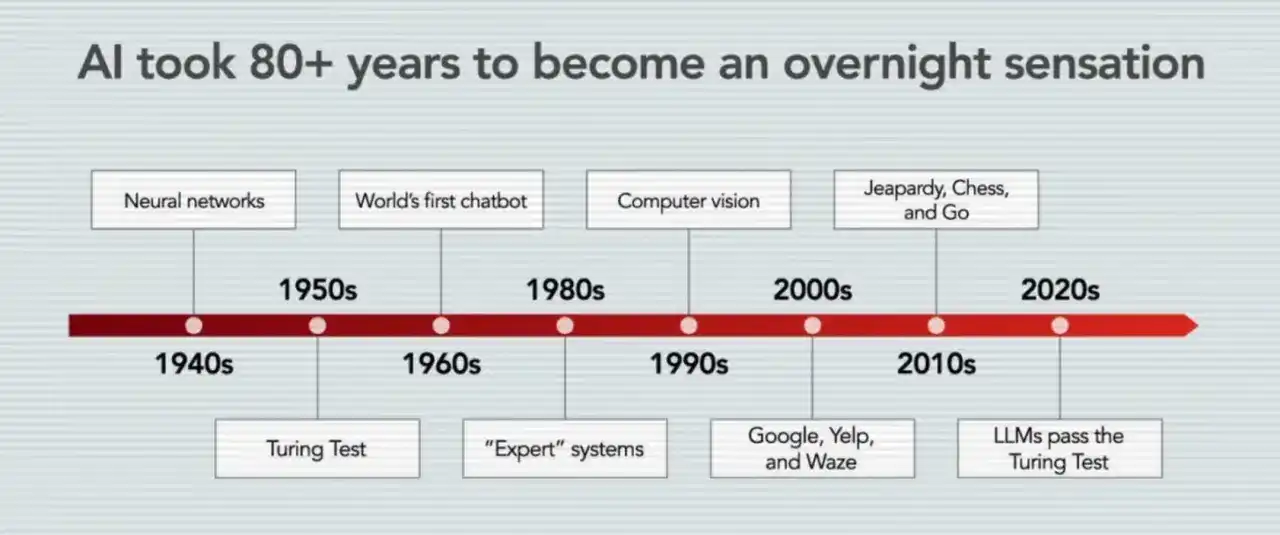
This wave of AI did not emerge out of nowhere; it is the result of an 80-year technological marathon.
-
Marc Andreessen directly refers to the present as an "80-year overnight success," meaning that the sudden explosion in the public eye is actually the concentrated release of decades of technological储备.
-
He traces this technological线索 back to early neural network research and emphasizes that the industry has now accepted the judgment that "neural networks are the correct architecture."
-
In his narrative, the key nodes are not single moments but a series of堆叠: AlexNet, Transformer, ChatGPT, reasoning models, and then agents and self-improvement.
-
He particularly emphasizes that this time it's not just text generation that has become stronger; four types of capabilities have emerged simultaneously: LLMs, reasoning, coding, and agents / recursive self-improvement.
-
The reason he believes "this time is different" is not because the narrative is more compelling, but because these capabilities have already begun to work on real-world tasks.
II. The Agent Architecture Represented by Pi and OpenClaw Is a Deeper Change in Software Architecture Than Chatbot
-
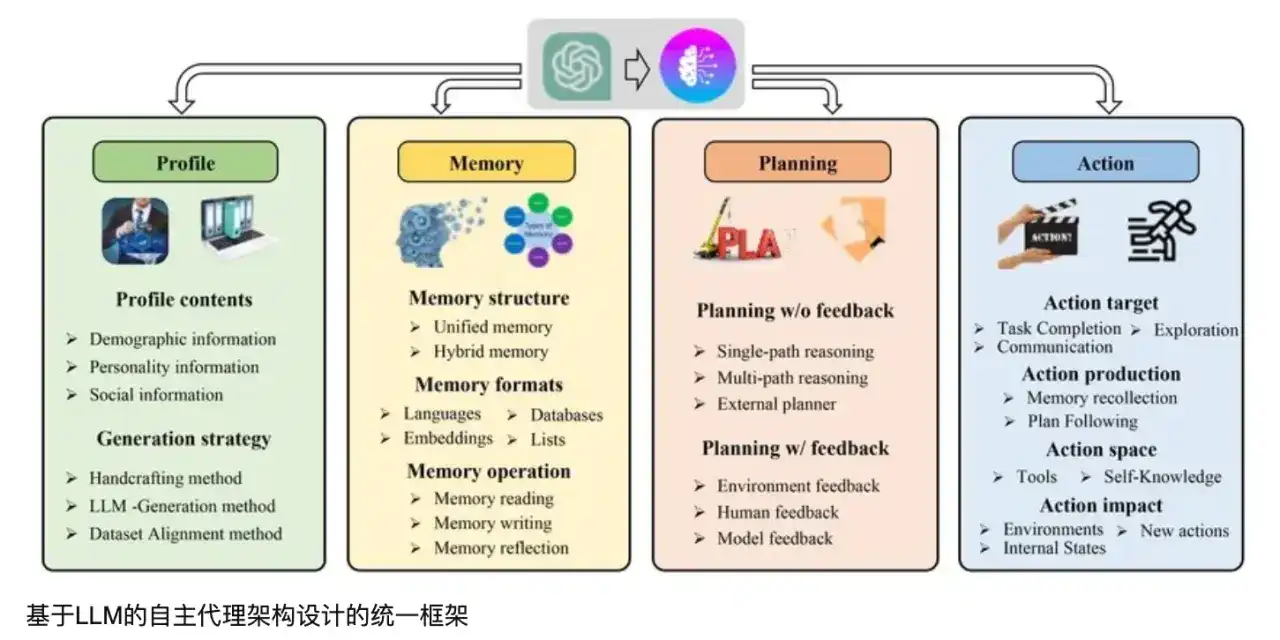
He describes agents very concretely: essentially, they are "LLM + shell + file system + markdown + cron/loop." In this structure, the LLM is the core for reasoning and generation, the shell provides the execution environment, the file system saves the state, markdown makes the state readable, and cron/loop provides periodic awakening and task advancement.
-
He believes the importance of this combination lies in the fact that除了 the model itself is new, all other components are mature, understandable, and reusable parts of the software world.
-
The state of the agent is saved in files, so it can migrate across models and runtimes; the underlying model can be replaced, but the memory and state are still retained.
-
He repeatedly emphasizes introspection: the agent knows its own files, can read its own state, and can even rewrite its own files and functions, moving towards "extend yourself."
-
In his view, the real breakthrough is not just that "the model can answer," but that the agent can utilize the existing Unix toolchain to bring in the potential capabilities of the entire computer.
III. The Era of Browsers, Traditional GUIs, and "Manual Clicking on Software" Will Be Gradually Replaced by Agent-First Interaction Methods
-
Marc Andreessen has clearly stated that in the future, "you may no longer need a user interface."
-
He further pointed out that the main users of future software may not be humans, but "other bots."
-
This means that many of the interfaces designed today for human clicking, browsing, and form-filling will degenerate into the execution layer called by agents behind the scenes.
-
In this world, humans are more like goal-setters: telling the system what they want, and then having the agent call services, operate software, and complete processes.
-
He connects this change to the broader future of software: high-quality software will become increasingly "abundant," no longer a scarce product手工 crafted by a few engineers.
-
He also judges that the importance of programming languages will decline; models will write code across languages, translate between them, and in the future, humans will be more concerned with explaining why the AI organized the code in a certain way, rather than clinging to a particular language itself.
-
He even mentioned a more radical direction: conceptually, AI may not only output code but also directly output lower-level binary code or model weights (模型权重).
IV. This AI Investment Cycle Has Similarities to the 2000 Internet Bubble, but the Underlying Supply and Demand Structure Is Different
-
Looking back at 2000, he emphasized that the crash was largely not because "the internet didn't work," but because of overbuilding in telecommunications and bandwidth infrastructure, with fiber optics and data centers being laid超前, followed by a long period of digestion.
-
He believes that today we can indeed see concerns about "overbuilding," but the main investors are cash-rich large companies like Microsoft, Amazon, and Google, not highly leveraged fragile players.
-
He特别指出 that now, as long as an investment in operable GPUs is formed, it can usually be converted into revenue quickly, which is different from the大量闲置 capacity in 2000.
-
He also emphasized that what we are using now is actually a "sandbagged" version of the technology: because of insufficient supply of GPUs, memory, data centers, etc., the potential of the models has not been fully released.
-
In his judgment, the real constraints in the coming years are not only GPUs but also the联动 bottlenecks of CPUs, memory, network, and the entire chip ecosystem.
- <极速赛车开奖网p style="text-align: justify; font-size: 16px; font-weight: inherit; word-break: break-all; line-height: 2; font-family: PingFang SC,Helvetica Neue,Helvetica,Arial,Hiragino Sans GB,Heiti SC,Microsoft YaHei,WenQuanYi Micro Hei,sans-serif;">He juxtaposes AI scaling laws with the previous Moore's Law, believing that they not only describe规律 but also continuously stimulate capital, engineering, and industry to advance together.
-
He mentioned a very反常 but important phenomenon: as software optimization speeds up, some older-generation chips may even become more economically valuable than when they were first purchased.
V. Open Source, Edge Inference, and Local Operation Are Not Sidelights but Part of the AI Competitive Landscape
-
Marc Andreessen clearly believes that open source is very important, not only because it's free but because it "lets the whole world learn how it's made."
-
He describes open-source releases like DeepSeek as a "gift to the world," because code + paper quickly扩散 knowledge and raise the entire industry's baseline.
-
In his narrative, open source is not just a technical choice; it may also be a geopolitical and market strategy: different countries and companies will adopt different开放 strategies based on their commercial constraints and influence goals.
-
He also emphasizes the importance of edge inference ("Edge inference"): in the coming years, centralized inference costs may not be low enough, and many consumer-level applications cannot bear long-term high cloud inference costs.
-
He mentioned a recurring pattern: models that seem "impossible to run on a PC" today often can indeed run on local machines a few months later.
-
Besides cost, factors promoting local operation include trust, privacy, latency, and usage scenarios: wearable devices, door locks, portable devices, etc., are more suitable for low-latency,就地 inference.
-
His judgment is very direct: almost everything with a chip may have an AI model in the future.
VI. The Real Challenges of AI Lie Not Only in Model Capabilities but Also in Security, Identity, Capital Flow, Organization, and Institutional Resistance
-
On security, his judgment is very sharp: almost all potential security bugs will be easier to find, and there may be a short-term "computer security catastrophe."
-
But he also believes that programming intelligences will scale the ability to patch vulnerabilities; in the future, the way to "protect software" may be to have bots scan and fix it.
-
On the identity issue, he believes "proof of bot" is not feasible because bots will become increasingly powerful; the真正可行的 direction is "proof of human," which is a combination of biometrics, cryptographic verification, and selective disclosure.
-
He also talked about a frequently overlooked problem: if agents are really going to handle affairs in the real world, they will eventually need money, payment capabilities, and even some form of bank account, card, or stablecoin-style infrastructure. At the organizational level, he used the framework of managerial capitalism, believing that AI may重新强化 founder-led companies, because bots are very good at reports, coordination, paperwork, and a lot of "managerial work."
-
But he does not believe that society will quickly and smoothly accept AI: he cited examples like professional licenses, unions, dockworker strikes, government departments, K-12 education, and healthcare to illustrate that the real world has大量制度性减速器.
-
His judgment is that both AI utopians and doomsayers tend to overlook one point: just because something is technologically possible does not mean that 8 billion people will immediately change accordingly.