When Tether No Longer Clings to the Dollar...

比推Xuất bản vào 2025-12-09Cập nhật gần nhất vào 2025-12-09

Tóm tắt

Tether, the issuer of the world's largest stablecoin USDT, is shifting its reserve strategy in anticipation of lower interest rates. While its business model thrived during high-rate periods—earning billions from U.S. Treasury holdings—future Fed rate cuts could reduce its interest income significantly. To adapt, Tether has diversified into gold (over 100 tons) and Bitcoin (over 90,000 BTC), which together make up 12-13% of its reserves. These assets historically perform well in low-rate, high-liquidity environments, potentially offsetting lost Treasury yield. However, rating agencies like S&P have expressed concern, downgrading Tether’s stability rating due to increased exposure to volatile assets like Bitcoin and reduced transparency. The key challenge remains maintaining USDT’s dollar peg while navigating this new macroeconomic phase.

Author: Prathik Desai

Original Title: Gold, Bills, Thrills

Compiled and Edited by: BitpushNews


When I think of stablecoins, I often see them merely as a bridge between the US dollar and the blockchain, nothing more. They can be powerful infrastructure components, silently supporting the operation of on-chain products in ways that are often easily overlooked.

As a business model, stablecoin issuers have direct revenue, which is tied to the interest rates published by the US Federal Reserve. The higher the interest rates, the more income the US Treasury bonds backing their stablecoin circulation bring to the issuers.

However, in recent years, the world's largest stablecoin issuer by circulation has adjusted its reserve strategy to better adapt to the macroeconomic environment.

In this quantitative analysis, I will explore why and how Tether (Tether) is partially replacing its massive interest-earning engine with gold and Bitcoin to cope with the upcoming shift in the interest rate cycle.

Let's begin.
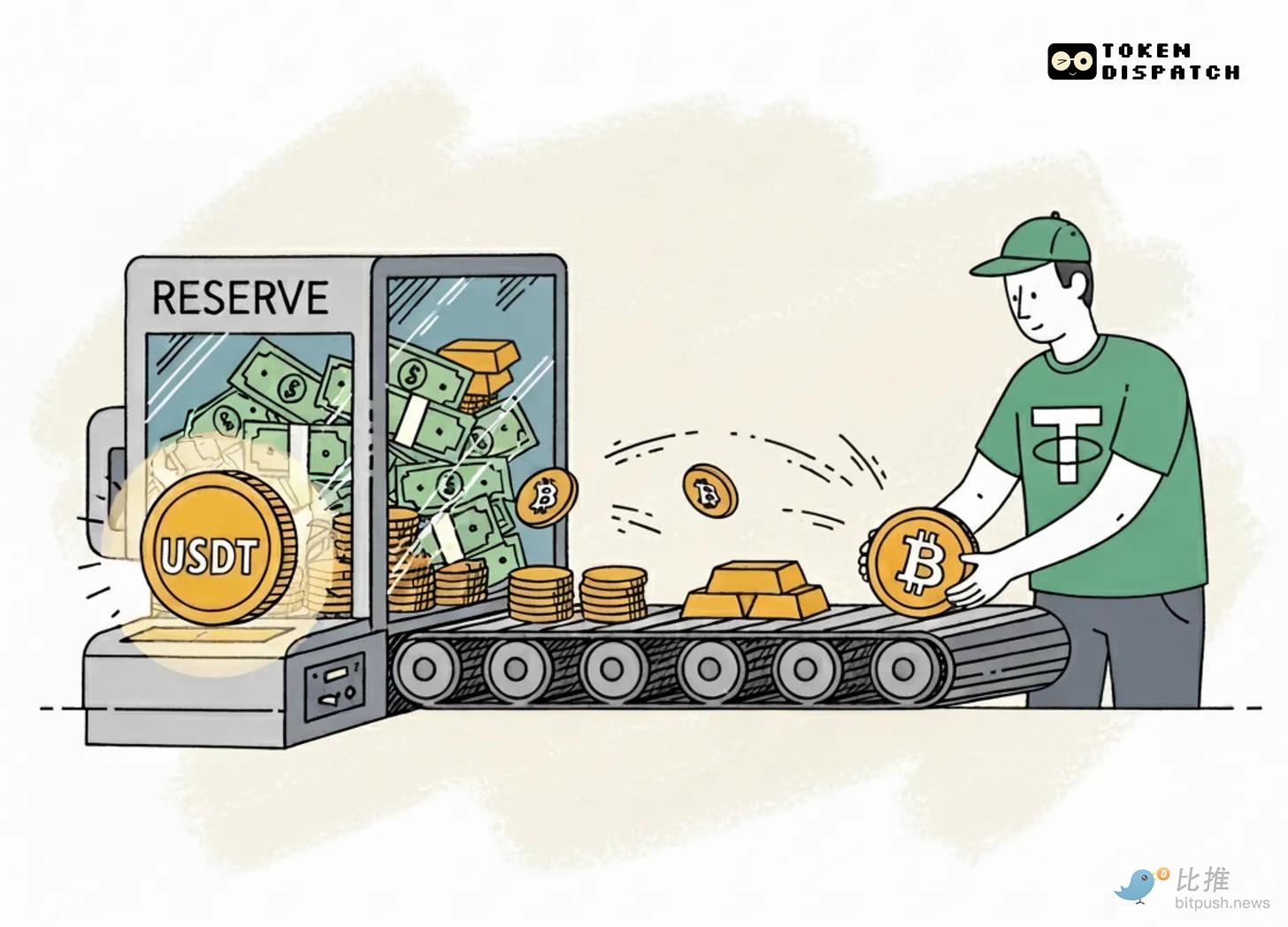
The US Treasury Machine

A glance at Tether's US Treasury reserves reveals how it became a profit machine during periods of high interest rates.

Over the past few years, USDT holders earned 0%, while Tether earned about 5% on approximately $1 trillion in US Treasury bonds.

Even with average interest rates relatively low for most of 2025, around 4.25%, as of September 30, 2025, Tether reported a net profit of over $10 billion for the year. In contrast, the second-largest stablecoin issuer, Circle, reported a net loss of $202 million for the same period.

For most of the past three years, Tether's business model perfectly aligned with the macroeconomic backdrop. The Federal Reserve maintained interest rates between 4.5% and 5.5%, and Tether held over $1 trillion in US bonds, with each percentage point of yield bringing in approximately $1 billion in annual revenue.

While most cryptocurrency companies struggled with operational losses, Tether accumulated tens of billions in surplus simply by going long on short-term government debt.

But what happens when the interest rate cycle turns, and rate cuts are expected in the coming years?

The Interest Rate Cycle Problem

CME FedWatch data shows that by December 2026, there is over a 75% probability that the federal funds rate will drop from the current 3.75-4% range to between 2.75-3% and 3.25-3.50%. This is already a significant drop from the 5% level that Tether relied on for profits in 2024.
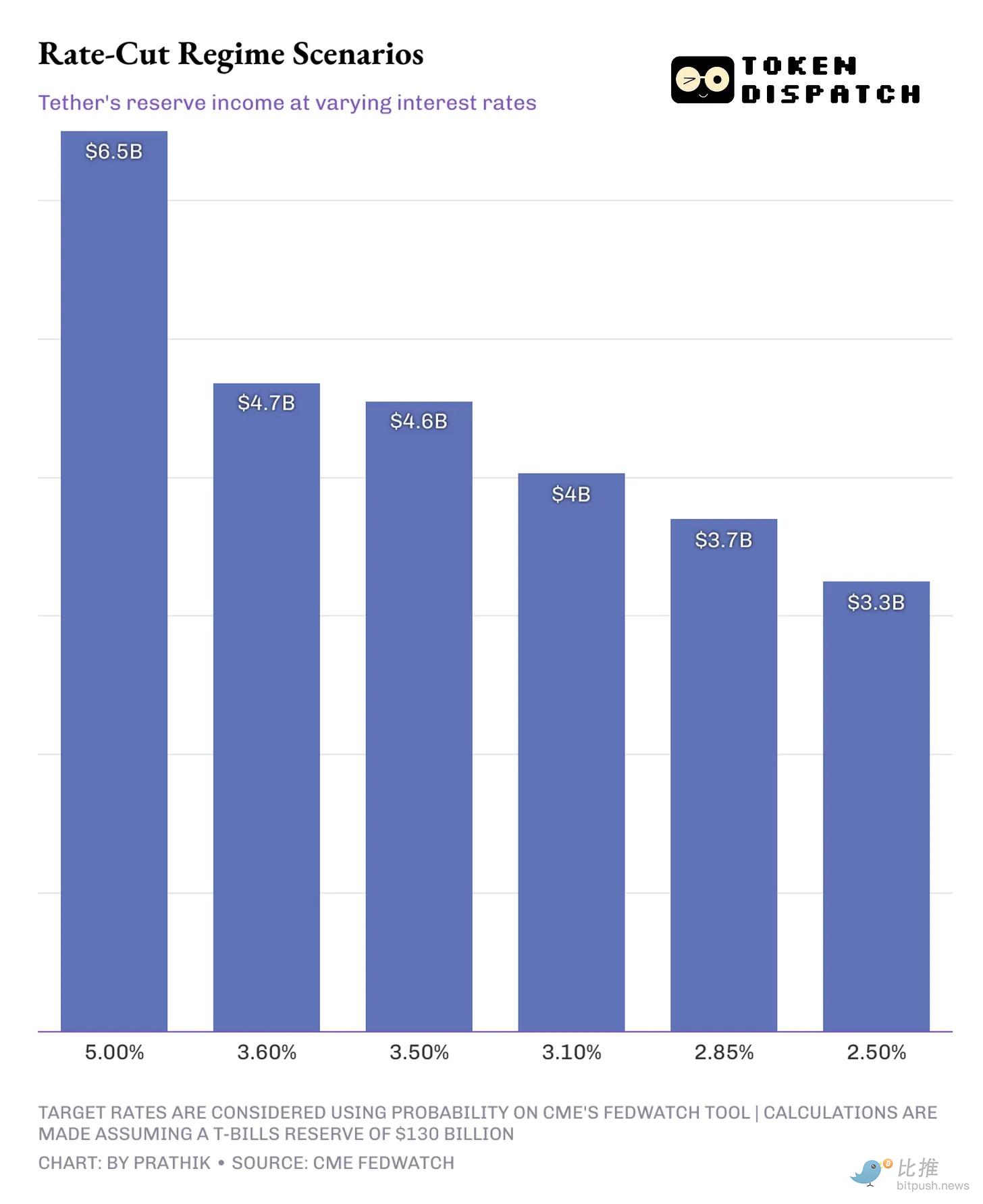
Lower interest rates could compress the interest income Tether earns from its US Treasury holdings.

A one-percentage-point drop in overall US economic liquidity could reduce Tether's annual income by at least $15 billion. This exceeds 10% of its annualized net profit for 2025.

So, how will Tether protect its profitability in this world? After Jerome Powell's term ends in 2026, a new Fed Chair is more likely to follow the expectations of US President Donald Trump for more significant and faster rate cuts.

It is at this point that Tether's reserve strategy diverges most significantly from any other stablecoin issuer.

Diversification Strategy

Between September 2021 and October 2022, Tether reduced its reliance on commercial paper (unsecured short-term debt instruments issued by large corporations) by over 99%. From over $30 billion in September 2021, it was cut to almost zero.

It replaced these assets with US-backed Treasury bonds to increase transparency for investors.
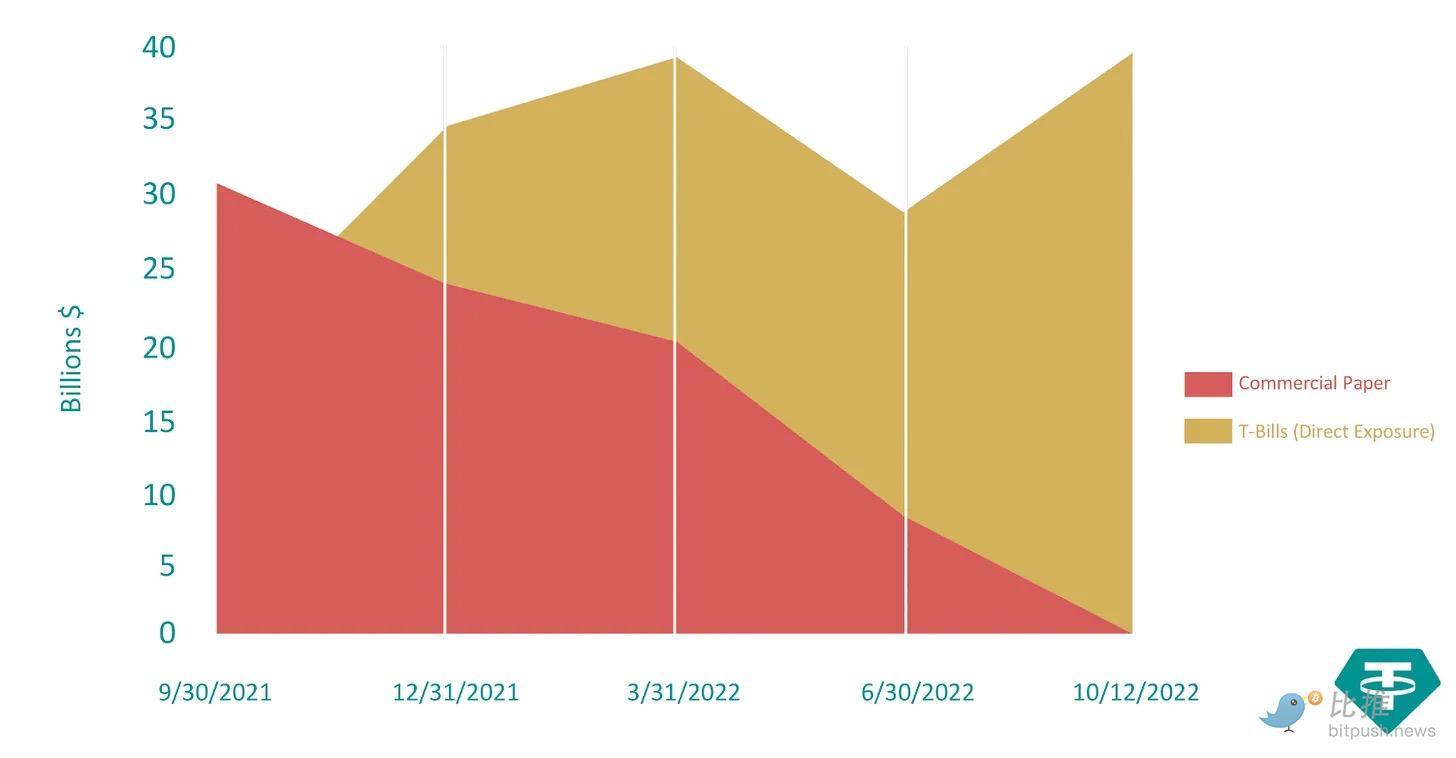
During the same period, Tether's US Treasury reserves grew from less than $25 billion to $40 billion.

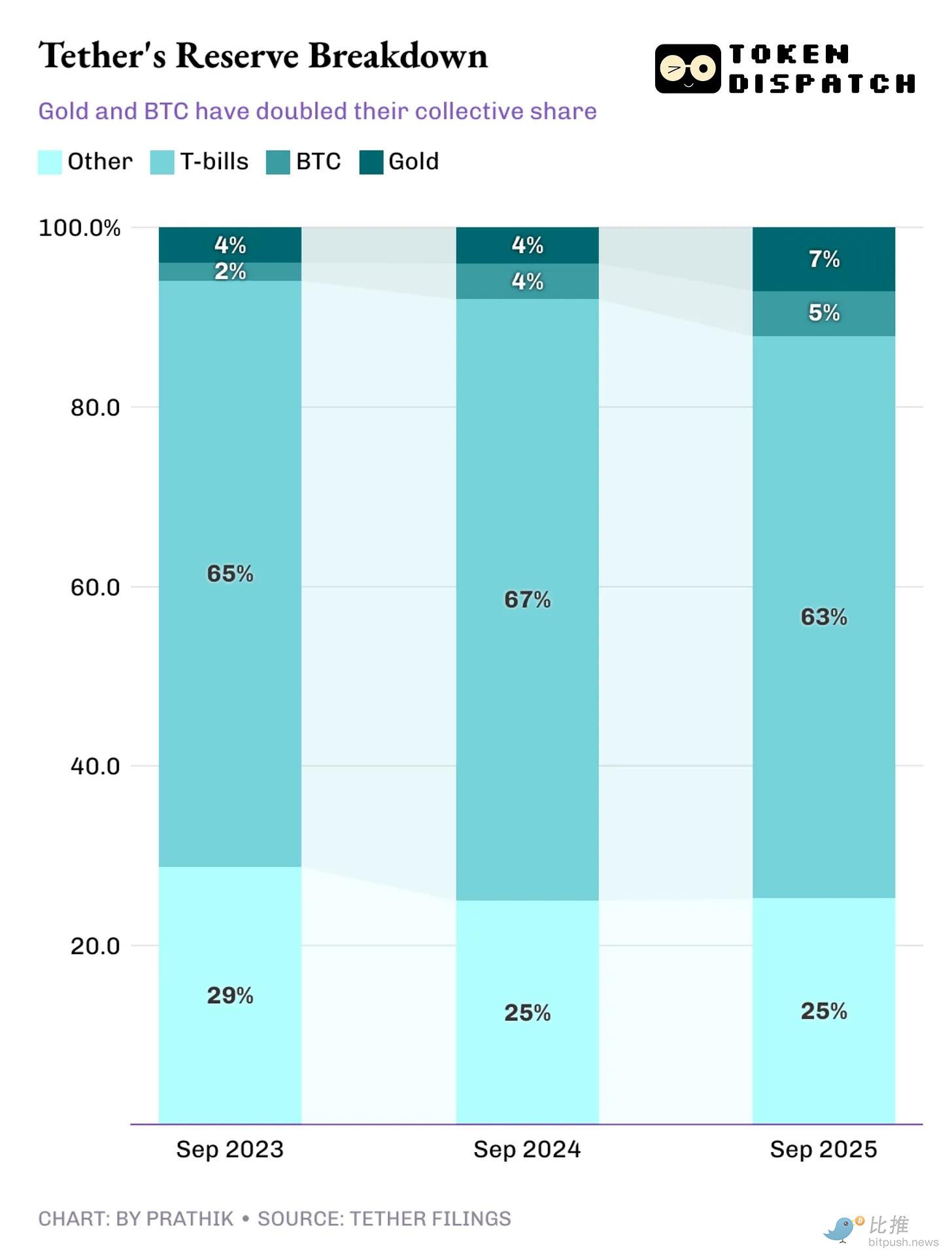
Between Q3 2023 and Q3 2025, the composition of Tether's reserve assets changed, incorporating asset classes rarely seen on the balance sheets of other stablecoin issuers.

As of September 2025, Tether had accumulated approximately over 100 tons of gold, valued at around $13 billion. It also held over 90,000 BTC, worth nearly $10 billion. Together, these account for about 12-13% of its reserves.

In contrast, its competitor Circle held only 74 Bitcoin, worth about $8 million.
Why the Shift Now?

The increase in gold and Bitcoin allocations coincided with the period when the forward rate curve no longer predicted rate hikes.

In response to rising inflation, interest rates jumped from less than 1% to over 5% between May 2022 and August 2023. During this time, maximizing income by investing in US Treasuries made economic sense. But once interest rates peaked in 2023 and no further hikes were expected, Tether saw it as the right moment to start preparing for the turn in the interest rate cycle.

Why Choose Gold and Bitcoin When Yields Fall?

Gold tends to perform well when US Treasury yields fall. This is driven by expectations of rising inflation and the reduced opportunity cost of holding gold instead of low-yielding US Treasuries.
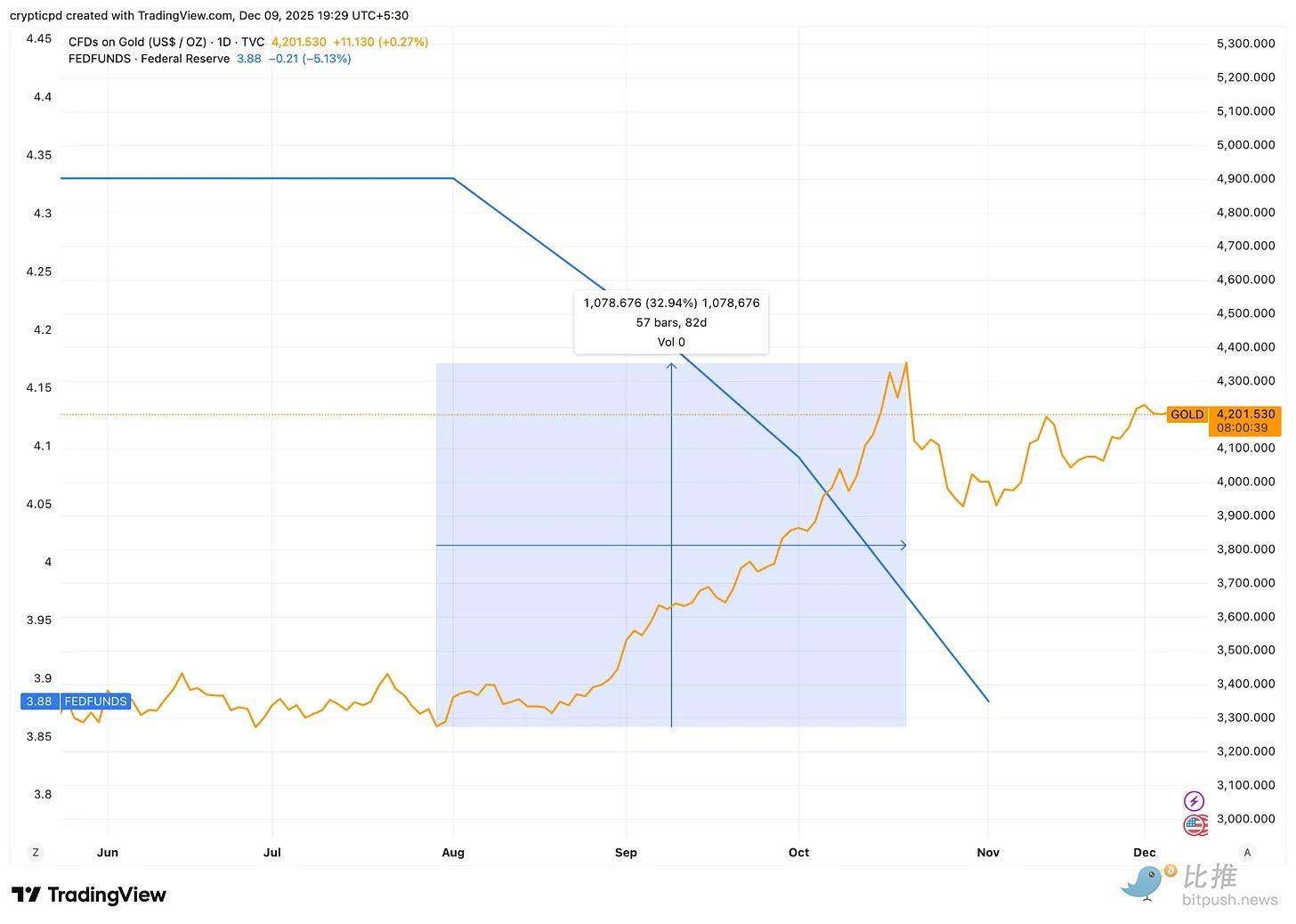
We saw this happen this year; when the Fed cut rates by 50 basis points, gold prices rose over 30% between August and November.

Even during the COVID-19 pandemic, when the Fed cut rates by 1.5 percentage points to inject liquidity into the economy, gold prices rose 40% in the subsequent five months.

Bitcoin has recently exhibited similar macro behavior. As monetary policy eases and liquidity expands, Bitcoin typically reacts like a high-beta asset.
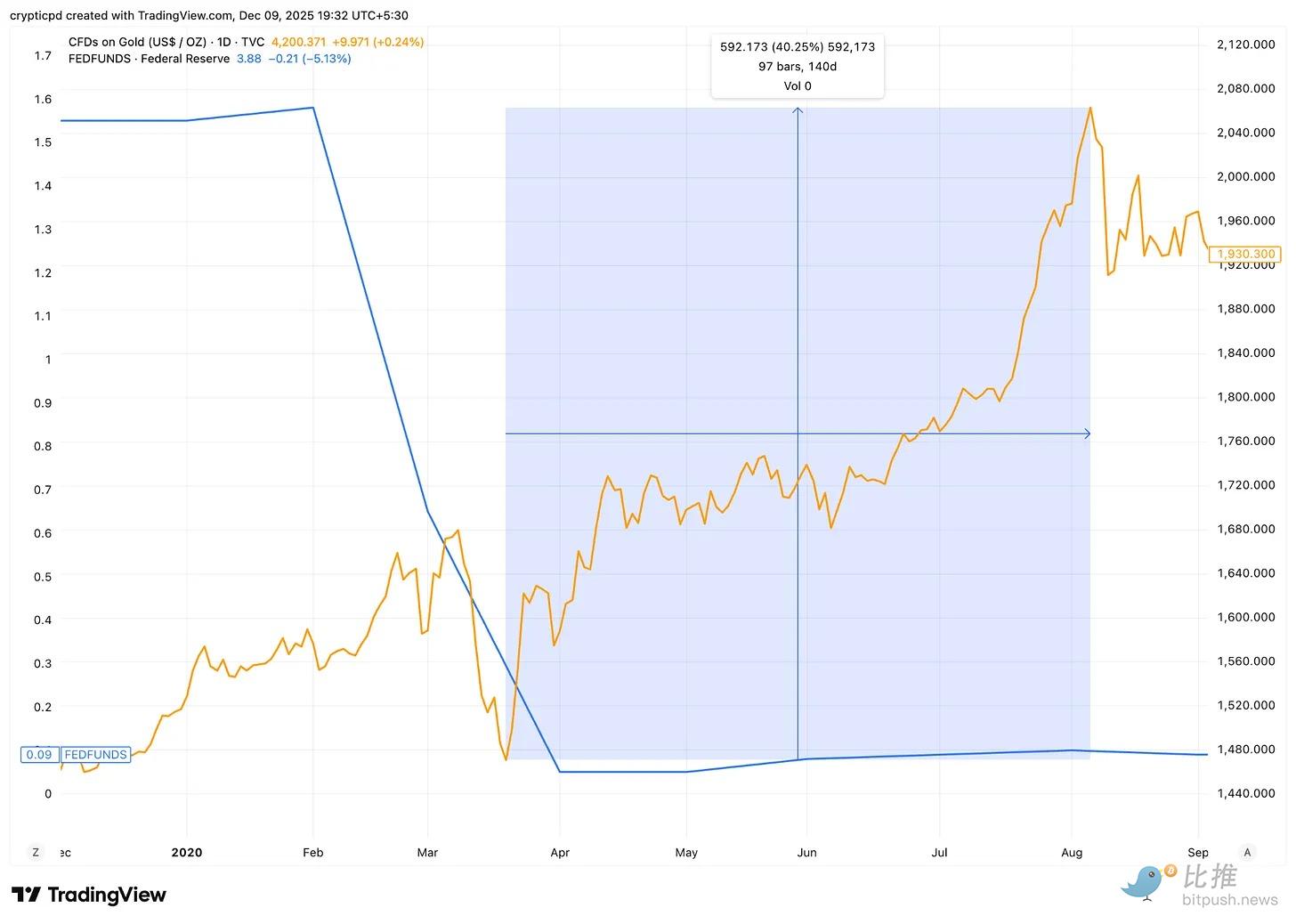
Therefore, while a high-interest-rate environment allows for income through US Treasuries, allocating to Bitcoin and gold can provide potential upside in a low-interest-rate environment.

This allows Tether to book unrealized gains and even realize some profits by selling gold or Bitcoin from its vault, particularly during phases when interest rates are low and income is squeezed.

However, not everyone approves of the increased exposure to gold and Bitcoin on Tether's balance sheet.

The Peg Problem

Although US Treasuries still account for 63% of Tether's reserves, the increased exposure to riskier assets like Bitcoin and unsecured loans has raised concerns among rating agencies.

Two weeks ago, S&P Global Ratings reassessed Tether's ability to maintain the USDT peg to the US dollar from Tier 4 (Constrained) to Tier 5 (Weak). It noted the increased exposure to corporate bonds, precious metals, Bitcoin, and secured loans in its reserves.

The agency pointed out that these assets account for almost 24% of the total reserves. More troubling for the agency is that, although US Treasuries still back most of the reserves, the USDT issuer provides limited transparency and disclosure regarding the composition of these riskier asset classes.

Furthermore, there are concerns about undermining the peg of the USDT token to the US dollar.

S&P stated in its report: "Bitcoin now accounts for about 5.6% of USDT's circulation, exceeding the 3.9% over-collateralization margin, indicating that the reserves can no longer fully absorb the impact of its value decline. Therefore, a decline in Bitcoin's value combined with a decline in the value of other high-risk assets could reduce reserve coverage and lead to USDT being undercollateralized."

On one hand, Tether's shift in reserve strategy seems a reasonable measure to cope with the upcoming low-interest-rate environment. When rate cuts come—and they will—this $13 billion profit engine will struggle to sustain itself. The upside potential of the held gold and Bitcoin could help offset some of the income loss.

On the other hand, this shift has also rightly made rating agencies nervous. The primary task of a stablecoin issuer is to protect its peg to the underlying currency (in this case, the US dollar). Everything else, including the revenue it generates, its reserve diversification strategy, and the unrealized gains it can obtain, becomes secondary. If the peg fails, the business collapses.

When circulating tokens are backed by volatile assets, the risk profile of the peg changes. A sufficiently large impairment of Bitcoin—which we have been experiencing over the past two months—would not necessarily break the USDT peg but would narrow the buffer between the two.

Tether's story will unfold with the upcoming monetary policy easing. This week's rate cut decision will be the first indicator to measure this stablecoin giant's ability to defend its peg and signal its future trajectory.

Let's wait and see.


Twitter:https://twitter.com/BitpushNewsCN

Bitpush TG Discussion Group:https://t.me/BitPushCommunity

Bitpush TG Subscription: https://t.me/bitpush

Original article link:https://www.bitpush.news/articles/7594373

Câu hỏi Liên quan

QWhy has Tether started diversifying its reserves to include assets like gold and Bitcoin?

ATether is diversifying its reserves to prepare for the upcoming shift in the interest rate cycle. As the Federal Reserve is expected to lower interest rates, the yield on U.S. Treasuries will decrease, compressing Tether's interest income. Gold and Bitcoin have historically performed well in low-rate environments, offering potential upside to offset this income loss.

QWhat is the current composition of Tether's reserves, and how does it differ from its competitor Circle?

AAs of September 2025, Tether's reserves consist of approximately 63% U.S. Treasuries, over 100 tons of gold (worth ~$13B), and over 90,000 BTC (worth ~$10B). In contrast, its competitor Circle holds only 74 Bitcoin, worth $8 million, showing a vastly different and more conservative strategy.

QWhat concerns have rating agencies like S&P Global raised about Tether's new reserve strategy?

AS&P Global Ratings downgraded its assessment of Tether's ability to maintain the USDT peg from 'constrained' to 'weak.' The agency is concerned about the increased exposure to higher-risk asset classes like corporate bonds, precious metals, Bitcoin, and secured loans, which now make up nearly 24% of its reserves. It also cited limited transparency and the risk that a drop in Bitcoin's value could reduce reserve coverage and lead to USDT being undercollateralized.

QHow did Tether's business model perform during the period of high interest rates?

ADuring the high-interest-rate period, Tether's business model was extremely profitable. It held over $1 trillion in U.S. Treasuries and earned a yield of around 5%. Even with lower average rates of about 4.25% for much of 2025, Tether reported a net profit exceeding $10 billion for the first nine months of the year, far outperforming competitors like Circle, which reported a net loss.

QHow do gold and Bitcoin typically behave in a low interest rate environment, and why is this beneficial for Tether?

AGold tends to perform well when U.S. Treasury yields fall, as it is driven by expectations of rising inflation and a lower opportunity cost of holding non-yielding assets. Bitcoin often acts as a high-beta asset, reacting positively to expansionary monetary policy and increased liquidity. This potential for price appreciation allows Tether to book unrealized gains or realize profits by selling these assets, helping to offset the squeezed income from lower-yielding Treasuries.

Nội dung Liên quan

Ethereum Có Thực Sự Là Một "Máy Tính Thế Giới" Không?

Kể từ khi ra mắt vào năm 2015, Ethereum được định vị là một "máy tính thế giới". Tuy nhiên, phân tích sâu từ Four Pillars đặt ra câu hỏi liệu nó có thực sự mang tính toàn cầu hay thiên về "máy tính phương Tây". Dữ liệu cho thấy sự phân bố người xác thực (validator) mất cân đối đáng kể. Hoa Kỳ chiếm 38,19% và Đức chiếm 13,04% tổng số người xác thực, nghĩa là hai nước này nắm hơn một nửa mạng lưới. Sự tập trung này xuất phát từ chi phí thấp, cơ sở hạ tầng tốt và văn hóa tham gia từ hộ gia đình tại Mỹ. Các nhà cung cấp dịch vụ đám mây như Hetzner và OVH tại châu Âu cũng đóng vai trò lớn. Tuy nhiên, bức tranh khả quan hơn ở nhóm người xác thực chuyên nghiệp do tổ chức vận hành. Tỷ trọng của Mỹ giảm xuống 25,81%, trong khi các quốc gia châu Á như Singapore (7,28%), Hồng Kông (6,44%), Nhật Bản (6,38%) và Hàn Quốc (4,59%) tăng mạnh, cho thấy sự phân bố cân bằng hơn do nhu cầu chiến lược về tuân thủ quy định và độ trễ thấp. Vấn đề nổi bật là sự vắng mặt của Nam Mỹ, Trung Đông và châu Phi. Cơ chế mạng ngang hàng (P2P) của Ethereum vô tình gây bất lợi cho các khu vực có mật độ node thấp, tạo ra vòng luẩn quẩn khiến họ nhận thông tin chậm và giảm hiệu suất, làm suy yếu lời hứa về khả năng chống kiểm duyệt và truy cập toàn cầu. Đây cũng là cơ hội lớn. Nhu cầu về cơ sở hạ tầng xác thực địa phương, đáp ứng yêu cầu về chủ quyền dữ liệu và độ trễ, sẽ tăng lên. Các nhà khai thác tiên phong tại các khu vực "ngoại vi" này có thể thiết lập lợi thế cạnh tranh bền vững, giống như xu hướng đang diễn ra tại châu Á.

Foresight News43 phút trước

Ethereum Có Thực Sự Là Một "Máy Tính Thế Giới" Không?

Foresight News43 phút trước

Bẫy Arbitrage Trí Tuệ của Bittensor: Vốn Chỉ Đổ Vào Token, AI Chất Lượng Không Ai Mua

Tác giả: Thejaswini M A Biên dịch: Chopper, Foresight News Bittensor, một mạng lưới AI phi tập trung sử dụng token để khuyến khích phát triển, đang đối mặt với những chỉ trích về cơ chế khuyến khích lệch lạc. Mạng được chia thành khoảng 128 "subnet" (mạng con) cho các nhiệm vụ AI khác nhau. Người khai thác (miner) cung cấp dịch vụ AI và được trả bằng token TAO dựa trên điểm số từ người xác thực (validator). Tuy nhiên, phần thưởng cho người xác thực lại phụ thuộc vào việc chấm điểm có giống với những người xác thực khác hay không, chứ không nhất thiết là chính xác. Vấn đề cốt lõi nằm ở cách phân bổ phần thưởng TAO mới. Tỷ lệ phần thưởng mà một subnet nhận được chỉ được xác định bởi giá token Alpha riêng của nó, không liên quan đến chất lượng dịch vụ AI. Điều này tạo ra một vòng lặp: mua token Alpha -> giá tăng -> subnet nhận nhiều TAO hơn -> thêm token được phân phối cho người nắm giữ Alpha -> họ có thêm vốn để tiếp tục mua vào. Giá trị hoàn toàn do dòng tiền quyết định, không có mối liên hệ rõ ràng với doanh thu thực tế từ người dùng AI. Hệ thống cũng dễ bị thao túng. Các quy tắc chống gian lận chỉ có hiệu lực khi các nút gian lận nắm giữ dưới 50% lượng token đặt cọc. Nếu vượt quá ngưỡng này, thợ đào và người xác thực có thể thông đồng để tăng điểm cho nhau. Một lỗ hổng khác là "sao chép điểm số", nơi người xác thực chỉ cần sao chép điểm từ người khác mà không cần kiểm tra công việc. Mặc dù tồn tại những vấn đề này, bài viết thừa nhận Bittensor đang xây dựng cơ sở hạ tầng AI có giá trị và thúc đẩy sự đổi mới phi tập trung, như ví dụ về nhóm Covexus đào tạo mô hình ngôn ngữ lớn hiệu quả trên các thiết bị phân tán. Việc các công ty như Grayscale và Bitwise đang xin phê duyệt ETF cho Bittensor có thể mang lại vốn và sự giám sát từ các nhà đầu tư tổ chức, có khả năng thúc đẩy các cải tiến cần thiết. Tóm lại, tiềm năng cho một hệ sinh thái AI mở và phi tập trung là rất lớn, nhưng cơ chế khuyến khích hiện tại cần phải gắn liền hơn với giá trị và nhu cầu thực tế.

Foresight News1 giờ trước

Bẫy Arbitrage Trí Tuệ của Bittensor: Vốn Chỉ Đổ Vào Token, AI Chất Lượng Không Ai Mua

Foresight News1 giờ trước

Warsh đang âm thầm định hình lại Cục Dự trữ Liên bang qua năm nhóm công tác

Tác giả: Qinbafrank Cục Dự trữ Liên bang Mỹ (Fed) mới đây đã công bố thành phần lãnh đạo của năm nhóm công tác cải cách lớn. Phân tích cho thấy, dưới sự chỉ đạo của Chủ tịch Kevin Warsh, có vẻ như một "tầng thiết kế chính sách song song" đang được thiết lập xoay quanh chủ tịch. Trong khi quyền quyết định chính thức vẫn thuộc về Ủy ban Thị trường Mở Liên bang (FOMC) và Hội đồng Thống đốc, thì quyền thiết lập chương trình nghị sự, sản xuất tri thức, tiếp cận dữ liệu và định hình diễn ngôn công chúng đang có xu hướng tập trung vào chủ tịch và các chuyên gia bên ngoài do ông lựa chọn. Năm nhóm công tác này có tên chính thức là "Nhóm công tác thúc đẩy chính sách tiền tệ của Chủ tịch", với 15 đồng trưởng nhóm đều là các chuyên gia bên ngoài, được nhân viên Fed hỗ trợ, tiến hành nghiên cứu độc lập và cuối cùng trình bày kết luận lên FOMC. Nhiệm vụ của năm nhóm bao phủ toàn bộ "hệ điều hành" của chính sách tiền tệ: Đầu vào dữ liệu → Mô hình năng suất, việc làm và lạm phát → Công cụ bảng cân đối kế toán → Giao tiếp đối ngoại. Các đặc điểm nổi bật của mô hình nhóm công tác này bao gồm: do lãnh đạo cao nhất trực tiếp khởi xướng; vượt qua ranh giới bộ phận hiện có; thiết lập kênh báo cáo thông tin song song; bỏ qua sự chậm trễ của thủ tục quan liêu thông thường và lợi ích cục bộ; nhanh chóng thiết lập lại chương trình nghị sự chính sách thông qua "thiết kế cấp cao"; và tập trung quyền phối hợp và tri thức thông qua một tổ chức đặc biệt. Trong tương lai, khả năng cao là Chủ tịch Warsh sẽ giữ nguyên hiện trạng cho đến khi các nhóm công tác hoàn thành nghiên cứu. Cần theo dõi xem các nhóm công tác này có tồn tại lâu dài hay không, liệu kết luận của họ có trở thành chính sách định sẵn của chủ tịch hay không, và FOMC cuối cùng chỉ phê chuẩn các quyết định đó.

marsbit2 giờ trước

Warsh đang âm thầm định hình lại Cục Dự trữ Liên bang qua năm nhóm công tác

marsbit2 giờ trước

Cuộc Thi Giao Dịch WEEX TradFi Đã Chính Thức Mở Màn, 50,000 USDT Tiền Thưởng Đến Tay Người Nhanh Nhất, Mở Lệnh Là Nhận Ngay 5 U

Thị trường tiền điện tử hiện đang trải qua chu kỳ điều chỉnh, nhưng WEEX đã thoát khỏi "lời nguyền" giảm giao dịch nhờ tích hợp TradFi (Tài chính Truyền thống) - mã hóa tài sản truyền thống. Người dùng WEEX giờ đây có thể giao dịch cổ phiếu (như NVDA, AAPL, TSLA), ETF (SPY, QQQ), hàng hóa (vàng, dầu) và cả cổ phần của các công ty Pre-IPO như OpenAI bằng USDT. Để chào mừng, WEEX tung sự kiện "TradFi Trading Competition" từ 9 đến 23/7 với tổng thưởng 50,000 USDT. Người tham gia có thể nhận ba phần thưởng: (1) Người mới: nạp ≥100 USDT, giao dịch một lệnh spot và một lệnh hợp đồng TradFi để nhận 200 USDT. (2) Tất cả người dùng: đạt khối lượng giao dịch hợp đồng nhất định (5k, 20k, 100k USDT) để nhận thưởng cấp số 3, 10, hoặc 50 USDT. (3) Phần thưởng chung: mở bất kỳ lệnh hợp đồng TradFi nào để nhận ngay 5 USDT. Một người có thể nhận tối đa 268 USDT. WEEX TradFi mang lại lợi ích vượt trội: (1) Đa dạng hóa tài sản để phòng ngừa rủi ro. (2) Giao dịch bằng USDT với số vốn nhỏ chỉ từ 5 USD. (3) Giao dịch 24/7, vượt thời gian biểu thị trường truyền thống. Người dùng có thể kết hợp nắm giữ spot và sử dụng hợp đồng để phòng hộ rủi ro một cách linh hoạt. Tham gia ngay để trải nghiệm và nhận thưởng: https://www.weex.com/zh-CN/events/promo/tradfi.

marsbit2 giờ trước

Cuộc Thi Giao Dịch WEEX TradFi Đã Chính Thức Mở Màn, 50,000 USDT Tiền Thưởng Đến Tay Người Nhanh Nhất, Mở Lệnh Là Nhận Ngay 5 U

marsbit2 giờ trước

Giao dịch

Giao ngay
活动图片