TON Enters the Telegram Era: The On-Chain Experiment of Super Apps is Unfolding

marsbitXuất bản vào 2026-05-08Cập nhật gần nhất vào 2026-05-08

Tóm tắt

The TON token recently surged nearly 120% in 4 days, approaching $3. This rally is primarily driven by Telegram founder Pavel Durov's announcement that Telegram will become the core driver of the TON network, replacing the TON Foundation and serving as its largest validator. This move signals a fundamental shift: Telegram is no longer just supporting TON from a distance but is formally taking over its governance and operations. This changes TON's valuation narrative from being a crypto project with Telegram's user base to becoming the foundational blockchain infrastructure for Telegram's future commercial ecosystem—transitioning from a crypto narrative to an internet-platform-level story. TON's recent technical upgrades focus on 10x faster speeds, 6x lower fees, and near-instant confirmations. These optimizations target Telegram's internal high-frequency, micro-transaction scenarios like tipping, bot services, and Mini App purchases. The goal is to enable seamless, near-zero-cost transactions for its nearly 1 billion users, making blockchain usage almost invisible—akin to platforms like WeChat Pay. TON's path is unique: it already has a massive user base and is building the blockchain system to serve it, aiming to onboard users into Web3 without them realizing it. The vision is to integrate wallet, payment, bot, and Mini App functionalities into a closed loop within Telegram, positioning TON as the value-exchange infrastructure for a super-app. In essence, this surge refl...

Author: Climber, CryptoPulse Labs

Recently, the TON token has experienced consecutive increases, rising approximately 120% over 4 days and approaching the $3 mark. The primary reason behind this surge is the public endorsement by Pavel Durov, the founder of Telegram.

He stated that Telegram will replace the TON Foundation, becoming the core driving force behind TON, and will serve as the largest validator for the TON network. Meanwhile, the TON network has also been continuously advancing technical upgrades, such as announcing a 10x increase in network speed performance and a 6x reduction in transaction fees.

On the surface, this appears to be a round of technical upgrades and narrative revival for TON. However, what the market is truly reassessing is not TON itself, but the fact that Telegram has begun, for the first time, to fully embark on a comprehensive on-chain transformation in a real sense.

I. Telegram Takes the Helm: TON's Valuation Logic Begins to Shift

Over the past few years, TON has occupied a very unique position. It is deeply intertwined with Telegram, yet the two have always maintained a certain distance.

The reason is quite simple. Early on, Telegram launched the Gram fundraising plan, which ultimately faced regulatory intervention from the U.S. SEC, forcing the project to be terminated. The community subsequently took over the project, gradually evolving into the current TON ecosystem.

Therefore, for a long time, although Telegram continued to support TON—including gradually integrating its wallet, bots, mini-apps, and advertising system with TON—it never truly assumed the role of the official driver of TON publicly.
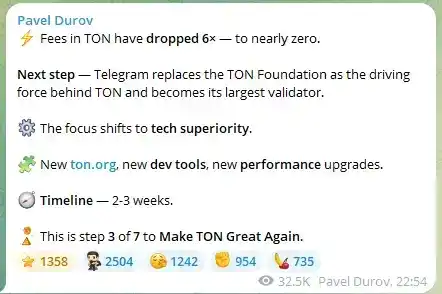
Pavel Durov's recent statements fundamentally alter market expectations. Particularly, the key points of Telegram replacing the TON Foundation and becoming the largest validator directly clarify that Telegram is now beginning to participate directly in the underlying governance and network operation of TON.

This is no longer just ecosystem support; it signifies Telegram formally reclaiming dominant control over TON's roadmap.

This shift is crucial because, in the past, the biggest question the market had about TON was not its technical capability but whether Telegram would truly go all-in on TON. Now, this question has a clear answer.

Simultaneously, this also means TON's valuation logic is changing. Previously, the market priced TON essentially as a public chain with Telegram's traffic support. But now, the market is beginning to reassess TON, as it is likely becoming the on-chain infrastructure within Telegram's future commercial ecosystem.

The difference between the two is significant. The former still belongs to the Crypto narrative, while the latter is beginning to enter the narrative of an internet-platform scale. This is also why TON's recent rise is not merely driven by sentiment but resembles a round of long-term expectation restructuring.

II. TON Reconstructs the Internet Payment Structure

Examining TON's recent rounds of upgrades closely reveals that its optimization direction is actually very clear: faster speed, lower fees, shorter confirmation times, and transaction fees approaching zero.

On the surface, these upgrades are optimizing chain performance, but what they are truly serving is not traditional DeFi but the large-scale payment application scenarios within Telegram.

Because Telegram itself has nearly 1 billion users, it inherently generates a vast amount of high-frequency, small-value transaction demand. Examples include content tipping, bot services, mini-app purchases, cross-border transfers, and digital goods consumption, among others.

These scenarios share a common need: users require extremely low costs and prioritize high speed.

If a payment takes tens of seconds to wait or incurs fees of several dollars, the entire user experience deteriorates significantly. Traditional blockchains have been particularly ill-suited for this type of scenario in the past.
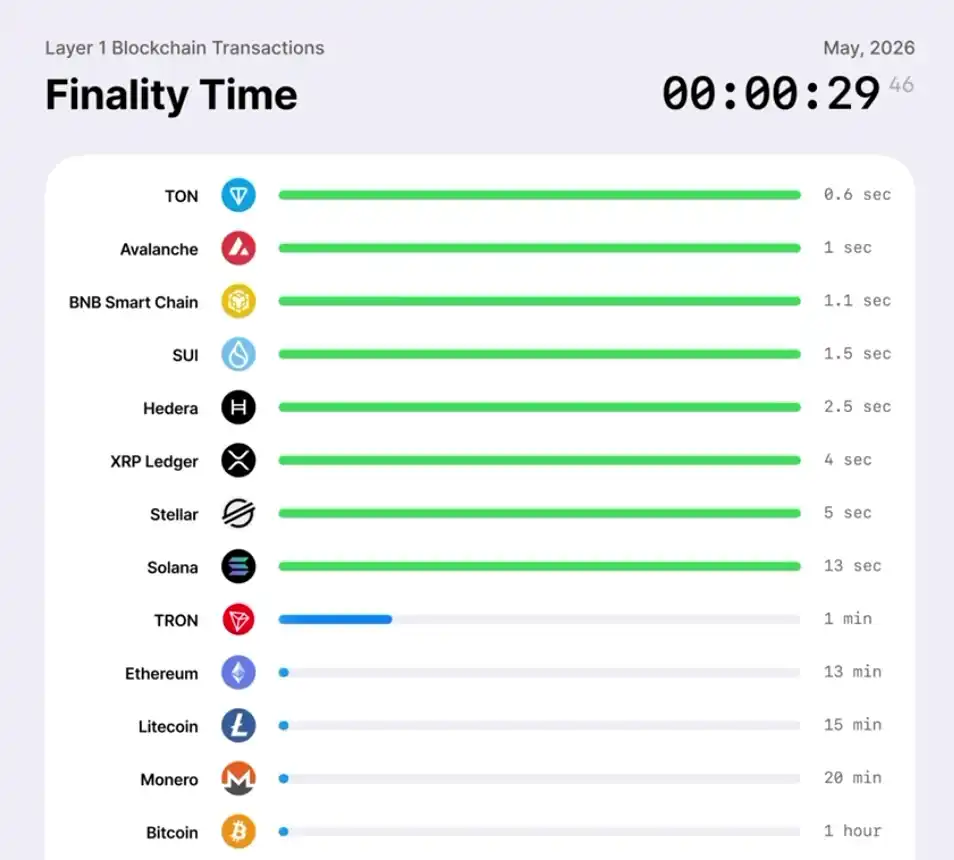
Therefore, TON's recent emphasis on fixed low fees and sub-second confirmations essentially revolves around redesigning blockchain for internet product experience. In other words, TON is attempting to solve a problem that Crypto has long failed to address: how to enable ordinary users to utilize on-chain systems almost imperceptibly.

This shift in logic is actually increasingly approaching the model of WeChat Pay.

Users don't need to understand blockchain, nor do they need to understand wallets, gas, or validation mechanisms. They only need to complete tipping, payments, purchases, transfers, and subscriptions, with all underlying settlements handled by TON.

This suggests that what TON truly aims to achieve may not be competition in the traditional L1 sense. What it is genuinely competing for is the global internet payment gateway.

Additionally, there is another crucial change. The logic of many public chains in the past has been: first build the infrastructure, then find users. But TON is the complete opposite. It first possesses a massive user base and then begins constructing the on-chain system.

Therefore, TON's challenge has never been how to get users into Web3, but rather how to enable users to complete on-chain actions without even realizing they are entering Web3. This represents a completely different development path.

III. TON's Future Blueprint: The On-Chain Transformation of Super Apps

Looking at all of TON's recent actions together, it becomes apparent that Telegram is gradually forming a complete closed loop. Functions that were originally separate—such as wallet, payments, bots, mini-apps, and on-chain settlements—are now gradually being integrated by TON.
This also signifies that TON is no longer just an independent public chain; it is becoming the infrastructure for value circulation within Telegram. The true significance of this lies in the fact that, for the first time, the crypto industry is approaching the on-chain transformation of super applications.

Because over the past decade, the crypto industry has always lacked a genuine mass-market entry point. Most public chains have been striving to attract users into the crypto world, but Telegram itself already possesses global-scale traffic.

Especially in markets like the Middle East, Russia, Eastern Europe, Southeast Asia, and Latin America, Telegram often functions not merely as a messaging tool but also as a community platform, commercial platform, payment tool, and more.

Therefore, TON's true strategic focus is not DeFi but rather global digital commercial scenarios.

Areas such as low-cost cross-border payments, the creator economy, on-chain micro-payments, and similar directions are likely the true sources of large-scale growth for TON in the future.

Of course, this path is not easy. TON's ecosystem remains in its early stages, with many applications still lingering in phases like mini-games, airdrops, and short-term traffic acquisition. Additionally, after Telegram's renewed deep involvement with TON, it may once again face regulatory pressure in the future.

Nevertheless, the market has now begun to realize one thing: TON's competitors may never have been traditional L1s, but rather the global internet payment systems.

Conclusion

This round of TON's rise is not essentially the market speculating on a simple upgrade. What truly drives the repricing of capital is the growing awareness that the world's first on-chain ecosystem with a genuine super-app entry point may have already begun to take shape.

And this time, Pavel Durov is no longer just an observer. Telegram is finally preparing to take the field itself.


Tiền kỹ thuật số thịnh hành

Câu hỏi Liên quan

QAccording to the article, what was the main reason for the recent significant price surge of the TON token?

AThe primary reason for TON's recent price surge was Telegram founder Pavel Durov's public announcement that Telegram will become the core driver behind the TON network, replacing the TON Foundation and becoming its largest validator.

QHow has Pavel Durov's statement fundamentally changed the market's perception of TON's valuation logic?

AHis statement shifted TON's valuation logic from being a crypto-native public chain with Telegram's traffic support to potentially becoming the on-chain infrastructure for Telegram's future commercial ecosystem, moving from a crypto narrative to an internet platform-level narrative.

QWhat specific user needs is TON's recent technical optimization targeting, and what payment system is this approach compared to?

ATON's recent optimizations (faster speeds, lower fees, sub-second confirmation, near-zero costs) target the need for low-cost, high-speed, small-value transactions within Telegram (e.g., tipping, Bot services). This approach is compared to systems like WeChat Pay, aiming for users to use the on-chain system almost without awareness.

QWhat key advantage does TON possess compared to many other public blockchains regarding its development path?

AUnlike other blockchains that build infrastructure first and then seek users, TON already possesses a massive user base (Telegram's near 1 billion users) first, and is now building the on-chain system around that existing traffic.

QWhat does the article suggest is the true long-term competitor for TON, and what is its ultimate envisioned role?

AThe article suggests TON's true competitor is not traditional Layer 1 blockchains, but the global internet payment system. Its ultimate envisioned role is to become the on-chain value circulation infrastructure for the Telegram super-app, enabling global digital commercial scenarios like low-cost cross-border payments and the creator economy.

Nội dung Liên quan

Đối thoại Giáp Hàng丨Nhìn lại hành trình hai mươi năm thanh toán Trung Quốc vươn ra biển lớn

Đây là bản tóm tắt tiếng Việt của cuộc phỏng vấn với Giả Hàng về hành trình hai thập kỷ thanh toán Trung Quốc ra thế giới: Giả Hàng, một chuyên gia với hơn 20 năm kinh nghiệm tại Ngân Liên, Ant Group và giờ là Chủ tịch DCS Singapore, chia sẻ góc nhìn về việc xây dựng mạng lưới thanh toán toàn cầu mới. Ông đúc kết từ ba chặng đường chính: **1. Thời Ngân Liên: Thách thức vượt Visa/Mastercard** Ông từng dẫn dắt Ngân Liên quốc tế, cố gắng đưa thẻ Trung Quốc vào mạng lưới chấp nhận toàn cầu. Bài học lớn: sức mạnh thực sự của tổ chức thẻ không nằm ở tiêu chuẩn kỹ thuật, mà ở **cơ chế phân phối lợi ích và quản trị** đã tạo nên hiệu ứng mạng lưới khó sao chép. Ngân Liên, giống như JCB trước đó, dù theo sát khách du lịch Trung Quốc để mở rộng mạng lưới nhưng không thể phát triển phát hành thẻ địa phương, nên khó cạnh tranh toàn diện. **2. Thời Ant Group và Alipay+: Kết nối ví điện tử** Tại Ant, ông đề xuất và xây dựng Alipay+, một mạng lưới kết nối các ví địa phương ở nhiều quốc gia thay vì tự triển khai ví toàn cầu. Tuy có thành công nhất định, Alipay+ vẫn gặp hạn chế cốt lõi: nó vẫn là **cùng một loại hình** cạnh tranh trực tiếp với Visa/Mastercard (thanh toán) mà không tạo ra giá trị đột phá mới. Mô hình thanh toán bằng mã QR thiếu một cơ chế phân chia lợi ích bền vũng như hệ thống hoàn tiền của thẻ. **3. Hiện tại với Stablecoin tại DCS: Một cơ hội khác biệt** Hiện tại, ông dẫn dắt DCS Singapore, tập trung vào cầu nối thanh toán bằng stablecoin. Ông tin rằng stablecoin có tiềm năng tạo nên **mạng lưới thanh toán toàn cầu mới thực sự**, không phải bằng cách thay thế Visa/Mastercard trong thanh toán tiêu dùng, mà bằng cách **tái tổ chức luồng chuyển tiền cơ bản**, thách thức hệ thống tài khoản ngân hàng truyền thống. Nó có thể thâm nhập từ thanh toán chéo biên giới đến thị trường địa phương ở các nước đang phát triển, tạo ra một vòng tuần hoàn mới cho tiền số. **Tổng kết:** Xuyên suốt 20 năm, câu hỏi lớn vẫn là làm thế nào xây dựng mạng lưới thanh toán toàn cầu kế tiếp. Bí quyết không chỉ ở công nghệ mới, mà còn ở **giá trị người dùng mới, cơ chế phân phối lợi ích mới và hệ thống quản trị mới**. Hành trình tìm kiếm câu trả lời vẫn đang tiếp diễn, với stablecoin là một hướng đi đầy hứa hẹn.

marsbit7 phút trước

Đối thoại Giáp Hàng丨Nhìn lại hành trình hai mươi năm thanh toán Trung Quốc vươn ra biển lớn

marsbit7 phút trước

Giá cổ phiếu Circle sụt giảm 76%, stablecoin đồng HKD ra mắt trong vòng 2 tuần tới

Giá cổ phiếu Circle (CRCL) đã giảm khoảng 76% từ mức đỉnh vào tháng 6 năm ngoái, phản ánh việc thị trường định giá lại triển vọng của công ty trong bối cảnh cạnh tranh gia tăng và lãi suất cao. Chủ tịch Circle Heath Tarbert bày tỏ sự tự tin vào các kế hoạch dài hạn như việc mở rộng USDC sang các tình huống thanh toán thực tế, ví dụ như thỏa thuận với JCB của Nhật Bản. Tuy nhiên, vị thế dẫn đầu của Circle đang bị thách thức bởi các đối thủ mới. Open USD, một stablecoin được hỗ trợ bởi khoảng 140 công ty, đang thu hút đối tác bằng cách chia sẻ lợi nhuận từ tài sản dự trữ. Hơn nữa, Visa đã ra mắt nền tảng stablecoin hỗ trợ Open USD, tạo thêm áp lực cạnh tranh lên USDC. Ở một diễn biến khác, Tether (USDT) phải đối mặt với thách thức tuân thủ theo Đạo luật GENIUS của Mỹ, yêu cầu cấu trúc dự trữ phải chủ yếu là tiền mặt và trái phiếu kho bạc. Họ có khoảng hai năm để điều chỉnh. Tại Hong Kong, thị trường stablecoin đang nóng lên với việc chuẩn bị ra mắt stablecoin HKD gắn với đồng đô la Hong Kong (HKDAP) bởi Zodia Custody, một công ty được hỗ trợ bởi Ngân hàng Standard Chartered. Điều này cho thấy cuộc đua đang chuyển từ việc giành được giấy phép sang việc triển khai hiệu quả trong các luồng thanh toán thực tế. Tóm lại, ngành stablecoin đang chuyển từ giai đoạn một người chiến thắng chiếm tất cả sang một thị trường cạnh tranh đa dạng, nơi lợi thế quy mô và khả năng thực thi sẽ quyết định người chiến thắng.

marsbit13 phút trước

Giá cổ phiếu Circle sụt giảm 76%, stablecoin đồng HKD ra mắt trong vòng 2 tuần tới

marsbit13 phút trước

Dưới Vòng Vây của Tư Bản, Phi Tập Trung Hóa Là Tuyến Phòng Thủ Duy Nhất Của Các Blockchain Công Cộng

Bài viết của Omid Malekan, Phó giáo sư Tài chính tại Trường Kinh doanh Columbia, lập luận rằng trong thế giới tiền mã hóa, phi tập trung hóa không chỉ là một đặc điểm trong thiết kế giao thức, mà là phòng tuyến duy nhất và không thể thay thế để chống lại sự thao túng của tư bản và các tập đoàn. Tác giả, với góc nhìn thực tế và Machiavellian, chỉ ra rằng bản chất của doanh nghiệp là theo đuổi lợi nhuận và quyền lực. Do đó, bất kỳ blockchain nào có thể bị kiểm soát hoặc có điểm yếu về quản trị cuối cùng sẽ bị các tổ chức truyền thống thâu tóm hoặc làm cho thoái hóa. Các cuộc tấn công bên ngoài như phân nhánh 51% tuy nguy hiểm, nhưng mối đe dọa lớn hơn đến từ việc giành quyền kiểm soát nội bộ bởi các lợi ích tư bản. Lịch sử các mạng lưới thanh toán (Visa, Mastercard) và nền tảng truyền thông xã hội cho thấy rõ con đường "thoái hóa nền tảng" này. Bài viết phê phán mạnh mẽ các giải pháp thay thế như blockchain được phép (permissioned) hoặc các mạng lớp 1, lớp 2 quá tập trung, coi chúng chỉ là cơ sở dữ liệu có thể bị tắt bất cứ lúc nào và không thể chống lại sự thao túng. Các liên minh doanh nghiệp này thực chất có thể củng cố sự độc quyền của các gã khổng lồ hiện có hơn là thúc đẩy đổi mới. Theo tác giả, việc các tổ chức tài chính truyền thống ủng hộ các giải pháp "phi tập trung giả mạo" có thể chỉ là một chiến thuật trì hoãn nhằm làm chậm lại sự phổ biến của công nghệ thực sự phi tập trung. Kết luận, tác giả thừa nhận Ethereum có nhiều khiếm khuyết và chi phí vận hành cao để duy trì tính phi tập trung. Tuy nhiên, trong bối cảnh hiện tại, nó vẫn là giải pháp tối ưu nhất - một điểm cân bằng Nash - nơi tài sản sẽ tự nhiên chảy về cơ sở hạ tầng an toàn và trung lập nhất để tránh khỏi sự "vây bắt" của tư bản. Những người theo đuổi các giải pháp thỏa hiệp có thể phải trả giá trong thực tế khắc nghiệt của ngành.

Foresight News22 phút trước

Dưới Vòng Vây của Tư Bản, Phi Tập Trung Hóa Là Tuyến Phòng Thủ Duy Nhất Của Các Blockchain Công Cộng

Foresight News22 phút trước

Giao dịch

Giao ngay

Bài viết Nổi bật

Làm thế nào để Mua ERA

Chào mừng bạn đến với HTX.com! Chúng tôi đã làm cho mua Caldera (ERA) trở nên đơn giản và thuận tiện. Làm theo hướng dẫn từng bước của chúng tôi để bắt đầu hành trình tiền kỹ thuật số của bạn.Bước 1: Tạo Tài khoản HTX của BạnSử dụng email hoặc số điện thoại của bạn để đăng ký tài khoản miễn phí trên HTX. Trải nghiệm hành trình đăng ký không rắc rối và mở khóa tất cả tính năng. Nhận Tài khoản của tôiBước 2: Truy cập Mua Crypto và Chọn Phương thức Thanh toán của BạnThẻ Tín dụng/Ghi nợ: Sử dụng Visa hoặc Mastercard của bạn để mua Caldera (ERA) ngay lập tức.Số dư: Sử dụng tiền từ số dư tài khoản HTX của bạn để giao dịch liền mạch.Bên thứ ba: Chúng tôi đã thêm những phương thức thanh toán phổ biến như Google Pay và Apple Pay để nâng cao sự tiện lợi.P2P: Giao dịch trực tiếp với người dùng khác trên HTX.Thị trường mua bán phi tập trung (OTC): Chúng tôi cung cấp những dịch vụ được thiết kế riêng và tỷ giá hối đoái cạnh tranh cho nhà giao dịch.Bước 3: Lưu trữ Caldera (ERA) của BạnSau khi mua Caldera (ERA), lưu trữ trong tài khoản HTX của bạn. Ngoài ra, bạn có thể gửi đi nơi khác qua chuyển khoản blockchain hoặc sử dụng để giao dịch những tiền kỹ thuật số khác.Bước 4: Giao dịch Caldera (ERA)Giao dịch Caldera (ERA) dễ dàng trên thị trường giao ngay của HTX. Chỉ cần truy cập vào tài khoản của bạn, chọn cặp giao dịch, thực hiện giao dịch và theo dõi trong thời gian thực. Chúng tôi cung cấp trải nghiệm thân thiện với người dùng cho cả người mới bắt đầu và người giao dịch dày dạn kinh nghiệm.

Tổng lượt xem 813Xuất bản vào 2025.07.17Cập nhật vào 2026.06.02

Làm thế nào để Mua ERA

Thảo luận

Chào mừng đến với Cộng đồng HTX. Tại đây, bạn có thể được thông báo về những phát triển nền tảng mới nhất và có quyền truy cập vào thông tin chuyên sâu về thị trường. Ý kiến ​​của người dùng về giá của ERA (ERA) được trình bày dưới đây.

活动图片