The Structure, Risks, and New Cycle of the On-Chain Lending Market

marsbitXuất bản vào 2026-01-28Cập nhật gần nhất vào 2026-01-28

Tóm tắt

On-chain lending is evolving from a tool primarily for leverage into a fundamental infrastructure for capital allocation, now representing 53.54% of the total DeFi TVL at approximately $64.3 billion. Aave dominates the sector with around 50% market share. The integration of Real-World Assets (RWA), such as credit assets and U.S. Treasuries, is emerging as a key growth driver, supported by improving macroeconomic conditions and regulatory clarity. However, the market faces significant risks including liquidity volatility, collateral liquidations, credit defaults, and cross-chain security vulnerabilities. Future trends point toward institutional adoption, tokenization of securities, fixed and floating rate products, and a bifurcation between compliant and high-risk lending layers. The sector is transitioning into a mature component of the global financial system.

Author: CoinW Research Institute

Key Takeaways

On-chain lending functionality is gradually transforming, evolving from an early tool primarily for leverage into a fundamental infrastructure for capital allocation. On-chain lending has become a crucial component of the DeFi ecosystem. Currently, the TVL of on-chain lending protocols is approximately $64.3 billion, accounting for about 53.54% of the total DeFi TVL.

Aave has become the leading protocol in the on-chain lending sector, with a TVL of about $32.9 billion, representing roughly 50% of the total lending sector TVL. Meanwhile, protocols like Morpho continue to consolidate their market share, resulting in a competitive landscape characterized by one dominant player and several strong contenders.

Credit-based assets have become a significant part of on-chain Real World Assets (RWA). As more types of debt instruments are introduced on-chain and institutional demand for compliant, traceable collateral increases, RWA lending is poised to become another major growth engine. Simultaneously, improvements in both the macroeconomic monetary environment and regulatory frameworks are collectively reducing the costs associated with capital flow and compliance, creating smoother external conditions for market development.

On-chain lending protocols also face multiple risks. Firstly, they are highly dependent on collateral value and market liquidity, making them susceptible to liquidations during market volatility. Secondly, the introduction of unsecured lending and RWA increases credit default and counterparty risks. Additionally, over-reliance on token incentives can artificially inflate scale, and cross-chain expansion exposes vulnerabilities in bridge security. Therefore, on-chain lending protocols must balance security, liquidity, and compliance while pursuing growth.

With the gradual tokenization of securities and the entry of compliant assets like U.S. Treasuries onto the chain, on-chain lending is evolving from a crypto-native financing tool into mainstream financial infrastructure, with a more robust collateral foundation. In this process, inter-institutional on-chain lending is expected to be a significant source of growth. At the same time, the coexistence of fixed and floating interest rates will drive the maturation of the on-chain interest rate system. Regulatory and capital logic may also lead to a market structure divided into a compliant, stable layer and a high-risk, innovative layer. On-chain lending will accelerate its integration into the global capital market through asset compliance and institutional alignment.

Table of Contents

I. Overview of the On-Chain Lending Market

  • 1.1. Market Size and Capital Flow
  • 1.2. Macro and Industry Drivers
  • 1.3. Regulatory Dynamics and Compliance

II. Classification of On-Chain Lending Markets

  • 2.1. Collateralized Lending Protocols
  • 2.2. Uncollateralized Lending Protocols
  • 2.3. Modular Lending Protocols
  • 2.4. Integration of RWA and Lending

III. Competitive Landscape

  • 3.1. Leading Protocol Landscape and TVL Changes
  • 3.2. Revenue Structure and Profit Model Comparison
  • 3.3. User Profile and Asset Structure
  • 3.4. Multi-Chain Deployment and Ecosystem Integration

IV. Risks, Dilemmas, and Challenges

  • 4.1. Liquidity Risk
  • 4.2. Credit Default Risk
  • 4.3. Incentives and Growth Illusion
  • 4.4. Cross-Chain Risk

V. Potential Development Trends

  • 5.1. On-Chain Transformation of Inter-Institutional Lending
  • 5.2. On-Chain Tokenization of Securities and Collateral Potential
  • 5.3. U.S. Treasuries as Core Lending Assets
  • 5.4. Coexistence of Fixed and Floating Interest Rates
  • 5.5. Two-Tier Structural Differentiation in the Lending Market

VI. Conclusion

References

On-chain lending protocols have become a vital part of the DeFi ecosystem. Evolving from initial tools for leverage expansion, they now encompass diverse capital markets including stablecoins and RWA. These protocols not only steadily carry liquidity but are increasingly becoming centers for capital pricing and crucial hubs for capital allocation. Currently, the TVL of on-chain lending protocols is approximately $64.3 billion, accounting for about 53.54% of the total DeFi TVL (nearly $120.2 billion). Specifically, Aave alone holds about 50% of the lending TVL, approximately $32.9 billion; protocols like Morpho hold respective market shares.

Furthermore, the diversity of funding sources and asset classes in on-chain lending is increasing, with RWA becoming a new engine for protocol growth. The structure of the on-chain lending market faces a situation of coexisting growth and challenges. On one hand, protocol TVL has gradually recovered, showing a overall market recovery trend. On the other hand, the market still faces structural challenges: severe liquidity fragmentation, dispersed funds across protocols and chains, and a lack of efficient liquidity integration mechanisms; traditional stablecoin lending is nearing saturation, while RWA and institutional credit supply remains insufficient, leading to interest rate differentiation and differences in risk appetite. Below, this report will provide a systematic analysis of the operational logic, current development status, and trends of the on-chain lending sector from the perspectives of market overview, market classification, and competitor landscape.

Full report available at: https://www.coinw.com/zh_CN/research/on-chain-lending-market-structure-risks-and-the-new-cycle/106


Câu hỏi Liên quan

QWhat is the current Total Value Locked (TVL) in on-chain lending protocols and what percentage of the total DeFi TVL does it represent?

AThe current TVL in on-chain lending protocols is approximately $64.3 billion, which represents about 53.54% of the total DeFi TVL.

QWhich protocol is the dominant leader in the on-chain lending sector and what is its market share?

AAave is the dominant leader in the on-chain lending sector, holding a TVL of approximately $32.9 billion and accounting for about 50% of the total lending market TVL.

QWhat are two major risks faced by on-chain lending protocols mentioned in the article?

ATwo major risks are: 1) High dependence on collateral value and market liquidity, making them vulnerable to liquidations during market volatility. 2) The introduction of unsecured lending and Real World Assets (RWA) increases credit default and counterparty risk.

QWhat emerging asset class is highlighted as a new growth engine for on-chain lending?

ACredit-type assets, particularly Real World Assets (RWA), are highlighted as a new and important growth engine for on-chain lending.

QWhat is one predicted future trend for the structure of the on-chain lending market according to the article?

AOne predicted trend is the market bifurcating into a two-tiered system, with a compliant and stable layer coexisting with a high-risk innovation layer, driven by regulatory and capital logic.

Nội dung Liên quan

Bộ trưởng Tài chính Mỹ Besant tuyên bố: Mỹ sắp kiểm soát 80% sức mạnh tính toán toàn cầu

Bộ trưởng Tài chính Mỹ Janet Yellen tuyên bố Mỹ sắp kiểm soát 80% năng lực tính toán toàn cầu, coi đây là trụ cột chiến lược kinh tế quốc gia. Bà cho biết Mỹ hiện chiếm 50-60% và sẽ sớm đạt 80%, đồng thời nhấn mạnh đây là cuộc cạnh tranh chiến lược "không thể thua", với lợi thế AI hiện tại khoảng một năm. Tuyên bố này được xem như sự bảo đảm cấp quốc gia cho đầu tư cơ sở hạ tầng AI, hỗ trợ triển vọng doanh nghiệp chip như NVIDIA và chu kỳ chi tiêu vốn của các nhà cung cấp điện toán đám mây. Yellen định vị AI, bán dẫn và điện toán lượng tử là ba trụ cột sức mạnh kinh tế và an ninh quốc gia, lập luận rằng AI tạo cơ hội và chưa gây mất việc làm ròng. Tuy nhiên, chuyên gia lưu ý "thị phần năng lực tính toán" thiếu số liệu chuẩn xác, khuyến nghị nhà đầu tư tập trung vào các chỉ số vật lý có thể định lượng như mở rộng công suất và cơ sở hạ tầng điện thay vì chỉ dựa vào tuyên bố chính sách. Việc kiểm chứng sẽ phụ thuộc vào dữ liệu từ báo cáo ngành bán dẫn và cơ sở hạ tầng đám mây trong các quý tới.

marsbit10 phút trước

Bộ trưởng Tài chính Mỹ Besant tuyên bố: Mỹ sắp kiểm soát 80% sức mạnh tính toán toàn cầu

marsbit10 phút trước

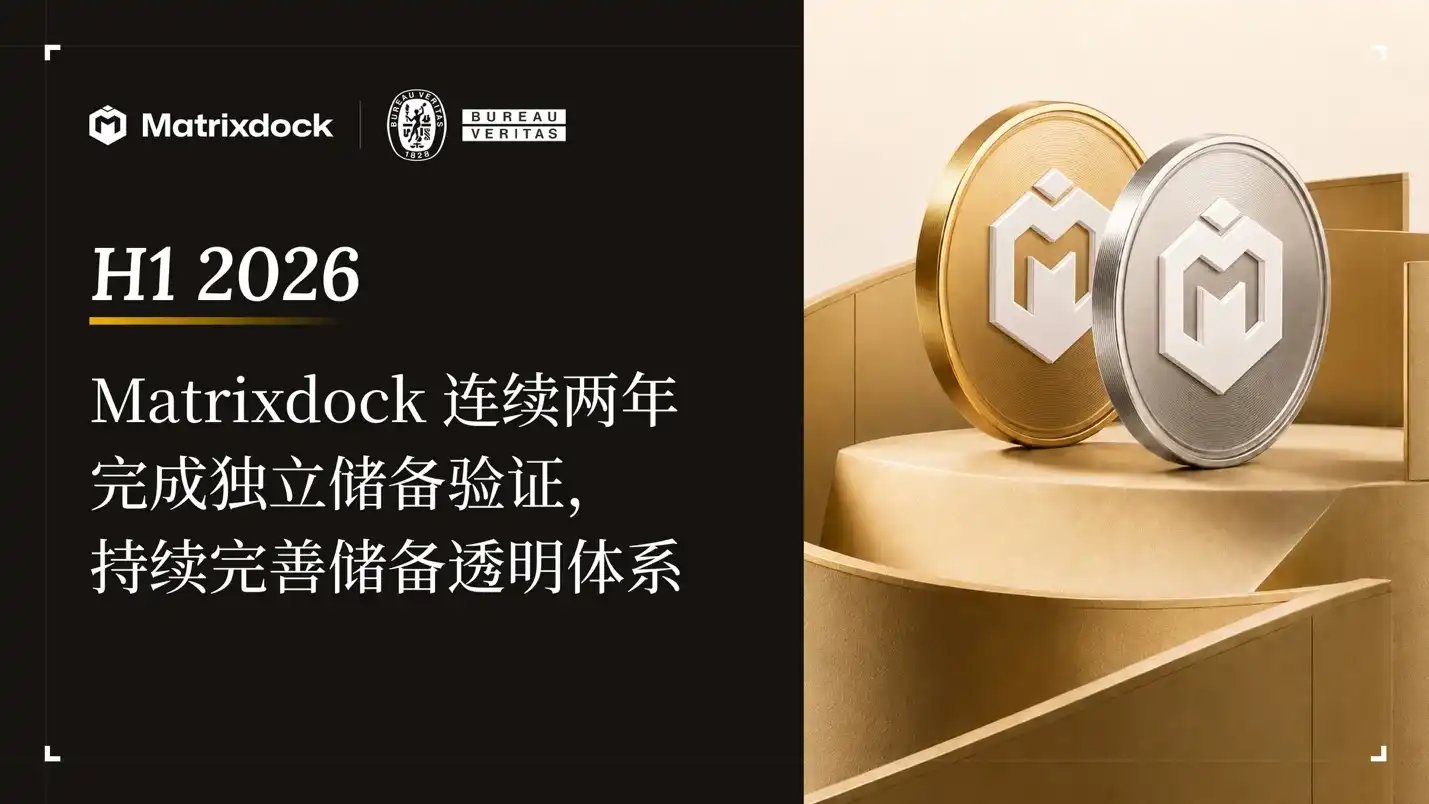
Matrixdock Hoàn Thành Kiểm Toán Dự Trữ Độc Lập Liên Tiếp Hai Năm, Tiếp Tục Hoàn Thiện Hệ Thống Minh Bạch Dự Trữ

Gần đây, Matrixdock, nền tảng token hóa RWA thuộc BIT (trước đây là Matrixport), đã hoàn thành cuộc kiểm toán dự trữ độc lập lần thứ tư liên tiếp trong kỳ nửa năm. Kiểm toán lần này tiếp tục được thực hiện bởi Bureau Veritas và lần đầu tiên đưa sản phẩm bạc token hóa XAGm vào phạm vi kiểm toán. Sự kiện đánh dấu Matrixdock duy trì quy trình xác minh độc lập nhất quán và liên tục trong hai năm, tiếp tục hoàn thiện hệ thống minh bạch dự trữ. Theo kết quả kiểm toán, tổng cộng 574 thỏi vàng và bạc từ các nhà luyện kim được LBMA chứng nhận đã được xác minh vật lý tại ba kho chứa cấp tổ chức. Cụ thể, dự trữ cho XAUm (vàng token hóa) là 508 thỏi, tương đương 16,331.184 ounce troy, khớp với lượng token đang lưu hành. Dự trữ cho XAGm (bạc token hóa) là 66 thỏi, tương đương 65,934 ounce troy, và sau khi áp dụng hệ số ozPerToken, cũng khớp với lượng token lưu hành. Không có chênh lệch nào được phát hiện. Ngoài kiểm toán định kỳ, Matrixdock cung cấp báo cáo dự trữ hàng tháng, bằng chứng dự trữ trên chuỗi (Proof of Reserves) và công cụ tra cứu phân bổ vàng (Gold Allocation Lookup), cho phép người nắm giữ xác minh liên tục tài sản cơ sở. Việc tuân thủ kiểm toán độc lập liên tục thể hiện cam kết của Matrixdock trong việc xây dựng một lớp dự trữ (Reserve Layer) minh bạch và đáng tin cậy cho tài chính trên chuỗi.

marsbit21 phút trước

Matrixdock Hoàn Thành Kiểm Toán Dự Trữ Độc Lập Liên Tiếp Hai Năm, Tiếp Tục Hoàn Thiện Hệ Thống Minh Bạch Dự Trữ

marsbit21 phút trước

Pháp mạnh tay xử lý Polymarket, 30 nước theo chân thúc ép EU định nghĩa lại thị trường dự đoán

Pháp đã ra lệnh cho tất cả nhà cung cấp dịch vụ internet trong nước chặn truy cập vào Polymarket, một nền tảng giao dịch dự đoán sự kiện thực tế bằng tiền điện tử. Cơ quan quản lý trò chơi ANJ của Pháp phân loại nền tảng này là hoạt động đánh bạc bất hợp pháp, thay vì một sàn giao dịch tiền điện tử, tập trung vào nguy cơ gây hại cho người dùng phổ thông. Quyết định này đánh dấu sự leo thang mạnh mẽ sau bốn năm tranh chấp pháp lý. Dữ liệu từ Similarweb cho thấy, chỉ trong tháng 6/2026, Polymarket có hơn 205.000 khách truy cập độc lập từ Pháp. Các biện pháp trước đó như cấm chuyển tiền đã không hiệu quả khi người dùng có thể sử dụng VPN. ANJ cũng trích dẫn hai cuộc điều tra: một vụ liên quan đến việc giả mạo dữ liệu cảm biến thời tiết để thao túng thị trường dự đoán, và một vụ khác về một trader người Pháp bị nghi ngờ thao túng tỷ lệ cược liên quan đến bầu cử Mỹ 2024. Hơn 30 quốc gia và vùng lãnh thổ đã áp đặt các hạn chế đối với Polymarket, từ Thụy Sĩ, Ba Lan đến Singapore. Tuy nhiên, với tư cách là nền kinh tế lớn nhất EU, hành động của Pháp có thể tạo ra tiền lệ quan trọng. Việc phân loại Polymarket là đánh bạc, thay vì công cụ tài chính, mâu thuẫn với khuôn khổ quy định MiCA hiện hành của EU. Nếu các quốc gia thành viên khác làm theo, các thị trường dự đoán bằng tiền điện tử có nguy cơ bị cấm hoàn toàn trong khối theo luật đánh bạc, chứ không phải được quản lý như một dịch vụ tài chính. Điều này sẽ ảnh hưởng sâu sắc đến kế hoạch mở rộng sang châu Âu của các nền tảng tuân thủ như Kalshi (Mỹ). Pháp hiện đang đóng vai trò như một trường hợp thử nghiệm cho toàn EU.

Foresight News27 phút trước

Pháp mạnh tay xử lý Polymarket, 30 nước theo chân thúc ép EU định nghĩa lại thị trường dự đoán

Foresight News27 phút trước

Khoảnh khắc đen tối của OpenAI: Doanh thu có nguy cơ giảm 70%, định giá nghìn tỷ còn trụ được bao lâu?

OpenAI đang trải qua một tuần tồi tệ với nhiều thách thức: vụ kiện từ Apple về việc đánh cắp sở hữu trí tuệ, cuộc chiến giá cả với các mô hình AI Trung Quốc như DeepSeek, và dự báo doanh thu quảng cáo thấp hơn 95%. Nếu tất cả rủi ro xảy ra, doanh thu ước tính năm 2030 của OpenAI có thể giảm 70%, dẫn đến thua lỗ dòng tiền 165 tỷ USD. CEO Sam Altman cố gắng trấn an nhà đầu tư nhưng tương lai công ty vẫn bấp bênh. Thị trường chứng khoán hiện nay phụ thuộc nặng nề vào AI, với các ngành như bất động sản, tiện ích, công nghiệp và tài chính đều được thúc đẩy bởi làn sóng này. Sự đa dạng hóa thực sự trở nên khó khăn khi hầu hết lĩnh vực đều liên quan đến AI. Chỉ một số ít như chăm sóc sức khỏe là ít bị ảnh hưởng. Netflix cũng báo cáo kết quả thất vọng với mức tăng trưởng doanh thu và chỉ số tương tác thấp hơn dự kiến. Công ty giảm tần suất báo cáo số liệu, làm dấy lên lo ngại về sự cạnh tranh từ các nền tảng video ngắn. Ngành streaming dường như đang gặp khó khăn dù các công ty vẫn tăng trưởng thuê bao và giá.

链捕手28 phút trước

Khoảnh khắc đen tối của OpenAI: Doanh thu có nguy cơ giảm 70%, định giá nghìn tỷ còn trụ được bao lâu?

链捕手28 phút trước

Giao dịch

Giao ngay
活动图片