# Bài viết Liên quan Organization

Trung tâm Tin tức HTX cung cấp những bài viết mới nhất và phân tích chuyên sâu về "Organization", bao gồm xu hướng thị trường, cập nhật dự án, phát triển công nghệ và chính sách quản lý trong ngành tiền kỹ thuật số.

a16z: From Companies to DAOs, DUNA May Become the Next Generation Organizational Form

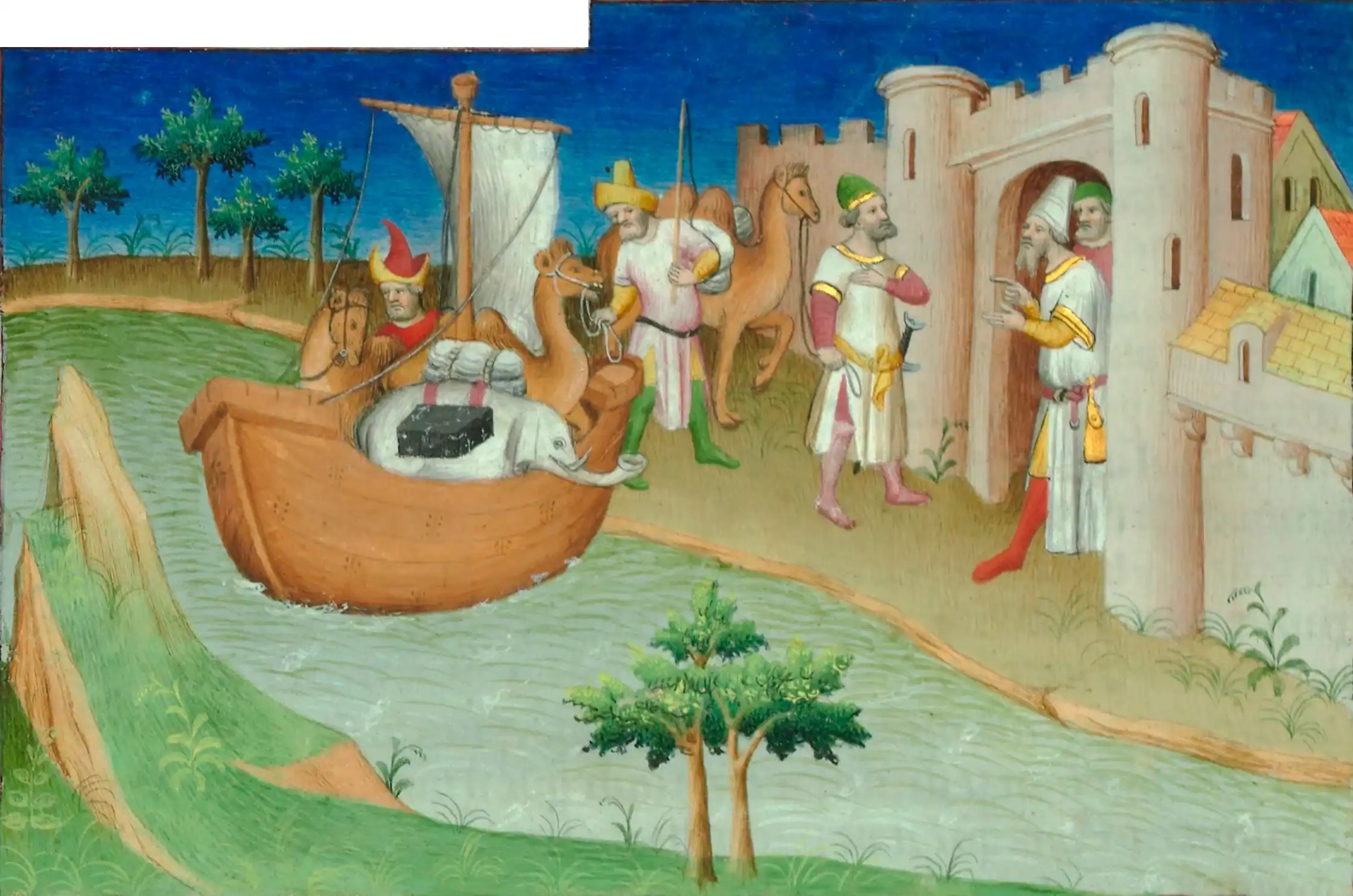
This article, "From Companies to DAOs: How DUNA Could Become the Next Organizational Form," traces the 500-year evolution of business collaboration. It begins with medieval structures like the *commenda* and Florentine *compagnia*, which exposed partners to personal risk. The modern corporation, exemplified by the Dutch East India Company (VOC), was a revolutionary leap, enabling large-scale, capital-intensive ventures by offering limited liability and reducing coordination costs. However, corporations introduced new challenges like principal-agent problems and bureaucratic overhead. The piece argues that software and internet-native protocols are now reducing these traditional overheads. Decentralized Autonomous Organizations (DAOs) emerged as a new model for coordination without centralized management. Yet, DAOs face a significant legal vacuum: they lack legal recognition, leaving members exposed to unlimited personal liability, and their tokens are vulnerable to being classified as securities under unclear regulations (e.g., the Howey Test). This has forced projects into suboptimal workarounds like offshore foundations. The article identifies the Decentralized Unincorporated Nonprofit Association (DUNA) as a potential solution. Recently legalized in states like Wyoming, the DUNA provides a legal wrapper for decentralized networks. It grants key protections—legal personality, limited liability, and perpetual existence—to a group without imposing a traditional hierarchical management structure. This allows token-holder communities to govern, hold assets, and contract as a single legal entity, aligning with their decentralized nature. While DUNA doesn't solve all governance challenges or magically resolve securities law questions, it represents a crucial step. It fills the legal recognition gap, offering a native legal form for internet-scale, decentralized collaboration and extending the separation of personal risk from organizational venture into a new domain.

marsbit08/01 00:51

a16z: From Companies to DAOs, DUNA May Become the Next Generation Organizational Form

marsbit08/01 00:51

Microsoft Halts Vibe Coding: "Burning Tokens" Is Now More Expensive Than Employees

Microsoft has halted the widespread internal use of Claude Code, withdrawing licenses from most employees by the end of its fiscal year, June 30, 2026. This reversal comes just six months after actively promoting the AI coding tool to boost productivity via "vibe coding"—where developers describe intent in natural language and let the LLM generate code. The core issue isn't the tool's effectiveness; internal reports suggest employees preferred Claude Code over Microsoft's own Copilot CLI. The problem is financial: the "copilot mode" adds a variable, consumption-based token cost on top of existing employee salaries without a proportional revenue increase. As usage grew, the token bills became unsustainable, leading to what sources describe as a cost-structure failure. Similar overruns have been reported at other firms like Uber. The article contrasts this with the approach of AI-native startups, exemplified by Y Combinator's philosophy. Here, high token consumption is strategic—it replaces, rather than supplements, human labor. Startups operate with tiny teams where AI agents handle work previously done by many, making the high token bill financially viable as it offsets much larger personnel costs. The conclusion is that "vibe coding" isn't dead, but its economics fail within traditional corporate structures that treat AI as a productivity add-on for existing staff. Success requires a foundational shift to an AI-native organization, where processes are built to be "legible to AI," and the company's core knowledge and assets reside in documented, AI-accessible systems rather than solely in employees' minds. The future divide will be between companies that merely add AI tools and those that redesign their organizations around them.

marsbit05/26 08:51

Microsoft Halts Vibe Coding: "Burning Tokens" Is Now More Expensive Than Employees

marsbit05/26 08:51

Notion CEO: AI companies should be a 'Jazz Band,' and I am a 'Refounder'

Notion CEO Ivan Zhao, in a recent podcast, shared his journey of twice rebuilding the company from near-collapse and now applying the same "Refounder" mindset to reshape the 1000-person organization in the AI era. He argues that AI has commoditized technical capability (Capability). True talent now hinges on Taste (judgment/values) and Agency (proactive drive), necessitating a shift in hiring—e.g., hiring more juniors for curiosity and having sales candidates demonstrate work upfront. Zhao envisions the company as a "Jazz Band"—agile and improvisational—versus a rigid "Marching Band." This is reflected in an engineering "dumbbell" structure (super juniors + top-tier seniors, with middle layers compressed), dissolving the CMO role to let teams operate directly, and integrating entrepreneurs via acquisitions to lead their expertise areas. Notion has abandoned traditional long-term product roadmaps, planning only conservatively for finances while adopting a week-by-week, improvisational approach to product strategy, as longer plans proved futile during rapid AI shifts. He concludes that while human nature and roles remain constants, companies must rewrite their approaches to hiring (valuing Taste/Agency over Capability), organizational design (reducing roles focused on coordination/execution), and planning (embracing flexibility). Modern knowledge work, being only ~150 years old, is ripe for reinvention.

marsbit05/26 04:43

Notion CEO: AI companies should be a 'Jazz Band,' and I am a 'Refounder'

marsbit05/26 04:43

YC Partner: How to Build a Self-Evolving AI-Native Company

YC Partner Tom Blomfield argues that the future lies in building AI-native companies designed as self-evolving systems, not just applying AI to traditional, hierarchical "Roman legion" structures. The core idea is to extract and codify all organizational knowledge—scattered across emails, Slack, documents, and human minds—into a central, AI-readable "company brain." This enables the creation of recursive AI loops that sense changes (from emails, support tickets, data), make decisions, execute via tools, and learn from feedback, all with minimal human intervention. YC exemplifies this with an agent that monitors failed queries, autonomously diagnoses the issue (e.g., needing a new database or index), writes code, submits it for review, and deploys fixes—optimizing the company while founders sleep. This shift redefines organizational structure: the bottleneck becomes token usage and context quality, not headcount. Middle management for coordination is largely obsolete. The critical human roles are individual contributors (ICs) and those handling high-risk, real-world judgments at the system's edge. Key steps include recording all organizational activity for AI, creating self-improving artifacts (like an AI-generated, living handbook), and treating internal software as temporary and disposable, while preserving valuable business context and data. The fundamental question for founders is whether to build their company as this new type of intelligent, self-optimizing system from the start.

marsbit05/20 06:36
YC Partner: How to Build a Self-Evolving AI-Native Company

marsbit05/20 06:36

In the Age of AI, the Organization Itself Is the Moat

In the AI era, where products, interfaces, and narratives are easily replicated, a company's true moat is its organizational structure. The article argues that exceptional companies like OpenAI, Anthropic, and Palantir differentiate themselves not merely through technology but by inventing new organizational forms that allow a specific type of talent to thrive and become a version of themselves they couldn't elsewhere. These companies compete on identity, offering ambitious individuals a sense of being special, chosen, close to power, and part of a historic mission. However, this emotional commitment must be matched by structural commitment—real power, ownership, status, and economic participation. For founders, the key question is not how to tell a better story, but what kind of person can only truly realize their potential within their specific company structure. For individuals evaluating opportunities, the distinction between "being chosen" (an emotional feeling) and "being seen" (a structural reality of tangible power and rewards) is crucial. The most dangerous promises are those priced in future time. While AI makes copying visible elements easy, it does not make building a great, novel organization any easier. The next frontier of competition is creating organizational vessels that attract, structure, and compound the judgment of the right people—those whom traditional boxes cannot contain. The company itself becomes the moat.

marsbit05/10 07:09

In the Age of AI, the Organization Itself Is the Moat

marsbit05/10 07:09

When Technology Is No Longer a Moat, Only One Thing Remains as the Ultimate Moat in the AI Field

In the rapidly converging AI landscape, where technology and product differentiators can be copied in months, the ultimate moat for a company is no longer its product, but its organizational form. Great companies innovate in their very structure, creating new institutional models that attract, empower, and unleash a specific type of talent. Examples like OpenAI and Palantir show how unique architectures—built around frontier model development or navigating complex client systems—foster new kinds of hybrid roles that competitors cannot replicate. These organizations compete on identity and emotional resonance, not just salary. They offer talent a path to become a version of themselves they aspire to be, fulfilling core human desires: to feel unique, destined, part of exponential progress, or proven. This requires structural alignment: if customer proximity is key, client-facing roles must have high status; if speed matters, decision rights must be decentralized. For founders, the critical question is: "What kind of person can only become themselves here?" They must build a company form that matches their ambitious narrative. For job seekers, the warning is to distinguish between feeling "chosen" (emotional validation) and being "seen" (tangible power, scope, and reward). The most dangerous promise is deferred compensation. While AI makes replicating products easy, it cannot replicate a novel, high-trust organizational system that compounds judgment over time. The future will belong not to companies that merely make employees feel special, but to those that invent entirely new structures, enabling a new breed of talent to emerge and thrive.

marsbit05/09 11:05

When Technology Is No Longer a Moat, Only One Thing Remains as the Ultimate Moat in the AI Field

marsbit05/09 11:05

5 Minutes to Make AI Your Second Brain

This article introduces a powerful personal knowledge management system combining Claude Code and Obsidian, designed to function as an "AI second brain." Unlike traditional RAG systems that perform temporary, one-off retrievals, this system enables AI to continuously build and maintain an evolving knowledge wiki. The architecture consists of three layers: a raw data layer (notes, articles, transcripts), an AI-maintained structured knowledge base that builds cross-references, and a schema layer that governs organization and system logic. Core operations are Ingest (bringing in external information), Query (instant knowledge access), and Lint (checking consistency and fixing issues). The system's power lies in creating a "compound interest" effect for knowledge: it reduces cognitive load by offloading the tasks of connecting, organizing, and understanding information to AI, while simultaneously improving the accuracy and contextual consistency of the AI's outputs. The setup process is quick, requiring users to download Obsidian, create a vault (knowledge repository), configure Claude Code to access that vault, and apply a specific system prompt. Advanced tips include using a browser extension to easily add web content, maintaining separate vaults for work and personal life, and utilizing the "Orphans" feature to identify unlinked ideas. The main drawbacks are the need for visual thinking, a commitment to ongoing maintenance, and local storage usage. Ultimately, the system transforms scattered information into a reusable, interconnected network of knowledge.

marsbit04/11 12:46

5 Minutes to Make AI Your Second Brain

marsbit04/11 12:46

Will Middle Management Be Replaced by AI? What Will the Future Company Structure Look Like

The article explores whether AI will eliminate middle management and reshape future corporate structures. It traces the historical evolution of organizations—from Roman military units to modern corporations—showing how hierarchical systems emerged to manage information flow under the constraint of limited "span of control." Middle management, matrix structures, and bureaucratic systems were all solutions to coordination challenges in information-scarce environments. AI, however, challenges this foundational premise. By enabling real-time modeling, understanding, and distribution of information, AI could replace human-centric coordination mechanisms. Examples like the AI firm "Moon Dark Side" illustrate radical experiments: no departments, titles, or traditional KPIs, with co-founders directly managing large teams and AI agents handling tasks from data processing to code generation. Block (founded by Jack Dorsey) is presented as a case study in building an "intelligent company." This model relies on two core components: a "company world model" (a real-time understanding of internal operations via digital traces) and a "customer world model" (built from real behavioral data, especially financial transactions). An intelligence layer uses these models to dynamically combine capabilities (e.g., payments, lending) to serve customers proactively, without pre-defined product roadmaps. In this structure, traditional roles shift. Middle managers are replaced by a system that handles coordination, while humans focus on individual contributions (ICs), direct responsibility (DRIs), or player-coach roles. The organization becomes flatter, faster, and more adaptive. The article concludes that AI is not just a tool for efficiency but a transformative force that could redefine organizational design, moving companies from human-led hierarchies to system-driven intelligence.

marsbit04/01 08:11

Will Middle Management Be Replaced by AI? What Will the Future Company Structure Look Like

marsbit04/01 08:11

活动图片