Karpathy Deletes Repository in Emergency! AI Job Apocalypse Chart Goes Viral, 60 Million White-Collar Jobs at Risk

marsbitXuất bản vào 2026-03-16Cập nhật gần nhất vào 2026-03-16

Tóm tắt

Karpathy's viral project, "karpathy.ai/jobs," analyzed 342 U.S. occupations using AI (Gemini Flash) to assign an "AI exposure" risk score (0-10). The findings revealed an average exposure of 4.9, with 42% of jobs (59.9 million positions) scoring 7 or higher, indicating high automation risk. High-risk roles are primarily screen-dependent and information-dense, including software developers (9/10), financial analysts (9/10), lawyers (8/10), and office clerks (9/10). The most secure jobs involve complex manual labor, such as plumbers, construction workers, and cleaners, which are difficult to automate. Higher-paying and degree-requiring jobs are more significant exposure. Karpathy later removed the project, clarifying it was a quick personal experiment that was overinterpreted. A supporting Harvard study confirms AI is already causing a "great reassignment," reducing hiring in highly automatable roles while increasing it in AI-augmented ones, highlighting a bifurcation in the white-collar job market.

Author: Xinzhiyuan

The "Employment Verdict" of the AI Era: Are 60 Million People About to Lose Their Jobs?

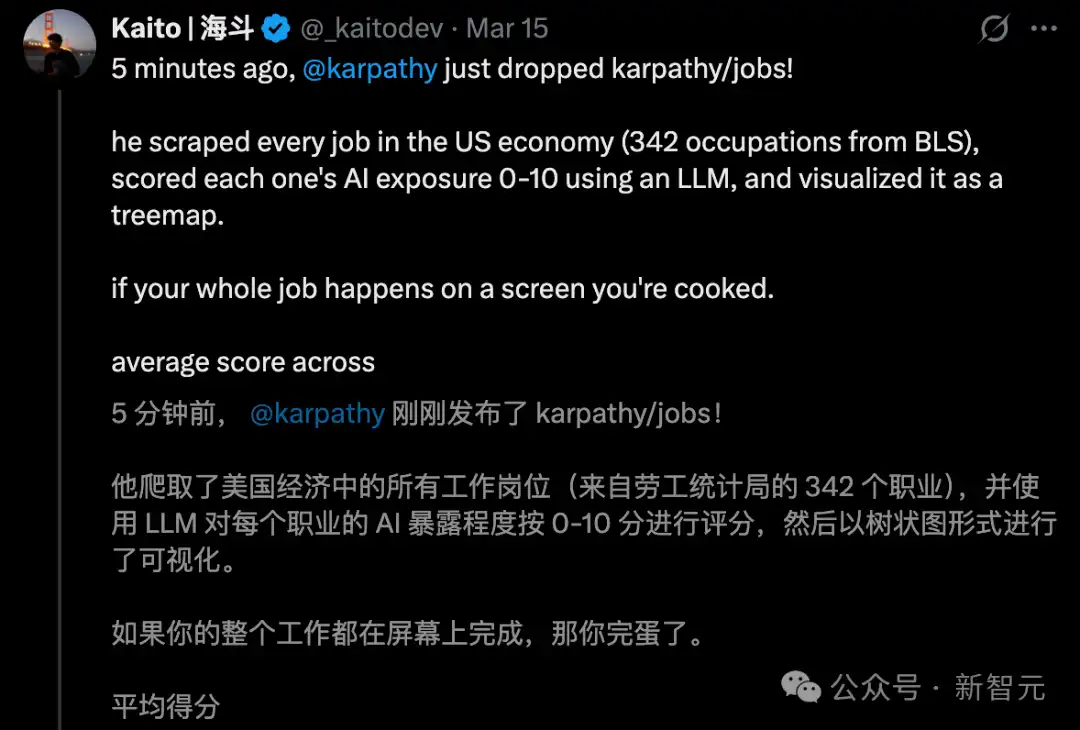
Last night, AI guru Karpathy launched a viral project—karpathy.ai/jobs/—providing an in-depth review of the extent of AI's "erosion" of employment.

He extracted 342 occupations from the U.S. Bureau of Labor Statistics (BLS) and assigned an AI replacement risk score (0-10) to each position.
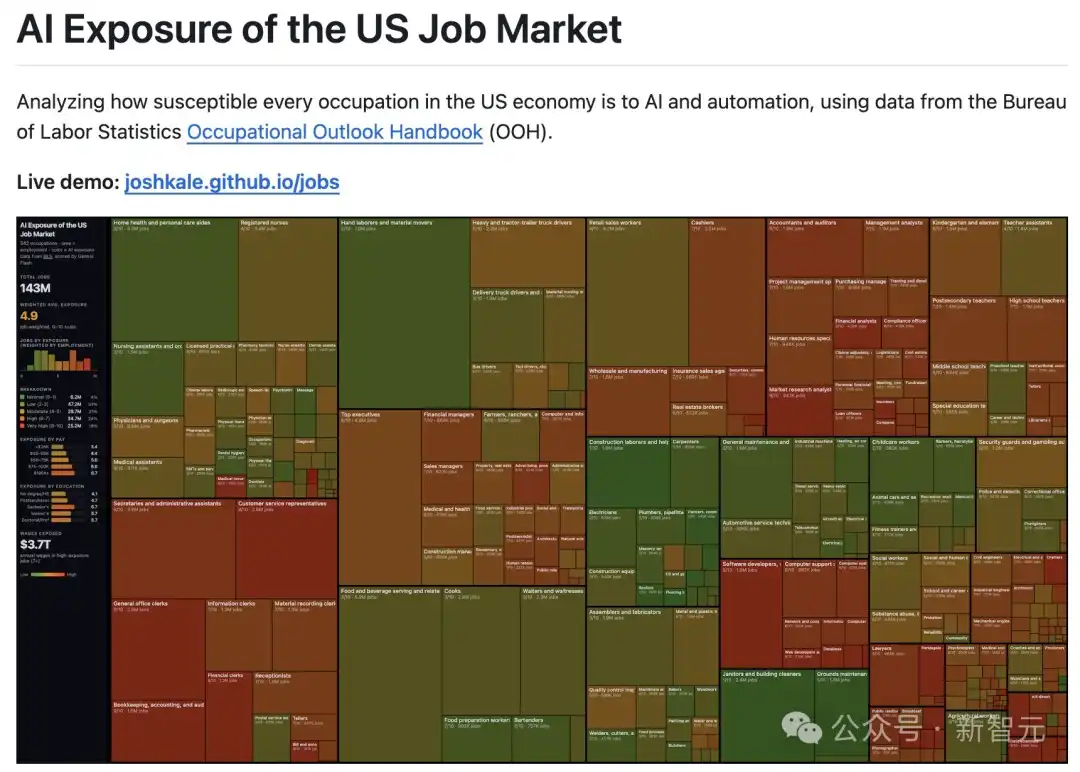
The results are startling, with an average exposure score of 4.9 across all industries.

Particularly, "screen-dependent" professions are in a full-blown crisis, almost all within AI's range—

  • Software Developers 9/10

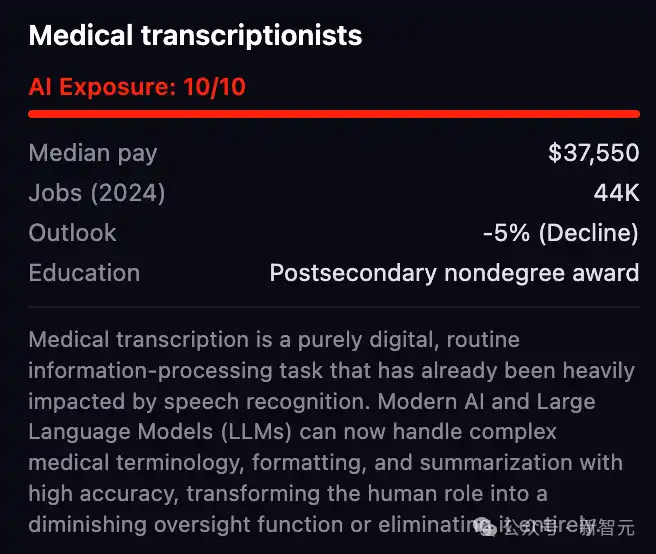
  • Medical Transcriptionists 10/10

  • Lawyers 8/10

  • General Office Clerks 9/10

Statistics show that approximately 60 million positions are in the high-risk range, meaning 42% have a risk score of 7 or above, with a total annual salary of $3.7 trillion.

As for the safest jobs? The answer is cleaners, plumbers, roofers—those involving complex physical labor have become the safest harbors.

极端的

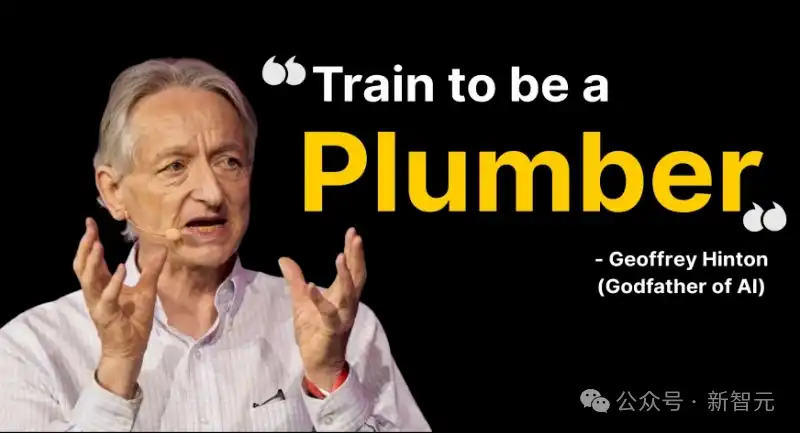
Hinton once advised: Become a plumber

On this, Musk sharply commented, "In the future, all work will become optional."

Other netizens compiled a video gathering predictions about unemployment from AI leaders.

60 Million White-Collar Jobs in the U.S., Really in Danger!

This project went viral across the internet, yet within minutes of going live, Karpathy deleted the post, and it's now a GitHub 404.

Fortunately, AI influencer Josh Kale cloned the entire repository before it was taken down.

极端的

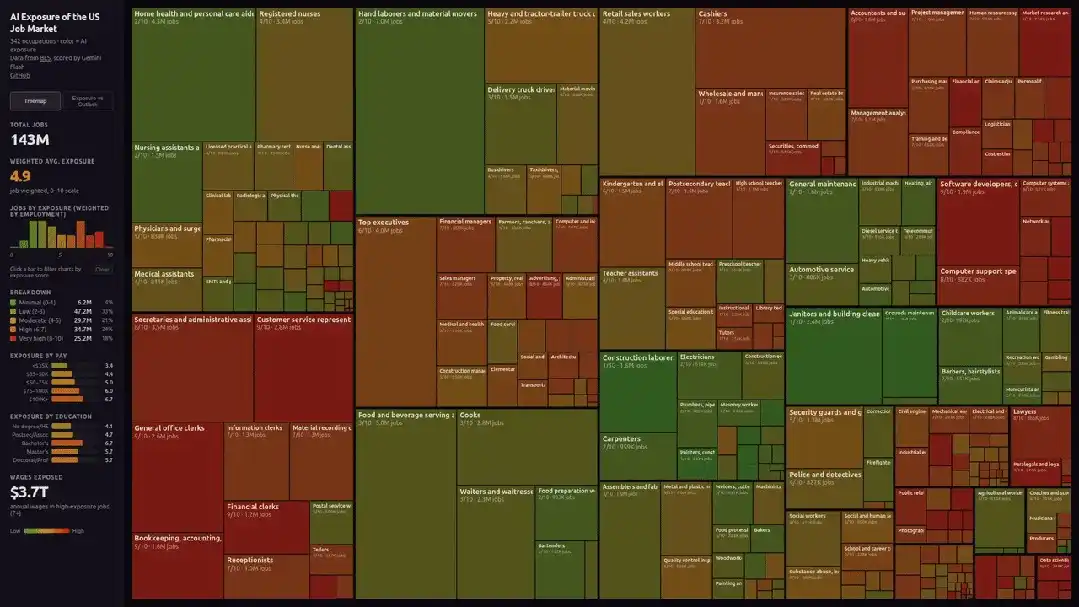
As can be seen, the far-left column of the project homepage lists all key metrics, including Exposure and Salary.

For all 342 U.S. occupations, comprising 143 million jobs, scored by Gemini Flash, the average exposure level for all occupations is as high as 4.9 points.
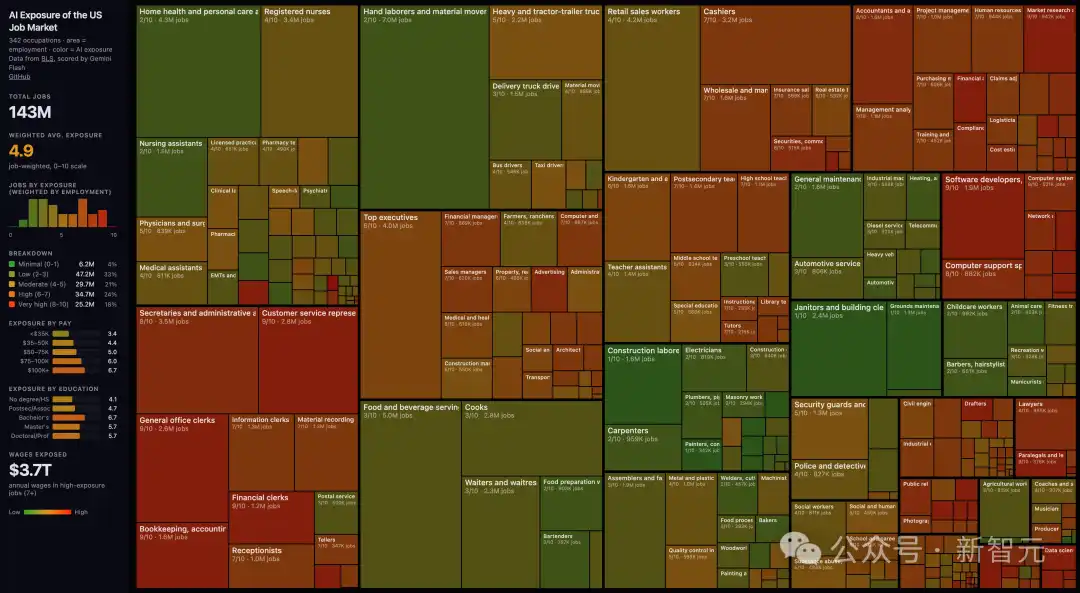
Portal: https://joshkale.github.io/jobs/

Among them, the most affected positions (6-10) account for 42%, or 59.9 million; the least affected (0-1) account for only 4%, with only 6.2 million positions.

Positions with annual salaries exceeding $100,000 (scoring 6.7) are more likely to be replaced by AI; while those with salaries below $35,000 are the least affected (3.4 points).

Moreover, occupations requiring a bachelor's degree are the most vulnerable to AI impact.
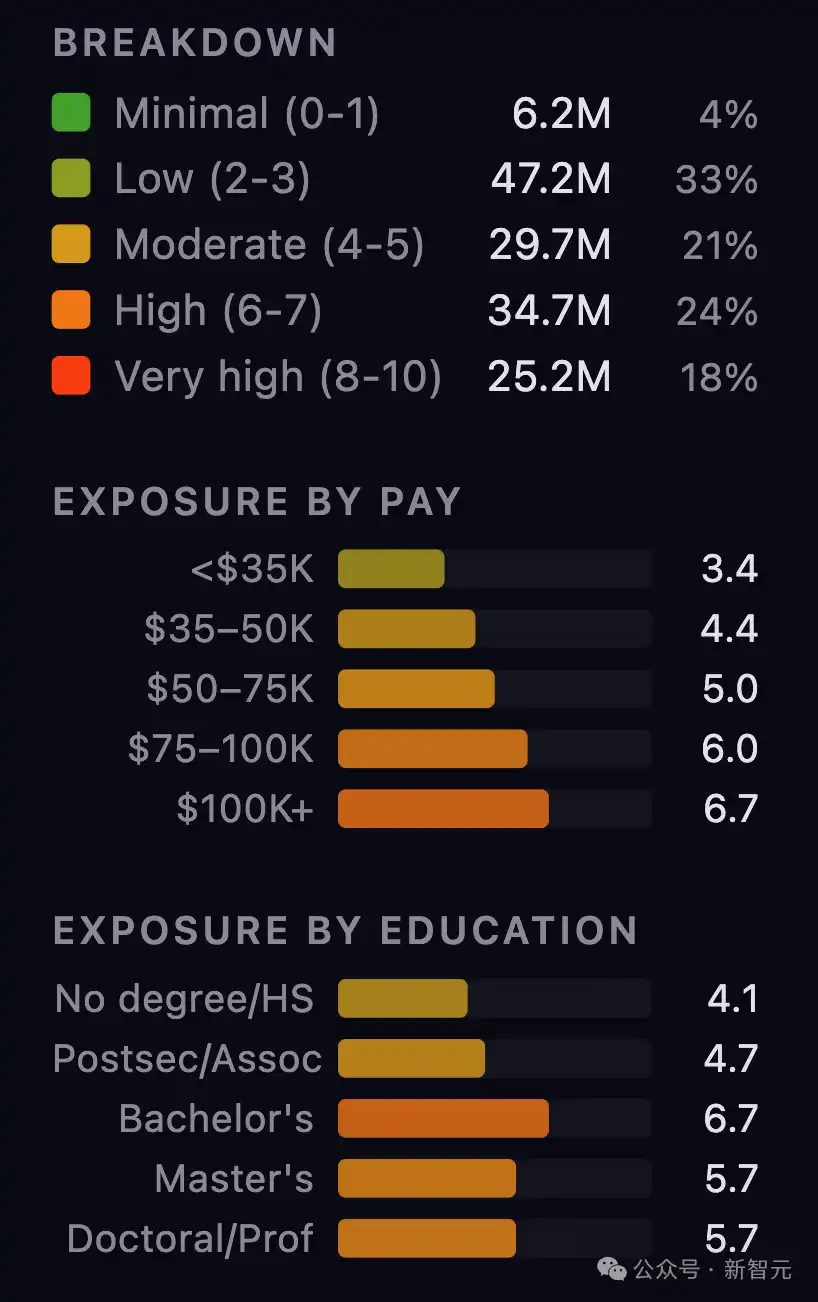
The overall trend is that AI is precisely targeting jobs along the axis of "information processing density."

Those white-collar clerical positions reliant on word processing, data analysis, code writing, and standardized processes, regardless of salary, are collectively "flashing red."

Conversely, positions involving physical operation, complex interpersonal interaction, or on-the-spot judgment remain in the safe zone.

White-Collar Job Massacre

In the interactive area on the right side of the homepage, professions with similar natures are closely clustered together.

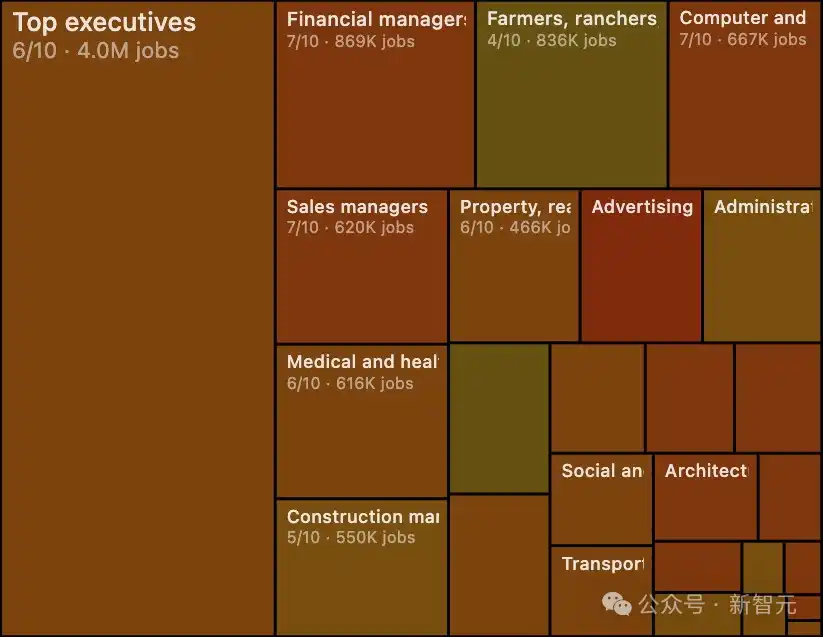
Let's first count the positions with an AI exposure index exceeding 6 points.

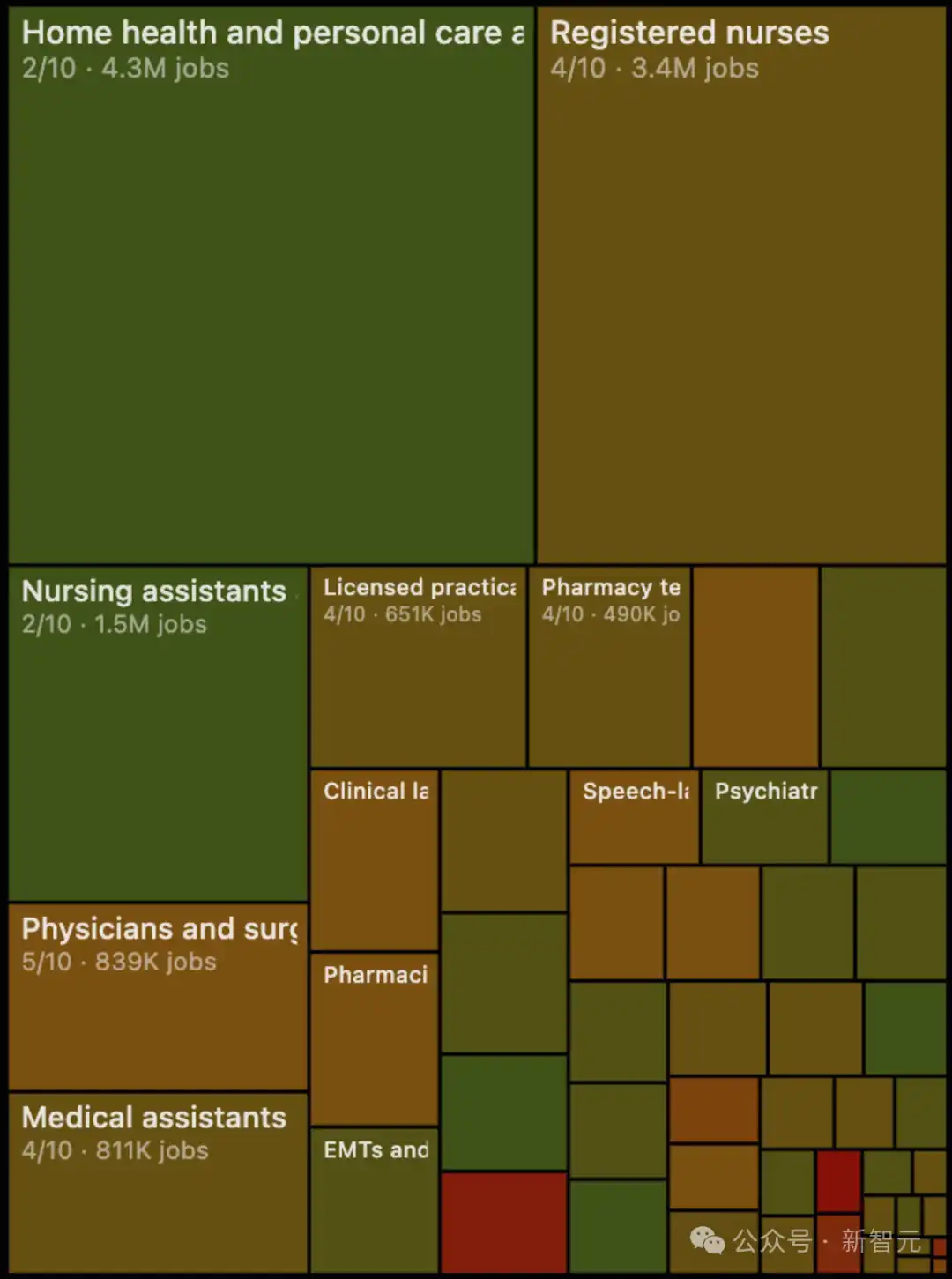
In the lower-left area, mainly office and administrative roles, all scoring above 7, including clerks, receptionists, etc.

Furthermore, their median annual salaries generally hover around $43,000, and the educational requirement is typically a high school diploma.
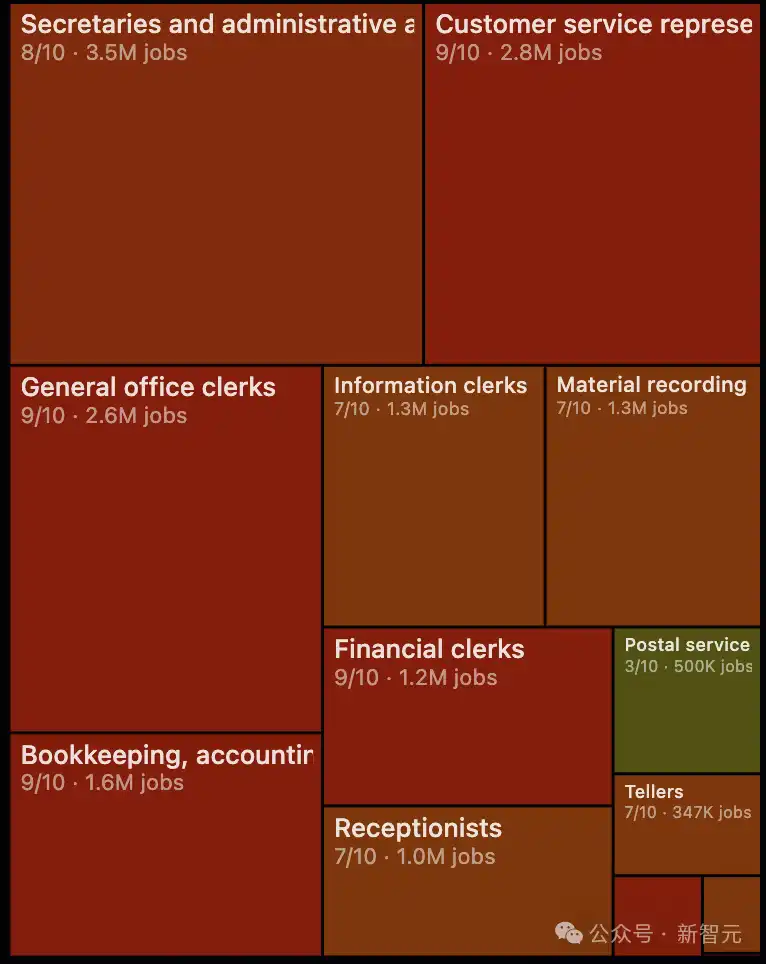
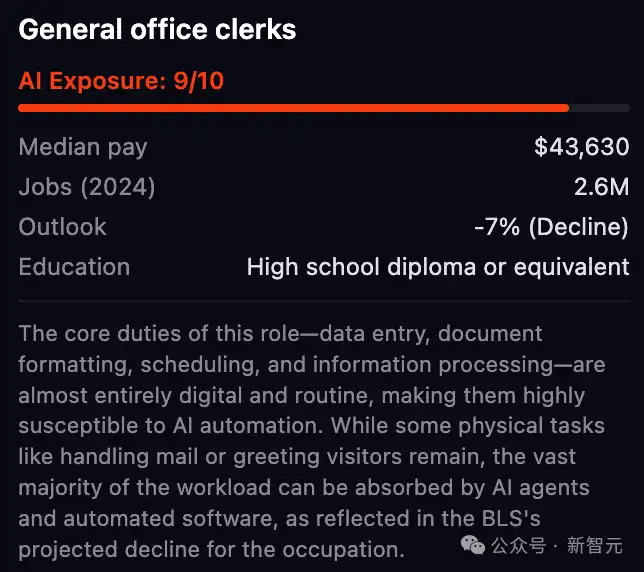
For example, Office Clerk positions (9/10), median annual salary: $43,630, job count: 2.6 million.

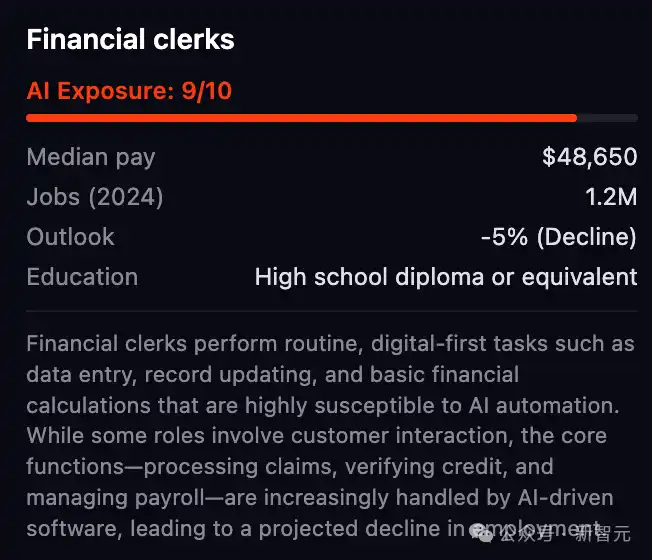
Financial Clerks (9/10), median annual salary: $48,650, job count: 1.2 million.

The core responsibilities of these roles are mostly routine, data entry, and document formatting tasks, which are almost entirely digitized and routine, making them extremely susceptible to AI automation.
The细分d "Business and Financial Operations" roles in the upper-right corner are almost entirely in the red.

These positions have median annual salaries between $50,000 and $100,000 and require a bachelor's degree.
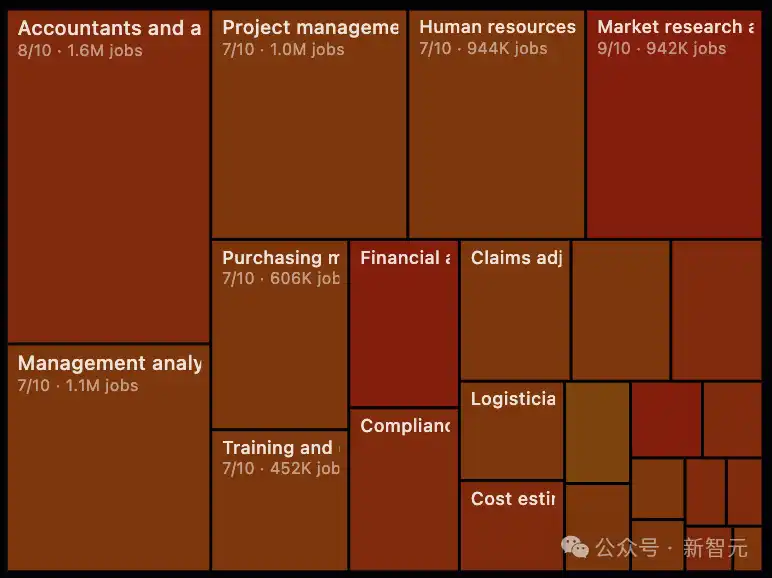
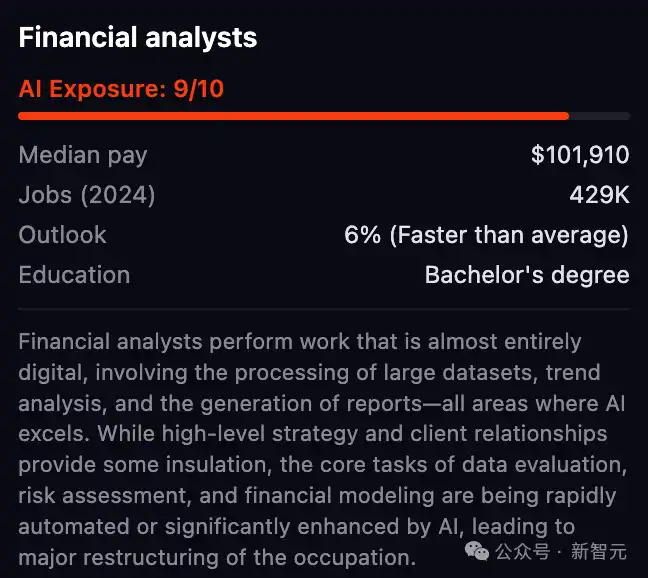
For example, Financial Analysts (9/10), median annual salary: $101,910, job count: 429,000.

The work content is almost "fully digital," involving processing large datasets, trend analysis, and report generation—precisely AI's forte.
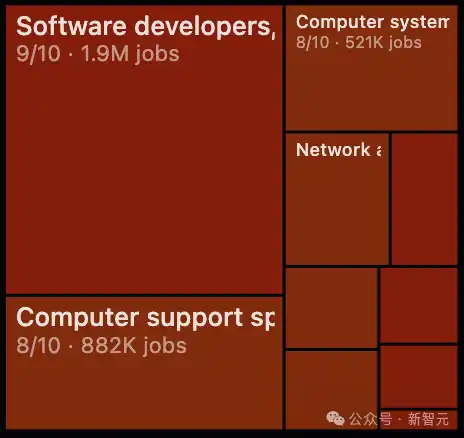
Of course, computer-related jobs are also significantly impacted by AI. After all, Dario Amodei once predicted that AI would replace software engineers in the next 6-12 months.

As evident in the chart below, Software Developers (9/10), Computer Systems Analysts (8/10), and Computer Support Specialists (8/10) are all in the high-risk range.

They hold median salaries as high as $130,000 but are among the most replaceable groups.
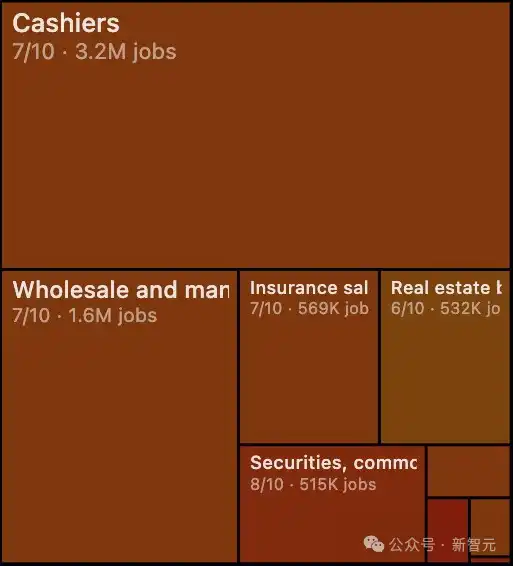
Additionally, positions like Lawyers (8/10), Data Scientists (9/10), Graphic Designers (9/10), and Cashiers (7/10) all face high risks of being replaced by AI.
<极端的mg style="max-width:100%;overflow:hidden;" src="https://d1x7dwosqaosdj.cloudfront.net/images/2026-03/a7222106d1f64d479a1426d7b极端的e9d480.png" alt="">

It is worth mentioning that Medical Transcriptionists have the highest risk among all positions.
Go Be a Plumber

Now, the safest professions truly只剩下 those involving "manual interaction with physical entities."

In the interactive chart, it's clear that the large areas colored green are基本上 related to complex on-site environments and hands-on operational jobs.

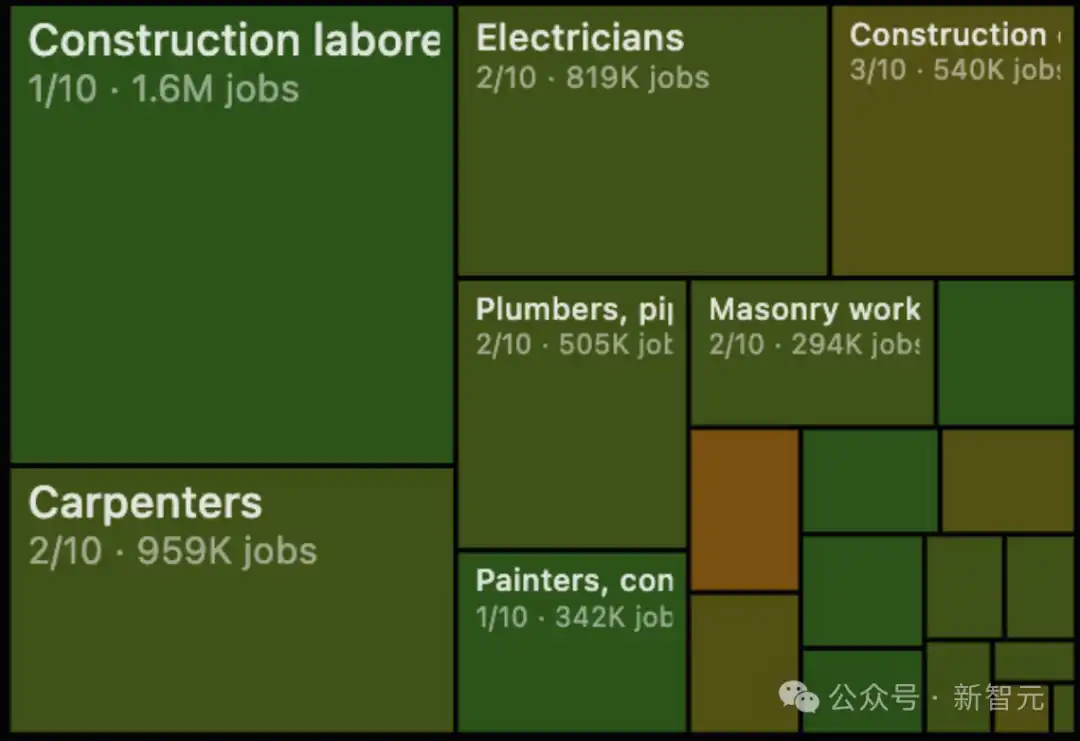
As shown below, construction and specialized trades have average exposure indices between 1 and 3; these physical tasks must be performed by humans.
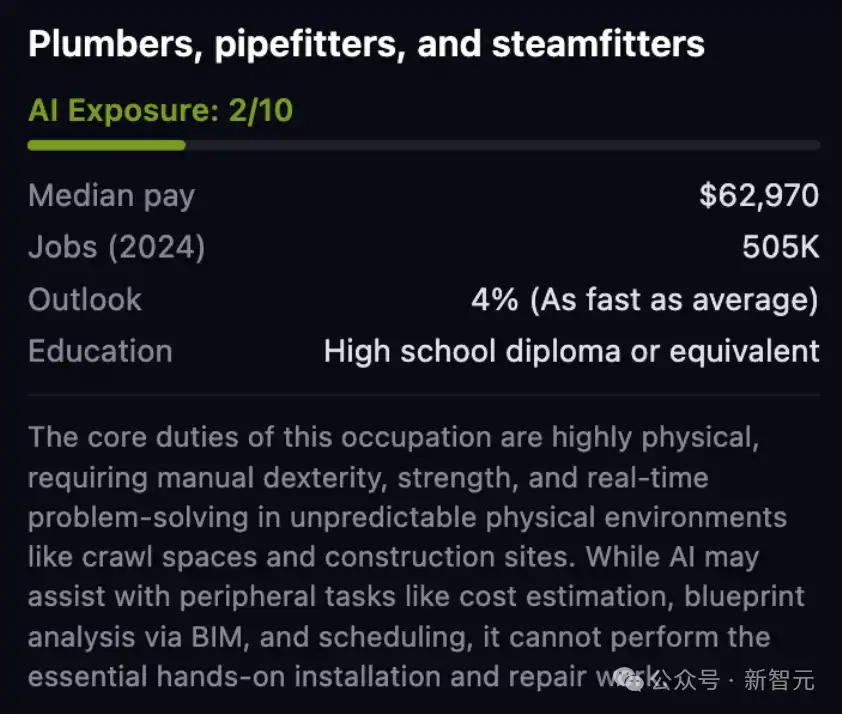
Take Plumbers, Pipefitters, and Steamfitters, for example: they only require a high school diploma, have a median salary of $62,970, and are among the least likely to be淘汰d.

Their core work属于 "heavy physical labor," requiring not only dexterity and strength but also the ability to solve various突发 situations in real-time within complex and changing environments like narrow crawl spaces or construction sites.

The core hands-on installation and repair work is still something AI cannot do.
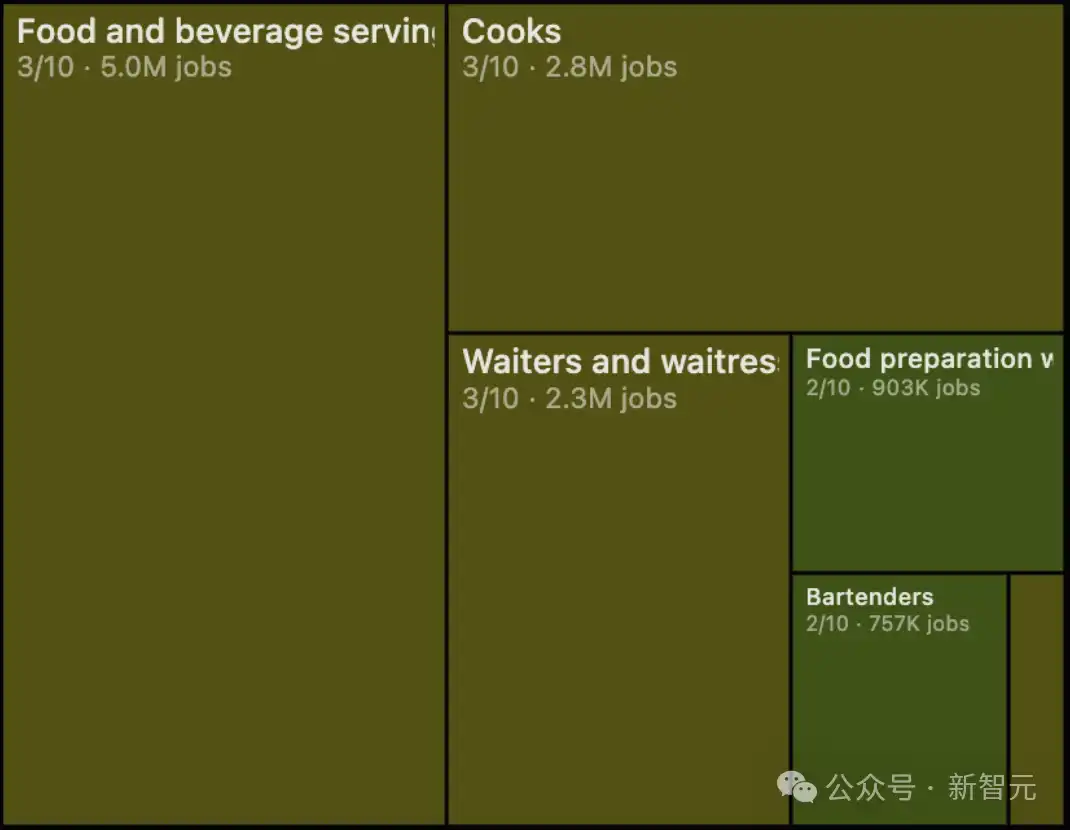
Similarly, food service occupations, including chefs, waiters, bartenders, and food preparation workers, are also in the safe zone.
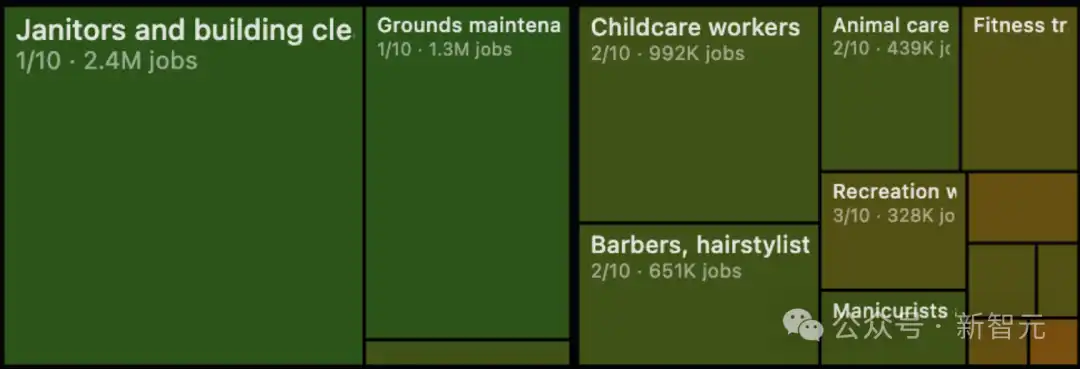
Furthermore, barbers, animal caretakers, cleaners, healthcare personal care aides, and transportation material movers are less impacted by AI.
<极端的 width="201"/>

In short, the value of Hinton's statement continues to rise.

The Internet Explodes, Karpathy Responds

Last night, this chart quickly went viral online, with many predicting that white-collar workers are about to suffer.
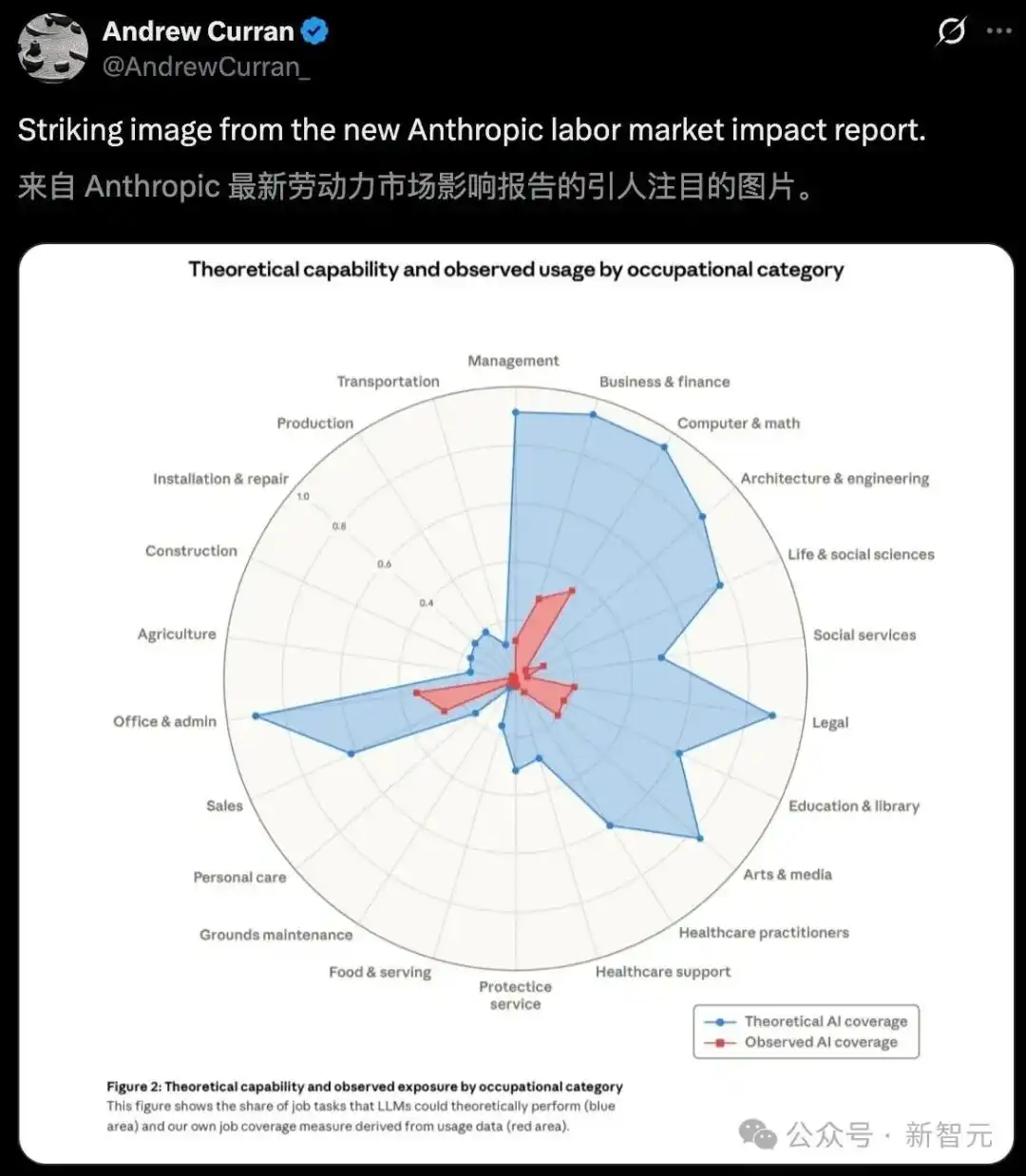
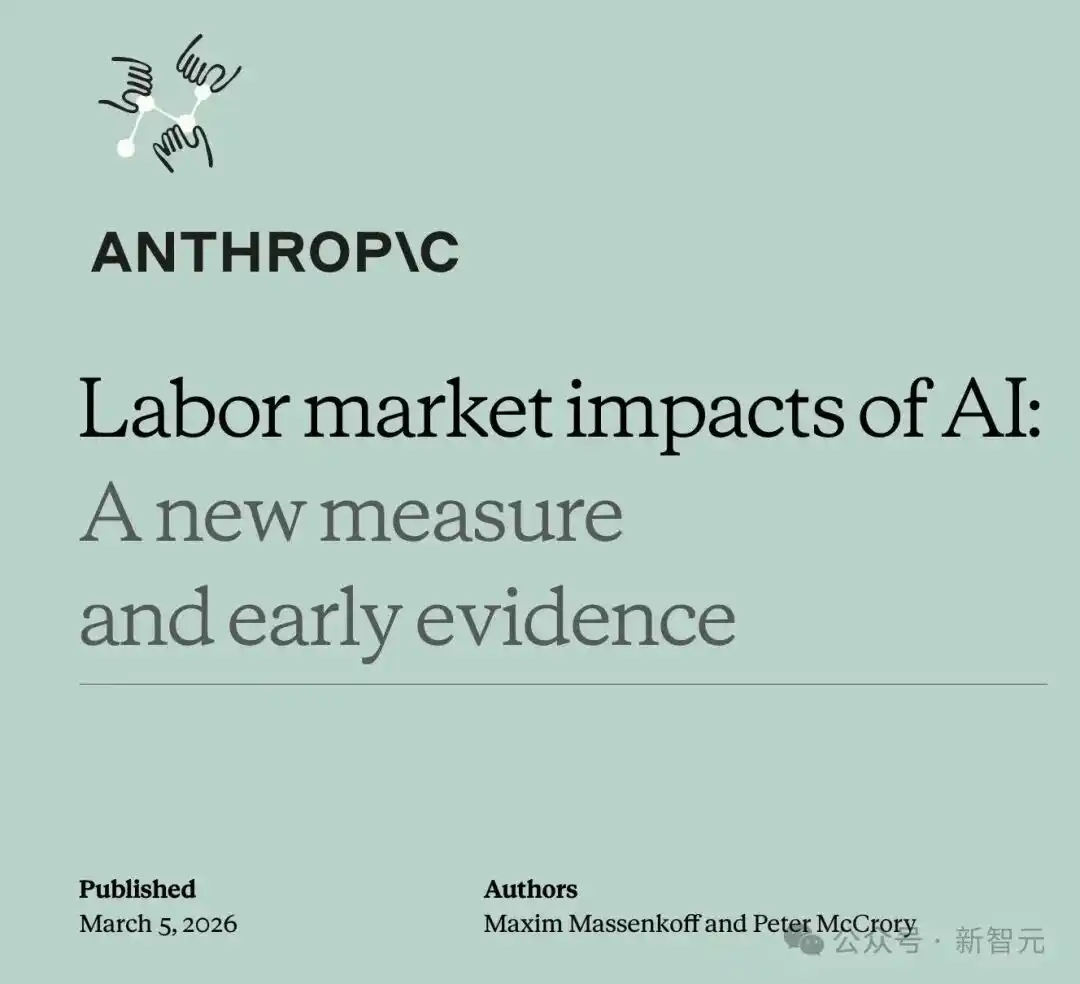
Two weeks ago, Anthropic also released a report titled "The Impact of AI on the Labor Market: New Metrics and Early Evidence."

Similar to Karpathy's data, the report指出 that tasks for computer programmers currently have an AI coverage rate as high as 75%.

Following closely are customer service representatives, data entry keyers, and medical records specialists—these are the "disaster zones" hit hardest by AI.

In contrast, about 30% of occupations are largely unaffected, such as cooks, lifeguards, and dishwashers, because these jobs require significant human physical collaboration.

However, the current actual adoption rate of AI represents only a small fraction of its theoretically feasible capabilities.
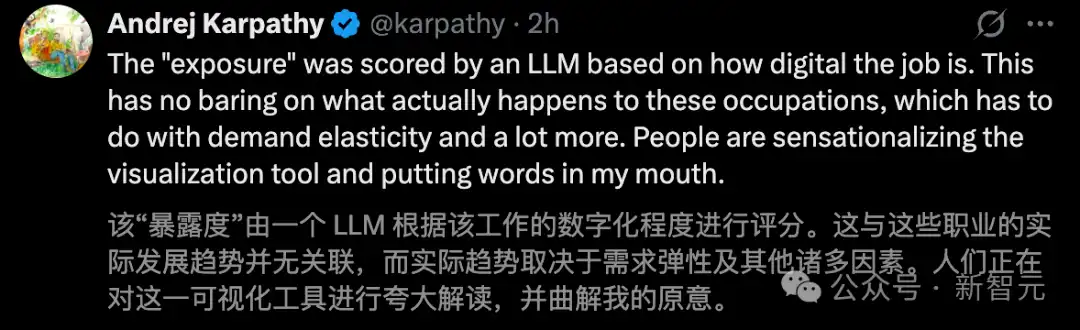
Precisely because this chart caused massive panic on social media, Karpathy subsequently urgently deleted the data.

He explained, "This was just a fun project I coded up 'by feel' over a weekend in 2 hours, and it's being over-interpreted by everyone."

Harvard Confirms: AI Isn't Just "Killing" Jobs

The panic is real, but panic is not the whole picture.

Harvard Business School professor Suraj Srinivasan,联合 researchers from Hong Kong University of Science and Technology and Ohio State University, published a heavyweight working paper, "Substitute or Complement? The Impact of Generative AI on the Labor Market," providing a more robust and complex answer.
Paper address: https://www.hbs.edu/ris/Publication%20Files/25-039_05fbec84-1f23-459b-8410-e3cd7ab6c88a.pdf

The research team directly pulled a dataset covering almost all online job postings in the U.S., tracking real changes in job supply and demand from 2019 to March 2025, entry by entry.

First, the substitution side.

After ChatGPT's release, hiring for the batch of positions with the highest automation potential (top 25%) decreased by an average of 95 per company per quarter, a drop of 17%.

The finance and tech industries were the first hit. "Screen搬砖" type jobs like文书 clerks, payroll clerks, medical transcriptionists, and telemarketers are being systematically phased out by AI.

Now, the enhancement side.

During the same period, hiring for the batch of positions with the highest enhancement potential (top 25%) increased by an average of 80 per company per quarter, a rise of 22%.

Microbiologists, financial analysts, clinical neuropsychologists—these professions share a common characteristic: part of the work can be accelerated by AI, while another part must be驾驭d by human experience, intuition, and social skills.

Behind these two sets of numbers lies a precise quantification method.

The research team used GPT-4o to evaluate 19,000 specific tasks across 900+ occupations one by one, categorizing them into four levels—"No Exposure," "Direct Exposure," "Application Exposure," "Image Exposure"—based on whether AI could reduce task completion time by more than half. They then combined the importance weight of each task within the occupation to calculate an "Automation Score" and an "Augmentation Score" for each profession.

The分化 at the skill level is even more striking.

In high-automation positions, demand for AI-related skills plummeted by 24%, total skill requirements also contracted, and the frequency of new skills appearing continued to decline.

These positions are being "hollowed out." As AI takes over most structured tasks, the remaining work becomes simpler and more standardized, and companies require less from people.

In high-augmentation potential positions, the trend is completely reversed. Demand for AI-related skills grew by 15%, and total skill requirements and the number of new skills are rising.

These positions have become more complex. Employees not only need to know how to use AI tools but also need the ability to supervise AI output and integrate human-AI collaboration processes. Taking the financial industry as an example, investment managers and analysts use AI to process vast amounts of market data, but the final judgment and decision-making still rest with humans.

AI is not wielding a broad axe against all white-collar workers equally. It's more like a "occupational reorganization." Pure information handlers are being淘汰d, while those who can collaborate with AI are becoming more valuable.

How Much Time is Left in the Window?

Karpathy deleted the post, but the data remains. Harvard's paper is calmer, but its conclusions are equally merciless.

Whether you look at Gemini Flash's score sheet or the empirical study covering the entire U.S. job market, they point to the same fact. The reorganization of white-collar jobs by AI is already happening.

It's just not a one-size-fits-all massacre; it's a分化.

What's being cut are those positions whose work content can be fully described and whose processes can be standardized and broken down.

What remains, and even becomes more valuable, are those positions that require judgment in gray areas, building trust between people, and making final decisions based on AI output.

This分化 brings a cruel consequence.

In the past, the first step on the white-collar career ladder was often standardized entry-level work: data entry, report writing, junior coding, basic analysis.

Young people started here, doing repetitive tasks, slowly accumulating experience and judgment, and eventually growing into irreplaceable individuals.

Now, AI is pulling out this first step.

The entrance has narrowed, but the reward at the end has反而 become greater.

For everyone still in the workforce, there's really only one question to answer.

What percentage of your work can AI *not* do?

If the answer makes you uneasy, then the time to act is not tomorrow, it's now.

Câu hỏi Liên quan

QWhat was the main purpose of Karpathy's project 'karpathy.ai/jobs/'?

AThe project aimed to deeply analyze the degree of AI's erosion of employment by scoring the AI replacement risk (0-10) for 342 occupations in the U.S., using data from the Bureau of Labor Statistics (BLS).

QAccording to the article, which types of jobs are most at risk from AI automation?

AScreen-dependent and white-collar jobs are most at risk, particularly those involving text processing, data analysis, code writing, and standardized processes, such as software developers (9/10), medical transcriptionists (10/10), lawyers (8/10), and general office clerks (9/10).

QWhat types of jobs were identified as the safest from AI replacement?

AJobs involving complex manual labor and physical interaction in complex on-site environments are the safest, such as plumbers, pipefitters, steamfitters, cleaners, roofers, and those in food service like chefs and bartenders.

QWhy did Karpathy eventually delete the project and its data?

AKarpathy deleted the project because it was a weekend hobby project he coded in about two hours based on his 'intuition,' and he felt it was being overinterpreted by the public, causing unnecessary panic.

QWhat key finding did the Harvard Business School working paper 'Substitute or Complement? The Impact of Generative AI on the Labor Market' reveal?

AThe paper found a dual impact: jobs with high automation potential saw a significant decrease in hiring (down 17% per firm per quarter), while jobs with high augmentation potential saw an increase (up 22% per firm per quarter), indicating AI is causing a 'restructuring' of the labor market rather than just job elimination.

Nội dung Liên quan

Những Tỷ Phú Đằng Sau Cuộc Bầu Cử Giữa Kỳ Đắt Giá Nhất Lịch Sử

Cuộc bầu cử giữa kỳ năm 2026 được dự báo là cuộc bầu cử đắt đỏ nhất trong lịch sử, với tổng chi tiêu cho quảng cáo chính trị ước tính lên tới 10,8 tỷ USD. Các tỷ phú đang đổ hàng chục triệu USD để tác động đến cuộc đua giành quyền kiểm soát Quốc hội và các chính sách then chốt. Theo phân tích của Bloomberg, hơn 4,7 tỷ USD đã được huy động cho các ủy ban chính trị liên bang trong chu kỳ này. Phần lớn nguồn tiền lớn đang chảy về phe Cộng hòa. Các nhà tài trợ cá nhân hàng đầu bao gồm George Soros (102,6 triệu USD), Elon Musk (84,8 triệu USD) và Jeff Yass (81,8 triệu USD). Yass là nhà tài trợ cá nhân lớn cho MAGA Inc. của ông Trump và ủng hộ mạnh mẽ quyền lựa chọn trường học. Các tỷ phú công nghệ cũng tham gia sâu rộng, với những khoản đóng góp lớn nhằm định hình quy định về trí tuệ nhân tạo và tiền mã hóa, hoặc chống lại các đề xuất thuế tỷ phú. Greg Brockman (OpenAI) và Marc Andreessen là những nhà tài trợ chính cho ủy ban hành động chính trị (PAC) về AI "Leading the Future". Các tỷ phú khác như Miriam Adelson và Paul Singer tiếp tục ủng hộ mạnh mẽ các ứng viên thân Israel. Bài viết nêu bật xu hướng "tiền đen" ẩn danh ngày càng tăng và dự báo sẽ có thêm các nhà tài trợ tỷ phú xuất hiện khi ngày bầu cử 3/11 đến gần.

marsbit26 phút trước

Những Tỷ Phú Đằng Sau Cuộc Bầu Cử Giữa Kỳ Đắt Giá Nhất Lịch Sử

marsbit26 phút trước

Sau khi lưu trữ tăng 50 lần, Sun Yuchen luôn hướng tới thập kỷ tiếp theo

Đa số người Trung Quốc biết đến Sun Yuchen (Tôn Vũ Thần) qua những câu chuyện gây tranh cãi và hành động thu hút sự chú ý. Tuy nhiên, ẩn sau hình ảnh đó là một nhà đầu tư có tầm nhìn xa trong thập kỷ qua. Năm 2016, ông khuyên giới trẻ không nên mua nhà mà đầu tư vào Bitcoin, NVIDIA, Tesla và Tencent. Đến năm 2026, những đề xuất này mang lại lợi nhuận khổng lồ, với NVIDIA tăng gần 24000%. Gần đây, tuyên bố "Mua ổ cứng" của ông vào tháng 11/2025 đã thúc đẩy cơn sốt cổ phiếu lưu trữ, như Western Digital (tách ra thành Sandisk) tăng gần 50 lần. Khi mọi người còn đang đuổi theo xu hướng này, Sun Yuchen đã chuyển sự chú ý sang bốn lĩnh vực mới nổi cho thập kỷ tới: Trí tuệ thể hiện (Robot hình người), Máy bay không người lái, Điện toán không gian và Khám phá vũ trụ. Ông nhấn mạnh rằng đây là những hướng đi then chốt mà AI vật lý sẽ định hình lại thế giới thực, từ nhà máy, chiến trường đến không gian. Triết lý đầu tư của ông là xác định các lĩnh vực có triển vọng và đặt cược vào cả "cơ thể" lẫn "bộ não" của ngành, không dựa vào một công ty duy nhất. Ví dụ, trong robot, ông tin vào khả năng sản xuất của Tesla (Optimus) và nền tảng AI của NVIDIA (GR00T). Năm 2025, Sun Yuchen đã tự mình bay qua đường Kármán trên chuyến bay của Blue Origin, củng cố niềm tin vào tương lai kinh tế vũ trụ. Ông kêu gọi giới trẻ tập trung vào công nghệ và đổi mới. Trong khi nhiều người vẫn chờ đợi cơ hội trong các lĩnh vực cũ, Sun Yuchen đã nhìn về một tương lai nơi AI vật lý thay đổi cách vận hành cơ bản của thế giới.

marsbit29 phút trước

Sau khi lưu trữ tăng 50 lần, Sun Yuchen luôn hướng tới thập kỷ tiếp theo

marsbit29 phút trước

IPO lớn nhất lịch sử đang đến gần, vượt SpaceX, 28 năm AI tự lặp lại, đếm ngược tới vụ nổ thông minh

【Tóm tắt】 Công ty AI Anthropic đang được định giá gần 1 nghìn tỷ USD, với kế hoạch IPO có thể trở thành đợt phát hành lớn nhất lịch sử, vượt cả SpaceX. Doanh thu thường niên (ARR) của họ đã tăng vọt lên 45 tỷ USD chỉ trong 5 tháng, tăng trưởng 500%. Sự bùng nổ này được thúc đẩy bởi hai sản phẩm chính: Claude Code cho lập trình và Cowork cho cộng tác thông minh. Đồng sáng lập Jack Clark đưa ra dự đoán quan trọng: đến cuối năm 2028, có hơn 50% khả năng các hệ thống AI có thể tự cải thiện chính mình một cách tự chủ, bắt đầu một quá trình "bùng nổ trí tuệ" đầy rủi ro và cơ hội. Để kiểm tra khả năng này, Anthropic đã hợp tác với Goldman Sachs và Blackstone thành lập một liên doanh 1.5 tỷ USD, nhằm thay thế các công ty tư vấn truyền thống như McKinsey bằng các giải pháp AI chiến lược. Sự định giá nghìn tỷ của Anthropic không chỉ phản ánh hiệu suất kinh doanh đột phá mà còn là sự định giá trước kỳ vọng về một tương lai mà AI có thể tự hoàn thiện đệ quy, định hình lại nền kinh tế và trật tự xã hội. Cuộc đếm ngược đến năm 2028 đã bắt đầu.

marsbit43 phút trước

IPO lớn nhất lịch sử đang đến gần, vượt SpaceX, 28 năm AI tự lặp lại, đếm ngược tới vụ nổ thông minh

marsbit43 phút trước

Mira Murati, Cựu CTO OpenAI và nghệ thuật vị kỷ tinh tế: Vừa trao dao lại là người đầu tiên giảng hòa

Bằng chứng và lời khai từ phiên tòa Musk kiện Altman đã tiết lộ vai trò toàn diện của cựu CTO OpenAI Mira Murati trong cuộc "đảo chính" tháng 11/2023: bà vừa là lực lượng chủ chốt thúc đẩy việc sa thải Altman, lại là người đầu tiên ký đơn đòi đưa ông trở lại khi chiều gió đổi chiều. Mâu thuẫn bắt nguồn từ tháng 9/2022, khi Murati gửi cho Altman một danh sách phàn nàn về phong cách quản lý áp lực, thiếu nhất quán và việc đặt doanh thu lên trên tinh thần nghiên cứu của OpenAI. Đến năm 2023, bà cung cấp hàng loạt bằng chứng nội bộ cho đồng sáng lập Ilya Sutskever, góp phần quan trọng vào quyết định sa thải của Hội đồng quản trị. Sau khi Altman bị sa thải ngày 16/11 và bà được bổ nhiệm làm CEO tạm thời, Murati có hành động hai mặt: một mặt thông báo lập trường cứng rắn của Hội đồng quản trị với Altman, mặt khác bí mật tìm kiếm sự hỗ trợ từ CEO Microsoft Nadella để lật ngược quyết định. Khi nhận thấy Hội đồng quản trị không thể đứng vững, Murati nhanh chóng đổi phe. Bà từ chối ủng hộ tuyên bố của Hội đồng, báo tin họ sắp từ chức cho Microsoft, và cuối cùng trở thành người đầu tiên ký vào lá đơn có chữ ký của 750 nhân viên đòi Altman tái đắc cử. Một cựu giám đốc nhận xét Murati "cực kỳ không hợp tác" sau vụ sa thải, không chịu thừa nhận vai trò của mình, khiến nhân viên hiểu lầm đây là cuộc tấn công bất ngờ từ các giám đốc bên ngoài. "Bà ấy chờ xem gió thổi chiều nào, mà không nhận ra chính bà ấy là làn gió đó." Xuyên suốt cuộc khủng hoảng, Murati luôn chỉ đứng về phía có lợi cho bản thân.

marsbit52 phút trước

Mira Murati, Cựu CTO OpenAI và nghệ thuật vị kỷ tinh tế: Vừa trao dao lại là người đầu tiên giảng hòa

marsbit52 phút trước

Hóa đơn suy luận AI tăng phi mã, Shopify, Roblox cảnh báo: Tiền tiết kiệm từ cắt giảm nhân sự không đủ trả phí chip

Các báo cáo tài chính quý I/2026 của các ông lớn công nghệ như Shopify và Roblox cho thấy một nghịch lý: trong khi AI giúp cắt giảm nhân sự, thì chi phí cho phần cứng (GPU) và sử dụng mô hình (token) lại đang tăng vọt, thậm chí vượt quá khoản tiết kiệm từ việc tinh giản lao động. Shopify cho biết AI đảm nhận hơn 50% công việc viết code, giúp công ty phát triển sản phẩm mà không cần tăng người. Tuy nhiên, chi phí sử dụng LLM (mô hình ngôn ngữ lớn), đặc biệt từ AI trợ lý Sidekick, đang làm xói mòn lợi nhuận gộp của mảng dịch vụ đăng ký. Mặc dù lợi nhuận gộp duy trì ở 80%, chi phí cơ sở hạ tầng liên quan đến AI đã tăng 20%. Roblox cũng báo cáo tình hình tương tự. Khoảng một phần tư mức điều chỉnh giảm dự báo lợi nhuận cả năm của họ trực tiếp đến từ các khoản đầu tư tăng thêm cho AI. Công ty đang xử lý 1,5 triệu lượt suy luận AI mỗi giây. Để đối phó, Roblox dự kiến sẽ tính phí đối với các tính năng AI cao cấp như "Roblox Reality" thay vì cung cấp miễn phí. Trên quy mô ngành, bốn gã khổng lồ Amazon, Meta, Microsoft và Google dự kiến chi tổng cộng 7250 tỷ USD cho đầu tư vào AI trong năm 2026, tăng 77%. So sánh cho thấy sự mất cân đối lớn: chi phí tiền lương toàn bộ nhân viên của Meta (khoảng 27 tỷ USD) chưa bằng 1/5 ngân sách cơ sở hạ tầng AI của họ. Một phân tích ước tính, cứ mỗi đô la chi cho năng lực tính toán AI, cần tiết kiệm gần mười đô la chi phí nhân sự để bù đắp. Tình thế này mang lại lợi nhuận cao cho các nhà cung cấp mô hình và chip như Nvidia, OpenAI, Anthropic. Trong khi đó, các công ty ứng dụng như Shopify và Roblox phải đối mặt với bài toán tài chính phức tạp: doanh thu phụ thuộc vào cường độ sử dụng AI, nhưng đường cong chi phí lại bị chi phối bởi giá của nhà cung cấp mô hình. Cách giải quyết chung là không thể chỉ dựa vào tiết kiệm từ cắt giảm nhân sự, mà phải tìm cách chuyển chi phí AI cho người dùng hoặc biến nó thành lợi thế chiến lược gắn kết khách hàng.

marsbit1 giờ trước

Hóa đơn suy luận AI tăng phi mã, Shopify, Roblox cảnh báo: Tiền tiết kiệm từ cắt giảm nhân sự không đủ trả phí chip

marsbit1 giờ trước

Giao dịch

Giao ngay
Hợp đồng Tương lai

Bài viết Nổi bật

Làm thế nào để Mua PEOPLE

Chào mừng bạn đến với HTX.com! Chúng tôi đã làm cho mua ConstitutionDAO (PEOPLE) trở nên đơn giản và thuận tiện. Làm theo hướng dẫn từng bước của chúng tôi để bắt đầu hành trình tiền kỹ thuật số của bạn.Bước 1: Tạo Tài khoản HTX của BạnSử dụng email hoặc số điện thoại của bạn để đăng ký tài khoản miễn phí trên HTX. Trải nghiệm hành trình đăng ký không rắc rối và mở khóa tất cả tính năng. Nhận Tài khoản của tôiBước 2: Truy cập Mua Crypto và Chọn Phương thức Thanh toán của BạnThẻ Tín dụng/Ghi nợ: Sử dụng Visa hoặc Mastercard của bạn để mua ConstitutionDAO (PEOPLE) ngay lập tức.Số dư: Sử dụng tiền từ số dư tài khoản HTX của bạn để giao dịch liền mạch.Bên thứ ba: Chúng tôi đã thêm những phương thức thanh toán phổ biến như Google Pay và Apple Pay để nâng cao sự tiện lợi.P2P: Giao dịch trực tiếp với người dùng khác trên HTX.Thị trường mua bán phi tập trung (OTC): Chúng tôi cung cấp những dịch vụ được thiết kế riêng và tỷ giá hối đoái cạnh tranh cho nhà giao dịch.Bước 3: Lưu trữ ConstitutionDAO (PEOPLE) của BạnSau khi mua ConstitutionDAO (PEOPLE), lưu trữ trong tài khoản HTX của bạn. Ngoài ra, bạn có thể gửi đi nơi khác qua chuyển khoản blockchain hoặc sử dụng để giao dịch những tiền kỹ thuật số khác.Bước 4: Giao dịch ConstitutionDAO (PEOPLE)Giao dịch ConstitutionDAO (PEOPLE) dễ dàng trên thị trường giao ngay của HTX. Chỉ cần truy cập vào tài khoản của bạn, chọn cặp giao dịch, thực hiện giao dịch và theo dõi trong thời gian thực. Chúng tôi cung cấp trải nghiệm thân thiện với người dùng cho cả người mới bắt đầu và người giao dịch dày dạn kinh nghiệm.

Tổng lượt xem 634Xuất bản vào 2024.12.12Cập nhật vào 2025.03.21

Làm thế nào để Mua PEOPLE

Thảo luận

Chào mừng đến với Cộng đồng HTX. Tại đây, bạn có thể được thông báo về những phát triển nền tảng mới nhất và có quyền truy cập vào thông tin chuyên sâu về thị trường. Ý kiến ​​của người dùng về giá của PEOPLE (PEOPLE) được trình bày dưới đây.

活动图片