Viewpoint: A $4 Billion Buyback Can Fix Liquidity, But Not U.S. Fiscal Health

marsbitXuất bản vào 2026-08-20Cập nhật gần nhất vào 2026-08-20

Tóm tắt

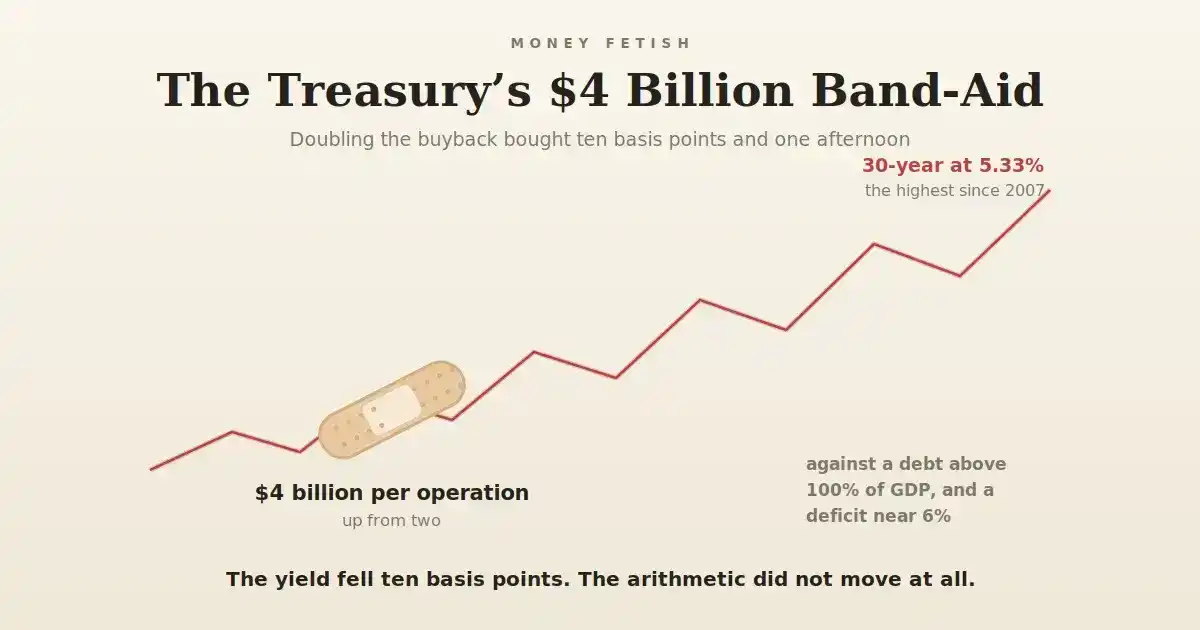
On August 19, the U.S. Treasury announced it would increase its maximum single-operation buyback size for long-term bonds from $2 billion to at least $4 billion, aiming to improve market liquidity. This move initially led to a pullback in long-term yields, such as the 30-year Treasury yield which had recently hit a 2007 high near 5.34%, sparking talk of potential "Treasury support." However, an opposing perspective argues this is merely a temporary fix. While buybacks can enhance trading conditions for older, less-liquid bonds, they do not address the underlying fiscal pressures. The Treasury's actions are a form of debt management, not monetary stimulus like QE; the funds used for buybacks ultimately come from cash balances or new borrowing. They do not reduce the government's overall financing needs. The core issue is growing fiscal supply. With the federal deficit reaching a record $432 billion in July 2026 and cumulative deficits already surpassing the prior fiscal year's total, the market faces a massive wave of new debt issuance. The recent surge in long-term yields may reflect a repricing of this persistent fiscal risk and the associated term premium, rather than just a liquidity shortage. Furthermore, demand-side challenges loom. Foreign holdings of U.S. Treasuries have recently declined, and if official demand weakens, the market will rely more on price-sensitive private investors, potentially requiring higher yields to clear future auctions. In essence, the Trea...

Editor's Note: On August 19, the U.S. Treasury Department announced an expansion of its long-term Treasury buyback program, increasing the maximum single-operation size for 10–20 year and 20–30 year Treasury bonds from $2 billion to at least $4 billion. Previously, the yield on the 30-year Treasury note had briefly risen to around 5.34%, the highest level since 2007. Following the announcement, long-end yields fell rapidly.

This gave the market a straightforward bullish narrative: the Treasury is taking more proactive steps to improve the liquidity of long-term bonds, potentially even creating a kind of "Treasury floor" expectation.

However, Marcus Nunes, in his article "The Treasury's $4 Billion Band-Aid," offers a counterpoint: while buybacks can indeed alleviate liquidity issues, if the pressure on long-term bonds stems from larger fiscal deficits, increased bond supply, and weaker marginal buying interest, then a $4 billion buyback does not address the real underlying conflict.

In other words, the market needs to distinguish between two things: the Treasury can make bonds easier to trade, but it cannot use buybacks to reduce the total amount the U.S. government ultimately needs to finance.

The following is a translated compilation of the original article:

On August 19, U.S. Treasury Secretary Scott Bessent announced an increase in the maximum single-operation size for liquidity support buybacks of 10–20 year and 20–30 year Treasury bonds, from $2 billion to at least $4 billion. The market reaction was swift. The yield on the 30-year Treasury note, which had earlier climbed to about 5.34%, subsequently retreated noticeably, while assets like stocks and gold strengthened in tandem.

But the author, Nunes, believes this reaction risks causing the market to overlook a more fundamental issue: Treasury buybacks address liquidity, not the fiscal deficit.

Buybacks Can Improve Trading, But Don't Reduce Government Financing Needs

Treasury buybacks are not quantitative easing.

When the Federal Reserve conducts QE, it can create base money to purchase Treasuries by expanding its balance sheet; the Treasury lacks this ability. The funds it uses to buy back old debt ultimately still come from its cash balance or from new debt issuance.

Therefore, Treasury buybacks are fundamentally more akin to debt structure management.

They can repurchase illiquid older securities, improving market liquidity, and can to some extent increase demand for bonds of specific maturities. However, they do not change one fact: the U.S. government still needs to issue bonds to finance its fiscal deficit.

The scale difference is particularly stark. The U.S. Treasury previously estimated needing to borrow a net $739 billion in the third quarter of 2026, while this single-operation buyback increase for long-term Treasuries is merely from $2 billion to at least $4 billion.

This is why Nunes refers to it as a "Band-Aid." Four billion dollars is enough to improve trading conditions for some long-term bonds, but it is unlikely to alter the overall supply and demand dynamics of the entire U.S. Treasury market.
What's Really Weighing on Long Bonds is the Growing Fiscal Supply

In Nunes's framework, the recent rise of the 30-year Treasury yield above 5% cannot be interpreted solely as a liquidity issue. More importantly, the amount the U.S. government needs to finance remains substantial.

In July 2026, the U.S. federal budget deficit reached $432 billion, a 48% year-over-year increase, setting a record high for any July. The cumulative deficit for the first 10 months of the fiscal year stands at approximately $1.8 trillion, already surpassing the total for the entire 2025 fiscal year.
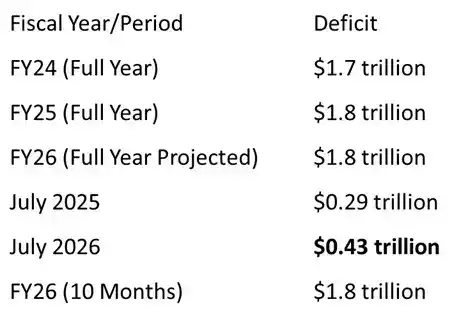
U.S. Federal Deficit – Year-on-Year Comparison

Meanwhile, total U.S. federal debt surpassed $40 trillion on August 19. As the debt stock grows and borrowing costs have risen in recent years, interest expenses are also climbing higher.

This means the core problem facing the U.S. Treasury is not that "old bonds are hard to trade," but rather: who will absorb the massive future supply of new bonds? If investors believe fiscal deficits will remain elevated in the future, they will demand higher yields to absorb the supply of long-term bonds.

From this perspective, the 30-year yield breaking through 5% may not be a temporary market malfunction, but rather a repricing of U.S. fiscal risk and duration risk.

The Buyer Problem Can't Be Solved by $4 Billion Either

Nunes also highlights the shift in foreign demand.

According to the U.S. Treasury's TIC data, foreign holdings of U.S. Treasuries decreased by approximately $72.1 billion month-over-month in June, with Japan, China, and the UK all seeing declines of varying degrees. This is not enough to prove foreign investors are "fleeing U.S. Treasuries en masse," as single-month holdings can be affected by exchange rates, custodian location changes, and asset allocation shifts. Furthermore, TIC data itself cannot fully identify the ultimate owners of securities. However, it at least indicates that previously stable foreign demand can no longer be taken for granted.
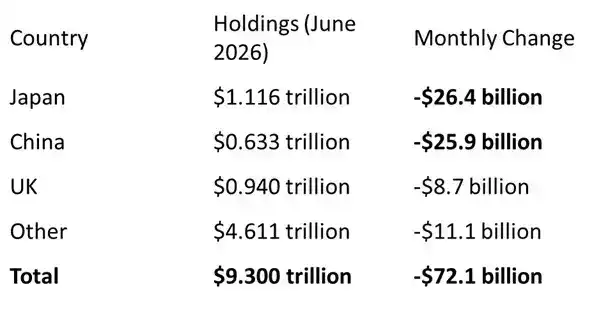
Foreign Holdings of U.S. Treasury Securities (June 2026)

More important is the buyer structure. If the willingness of foreign official institutions to absorb U.S. Treasuries declines, the U.S. will need to rely more on private investors. Private capital typically places greater emphasis on price and yield, meaning the market may require higher long-term interest rates to attract sufficient funds to take on the growing bond supply.

This is also why simply increasing buybacks doesn't solve the problem. The Treasury can buy back a portion of old debt, but it cannot dictate at what price other investors are willing to hold the large volumes of long-term bonds the U.S. will issue in the future.

The Real Divide: Is This a Liquidity Problem or a Fiscal Problem?

Supporters of expanding buybacks could argue that the Treasury is not attempting to solve the fiscal deficit. Buybacks are inherently a market liquidity tool. If they can improve the trading of old securities and reduce market friction, they have already achieved their policy objective. In this sense, criticizing buybacks with "$4 billion can't fix the deficit" might itself confuse the purpose of the policy tool.

But the real question Nunes poses is this: if the primary force driving long-end yields higher has shifted from liquidity to fiscal supply, then continuing to use liquidity tools will naturally have limited effectiveness.

These two explanations correspond to two completely different market judgments. If the recent selloff in long bonds was mainly due to insufficient market depth, deteriorating liquidity in old securities, and short-term positioning shocks, then the Treasury's expanded buyback might be enough to stabilize the market. However, if the rise in long-end yields primarily reflects persistent fiscal deficits, larger long-term bond supply, and higher term premia, then buybacks can only make the adjustment process smoother; they are unlikely to change the ultimate level of yields.

This is the article's core judgment: The Treasury can improve the "trading problem" in the Treasury market, but it cannot buy away America's "fiscal problem" through buybacks.

What truly needs to be watched next is not how much the Treasury increases its next buyback size, but whether long-term Treasury auctions continue to attract sufficient demand, whether the fiscal deficit narrows, and whether higher yields can re-attract foreign and private buyers.

If these variables do not improve, then the yield decline brought about by the $4 billion initiative is more likely to be a short-term buffer, rather than a true reversal of the pressure on U.S. long bonds.


Tiền kỹ thuật số thịnh hành

Câu hỏi Liên quan

QWhat is the main action taken by the U.S. Treasury according to the article, and what was its immediate market impact?

AThe U.S. Treasury announced an expansion of its long-term bond repurchase program, increasing the maximum single-operation size for 10–20 year and 20–30 year Treasuries from $2 billion to at least $4 billion. The immediate market impact was a rapid decline in long-term bond yields, particularly the 30-year yield which had previously reached a high, and a simultaneous strengthening of assets like stocks and gold.

QAccording to Marcus Nunes's perspective in the article, what fundamental problem does the Treasury's bond repurchase fail to address?

AAccording to Marcus Nunes, the Treasury's bond repurchase program addresses market liquidity issues but fails to address the fundamental problem of the U.S. government's large fiscal deficits and the associated high financing needs. The repurchase does not reduce the total amount the government ultimately needs to borrow.

QWhy does the author refer to the $4 billion repurchase increase as a 'Band-Aid' solution?

AThe author refers to it as a 'Band-Aid' because while the $4 billion increase can improve trading conditions for some long-term bonds, its scale is negligible compared to the broader financing needs (e.g., an estimated $739 billion in net borrowing needed for a single quarter). Therefore, it cannot meaningfully alter the overall supply and demand dynamics of the U.S. Treasury market driven by large fiscal deficits.

QWhat are the two main factors, beyond liquidity, that the article suggests are putting upward pressure on long-term bond yields?

ABeyond liquidity issues, the two main factors are: 1) The increasingly large supply of new bonds required to finance persistent and growing U.S. federal budget deficits. 2) Potential weakening in demand from traditional major buyers, such as foreign official institutions, which may require higher yields to attract sufficient private investor capital to absorb the supply.

QWhat does the article conclude about the true test for the U.S. long-term bond market, beyond the Treasury's repurchase actions?

AThe article concludes that the true test for the U.S. long-term bond market is not the size of Treasury repurchases, but whether upcoming long-term bond auctions continue to attract sufficient demand, whether the fiscal deficit narrows, and whether higher yields can successfully re-attract foreign and private investor buying. Without improvement in these underlying variables, the yield decline from the repurchase program is likely just a short-term buffer, not a fundamental reversal of pressure.

Nội dung Liên quan

Chuyên gia phân tích nổi tiếng đưa ra dự báo gây sốc: Bitcoin, Ethereum và ba altcoin này có thể tăng gấp 5 lần! Dưới đây là chi tiết

Sau đợt tăng mạnh trên thị trường tiền điện tử bắt đầu từ đêm qua, kỳ vọng giá lên đang gia tăng. Nhà phân tích tiền điện tử nổi tiếng Ansem đã đưa ra dự báo mới thu hút sự chú ý của các nhà đầu tư. Ansem cho rằng một danh mục đầu tư với trọng số bằng nhau gồm Bitcoin (BTC), Ethereum (ETH), Solana (SOL), Hyperliquid (HYPE) và Pump Fun (PUMP) có khả năng mang lại lợi nhuận gấp 3 đến 5 lần trong vòng hai năm tới. Ông đặc biệt nhấn mạnh đến tiềm năng của HYPE và PUMP, cho rằng hai token này có tỷ lệ rủi ro/lợi nhuận hấp dẫn nhất trong số năm tài sản và có thể vượt trội hơn các đồng tiền lớn như BTC, ETH và SOL trong thời gian tới. Việc phân bổ đều trọng số có thể khuếch đại tác động của các yếu tố "hype" và "pump" đối với lợi nhuận danh mục, nhưng đồng thời cũng làm tăng rủi ro và biến động tổng thể. Nếu các tài sản biến động mạnh này giảm giá đáng kể, nó có thể ảnh hưởng tiêu cực đến tổng lợi nhuận. Cuối cùng, cần lưu ý rằng đây là nhận định cá nhân của nhà phân tích, không phải dự báo giá chắc chắn. Tương lai thị trường phụ thuộc vào nhiều yếu tố như điều kiện thanh khoản toàn cầu, chính sách lãi suất, quy định pháp lý, sự quan tâm của nhà đầu tư tổ chức và xu hướng chung của Bitcoin. *Đây không phải là lời khuyên đầu tư.

cryptonews.ru24 phút trước

Chuyên gia phân tích nổi tiếng đưa ra dự báo gây sốc: Bitcoin, Ethereum và ba altcoin này có thể tăng gấp 5 lần! Dưới đây là chi tiết

cryptonews.ru24 phút trước

Hỗ trợ thanh khoản của Mỹ đã tới, đây mới là lợi ích cốt lõi

Ngày 19/8, Bộ Tài chính Mỹ công bố mở rộng hỗ trợ thanh khoản cho trái phiếu kho bạc dài hạn, nâng giới hạn mua lại đối với trái phiếu cũ (non-on-the-run) kỳ hạn 10-20 năm và 20-30 năm từ 2 tỷ lên ít nhất 4 tỷ USD cho mỗi lần. Biện pháp có hiệu lực từ ngày 9/9 đến ngày 4/11. Thị trường phản ứng tích cực. Lợi suất trái phiếu dài hạn giảm, hỗ trợ tài sản rủi ro như cổ phiếu công nghệ, vàng và tiền mã hóa nhờ áp lực chiết khấu giảm. Tuy nhiên, đây không phải là nới lỏng định lượng (QE) từ Cục Dự trữ Liên bang mà là hoạt động quản lý nợ, mua lại trái phiếu cũ thanh khoản kém để cải thiện điều kiện giao dịch ở phần dài của đường cong lợi suất. Phản ứng thị trường chủ yếu dựa trên kỳ vọng áp lực lợi suất dài hạn giảm bớt, kích hoạt việc mua lại để phòng ngừa rủi ro. Tuy nhiên, quy mô hỗ trợ (tối đa khoảng 14 tỷ USD mới) và nguồn vốn vẫn bị ràng buộc bởi nhu cầu tài trợ thâm hụt. Nó giống như một "tấm đệm" giảm biến động ngắn hạn hơn là thay đổi căn bản định giá vĩ mô dài hạn dựa trên lạm phát, chính sách Fed và phí kỳ hạn. Độ bền của đợt phục hồi này sẽ phụ thuộc vào thông báo tái tài trợ quý tiếp theo vào ngày 4/11. Nếu Bộ Tài chính tiếp tục hỗ trợ với khối lượng thực tế và điều chỉnh cơ cấu phát hành giảm áp lực cung dài hạn, tài sản rủi ro có thể duy trì đà hồi phục. Ngược lại, nếu chỉ là biện pháp tình thế, áp lực lợi suất dài hạn vẫn có thể quay trở lại.

marsbit48 phút trước

Hỗ trợ thanh khoản của Mỹ đã tới, đây mới là lợi ích cốt lõi

marsbit48 phút trước

SEC ban hành quy định mới, bò tới

Ngày 19/8 (giờ Bắc Kinh), Chủ tịch SEC Paul Atkins công bố dự thảo "Quy định về Tài sản Mã hóa", cho phép các dự án khởi nghiệp huy động tối đa 5 triệu USD trong 4 năm, các dự án lớn hơn có thể huy động 20 triệu hoặc 75 triệu USD mỗi 12 tháng mà không cần đăng ký chứng khoán đầy đủ. Nhà Trắng cũng ủng hộ chính sách này. Bản dự thảo thiết lập một cơ chế "Cảng an toàn Hợp đồng Đầu tư". Các dự án, sau khi hoàn thành hoặc chấm dứt vĩnh viễn các "nỗ lực quản lý thiết yếu" đã cam kết, có thể tự nộp Đơn TR để chứng nhận đã đủ điều kiện. Quyền lực chính của SEC không phải là phê duyệt trước mà là quyền giám sát và thách thức sau này. Dự thảo làm rõ, các cam kết công khai trong đợt gây quỹ sẽ trở thành căn cứ quan trọng để đánh giá liệu hợp đồng đầu tư đã kết thúc hay chưa. Các đội ngũ cam kết ít và giao quyền kiểm soát nhanh sẽ có lợi thế. Các quy định cũng nhấn mạnh việc phát hành thực thể phải đăng ký tại Mỹ, điều này nhằm thu hút các hoạt động phát hành trở lại Mỹ. Một chi tiết đáng chú ý là cơ chế miễn trừ cho các công ty khởi nghiệp định nghĩa "giao dịch được quy định" bao gồm cả các hình thức phân phối phi tiền mặt như airdrop và phần thưởng mạng, nghĩa là giá trị của chúng có thể được tính vào giới hạn huy động vốn. Động thái này của SEC đánh dấu sự thay đổi trong cách tiếp cận, từ "quản lý bằng hành pháp" sang thiết lập quy tắc rõ ràng trước, đồng thời tạo áp lực lên Quốc hội Mỹ đang chậm trễ trong việc thông qua Đạo luật CLARITY. Điểm mấu chốt của dự thảo không chỉ nằm ở hạn mức huy động vốn mà ở việc SEC lần đầu tiên thiết lập một quy trình tương đối rõ ràng cho việc "tốt nghiệp" của token - chuyển từ trạng thái hợp đồng đầu tư sang tài sản độc lập. Điều này có thể chuyển hướng cạnh tranh trong tương lai sang việc dự án nào có thể hoàn thành bước chuyển đổi này nhanh hơn. Dự thảo hiện đang trong giai đoạn lấy ý kiến công chúng.

marsbit57 phút trước

SEC ban hành quy định mới, bò tới

marsbit57 phút trước

Giao dịch trên Savedex.com – Những điều bạn cần biết trước khi nạp tiền

Savedex, một sàn giao dịch tiền điện tử tập trung thành lập từ 2018 và có trụ sở tại Cyprus (đăng ký số HE 358928, được cho là chịu sự quản lý của CySEC), đang thu hút sự chú ý nhờ giao diện đơn giản, phí giao dịch thấp và quy trình xác minh nhanh chóng. Nền tảng cung cấp các công cụ cho giao dịch spot, futures và margin (đòn bẩy lên đến 1:20), cùng với API cho giao dịch tự động. Tuy nhiên, Savedex chỉ chấp nhận tiền gửi và rút tiền bằng tiền điện tử, không hỗ trợ tiền pháp định. Mặc dù có một loạt tài sản kỹ thuật thuật cơ bản, danh mục altcoin còn hạn chế và thanh khoản trên một số cặp giao dịch có thể không cao. Bảo mật được nhấn mạnh với xác thực hai yếu tố (2FA), ví lạnh và mã hóa dữ liệu. Người dùng cũng được nhắc nhở rằng dịch vụ hỗ trợ khách hàng đôi khi có phản hồi chậm. Nền tảng còn cung cấp các sản phẩm thu nhập thụ động với lợi nhuận tiềm năng và chương trình giới thiệu. Tóm lại, Savedex phù hợp cho những nhà giao dịch tìm kiếm một nền tảng gọn gàng với nhiều tính năng, nhưng cần lưu ý những hạn chế về loại tiền gửi và thanh khoản.

TheNewsCrypto1 giờ trước

Giao dịch trên Savedex.com – Những điều bạn cần biết trước khi nạp tiền

TheNewsCrypto1 giờ trước

Giao dịch

Giao ngay

Bài viết Nổi bật

Làm thế nào để Mua 4

Chào mừng bạn đến với HTX.com! Chúng tôi đã làm cho mua 4 (4) trở nên đơn giản và thuận tiện. Làm theo hướng dẫn từng bước của chúng tôi để bắt đầu hành trình tiền kỹ thuật số của bạn.Bước 1: Tạo Tài khoản HTX của BạnSử dụng email hoặc số điện thoại của bạn để đăng ký tài khoản miễn phí trên HTX. Trải nghiệm hành trình đăng ký không rắc rối và mở khóa tất cả tính năng. Nhận Tài khoản của tôiBước 2: Truy cập Mua Crypto và Chọn Phương thức Thanh toán của BạnThẻ Tín dụng/Ghi nợ: Sử dụng Visa hoặc Mastercard của bạn để mua 4 (4) ngay lập tức.Số dư: Sử dụng tiền từ số dư tài khoản HTX của bạn để giao dịch liền mạch.Bên thứ ba: Chúng tôi đã thêm những phương thức thanh toán phổ biến như Google Pay và Apple Pay để nâng cao sự tiện lợi.P2P: Giao dịch trực tiếp với người dùng khác trên HTX.Thị trường mua bán phi tập trung (OTC): Chúng tôi cung cấp những dịch vụ được thiết kế riêng và tỷ giá hối đoái cạnh tranh cho nhà giao dịch.Bước 3: Lưu trữ 4 (4) của BạnSau khi mua 4 (4), lưu trữ trong tài khoản HTX của bạn. Ngoài ra, bạn có thể gửi đi nơi khác qua chuyển khoản blockchain hoặc sử dụng để giao dịch những tiền kỹ thuật số khác.Bước 4: Giao dịch 4 (4)Giao dịch 4 (4) dễ dàng trên thị trường giao ngay của HTX. Chỉ cần truy cập vào tài khoản của bạn, chọn cặp giao dịch, thực hiện giao dịch và theo dõi trong thời gian thực. Chúng tôi cung cấp trải nghiệm thân thiện với người dùng cho cả người mới bắt đầu và người giao dịch dày dạn kinh nghiệm.

Tổng lượt xem 796Xuất bản vào 2025.10.20Cập nhật vào 2026.06.02

Làm thế nào để Mua 4

Thảo luận

Chào mừng đến với Cộng đồng HTX. Tại đây, bạn có thể được thông báo về những phát triển nền tảng mới nhất và có quyền truy cập vào thông tin chuyên sâu về thị trường. Ý kiến ​​của người dùng về giá của 4 (4) được trình bày dưới đây.

活动图片