Looking Back at Information Hiding in the GenAI Era from Claude's Invisible Watermark: How Can Embedded Watermarks Ensure Losslessness?

marsbitXuất bản vào 2026-08-17Cập nhật gần nhất vào 2026-08-17

Tóm tắt

On August 11, 2026, Anthropic announced that its new Claude models will embed invisible, machine-readable watermarks into generated text, allowing AI-generated content to be traced even after copying and redistribution, without affecting semantic quality or readability. This move follows global initiatives to watermark AI outputs, highlighted by the World Economic Forum and futurist Kevin Kelly. A core challenge is ensuring watermarking does not degrade model performance, leading to the key research goal of "provably lossless" generation. The theoretical foundation lies in provably secure steganography, which requires that watermarked data be indistinguishable from normal data in distribution. Early theoretical work was limited by the inability to precisely sample natural data distributions. The rise of generative AI models around 2018 provided a breakthrough, as these models learn and sample from explicit distributions. Pioneering work by a University of Science and Technology of China (USTC) team proposed frameworks for provably secure steganography using generative models, mapping encrypted messages to drive content generation. Subsequent research expanded the practicality of these techniques. Advancements include public-key steganography for asymmetric extraction, "box-less" extraction where the receiver doesn't need the original model, and "grey-box" scenarios for resource-constrained devices. A key innovation, SyncPool, resolved tokenization ambiguities in LLMs to ens...

On August 11, 2026, Anthropic announced that starting from August 2nd, the newly released version of the Claude model will directly embed invisible, machine-readable watermarks into generated text. This will enable AI-generated content to be identified and traced by software even after being copied and disseminated.

The official documentation states: "When a supported Claude model generates text, it embeds a subtle watermark directly into the text. You will not see it, and it does not change the semantics, quality, or readability of Claude's responses."

This mechanism covers Claude's web interface, API, Claude Code, and all product lines. It takes effect for global users and cannot be disabled. Generated images and other files will also include digital signature and traceability metadata compliant with the C2PA standard.

This is a landmark move by Anthropic following its signing of the EU's Artificial Intelligence Act, Article 50, Transparency Code of Conduct.

"Watermarking" AI-generated content is evolving from corporate initiatives to a global consensus. In June 2025, the World Economic Forum released the "Top 10 Emerging Technologies of 2025" at the Summer Davos in Tianjin, listing "Generative Watermarking" in second place. Futurist Kevin Kelly predicted in "2049: The Possible Next 10,000 Days" that the AI era necessitates "redefining reality" and "adding watermarks or similar markers to distinguish authenticity on AI-generated images and videos."
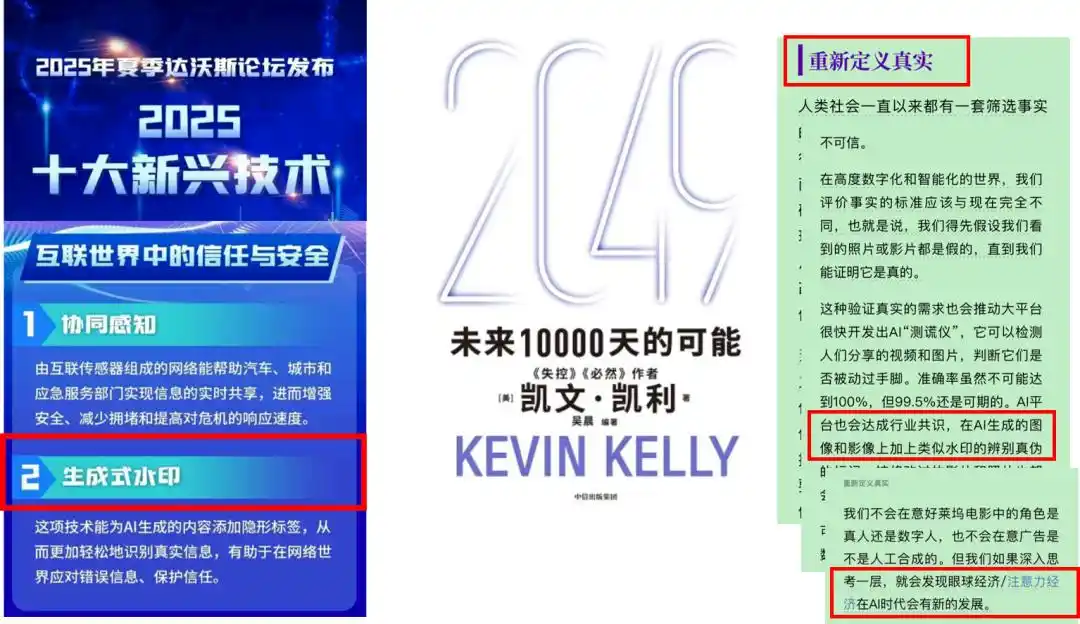
Figure 1: Summer Davos Forum and Kevin Kelly's Prediction

However, getting watermarks "right" is not easy.

On the day of Anthropic's announcement, users' most concentrated concern was precisely: will watermarking harm the model? Will it reduce generation quality?

"Provable performance losslessness" thus became the core proposition of information hiding research in the GenAI era. To understand this proposition, we must return to its theoretical origin—provably secure steganography.

Provably Secure Steganography: Twenty Years Waiting for Generative Models

Steganography and watermarking both belong to information hiding. Traditional steganography has long remained at the level of "empirical security": using steganalysis algorithms to test security strength, but unable to provide mathematical guarantees. Provably secure steganography requires strict proof: the distribution of data carrying secrets is indistinguishable from that of normal data.

This theoretical line has a long history.

In 1949, Shannon pointed out the difficulty of establishing a theory for covert communication; in 1998, Cachin introduced relative entropy, providing an information-theoretic security definition; in 2002, Turing Award winner Manuel Blum guided Hopper et al. in establishing the computational security steganography framework, further developing public-key steganography and covert key agreement in 2004.

However, all constructions of provably secure steganography rely on a stringent premise—the carrier distribution must be precisely sampleable. Natural data distributions are uncontrollable, causing the theory to lie dormant for years.
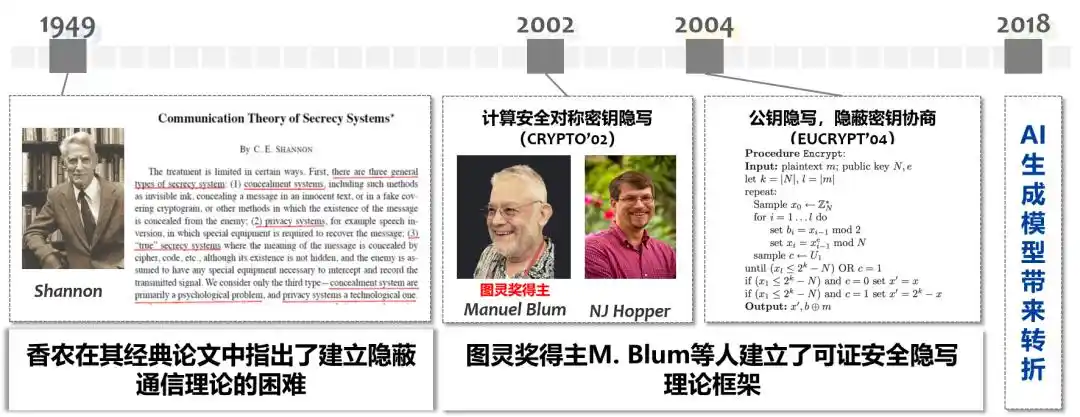
Figure 2: A Brief History of Provably Secure Steganography Development

In 2018, AI generative models brought a turning point: models first learn a distribution, then sample according to it, naturally providing an "explicit distribution or perfect sampler."

A team from the University of Science and Technology of China (USTC) pioneered the idea of generative provably secure steganography internationally. They proposed two frameworks: "black-box sampling" and "compression-reversible sampling" (IWDW 2018, arXiv 2018), reducing steganographic security to cryptographic algorithm security—encrypting a message into pseudo-random ciphertext, using the ciphertext to drive sampling for content generation, and allowing the receiver to recover the ciphertext via inverse sampling.

At that time, generative AI had not yet exploded, and this idea seemed "ahead of its time," initially finding it difficult to gain peer recognition. As the quality of generative models like text and audio improved rapidly, related achievements gradually gained acknowledgment. The International Workshop on Digital Forensics and Watermarking (IWDW) invited the USTC team to deliver a keynote report titled "When Provably Secure Steganography Meets Generative Models."
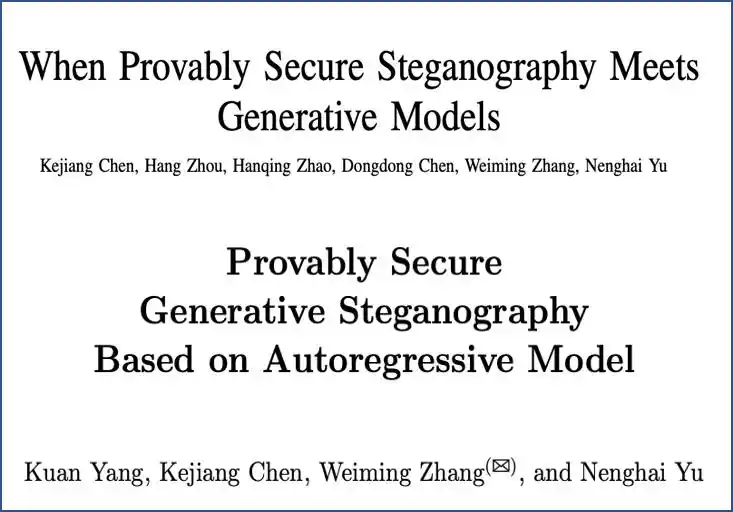
Figure 3: The Earliest Papers on Generative Provably Secure Steganography

Around 2021, AI-generated data gradually became a major form of online content. Provably secure steganography gained widespread attention globally: Tsinghua University proposed provably secure linguistic steganography based on sample grouping (Findings of ACL 2021); Boston University and Johns Hopkins University proposed the cryptographically secure steganography scheme Meteor for real distributions (ACM CCS 2021); Oxford University proposed perfectly secure steganography based on minimal entropy coupling (ICLR 2023).

The USTC team proposed the DisCop construction based on "distribution replicas" (IEEE S&P 2023), significantly improving embedding payload rate. In the same year, Quanta Magazine listed "perfectly hiding secret information in generated data" as one of the seven international breakthroughs in computer science for the year, heralding the entry of information hiding into the "provable" era.

From Symmetric to Asymmetric, from "Boxed" to "Box-less"

Early generative provably secure steganography schemes were all "symmetric key" systems, requiring the sender and receiver to pre-share a key and relying on white-box extraction, limiting their application scenarios.

Additionally, subword ambiguity could lead to extraction failure. The USTC team pushed the technical route towards public-key steganography, box-less/grey-box scenarios, and eliminated subword ambiguity, making generative hiding practical.

Public-key steganography (IEEE TIFS 2024): Proposed a provably secure public-key steganography scheme combining Elliptic Curve Cryptography (ECC) with generative models and introduced a steganographic key exchange protocol. Solved the problems of steganographic key agreement and "asymmetric" hidden information extraction.

Box-less steganography (IEEE TMM 2026): Traditional methods rely on "white-box" extraction, requiring the receiver to possess the exact same language model as the sender. The team proposed Disreo, achieving "box-less extraction" through token position randomization and output probability reorganization, enabling the receiver to recover the message without accessing the underlying model, providing greater convenience for practical deployment.

Grey-box steganography (ACM CCS 2026): Between white-box and box-less lies the "grey-box" scenario—unequal resources between sender and receiver; the receiver may only have the capability to run a small model (e.g., on mobile devices). SpecStega is based on speculative sampling: using a small model shared by both parties to embed and extract messages, then refining the output with the target large model. This ensures the final stego-text aligns with the large model's output distribution, maintaining high quality and security, while allowing efficient decoding at the receiver end using only the small model. The payload rate is improved over 20 times compared to existing black-box schemes—offering a third path between "boxed" and "box-less" for provably secure steganography.

Resolving subword ambiguity (IEEE TDSC): Steganography based on large language models commonly faces token decoding ambiguity—the same text segment can be tokenized into different subword sequences, causing extraction failure. The team proposed SyncPool, which groups tokens with prefix relationships before embedding, eliminating ambiguity in principle and achieving reliable extraction for provably secure steganography.

From Steganography to Watermarking: Bringing "Provable Losslessness" to Industry

First, AIGC large models learn the distribution of natural data, then sample according to that distribution to generate text, images, audio, video, etc. If one can: embed a watermark in the generated content without affecting the sampling distribution, it means the watermark embedding does not impact generation quality.

Provably secure steganography theoretically guarantees that the distribution of data carrying secrets is indistinguishable from that of normally generated data—meaning embedding information does not alter the model's sampling distribution. This is precisely the definition of "provably generation-quality-lossless watermarking." Watermarking does not require the large capacity of steganography, thus capacity can be traded for robustness.

In the text domain, the provably generation-quality-lossless watermarking system developed by the USTC team is plug-and-play, requiring no modification of model parameters. It supports single-bit robust discrimination and multi-bit model attribution, and has been applied to platforms like the Spark large model and Secure GPT, serving 13,000 developers.

Meanwhile, international research on provably lossless generative text watermarks is also advancing rapidly:

In 2024, teams from the University of Maryland and others' "Unbiased Watermark for Large Language Models" (ICLR 2024 Spotlight) defined unbiased watermarks and provided a general construction.

The same year, Stanford University proposed robust unbiased watermarks resistant to distortion (TMLR 2024).

In 2025, Multi-Channel Unbiased Watermark MCmark (ACL 2025) improved watermark extraction robustness while maintaining strict unbiasedness.

In the image domain, the USTC team proposed Gaussian Shading (CVPR 2024), mapping an encrypted, randomized watermark to Gaussian latent variables indistinguishable from normal generation, then acting on the entire latent space via the diffusion process—training-free, plug-and-play, and provably performance-lossless.

Gaussian Shading++ and T2SMark (NeurIPS 2025) further addressed robustness, generation parameter variation, and generation diversity issues in real-world deployment.

TAG-WM (ICCV 2025) introduced a dual mechanism of "template watermark + information watermark," achieving both tamper localization and ownership verification under the lossless premise.

SemBind (ICML 2026) binds the watermark to image semantics through a semantic masker, resisting black-box forgery attacks.
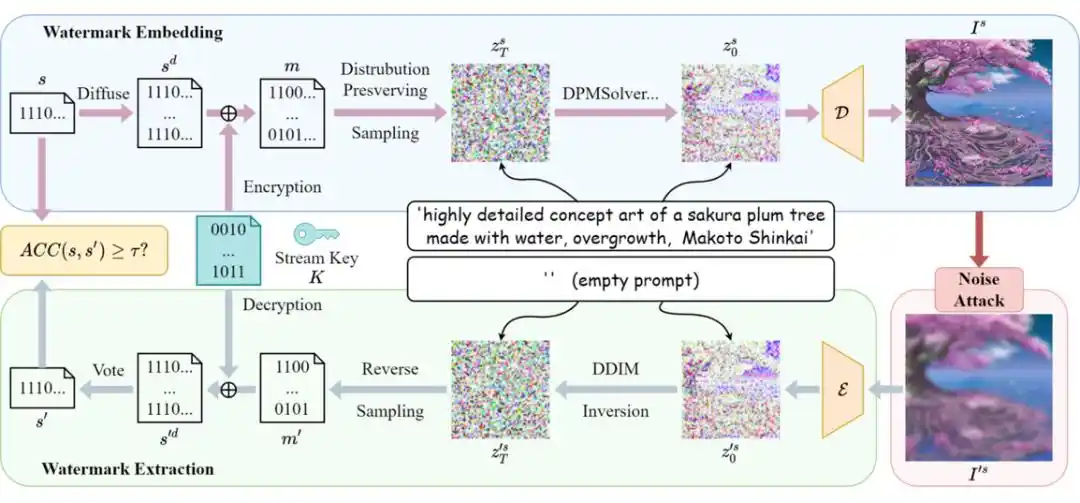
Figure 4: Provably Lossless Generative Image Watermark Gaussian Shading (CVPR 2024)

From content watermarking to model watermarking. Models themselves are important digital assets, also requiring reliable provenance. Model watermarking always faces one question: will it affect the model's normal use?

Drawing inspiration from the "provably undetectable backdoor" construction proposed by Turing Award winner Shafi Goldwasser et al. at FOCS 2022, the USTC team proposed a provably performance-lossless black-box model watermarking protocol (IEEE TDSC 2026): using unforgeable message authentication codes to construct branch indicators, making the probability of normal users triggering the watermark branch computationally negligible, thereby reducing performance losslessness to cryptographic security.

Thus, "provable losslessness" extends from generated content to the models themselves.

From "Empirical Security" to "Provable Security"

Anthropic's invisible watermark sparked controversy on its launch day: writers worried about attribution, developers worried "will the watermark reduce generation quality?" Industry pioneers chose "engineering fast runs," while the goals of "accurate marking, no harm, withstand rewriting and erasure, and provide definitive evidence" call for solid theoretical support.

From Shannon's conceptual challenge to Blum et al.'s theoretical frameworks, from the first generative provably secure steganography algorithm in 2018 to the Spark model watermark and Claude's watermark, information hiding has taken seventy-seven years to finally upgrade from "empirical security" to "provable security," turning "worrying that embedding watermarks harms the model" into "mathematically proven losslessness"—whether for generated content or the model itself—providing theoretically guaranteed technical support for AI content governance.

Watermarking: Attack and Defense

Designing watermarks is hard; erasing them is easy. Or perhaps not entirely. Designing watermarks requires pursuing both quality losslessness and robustness simultaneously, while attackers also need to erase watermarks under quality constraints.

Without constraints, watermarks are easily erased. Rewriting sentence by sentence to erase watermarks—does it still count as content generated by the original model? Perhaps it would be easier to just use another open-source model for generation.

Like other security fields, attackers and defenders engage in a game under their respective constraints. The existence of both attack and defense keeps a technology direction vibrant.

And "losslessness" is the constraint and pursuit for both sides.

Defenders do not want to sacrifice generation quality by embedding watermarks; attackers also do not want to degrade quality by erasing watermarks.

Absolute security never exists. The significance of defense is to create the greatest possible cost for attack. The essence of attack and defense is a game of cost, and the same holds for watermarking.

This article is from the WeChat public account "New Zhiyuan," author: New Zhiyuan.

Tiền kỹ thuật số thịnh hành

Câu hỏi Liên quan

QWhat is the core concept behind 'provably secure steganography' as discussed in the article?

AThe core concept of 'provably secure steganography' is to mathematically prove that the distribution of stego-data (data containing hidden information) is indistinguishable from the distribution of normal, cover data. This ensures that embedding information does not alter the statistical properties of the generated content, providing a theoretical guarantee of security and 'losslessness' in terms of generation quality.

QWhat key advantage do generative AI models provide for provably secure steganography, according to the article?

AGenerative AI models provide a key prerequisite that was historically difficult to achieve: an explicit or perfect sampler of a data distribution. Since these models learn a distribution and then sample from it to generate content, they naturally offer the 'perfect sampler' required for the theoretical constructions of provably secure steganography, enabling the shift from 'empirical security' to 'provable security'.

QName three practical challenges in steganography/watermarking that the research from USTC addressed, as mentioned in the article.

A1. Public Key Steganography: They proposed schemes combining Elliptic Curve Cryptography with generative models to solve asymmetric key management and extraction. 2. Boxless Extraction (Disreo): Enabling message recovery without the receiver needing access to the original generative model. 3. Subword Token Ambiguity (SyncPool): Solving extraction failures caused by the same text being tokenized into different subword sequences by grouping related tokens.

QHow does the concept of 'provable performance losslessness' apply to both generated content and AI models themselves?

AFor generated content (text, images), 'provable performance losslessness' means embedding a watermark does not change the model's sampling distribution, guaranteeing no degradation in generation quality. For AI models, it refers to model watermarking protocols where the probability of a normal user triggering the 'watermark branch' of the model is computationally negligible. This is achieved by using cryptographic constructs like unforgeable message authentication codes, thereby extending the guarantee of 'no performance impact' from the content to the model asset itself.

QAccording to the article, what is the fundamental nature of the battle between watermarking defense and attack?

AThe fundamental nature is a cost博弈 (game of cost/博弈). There is no absolute security. The goal of defense (watermarking) is to impose the highest possible cost on the attacker (e.g., significant quality degradation or computational effort required for removal). Conversely, attackers operate under the constraint of maintaining content quality while removing the watermark. 'Losslessness' is a shared constraint and pursuit for both sides in this ongoing博弈.

Nội dung Liên quan

Trump tiếp đón lãnh đạo các công ty tiền mã hóa hàng đầu tại Nhà Trắng trong bối cảnh thảo luận về khả năng Mỹ mua Bitcoin

Ngày 19 tháng 8, Tổng thống Donald Trump đã chủ trì một cuộc họp tại Nhà Trắng với các lãnh đạo nền tảng tiền mã hóa và tổ chức tài chính truyền thống, đưa vấn đề quy định tài sản số vào chương trình nghị sự kinh tế. Cuộc họp có sự tham gia của các công ty hàng đầu như Coinbase, Ripple, Robinhood, Kraken, Nasdaq, Intercontinental Exchange và Chainlink. Tổng thống Trump chỉ trích cách tiếp cận của chính quyền trước đây, tuyên bố đã chấm dứt "cuộc chiến với tiền mã hóa" và nhấn mạnh lệnh cấm các cơ quan liên bang tạo hay quảng bá tiền số ngân hàng trung ương. Khi được hỏi về khả năng chính phủ Mỹ mua lượng lớn Bitcoin, ông Trump cho biết đề xuất này vẫn đang được xem xét và sẽ dựa trên khuyến nghị từ Chủ tịch SEC Paul Atkins cùng các quan chức khác. Các nhà quản lý và lãnh đạo ngành tại cuộc họp đã trình bày ưu tiên của họ. Chủ tịch CFTC, Mike Selig, nhấn mạnh sự cần thiết của các quy định rõ ràng để thu hút đầu tư và giữ chân công nghệ tại Mỹ. Chủ tịch SEC, Paul Atkins, thảo luận về các đề xuất miễn trừ quy tắc huy động vốn cho các giao dịch tiền mã hóa phù hợp. Các CEO từ ICE, Robinhood và Kraken cũng bày tỏ sự ủng hộ đối với việc sửa đổi quy định lỗi thời và bảo vệ nhà đầu tư. Brian Armstrong, CEO Coinbase, kêu gọi Thượng viện thông qua Dự luật Minh bạch Thị trường Tài sản Số (CLARITY Act) năm 2025, với một cuộc bỏ phiếu quan trọng dự kiến vào ngày 15 tháng 9. Ông Trump mô tả dự luật này có tính lưỡng đảng. Cuộc họp cũng đề cập đến những tranh cãi đang diễn ra về vấn đề đạo đức tổng thống liên quan đến hoạt động tài sản số của các quan chức liên bang.

cryptonews.ru35 phút trước

Trump tiếp đón lãnh đạo các công ty tiền mã hóa hàng đầu tại Nhà Trắng trong bối cảnh thảo luận về khả năng Mỹ mua Bitcoin

cryptonews.ru35 phút trước

Công ty Winklevoss Capital bán nền tảng đầu tư Zcash của mình cho một công ty được họ hậu thuẫn và mua cổ phiếu của công ty đó

Công ty Winklevoss Capital đã nhận được chứng quyền mua khoảng 43,3 triệu cổ phiếu của Cypherpunk Technologies như một phần của thỏa thuận mua lại doanh nghiệp khai thác Zcash mới của Cypherpunk. Cấu trúc này làm loãng cổ phần của các cổ đông hiện tại và mang lại cho những người sáng lập Gemini tỷ lệ sở hữu lớn hơn trong các khoản đầu tư Zcash. Cypherpunk đã trả 33,33 triệu USD bằng cách phát hành chứng quyền trả trước cho Winklevoss Treasury Investments, tương đương với giá cổ phiếu ước tính là 0,77 USD. Cổ phiếu CYPH đã tăng mạnh sau thông báo. Mỏ khai thác Cypherpunk hiện đang vận hành, chiếm khoảng 18% tổng tỷ lệ băm mạng lưới Zcash và được mô tả là mỏ khai thác Zcash lớn nhất thế giới. Công ty đã sở hữu một lượng ZEC đáng kể và có kế hoạch tăng lên 5% tổng nguồn cung lưu hành. Cameron Winklevoss mô tả thương vụ là một động thái chiến lược nhằm tập trung khai thác Zcash vào Hoa Kỳ. Cypherpunk Technologies, trước đây là một công ty công nghệ sinh học, đã chuyển đổi sau một đợt đầu tư tư nhân do Winklevoss Capital dẫn dắt. Thương vụ diễn ra sau một lỗ hổng bảo mật được phát hiện trong giao thức Zcash vào đầu năm 2026, vốn đã ảnh hưởng đến giá cả của cả ZEC và cổ phiếu CYPH.

cryptonews.ru36 phút trước

Công ty Winklevoss Capital bán nền tảng đầu tư Zcash của mình cho một công ty được họ hậu thuẫn và mua cổ phiếu của công ty đó

cryptonews.ru36 phút trước

Bitcoin tăng 8,7% sau khi kế hoạch mua lại trái phiếu kho bạc khiến lợi suất giảm

Ngày 19/8, Bộ Tài chính Mỹ thông báo sẽ tối thiểu tăng gấp đôi khối lượng mua lại trái phiếu dài hạn từ ngày 9/9. Ngay sau đó, Bitcoin đã bật tăng 8.7%, đạt mức cao trong ngày là 69,749 USD. Động thái này phản ánh một luận điểm kinh tế vĩ mô: việc mua lại trái phiếu kho bạc có thể tạo áp lực giảm lợi suất dài hạn, dẫn đến đồng USD suy yếu và các điều kiện tài chính nới lỏng, từ đó giảm chi phí cơ hội nắm giữ Bitcoin. Thị trường phản ứng ngay lập tức: lợi suất trái phiếu dài hạn Mỹ giảm, chỉ số USD mất giá, vàng và các tài sản rủi ro như Bitcoin cùng tăng mạnh. Một lượng lớn vị thế bán khống tiền mã hóa trị giá 1.16 tỷ USD đã bị thanh lý, góp phần đẩy giá. Dù chương trình mua lại của Bộ Tài chính nhằm mục đích cải thiện thanh khoản cho trái phiếu cũ chứ không phải kích thích tiền tệ, thị trường vẫn diễn giải nó theo hướng tích cực. Tuy nhiên, quy mô chương trình này còn nhỏ so với tổng thị trường trái phiếu kho bạc 32 nghìn tỷ USD. Báo cáo từ Glassnode chỉ ra rằng Bitcoin trước đó đã giao dịch gần mức đáy chu kỳ, bị giới hạn bởi lợi suất trái phiếu cao. Đợt tăng giá này cho thấy Bitcoin nhạy cảm với thay đổi lợi suất, nhưng chưa đủ để xác lập một xu hướng thị trường mới. Tương lai của Bitcoin sẽ phụ thuộc vào việc liệu lợi suất có tiếp tục giảm bền vững hay không, hay sự kiện này chỉ đơn thuần là một đợt "bóp giá" vị thế bán khống ngắn hạn.

cryptonews.ru41 phút trước

Bitcoin tăng 8,7% sau khi kế hoạch mua lại trái phiếu kho bạc khiến lợi suất giảm

cryptonews.ru41 phút trước

Giao dịch

Giao ngay

Bài viết Nổi bật

AGENT S là gì

Agent S: Tương Lai của Tương Tác Tự Động trong Web3 Giới thiệu Trong bối cảnh không ngừng phát triển của Web3 và tiền điện tử, các đổi mới đang liên tục định nghĩa lại cách mà cá nhân tương tác với các nền tảng kỹ thuật số. Một dự án tiên phong như vậy, Agent S, hứa hẹn sẽ cách mạng hóa tương tác giữa con người và máy tính thông qua khung tác nhân mở của nó. Bằng cách mở đường cho các tương tác tự động, Agent S nhằm đơn giản hóa các nhiệm vụ phức tạp, cung cấp các ứng dụng chuyển đổi trong trí tuệ nhân tạo (AI). Cuộc khám phá chi tiết này sẽ đi sâu vào những phức tạp của dự án, các tính năng độc đáo của nó và những tác động đối với lĩnh vực tiền điện tử. Agent S là gì? Agent S đứng vững như một khung tác nhân mở đột phá, được thiết kế đặc biệt để giải quyết ba thách thức cơ bản trong việc tự động hóa các nhiệm vụ máy tính: Thu thập Kiến thức Cụ thể theo Miền: Khung này học một cách thông minh từ nhiều nguồn kiến thức bên ngoài và kinh nghiệm nội bộ. Cách tiếp cận kép này giúp nó xây dựng một kho lưu trữ phong phú về kiến thức cụ thể theo miền, nâng cao hiệu suất của nó trong việc thực hiện nhiệm vụ. Lập Kế Hoạch Qua Các Tầm Nhìn Nhiệm Vụ Dài Hạn: Agent S sử dụng lập kế hoạch phân cấp tăng cường kinh nghiệm, một cách tiếp cận chiến lược giúp phân chia và thực hiện các nhiệm vụ phức tạp một cách hiệu quả. Tính năng này nâng cao đáng kể khả năng quản lý nhiều nhiệm vụ con một cách hiệu quả và hiệu suất. Xử Lý Các Giao Diện Động, Không Đều: Dự án giới thiệu Giao Diện Tác Nhân-Máy Tính (ACI), một giải pháp đổi mới giúp nâng cao tương tác giữa các tác nhân và người dùng. Sử dụng các Mô Hình Ngôn Ngữ Lớn Đa Phương Thức (MLLMs), Agent S có thể điều hướng và thao tác các giao diện người dùng đồ họa đa dạng một cách liền mạch. Thông qua những tính năng tiên phong này, Agent S cung cấp một khung vững chắc giải quyết các phức tạp liên quan đến việc tự động hóa tương tác giữa con người với máy móc, mở ra nhiều ứng dụng trong AI và hơn thế nữa. Ai là Người Tạo ra Agent S? Mặc dù khái niệm về Agent S là hoàn toàn đổi mới, thông tin cụ thể về người sáng lập vẫn còn mơ hồ. Người sáng lập hiện vẫn chưa được biết đến, điều này làm nổi bật giai đoạn sơ khai của dự án hoặc sự lựa chọn chiến lược để giữ kín các thành viên sáng lập. Bất chấp sự ẩn danh, sự chú ý vẫn tập trung vào khả năng và tiềm năng của khung này. Ai là Các Nhà Đầu Tư của Agent S? Vì Agent S còn tương đối mới trong hệ sinh thái mã hóa, thông tin chi tiết về các nhà đầu tư và những người tài trợ tài chính của nó không được ghi chép rõ ràng. Sự thiếu vắng thông tin công khai về các nền tảng đầu tư hoặc tổ chức hỗ trợ dự án dấy lên câu hỏi về cấu trúc tài trợ và lộ trình phát triển của nó. Hiểu biết về sự hỗ trợ là rất quan trọng để đánh giá tính bền vững và tác động tiềm năng của dự án. Agent S Hoạt Động Như Thế Nào? Tại cốt lõi của Agent S là công nghệ tiên tiến cho phép nó hoạt động hiệu quả trong nhiều bối cảnh khác nhau. Mô hình hoạt động của nó được xây dựng xung quanh một số tính năng chính: Tương Tác Giống Như Con Người: Khung này cung cấp lập kế hoạch AI tiên tiến, cố gắng làm cho các tương tác với máy tính trở nên trực quan hơn. Bằng cách bắt chước hành vi của con người trong việc thực hiện nhiệm vụ, nó hứa hẹn nâng cao trải nghiệm người dùng. Ký Ức Tường Thuật: Được sử dụng để tận dụng các trải nghiệm cấp cao, Agent S sử dụng ký ức tường thuật để theo dõi lịch sử nhiệm vụ, từ đó nâng cao quy trình ra quyết định của nó. Ký Ức Tình Huống: Tính năng này cung cấp cho người dùng hướng dẫn từng bước, cho phép khung này cung cấp hỗ trợ theo ngữ cảnh khi các nhiệm vụ diễn ra. Hỗ Trợ OpenACI: Với khả năng chạy cục bộ, Agent S cho phép người dùng duy trì quyền kiểm soát đối với các tương tác và quy trình làm việc của họ, phù hợp với tinh thần phi tập trung của Web3. Tích Hợp Dễ Dàng với Các API Bên Ngoài: Tính linh hoạt và khả năng tương thích với nhiều nền tảng AI khác nhau đảm bảo rằng Agent S có thể hòa nhập liền mạch vào các hệ sinh thái công nghệ hiện có, làm cho nó trở thành lựa chọn hấp dẫn cho các nhà phát triển và tổ chức. Những chức năng này cùng nhau góp phần vào vị trí độc đáo của Agent S trong không gian tiền điện tử, khi nó tự động hóa các nhiệm vụ phức tạp, nhiều bước với sự can thiệp tối thiểu của con người. Khi dự án phát triển, các ứng dụng tiềm năng của nó trong Web3 có thể định nghĩa lại cách mà các tương tác kỹ thuật số diễn ra. Thời Gian Phát Triển của Agent S Sự phát triển và các cột mốc của Agent S có thể được tóm tắt trong một dòng thời gian nêu bật các sự kiện quan trọng của nó: 27 tháng 9, 2024: Khái niệm về Agent S được ra mắt trong một bài nghiên cứu toàn diện mang tên “Một Khung Tác Nhân Mở Sử Dụng Máy Tính Như Một Con Người,” trình bày nền tảng cho dự án. 10 tháng 10, 2024: Bài nghiên cứu được công bố công khai trên arXiv, cung cấp một cái nhìn sâu sắc về khung và đánh giá hiệu suất của nó dựa trên tiêu chuẩn OSWorld. 12 tháng 10, 2024: Một video trình bày được phát hành, cung cấp cái nhìn trực quan về khả năng và tính năng của Agent S, thu hút thêm sự quan tâm từ người dùng và nhà đầu tư tiềm năng. Những dấu mốc trong dòng thời gian không chỉ minh họa sự tiến bộ của Agent S mà còn chỉ ra cam kết của nó đối với sự minh bạch và sự tham gia của cộng đồng. Những Điểm Chính Về Agent S Khi khung Agent S tiếp tục phát triển, một số thuộc tính chính nổi bật, nhấn mạnh tính đổi mới và tiềm năng của nó: Khung Đổi Mới: Được thiết kế để cung cấp cách sử dụng máy tính trực quan giống như tương tác của con người, Agent S mang đến một cách tiếp cận mới cho việc tự động hóa nhiệm vụ. Tương Tác Tự Động: Khả năng tương tác tự động với máy tính thông qua GUI đánh dấu một bước tiến tới các giải pháp tính toán thông minh và hiệu quả hơn. Tự Động Hóa Nhiệm Vụ Phức Tạp: Với phương pháp mạnh mẽ của nó, nó có thể tự động hóa các nhiệm vụ phức tạp, nhiều bước, làm cho các quy trình nhanh hơn và ít sai sót hơn. Cải Tiến Liên Tục: Các cơ chế học tập cho phép Agent S cải thiện từ các trải nghiệm trước đó, liên tục nâng cao hiệu suất và hiệu quả của nó. Tính Linh Hoạt: Khả năng thích ứng của nó trên các môi trường hoạt động khác nhau như OSWorld và WindowsAgentArena đảm bảo rằng nó có thể phục vụ một loạt các ứng dụng rộng rãi. Khi Agent S định vị mình trong bối cảnh Web3 và tiền điện tử, tiềm năng của nó để nâng cao khả năng tương tác và tự động hóa quy trình đánh dấu một bước tiến quan trọng trong công nghệ AI. Thông qua khung đổi mới của mình, Agent S minh họa cho tương lai của các tương tác kỹ thuật số, hứa hẹn một trải nghiệm liền mạch và hiệu quả hơn cho người dùng trên nhiều ngành công nghiệp khác nhau. Kết luận Agent S đại diện cho một bước nhảy vọt táo bạo trong sự kết hợp giữa AI và Web3, với khả năng định nghĩa lại cách chúng ta tương tác với công nghệ. Mặc dù vẫn còn ở giai đoạn đầu, những khả năng cho ứng dụng của nó là rộng lớn và hấp dẫn. Thông qua khung toàn diện của mình giải quyết các thách thức quan trọng, Agent S nhằm đưa các tương tác tự động lên hàng đầu trong trải nghiệm kỹ thuật số. Khi chúng ta tiến sâu hơn vào các lĩnh vực tiền điện tử và phi tập trung, các dự án như Agent S chắc chắn sẽ đóng một vai trò quan trọng trong việc định hình tương lai của công nghệ và sự hợp tác giữa con người với máy tính.

Tổng lượt xem 1.3kXuất bản vào 2025.01.14Cập nhật vào 2025.01.14

AGENT S là gì

Làm thế nào để Mua S

Chào mừng bạn đến với HTX.com! Chúng tôi đã làm cho mua Sonic (S) trở nên đơn giản và thuận tiện. Làm theo hướng dẫn từng bước của chúng tôi để bắt đầu hành trình tiền kỹ thuật số của bạn.Bước 1: Tạo Tài khoản HTX của BạnSử dụng email hoặc số điện thoại của bạn để đăng ký tài khoản miễn phí trên HTX. Trải nghiệm hành trình đăng ký không rắc rối và mở khóa tất cả tính năng. Nhận Tài khoản của tôiBước 2: Truy cập Mua Crypto và Chọn Phương thức Thanh toán của BạnThẻ Tín dụng/Ghi nợ: Sử dụng Visa hoặc Mastercard của bạn để mua Sonic (S) ngay lập tức.Số dư: Sử dụng tiền từ số dư tài khoản HTX của bạn để giao dịch liền mạch.Bên thứ ba: Chúng tôi đã thêm những phương thức thanh toán phổ biến như Google Pay và Apple Pay để nâng cao sự tiện lợi.P2P: Giao dịch trực tiếp với người dùng khác trên HTX.Thị trường mua bán phi tập trung (OTC): Chúng tôi cung cấp những dịch vụ được thiết kế riêng và tỷ giá hối đoái cạnh tranh cho nhà giao dịch.Bước 3: Lưu trữ Sonic (S) của BạnSau khi mua Sonic (S), lưu trữ trong tài khoản HTX của bạn. Ngoài ra, bạn có thể gửi đi nơi khác qua chuyển khoản blockchain hoặc sử dụng để giao dịch những tiền kỹ thuật số khác.Bước 4: Giao dịch Sonic (S)Giao dịch Sonic (S) dễ dàng trên thị trường giao ngay của HTX. Chỉ cần truy cập vào tài khoản của bạn, chọn cặp giao dịch, thực hiện giao dịch và theo dõi trong thời gian thực. Chúng tôi cung cấp trải nghiệm thân thiện với người dùng cho cả người mới bắt đầu và người giao dịch dày dạn kinh nghiệm.

Tổng lượt xem 2.6kXuất bản vào 2025.01.15Cập nhật vào 2026.06.02

Làm thế nào để Mua S

Thảo luận

Chào mừng đến với Cộng đồng HTX. Tại đây, bạn có thể được thông báo về những phát triển nền tảng mới nhất và có quyền truy cập vào thông tin chuyên sâu về thị trường. Ý kiến ​​của người dùng về giá của S (S) được trình bày dưới đây.

活动图片