10,000 Scientists Get 1 Year of Free Access: OpenAI Brings the Scientific Research Pipeline into ChatGPT

marsbitXuất bản vào 2026-07-30Cập nhật gần nhất vào 2026-07-30

Tóm tắt

OpenAI has launched the "ChatGPT for Academic Researchers" program, offering free one-year access to its flagship models for 100,000 university researchers globally, with 10,000 spots available this summer. Selected institutions include prestigious centers like ENS Paris and the IAS at Princeton. The initiative provides an integrated research workspace within ChatGPT, bundling tools like ChatGPT, ChatGPT Work, and Codex, along with expanded Deep Research capabilities, higher usage limits, and specialized tools for life sciences. The suite connects to platforms like Zotero and GitHub, aiming to streamline the entire research workflow from literature review and coding to data analysis and manuscript drafting. OpenAI notes that about 1.3 million people already use ChatGPT weekly for advanced science and math. The program targets building long-term user dependency by embedding these tools into daily research habits. However, access comes with limitations: it does not include API credits or model weights, and eligibility is restricted to verified academic researchers from supported countries. This approach contrasts with Anthropic's "AI for Science" program, which offers API credits but not an integrated workspace. Both companies emphasize preventing misuse by withholding model weights, a point of contention for AI researchers seeking transparency. The core strategy remains clear: provide a powerful, integrated environment to foster user reliance ahead of the post-free period.

100,000 university researchers, each getting one year of free access to flagship models!

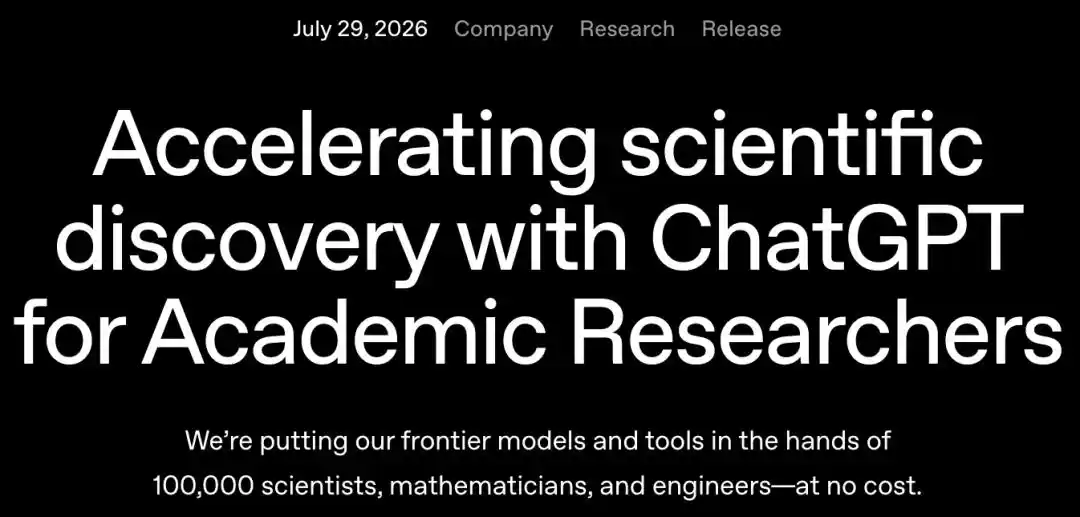
On July 29, OpenAI gave a big gift to the academic community, officially launching 'ChatGPT for Academic Researchers,' offering 100,000 researchers free access to cutting-edge models.
Prestigious institutions like École Normale Supérieure (ENS), which has produced many Nobel and Fields Medal laureates, and the Institute for Advanced Study (IAS) where Einstein worked, are among the first batch of selected institutions.

Eligible researchers can use GPT-5.6 Sol Pro, OpenAI's current top-tier flagship model.

It's important to clarify that the 100,000 target is for 2027, with the first 10,000 spots being released this summer.

An Entire Research Pipeline, Packaged and Delivered

What can this suite change for a researcher?

Reading literature in the morning, querying an idea, and letting it generate a few hypotheses on the fly can be done with ChatGPT.

Writing code, running data, and performing formal verification in the afternoon can be done with Codex.

When it's time to apply for funding, write grant proposals, or draft manuscripts, ChatGPT Work can take over.

This isn't just 'one more chat window'; it's your entire research workflow, which was previously scattered across editors, reference management software, terminals, and chat windows, all packaged into a single workspace.

Researchers approved for this program receive precisely this entire suite: ChatGPT, ChatGPT Work, Codex, along with an expanded Deep Research, higher usage limits, and a larger context window.

It's also stacked with over 75 life sciences skills: from genetics, genomics, single-cell analysis, all the way to protein modeling and drug discovery.

Additionally, there's a bunch of connectors; hook up literature databases, public genome and clinical databases, satellite imagery, even Zotero and GitHub, and they're ready to use.
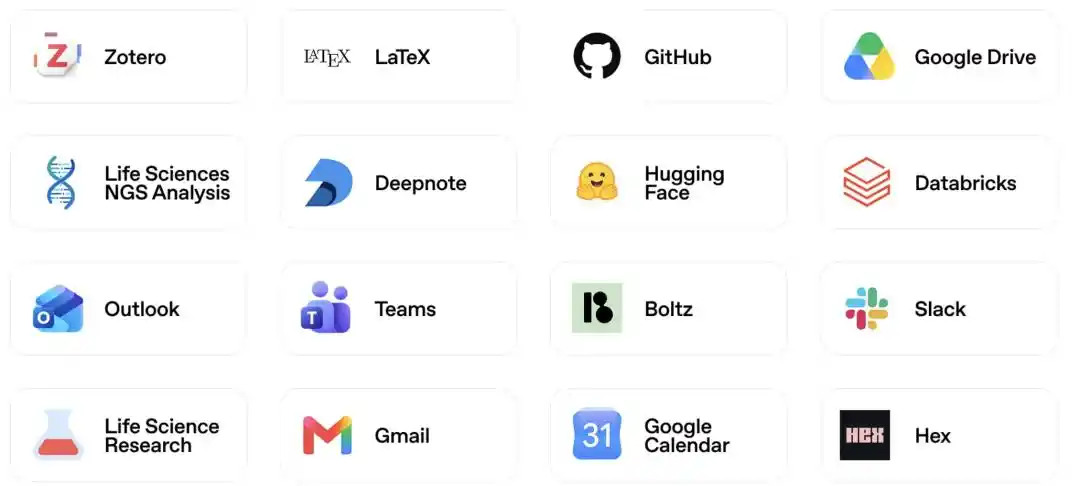
From Zotero, GitHub to Boltz, NGS analysis, commonly used research tools are packaged and connected into the same workspace.

The models also have their specialties: GPT-5.6 Terra handles daily tasks, Luna runs lightweight tasks, and Sol tackles the hardest scientific and mathematical problems.

On FrontierMath Tier 4, which measures research-level mathematical reasoning, Sol scored 83%, while the previous generation GPT-5.5 scored only 72.5%. On GeneBench Pro, which tests complex biological data analysis, Sol Pro solved 31.5% of the problems.

From searching literature, writing code, running analysis, to finalizing and submitting drafts, every step of a researcher's process is integrated into the same system.

OpenAI's goal is clear: move your entire research workflow into ChatGPT.

1.3 Million People Weekly Are Already Using ChatGPT for Research

Scientists, in fact, have been using it this way for a while.

OpenAI's official data states: approximately 1.3 million people use ChatGPT weekly for advanced science and mathematics, generating about 8.4 million messages.

A more direct signal comes from the mathematics community: arXiv math papers acknowledging ChatGPT grew from 14 in February to 100 in just the first three weeks of July.
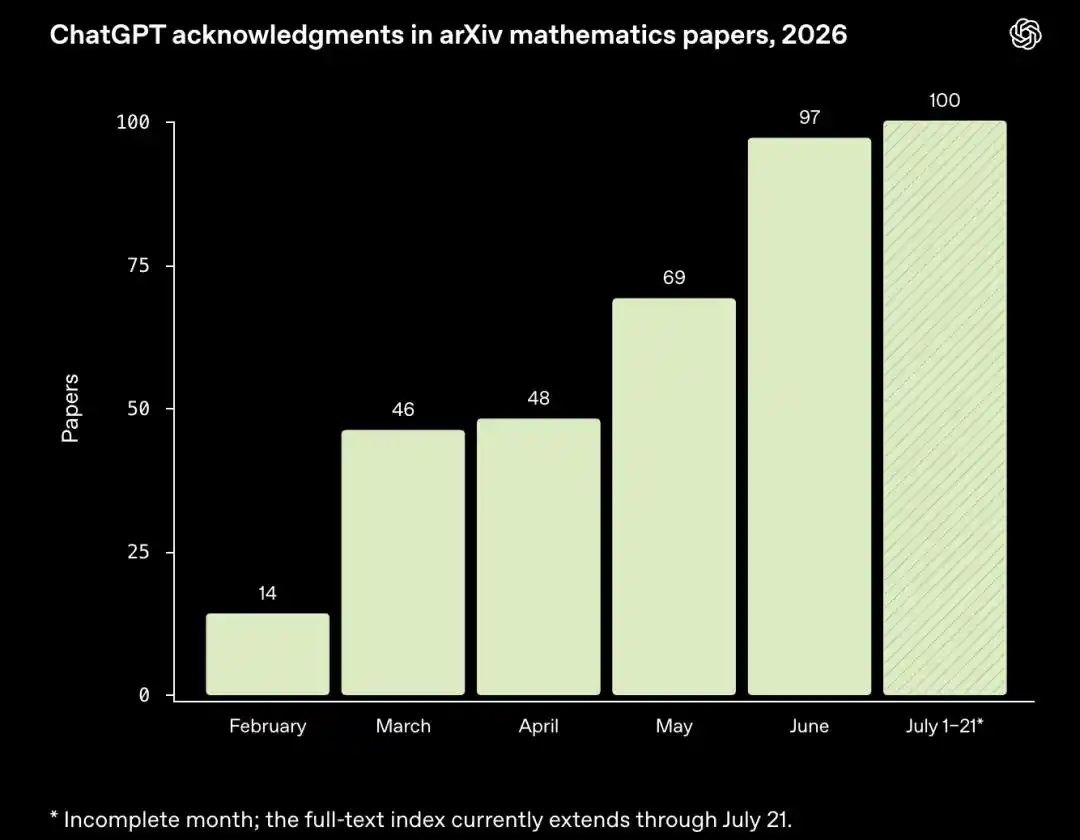
Number of arXiv math papers acknowledging ChatGPT: increased from 14 in February to 97 in June; reached 100 in just the first 3 weeks of July (up to the 21st). (Source: OpenAI)

Furthermore, the more intensely it's used, the more people dare to delegate entire large tasks:

Among the top 20% of scientists in terms of AI usage, close to 7% are willing to hand over entire tasks estimated to take over 4 hours to AI; this is only 3.5% among other peers, exactly double.

This shows that once a tool becomes familiar, people actively delegate increasingly heavy work to it. Habits are formed this way, gradually.

Seeing these numbers, OpenAI's motivation for giving away something this expensive for free to 100,000 scientists isn't hard to understand.

This workspace by default doesn't use your content to train models and provides ample enterprise-grade privacy protection. What it wants isn't your data, but your habits.

When a postdoc completes a full year of research solidly within this workflow: all the instincts for searching, analyzing, and writing become ingrained in ChatGPT and Codex.

By the time the one-year free window closes, the switching cost will have become too high to bother with.

As one industry observer bluntly stated: What lab leaders should really pay attention to is which company's tools their team members are quietly making their default choice upon opening their computers.

That choice will continue to compound long after the free period ends.

Three Limitations of the Free Lunch

This free offer comes with three limitations.

First, it's not unlimited use. The official statement is clear: the limits are similar to ChatGPT Pro, and exceeding them requires purchasing additional credits.

Second, it doesn't include API access. The self-serve plan explicitly states: it does not include OpenAI API credits.

Third, and most crucial: this is not open-source; no model weights are provided at all.

Researchers receive 12 months of product access, the ability to call the models, but cannot see the weights or modify the models.

Furthermore, the bar to get this free lunch is not low.

Applicants must be faculty or postdoctoral researchers at universities, pass SheerID institutional verification, be from a supported country, and submit a paper published in the last 3 years on arXiv, bioRxiv, or ChemRxiv with their name on it.

The most subtle point: the very group that actually wants the model weights is precisely bypassed.

Those doing AI research have been calling for weights and training data. Because only with these can they independently evaluate model behavior, verify reproducibility, and conduct safety audits.

OpenAI's response is: to prevent misuse, weights cannot be given.

In essence, OpenAI is opening up usage rights but firmly guarding the model itself. The underlying system remains a black box.

Anthropic Has Been in the Game, Just With a Different Approach

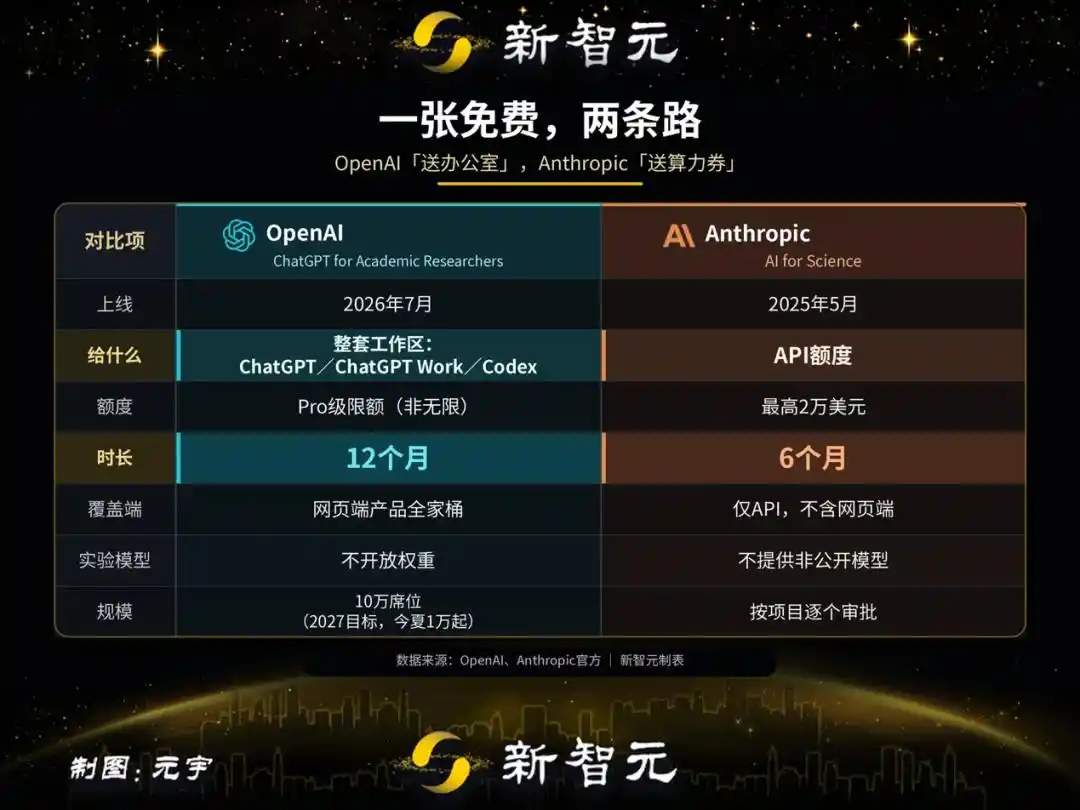
As early as May 2025, Anthropic launched its AI for Science initiative:

Offering up to $20,000 in API credits for researchers at academic and non-profit institutions, valid for 6 months, with a focus on biology and life sciences.

But what the two companies are offering is not the same thing.

Anthropic provides API credits, usable only via the interface, not the Claude web interface, and without access to non-public experimental models. Essentially, it's a compute credit.

OpenAI provides the entire workspace, Pro-level limits, and seats for a team of 5.

One provides AI tools, the other provides an AI work environment. The latter's binding effect on usage habits is much deeper.

However, the two companies are strikingly aligned on one point: neither opens up model weights.
The very scientists researching 'AI itself' are precisely the ones who want the weights and training data.

Because only with these can they independently evaluate model behavior, reproduce results, and conduct safety audits.

This program targets math, physics, chemistry, biology, medicine, and engineering, neatly sidestepping the core demands of this group.

The reason given by both OpenAI and Anthropic: limiting weight access prevents abuse.

Regardless, for a researcher who has just received a year of free credits, the utility of this tool is real and substantial.

But, when the free period ends, will you still be able to walk away?

References:

https://x.com/OpenAI/status/2082516370949062989

https://openai.com/index/chatgpt-for-academic-researchers/

This article is from the WeChat public account "Xinzhiyuan" (New Intelligence), author: ASI启示录 (ASI Revelation)


Tiền kỹ thuật số thịnh hành

Câu hỏi Liên quan

QWhat is the main announcement made by OpenAI in this article, and what are the key benefits for the researchers?

AOpenAI announced the 'ChatGPT for Academic Researchers' program, offering 10,000 (with a goal of 100,000) researchers free, one-year access to its flagship models, including GPT-5.6 Sol Pro. Key benefits include a full suite of tools (ChatGPT, ChatGPT Work, Codex) integrated into a single workspace, specialized models for different tasks, connectors to tools like Zotero and GitHub, and over 75 life sciences skills.

QAccording to the article, how is OpenAI's offering to researchers different from Anthropic's 'AI for Science' plan?

AOpenAI provides a complete, integrated workspace with its chat interface, team seats, and higher usage limits, aiming to integrate the entire research workflow. Anthropic's 'AI for Science' offers API credits (up to $20,000) for use via interface calls, focusing primarily on providing computing power rather than a full user-facing work environment. However, neither company provides access to the underlying model weights.

QWhat are the three main limitations or conditions attached to OpenAI's free offer for academic researchers?

A1. Usage is not unlimited; it has caps similar to ChatGPT Pro, requiring payment for overages. 2. It does not include OpenAI API access/credits. 3. It is not open-source; researchers receive product access but not the model weights. Additionally, eligibility is restricted to university faculty and postdocs in supported countries who can provide a recent paper published on platforms like arXiv.

QWhat evidence does the article provide to show that scientists are already heavily using ChatGPT for research?

AThe article cites OpenAI data showing approximately 1.3 million people use ChatGPT weekly for advanced science and math, generating about 8.4 million messages. It also points to the rapid increase in arXiv mathematics papers acknowledging ChatGPT, rising from 14 in February to 100 in just the first three weeks of July.

QWhat is the article's perspective on OpenAI's long-term strategic motivation behind offering this free program?

AThe article suggests OpenAI's primary motivation is not to collect user data (as the workspace promises not to use content for training) but to cultivate user habits and dependency. The goal is to embed its tools so deeply into a researcher's daily workflow over the free year that the switching cost becomes prohibitively high, creating long-term, 'compounding' user retention after the free period ends.

Nội dung Liên quan

Phỏng vấn lãnh đạo Robinhood: Chiến lược "đòn bẩy" thu hút khách hàng với Meme + token hóa cổ phiếu Mỹ, tất cả các dòng sản phẩm đều đạt doanh thu hàng trăm triệu USD

**Tóm tắt:** Johann Kerbrat, Phó Chủ tịch cấp cao phụ trách mảng Crypto và Kinh doanh Quốc tế của Robinhood, đã chia sẻ chiến lược "đòn bẩy" đằng sau Robinhood Chain sau 3 tuần ra mắt mainnet: song song phát triển meme token và Tài sản Thế giới Thực (RWA). Chuỗi đạt khối lượng giao dịch DEX hàng tuần hơn 30 tỷ USD với hơn 105 triệu giao dịch. Chiến lược này nhằm thu hút hai nhóm người dùng khác nhau: cộng đồng DeFi qua meme và người dùng toàn cầu muốn tiếp cận cổ phiếu Mỹ được mã hóa (hiện có 90+ mã, tại 120+ quốc gia). Robinhood muốn chuyển 27 triệu tài khoản có tiền gửi của mình lên chain bằng cách kết hợp sản phẩm DeFi (như Robinhood Earn) với trải nghiệm người dùng đơn giản, thân thiện của CeFi, không yêu cầu ví tự quản. Về công nghệ, họ chọn stack L2 của Arbitrum thay vì xây L1 riêng để tận dụng bảo mật của Ethereum, hệ sinh thái EVM và tập trung vào sản phẩm tài chính. Kerbrat nhấn mạnh mục tiêu là "mở rộng chiếc bánh" - đưa nhiều người dùng hơn vào thế giới crypto hơn là cạnh tranh thị phần với các chain khác như Base. Các đối tác DeFi được lựa chọn dựa trên khả năng đáp ứng yêu cầu tuân thủ, tạo trải nghiệm độc đáo và khác biệt hóa. Về doanh thu, tất cả các mảng kinh doanh chính của Robinhood (chứng khoán, crypto, v.v.) đều đạt doanh thu hàng trăm triệu USD. Hiện tại, Robinhood Chain ưu tiên tối đa hóa tỷ lệ áp dụng hơn là tối ưu doanh thu từ phí gas, với tầm nhìn dài hạn là trở thành một "siêu ứng dụng" tài chính toàn diện.

marsbit15 phút trước

Phỏng vấn lãnh đạo Robinhood: Chiến lược "đòn bẩy" thu hút khách hàng với Meme + token hóa cổ phiếu Mỹ, tất cả các dòng sản phẩm đều đạt doanh thu hàng trăm triệu USD

marsbit15 phút trước

Báo cáo Quý 3 của Fidelity: BTC, ETH và SOL tiếp tục tích lũy đáy, đợt gấu tiền mã hóa này còn kéo dài bao lâu?

Báo cáo Q3 của Fidelity cho thấy thị trường tiền mã hóa đang tiếp tục tìm đáy trong xu hướng giảm hiện tại. Chỉ số NUPL trọng số giảm xuống -0.01, với BTC duy trì lợi nhuận chưa thực hiện trong khi ETH và SOL chìm sâu trong khoản lỗ. Tỷ lệ thống trị của BTC tăng lên 68%, phản ánh xu hướng tập trung vốn vào tài sản có tính thanh khoản cao nhất. Giá cả giảm mạnh, nhiều chỉ số tiệm cận vùng "đầu hàng" lịch sử. Dựa trên chu kỳ đáy khoảng 300 ngày vào các năm 2018 và 2022, đợt điều chỉnh kéo dài 203 ngày hiện tại có thể đã trải qua 2/3 chặng đường. Tháng 10/2026 được đề xuất là khung thời gian đáng quan sát, nhưng không phải là dự báo chắc chắn về điểm đáy. * **Bitcoin (BTC):** NUPL ở mức 0.09 (tích cực), nhưng động lực giá vẫn âm. Chỉ số Yardstick cho thấy BTC có thể bị định giá thấp so với sức mạnh băm của mạng lưới. * **Ethereum (ETH):** NUPL ở mức -0.43 (tích cực cho lợi nhuận dài hạn), động lực âm. Khối lượng chuyển stablecoin vẫn tăng trưởng mạnh, thể hiện nhu cầu sử dụng thực tế. * **Solana (SOL):** NUPL ở mức -0.72 (tích cực), động lực âm. Các chỉ số sử dụng cơ bản và khối lượng chuyển stablecoin vẫn thể hiện sự phục hồi tích cực bất chấp thị trường suy yếu. Báo cáo kết luận rằng thị trường vẫn đang trong giai đoạn tích lũy và điều chỉnh, với sự thận trọng cao.

marsbit25 phút trước

Báo cáo Quý 3 của Fidelity: BTC, ETH và SOL tiếp tục tích lũy đáy, đợt gấu tiền mã hóa này còn kéo dài bao lâu?

marsbit25 phút trước

Bitcoin và Ethereum đã thể hiện như thế nào trong tháng 8? Đây là những thông tin chính bạn cần biết

Bitcoin và Ethereum đã bước vào tháng Tám với thành tích lịch sử yếu sau khi kết thúc tháng Bảy tăng trưởng. Dữ liệu lịch sử cho thấy khả năng cả hai đóng cửa tháng với mức lỗ là không thể loại trừ. Trong tháng Bảy, Ethereum vượt trội hơn Bitcoin với mức tăng 18,5%, so với mức tăng 7% của Bitcoin. Tuy nhiên, hiệu suất trong tháng Tám của Ethereum từ năm 2016 trở lại đây khá hỗn hợp: tăng trong 4 lần và giảm trong 6 lần. Đợt tăng mạnh nhất là vào năm 2017 (92,86%), trong khi đợt giảm mạnh nhất là vào năm 2018 (-34,79%). Mặc dù lợi nhuận trung bình của Ethereum trong tháng Tám là 6,74%, nhưng lợi nhuận trung vị âm (-1,74%) cho thấy mức trung bình tích cực chủ yếu được thúc đẩy bởi một vài đợt tăng trưởng mạnh. Bitcoin cũng không có tín hiệu rõ ràng trong tháng Tám. Lợi nhuận trung bình hàng tháng là 1,06%, nhưng lợi nhuận trung vị là -6,99%, điều này cho thấy các phiên đóng cửa thua lỗ phổ biến hơn. Gần đây, Bitcoin thể hiện sự biến động: tăng 8,13% vào tháng 8/2025, tăng 2,95% vào 2024 và giảm 4,02% vào 2023. Tóm lại, mặc dù lợi nhuận trung bình lịch sử của cả Bitcoin và Ethereum trong tháng Tám là dương, nhưng lợi nhuận trung vị âm cho thấy khả năng thua lỗ là phổ biến hơn, với mức trung bình được nâng lên bởi một số đợt tăng mạnh hiếm hoi.

cryptonews.ru42 phút trước

Bitcoin và Ethereum đã thể hiện như thế nào trong tháng 8? Đây là những thông tin chính bạn cần biết

cryptonews.ru42 phút trước

Lãnh đạo HIVE: GPU phục vụ AI mang lại doanh thu cao gấp 10 lần mỗi giờ so với các trang trại khai thác tiền điện tử

Lãnh đạo HIVE: GPU cho AI mang lại doanh thu gấp 10 lần mỗi giờ so với trang trại khai thác tiền điện tử Trong một cuộc thảo luận gần đây, Chủ tịch HIVE Frank Holmes đã tiết lộ sự chênh lệch lớn về khả năng sinh lời giữa việc cung cấp sức mạnh tính toán cho trí tuệ nhân tạo (AI) và khai thác Bitcoin. Một cụm 504 GPU Nvidia B200 của HIVE trong cơ sở hạ tầng AI của Bell Canada ở Manitoba tạo ra khoảng 2,90 đô la mỗi giờ trên mỗi GPU. Trong khi đó, các giàn khai thác Bitcoin của công ty chỉ tạo ra khoảng 0,12 đô la mỗi giờ – chênh lệch hơn 20 lần. Đây là cốt lõi trong chiến lược của HIVE: đầu tư phần lớn vào kinh doanh AI có lợi nhuận cao hơn, đồng thời vẫn duy trì hoạt động khai thác Bitcoin đáng kể. Năm tài chính 2026, HIVE đạt tốc độ băm trung bình 22,2 EH/s, chiếm khoảng 3% tổng tốc độ băm mạng Bitcoin và khai thác được 2.885 BTC. Doanh thu tổng thể của HIVE năm 2026 đạt 297,8 triệu đô la, tăng 158%. Bộ phận AI và điện toán hiệu suất cao (HPC) mới, BUZZ HPC, đóng góp 19,5 triệu đô la. HIVE đã chuyển hướng sang AI từ sớm, với khoản đầu tư 70 triệu đô la vào chip Nvidia cách đây ba năm, giúp họ có lợi thế khi cơn sốt AI bùng nổ. Công ty đã nhận được đánh giá "Mua" đầu tiên từ một nhà phân tích, ký thỏa thuận cung cấp điện toán đám mây GPU trị giá khoảng 220 triệu đô la với Bell và startup AI Cohere, cũng như huy động 75 triệu đô la thông qua phát hành trái phiếu. Dự án đầy tham vọng nhất của HIVE là một trung tâm dữ liệu AI công suất 320 MW đang được xây dựng ở Vùng Toronto, dự kiến chứa hơn 100.000 GPU. Khi hoạt động đầy đủ vào nửa cuối năm 2027, cơ sở này dự kiến tạo ra khoảng 360 triệu đô la doanh thu định kỳ hàng năm. HIVE không đơn độc trong xu hướng này. Các công ty khai thác đối thủ như MARA, Hut 8 và Terawulf cũng đang chuyển hướng nguồn lực năng lượng hạn chế sang các hợp đồng AI/HPC sinh lời hơn, trước bối cảnh biên lợi nhuận khai thác Bitcoin giảm và giá mỗi hash giảm. Mục tiêu trước mắt của HIVE là tăng gấp mười lần doanh thu hàng năm từ AI/HPC vào cuối năm tài chính, phụ thuộc vào việc đưa vào vận hành đúng hạn trung tâm dữ liệu Toronto và các hợp đồng dịch vụ đám mây GPU tiếp theo.

cryptonews.ru2 giờ trước

Lãnh đạo HIVE: GPU phục vụ AI mang lại doanh thu cao gấp 10 lần mỗi giờ so với các trang trại khai thác tiền điện tử

cryptonews.ru2 giờ trước

Giao dịch

Giao ngay

Bài viết Nổi bật

Làm thế nào để Mua ONE

Chào mừng bạn đến với HTX.com! Chúng tôi đã làm cho mua Harmony (ONE) trở nên đơn giản và thuận tiện. Làm theo hướng dẫn từng bước của chúng tôi để bắt đầu hành trình tiền kỹ thuật số của bạn.Bước 1: Tạo Tài khoản HTX của BạnSử dụng email hoặc số điện thoại của bạn để đăng ký tài khoản miễn phí trên HTX. Trải nghiệm hành trình đăng ký không rắc rối và mở khóa tất cả tính năng. Nhận Tài khoản của tôiBước 2: Truy cập Mua Crypto và Chọn Phương thức Thanh toán của BạnThẻ Tín dụng/Ghi nợ: Sử dụng Visa hoặc Mastercard của bạn để mua Harmony (ONE) ngay lập tức.Số dư: Sử dụng tiền từ số dư tài khoản HTX của bạn để giao dịch liền mạch.Bên thứ ba: Chúng tôi đã thêm những phương thức thanh toán phổ biến như Google Pay và Apple Pay để nâng cao sự tiện lợi.P2P: Giao dịch trực tiếp với người dùng khác trên HTX.Thị trường mua bán phi tập trung (OTC): Chúng tôi cung cấp những dịch vụ được thiết kế riêng và tỷ giá hối đoái cạnh tranh cho nhà giao dịch.Bước 3: Lưu trữ Harmony (ONE) của BạnSau khi mua Harmony (ONE), lưu trữ trong tài khoản HTX của bạn. Ngoài ra, bạn có thể gửi đi nơi khác qua chuyển khoản blockchain hoặc sử dụng để giao dịch những tiền kỹ thuật số khác.Bước 4: Giao dịch Harmony (ONE)Giao dịch Harmony (ONE) dễ dàng trên thị trường giao ngay của HTX. Chỉ cần truy cập vào tài khoản của bạn, chọn cặp giao dịch, thực hiện giao dịch và theo dõi trong thời gian thực. Chúng tôi cung cấp trải nghiệm thân thiện với người dùng cho cả người mới bắt đầu và người giao dịch dày dạn kinh nghiệm.

Tổng lượt xem 643Xuất bản vào 2024.12.12Cập nhật vào 2026.06.02

Làm thế nào để Mua ONE

Thảo luận

Chào mừng đến với Cộng đồng HTX. Tại đây, bạn có thể được thông báo về những phát triển nền tảng mới nhất và có quyền truy cập vào thông tin chuyên sâu về thị trường. Ý kiến ​​của người dùng về giá của ONE (ONE) được trình bày dưới đây.

活动图片