Finding the Next Wang Tao

marsbitXuất bản vào 2026-07-07Cập nhật gần nhất vào 2026-07-07

Tóm tắt

Hong Kong's deep-tech startups are crossing the Shenzhen River to scale up. On July 2nd, six university spin-off teams presented at the "X-Day" Xili Lake Roadshow in Nanshan, Shenzhen. Their projects spanned next-gen battery materials, quantum dot displays, robotics AI, digital sports, smart airports, and AI-powered fall prevention for the elderly. This reflects a growing trend: Hong Kong's academic research is increasingly seeking industrial application and commercialization within the Greater Bay Area, with Shenzhen being a primary destination. These startups exemplify the "fusion+" model—leveraging Hong Kong's strengths in fundamental, globally-connected research ("0 to 1") and Shenzhen's robust manufacturing ecosystem and market access for scaling ("1 to 100"). Examples include SuFang New Energy (high-energy-density battery materials), PuLang Quantum (quantum dot films in high-end displays and vehicles), and BuGu Health (AI-based fall risk screening). Platforms like the HKU Youth Innovation Academy and HKUST BlueBay are establishing physical bridges for this cross-border innovation. The discussion highlights a clear division of labor: Hong Kong provides the seeding ground for cutting-edge technology, while Shenzhen offers the pathway to产业化. As these connections strengthen through initiatives like the Xili Lake Roadshow, the region aims to foster the next generation of global tech leaders like DJI's Wang Tao.

A group of Hong Kong tech startup teams cross the Shenzhen River.

July 1st marked the 29th anniversary of Hong Kong's return. The next afternoon, six startup teams with backgrounds from Hong Kong universities appeared in Nanshan, Shenzhen. At the "X-Day" Xili Lake Roadshow Hong Kong Tech Special Event, they presented projects in lithium battery materials, quantum dot displays, robot intelligent control, digital sports, smart airports, and healthcare.

In fact, scenes like this have become increasingly common in recent years. Research achievements from Hong Kong universities continue to enter the Greater Bay Area, searching for the next stop for industrialization. So, they come to Shenzhen.

The journey from the laboratory to the industry unfolds from here, a much longer path.

A Group of Hong Kong University Entrepreneurs Gather in Shenzhen

Starting from a Roadshow

The first to take the stage was Sufang New Energy, founded in October 2023 and led by City University of Hong Kong Tenured Professor Liu Qi. Headquartered in Shenzhen, the company focuses on the R&D and industrialization of lithium-rich manganese-based cathode materials.

Voltage decay is a hurdle that lithium-rich manganese-based materials have struggled to overcome for years in industrialization. The team disclosed that Sufang New Energy is the only enterprise globally capable of synthesizing ultra-low voltage decay lithium-rich manganese-based materials. A production line with an annual capacity of 300 tons has been built in Shenzhen's Pingshan district, and samples have been sent to leading battery manufacturers for testing. "Driving 1000 kilometers on a single charge is no problem," stated Sufang New Energy's R&D Vice President Wang Bo.

Coincidentally, an existing investor was sitting in the audience. ZStone Partners had previously invested in this team. Founding Partner Zhong Qiankai noted that Sufang New Energy's progress was even faster than anticipated.

Next up was Pulang Quantum. Founder Zhang Zhikuan holds a PhD from the Hong Kong University of Science and Technology, with bachelor's and master's degrees from Peking University. He previously served as CTO of Refond Optoelectronics before co-founding the company with Professor Sun Xiaowei, Chair Professor at Southern University of Science and Technology and Foreign Academician of the Russian Academy of Sciences. The company provides full-process integrated supply of high-end quantum dot materials.

Products from this company have actually already appeared in many people's daily lives - the screens of Lenovo Legion 9000K and ASUS ROG series laptops contain Pulang's quantum dot films. In the most demanding automotive field, Pulang is the first company globally to achieve mass production of front-installed automotive quantum dot films, starting with the Zeekr 7X and gradually entering models from NIO, Audi, and others, holding over 70% of the global market share for automotive quantum dot films.
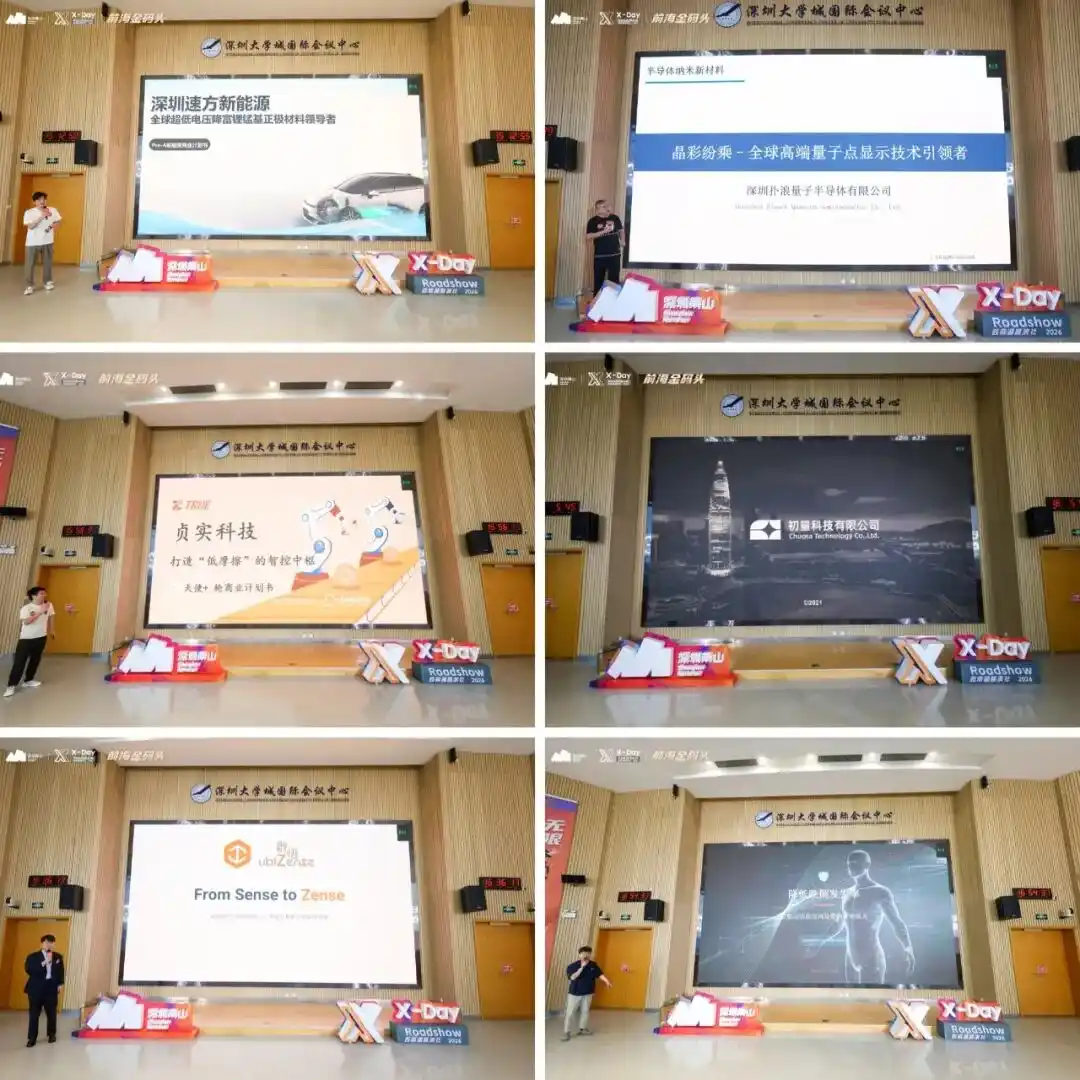
Zhenshi Technology followed, presenting a "ready-to-use" robotic embodied intelligent control system, emphasizing "vision, control, and AI integration," targeting non-standard industrial scenarios with small batches and multiple varieties. The founders are a pair of brothers: CEO Gui Kai handles the market and "cerebellum" control, while his younger brother Gui Shun, a PhD from The Hong Kong Polytechnic University, is responsible for the AI "brain." The company is headquartered in Nanjing and just established a research center this year in Shenzhen's Qianhai, joining The Hong Kong Polytechnic University Qianhai Advanced Technology Research Centre.

From there, the technology began to enter more specific life and industry scenarios.

Chuliang Technology has built the digital sports brand PARTYDAY, using self-developed hardware-software integrated devices like skiing simulators and miniature racing cars to create indoor sports and entertainment spaces. It has currently opened 7 stores in Xi'an, Shenzhen, Wuhan, Hangzhou, and Shanghai, serving over 3 million cumulative visitors. The company has settled in the University of Hong Kong Youth Science and Innovation Institute located in Qianhai, leveraging cross-border incubation platforms from Hong Kong universities to foster bidirectional development of technology and innovation between Shenzhen and Hong Kong.

Inspired by the Asian Institute of Supply Chain and Logistics at The Chinese University of Hong Kong, Qiwu Technology (Ubizense) brings AI and IoT into airports. Its apron collaborative decision-making system has been deployed and running at Hong Kong International Airport for 8 years.

Now, the team is migrating this system from the two-dimensional apron to three-dimensional airspace, developing a drone collaborative decision management system targeting the low-altitude economy. The first stop in their landing plan is Shenzhen. Co-founder Xu Shenghao stated they aim to establish roots in Shenzhen first, striving to launch a pilot at Bao'an Airport.

The final presentation was from Bugoo Health, focusing on an easily overlooked issue: falls among the elderly. According to General Manager Xu Hongyuan, the annual incidence of falls among those aged 60 and above is about 30%, while most existing solutions focus on post-fall alerts and protection.

The company originates from Hong Kong Baptist University and was incubated at the Hong Kong Science Park. It uses wearable sensors combined with AI movement analysis to screen for fall risks in advance from balance, strength, and gait data, followed by exercise interventions. Currently, nearly 20 large public hospitals and over half of community health centers in Hong Kong are its users. The product has obtained U.S. FDA certification and is preparing to enter the mainland Chinese market.

Six teams with backgrounds from Hong Kong universities came to Xili Lake in Shenzhen. With technology stepping out of the lab, the next question to answer is how to truly integrate into the industry.

From Hong Kong to Shenzhen, Searching for the Next Wang Tao

An unavoidable question is: Why are Hong Kong tech startups flocking to Shenzhen? Before the roadshow began, four investors long involved in Hong Kong tech investments discussed this matter.
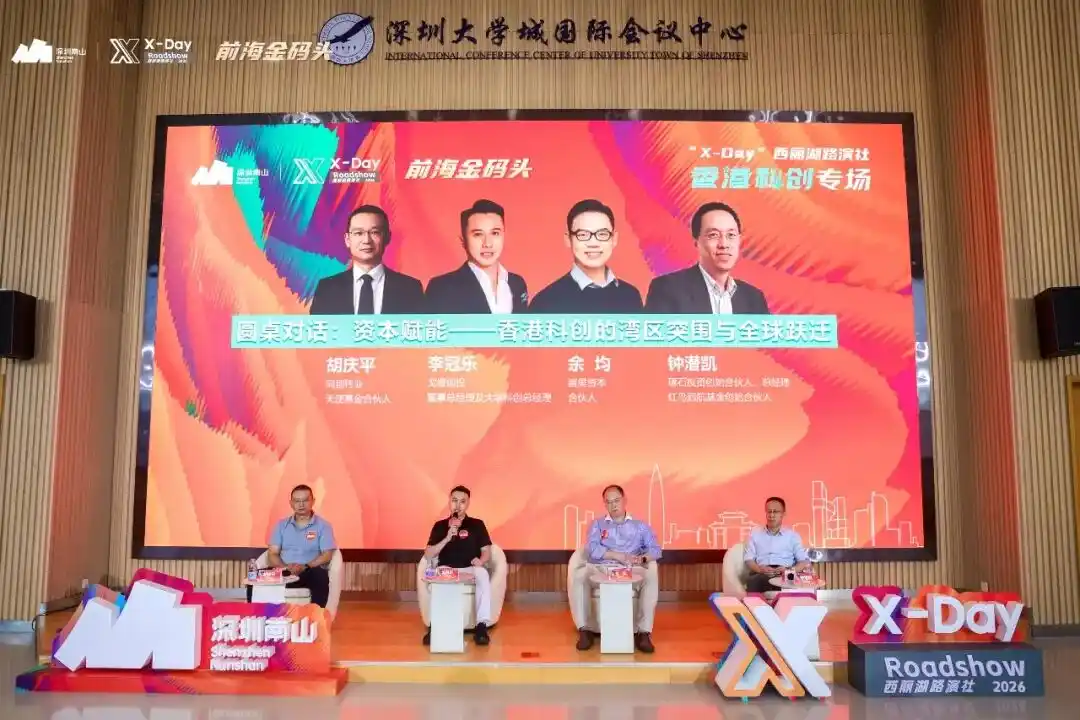
Junhao Capital Partner Yu Jun mentioned a detail: On roughly 1100 square kilometers of land in Hong Kong, there is a high-density concentration of universities and research resources, which is itself a scarce advantage.

For a technology to leave the lab, it must cross pilot-scale testing, find customers, and undergo real market validation. Yu Jun repeatedly mentioned "real demand": No matter how cutting-edge the technology, it must ultimately land on a business model.

Gobi Partners Managing Director Li Guanle feels this more deeply. Having long invested in university tech projects, he observed that many overseas scientists returning to China often choose Hong Kong as their first stop. The English-speaking environment, global academic networks, and dense university resources give Hong Kong teams a natural international perspective.

"Hong Kong teams excel at going from 0 to 1, while the Greater Bay Area can provide the engineering and industrial support to go from 1 to 100," Li Guanle stated.

ZStone Partners Founding Partner Zhong Qiankai calls it "Fusion+". Over the years, he has encountered many semiconductor, AI, and materials projects from HKUST. The technology often stands at the threshold of industrialization; the next step is to truly connect Hong Kong's research with the mainland's industry.

Shenzhen happens to be at this stage.

In fact, a Shenzhen-Hong Kong tech channel is gradually becoming clear. Platforms like the City University of Hong Kong Shenzhen Research Institute, the University of Hong Kong Youth Science and Innovation Institute, and the Hong Kong University of Science and Technology Blue Bay Qianhai Innovation Port have successively landed in Shenzhen. Beyond university labs, industry and markets are getting closer.

The six roadshow projects that day also reflected this trajectory. Separated by a river, the two cities are each taking on the parts they excel at. As Tongchuang Weiye Angel Fund Partner Hu Qingping said, from the angel stage onwards, entrepreneurial interaction between Shenzhen and Hong Kong has become increasingly close, and what's needed in the future is "two-way" collaboration.

The Xili Lake Roadshow makes this connection more concrete. Since its launch, "X-Day" has held 18 themed roadshows, attracting over 520 project applications. 53 companies have received equity investments totaling over 2.096 billion yuan, and 32 companies have obtained new bank credit lines exceeding 1.145 billion yuan. Additionally, 8 non-local roadshow projects have established entities in Nanshan.

Hong Kong has the source innovation; Shenzhen receives the next stage of industrialization. The Shenzhen River is narrow, and the distance in tech and innovation between Shenzhen and Hong Kong is getting shorter.

Perhaps the next entrepreneur like DJI's Wang Tao, who takes a product global, is setting out from here.

This article is from the WeChat public account "Investment Community" (ID: pedaily2012), by Wang Lu


Tiền kỹ thuật số thịnh hành

Câu hỏi Liên quan

QWhat is the main theme of the article 'Finding the Next Wang Tao'?

AThe main theme is the increasing trend of Hong Kong's university-based scientific research and entrepreneurial teams crossing into Shenzhen, within the Greater Bay Area, to industrialize their technological innovations. It highlights the complementary strengths of Hong Kong's academic research and Shenzhen's industrial ecosystem.

QWho is Wang Tao, and why is he referenced in the article's title?

AWang Tao (Frank Wang) is the founder of DJI, the world's leading consumer drone company. He is a prominent example of a successful entrepreneur who leveraged Hong Kong's academic resources (he studied at Hong Kong University of Science and Technology) and the manufacturing/industrial ecosystem of Shenzhen to build a global product. The article uses him as a benchmark, suggesting the search for the next major innovator emerging from this Hong Kong-Shenzhen collaboration model.

QWhat are some specific challenges that Hong Kong's tech startups face in moving from the lab to the market, as mentioned in the article?

AThe challenges include bridging the gap from laboratory research to pilot-scale production (pilot testing), finding initial customers, and validating their technology in the real market. The article emphasizes that even cutting-edge technology must eventually establish a viable business model based on genuine market demand.

QHow does the X-Day Xili Lake Roadshow Club event, described in the article, facilitate Hong Kong-Shenzhen collaboration?

AThe X-Day Xili Lake Roadshow Club provides a platform for Hong Kong university-based tech startups to pitch their projects to investors and the industry in Shenzhen (Nanshan District). It acts as a concrete connector, helping projects gain funding, bank credit, and facilitating the establishment of business entities in Shenzhen. The event specifically mentioned has attracted over 520 projects and helped secure significant investment and credit.

QWhat are some of the key advantages Shenzhen offers to Hong Kong's tech entrepreneurs, according to the investors cited in the article?

AAccording to the investors, Shenzhen offers critical advantages for the '1 to 100' phase of growth. These include robust engineering capabilities, complete industrial supply chains, and proximity to a vast market for pilot testing and commercialization. While Hong Kong excels at foundational '0 to 1' research with international perspective, Shenzhen provides the manufacturing, scaling, and deep market integration necessary for产业化 (industrialization).

Nội dung Liên quan

Liệu việc 'xác minh chính thức' Ironwood của Zcash có xóa bỏ lo ngại làm giả và thúc đẩy ZEC?

Zcash đã công bố bắt đầu quá trình "xác minh hình thức" (formal verification) đối với bể Ironwood được bảo vệ (shielded pool) mới ra mắt, nhằm loại bỏ mọi lỗi tạo tiền giả không thể phát hiện, vốn từng xảy ra với bể Orchard trước đó. Lỗi này trước đây đã gây ra lo ngại về việc có thể đúc thêm token ZEC mà không thể kiểm chứng được do tính chất bảo mật cao của giao thức, dẫn đến làn sóng bán tháo và khiến giá ZEC lao dốc hơn 60% trong ba ngày vào tháng Sáu. Việc xác minh hình thức Ironwood được kỳ vọng sẽ tái thiết lập niềm tin bằng cách về mặt toán học loại bỏ khả năng xảy ra các lỗi tạo tiền giả không thể phát hiện trong tương lai. Một số nhân vật trong ngành đánh giá cao bước tiến này, coi đây là giải pháp cho điểm đánh đổi lớn trước đây của tiền tệ bảo mật. Về giá cả, ZEC đã tăng 6% sau thông báo, lên mức 512 USD. Triển vọng phục hồi mở rộng phụ thuộc vào việc ZEC có thể củng cố vững chắc trên ngưỡng 500 USD hay không; nếu thành công, mức tăng thêm 30% hướng tới 640-680 USD là khả thi. Ngược lại, nếu bị kháng cự tại 500 USD, giá có thể quay lại vùng 380 USD. Bên cạnh đó, Zcash cũng đang tiến hành kế hoạch phát triển ví có khả năng khôi phục sau thời đại lượng tử, góp phần củng cố thêm niềm tin tổng thể vào giao thức. Tuy nhiên, cần theo dõi xem liệu bể Ironwood mới, hiện chưa có lượng cung nào, có thu hút được người dùng ZEC hay không.

ambcrypto21 phút trước

Liệu việc 'xác minh chính thức' Ironwood của Zcash có xóa bỏ lo ngại làm giả và thúc đẩy ZEC?

ambcrypto21 phút trước

Ấn Độ Duy Trì Lập Trường Cứng Rắn Về Tiền Mã Hóa Khi RBI Tái Cảnh Báo Chống Lại Tài Sản Kỹ Thuật Số

Ấn Độ vẫn duy trì lập trường cứng rắn về tiền mã hóa khi Ngân hàng Dự trữ Ấn Độ (RBI) tiếp tục cảnh báo về các tài sản số. Các tài liệu nội bộ chính phủ cho thấy RBI kiến nghị hạn chế tiền mã hóa và stablecoin, nhằm tránh rủi ro lây lan tài chính trong hệ thống ngân hàng và bảo vệ chủ quyền tiền tệ. RBI lo ngại stablecoin do ngoại tệ hỗ trợ có thể đe dọa chủ quyền, còn stablecoin gắn với đồng rupee có thể làm giảm doanh thu phát hành tiền của chính phủ. Cơ quan thuế Ấn Độ báo cáo khó khăn trong việc theo dõi giao dịch, với dưới 1/4 trong số khoảng 645.000 nhà giao dịch khai báo giao dịch tiền mã hóa cho năm tài chính kết thúc tháng 3/2023. Các vấn đề xuất phát từ sàn giao dịch nước ngoài, ví cá nhân và giao dịch ngang hàng. Đơn vị Tình báo Tài chính Ấn Độ sẽ yêu cầu các sàn lưu trữ dữ liệu cho giao dịch trên 10.000 USD từ tháng 1/2026. Dù chưa có luật chính thức, các cơ quan chính phủ vẫn đang thảo luận chính sách quản lý dài hạn. Ước tính đến cuối tháng 5, Ấn Độ có khoảng 39 triệu người sở hữu tài sản số trị giá 2,1 tỷ USD, là một trong những thị trường tiền mã hóa hàng đầu thế giới.

TheNewsCrypto41 phút trước

Ấn Độ Duy Trì Lập Trường Cứng Rắn Về Tiền Mã Hóa Khi RBI Tái Cảnh Báo Chống Lại Tài Sản Kỹ Thuật Số

TheNewsCrypto41 phút trước

Ethereum duy trì lợi nhuận quý 3 bất chấp việc Tether đốt 2,5 tỷ USD – Nhưng yếu tố xúc tác NÀY vẫn tồn tại

Ethereum (ETH) đang duy trì mức lợi nhuận tích lũy trong quý 3 bất chấp việc Tether đốt 2,5 tỷ USD USDT trên mạng lưới của nó, làm giảm nguồn thanh khoản stablecoin. Yếu tố then chốt có thể thúc đẩy Ethereum trong nửa cuối năm (H2) là bản nâng cấp lớn có tên Glamsterdam, dự kiến triển khai vào H2/2026, hiện đang trong giai đoạn thử nghiệm cuối cùng. Bản nâng cấp này hứa hẹn cải thiện đáng kể khả năng mở rộng thông qua xử lý giao dịch song song và từ từ nâng giới hạn gas, nhằm tăng thông lượng mạng. Tuy nhiên, Ethereum đang đối mặt với thách thức khi hoạt động DeFi suy yếu và thanh khoản stablecoin toàn thị trường giảm xuống mức thấp nhất trong bốn tháng. Sự sụt giảm TVL của các giao thức lớn như Aave và việc chuyển dòng vốn ổn định sang các mạng lưới khác (ví dụ: TRON) tạo ra áp lực. Do đó, mặc dù nâng cấp cơ sở hạ tầng tạo cơ sở lạc quan, nhưng đợt tăng giá bền vững của ETH sẽ cần được hỗ trợ bởi sự phục hồi thực sự của thanh khoản và hoạt động trên chuỗi, thay vì chỉ dựa vào các dòng tiền ngắn hạn.

ambcrypto1 giờ trước

Ethereum duy trì lợi nhuận quý 3 bất chấp việc Tether đốt 2,5 tỷ USD – Nhưng yếu tố xúc tác NÀY vẫn tồn tại

ambcrypto1 giờ trước

Trí tuệ cụ thân vượt qua 'kỳ thi đại học' khó đến điên cuồng, con người 100 điểm, mô hình mạnh nhất 12.8

Trí tuệ thể hóa (Embodied AI) đang đối mặt với một “kỳ thi khó” mang tên RoboDojo – một tiêu chuẩn đánh giá toàn diện mới cho khả năng thao tác của robot, được ví như "đỉnh Everest" trong lĩnh vực này. RoboDojo đánh giá trên cả môi trường mô phỏng và thế giới thực, bao gồm 42 nhiệm vụ mô phỏng và 18 nhiệm vụ trên robot thật, kiểm tra 5 khả năng cốt lõi: Khái quát hóa, Trí nhớ, Thao tác chính xác, Thực thi nhiều bước và Hiểu ngữ nghĩa mở. Kết quả cho thấy khoảng cách lớn: Trong mô phỏng, chiến lược robot mạnh nhất hiện nay (Hy-Embodied-0.5-VLA) chỉ đạt tỷ lệ thành công trung bình 8.80%. Trên robot thật, mô hình tốt nhất (π0.5) chỉ đạt 12.8%. Trong khi đó, con người đạt lần lượt 76.03% và 100%. RoboDojo tiết lộ điểm yếu của các mô hình cơ bản hiện nay: thiếu ổn định, khó hoàn thành toàn bộ nhiệm vụ dài và đặc biệt kém trong các nhiệm vụ ngữ nghĩa mở (tỷ lệ thành công chỉ ~1.67%). Dự án cung cấp cơ sở hạ tầng như XPolicyLab để chuẩn hóa việc đánh giá và một bảng xếp hạng công khai, minh bạch, giúp cộng đồng có thước đo chung để tiến bộ hướng tới robot thao tác đa năng thực sự.

marsbit1 giờ trước

Trí tuệ cụ thân vượt qua 'kỳ thi đại học' khó đến điên cuồng, con người 100 điểm, mô hình mạnh nhất 12.8

marsbit1 giờ trước

Phía sau mức tăng 3 lần trong một tuần của ANSEM: Sự hồi sinh và cái bẫy của Meme Solana

Bài viết phân tích sự hồi phục của thị trường meme coin trên Solana, được kích hoạt bởi cú bùng nổ của ANSEM với mức tăng gần 299% trong một tuần. Sự kiện này đã thúc đẩy khối lượng giao dịch hàng tuần trên nền tảng Pump.fun lên 53,3 tỷ USD và đưa tỷ trọng giao dịch meme coin trong tổng khối lượng Solana lên trên 20% - mức cao nhất kể từ giữa tháng 5. Tuy nhiên, bài viết chỉ ra những mặt tối và bẫy tiềm ẩn. Sự bùng nổ của các bản sao (copycat) và sự gia tăng số lượng token mới là dấu hiệu điển hình, nhưng môi trường giao dịch cực kỳ nhanh (thời gian nắm giữ trung bình chỉ 100 giây) tạo lợi thế lớn cho bot và "cá voi". Các nghiên cứu được trích dẫn cho thấy phần lớn các dự án meme coin có dấu hiệu thao túng, như gom hàng ngay khi phát hành, giao dịch giả tạo để tạo khối lượng, khiến nhiều nhà đầu tư nhỏ lẻ trở thành đối tượng chịu lỗ. Tác giả đặt câu hỏi liệu đợt hồi phục này có thể thoát khỏi vòng lặp cũ, nơi sức nóng chỉ mang tính nhất thời và lợi nhuận chủ yếu chảy về tay những người nắm giữ sớm và bot, hay không. Tương lai thị trường sẽ phụ thuộc vào việc liệu sự quan tâm và khối lượng có được duy trì bền vững hay sẽ nhanh chóng tàn lụi.

Foresight News2 giờ trước

Phía sau mức tăng 3 lần trong một tuần của ANSEM: Sự hồi sinh và cái bẫy của Meme Solana

Foresight News2 giờ trước

Giao dịch

Giao ngay

Bài viết Nổi bật

Làm thế nào để Mua RIVER

Chào mừng bạn đến với HTX.com! Chúng tôi đã làm cho mua River (RIVER) trở nên đơn giản và thuận tiện. Làm theo hướng dẫn từng bước của chúng tôi để bắt đầu hành trình tiền kỹ thuật số của bạn.Bước 1: Tạo Tài khoản HTX của BạnSử dụng email hoặc số điện thoại của bạn để đăng ký tài khoản miễn phí trên HTX. Trải nghiệm hành trình đăng ký không rắc rối và mở khóa tất cả tính năng. Nhận Tài khoản của tôiBước 2: Truy cập Mua Crypto và Chọn Phương thức Thanh toán của BạnThẻ Tín dụng/Ghi nợ: Sử dụng Visa hoặc Mastercard của bạn để mua River (RIVER) ngay lập tức.Số dư: Sử dụng tiền từ số dư tài khoản HTX của bạn để giao dịch liền mạch.Bên thứ ba: Chúng tôi đã thêm những phương thức thanh toán phổ biến như Google Pay và Apple Pay để nâng cao sự tiện lợi.P2P: Giao dịch trực tiếp với người dùng khác trên HTX.Thị trường mua bán phi tập trung (OTC): Chúng tôi cung cấp những dịch vụ được thiết kế riêng và tỷ giá hối đoái cạnh tranh cho nhà giao dịch.Bước 3: Lưu trữ River (RIVER) của BạnSau khi mua River (RIVER), lưu trữ trong tài khoản HTX của bạn. Ngoài ra, bạn có thể gửi đi nơi khác qua chuyển khoản blockchain hoặc sử dụng để giao dịch những tiền kỹ thuật số khác.Bước 4: Giao dịch River (RIVER)Giao dịch River (RIVER) dễ dàng trên thị trường giao ngay của HTX. Chỉ cần truy cập vào tài khoản của bạn, chọn cặp giao dịch, thực hiện giao dịch và theo dõi trong thời gian thực. Chúng tôi cung cấp trải nghiệm thân thiện với người dùng cho cả người mới bắt đầu và người giao dịch dày dạn kinh nghiệm.

Tổng lượt xem 706Xuất bản vào 2026.01.16Cập nhật vào 2026.06.02

Làm thế nào để Mua RIVER

Thảo luận

Chào mừng đến với Cộng đồng HTX. Tại đây, bạn có thể được thông báo về những phát triển nền tảng mới nhất và có quyền truy cập vào thông tin chuyên sâu về thị trường. Ý kiến ​​của người dùng về giá của RIVER (RIVER) được trình bày dưới đây.

活动图片