OpenAI Proposes Transferring 5% Equity to the U.S. Government

marsbitXuất bản vào 2026-07-06Cập nhật gần nhất vào 2026-07-06

Tóm tắt

OpenAI has reportedly proposed to sell 5% of its equity to the U.S. government, a stake valued at over $40 billion based on its $852 billion valuation. According to the Financial Times, CEO Sam Altman has engaged in preliminary discussions with senior officials, including the Commerce and Treasury Secretaries, framing public ownership as a way for Americans to share in AI's economic benefits. The proposal includes a broader vision where other major U.S. AI companies like Anthropic, Google, and Meta would contribute a similar percentage of their equity to a public investment vehicle, modeled on the Alaska Permanent Fund, to distribute dividends to citizens. However, there is no indication of interest from these rivals. This move is seen as an attempt to navigate increasing regulatory pressure and scrutiny over AI safety and societal impact. It contrasts with more radical proposals, such as one from Senator Bernie Sanders advocating for up to 50% public ownership. While the discussions are conceptual and would likely require congressional action, they signify a strategic shift: OpenAI is offering a financial stake to align government interests and potentially secure a more stable regulatory relationship ahead of a possible future IPO. The outcome could reshape how AGI development is governed and who benefits from its profits.

OpenAI proposes transferring 5% equity to the U.S. government, valued at over $40 billion based on an $852 billion valuation. Altman also wants to bring all U.S. AI giants on board—how will this move reshape the industry landscape?

OpenAI, valued at $852 billion, is actively offering its equity to the White House.

According to a report by the Financial Times, OpenAI has initiated preliminary talks with the U.S. government, proposing to transfer 5% of the company's equity—worth approximately $42.6 billion at the current valuation.
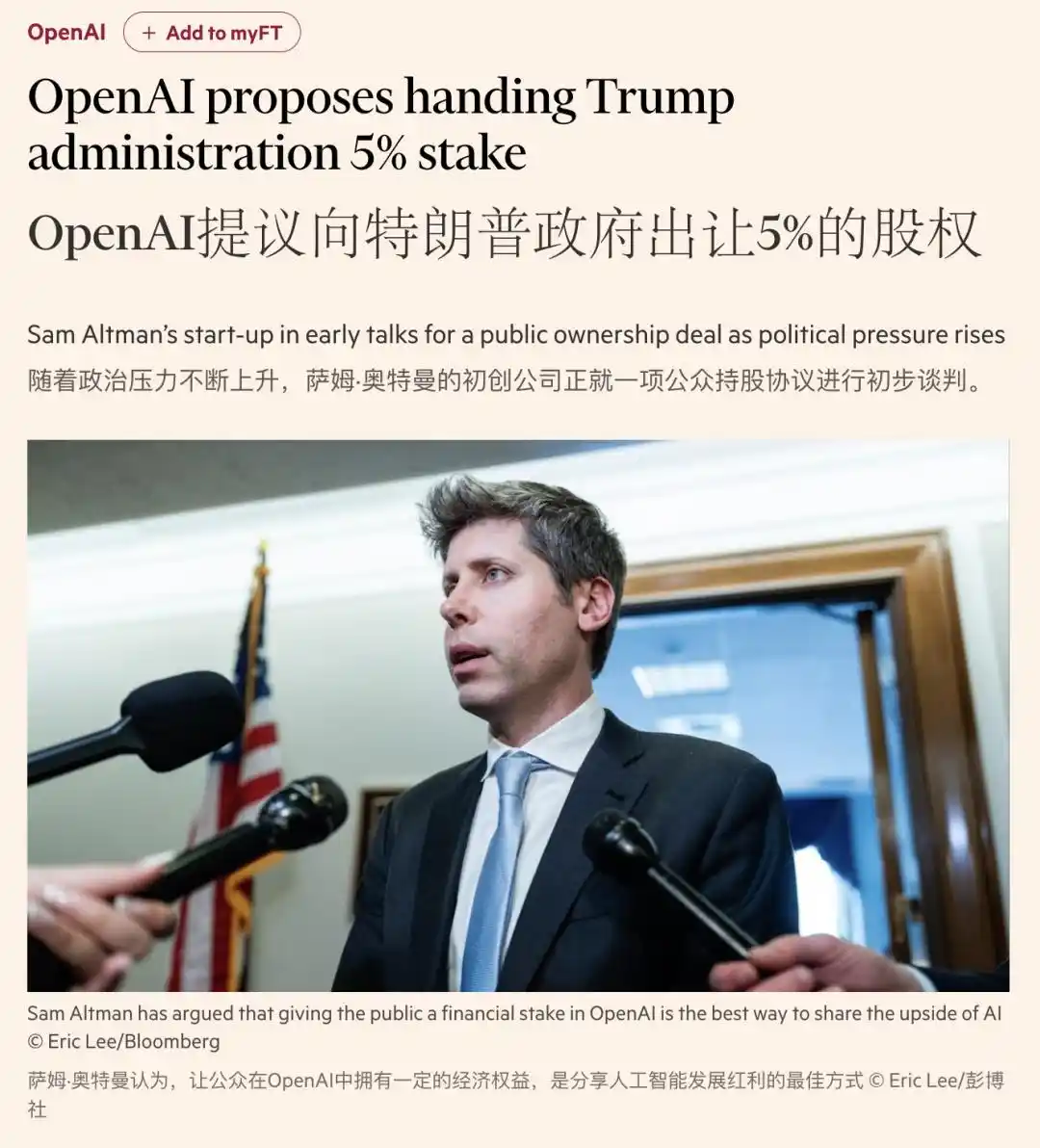
https://www.ft.com/content/7c803eab-8e80-4431-9a87-e943bf00e00b?syn-25a6b1a6=1

The core argument Altman presented in the discussion was that public ownership of AI company equity is the best way to share the dividends of AI development.

This proposal contains an even greater ambition: Altman suggested that all major U.S. AI companies contribute an equal proportion of their equity to a public investment vehicle, similar to the Alaska Permanent Fund, to distribute dividends to the U.S. government and its residents.

The AI industry in the U.S. is facing growing regulatory pressure, and Altman's chosen strategy is to make the U.S. government a stakeholder in the industry.

Exchanging Equity for Trust: Altman's Big Calculation

Altman has discussed this proposal directly with several senior U.S. government officials, including Commerce Secretary Howard Lutnick and Treasury Secretary Scott Bessent.
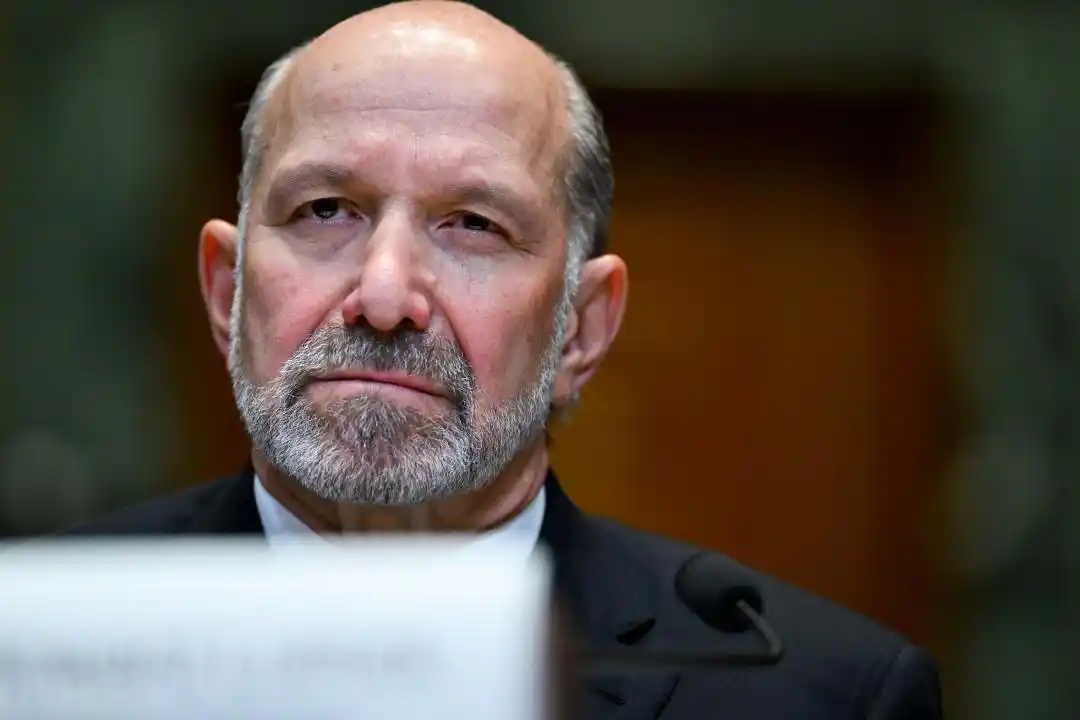
Howard Lutnick

Scott Bessent

Negotiations are currently at a "conceptual" stage, and any transaction would likely require Congressional legislation to proceed.

However, the mere existence of these talks sends a signal: OpenAI is willing to exchange tangible financial interests for a more stable relationship with the U.S. government.

The specific model proposed by Altman references the Alaska Permanent Fund. This fund invests Alaska's oil revenues in the stock market and distributes dividends to the state government and its residents.

Altman envisions that AI company equity could be managed similarly—held by a public investment vehicle to allow ordinary American citizens to benefit from AI growth, even if they have never invested in the stock market.

This vision is not limited to OpenAI.

Altman suggested that major U.S. AI companies like Anthropic, Google, and Meta join the same arrangement, each transferring 5% of their equity.

However, there is currently no evidence that these companies have any interest in this proposal.

The implementation difficulty of a proposal requiring collective concessions from competitors is self-evident.

5% vs 50%

A Divergence in Strategy Behind a Number

Altman is not the only one advocating for public ownership in AI.

U.S. Senator Sanders has also engaged in conversations with Altman in recent weeks, but Sanders' stance is far more radical—he believes the public should hold nearly half of the equity in U.S. AI companies through a sovereign wealth fund.

Further Reading: New U.S. Proposal: "Nationalize" AI Giants, "Public Ownership" of 50%
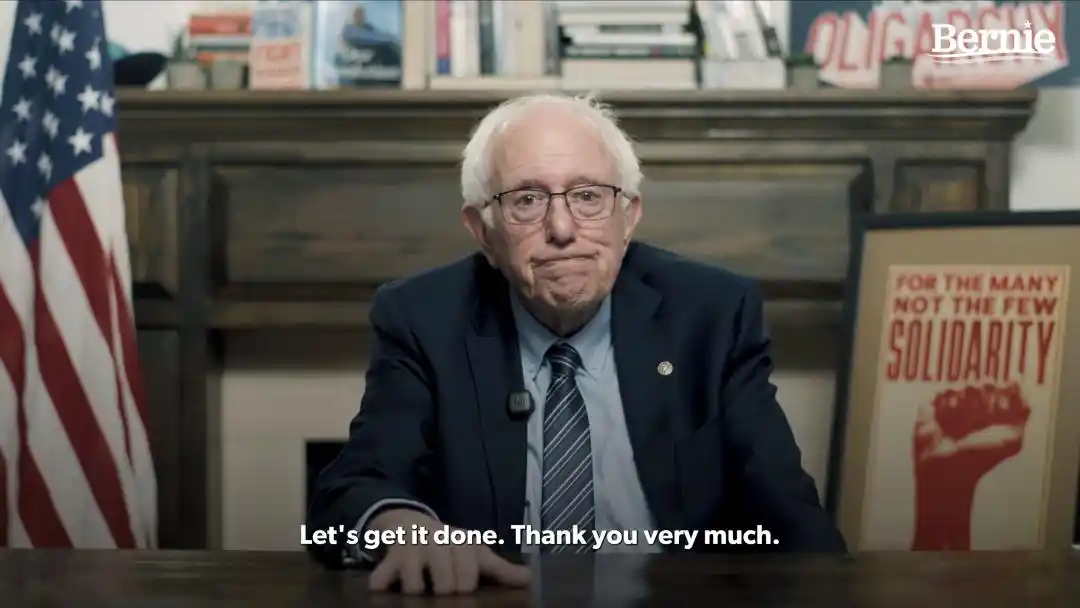
The gap between 5% and 50% reflects two fundamentally different approaches.

Altman's 5% proposal is a gesture of profit-sharing, allowing the U.S. government and public to "participate" in AI growth while control remains firmly in the hands of the companies.

Senator Sanders' 50% proposal would make the public a substantial majority shareholder, granting them genuine influence over corporate governance.
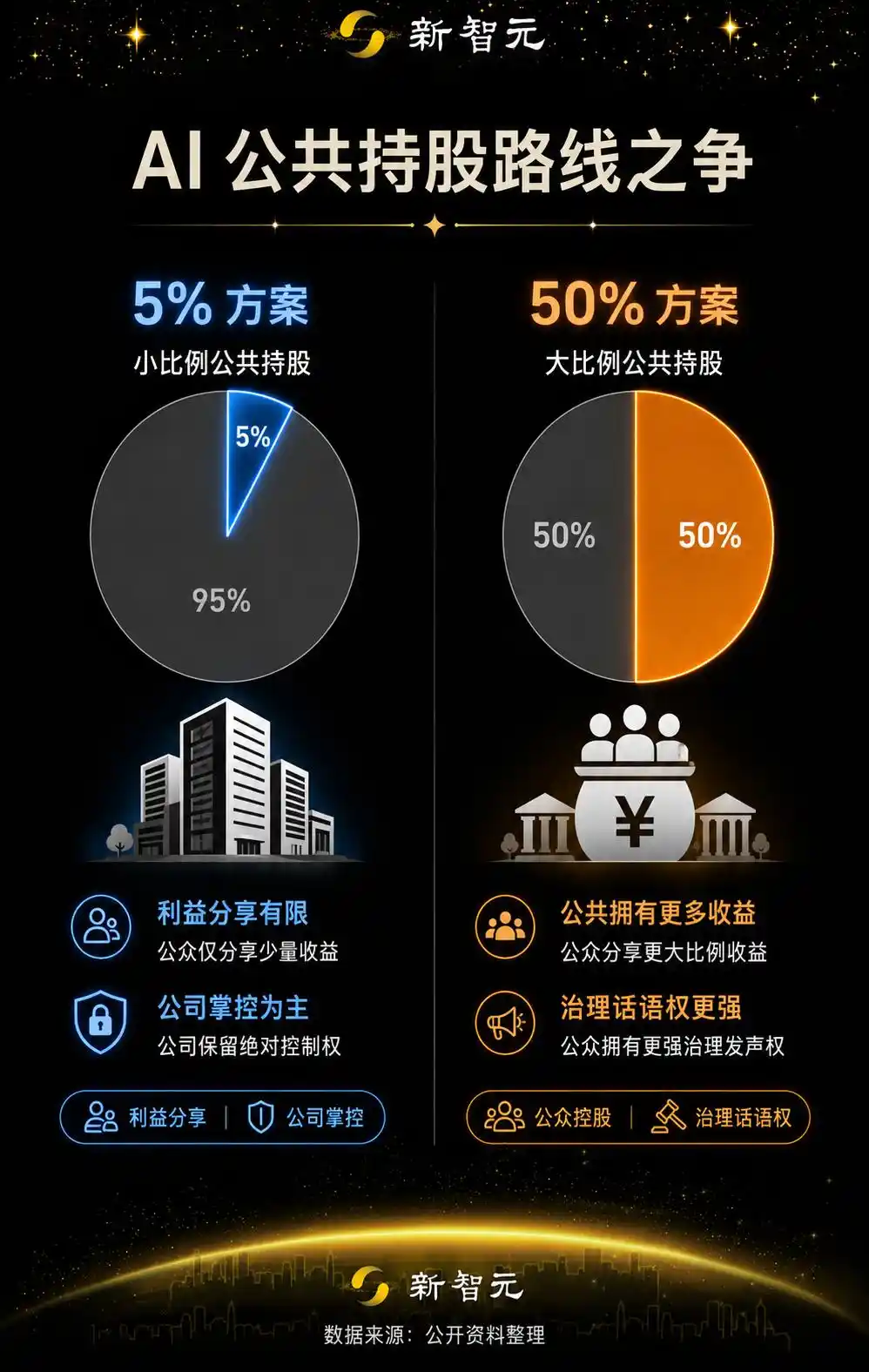
Intriguingly, OpenAI's own policy documents hint that 5% might not be enough.

In April of this year, OpenAI proposed establishing a "Public Wealth Fund" to allow "every citizen—including those not invested in financial markets—to benefit from AI-driven economic growth."

In May, the OpenAI Foundation went further in an official blog post: "Society may need new ways for people to gain enduring stakes in value-creating systems."

The foundation also stated the goal is "to give people both a stake and a voice in shaping the transformation, rather than just picking up the pieces after decisions have been made."

Judging from OpenAI's own statements, 5% appears more like an opening offer than a final solution.

The AI Industry's Regulatory Dilemma

To understand the true driving force behind this proposal, one must look at what the AI industry in the U.S. is currently experiencing.

Both OpenAI and Anthropic recently faced delays by the U.S. government in releasing their frontier models (GPT-5.6, Mythos 5, Fable 5) for review.
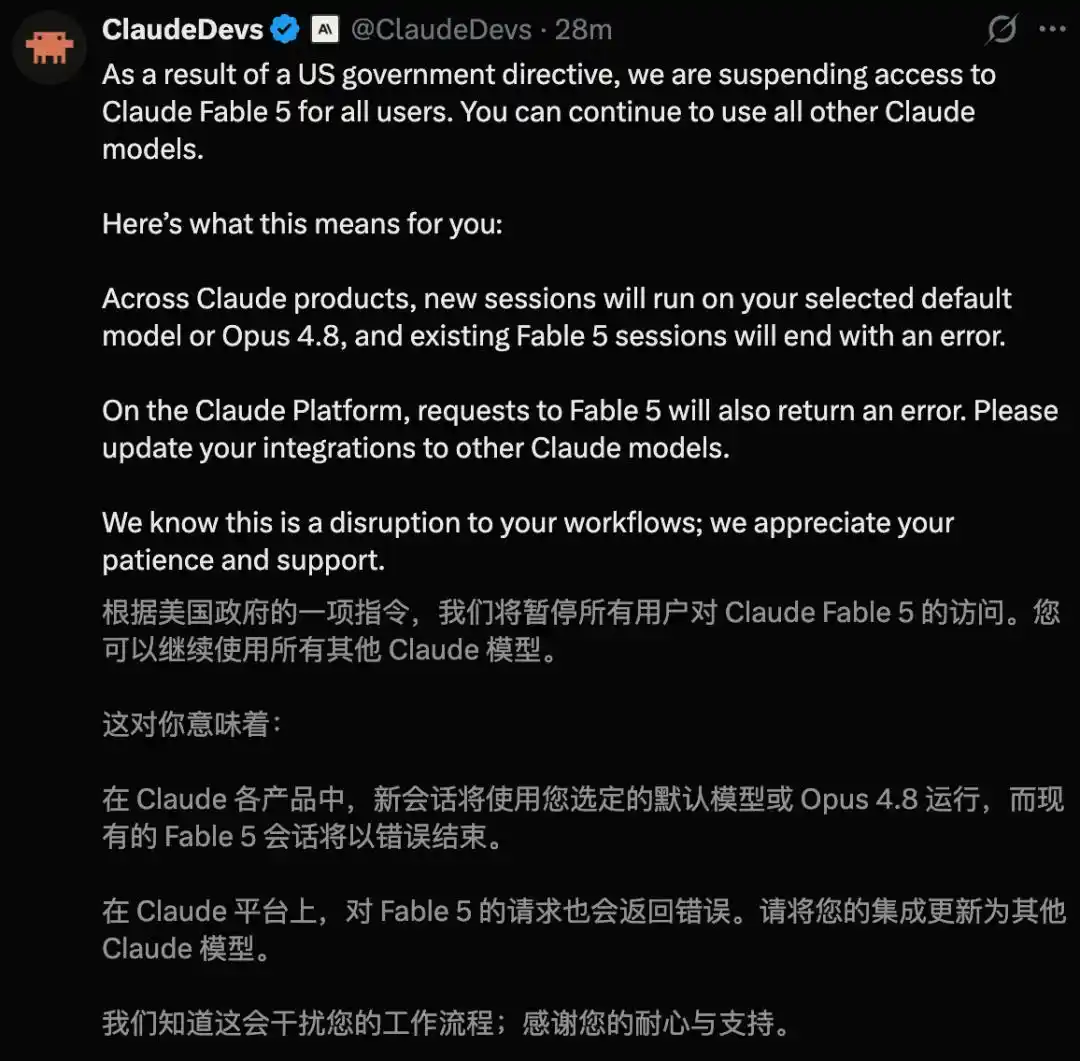
Concerns in U.S. society regarding large-scale data center construction, AI's impact on employment, and cybersecurity risks continue to escalate. Some members of Congress and White House advisors have explicitly leaned towards imposing stricter regulations on the AI industry.

A relevant precedent is Intel.

After the U.S. government acquired a 10% stake in Intel, the White House's attitude towards the chip giant noticeably shifted towards support.

Government equity ownership as a tool to improve relations already has a ready-made case study.
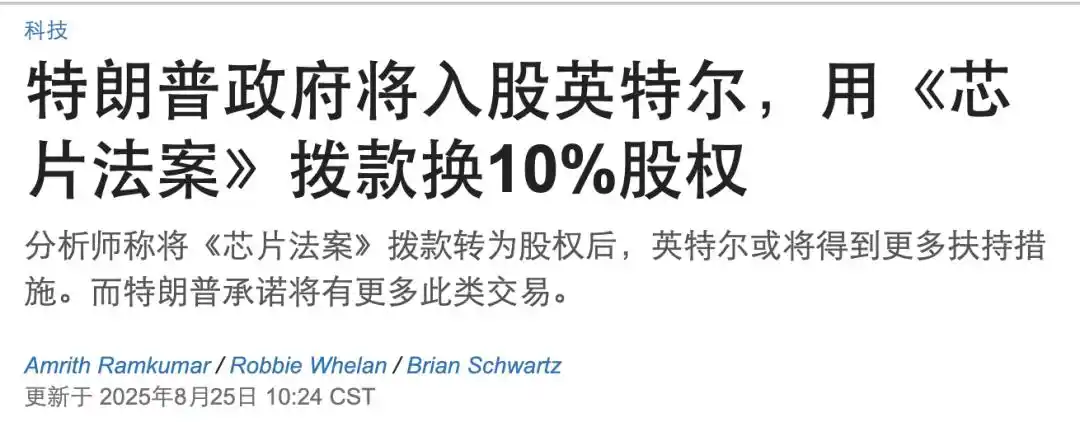
https://cn.wsj.com/articles/%E7%89%B9%E6%9C%97%E6%99%AE%E4%B8%8E%E8%8B%B1%E7%89%B9%E5%B0%94%E8%BE%BE%E6%88%90%E5%8D%8F%E8%AE%AE-%E6%94%BF%E5%BA%9C%E6%8C%81%E8%82%A110-8954b92d

OpenAI and Anthropic are also preparing for public listings, which would broaden their shareholder bases and bring substantial returns to existing investors—though OpenAI's IPO might not occur until next year.

Offering equity to the U.S. government at this juncture is a telling move: is it to secure stable external relationships before an IPO, or a strategic preemptive move ahead of tightening regulations?

Both interpretations point to the same conclusion—Altman believes the relationship with regulators has become urgent enough to require maintenance through equity.

A New Variable in the AGI Race

The figure of 5% may seem small, but its impact will extend far beyond the financial realm.

AGI development is currently the core race within the AI industry.

OpenAI, Anthropic, and Google DeepMind are all sprinting towards this goal, with each leap in frontier model capabilities accompanied by sharper safety debates.

When the government holds equity in these companies, it gains an institutionalized window to intervene in decision-making—from the release pace of frontier models and safety evaluation standards to data usage norms and export controls, government influence will find its points of application.

Accepting the transfer of 5% equity can, in the short term, alleviate regulatory pressure and address public discontent over the perceived windfall profits of the U.S. AI industry.

Senator Sanders' 50% proposal already shows that discussions about how much equity the government should hold in AI companies have only just begun.

The development path for AGI will no longer be driven purely by technical judgment and commercial logic; considerations from regulatory and public interest perspectives will become hard constraints.

This proposal is still in its early conceptual stages, far from any formal agreement, and may never materialize.

However, it marks the entry of the relationship between the AI industry and the government into a new dimension—the focus of debate shifts from "whether to regulate AI" to "whether the government should become a shareholder in AI."

The answer to this question will determine who ultimately develops, owns, and sets the boundaries for AGI.

The 5% offered by Altman might become the beautiful butterfly that flaps its wings.

References:

https://www.ft.com/content/7c803eab-8e80-4431-9a87-e943bf00e00b

This article is from the WeChat public account "新智元", author: ASI启示录, editor: 马可

Câu hỏi Liên quan

QAccording to the article, what specific proposal has OpenAI made to the U.S. government?

AOpenAI has proposed offering a 5% equity stake in the company to the U.S. government, valued at approximately $42.6 billion based on its current $852 billion valuation.

QWhat broader initiative did Sam Altman suggest alongside OpenAI's own equity offer?

ASam Altman suggested that all major U.S. AI companies, such as Anthropic, Google, and Meta, should contribute an equal proportion (5%) of their equity to a public investment vehicle, modeled on the Alaska Permanent Fund, to benefit the U.S. government and its citizens.

QWhat is a key motivation behind OpenAI's proposal, as indicated by the context of the article?

AA key motivation is to navigate growing regulatory pressure in the U.S. By making the government a stakeholder, OpenAI aims to build trust, stabilize its relationship with regulators, and potentially ease the path for its operations and future developments, including a potential IPO.

QHow does the proposal from Senator Sanders differ from Sam Altman's?

ASenator Sanders advocates for a much more substantial public stake, proposing that a sovereign wealth fund should hold close to 50% of the equity in U.S. AI companies. This contrasts with Altman's 5% proposal, which is more about profit-sharing while retaining company control, whereas 50% would grant the public significant governance power.

QWhat potential precedent does the article mention for government equity ownership in a tech company?

AThe article cites the example of the U.S. government taking a 10% stake in Intel. Following this investment, the White House's stance toward the chip giant notably shifted to one of greater support, demonstrating how equity ownership can be used as a tool to improve government-company relations.

Nội dung Liên quan

Thị trường mã hóa còn ai mua không? Giải mã 3 tâm lý chờ đợi phổ biến hiện nay

Tác giả nhận thấy nhiều nhà đầu tư, kể cả những người ủng hộ tiền mã hóa nhiệt thành, hiện đang giữ thái độ thận trọng. Họ thường tập trung vào một số ít tài sản như BTC, trong khi giảm dần vị thế ở các đồng tiền khác và chờ đợi mức giá thấp hơn (ví dụ: BTC về 50,000 USD). Mối quan tâm chính là cơ hội đầu tư vào cổ phiếu AI đang tăng trưởng mạnh, khiến việc phân bổ vốn vào tiền mã hóa có vẻ kém hấp dẫn hơn. Bài viết phân tích ba tâm lý phổ biến: 1. **Hài lòng với danh mục hiện có:** Niềm tin dài hạn vào tài sản số vẫn còn, nhưng họ thiếu động lực ngắn hạn để tăng vốn. Sự thay đổi có thể đến từ một chất xúc tác mới hoặc luân chuyển vốn từ các danh mục khác. 2. **Chờ giá thấp hơn:** Phản ánh kỳ vọng về biến động giá hoặc niềm tin vào tiềm năng tăng trưởng chưa đủ lớn. Tâm lý này có thể thay đổi nếu chu kỳ thị trường dự đoán qua đi mà không có sự sụt giảm lớn, hoặc nếu có sự kiện làm tăng kỳ vọng (ví dụ: quốc gia mua vào). 3. **Chi phí cơ hội:** Trong bối cảnh các cơ hội đầu tư vào AI có vẻ hứa hẹn hơn, thật khó để biện minh cho việc đặt cược vào tài sản số nếu không kỳ vọng tốc độ tăng trưởng vượt trội. Một đợt giảm tốc trong cơn sốt AI có thể tạo điểm đảo chiều và dòng vốn quay trở lại. Kết luận, tác giả cho rằng thị trường có khả năng đang gần đáy hơn là đỉnh. Bài viết cung cấp một cái nhìn chân thực về tâm lý nhà đầu tư hiện tại, nơi niềm tin dài hạn vẫn tồn tại nhưng bị lu mờ bởi sự thận trọng và những lựa chọn thay thế hấp dẫn khác.

marsbit2 phút trước

Thị trường mã hóa còn ai mua không? Giải mã 3 tâm lý chờ đợi phổ biến hiện nay

marsbit2 phút trước

Trung Quốc có thêm 67 kỳ lân trong nửa năm, AI và robot chiếm hơn một nửa

Theo báo cáo từ IT桔子, nửa đầu năm 2026, Trung Quốc chào đón 67 kỳ lân mới với tổng định giá 1829 tỷ USD, đánh dấu sự phục hồi mạnh mẽ sau giai đoạn điều chỉnh. Số lượng này cao nhất trong vòng 5 năm, trung bình mỗi 3 ngày có một kỳ lân ra đời. AI và robot là hai động lực chính, chiếm hơn 53% tổng số, với 17 công ty AI và 19 công ty robot. Trong đó, DeepSeek (615.38 tỷ USD) và Kling AI (180 tỷ USD) dẫn đầu về định giá. Các lĩnh vực bán dẫn, lượng tử cũng có những kỳ lân mới. Về địa lý, các công ty tập trung cao ở Bắc Kinh (19), Thượng Hải (18), Thâm Quyến (9) và Hàng Châu (5), chiếm 76.1%. Mặc dù Hàng Châu chỉ có 5 công ty, nhưng nhờ DeepSeek, tổng định giá của thành phố này lên tới 682 tỷ USD. Cấu trúc định giá có hình kim tự tháp: 77.6% kỳ lân mới có định giá từ 10-20 tỷ USD. Tốc độ phát triển có hai cực: các công ty AI/robot thường thành lập và đạt định giá kỳ lân nhanh (34.3% trong vòng 3 năm), thậm chí có công ty như Bula Ge chỉ mất 1 tháng; trong khi các công ty công nghệ hạt nhân như bán dẫn, dược phẩm sinh học cần thời gian dài hơn (trên 8 năm) để đạt được cột mốc này. Báo cáo chỉ ra xu hướng dịch chuyển từ tiêu dùng internet sang công nghệ cứng. Tuy nhiên, sự tập trung cao vào AI/robot và tốc độ định giá nhanh cũng tiềm ẩn rủi ro về bong bóng và thử thách trong việc hiện thực hóa kỳ vọng thương mại.

marsbit44 phút trước

Trung Quốc có thêm 67 kỳ lân trong nửa năm, AI và robot chiếm hơn một nửa

marsbit44 phút trước

Aave V4 vượt mốc 250 triệu USD – Nhưng vẫn tồn tại MỘT thách thức về thanh khoản

Aave V4 đã đạt cột mốc quan trọng với tổng tiền gửi vượt 250 triệu USD, cho thấy sức hút mạnh mẽ của cơ sở hạ tầng cho vay được nâng cấp trong môi trường DeFi đầy thách thức. Sự tăng trưởng này được thúc đẩy bởi hiệu quả vốn, thông số rủi ro được cải thiện và nhiều lựa chọn cho vay hơn. Tuy nhiên, một phần đáng kể khoản tiền gửi đến từ việc người dùng chuyển vị thế từ V3 sang, không phải hoàn toàn là vốn mới. Để củng cố vị thế nhà cung cấp thanh khoản hàng đầu, Aave cần thu hút dòng vốn mới ròng liên tục. Bức tranh thanh khoản tổng thể phức tạp hơn. Tổng giá trị bị khóa (TVL) của Aave, từng đạt đỉnh 13,4 triệu ETH, đã giảm mạnh và hiện phục hồi một phần lên khoảng 7,4 triệu ETH. Việc rút tiền vẫn đang lấn át một phần dòng vốn mới vào V4, hạn chế mức tăng trưởng tổng thể. Một điểm sáng là tiền gửu cbETH trên Aave đã tăng mạnh, từ mức 18-20 triệu USD trong tháng 5 lên khoảng 70 triệu USD vào đầu tháng 7, phản ánh nhu cầu gia tăng đối với tài sản thế chấp staking thanh khoản và củng cố năng lực cho vay của giao thức. Tương lai mở rộng của hệ sinh thái Aave sẽ phụ thuộc vào khả năng duy trì dòng vốn mới ròng tích cực theo thời gian.

ambcrypto1 giờ trước

Aave V4 vượt mốc 250 triệu USD – Nhưng vẫn tồn tại MỘT thách thức về thanh khoản

ambcrypto1 giờ trước

Khả năng thông qua giảm xuống dưới 50%: Đạo luật Clarity năm nay không còn hy vọng?

Dự luật Clarity, nhằm thiết lập khung quy định liên bang toàn diện đầu tiên cho thị trường tài sản số Mỹ, đang đối mặt với nguy cơ không được thông qua trong năm nay. Mục tiêu ký kết vào ngày 4/7 đã thất bại và thời gian làm việc hiệu quả trước kỳ nghỉ hè của Quốc hội vào tháng 8 chỉ còn khoảng ba tuần. Dự luật đã vượt qua Ủy ban Ngân hàng Thượng viện hồi tháng 5, nhưng vẫn bị tắc nghẽn do ba bất đồng chính chưa được giải quyết: quy định về thu nhập từ stablecoin, quyền miễn trừ trách nhiệm cho nhà phát triển DeFi và các chi tiết về thực thi pháp luật cùng đạo đức. Các cuộc đàm phán bí mật về vấn đề đạo đức đã tan vỡ vào đầu tháng 6. Một yếu tố tích cực là Hiệp hội Cảnh sát trưởng Hoa Kỳ (MCSA) đã chuyển từ phản đối sang lập trường trung lập đối với dự luật sau khi một số lo ngại về điều khoản giới hạn trách nhiệm cho nhà phát triển giao thức phi tập trung (Điều 604) được giải quyết. Theo dữ liệu từ Polymarket, xác suất dự luật được ký thành luật trong năm 2026 hiện chỉ là 49%. Các nhà phân tích cho rằng nếu được thông qua, dự luật sẽ thúc đẩy các tổ chức tài chính truyền thống tham gia mạnh mẽ hơn vào không gian tiền số. Ngược lại, sự chậm trễ sẽ kéo dài tình trạng thiếu chắc chắn về quy định. Văn bản cuối cùng dự kiến sẽ được công bố sớm, và các cuộc đàm phán trong vài tuần tới sẽ quyết định số phận của dự luật quan trọng này.

Foresight News2 giờ trước

Khả năng thông qua giảm xuống dưới 50%: Đạo luật Clarity năm nay không còn hy vọng?

Foresight News2 giờ trước

Giao dịch

Giao ngay
活动图片