In-Depth Report on the Privacy Coin Sector: A Paradigm Shift from Anonymous Assets to Compliant Privacy Infrastructure

HTX LearnXuất bản vào 2026-01-22Cập nhật gần nhất vào 2026-04-22

Tóm tắt

As institutional capital continues to account for a rising share of the crypto market, privacy is evolving from a marginalized demand for anonymity into a core infrastructure capability required for blockchain’s integration into the real financial system. Public transparency was once regarded as blockchain’s most fundamental value proposition. However, as institutional participation becomes the dominant force, this very feature is revealing structural limitations. For enterprises and financial institutions, the full exposure of transactional relationships, position structures, and strategic timing constitutes a material commercial risk in itself. Privacy is therefore no longer an ideological choice, but a prerequisite for blockchain’s transition toward scalable and institutionalized adoption. Competition in the privacy sector is also accordingly shifting from a race for “maximum anonymity” to a test of “institutional compatibility”.

I. The Institutional Ceiling of Full Anonymity: Strengths and Constraints of the Monero Model

Fully anonymous privacy models, represented by Monero, constitute the earliest and “purest” technical path within the privacy sector. Their core objective is not to strike a balance between transparency and privacy, but to minimize observable on-chain information to the greatest extent possible, severing the ability of third parties to extract transactional semantics from a public ledger. In pursuit of this goal, Monero employs mechanisms such as ring signatures, stealth addresses, and Ring Confidential Transactions (RingCT), simultaneously obscuring the three key elements of a transaction: sender, recipient, and amount. External observers can verify that “a transaction has occurred”, but are unable to deterministically reconstruct transaction paths, counterparties, or value. For individual users, this “privacy by default, privacy without conditions” experience is highly compelling. It turns privacy from an optional feature into a system-wide norm, significantly reducing the risk that financial behavior is persistently tracked by data analytics tools, and granting users a level of anonymity and unlinkability in payments, transfers, and asset holdings that closely resembles cash.

At a technical level, the value of full anonymity lies not merely in “concealment”, but in its systematic resistance to on-chain analysis. The greatest externality of transparent blockchains is “composable surveillance”: Public information from individual transactions is continuously pieced together through address clustering, behavioral pattern recognition, and cross-referencing with off-chain data, gradually linking on-chain activity to real-world identities and ultimately forming monetizable and potentially abusive “financial profiles”. Monero’s significance lies in raising the cost of this process to prohibitively high levels that discourage such behavior. When large-scale, low-cost attribution analysis is no longer reliable, both the deterrent effect of surveillance and the feasibility of fraud are reduced. In this sense, Monero is not designed solely for “bad actors”; it also responds to a more fundamental reality: In a digital environment, privacy is an integral component of security. However, the fundamental limitation of full anonymity is that it is irrevocable and unconditional. For financial institutions, transaction information is not only essential for internal risk management and auditing, but also a legally mandated carrier of compliance obligations. Institutions must retain traceable, explainable, and submit-ready evidence under frameworks such as KYC/AML, sanctions compliance, counterparty risk management, anti-fraud controls, taxation, and accounting audits. Fully anonymous systems permanently “lock away” this information at the protocol level, rendering institutions structurally incapable of compliance even if they are subjectively willing to comply. When regulators require explanations of fund sources, proof of counterparty identity, or disclosure of transaction amounts and purposes, institutions cannot reconstruct critical information from the chain, nor can they provide verifiable disclosures to third parties. This is not a case of “regulators failing to understand technology”, but a direct collision between institutional objectives and technical design. The baseline of modern finance is “auditability when necessary”, whereas the baseline of full anonymity is “non-auditability under any circumstances”.
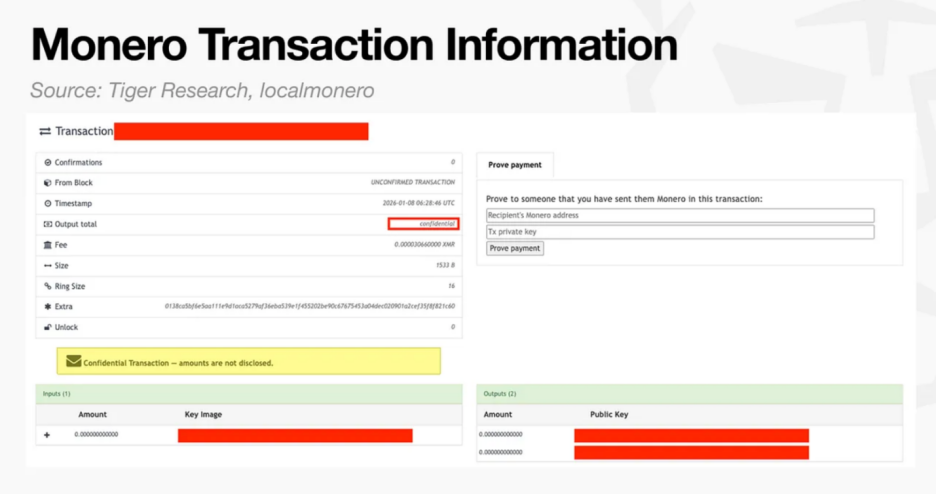
The external manifestation of this conflict is the systematic exclusion of strongly anonymous assets from mainstream financial infrastructure: exchange delistings, lack of support from payment and custody providers, and the inability of compliant capital to integrate into the infrastructure. Importantly, this does not mean that genuine demand for anonymity disappears. Instead, demand often migrates to more opaque, higher-friction channels, fostering “compliance vacuums” and the proliferation of gray intermediaries. In Monero’s case, instant exchange services have, at times, absorbed substantial purchasing and conversion demand. Users pay higher spreads and fees for accessibility, while bearing risks related to fund freezes, counterparty exposure, and lack of transparency. More critically, such intermediaries can introduce persistent structural sell pressure. When service providers rapidly convert collected Monero fees into stablecoins and cash out, the market experiences continuous passive selling unrelated to organic buy demand, suppressing price discovery over the long term. A paradox thus emerges: The more excluded an asset is from compliant channels, the more demand concentrates in high-friction intermediaries; the stronger these intermediaries become, the more distorted price formation becomes; and the more distorted prices are, the harder it is for mainstream assets to assess and enter the market through “normal” channels. This vicious cycle is not evidence that “the market rejects privacy”, but rather the outcome of institutional constraints and channel structures.

Therefore, any assessment of the Monero model should move beyond moralized debate and return to the realities of institutional compatibility. Fully anonymous privacy is “secure by default” in the individual realm, but “unviable by default” in the institutional realm. The more absolute its advantages, the more rigid its constraints. Even if the privacy narrative gains renewed momentum, fully anonymous assets will likely remain concentrated in non-institutional use cases and specific communities. In the institutional era, mainstream finance is far more likely to adopt models of “controlled anonymity” and “selective disclosure”: protecting commercial confidentiality and user privacy while enabling authorized auditability and regulatory evidence when required. In other words, Monero is not a technological failure, but a solution locked into a use case that institutions cannot accommodate. It proves that strong anonymity is technically feasible, while equally demonstrating that, in a compliance-driven financial era, the competitive focus of privacy will shift from “hiding everything” to “proving everything when necessary”.


II. The Rise of Selective Privacy

As fully anonymous privacy approaches its institutional ceiling, the privacy sector is undergoing a directional shift. “Selective privacy” is emerging as a new technological and institutional compromise. Its core objective is not to oppose transparency, but to introduce controllable, authorizable, and disclosable privacy layers on top of a verifiable ledger. The underlying logic of this transition fundamentally lies in that privacy is no longer framed as a tool to evade regulation, but redefined as an infrastructure capability that can be leveraged by institutional systems. Zcash represents the most prominent early implementation of the selective privacy approach. By allowing transparent addresses (t-addresses) and shielded addresses (z-addresses) to coexist, it gives users the freedom to choose between public and private transactions. When shielded addresses are used, the sender, recipient, and amount are encrypted on-chain; when compliance or audit needs arise, users can disclose full transaction details to designated third parties via view keys. Conceptually, this architecture is a milestone. It was among the first mainstream privacy projects to explicitly demonstrate that privacy does not have to come at the expense of verifiability, and that compliance does not necessarily require full transparency.

From an institutional evolution perspective, Zcash’s value lies less in adoption metrics than in its role as a proof of concept. It demonstrates that privacy can be optional rather than a system default, and that cryptographic tools can reserve technical interfaces for regulatory disclosure. This is particularly relevant in today’s regulatory environment where major jurisdictions have not rejected privacy per se, but have firmly opposed “unauditable anonymity”. Zcash’s design directly addresses this core concern. However, as selective privacy moves from “personal transfer tools” to “institutional transaction infrastructure”, Zcash’s structural limitations become apparent. Its privacy model remains fundamentally a transaction-level binary choice: A transaction is either fully public or fully private. For real-world financial scenarios, this binary structure is overly simplistic. Institutional transactions involve not just “two counterparties”, but a variety of participants and responsibility holders. Counterparties need to verify contractual performance, clearing and settlement institutions require visibility into amounts and timing, auditors must validate complete records, and regulators may only be concerned with fund provenance and compliance attributes. These stakeholders have asymmetric and partially overlapping information requirements.

In such contexts, Zcash cannot modularize transaction data or support differentiated authorization. Institutions cannot disclose only “necessary information”, but must choose between full disclosure and full concealment. As a result, once integrated into complex financial workflows, Zcash either exposes excessive commercially sensitive information or fails to meet baseline compliance requirements. Its privacy capabilities therefore struggle to embed into real institutional processes, remaining largely peripheral or experimental. By contrast, the Canton Network represents a fundamentally different selective privacy paradigm. Rather than originating from “anonymous assets”, Canton is designed from the outset around institutional workflows and regulatory constraints. Its core philosophy is not “hiding transactions”, but “managing access to information”. Through the smart contract language Daml, Canton decomposes transactions into multiple logical components, ensuring that each participant can only view the data segments relevant to their authorized role, while all other information is isolated at the protocol level. This design produces a fundamental shift. Privacy is no longer an after-the-fact attribute of transactions, but an embedded feature of contract architecture and permission systems, forming an integral part of compliant processes. 

From a broader perspective, the contrast between Zcash and Canton highlights the divergence within the privacy sector. The former remains rooted in the crypto-native world, seeking a balance between individual privacy and compliance. The latter actively embraces the real financial system, engineering privacy into workflows, processes, and institutions. As institutional capital continues to gain share in the crypto market, the primary battleground of privacy will move accordingly. The future will not be defined by who can conceal the most, but by who can be regulated, audited, and adopted at scale without exposing unnecessary information. Under this standard, selective privacy is no longer merely a technical route, but an inevitable path toward mainstream finance.


III. Privacy 2.0: From Transaction Obfuscation to Privacy-Computing Infrastructure Upgrade

Once privacy is redefined as a prerequisite for institutional blockchain participation, the technical boundaries and value scope of the privacy sector expand accordingly. Privacy is no longer merely understood as “whether a transaction is visible”, but instead evolves toward a deeper question: Whether a system can perform computation, collaboration, and decision-making without exposing the underlying data. This shift marks the transition of the privacy sector from the “privacy assets / private transfers” 1.0 phase to a 2.0 phase centered on privacy computing, upgrading privacy from an optional feature to a general infrastructure capability. In the Privacy 1.0 era, technical focus was primarily on “what to hide” and “how to hide”—that is, how to obscure transaction paths, amounts, and identity linkages. In the Privacy 2.0 era, the focus turns to “what can still be done under conditions of concealment”. This distinction is critical. Institutions do not merely require private transfers; they need to execute complex operations such as trade matching, risk computation, clearing and settlement, strategy execution, and data analytics while preserving privacy. If privacy only covers the payment layer and cannot extend to the business logic layer, its value to institutions remains limited.

The Aztec Network represents one of the earliest manifestations of this shift within the blockchain ecosystem. Aztec does not treat privacy as a tool for resisting transparency, but instead embeds it as a programmable attribute of the smart contract execution environment. Through a rollup architecture built on zero-knowledge proofs, Aztec allows developers to define, at the contract layer, which states should remain private and which should be publicly visible. This enables a hybrid logic of “selective privacy and selective transparency”, allowing privacy to extend beyond simple value transfers to support complex financial structures such as lending, trading, treasury management, and DAO governance. However, Privacy 2.0 does not stop at the blockchain-native world. With the rise of AI, data-intensive finance, and cross-institution collaboration requirements, relying solely on on-chain zero-knowledge proofs is increasingly insufficient to cover the full range of scenarios. Consequently, the privacy sector has begun evolving toward a broader class of “privacy computing networks”. Projects like Nillion and Arcium emerge against this backdrop. Rather than attempting to replace blockchains, these platforms function as privacy collaboration layers between blockchains and real-world applications—a common feature among them. By combining multi-party computation (MPC), fully homomorphic encryption (FHE), and zero-knowledge proofs (ZKP), data can be stored, accessed, and computed while remaining encrypted throughout the process; and participants can jointly complete model inference, risk assessment, or strategy execution without ever accessing the raw data. This approach upgrades privacy from a “transaction-layer attribute” to a "computation-layer capability", expanding its potential market into areas such as AI inference, institutional dark pool trading, RWA data disclosure, and enterprise data collaboration.

Compared with traditional privacy coins, the value logic of privacy-computing projects changes significantly. These projects do not rely on a “privacy premium” as the core narrative. Instead, their value lies in functional indispensability. When certain computations simply cannot be performed in a public environment, or doing so on plaintext would create severe commercial risk or security issues, privacy computing ceases to be a question of “whether it is needed”, and becomes one of “whether operations are even possible without it”.This shift gives the privacy sector, for the first time, the potential for a fundamental moat: Once data, models, and workflows are entrenched in a given privacy computing network, migration costs are significantly higher than with ordinary DeFi protocols. Another notable feature of the Privacy 2.0 stage is the engineering, modularization, and invisibility of privacy. Privacy no longer exists in the explicit forms of “privacy coins” or “privacy protocols”, but is deconstructed into reusable modules embedded into wallets, account abstraction, Layer 2 solutions, bridges, and enterprise systems. End users may not even realize they are “using privacy”, yet their asset balances, trading strategies, identity linkages, and behavioral patterns are protected by default. This kind of “invisible privacy” is paradoxically more aligned with the realistic path to large-scale adoption.

At the same time, regulatory concerns also shift. In the Privacy 1.0 era, the core regulatory question was whether anonymity existed. However, in the Privacy 2.0 era, the question becomes whether compliance can be verified without exposing raw data. Zero-knowledge proofs, verifiable computation, and rule-level compliance thus become the key interfaces between privacy computing projects and institutional environments. Privacy is no longer viewed as a source of risk, but is redefined as a technical means to achieve compliance. Taken together, Privacy 2.0 is not a simple upgrade of privacy coins, but a systematic solution to how blockchains can integrate with the real economy. It signifies that the competitive dimensions of the privacy sector are shifting from asset layer to execution layer, from payment layer to computation layer, and from ideological discourse to engineering capability. In the institutional era, truly valuable long-term privacy projects are not those that are the “most mysterious”, but those that are the "most usable". Privacy computing is the concentrated embodiment of this logic at the technological level.


IV. Conclusion

In summary, the core dividing line in the privacy sector is no longer whether privacy exists, but how privacy can be used under compliant conditions. Fully anonymous models have irreplaceable security value at the individual level, but their institutional non-auditability makes them unsuitable for institutional finance; selective privacy, through designs that enable disclosure and authorization, provides a feasible technical interface between privacy and regulation; and the rise of Privacy 2.0 further upgrades privacy from an asset attribute to an infrastructure capability for computation and collaboration. In the future, privacy will no longer be an explicit feature, but will be embedded as a default system assumption across various financial and data workflows. Privacy projects with long-term value are not necessarily the most “secretive”, but those that are the most usable, verifiable, and compliant. This shift marks a key milestone in the maturation of the privacy sector.


Nội dung Liên quan

ENI chính thức công bố hoàn thành nâng cấp thương hiệu chiến lược: Từ giao thức cơ sở tiến lên thành hạ tầng tài chính cấp tổ chức toàn cầu

Vào ngày 20 tháng 4 năm 2026 tại Hồng Kông, ENI – nền tảng cơ sở hạ tầng tài chính hàng đầu – chính thức công bố hoàn thành nâng cấp chiến lược thương hiệu toàn diện, đánh dấu bước chuyển mình từ một giao thức cơ bản thành một nền tảng BaaS (Blockchain-as-a-Service) toàn cầu, phục vụ doanh nghiệp. Trong bài phát biểu, CEO Arion Ho nhấn mạnh ENI không chỉ là công nghệ nền mà còn đóng vai trò cầu nối giữa tài chính truyền thống (TradFi) và Web3, giúp các tổ chức và doanh nghiệp tích hợp hệ thống một cách hiệu quả. Về thiết kế, ENI áp dụng tỷ lệ vàng 1:4 và góc nghiêng 25 độ, thể hiện sự chính xác và chuyên nghiệp, qua đó xây dựng hình ảnh đáng tin cậy, đạt chuẩn quốc tế. ENI cung cấp giải pháp tùy chỉnh sâu cho các tổ chức lớn và nền tảng BaaS tiêu chuẩn cho doanh nghiệp vừa và nhỏ, giảm thiểu rào cản gia nhập Web3. Việc ra mắt tại Hồng Kông – trung tâm tài chính toàn cầu – khẳng định tầm nhìn của ENI trong việc dẫn dắt quá trình chuyển đổi số, hỗ trợ doanh nghiệp di chuyển tài sản và nghiệp vụ lên hệ thống kinh tế số thế hệ mới một cách ổn định và bảo mật.

marsbit1 giờ trước

ENI chính thức công bố hoàn thành nâng cấp thương hiệu chiến lược: Từ giao thức cơ sở tiến lên thành hạ tầng tài chính cấp tổ chức toàn cầu

marsbit1 giờ trước

Giao dịch

Giao ngay
Hợp đồng Tương lai

Bài viết Nổi bật

ETH 2.0 là gì

ETH 2.0: Một Kỷ Nguyên Mới Cho Ethereum Giới thiệu ETH 2.0, thường được biết đến là Ethereum 2.0, đánh dấu một sự nâng cấp quan trọng cho blockchain Ethereum. Sự chuyển mình này không đơn thuần chỉ là một sự thay đổi bề ngoài; nó nhằm mục đích cải thiện một cách cơ bản khả năng mở rộng, an ninh và tính bền vững của mạng lưới. Với sự chuyển đổi từ cơ chế đồng thuận Proof of Work (PoW) tốn năng lượng sang Proof of Stake (PoS) hiệu quả hơn, ETH 2.0 hứa hẹn mang đến một cách tiếp cận mang tính biến đổi cho hệ sinh thái blockchain. ETH 2.0 là gì? ETH 2.0 là một tập hợp các cập nhật độc đáo và liên kết với nhau, tập trung vào việc tối ưu hóa khả năng và hiệu suất của Ethereum. Sự thay đổi này được thiết kế để giải quyết những thách thức nghiêm trọng mà cơ chế Ethereum hiện tại đã phải đối mặt, đặc biệt liên quan đến tốc độ giao dịch và sự tắc nghẽn trong mạng lưới. Mục tiêu của ETH 2.0 Các mục tiêu chính của ETH 2.0 xoay quanh việc cải thiện ba khía cạnh cốt lõi: Khả năng mở rộng: Nhằm mục đích tăng cường đáng kể số lượng giao dịch mà mạng lưới có thể xử lý mỗi giây, ETH 2.0 hướng đến việc vượt qua giới hạn hiện tại khoảng 15 giao dịch mỗi giây, với khả năng đạt đến hàng nghìn. An ninh: Các biện pháp an ninh được cải thiện là yếu tố thiết yếu của ETH 2.0, đặc biệt thông qua khả năng kháng lại các cuộc tấn công mạng và duy trì tinh thần phi tập trung của Ethereum. Tính bền vững: Cơ chế PoS mới được thiết kế không chỉ để cải thiện hiệu quả mà còn giảm thiểu tiêu thụ năng lượng một cách đáng kể, phù hợp với các yếu tố môi trường trong khuôn khổ hoạt động của Ethereum. Ai là Người Tạo Ra ETH 2.0? Sự ra đời của ETH 2.0 có thể được ghi nhận cho Quỹ Ethereum. Tổ chức phi lợi nhuận này đóng vai trò quan trọng trong việc hỗ trợ sự phát triển của Ethereum, được dẫn dắt bởi đồng sáng lập nổi tiếng Vitalik Buterin. Tầm nhìn của ông về một Ethereum có khả năng mở rộng và bền vững hơn chính là động lực thúc đẩy sự nâng cấp này, với sự đóng góp từ một cộng đồng toàn cầu các nhà phát triển và người đam mê cam kết cải tiến giao thức. Những Nhà Đầu Tư Của ETH 2.0 Là Ai? Mặc dù chi tiết về các nhà đầu tư cho ETH 2.0 chưa được công bố, nhưng Quỹ Ethereum được biết đến là nhận được sự hỗ trợ từ nhiều tổ chức và cá nhân trong lĩnh vực blockchain và công nghệ. Những đối tác này bao gồm các công ty đầu tư mạo hiểm, các công ty công nghệ và tổ chức từ thiện có cùng mối quan tâm trong việc hỗ trợ phát triển các công nghệ phi tập trung và hạ tầng blockchain. ETH 2.0 Hoạt Động Như Thế Nào? ETH 2.0 nổi bật với việc giới thiệu một loạt tính năng chính phân biệt nó với người tiền nhiệm. Proof of Stake (PoS) Sự chuyển đổi sang cơ chế đồng thuận PoS là một trong những thay đổi tiêu biểu của ETH 2.0. Khác với PoW, mà dựa vào khai thác tốn năng lượng để xác minh giao dịch, PoS cho phép người dùng xác thực giao dịch và tạo ra các khối mới theo số lượng ETH mà họ đặt cược vào mạng lưới. Điều này dẫn đến việc cải thiện hiệu suất năng lượng, giảm tiêu thụ khoảng 99,95%, làm cho Ethereum 2.0 trở thành một lựa chọn thân thiện với môi trường hơn đáng kể. Các Chuỗi Shard Các chuỗi shard là một đổi mới quan trọng khác của ETH 2.0. Những chuỗi nhỏ hơn này hoạt động song song với chuỗi Ethereum chính, cho phép nhiều giao dịch được xử lý đồng thời. Cách tiếp cận này nâng cao tổng khả năng của mạng lưới, giải quyết những lo ngại về khả năng mở rộng mà Ethereum đã gặp phải. Beacon Chain Tại lõi của ETH 2.0 là Beacon Chain, chuỗi này điều phối mạng lưới và quản lý giao thức PoS. Nó đóng vai trò như một tổ chức: giám sát các validator, đảm bảo rằng các shard vẫn kết nối với mạng lưới, và theo dõi sức khỏe tổng thể của hệ sinh thái blockchain. Thời gian của ETH 2.0 Hành trình của ETH 2.0 đã được đánh dấu bởi một số mốc quan trọng ghi lại sự tiến hóa của sự nâng cấp quan trọng này: Tháng 12 năm 2020: Sự ra mắt của Beacon Chain đánh dấu việc giới thiệu PoS, tạo nền tảng cho việc chuyển sang ETH 2.0. Tháng 9 năm 2022: Việc hoàn thành “The Merge” đại diện cho một khoảnh khắc trọng đại khi mạng lưới Ethereum chuyển thành công từ cơ chế PoW sang PoS, báo hiệu một kỷ nguyên mới cho Ethereum. 2023: Dự kiến ra mắt các chuỗi shard nhằm tăng cường khả năng mở rộng của mạng lưới Ethereum hơn nữa, củng cố ETH 2.0 như một nền tảng vững chắc cho các ứng dụng và dịch vụ phi tập trung. Tính Năng và Lợi Ích Chính Khả Năng Mở Rộng Cải Thiện Một trong những lợi thế quan trọng nhất của ETH 2.0 là khả năng mở rộng được cải thiện. Sự kết hợp giữa PoS và chuỗi shard cho phép mạng lưới mở rộng khả năng của mình, cho phép nó xử lý một khối lượng giao dịch lớn hơn rất nhiều so với hệ thống trước đây. Hiệu Quả Năng Lượng Việc áp dụng PoS đại diện cho một bước tiến lớn về hiệu quả năng lượng trong công nghệ blockchain. Bằng cách giảm thiểu tiêu thụ năng lượng một cách đáng kể, ETH 2.0 không chỉ giảm chi phí vận hành mà còn phù hợp hơn với các mục tiêu bền vững toàn cầu. An Ninh Được Cải Thiện Các cơ chế cập nhật của ETH 2.0 góp phần cải thiện an ninh trên toàn mạng lưới. Việc triển khai PoS, cùng với các biện pháp kiểm soát đổi mới được thiết lập thông qua các chuỗi shard và Beacon Chain, đảm bảo một mức độ bảo vệ cao hơn chống lại các mối đe dọa tiềm năng. Chi Phí Thấp Hơn Cho Người Dùng Khi khả năng mở rộng được cải thiện, những tác động về chi phí giao dịch cũng sẽ rõ ràng. Tăng cường khả năng và giảm tắc nghẽn được kỳ vọng sẽ biến thành phí thấp hơn cho người dùng, khiến Ethereum trở nên dễ tiếp cận hơn cho các giao dịch hàng ngày. Kết luận ETH 2.0 đánh dấu một sự tiến hóa quan trọng trong hệ sinh thái blockchain Ethereum. Khi nó giải quyết các vấn đề cốt lõi như khả năng mở rộng, tiêu thụ năng lượng, hiệu quả giao dịch và an ninh tổng thể, tầm quan trọng của sự nâng cấp này không thể bị đánh giá thấp. Sự chuyển đổi sang Proof of Stake, việc giới thiệu các chuỗi shard và công việc nền tảng của Beacon Chain là chỉ dấu cho một tương lai mà Ethereum có thể đáp ứng những yêu cầu ngày càng tăng của thị trường phi tập trung. Trong một ngành công nghiệp được dẫn dắt bởi đổi mới và tiến bộ, ETH 2.0 là minh chứng cho khả năng của công nghệ blockchain trong việc mở đường cho một nền kinh tế số bền vững và hiệu quả hơn.

Tổng lượt xem 198Xuất bản vào 2024.04.04Cập nhật vào 2024.12.03

ETH 2.0 là gì

ETH 3.0 là gì

ETH3.0 và $eth 3.0: Một Khảo Sát Sâu Về Tương Lai Của Ethereum Giới Thiệu Trong bối cảnh tiền tệ kỹ thuật số và công nghệ chuỗi khối đang phát triển nhanh chóng, ETH3.0, thường được ký hiệu là $eth 3.0, đã nổi lên như một chủ đề thú vị và đầy suy đoán. Thuật ngữ này bao gồm hai khái niệm chính cần được làm rõ: Ethereum 3.0: Đây đại diện cho một bản nâng cấp tiềm năng trong tương lai nhằm cải thiện khả năng của chuỗi khối Ethereum hiện tại, đặc biệt tập trung vào việc nâng cao khả năng mở rộng và hiệu suất. ETH3.0 Meme Token: Dự án tiền điện tử khác biệt này tìm cách tận dụng công nghệ chuỗi khối Ethereum trong việc tạo ra một hệ sinh thái tập trung vào meme, thúc đẩy sự tham gia trong cộng đồng tiền điện tử. Hiểu rõ những khía cạnh này của ETH3.0 là rất quan trọng không chỉ cho những người đam mê crypto mà còn cho những ai quan sát các xu hướng công nghệ rộng lớn hơn trong không gian số. ETH3.0 là gì? Ethereum 3.0 Ethereum 3.0 được tung hô như một bản nâng cấp đề xuất cho mạng Ethereum đã được thiết lập, mà từ khi ra đời đã là nền tảng cho nhiều ứng dụng phi tập trung (dApps) và hợp đồng thông minh. Những cải tiến được tưởng tượng chủ yếu tập trung vào khả năng mở rộng—tích hợp các công nghệ hiện đại như sharding và chứng minh không biết (zk-proofs). Những đổi mới công nghệ này nhằm tạo điều kiện thuận lợi cho một số lượng giao dịch chưa từng có trên giây (TPS), có khả năng đạt đến hàng triệu, từ đó giải quyết một trong những hạn chế lớn nhất mà công nghệ chuỗi khối hiện tại phải đối mặt. Cải tiến không chỉ mang tính kỹ thuật mà còn mang tính chiến lược; nó nhằm chuẩn bị cho mạng Ethereum sự áp dụng và hữu ích rộng rãi hơn trong một tương lai đánh dấu bằng nhu cầu gia tăng cho các giải pháp phi tập trung. ETH3.0 Meme Token Ngược lại với Ethereum 3.0, ETH3.0 Meme Token dấn thân vào một lĩnh vực nhẹ nhàng và vui tươi hơn bằng cách kết hợp văn hóa meme internet với động lực tiền điện tử. Dự án này cho phép người dùng mua, bán và giao dịch meme trên chuỗi khối Ethereum, tạo ra một nền tảng khuyến khích sự tham gia của cộng đồng thông qua sự sáng tạo và mối quan tâm chung. ETH3.0 Meme Token nhằm mục đích minh họa cách công nghệ chuỗi khối có thể giao thoa với văn hóa số, tạo ra các trường hợp sử dụng vừa giải trí vừa khả thi về tài chính. Ai Là Người Tạo Ra ETH3.0? Ethereum 3.0 Sáng kiến hướng tới Ethereum 3.0 chủ yếu được thúc đẩy bởi một liên minh các nhà phát triển và nhà nghiên cứu trong cộng đồng Ethereum, nổi bật trong số đó là Justin Drake. Được biết đến với những hiểu biết và đóng góp của mình vào sự phát triển của Ethereum, Drake đã là một nhân vật nổi bật trong các thảo luận về việc chuyển đổi Ethereum thành một lớp đồng thuận mới, được gọi là “Beam Chain.” Cách tiếp cận phát triển theo hình thức hợp tác này cho thấy Ethereum 3.0 không phải là sản phẩm của một người sáng tạo duy nhất mà là biểu hiện của sự sáng tạo tập thể tập trung vào việc thúc đẩy công nghệ chuỗi khối. ETH3.0 Meme Token Thông tin về người sáng tạo ETH3.0 Meme Token hiện tại không thể truy tìm. Tính chất của các meme token thường dẫn đến một cấu trúc phi tập trung và do cộng đồng điều hành, điều này có thể giải thích cho việc thiếu sự ghi nhận cụ thể. Điều này phù hợp với tinh thần của cộng đồng crypto rộng lớn hơn, nơi sự đổi mới thường xuất phát từ những nỗ lực hợp tác hơn là cá nhân. Ai Là Nhà Đầu Tư Của ETH3.0? Ethereum 3.0 Sự ủng hộ cho Ethereum 3.0 chủ yếu đến từ Quỹ Ethereum cùng với một cộng đồng các nhà phát triển và nhà đầu tư nhiệt tình. Mối liên kết cơ bản này cung cấp một mức độ hợp pháp đáng kể và nâng cao triển vọng thực hiện thành công khi nó khai thác được sự tin tưởng và tín nhiệm đã được xây dựng qua nhiều năm hoạt động của mạng lưới. Trong bối cảnh thay đổi nhanh chóng của tiền điện tử, sự ủng hộ của cộng đồng đóng vai trò quan trọng trong việc thúc đẩy phát triển và áp dụng, định vị Ethereum 3.0 như một ứng cử viên nghiêm túc cho những tiến bộ chuỗi khối trong tương lai. ETH3.0 Meme Token Trong khi các nguồn hiện có không cung cấp thông tin rõ ràng về các tổ chức hoặc quỹ đầu tư hỗ trợ ETH3.0 Meme Token, điều này phản ánh mô hình tài trợ điển hình của các meme token, thường dựa vào sự hỗ trợ từ cơ sở và sự tham gia của cộng đồng. Các nhà đầu tư trong các dự án như vậy thường là những cá nhân có động lực bởi tiềm năng đổi mới do cộng đồng điều hành và tinh thần hợp tác trong cộng đồng crypto. ETH3.0 Hoạt Động Như Thế Nào? Ethereum 3.0 Các đặc điểm phân biệt của Ethereum 3.0 nằm ở việc triển khai đề xuất công nghệ sharding và zk-proof. Sharding là một phương pháp phân chia chuỗi khối thành những phần nhỏ hơn, dễ quản lý hoặc “shards”, có thể xử lý các giao dịch đồng thời thay vì tuần tự. Việc phân cấp xử lý này giúp ngăn chặn tắc nghẽn và đảm bảo mạng lưới luôn phản ứng ngay cả khi chịu tải nặng. Công nghệ chứng minh không biết (zk-proof) bổ sung thêm một lớp tinh vi bằng cách cho phép xác nhận giao dịch mà không tiết lộ dữ liệu nền tảng liên quan. Khía cạnh này không chỉ nâng cao tính riêng tư mà còn làm tăng hiệu quả tổng thể của mạng lưới. Cũng có những cuộc thảo luận về việc tích hợp Máy Ảo Ethereum Không Kiến Thức (zkEVM) vào bản nâng cấp này, làm tăng cường khả năng và tính hữu ích của mạng lưới. ETH3.0 Meme Token ETH3.0 Meme Token tự định hình bằng cách tận dụng sự phổ biến của văn hóa meme. Nó thiết lập một thị trường cho người dùng tham gia vào việc giao dịch meme, không chỉ vì mục đích giải trí mà còn vì tiềm năng lợi ích kinh tế. Bằng cách tích hợp các tính năng như staking, cung cấp tính thanh khoản và cơ chế quản trị, dự án tạo ra một môi trường khuyến khích sự tương tác và tham gia của cộng đồng. Bằng cách cung cấp một sự kết hợp độc đáo giữa giải trí và cơ hội kinh tế, ETH3.0 Meme Token nhằm thu hút một đối tượng đa dạng, từ những người đam mê crypto đến những người yêu thích meme bình dân. Thời Gian Dự Kiến Của ETH3.0 Ethereum 3.0 Ngày 11 tháng 11 năm 2024: Justin Drake gợi ý về bản nâng cấp ETH 3.0 sắp tới, tập trung vào việc cải tiến khả năng mở rộng. Thông báo này đánh dấu sự bắt đầu của các cuộc thảo luận chính thức về kiến trúc tương lai của Ethereum. Ngày 12 tháng 11 năm 2024: Đề xuất được mong đợi cho Ethereum 3.0 dự kiến sẽ được công bố tại Devcon ở Bangkok, tạo cơ hội cho phản hồi rộng rãi từ cộng đồng và các bước tiếp theo trong phát triển. ETH3.0 Meme Token Ngày 21 tháng 3 năm 2024: ETH3.0 Meme Token chính thức được niêm yết trên CoinMarketCap, đánh dấu bước vào lĩnh vực công cộng của tiền điện tử và nâng cao khả năng hiển thị cho hệ sinh thái dựa trên meme của nó. Điểm Chính Tóm lại, Ethereum 3.0 đại diện cho một sự tiến hóa đáng kể trong mạng Ethereum, tập trung vào việc vượt qua các hạn chế về khả năng mở rộng và hiệu suất thông qua các công nghệ tiên tiến. Các bản nâng cấp đề xuất của nó phản ánh một cách tiếp cận chủ động đối với nhu cầu và tính hữu ích trong tương lai. Trong khi đó, ETH3.0 Meme Token khái quát tinh thần của văn hóa do cộng đồng điều hành trong không gian tiền điện tử, tận dụng văn hóa meme để tạo ra các nền tảng hấp dẫn khuyến khích sự sáng tạo và tham gia của người dùng. Hiểu rõ các mục đích và chức năng khác nhau của ETH3.0 và $eth 3.0 là điều tối cần thiết cho bất kỳ ai quan tâm đến các phát triển hiện tại trong lĩnh vực crypto. Với cả hai sáng kiến mở ra những con đường độc đáo, chúng cùng nhau nhấn mạnh bản chất năng động và đa diện của sự đổi mới trong công nghệ chuỗi khối.

Tổng lượt xem 201Xuất bản vào 2024.04.04Cập nhật vào 2024.12.03

ETH 3.0 là gì

Làm thế nào để Mua ETH

Chào mừng bạn đến với HTX.com! Chúng tôi đã làm cho mua Ethereum (ETH) trở nên đơn giản và thuận tiện. Làm theo hướng dẫn từng bước của chúng tôi để bắt đầu hành trình tiền kỹ thuật số của bạn.Bước 1: Tạo Tài khoản HTX của BạnSử dụng email hoặc số điện thoại của bạn để đăng ký tài khoản miễn phí trên HTX. Trải nghiệm hành trình đăng ký không rắc rối và mở khóa tất cả tính năng. Nhận Tài khoản của tôiBước 2: Truy cập Mua Crypto và Chọn Phương thức Thanh toán của BạnThẻ Tín dụng/Ghi nợ: Sử dụng Visa hoặc Mastercard của bạn để mua Ethereum (ETH) ngay lập tức.Số dư: Sử dụng tiền từ số dư tài khoản HTX của bạn để giao dịch liền mạch.Bên thứ ba: Chúng tôi đã thêm những phương thức thanh toán phổ biến như Google Pay và Apple Pay để nâng cao sự tiện lợi.P2P: Giao dịch trực tiếp với người dùng khác trên HTX.Thị trường mua bán phi tập trung (OTC): Chúng tôi cung cấp những dịch vụ được thiết kế riêng và tỷ giá hối đoái cạnh tranh cho nhà giao dịch.Bước 3: Lưu trữ Ethereum (ETH) của BạnSau khi mua Ethereum (ETH), lưu trữ trong tài khoản HTX của bạn. Ngoài ra, bạn có thể gửi đi nơi khác qua chuyển khoản blockchain hoặc sử dụng để giao dịch những tiền kỹ thuật số khác.Bước 4: Giao dịch Ethereum (ETH)Giao dịch Ethereum (ETH) dễ dàng trên thị trường giao ngay của HTX. Chỉ cần truy cập vào tài khoản của bạn, chọn cặp giao dịch, thực hiện giao dịch và theo dõi trong thời gian thực. Chúng tôi cung cấp trải nghiệm thân thiện với người dùng cho cả người mới bắt đầu và người giao dịch dày dạn kinh nghiệm.

Tổng lượt xem 3.2kXuất bản vào 2024.12.10Cập nhật vào 2025.03.21

Làm thế nào để Mua ETH

Thảo luận

Chào mừng đến với Cộng đồng HTX. Tại đây, bạn có thể được thông báo về những phát triển nền tảng mới nhất và có quyền truy cập vào thông tin chuyên sâu về thị trường. Ý kiến ​​của người dùng về giá của ETH (ETH) được trình bày dưới đây.

活动图片