Xianyu, China's Version of the Folk Dark Web

marsbitXuất bản vào 2026-01-08Cập nhật gần nhất vào 2026-01-08

Tóm tắt

The article "Xianyu: China's Folk Dark Web" explores the unconventional and often hidden digital marketplace on Xianyu, a second-hand goods platform, where users trade restricted or sensitive services through coded language and images to evade oversight. It details how cryptocurrencies like USDT are traded using veiled terms, and how services such as fake overseas IDs (e.g., Palau, Nigeria) for bypassing KYC checks on exchanges are sold. The piece highlights the case of a wealthy crypto influencer selling low-cost tutorial services to recruit users for commission-based schemes. Beyond crypto, Xianyu serves as a hub for accessing restricted AI tools like ChatGPT, Claude, and Gemini. Sellers exploit policy loopholes (e.g., student or military discounts) to offer accounts and subscriptions at low prices, making advanced AI models accessible to many Chinese users despite regional barriers. The platform also hosts absurd yet real services, such as hiring elderly people to confront employers over unpaid wages or providing fake death certificates to cancel flight tickets. These transactions reveal a raw, pragmatic side of internet culture where users seek solutions outside formal channels. However, the article warns of risks: some listings openly trade personal KYC-verified exchange accounts, potentially enabling fraud or money laundering. While Xianyu embodies grassroots ingenuity in circumventing restrictions, it also becomes a space where convenience blurs into ethi...

Author: San\Laoda | Deep Tide TechFlow

Search for "USDT" on Xianyu, and the page is blank. But change the keyword to "Sell USD Coin", and a hidden digital black market instantly unfolds.

Sellers use various homophones, code words, and images to evade platform supervision. "Those who know, know" is the passphrase here. Some hide contact information in the corners of images, while others directly post screenshots of exchange logos to prove they are "insiders".
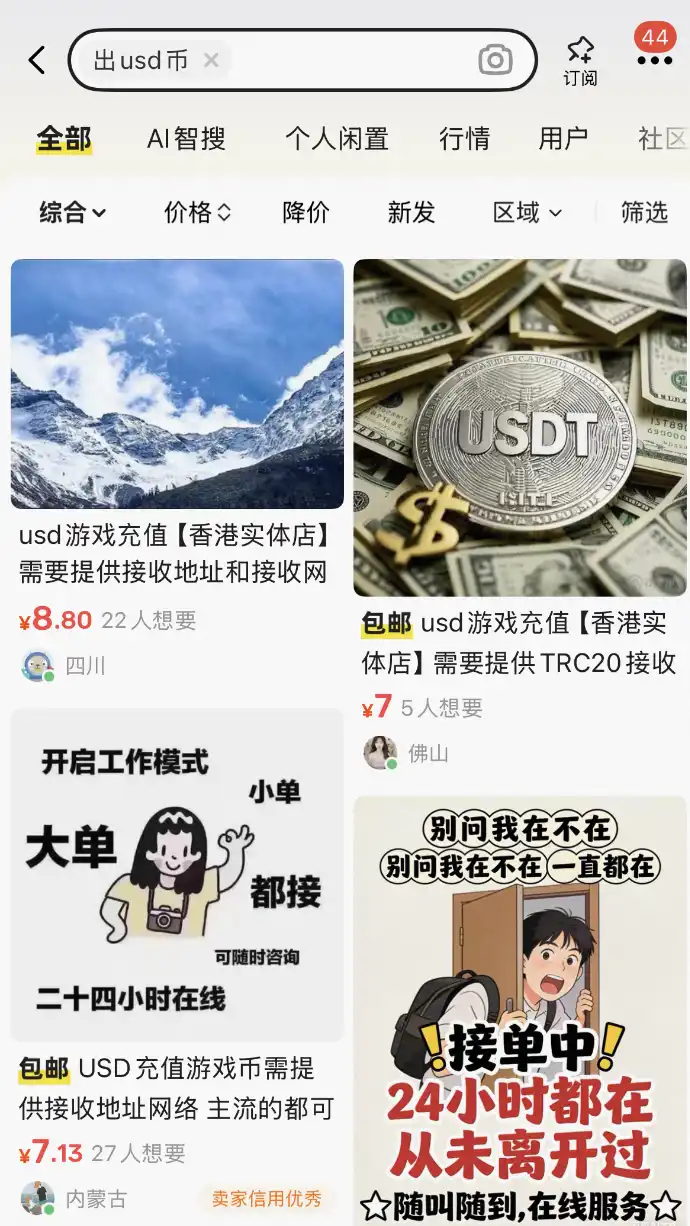
Crypto assets, highly sensitive and strictly restricted in public discourse, haven't truly disappeared. Instead, they've been disguised and folded into a more下沉 (down-market) platform.

"Buy/Sell USDT", "Step-by-step guide to downloading exchange apps", "Overseas ID for exchange KYC", "Binance alpha tutorial"... Here, you can almost buy a one-stop service for crypto guidance.

The digital black market extends far beyond crypto-related content: discounted air tickets, hotel bookings, reservations at热门 (hot) restaurants, concert内场 (inner field/vip) tickets, Soldier AI verification...

On social media, there's a saying:

"You can buy almost anything on Xianyu."

This is not an exaggeration.

The Hidden Crypto Business

In October 2025, the official X account of the Palau Republic's digital residency program rarely issued an announcement in Chinese.

"Recently, it has been discovered that individuals are publicly displaying forged Palau ID documents on social media and using them to bypass KYC verification processes on various platforms. This behavior constitutes serious identity fraud." RNS.ID officially announced that it would implement secondary reviews for all Palau ID users with Chinese pinyin names. Users failing verification would be marked as fraud objects and synchronized to global fraud databases.
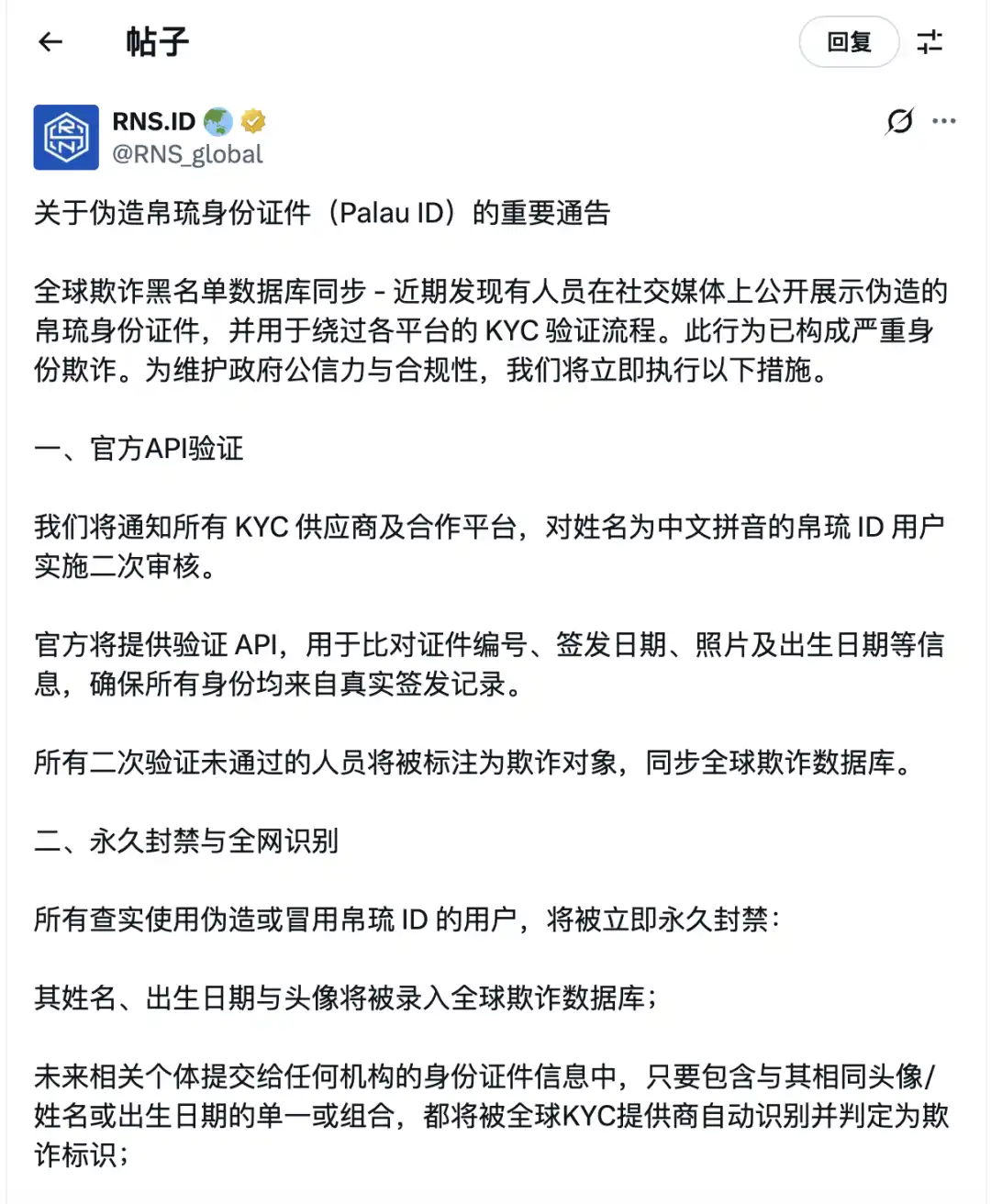
Why would this Pacific island nation's government specifically release a Chinese announcement? The answer lies in Xianyu's search results.

Entering keywords like "overseas identity" or "Palau ID" reveals an underground network for trading fake documents. Prices range from tens to hundreds of RMB, promising "100% pass rate for major exchange verification".
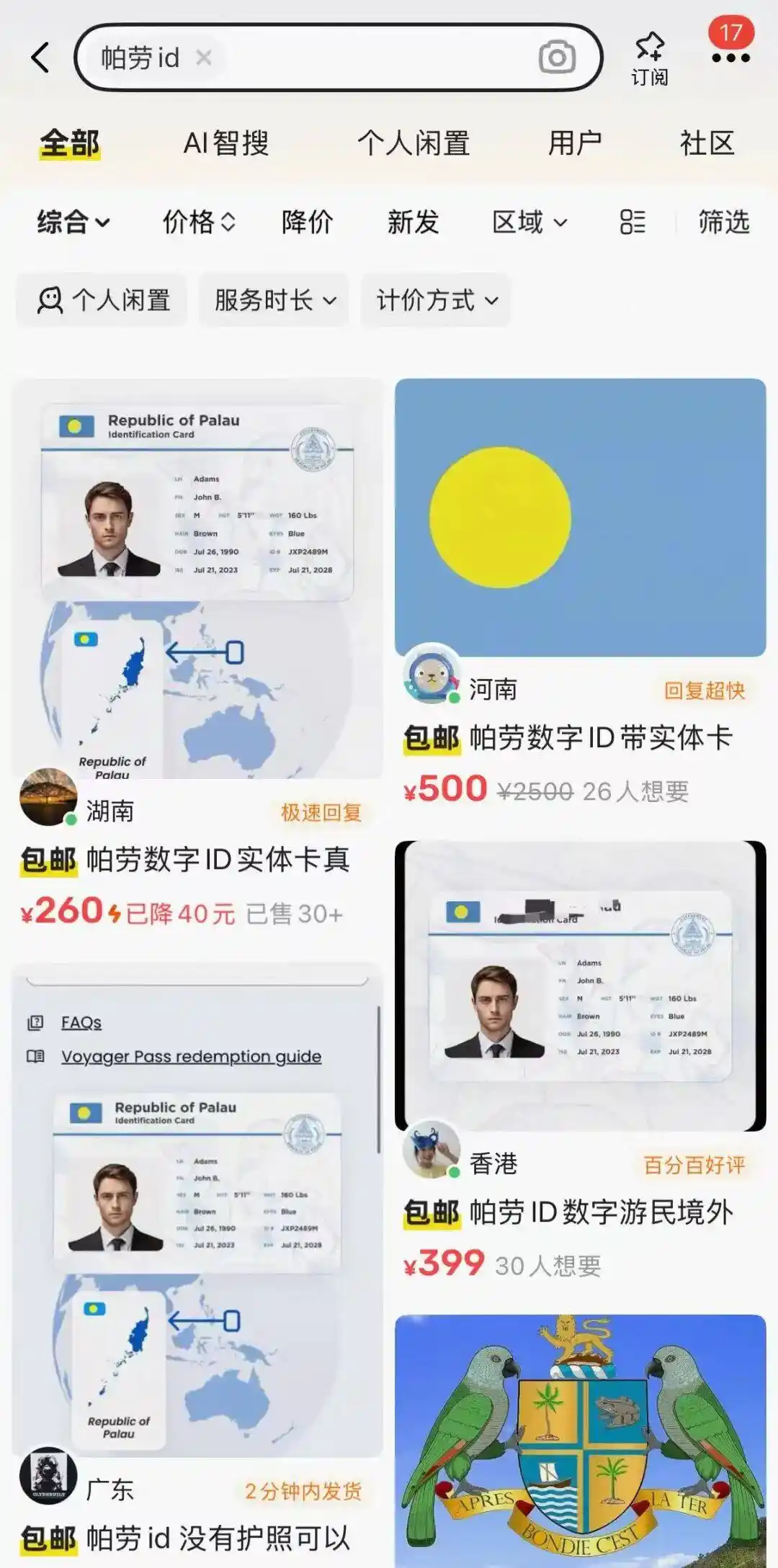
Besides Palau, documents from Dominica, Nigeria, the Philippines, and other countries are also hot commodities. The quality of these fake documents is constantly improving, with sellers offering customization services, using the buyer's real photos to ensure they pass facial recognition.

Beyond selling fake KYC documents, the Xianyu crypto black market has more zero-cost virtual services.

On Xianyu, an account named "Shenzhen Xiaoxia" once sold a 30-minute guidance service for downloading and installing Binance and OKX for 10 RMB. (Note: Currently delisted)

"Xiaoxia" is not a nobody; in the crypto world, this is a thunderous name, a top-tier KOL.

Not long ago, news of him buying Shenzhen's top luxury mansion, CITIC Xinyue Bay, while 60 million RMB in debt, was widely circulated in the industry.

Why would a crypto billionaire personally do "customer service" business for 10 RMB per order on Xianyu?

The 10 RMB tuition fee is just bait; the real income comes from referral commissions. Every user who registers through his link can bring him a share of the transaction fees in the future. An active user might generate hundreds or even thousands of RMB in revenue per month.

This 10 RMB business is an extremely low-cost fishing rod. The other end of the rod connects to a vast, sustainably monetizable pool of traffic.

If "Xiaoxia's" business is an open scheme, more sellers are doing a purer form of "chipping away at the wall" of information asymmetry.

A product priced at 88 RMB, "Binance Alpha Beginner Tutorial", offers one-on-one online lessons, promising "hand-holding guidance, worry-free and effort-saving". The so-called "Alpha" usually refers to activities launched by platforms like Binance that allow users to earn potential airdrop rewards by completing tasks.
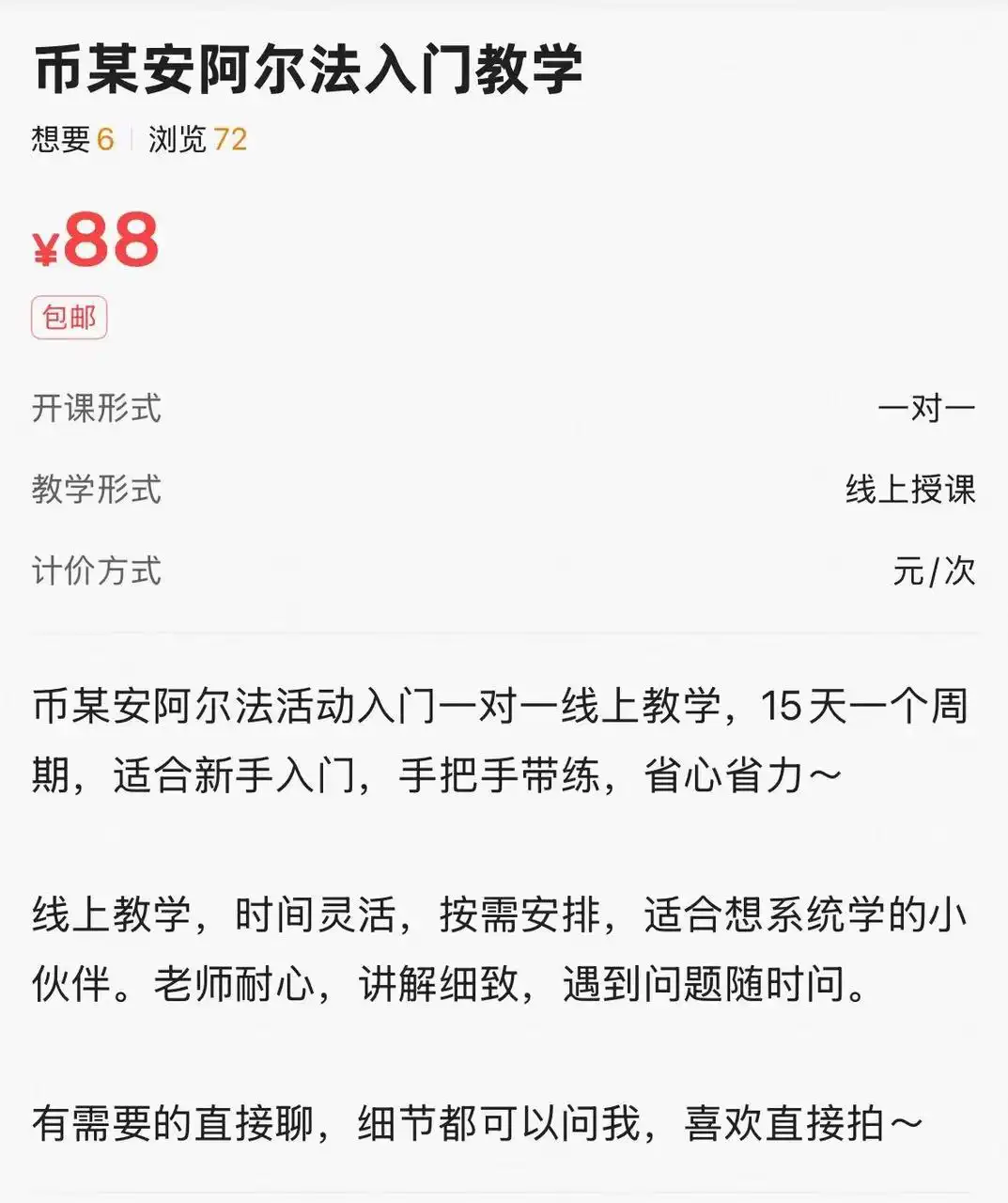
The methods for participating in these activities are already open secrets on platforms like X and YouTube, where countless bloggers share detailed guides for free. But for most domestic users, the wall built by language, internet environment, and information channels is very real.

One buyer commented, "The seller is very helpful, much more convenient than figuring it out myself."

AI "Arsenal"

If crypto trading is just a small "darkroom" opened up in this folded space of Xianyu, then the trade surrounding AI is a truly massive,全民参与的 (nationwide participating) "digital arsenal".

When names like ChatGPT and Claude exploded globally, an invisible wall also rose. Complex registration processes, network environment issues, and the barrier of credit card payments kept the vast majority of curious Chinese users out. They could see the绚烂烟火 (brilliant fireworks) of the new world but couldn't find the entrance.

Xianyu unexpectedly became the folk path绕过高墙 (bypassing the high wall).

The "arms dealers" here offer全套服务 (full-service packages) from入门到精通 (beginner to master).

The most basic commodity is "accounts" – a ready-made GPT or Claude account, priced from tens to over a hundred RMB, often with follow-up monthly top-up services.

Which overseas AI applications and large models are hottest in the market? Just look at Xianyu.

In 2025, when the AI app Manus (now acquired by Meta for $2 billion) burst onto the scene, beta access codes were extremely scarce. On Xianyu, the price of beta codes soared from a few hundred RMB initially to thousands, even tens of thousands overnight. At its peak, someone even listed an astronomical price of "one hundred thousand RMB", which contributed to Manus's massive出圈 (breakout into mainstream awareness).

Currently, the hottest AI products on Xianyu are Gemini and ChatGPT.

The $20 monthly subscription fee for the Plus version is enough to dampen the enthusiasm of many ordinary people.

However, Google offers a one-year free福利 (benefit) for students, and OpenAI launched a福利活动 (benefit campaign) for US military veterans and active-duty personnel, offering a free year of ChatGPT Plus. This small act of policy goodwill was developed by a group of敏锐的卖家 (keen sellers) on Xianyu into a规模化 (scaled) business.

Search for "大兵" (soldier) on Xianyu, and a peculiar cyber spectacle unfolds. Product covers feature various cartoon soldiers or tough guy images, with product names full of默契的黑话 (tacit understanding slang): "Soldier help get verified!", "Soldier one-year plus ready-made account", priced from a few RMB to几十块 (dozens of RMB).

One Xianyu user mentioned on social media: "Xianyu is currently the largest AI training base in the Chinese-speaking world. Without Xianyu, most Chinese people simply couldn't use top-tier international AI models."

This statement is full of contradictions, yet incredibly realistic.

Xianyu, a platform originally meant for trading second-hand goods, thus inadvertently assumed the role of "enlightener" and "popularizer" for top-tier international AI models in China.

Buying Everything

Whether it's crypto trading or AI services, this is still just the tip of the iceberg of Xianyu's digital black market.

"Humanity's development of Xianyu is less than one percent," someone commented, calling Xianyu the Chinese version of the dark web.

The "dark" of Xianyu doesn't solely refer to blackness, but more to the absurdity. A large number of捞偏门 (unconventional/edge) and "underground industries" rarely seen in daily life have taken root and sprouted on the platform.

Some products are so abstract, even匪夷所思 (unimaginable), that they become a source of amusement on social media.

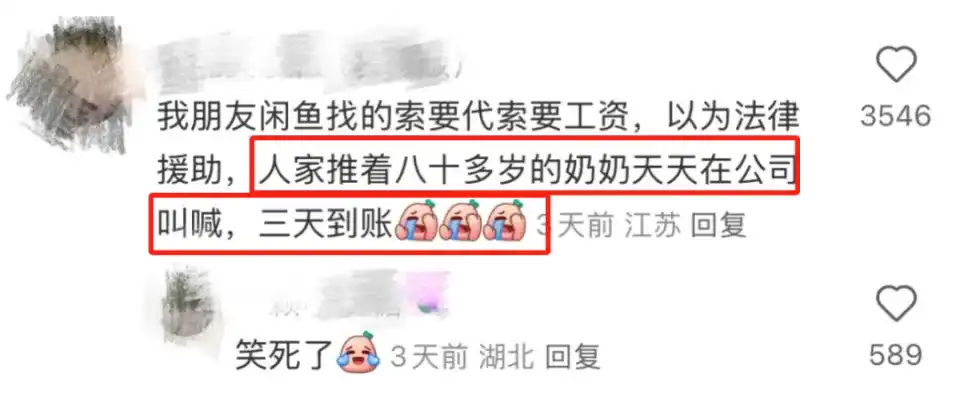
What should a worker do if maliciously owed wages?

Someone went on Xianyu and found low-cost legal aid. Unexpectedly, the merchant directly sent out an over-80-year-old grandma to fight, employing tactics like crying, making a scene, and threatening suicide. The wages arrived in three days.
Someone wanted to refund an airline ticket and sought help on Xianyu, directly receiving a "death certificate".

On Xianyu, we see not just needs and transactions, but perhaps the most authentic field research of the Chinese internet.

In this field grows the most vigorous "wild wisdom".

It doesn't follow the elegant rules of the commercial world,信奉 (believing in) only the highest principle of "solving problems". When正规渠道 (official channels) cannot meet demand, or the cost is too high,民间创造力 (folk creativity) gushes out in a raw, even darkly humorous way.

Xianyu's digital black market presents a真实切片 (real slice) of contemporary Chinese society. Here, there is no glossy brand packaging, but there are the most authentic slices of human nature: speculation, cutting corners, laziness, despair, and the instinct to survive in the cracks of the rules.

However, when the path to solving problems slides into deeper gray areas, the subject of the transaction reaches its endpoint: the person themself.

If hiring an old lady is renting "someone else's performance", then the most dangerous business on Xianyu is renting out "your own identity".

"Selling新人 (newbie), exchange", "Stably recycling exchange accounts, KYC passed, long-term cooperation", "Long-term buying新人扫码注册 (newbie scan code registrations)"... These notices赤裸地 (nakedly) package and sell a person's KYC identity in the digital world. The seller's rhetoric is highly seductive, with some包装 (packaging) this behavior as being a "digital landlord", misleading users into thinking they are merely activating "idle assets" to easily achieve "lying down and earning".

However, an account rented or sold by a novice could become a tool for telecom fraud or money laundering gangs.

From buying a tutorial, to buying an account; from hiring someone to solve your troubles, to renting yourself out to trouble itself. This bizarre chain of transactions ultimately forms a terrifying closed loop.

We start by using money to buy convenience, and end up walking all the way to exchanging ourselves for money.

This fantastical digital soil is both the "folk infrastructure" for ordinary people to bypass barriers and obtain resources, and a dark forest潜伏着 (lurking with) countless traps. It proves in the most extreme way that any suppressed demand will not disappear, but will only emerge in corners untouched by rules, in more primitive and dangerous ways.

Here, convenience and cost are tagged with the same price. You think you're just taking a shortcut, only to find that the end of the shortcut might also be a cliff.

Original article link

Câu hỏi Liên quan

QWhat is the main theme of the article about Xianyu?

AThe article portrays Xianyu (Idle Fish) as a Chinese version of a 'folk dark web,' a platform where users trade a vast array of restricted, gray-market, and bizarre goods and services using coded language to evade oversight, from crypto assets to AI tools and even personal identities.

QAccording to the article, how is Xianyu used for cryptocurrency-related activities?

AUsers on Xianyu trade cryptocurrency-related services using coded terms like '出 USD 币' instead of 'USDT' to avoid detection. Services include selling fake foreign IDs for KYC verification, providing guides for downloading exchange apps, and offering paid tutorials for activities like Binance's 'Alpha' tasks, capitalizing on information barriers for Chinese users.

QWhat role does Xianyu play in the distribution of international AI tools in China?

AXianyu acts as a major unofficial distribution channel, or 'AI training base,' for international AI models in China. Sellers provide services like selling pre-registered accounts for tools like ChatGPT and Claude, monthly top-ups, and even exploiting free access programs (e.g., for students or US military personnel) to sell subsidized or free accounts to the general public.

QWhat are some of the more extreme or 'bizarre' services mentioned as being available on Xianyu?

AThe article cites extremely unconventional services, such as hiring elderly people to perform emotional protests to recover unpaid wages, obtaining fake 'death certificates' to cancel flight tickets, and most dangerously, the buying and selling of personal verified digital identities (KYC) for exchanges, which can be used for illicit activities like fraud and money laundering.

QWhat is the ultimate risk or 'dangerous loop' the article warns about regarding transactions on Xianyu?

AThe article warns that the transaction chain can form a dangerous loop where users start by using money to buy convenience (e.g., a tutorial) but may end up selling their own personal identity and security for money.出租 (renting out) one's own verified digital identity for cash makes individuals complicit in and vulnerable to serious crimes like fraud and money laundering, turning them from consumers into commodities.

Nội dung Liên quan

Con đường chạm mốc 80.000 USD của Bitcoin có thể phụ thuộc vào XU HƯỚNG ẨN NÀY

Chỉ số Coinbase Bitcoin Premium đã trải qua đợt giảm kỷ lục 50 ngày liên tiếp, cho thấy áp lực bán từ các tổ chức hoặc nhu cầu thể chế tại Mỹ đang yếu đi. Mặc dù xu hướng này thường báo hiệu sự thận trọng ngắn hạn hơn là một xu hướng giảm dài hạn. Đồng thời, chỉ số Lãi/Lỗ Thực Chưa Thực Hiện (NUPL) ngắn hạn của Bitcoin cũng đã cắt xuống dưới đường trung bình dài hạn vào ngày 2/6, cho thấy động lực thị trường đang suy yếu và lợi nhuận của nhà đầu tư đang thu hẹp. Trong các đáy thị trường giảm trước đây, chỉ số NUPL trung bình 100 ngày thường giảm xuống dưới 0, nhưng trong chu kỳ này nó vẫn ở mức dương, dự báo khả năng cần một đợt giảm giá khác. Về giá cả, Bitcoin hiện giao dịch quanh mức $63,148, tăng gần 7% trong tuần nhưng vẫn chưa chạm lại mức $80,000. Các tín hiệu kỹ thuật cho thấy một bức tranh hỗn hợp: MACD thể hiện đà tăng, trong khi RSI lại cho tín hiệu giảm. Một điểm tích cực là dòng tiền vào các Quỹ ETF Bitcoin đã quay trở lại sau 8 tuần chảy ra liên tiếp. Tuy nhiên, dự báo cộng đồng vẫn chia rẽ. Một số nhà phân tích cảnh báo về vùng thanh khoản mạnh ở $48,000-$50,000, nơi có thể kích hoạt nhiều lệnh dừng lỗ. Trong khi đó, những người nắm giữ dài hạn vẫn kiên định bất chấp ba quý thua lỗ liên tiếp. Tóm lại, dù có một số dấu hiệu tăng giá, Bitcoin cần một làn sóng mua mạnh mẽ từ các nhà đầu tư tổ chức để có đà vượt qua ngưỡng $80,000. Diễn biến của chỉ số NUPL trung bình 100 ngày so với mức 0 sẽ là yếu tố quan trọng cần theo dõi trong những tuần tới.

ambcrypto10 phút trước

Con đường chạm mốc 80.000 USD của Bitcoin có thể phụ thuộc vào XU HƯỚNG ẨN NÀY

ambcrypto10 phút trước

Vừa rồi, mô hình thế giới siêu cao khung hình đầu tiên toàn cầu ra đời, không chứa Nvidia, lao nhanh 50 FPS

Thế giới mô hình thực sự bước vào thời đại thời gian thực. Khi ngành công nghiệp vẫn đang vật lộn với 5-10 FPS, một nhóm các nhà nghiên cứu Trung Quốc đã đưa mô hình thế giới tương tác thời gian thực lên 50 FPS. MoWorld - Flash World Model toàn cầu đầu tiên từ Moxin Tech và Đại học Chiết Giang, cũng là mô hình thế giới tương tác thời gian thực đầu tiên được xây dựng hoàn toàn trên nền tảng NPU nội địa (chip Ascend 910C). Dự án đã xây dựng một vòng khép kín hoàn chỉnh từ đào tạo, chưng cất đến triển khai suy luận trên nền tảng NPU nội địa, giảm chi phí suy luận 70% so với các giải pháp GPU quy mô tương đương. MoWorld đạt được khả năng đào tạo và suy luận video dài 2000 khung hình, hỗ trợ điều khiển camera 6DoF cho trải nghiệm du lịch ảo sống động. Ứng dụng tiềm năng bao gồm giải trí tương tác, trí tuệ thể hiện, sáng tạo phim ảnh và số đôi sinh. Đột phá này chứng minh khả năng của nền tảng điện toán nội địa trong việc hỗ trợ các mô hình thế giới tiên tiến, mở ra cơ hội cạnh tranh và định hình tiêu chuẩn cho thế hệ trí tuệ không gian tiếp theo.

marsbit58 phút trước

Vừa rồi, mô hình thế giới siêu cao khung hình đầu tiên toàn cầu ra đời, không chứa Nvidia, lao nhanh 50 FPS

marsbit58 phút trước

Thái Bình Dương 'sốt', thời tiết cực đoan biến thành máy rút tiền cho Phố Wall như thế nào?

Bài viết phân tích sâu về hiện tượng El Niño đang diễn ra năm 2026, được dự báo có thể mạnh nhất kể từ năm 1950, và tác động đa chiều của nó đến khí hậu toàn cầu cùng thị trường tài chính. El Niño khiến nhiệt độ bề mặt đại dương ở trung và đông Thái Bình Dương ấm lên bất thường, gây ra các hiện tượng thời tiết cực đoan như mưa lũ ở Trung Quốc, hạn hán ở Đông Nam Á, và ảnh hưởng đến gió mùa tại Ấn Độ. Sự kết hợp với biến đổi khí hậu càng làm trầm trọng thêm các rủi ro. Trên thị trường tài chính, các quỹ đầu cơ như Moreton Capital đang huy động vốn để đặt cược vào sự gián đoạn nguồn cung nông sản do El Niño gây ra. Lịch sử cho thấy nhiều nhà giao dịch như Richard Dennis hay Anthony Ward đã kiếm lợi nhuận khổng lồ nhờ dự đoán chính xác tác động của thời tiết lên giá cả hàng hóa như đậu nành, ca cao. Gần đây, đợt giá ca cao tăng vọt năm 2024 do thời tiết bất lợi ở Tây Phi là một ví dụ điển hình. Hiện tại, giá cả các mặt hàng như dầu cọ, cao su, đường đã tăng do kỳ vọng vào nguồn cung sụt giảm trong tương lai, bất chấp số liệu tồn kho hiện tại vẫn cao. Bài viết liệt kê các chỉ số then chốt cần theo dõi để đánh giá diễn biến tiếp theo, như chỉ số Niño3.4, dữ liệu gió mùa Ấn Độ và báo cáo tồn kho dầu cọ Malaysia. Cuối cùng, bài viết cảnh báo rằng những câu chuyện về El Niño đang được ghép nối với các rủi ro khác như thiếu hụt phân bón và căng thẳng địa chính trị, tạo thành một "câu chuyện kể" có nguy cơ ảnh hưởng đến an ninh lương thực và chi phí sinh hoạt của người dân toàn cầu. Tác động thực sự về giá có thể xảy ra mạnh mẽ nhất sau khi El Niño đạt đỉnh.

marsbit59 phút trước

Thái Bình Dương 'sốt', thời tiết cực đoan biến thành máy rút tiền cho Phố Wall như thế nào?

marsbit59 phút trước

Thái Bình Dương 'Sốt Cao', Biến Đổi Thời Tiết Cực Đoan Lại Trở Thành 'Máy Rút Tiền' Của Phố Wall?

Tháng 7/2026, các hiện tượng thời tiết cực đoan như mưa lớn, lũ lụt, nắng nóng và bão ở châu Á, cùng với hạn hán ở Đông Nam Á, Nam Mỹ, đều có liên quan đến El Niño - hiện tượng ấm lên bất thường của vùng nước biển trung tâm và đông Thái Bình Dương. Các cơ quan khí tượng dự báo đây có thể là đợt El Niño mạnh nhất kể từ năm 1950. El Niño không chỉ ảnh hưởng đến thời tiết mà còn tác động mạnh đến thị trường hàng hóa toàn cầu, tạo ra cơ hội đầu cơ cho các quỹ đầu tư. Năm 1972, El Niño khiến cá cơm Peru biến mất, đẩy giá đậu tương tăng và giúp nhà giao dịch huyền thoại Richard Dennis kiếm được khoản lợi nhuận đầu tiên. Gần đây, năm 2024, thời tiết khô nóng ở Tây Phi đã làm giảm sản lượng ca cao, đẩy giá tăng hơn 400%. Năm 2026, thị trường lại xôn xao với kỳ vọng El Niño. Một quỹ phòng hộ đang gọi vốn 500 triệu USD để đầu tư vào các mặt hàng nông sản nhạy cảm với thời tiết như ngô Nam Phi, dầu cọ Malaysia và lúa mì Australia. Giá dầu cọ, cao su, đường trên thị trường kỳ hạn đã tăng dựa trên kỳ vọng về nguồn cung giảm trong tương lai, bất chấp dữ liệu tồn kho hiện tại vẫn cao. Tác động của El Niño khác nhau tùy khu vực: gây hạn hán ở Đông Nam Á (ảnh hưởng dầu cọ, cao su), làm giảm gió mùa ở Ấn Độ (ảnh hưởng đường, bông), nhưng lại có thể mang đến mưa nhiều cho Nam Mỹ (có lợi cho đậu tương, mía). Các chuyên gia cho rằng tác động giá cả thực sự thường xảy ra sau khi El Niño đạt đỉnh, tức là năm 2027 mới là thời điểm giao dịch dựa trên tình trạng sản lượng giảm thực tế. Bên cạnh cơ hội đầu tư, một luồng thông tin đáng lo ngại đang lan truyền, kết nối El Niño với tình trạng thiếu phân bón, gián đoạn năng lượng và nguy cơ khủng hoảng lương thực toàn cầu trong vòng 3-4 tháng tới. Điều này cho thấy tác động của biến đổi khí hậu và thời tiết cực đoan không còn là chuyện của thiên nhiên hay nhà đầu tư, mà ngày càng ảnh hưởng trực tiếp đến đời sống và chi phí sinh hoạt của mọi người.

链捕手1 giờ trước

Thái Bình Dương 'Sốt Cao', Biến Đổi Thời Tiết Cực Đoan Lại Trở Thành 'Máy Rút Tiền' Của Phố Wall?

链捕手1 giờ trước

Vừa mới đây, Nhà tương lai học trưởng của OpenAI rời đi, từng bị Elon Musk chửi là 'đồ ngu ngốc'

Vừa qua, Joshua Achiam, nhà tương lai học trưởng của OpenAI, đã tuyên bố rời công ty sau 9 năm gắn bó. Ông gia nhập OpenAI với tư cách thực tập sinh vào năm 2017, từng là nhà khoa học nghiên cứu an toàn AI và lãnh đạo nhóm Sứ mệnh Phù hợp (Mission Alignment), chịu trách nhiệm bảo vệ sứ mệnh ban đầu của công ty: đảm bảo AGI (trí tuệ nhân tạo phổ quát) mang lại lợi ích cho nhân loại. Đầu năm nay, nhóm này bị giải tán và ông chuyển sang vai trò Nhà tương lai học trưởng. Trong bài đăng trên X, Achiam mô tả quyết định rời đi sau nhiều suy nghĩ là "tốt nghiệp". Ông bày tỏ sự lạc quan về một tương lai nơi nhu cầu cơ bản của mọi người được đáp ứng và chứa đựng những khả năng khoa học xã hội khó tưởng tượng, kết thúc bằng thông điệp "Hướng tới một AGI an toàn". Vị trí của ông nằm ở giao điểm giữa an toàn AI và chính sách, nhằm nghiên cứu rủi ro và lợi ích tiềm tàng khi AI phát triển. Việc ông rời đi làm dấy lên bàn luận về làn sóng các lãnh đạo an toàn rời OpenAI thời gian gần đây, như Jan Leike, Miles Brundage và Andrea Vallone. Trong khi đó, OpenAI đang nỗ lực kết nối chặt chẽ hơn giữa đội ngũ nghiên cứu và chính sách. Một khoảnh khắc đáng chú ý trong sự nghiệp của Achiam là vào năm 2018, khi ông chất vấn Elon Musk về rủi ro an toàn liên quan đến kế hoạch phát triển AGI tại Tesla, và bị Musk gọi là "jackass" (kẻ ngốc). Sự kiện này sau đó trở thành một giai thoại nội bộ. Achiam cho rằng, bí mật về việc đạt được AGI giờ đây đã được biết đến, và việc thúc đẩy sứ mệnh này bên ngoài các phòng thí nghiệm tiên phong cũng đã trở nên khả thi. Sự ra đi của ông đánh dấu một bước ngoặt, phản ánh sự phát triển và những thay đổi nội bộ của OpenAI khi nó chuyển từ một phòng lab nghiên cứu nhỏ thành một tổ chức lớn với nhiều áp lực về sản phẩm, vốn đầu tư và chính sách.

marsbit1 giờ trước

Vừa mới đây, Nhà tương lai học trưởng của OpenAI rời đi, từng bị Elon Musk chửi là 'đồ ngu ngốc'

marsbit1 giờ trước

Giao dịch

Giao ngay
活动图片