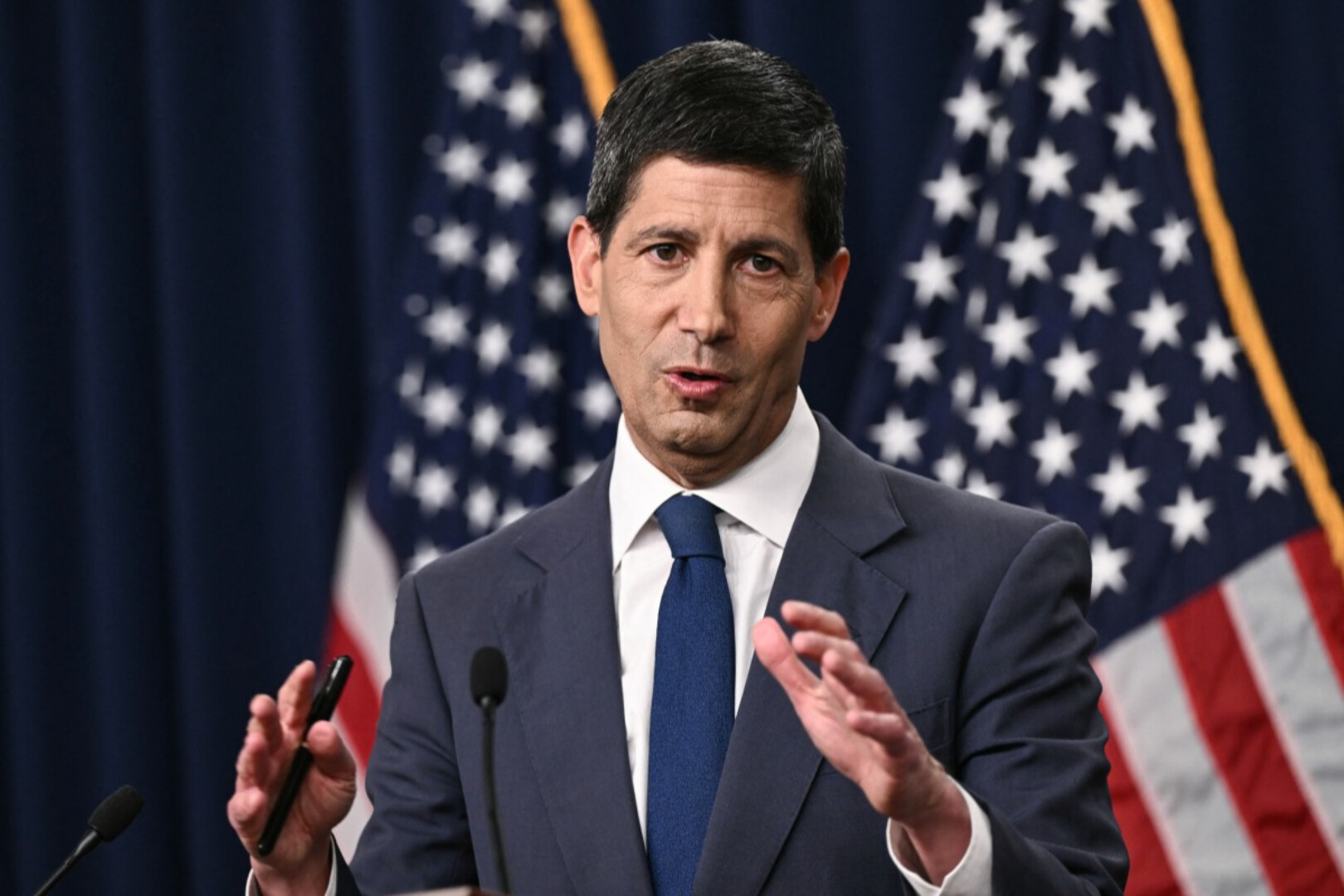
Is U.S. Congressman Warren Davidson reacting to the current situation in Canada? He recently introduced the “Keep Your Coins Act” to protect private bitcoin and crypto usage in his country. Specifically, it prohibits Federal Agencies from interfering with the right to self-custody and to transact P2P. It restricts their ability to ban “self-hosted” cryptocurrency wallets.
In Canada, things are looking bad for freedom. The government reduced the legitimacy of all crowdfunding platforms by prohibiting them to give to the Canadian truckers the money people donated. And then, it got worse.
As X Strategies’ Greg Price puts it, “Canada’s Deputy Prime Minister says, under the Emergencies Act, banks can immediately freeze or suspend bank accounts without a court order and be protected from civil liability.“
To that, Warren Davidson responded. “Our office will be introducing legislation in the US House of Representatives shortly to protect Americans from this version of overt theft.” And then, Davidson explained his rationale. “A number of people will undoubtedly recognize that, “Bitcoin fixes this.” That’s only true with self-custody. Account-based crypto has similar vulnerabilities.”
While describing the Canadian truckers situation, controversial TV presenter Tucker Carlson said:
“Tally Coin, for example, is a small crowdfunding service that uses Bitcoin. It’s not controlled by banks, that’s the point. They’re hosting a fundraiser for the truckers. Now, why is this appealing? No one can steal the money. No government can pressure anyone to turn the money over, because governments don’t control crypto.”
That’s only true with self-custody.
So, What Did Warren Davidson’s New Bill Say Exactly?
Let’s answer that with a direct quote from Davidson’s “Keep Your Coins Act”:
“IN GENERAL.—No agency head may prohibit or otherwise restrict the ability of a covered user to— (1) use virtual currency or its equivalent for such user’s own purposes, such as to purchase real or virtual goods and services for the user’s own use; or (2) conduct transactions through an self-hosted wallet.”
To clarify, according to Davidson, bitcoin and crypto act “as a substitute for currency but may not possess all the attributes (including legal tender status).” Warren Davidson has been working on this for a while, when Bitcoinist reported on his presentation at the Bitcoin 2021 conference, we said:
“Politicians only care about a few things, and money is one of them. “If we don’t do this right, the capital will flow out of the United States,” said the Representative referring to the regulation around Bitcoin. According to him, Congress should pass law and define, “What is a security and what’s not” The country needs more clarity.”
And, if the “Keep Your Coins Act” passes, it will have more clarity.
Did Warren Davidson Say Something About The New Bill?
He did, in a recent interview. The article’s author defined the “Keep Your Coins Act” as, “protecting the ability to act as a self-custodian and conduct peer-to-peer transactions by prohibiting any agency from impairing this right.”
In it, Davidson says that his inspiration was actually U.S. Treasury Secretary Janet Yellen:
“We started working on the text after it was obvious that Secretary Yellen would resurrect the effort to restrict self-custody. If they can’t stop crypto, they want to try to move it to an account-based system.”
And he tells us the exact reason that he used the loaded term “self-hosted wallet.”
“It takes the FinCen language that’s been out there for a while now and provides a framework for KYC that protects self-custody.”
Ok, he was using the language of the enemy, but, why is Warren Davidson talking about KYC? The very short bill doesn’t even mention it, but, as you can see, it’s in the Congressman’s mind. In any case, the “Keep Your Coins Act” still has to pass, which is easier said than done. The crypto industry has powerful enemies, and self-custody isn’t a popular concept among that crowd.