# Unemployment İlgili Makaleler

HTX Haber Merkezi, kripto endüstrisindeki piyasa trendleri, proje güncellemeleri, teknoloji gelişmeleri ve düzenleyici politikaları kapsayan "Unemployment" hakkında en son makaleleri ve derinlemesine analizleri sunmaktadır.

India's Most Profitable Business, Uprooted by AI?

A tragic double suicide in Bangalore highlights the human cost of AI's disruption to India's IT outsourcing industry. A former high-earning software engineer, unemployed after AI made his US role redundant, and his wife took their own lives after he failed to find comparable work in India. This story underscores a systemic crisis. India's $2800 billion IT services sector, built on providing low-cost human labor to global clients, is facing an existential threat from AI automation. Tasks once performed by armies of junior coders are now handled faster and cheaper by AI tools, eroding the core cost advantage. Companies like OpenDoor are cutting entire India-based teams to rebuild with smaller, AI-native units. Major Indian IT firms like TCS and Wipro are experiencing layoffs and stalled revenue growth. Reports warn that up to 30% of work hours in India could be automated by 2030, with youth unemployment soaring. The industry's historical success, fueled by solving the Y2K crisis and providing "body shopping" services, has created a dangerous path dependency. While companies attempt to pivot to AI consulting and governments promote AI strategies, the pace of job displacement may overwhelm efforts. India's struggle poses a critical question for developing nations: what is the new path to economic development in the AI era when the old model of leveraging cheap labor for outsourced work is becoming obsolete?

marsbit08/10 06:41

India's Most Profitable Business, Uprooted by AI?

marsbit08/10 06:41

The person closest to the Federal Reserve commented on US non-farm payroll data!

The U.S. non-farm sector lost 23,000 jobs in July, indicating the labor market has not yet stabilized following four months of positive growth, although the unemployment rate edged down to 4.1%. Following the weak jobs data, Wall Street Journal reporter Nick Timiraos, known for his close ties to Federal Reserve policy, stated that interpreting the July employment report will be a complex task for the Fed. According to Timiraos, the new data showing the labor market is no longer improving could reduce the need for the Fed to raise interest rates next month. However, the most critical factor determining the direction of the interest rate decision will be inflation data. He noted that market focus will remain on inflation, especially as unemployment continues to fall, with rising or falling price pressures likely to shape the Fed's approach to interest rate policy. Therefore, moderate inflation data could strengthen the argument for the Fed to leave rates unchanged. Specifically, two consecutive months of moderate inflation could be interpreted as a sign that slowing price pressures are becoming a more pronounced trend, not a temporary fluctuation. Conversely, positive inflation data could force the Fed to reconsider its current inflation forecasts and increase the likelihood of a rate hike. Timiraos added that if inflation proves to be high, forecasts of reaching inflation targets without changing interest rates could be questioned by more Fed officials. In such a scenario, support for a rate hike among policymakers could increase.

cryptonews.ru08/07 17:51

The person closest to the Federal Reserve commented on US non-farm payroll data!

cryptonews.ru08/07 17:51

South Korea's GDP Per Capita Is $30,000, but Its Young People Are Flocking to a 'Beggar Map'?

Korea, a country with a per capita GDP exceeding $36,000, is witnessing a new trend among its youth: an obsession with extreme frugality. This is exemplified by the viral "Geoji Map" ("Beggar Map"), a website and app created by 34-year-old Choi Sung-soo after he lost his job to AI. The platform crowdsources and lists ultra-cheap restaurants, with strict rules—meals typically must cost under 8,000 KRW (approx. $6) and provide decent protein and vegetables. It gained 1.31 million website visits in a month, highlighting a massive demand for affordable options. This "jjantech" (frugal finance) movement extends beyond food. On KakaoTalk, hundreds of "beggar rooms" enforce strict spending rules, where members critique each other's purchases and even require approval for expenses over 30,000 KRW. Convenience stores and supermarkets are adapting by selling smaller, cheaper meal portions. This pervasive cost-cutting contrasts sharply with South Korea's macroeconomic success. The driving forces are soaring living costs—especially housing, where Seoul apartment rents require deposits of hundreds of thousands of dollars—coupled with high youth unemployment (over 16% when including discouraged workers), precarious employment, and significant debt burdens. Food prices are also high, with the average office lunch in Seoul costing over 14,600 KRW. The shift represents a deeper change in mindset. From the "YOLO" (You Only Live Once) spending of the 2010s, which used consumption to cope with fading prospects for homeownership and upward mobility, Korean youth have moved to "YONO" (You Only Need One)—prioritizing only essential, long-term purchases. Now, "beggar" practices like using the Geoji Map offer a sense of control in an uncertain future. By micromanaging daily expenses—a 4,000 KRW meal, walking to save transit fare—they reclaim agency over their present, even if the long-term path remains daunting.

marsbit08/05 02:47

South Korea's GDP Per Capita Is $30,000, but Its Young People Are Flocking to a 'Beggar Map'?

marsbit08/05 02:47

Debate: Korean Workers Fear Unemployment, While Musk Envisions a Society 'Without Work'?

While South Korean auto workers fear job losses from robotics, Elon Musk envisions a future where AI and robots render most work optional. This article explores the growing tension between immediate anxieties over automation and long-term visions of a post-work society. The piece begins with recent strikes at Hyundai's Korean plants, where unions, amid standard wage negotiations, also sought job guarantees against advancing robotics—specifically mentioning Boston Dynamics' Atlas. This reflects how anxiety about technological displacement is emerging even before robots are fully capable of replacing skilled labor on assembly lines. The author argues that while current robotics still struggle with the nuanced, experiential knowledge of veteran workers, the *perception* of imminent replacement is fueling social conflict prematurely. This modern "Luddite" sentiment is compared to the 19th-century English textile workers who smashed machines. Historically, Luddites weren't simply anti-technology; they were protesting the rapid devaluation of their skills and the unequal distribution of productivity gains. Similarly, today's workers ask who will bear the cost of transition and share in the new wealth created by machines. In contrast, figures like Elon Musk propose an optimistic endpoint: with AI and robotics driving extreme abundance, the link between work and survival could break. He suggests concepts like "Universal High Income" could allow society to share the technological bounty, transforming work from a necessity into a choice. The core challenge, however, lies in the transition. The author notes that technology's benefits diffuse slowly, while its disruptive costs—job losses, skill obsolescence—can be concentrated and immediate. The risk is a painful interim period where productivity gains are captured by a few before new social contracts, safety nets, and retraining systems are established. The conclusion calls for proactive governance. Just as past industrial revolutions gave rise to labor standards and social safety nets, the robotics era needs its own frameworks. These should address job transition support, distribution of productivity gains, safety liability, and ethical deployment. Embracing such "constraints" is not opposition to progress but a necessary step to ensure technology benefits society broadly. The discussion sparked by Hyundai's workers, therefore, is not premature but essential.

marsbit08/03 10:10

Debate: Korean Workers Fear Unemployment, While Musk Envisions a Society 'Without Work'?

marsbit08/03 10:10

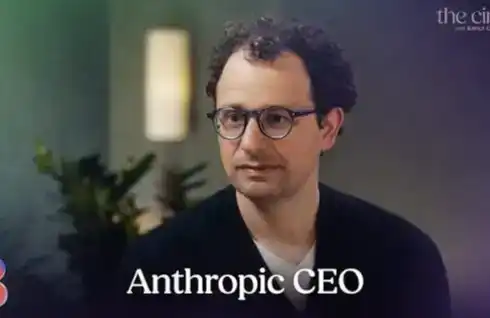
Anthropic CEO's Latest Interview: On Technological Explosion, Safety Red Lines, and the Civilization Contract

Interview with Anthropic CEO Dario Amodei covers the intense pressures and ethical dilemmas of leading AI development. He describes the experience as "exponential growth," feeling constant acceleration akin to relativistic time dilation. The discussion delves into his departure from OpenAI, rooted in a fundamental loss of trust and divergent values rather than mere technical disagreements. Amodei emphasizes Anthropic's enterprise-focused business model, arguing it aligns better with safety and responsible deployment than consumer-facing, ad-driven models. He addresses critical issues like AI's impact on employment, advocating for proactive macroeconomic policies and a shift towards "doing more with the same resources" to avoid widespread job displacement. On safety and governance, he details Anthropic's cautious approach, including delaying the release of the powerful "Mythos" model due to its advanced cyber capabilities. He stresses the need for "human-in-the-loop" principles in military applications, setting red lines against autonomous weapons and mass surveillance. Amodei calls for industry collaboration among trustworthy actors to establish standards and advocates for a balanced regulatory framework with checks and balances, such as Anthropic's Long-term Benefit Trust, rather than corporate or government monopoly over the technology. He expresses geopolitical concerns, particularly regarding China, and a belief that AI should bolster liberal democracies. While acknowledging a non-zero risk of civilizational catastrophe from advanced AI, he asserts Anthropic's actions are aimed at significantly reducing that probability. The interview concludes with Amodei arguing that trust must be earned through concrete actions, like sacrificing commercial gain for safety, to distinguish Anthropic in a Silicon Valley landscape he criticizes for eroded public trust.

marsbit06/18 08:34

Anthropic CEO's Latest Interview: On Technological Explosion, Safety Red Lines, and the Civilization Contract

marsbit06/18 08:34

The Unclear American Economy: Resilient or Cooling Down?

**U.S. Economic Outlook: Resilient or Cooling Down?** This analysis examines whether the U.S. economy is heading towards a recession. While still growing, the economy shows significant signs of strain. Key data points include Q1 2026 GDP growth of 1.6% and Q1 PCE inflation at 4.5% (annualized), more than double the Fed's target. The labor market remains resilient but is softening, with unemployment at 4.3%. Critical recession indicators present a mixed picture: the yield curve has normalized after a prolonged inversion (historically a late-cycle signal), and the Conference Board's Leading Economic Index has been declining. Current recession probability for 2026 is estimated at 19%, but rises to 41% for 2027, indicating heightened delayed risks. Major pressures are building: a wall of corporate debt refinancing at higher rates, depleted consumer savings, a contracting housing sector, and an energy price shock. The economy exhibits stagflationary characteristics—high inflation alongside slowing growth—which constrains the Federal Reserve's policy options. Historical patterns show recessions are often preceded by Fed tightening and yield curve inversions. If a recession occurs, it is expected to be mild, similar to 2001 rather than 2008. For investors, a defensive portfolio shift toward staples, healthcare, and short-term high-quality bonds may be prudent, while maintaining a long-term, diversified perspective. Key developments to monitor include upcoming GDP, employment, and inflation data, as well as policy signals from the new Fed Chair.

marsbit06/15 05:54

The Unclear American Economy: Resilient or Cooling Down?

marsbit06/15 05:54

活动图片