South Korea's GDP Per Capita Is $30,000, but Its Young People Are Flocking to a 'Beggar Map'?

marsbit2026-08-05 tarihinde yayınlandı2026-08-05 tarihinde güncellendi

Özet

Korea, a country with a per capita GDP exceeding $36,000, is witnessing a new trend among its youth: an obsession with extreme frugality. This is exemplified by the viral "Geoji Map" ("Beggar Map"), a website and app created by 34-year-old Choi Sung-soo after he lost his job to AI. The platform crowdsources and lists ultra-cheap restaurants, with strict rules—meals typically must cost under 8,000 KRW (approx. $6) and provide decent protein and vegetables. It gained 1.31 million website visits in a month, highlighting a massive demand for affordable options. This "jjantech" (frugal finance) movement extends beyond food. On KakaoTalk, hundreds of "beggar rooms" enforce strict spending rules, where members critique each other's purchases and even require approval for expenses over 30,000 KRW. Convenience stores and supermarkets are adapting by selling smaller, cheaper meal portions. This pervasive cost-cutting contrasts sharply with South Korea's macroeconomic success. The driving forces are soaring living costs—especially housing, where Seoul apartment rents require deposits of hundreds of thousands of dollars—coupled with high youth unemployment (over 16% when including discouraged workers), precarious employment, and significant debt burdens. Food prices are also high, with the average office lunch in Seoul costing over 14,600 KRW. The shift represents a deeper change in mindset. From the "YOLO" (You Only Live Once) spending of the 2010s, which used consumption to cope wit...

South Korean youth have recently invented a new way of dining: first open the "Beggar Map," filter nearby restaurants by price; once a single meal costs more than 8,000 won (37 yuan RMB) and has no meat or vegetables, it's immediately deemed "unworthy of the list."
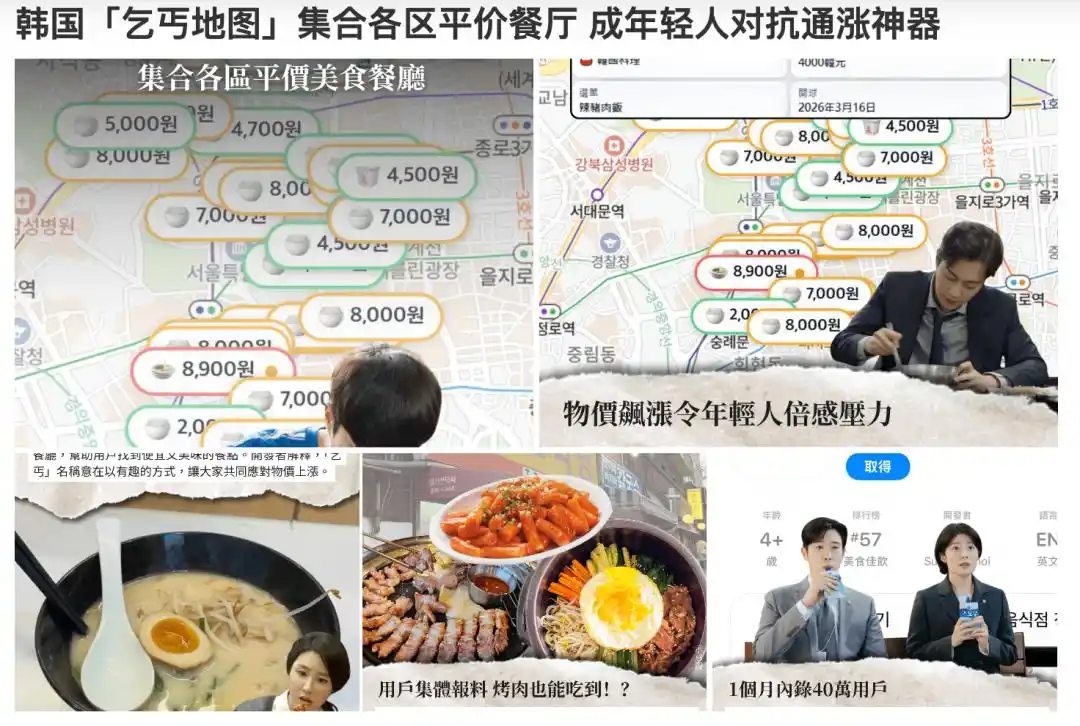
The developer of this map, Choi Seong-su, is 34 years old and lost his job due to the impact of the AI wave. Living on severance pay, he limited his daily food budget to 10,000 won. Later, using AI programming tools, he spent a weekend creating a website dedicated to finding cheap restaurants.

What made him unemployed was AI, and what helped him figure out "where to eat cheaply after becoming unemployed" was also AI—a closed-loop service in the making.

Within a month of its launch, the website reached 1.31 million visits; the app surpassed 21,000 downloads in 6 days. In a country with a GDP per capita exceeding $36,000, home to global giants like Samsung and Hyundai, "where to eat a 5,000-won meal today" has become a question studied by millions.

01: South Korean Youth Turn Saving Money into a Competitive Game

The official name of the "Beggar Map" is Geoji Map. There are no Michelin stars on this map, only prominent price figures: 3,000-won bibimbap, 3,900-won pasta, 4,000-won pork cutlet.
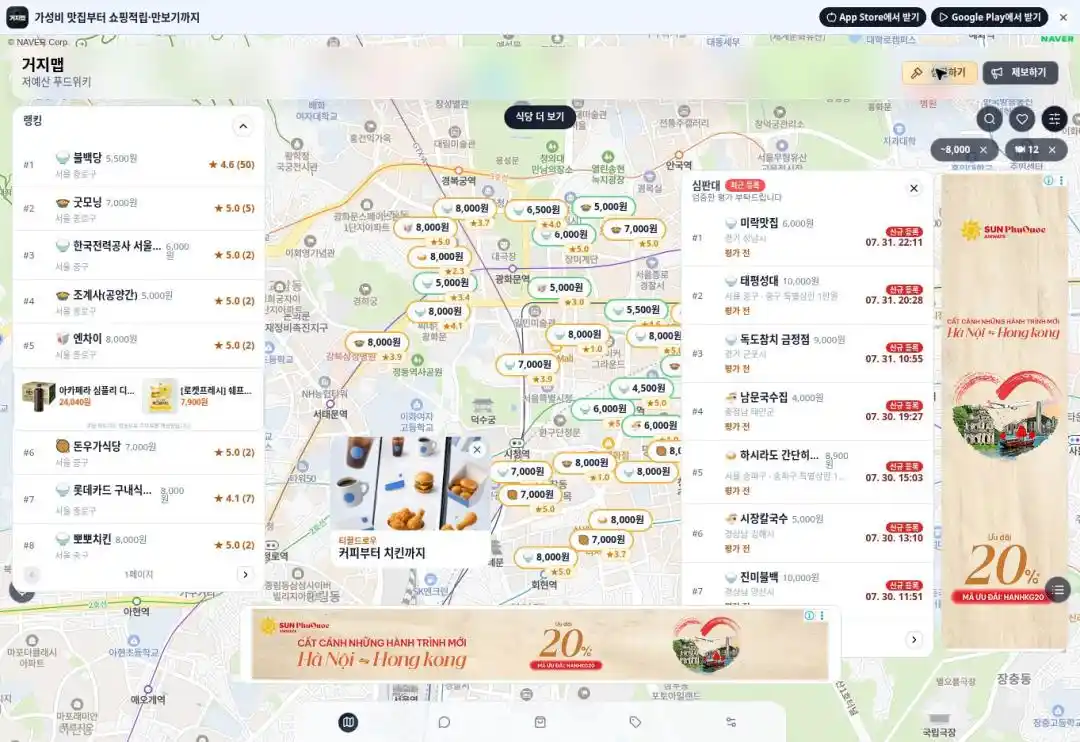
Its rules are stricter than many food guides. Initially, most areas used 8,000 won as the reference line, with high-consumption areas like Gangnam and Yeouido allowing up to 10,000 won; restaurants that exceed the price limit or use a single cheap side dish as a lure may be reported and removed by users.

Cheap isn't enough; the meal also has to be substantial. The platform emphasizes that "beggars also need" protein and dietary fiber. High-carb menus like noodles, if priced over 7,000 won, generally don't qualify; a meaty seolleongtang (ox bone soup) at the same price might pass. The platform's review rules carry a rigorous nutritional spirit of being poor but thorough.
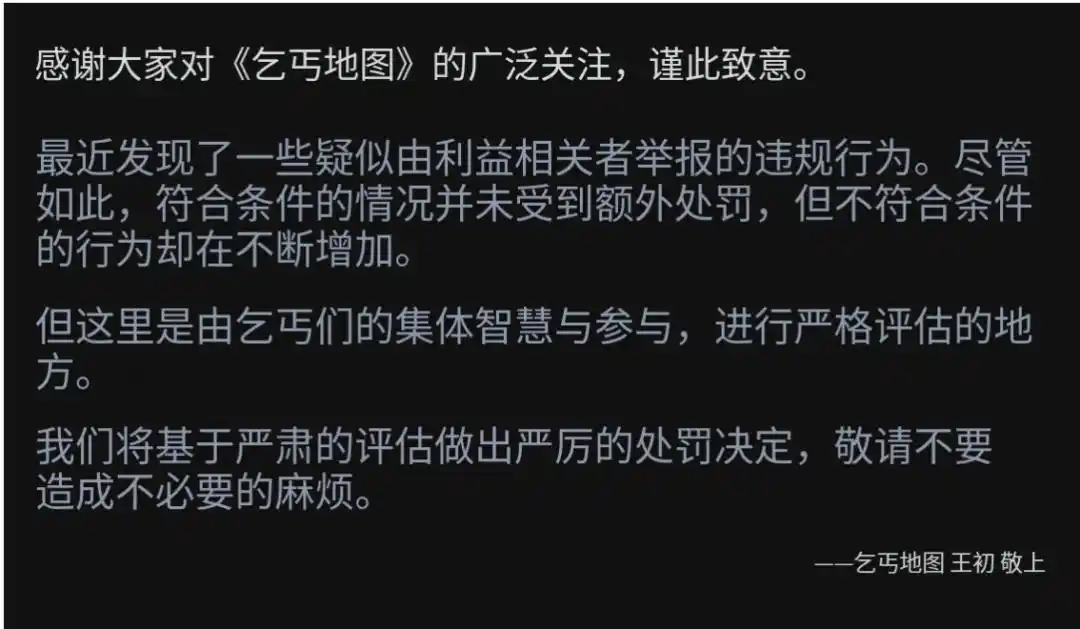
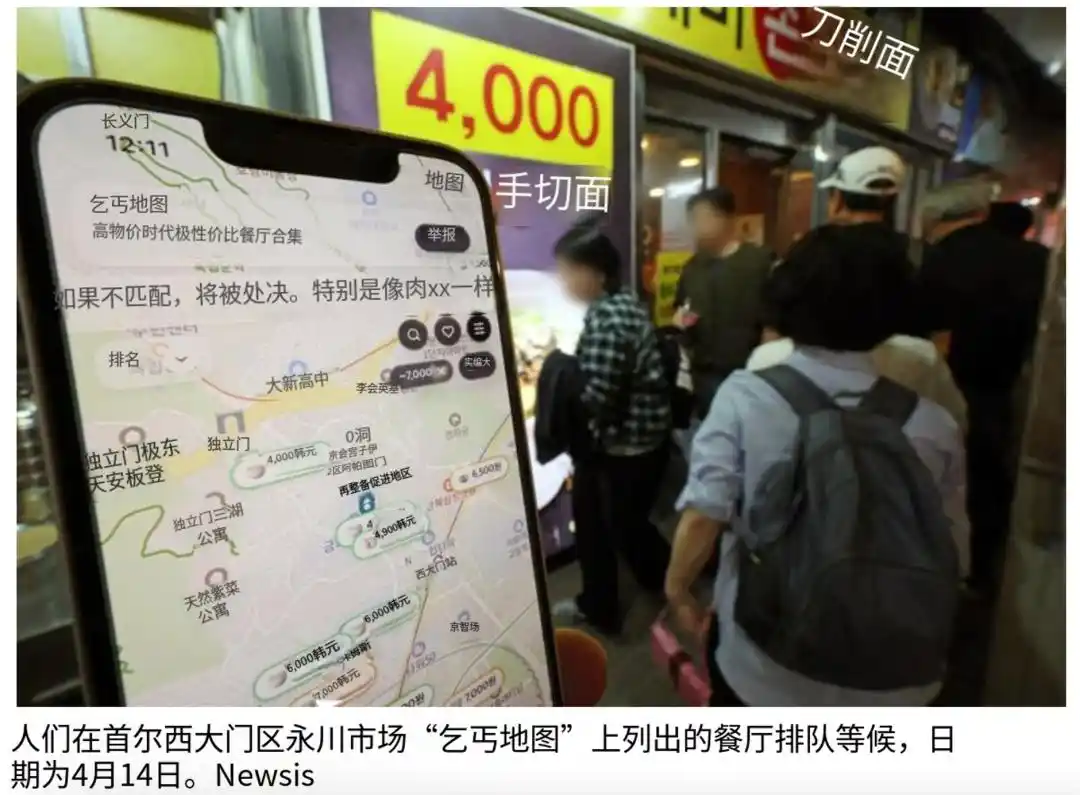
A pork cutlet shop in Sinchon, Seoul, charging only 4,000 won per portion, has long occupied a top spot on the map. Some diners, worried one piece wouldn't be enough, ordered two and ended up stuffed to the point of regret; others warned newcomers that water costs an extra 1,000 won at the shop, so true savings experts should bring their own. The list also includes a 9,500-won chicken and beer buffet. Taste, protein, free side dishes, and how much satiety you get per 1,000 won are all part of the review criteria. Food reviewing here has turned into folk cost engineering.

Restaurants are added, modified, and deleted collaboratively by users. Some upload menus, others add business hours, and some mark "mediocre hygiene." Businesses that use cheap dishes as bait to sell higher-priced items elsewhere are quickly reported. A group of highly vigilant wallets forms the internet's most difficult-to-fool review committee.

In Seoul, an average meal out easily reaches 12,000 won; finding something under 8,000 won already requires a dedicated search. Korean media recorded a 22-year-old female college student using the "Beggar Map" daily to find cheaper options than the school cafeteria. For small eateries, the map is like free advertising: without paying commissions to high-fee delivery platforms, lines form outside their doors.
Even before the "Beggar Map" appeared, South Korean youth had been rehearsing for three years in the social app KakaoTalk.

In 2023, numerous open group chats named "Beggar Rooms" became popular. Popular groups typically limit members to 300-500, with special "Standby Beggar Rooms" for when they're full. Members report daily expenses. Spending 3,000 won on an iced Americano gets you advised to drink from the office water cooler; wanting to take a bus for a 5.3 km trip gets told to trust your own legs; spending 40,000 won on a personal color test gets the suggestion to "hold a few colored papers next to your face and compare."

Some groups, like companies, have established complete rules: Spending over 30,000 won requires filling out an "Expense Application Form," answering if the item is necessary, whether it can be used weekly, if it has more than one purpose, and getting three group members to sign. Using paid emoticons can also get you kicked out, because cute emoticons stimulate spending; if you really want to use them, you have to draw your own. The person who spends the most each month must also write a 500-word reflection. According to Korean media statistics, there are hundreds of similar group chats on KakaoTalk.

This trend has a specific name: jjantech, often translated as "frugal finance," combining the word for frugality "jjan" with the term for finance management, jaetech. Young people study convenience store discounts, stack payment promotions, use gift cards to empty the fridge, and exchange steps for points.

24-year-old graduate student Jung Ye-eun walks whenever possible for trips under 40 minutes to save on transportation; 25-year-old job seeker Lee Ji-min reduces visits to her parents to save the roughly 100,000 won round-trip KTX ticket to Gimhae; 26-year-old Kim Se-rim walks 8,000 steps daily to exchange city app reward points for Seoul Pay to buy food. Someone spending 3,100 won on green tea bags gets immediate improvement suggestions from the group: brew each bag two or three times.

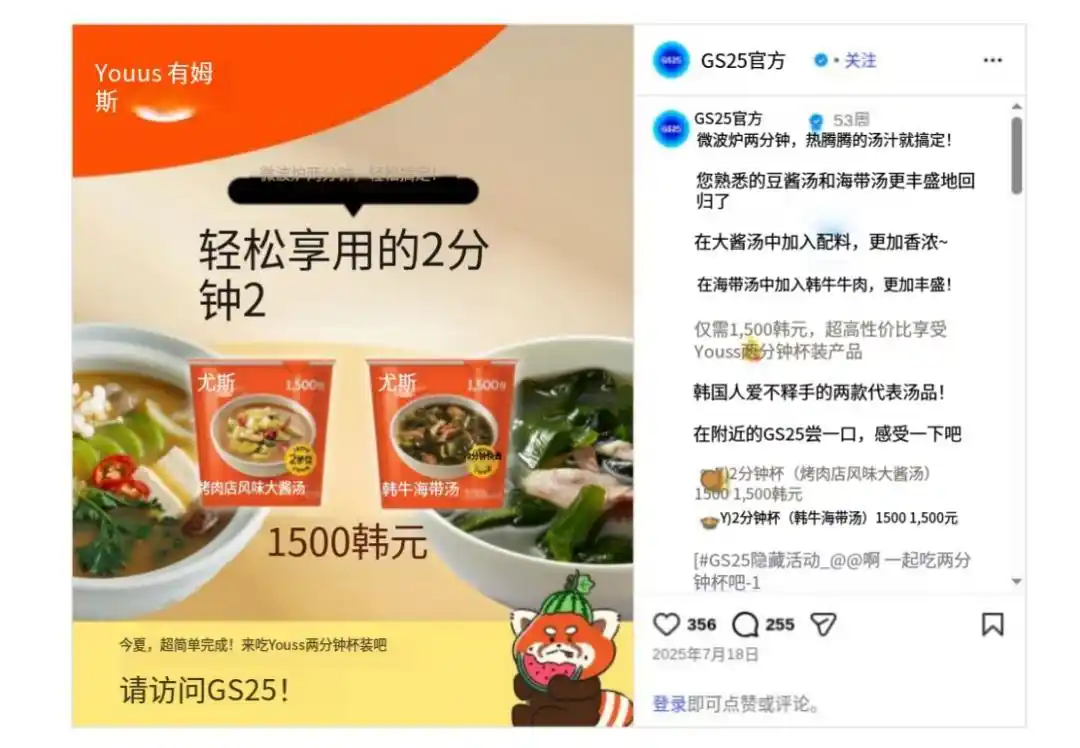
The consumer market quickly adapted. South Korea's largest convenience store chain, GS25, launched chilled cup rice meals for 3,000 to 5,000 won and instant soups for 1,500 won. In the first four months of 2026, sales grew by 33.8% and 167.4% year-on-year respectively. Supermarkets started selling 1kg bags of rice and single-meal portions of meat. Sales data shows young people care more about paying less today and whether food will spoil before they finish it.
From hunting for a 4,000-won pork cutlet to holding "consumption criticism sessions" over an iced Americano, it looks like a lively money-saving game. But behind it lies the increasingly tight living budget of South Koreans.

South Korea has already entered the ranks of developed countries with a GDP per capita over $30,000, so why do its young people have to split every few thousand won?

The answer lies in another map composed of wages, employment, housing prices, and debt.

02. How Did Young People in a Developed Country Become "Paupers"?

Looking at macro numbers, South Korea seems like a country where a "beggar lifestyle" shouldn't be popular.

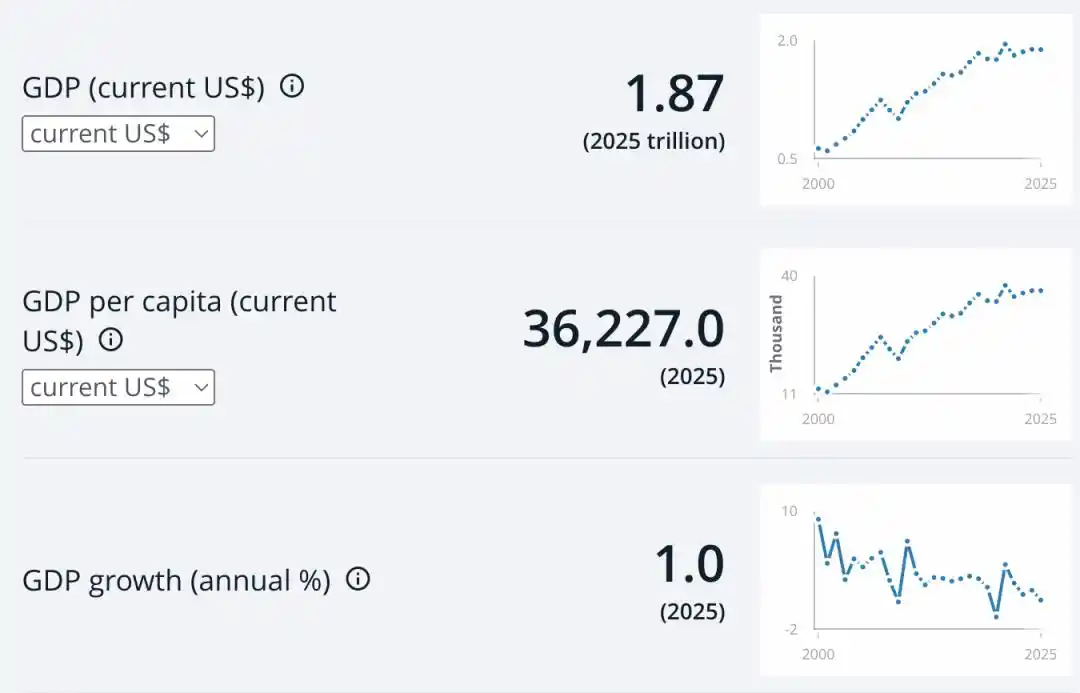
World Bank data shows South Korea's nominal GDP in 2025 was about $1.87 trillion, with a GDP per capita of $36,227; the IMF predicts it will rise to about $37,410 in 2026. It is Asia's fourth-largest economy, with mature industries in semiconductors, automobiles, shipbuilding, and chemicals. The World Bank's data on South Korea looks decent enough in any country profile.
Wage numbers don't look bad either. In 2026, the minimum hourly wage increased to 10,320 won (48 yuan RMB), equivalent to 2.157 million won per month based on 209 hours. The average nominal monthly wage for all workers in May, released by the Ministry of Employment and Labor, was 3.982 million won, about 19,000 yuan RMB.

The trouble lies beneath the average.

During the same period, the labor force participation rate for youth aged 15-29 fell to 47.2%; the employment rate dropped to 43.8%, with 255,000 fewer young people employed year-on-year; the unemployment rate rose to 7.2%. Including those preparing for jobs, those who have given up job hunting, and those wanting more work hours, the "extended unemployment rate" reached 16.6%. Surveys by Statistics Korea show the youth labor force is shrinking faster than the total population.
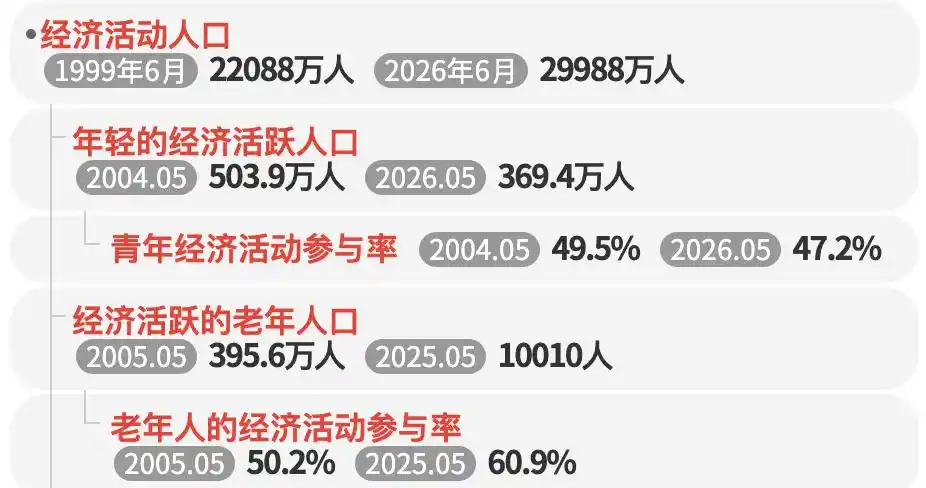
A university degree is no longer a guaranteed ticket. In Q2 2026, the number of unemployed South Koreans with college education or above reached 481,000, with those in their 20s and 30s accounting for 64.2%. Among youth aged 15-29 who have left school and are currently unemployed, 48.6% have been jobless for over a year—about 605,000 people; 19.4% have been unemployed for over three years. A July survey also showed it takes an average of 11.2 months for young people to find their first paid job.

The first job is also hard to keep stable. Monthly salaries most commonly fall between 2 and 3 million won, with an average tenure of just 1 year and 6.8 months; among those who leave, 44.4% cite wages, working hours, and other labor conditions as the primary reason. The Bank of Korea also found that among the economically inactive population aged 20-34, the proportion "resting" increased from 14.6% in 2019 to 22.3% in 2025, with 450,000 explicitly stating they don't want to work. Many have work experience, making it hard to explain simply as being "choosy."

This disconnect has given rise to a term in the South Korean job market that sounds like a second-hand item: "중고신입" (jung-go-sin-ip), or "second-hand newbie"—someone who has worked for a while but is re-entering the job market as a fresh graduate.

Even if one can work steadily, housing in Seoul feels like a commodity priced in a different system.

In July 2026, the average selling price of an apartment in Seoul approached 1.595 billion won (7.46 million yuan RMB). South Korea also has a unique "jeonse" system: instead of monthly rent, the tenant pays a huge lump-sum deposit, refunded by the landlord when the lease ends. Now, the average jeonse deposit for a Seoul apartment has exceeded 700 million won.
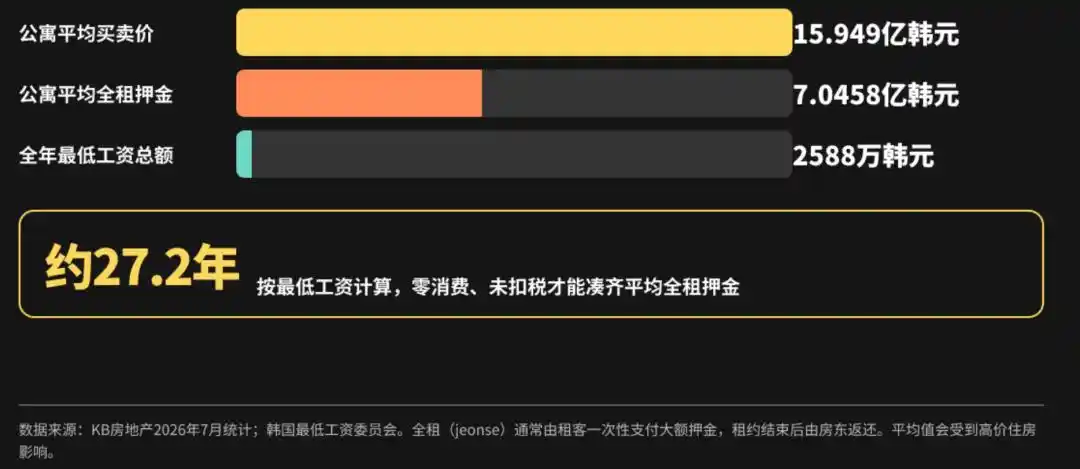
For most young people entering society, 700 million won is out of reach. At the 2026 minimum wage, someone would have to work for about 27 years without spending a penny to save that deposit. In reality, many young people end up in "gosiwons"—micro-rooms originally meant for exam takers that have become residences for low-income earners.

Late last year, a Korean journalist visited a gosiwon in Jongno, Seoul. A room about to be rented to someone in their 20s was only 2.85 square meters, with a bed 1.9 meters long and 1.5 meters wide. When lying down, your feet go under the desk, and either your head or feet still touch the wall.

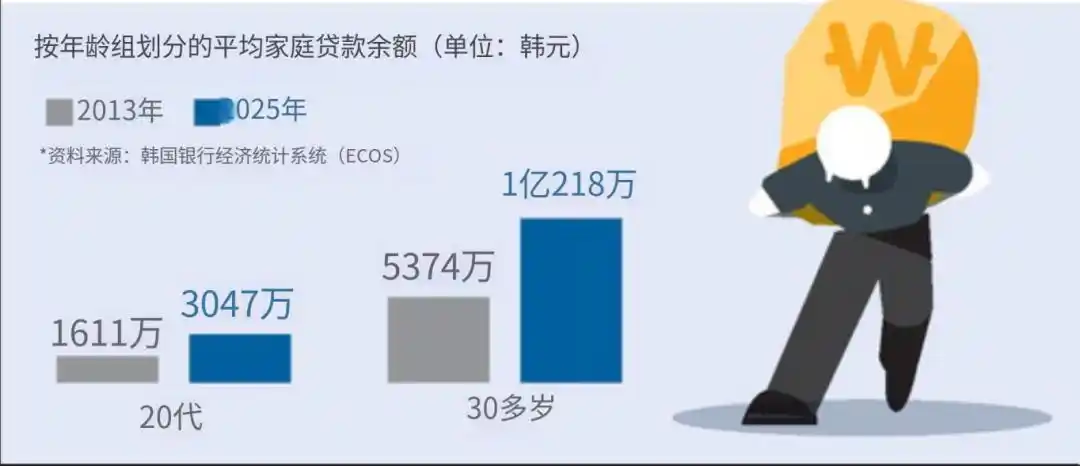
Housing is out of reach, but debt is getting closer. The average household loan for people in their 20s increased from 16.11 million won in 2013 to 30.47 million in 2025; for those in their 30s, it rose from 53.74 million to 102.18 million. Combined, these two groups saw an 89.9% increase, nearly doubling in 12 years.
The final pressure comes from food, which is unavoidable every day.

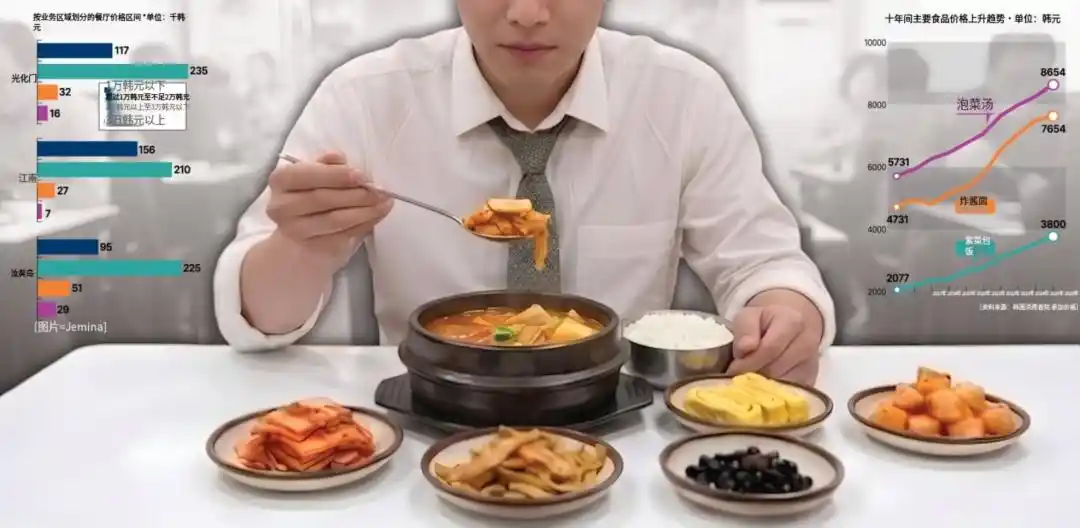
In the spring of 2026, the retail price of a 20kg bag of rice stayed above 60,000 won (280 yuan RMB) for eight consecutive months; in early May, domestic pork belly cost about 2,811 won per 100g, up 12.9% year-on-year. According to the "modified Engel coefficient," which combines food and dining out expenses, it reached 30.3% in 2025—the first time South Korea crossed the 30% mark in 31 years. This data means that for every 100 won a South Korean spends, 30 goes toward food.

Korean media surveyed about 1,200 restaurants around three major office districts in Seoul: Gwanghwamun, Yeouido, and Gangnam. The average lunch price was 14,635 won. At the then-minimum hourly wage, someone had to work about 1 hour and 25 minutes to afford an ordinary lunch.
Around 2015, South Korean youth began using "Hell Joseon" to mock job competition, class rigidity, and high housing prices. More than a decade later, GDP per capita has climbed another notch, but "Hell Joseon" hasn't faded from the lexicon.

This is the gap between South Korea's two sets of accounts.

The national account shows a GDP per capita over $36,000, booming AI chip exports, and upgraded growth expectations. The young people's account shows unemployment, high rent, high debt, and high prices. The former proves South Korea is still wealthy; the latter determines how freely young people spend today.

When an ordinary lunch requires over an hour's wage, saving a few thousand won becomes meaningful. A decade ago, South Korean youth facing stress swiped cards for bags and shouted "live for the moment." Now, they walk five kilometers to save on transportation. Wallet usage has changed, and so has their judgment of the future.

03. From Living for the Moment to the "Beggar Generation"

South Korean society once held a very solid belief in the future.

From the 1960s to the 1990s, the "Miracle on the Han River" transformed a war-torn agricultural country into an industrial powerhouse. South Korea's average annual GDP growth was 8.5% in the 60s, 7.7% in the 70s, and 9.1% in the 80s. Factory expansion, export growth, and urbanization happened simultaneously. Many families saw refrigerators, cars, and apartments become staples of middle-class life.

This period left a simple intergenerational contract: Study hard, get into a large corporation, work long-term, let wages grow with seniority, and finally own a home. The parent generation saved because they believed enduring a few years would bring a wealthier tomorrow.

By the 2010s, this contract was loosening. Economic growth slowed, Seoul housing prices soared, big corporate hiring thresholds rose, and young people began calling themselves the "Sam-po Generation" (giving up three things), "O-po Generation" (five things), successively abandoning dating, marriage, childbirth, homeownership, and social relationships.
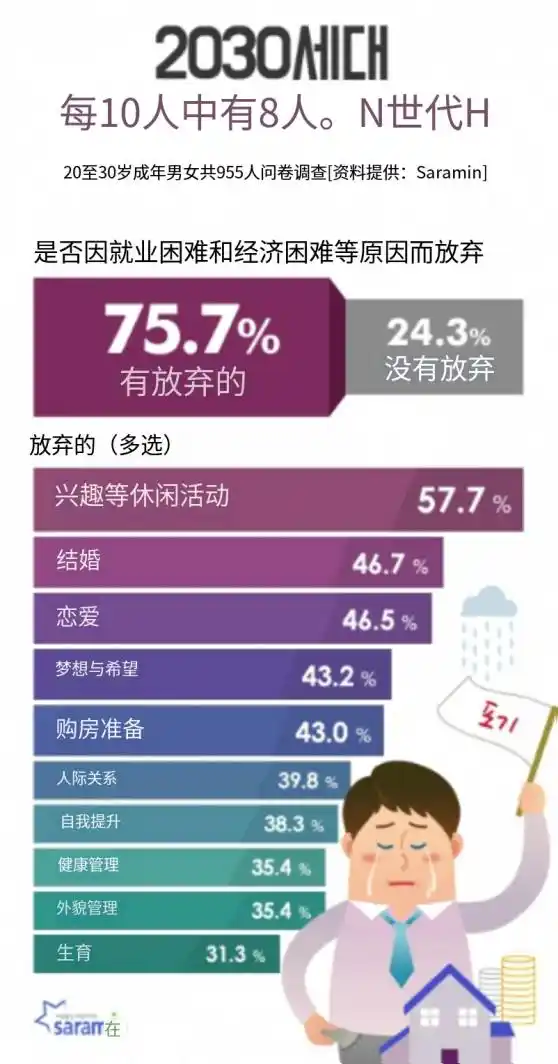
Back then, the residual warmth of the parents' growth era remained, and consumption and social media offered instant gratification. YOLO (You Only Live Once) gained a strong following.

The South Korean version of YOLO actually contained two mindsets. Some still believed future income would increase and were willing to spend ahead; others already doubted that savings could buy a home or achieve class mobility, so they traded distant big goals for a trip, a fancy meal, or a brand-name bag. The latter logic was almost pessimistic: Since saving for a down payment is like filling the sea with a spoon, at least buy some respectability you can afford today.

But this lifestyle of compensating for a distant future with present consumption had a hidden premise: Maybe you can't afford a house, but next month's salary will arrive on time, right?

Entering the 2020s, the pandemic, high inflation, high interest rates, shrinking hiring, and AI replacement anxiety arrived in succession. "Anything can go wrong anytime" gradually became the psychological backdrop for South Korean youth. High consumption became harder to sustain, and YOLO gave way to YONO—You Only Need One.
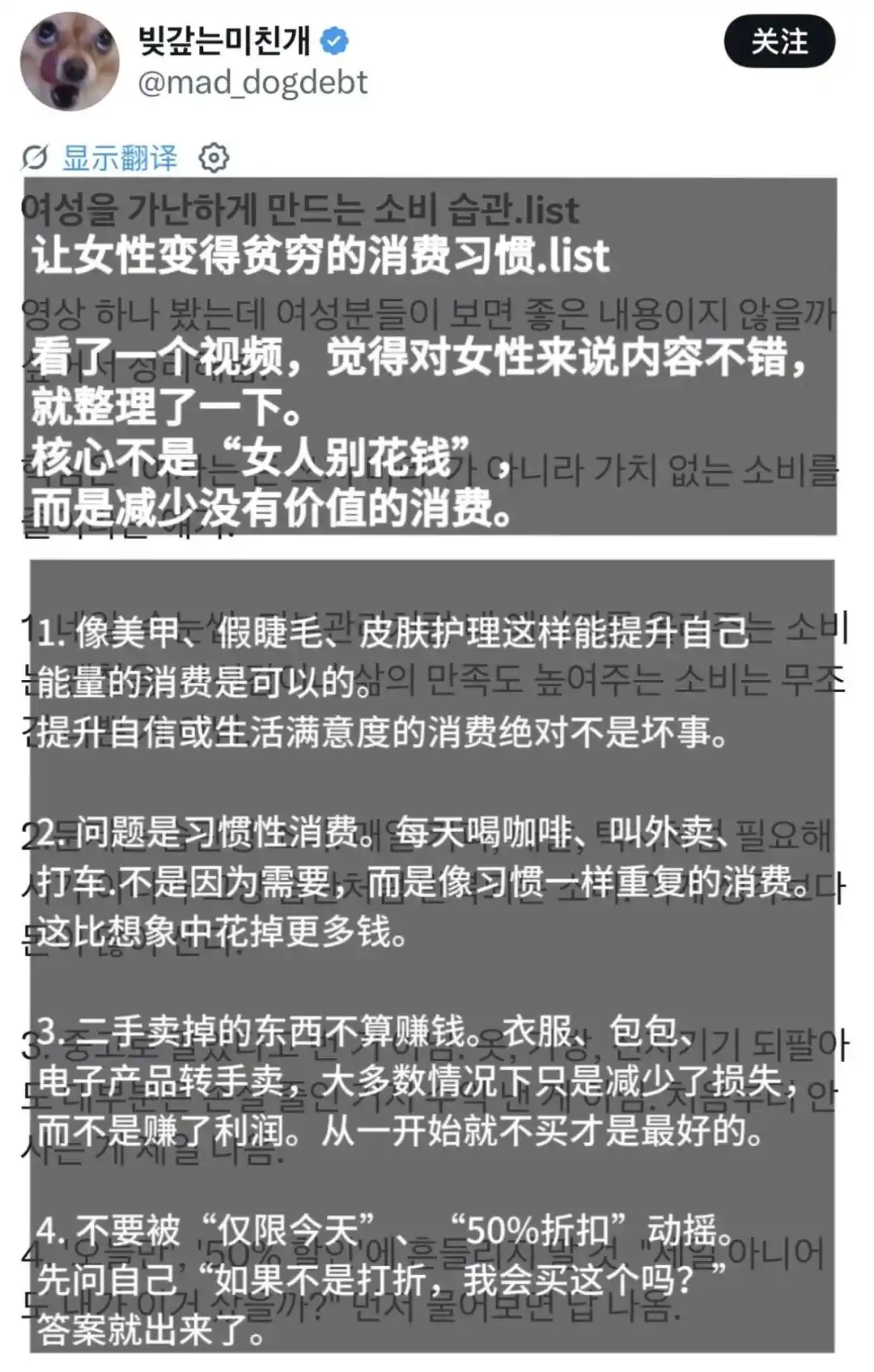
YONO emphasizes cutting unnecessary spending, paying only for things truly needed and used long-term. Many young people cut back on weekday coffee, dining out, and transport costs, but might still splurge on a trip or an item they genuinely love. The desire to consume hasn't disappeared; it's just concentrated on a few key targets.

Now, the Beggar Map pushes YONO to a more extreme version: even a single meal must pass a triple check of price, nutrition, and satiety.

From YOLO to YONO, to Beggar Rooms and the Beggar Map, the slogans of South Korean youth may seem to zigzag, but the core demand hasn't changed: To reclaim a bit of agency on an increasingly unpredictable life path.

Living for the moment uses consumption to prove "today belongs to me"; extreme saving uses the remaining balance to prove "there's still a way out tomorrow."

YOLO and YONO seem opposite, but they tackle the same puzzle: when long-term planning becomes harder, how should one arrange today. Some trade money for immediate experience; others keep money in the account for breathing room. Consumption patterns changed, but the need for a sense of certainty never disappeared.

The beggar lifestyle is the solution millions of South Koreans have rediscovered: breaking down overwhelming economic uncertainty into one meal, one bus ride, one day's budget. The 4,000-won pork cutlet, points earned from 8,000 steps, the tea bag brewed a third time—all make life tangible again. The future is still hard to predict, but at least how to spend today, they can still decide for themselves.

This article is from the WeChat public account "Cool Play Lab," author: Cool Play Lab

Trend Kriptolar

İlgili Sorular

QWhat is the purpose of the 'Geoji Map' (乞丐地图) created by Choi Sung-soo, and how is it used by young people in South Korea?

AThe 'Geoji Map' is a website and app created by Choi Sung-soo to help people find extremely cheap restaurants. It filters nearby eateries by price, typically excluding meals costing over 8000 KRW (approx. 37 RMB) if they lack protein and vegetables. Users collaboratively add, review, and maintain listings based on strict criteria like cost, nutritional value, and satiety. It helps young Koreans, facing economic pressures like high living costs and unemployment, stretch their daily budgets by finding affordable meal options.

QHow does the article explain the paradox of young Koreans adopting 'beggar life' trends despite South Korea's high per capita GDP?

AThe article explains that while South Korea's macroeconomic indicators like a per capita GDP over $36,000 appear strong, many young people face significant personal economic hardships. These include high youth unemployment rates, precarious employment (like short-term contracts), soaring housing costs (especially in Seoul), rising personal debt, and increasing food prices. The 'beggar life' trends like the Geoji Map and 'jjantech' (frugal finance) are practical responses to this gap between national wealth and individual financial strain.

QWhat are some examples of 'jjantech' or frugal financial practices mentioned in the article?

AExamples of 'jjantech' practices include: using KakaoTalk 'beggar room' chat groups where members scrutinize each other's spending and require approval for purchases over 30,000 KRW; walking instead of using public transport for short trips; reusing tea bags multiple times; exchanging steps walked for municipal reward points (Seoul Pay) to buy food; and purchasing single-portion groceries to avoid waste. Convenience stores have also adapted by selling affordable ready-to-eat meals to cater to this demand.

QAccording to the article, how has the mindset of South Korean youth towards consumption and the future shifted from the 2010s to the 2020s?

AIn the 2010s, the 'YOLO' (You Only Live Once) mindset was prevalent, where young people spent on immediate experiences and luxury goods, either due to belief in future income growth or as compensation for feeling that long-term goals like home ownership were unattainable. By the 2020s, facing successive crises (pandemic, inflation, AI job displacement), the mindset shifted to 'YONO' (You Only Need One), focusing on cutting unnecessary spending for essentials. This has further evolved into the extreme frugality of the 'beggar generation,' where every small expense is meticulously calculated to maintain control and security in an uncertain future.

QWhat specific economic pressures on young Koreans are highlighted as reasons for the popularity of frugal living?

AThe article highlights several key economic pressures: 1) High youth unemployment and underemployment, with many graduates struggling to find stable, well-paying jobs. 2) Skyrocketing housing costs in Seoul, where apartment prices and 'jeonse' (lump-sum deposit) rents are prohibitively high. 3) Increasing levels of personal debt among people in their 20s and 30s. 4) Rising food and living costs, with a significant portion of income spent just on meals (a high 'modified Engel coefficient'). These factors collectively make saving even small amounts of money a critical daily concern.

İlgili Okumalar

He Was the Hero of Shanghai's Two Major Industries, Yet Passed Away Quietly in Regret

He was a pivotal figure in the development of two major Shanghai industries—semiconductors and commercial aircraft—yet passed away in quiet regret. Jiang Shangzhou, son of a veteran revolutionary and a Swiss-educated technocrat, became Deputy Director of the Shanghai Economic Commission in 1997. Tasked with identifying strategic industries, he championed integrated circuits (ICs) despite a climate of skepticism. Countering a national plan for just two 8-inch chip production lines, he boldly declared Shanghai would build ten within five years. He masterminded the Zhangjiang microelectronics zone, personally recruited top talent like Morris Chang, and helped establish SMIC. Through innovative financing that circumvented Western embargoes, SMIC grew rapidly, with Shanghai exceeding its target by building 18 lines. Simultaneously, while battling lung cancer, Jiang led the push for China's large commercial aircraft program as head of a state major projects panel. He argued it was a strategic imperative that would drive advancements across multiple industries. His relentless advocacy culminated in the 2006 state approval that paved the way for the C919. Jiang's career was marked by foresight often deemed too超前. Earlier postings in Sanya and Yangpu saw his ideas for tourism and economic reform initially rejected, only to be validated years later. In 2009, he became Chairman of the embattled SMIC. Despite his deteriorating health, he steered the company until his death in 2011, leaving a final insight for the chip industry: China need not master every process but must lead in key areas. He did not live to see the C919 fly or SMIC's full recovery, but his foundational work made Shanghai a national leader in both semiconductors and aerospace. Colleagues remembered him as a visionary whose impact shaped the three decades that followed.

marsbit8 dk önce

He Was the Hero of Shanghai's Two Major Industries, Yet Passed Away Quietly in Regret

marsbit8 dk önce

Illustrating the Cloudflare Wallet: The New Player in Stablecoin Payments Using x402

On August 4th, Cloudflare announced the launch of "Wallets," though the initial offering is limited to claiming a user handle. Full functionality for topping up, making payments, and using a Virtual Wallet via API keys is marked "Soon." The announcement clarifies that this handle is not yet a functional wallet. It represents a key piece in Cloudflare's broader payments strategy, alongside the Stripe Projects service (currently in open beta for agent-assisted purchases) and the Monetization Gateway for merchants (on a waitlist). The Wallet is positioned as the payer-side component for managing identity, balances, and authorization rules. While the underlying x402 protocol shows activity (75.41 million transactions, $24.24M volume in 30 days, averaging ~$0.32 per transaction), this data reflects the open network's usage, not specifically Cloudflare Wallet adoption. These metrics indicate suitability for frequent micro-payments like API calls. Cloudflare's documentation uses a $0.01 per-call example to illustrate the x402 flow: a server returns HTTP 402, the agent signs the payment, a facilitator verifies it, and the server delivers the result. Currently, developers must manage private keys and use test networks/USDC for agent payments. The Wallet roadmap aims to separate the user's Account Wallet from an agent's Virtual Wallet, adding controls for spending limits, whitelists, and per-transaction caps. This design resembles a corporate card with approval rules. However, these controls are not yet available for configuration. In summary, Cloudflare Wallet's current launch is a preliminary step. Critical details like supported stablecoins, blockchains, regions, KYC, custody, and fees remain undisclosed. The announcement primarily establishes a payer identity framework, with the full payment and agent autonomy system still under development.

marsbit29 dk önce

Illustrating the Cloudflare Wallet: The New Player in Stablecoin Payments Using x402

marsbit29 dk önce

TradeXYZ and Hyperliquid: Unveiling the Symbiotic Relationship Under a 50% Revenue Share

Market sentiment is cautious. AI investments are rewarded only when they drive growth without severely harming cash flow, while crypto markets face pressure from ETF outflows and rising yields. Within crypto, leadership has rotated to Solana and DEXs. Solana's ecosystem gained 8.5%, driven by tokens like META, while DEXs, led by Uniswap, rose 5.2%. A key debate centers on TradeXYZ's dominant role on the Hyperliquid exchange, where it generates over 50% of the volume in RWA perpetuals. TradeXYZ, an independent team, is required to share 50% of its HIP-3 protocol revenue with Hyperliquid. Concerns range from the sustainability of this split to Hyperliquid's long-term monetization. The argument that TradeXYZ might leave due to the 50% share is considered weak, as it would require rebuilding its entire platform and abandoning its user base, damaging its reputation. Conversely, Hyperliquid replacing TradeXYZ would signal bad faith to other builders. Their relationship is seen as symbiotic. Regarding monetization, Hyperliquid benefits not only from the 50% fee split but also from priority write fees, read fees from market makers, and second-order effects like increased USDC supply, which generates significant adjusted revenue. The more pertinent question is how both parties will transition from a growth-focused, low-fee model to a more stable, higher-fee structure.

marsbit44 dk önce

TradeXYZ and Hyperliquid: Unveiling the Symbiotic Relationship Under a 50% Revenue Share

marsbit44 dk önce

Report: DeepSeek Resumes Financing, Pre-money Valuation at 500 Billion Yuan

Several transaction sources revealed to Caijing that AI company DeepSeek has restarted its second round of financing, aiming to raise 50 billion yuan with a pre-money valuation of approximately 500 billion yuan. The signing is planned for late August. DeepSeek completed its first funding round of 50 billion yuan in June with a valuation over 350 billion yuan, marking the largest first-round financing in China's AI large model history. The second round was reportedly paused in late July, partly due to the founder's dissatisfaction with leaked investor meeting details circulating online. It has since been restarted with a desire for a more discreet process. The second-round valuation represents a 43% increase from the first round. If successful, DeepSeek will have raised over 100 billion yuan across both rounds. Investor interest remains high; the first round saw over 100 billion yuan in expressed intent, leaving significant unmet demand. DeepSeek's fundraising scale surpasses competitors like Moonshot AI, which recently raised funds at a $31.5 billion valuation and is planning a Pre-IPO round. Market pricing for these model companies is seen more as an "option" on reaching AGI rather than based on traditional financial metrics. Regarding model development, DeepSeek recently publicly tested the DeepSeek-V4-Flash official version in late July, featuring enhanced Agent capabilities and strong performance on benchmarks. It follows a high-value, low-cost strategy, with its pricing being competitive against rivals like Zhipu GLM-5.2 and OpenAI's GPT-4o. On the OpenRouter platform, DeepSeek-V4-Flash recently ranked first in weekly token consumption. The company faces pressure in training new models, and the release timeline for the V4-Pro official version remains unannounced.

marsbit1 saat önce

Report: DeepSeek Resumes Financing, Pre-money Valuation at 500 Billion Yuan

marsbit1 saat önce

İşlemler

Spot

Popüler Makaleler

$S$ Nedir

SPERO'yu Anlamak: Kapsamlı Bir Genel Bakış SPERO'ya Giriş İnovasyonun manzarası gelişmeye devam ederken, web3 teknolojilerinin ve kripto para projelerinin ortaya çıkışı dijital geleceği şekillendirmede önemli bir rol oynamaktadır. Bu dinamik alanda dikkat çeken projelerden biri SPERO, $$s$$ olarak adlandırılmaktadır. Bu makale, SPERO hakkında ayrıntılı bilgi toplamak ve sunmak amacıyla, meraklılar ve yatırımcıların web3 ve kripto alanlarındaki temellerini, hedeflerini ve yeniliklerini anlamalarına yardımcı olmayı amaçlamaktadır. SPERO,$$s$$ Nedir? SPERO,$$s$$, kripto alanında merkeziyetsizlik ve blok zinciri teknolojisi ilkelerini kullanarak etkileşimi, faydayı ve finansal kapsayıcılığı teşvik eden bir ekosistem yaratmayı amaçlayan benzersiz bir projedir. Proje, kullanıcıların yenilikçi finansal çözümler ve hizmetler sunarak eşler arası etkileşimleri yeni yollarla kolaylaştırmayı hedeflemektedir. SPERO,$$s$$'nin temel amacı, bireyleri güçlendirmek ve kripto para alanındaki kullanıcı deneyimini artıran araçlar ve platformlar sağlamaktır. Bu, daha esnek işlem yöntemlerini mümkün kılmayı, topluluk odaklı girişimleri teşvik etmeyi ve merkeziyetsiz uygulamalar (dApp'ler) aracılığıyla finansal fırsatlar yaratmayı içermektedir. SPERO,$$s$$'nin temel vizyonu kapsayıcılık etrafında dönmekte olup, geleneksel finansal sistemlerdeki boşlukları kapatmayı ve blok zinciri teknolojisinin faydalarından yararlanmayı hedeflemektedir. SPERO,$$s$$'nin Yaratıcısı Kimdir? SPERO,$$s$$'nin yaratıcısının kimliği bir miktar belirsizdir, çünkü kurucusu(ları) hakkında ayrıntılı arka plan bilgisi sağlayan sınırlı kamuya açık kaynaklar bulunmaktadır. Bu şeffaflık eksikliği, projenin merkeziyetsizlik taahhüdünden kaynaklanabilir—birçok web3 projesinin paylaştığı bir etik anlayışı, bireysel tanınmanın yerine kolektif katkıları önceliklendirmektedir. Topluluk ve onun kolektif hedefleri etrafında tartışmaları merkezileştirerek, SPERO,$$s$$, belirli bireyleri öne çıkarmadan güçlendirme özünü taşımaktadır. Bu nedenle, SPERO'nun etik anlayışını ve misyonunu anlamak, tek bir yaratıcının kimliğini belirlemekten daha önemlidir. SPERO,$$s$$'nin Yatırımcıları Kimlerdir? SPERO,$$s$$, kripto sektöründe yeniliği teşvik etmeye adanmış girişim sermayedarlarından melek yatırımcılara kadar çeşitli yatırımcılar tarafından desteklenmektedir. Bu yatırımcıların odak noktası genellikle SPERO'nun misyonuyla uyumlu olup, toplumsal teknolojik ilerlemeyi, finansal kapsayıcılığı ve merkeziyetsiz yönetimi vaat eden projeleri önceliklendirmektedir. Bu yatırımcı temelleri, yalnızca yenilikçi ürünler sunan projelere değil, aynı zamanda blok zinciri topluluğuna ve ekosistemlerine olumlu katkılarda bulunan projelere de ilgi duymaktadır. Bu yatırımcıların desteği, SPERO,$$s$$'yi hızla gelişen kripto projeleri alanında dikkate değer bir rakip haline getirmektedir. SPERO,$$s$$ Nasıl Çalışır? SPERO,$$s$$, onu geleneksel kripto para projelerinden ayıran çok yönlü bir çerçeve kullanmaktadır. İşte benzersizliğini ve yeniliğini vurgulayan bazı temel özellikler: Merkeziyetsiz Yönetim: SPERO,$$s$$, kullanıcıların projenin geleceğiyle ilgili karar alma süreçlerine aktif olarak katılmalarını sağlayan merkeziyetsiz yönetim modellerini entegre etmektedir. Bu yaklaşım, topluluk üyeleri arasında sahiplik ve hesap verebilirlik duygusunu teşvik etmektedir. Token Kullanımı: SPERO,$$s$$, ekosistem içinde çeşitli işlevler sunmak üzere tasarlanmış kendi kripto para token'ını kullanmaktadır. Bu token'lar, işlemleri, ödülleri ve platformda sunulan hizmetlerin kolaylaştırılmasını sağlayarak genel etkileşimi ve faydayı artırmaktadır. Katmanlı Mimari: SPERO,$$s$$'nin teknik mimarisi, modülerlik ve ölçeklenebilirliği destekleyerek projenin evrimi sırasında ek özelliklerin ve uygulamaların sorunsuz bir şekilde entegrasyonuna olanak tanımaktadır. Bu uyum sağlama yeteneği, sürekli değişen kripto manzarasında geçerliliği sürdürmek için hayati öneme sahiptir. Topluluk Katılımı: Proje, işbirliği ve geri bildirim teşvik eden mekanizmalar kullanarak topluluk odaklı girişimlere vurgu yapmaktadır. Güçlü bir topluluk oluşturarak, SPERO,$$s$$, kullanıcı ihtiyaçlarını daha iyi karşılayabilir ve piyasa trendlerine uyum sağlayabilir. Kapsayıcılığa Odaklanma: Düşük işlem ücretleri ve kullanıcı dostu arayüzler sunarak, SPERO,$$s$$, daha önce kripto alanında yer almamış bireyler de dahil olmak üzere çeşitli bir kullanıcı tabanını çekmeyi hedeflemektedir. Bu kapsayıcılık taahhüdü, erişilebilirlik yoluyla güçlendirme misyonuyla uyumludur. SPERO,$$s$$ Zaman Çizelgesi Bir projenin tarihini anlamak, gelişim yolculuğu ve kilometre taşları hakkında kritik bilgiler sağlar. Aşağıda, SPERO,$$s$$'nin evriminde önemli olayları haritalayan önerilen bir zaman çizelgesi bulunmaktadır: Kavram Geliştirme ve Fikir Aşaması: SPERO,$$s$$'nin temelini oluşturan ilk fikirler, blok zinciri endüstrisindeki merkeziyetsizlik ve topluluk odaklılık ilkeleriyle yakından uyumlu olarak geliştirildi. Proje Beyaz Kağıdının Yayınlanması: Kavramsal aşamayı takiben, SPERO,$$s$$'nin vizyonunu, hedeflerini ve teknolojik altyapısını ayrıntılı bir şekilde açıklayan kapsamlı bir beyaz kağıt yayımlandı ve topluluk ilgisini ve geri bildirimini toplamak amacıyla sunuldu. Topluluk Oluşturma ve Erken Katılımlar: Projenin hedefleri etrafında tartışmalar yürüterek destek toplamak ve erken benimseyenler ile potansiyel yatırımcılar için bir topluluk oluşturmak amacıyla aktif iletişim çabaları gerçekleştirildi. Token Üretim Etkinliği: SPERO,$$s$$, yerel token'larını erken destekçilere dağıtmak ve ekosistem içinde başlangıç likiditesini sağlamak amacıyla bir token üretim etkinliği (TGE) gerçekleştirdi. İlk dApp'in Yayınlanması: SPERO,$$s$$ ile ilişkili ilk merkeziyetsiz uygulama (dApp) faaliyete geçti ve kullanıcıların platformun temel işlevleriyle etkileşimde bulunmalarını sağladı. Sürekli Gelişim ve Ortaklıklar: Projenin tekliflerine sürekli güncellemeler ve iyileştirmeler yapılmakta olup, blok zinciri alanındaki diğer oyuncularla stratejik ortaklıklar, SPERO,$$s$$'yi rekabetçi ve gelişen bir oyuncu haline getirmiştir. Sonuç SPERO,$$s$$, web3 ve kripto paranın finansal sistemleri devrim niteliğinde dönüştürme ve bireyleri güçlendirme potansiyelinin bir kanıtıdır. Merkeziyetsiz yönetime, topluluk katılımına ve yenilikçi tasarlanmış işlevselliğe olan bağlılığıyla, daha kapsayıcı bir finansal manzaraya doğru bir yol açmaktadır. Hızla gelişen kripto alanındaki herhangi bir yatırımda olduğu gibi, potansiyel yatırımcılar ve kullanıcılar, SPERO,$$s$$ içindeki devam eden gelişmelerle ilgili olarak kapsamlı bir araştırma yapmaları ve düşünceli bir şekilde katılmaları teşvik edilmektedir. Proje, kripto endüstrisinin yenilikçi ruhunu sergileyerek, sayısız olasılığını keşfetmeye davet etmektedir. SPERO,$$s$$'nin yolculuğu hala devam ederken, temel ilkeleri, teknoloji, finans ve birbirimizle etkileşim biçimimizi etkileyebilir.

323 Toplam GörüntülenmeYayınlanma 2024.12.17Güncellenme 2024.12.17

$S$ Nedir

AGENT S Nedir

Agent S: Web3'te Otonom Etkileşimin Geleceği Giriş Web3 ve kripto para dünyasında sürekli gelişen manzarada, yenilikler bireylerin dijital platformlarla etkileşim biçimlerini sürekli olarak yeniden tanımlıyor. Bu tür öncü projelerden biri olan Agent S, açık ajans çerçevesi aracılığıyla insan-bilgisayar etkileşimini devrim niteliğinde değiştirmeyi vaat ediyor. Otonom etkileşimlerin yolunu açarak, Agent S karmaşık görevleri basitleştirmeyi ve yapay zeka (AI) alanında dönüştürücü uygulamalar sunmayı hedefliyor. Bu detaylı inceleme, projenin karmaşıklıklarına, benzersiz özelliklerine ve kripto para alanındaki etkilerine dalacaktır. Agent S Nedir? Agent S, bilgisayar görevlerinin otomasyonunda üç temel zorluğu ele almak üzere özel olarak tasarlanmış çığır açıcı bir açık ajans çerçevesidir: Alan Spesifik Bilgi Edinimi: Çerçeve, çeşitli dış bilgi kaynaklarından ve iç deneyimlerden akıllıca öğrenir. Bu çift yönlü yaklaşım, alan spesifik bilgi açısından zengin bir veri havuzu oluşturmasını sağlar ve görev yürütmedeki performansını artırır. Uzun Görev Ufukları Üzerinde Planlama: Agent S, karmaşık görevlerin verimli bir şekilde parçalanmasını ve yürütülmesini kolaylaştıran deneyim artırımlı hiyerarşik planlama kullanır. Bu özellik, çoklu alt görevleri etkili ve verimli bir şekilde yönetme yeteneğini önemli ölçüde artırır. Dinamik, Homojen Olmayan Arayüzlerle Başlama: Proje, ajanlar ve kullanıcılar arasındaki etkileşimi geliştiren yenilikçi bir çözüm olan Ajan-Bilgisayar Arayüzü'ni (ACI) tanıtmaktadır. Çok Modlu Büyük Dil Modellerini (MLLM'ler) kullanarak, Agent S çeşitli grafik kullanıcı arayüzlerini sorunsuz bir şekilde gezinebilir ve manipüle edebilir. Bu öncü özellikler aracılığıyla, Agent S, makinelerle insan etkileşimini otomatikleştirmede karşılaşılan karmaşıklıkları ele alan sağlam bir çerçeve sunarak, AI ve ötesinde birçok uygulama için zemin hazırlıyor. Agent S'nin Yaratıcısı Kimdir? Agent S'nin kavramı temelde yenilikçi olsa da, yaratıcısı hakkında spesifik bilgiler belirsizliğini koruyor. Yaratıcı şu anda bilinmiyor, bu da projenin yeni aşamasını veya kurucu üyeleri gizli tutma stratejik tercihini vurguluyor. Anonimlikten bağımsız olarak, odak çerçevenin yetenekleri ve potansiyeli üzerinde kalıyor. Agent S'nin Yatırımcıları Kimlerdir? Agent S, kriptografik ekosistemde oldukça yeni olduğundan, yatırımcıları ve finansal destekçileri hakkında ayrıntılı bilgiler açıkça belgelenmemiştir. Projeyi destekleyen yatırım temelleri veya organizasyonları hakkında kamuya açık bilgilerdeki eksiklik, finansman yapısı ve gelişim yol haritası hakkında sorular doğuruyor. Destekleyicilerin anlaşılması, projenin sürdürülebilirliğini ve potansiyel pazar etkisini değerlendirmek için kritik öneme sahiptir. Agent S Nasıl Çalışır? Agent S'nin temelinde, çeşitli ortamlarda etkili bir şekilde çalışmasını sağlayan son teknoloji bir sistem yatmaktadır. İşleyiş modeli birkaç ana özellik etrafında inşa edilmiştir: İnsan Benzeri Bilgisayar Etkileşimi: Çerçeve, bilgisayarlarla etkileşimleri daha sezgisel hale getirmeyi amaçlayan gelişmiş AI planlaması sunar. Görev yürütmedeki insan davranışını taklit ederek, kullanıcı deneyimlerini yükseltmeyi vaat eder. Anlatı Belleği: Yüksek düzeyde deneyimlerden yararlanmak için kullanılan Agent S, görev geçmişlerini takip etmek amacıyla anlatı belleğini kullanarak karar verme süreçlerini geliştirir. Episodik Bellek: Bu özellik, kullanıcılara adım adım rehberlik sağlayarak, çerçevenin görevler gelişirken bağlamsal destek sunmasına olanak tanır. OpenACI Desteği: Yerel olarak çalışabilme yeteneği ile Agent S, kullanıcıların etkileşimleri ve iş akışları üzerinde kontrol sağlamasına olanak tanır ve Web3'ün merkeziyetsiz felsefesiyle uyumlu hale gelir. Dış API'lerle Kolay Entegrasyon: Çeşitli AI platformlarıyla uyumluluğu ve çok yönlülüğü, Agent S'nin mevcut teknolojik ekosistemlere sorunsuz bir şekilde entegre olmasını sağlar ve geliştiriciler ile organizasyonlar için cazip bir seçenek haline getirir. Bu işlevsellikler, Agent S'nin kripto alanındaki benzersiz konumuna katkıda bulunarak, karmaşık, çok aşamalı görevleri minimum insan müdahalesi ile otomatikleştirir. Proje geliştikçe, Web3'teki potansiyel uygulamaları dijital etkileşimlerin nasıl gelişeceğini yeniden tanımlayabilir. Agent S'nin Zaman Çizelgesi Agent S'nin gelişimi ve kilometre taşları, önemli olaylarını vurgulayan bir zaman çizelgesinde özetlenebilir: 27 Eylül 2024: Agent S'nin kavramı, “Bilgisayarları İnsan Gibi Kullanan Açık Bir Ajans Çerçevesi” başlıklı kapsamlı bir araştırma makalesi ile tanıtıldı ve projenin temelini sergiledi. 10 Ekim 2024: Araştırma makalesi arXiv'de kamuya açık olarak yayınlandı ve çerçevenin derinlemesine bir incelemesini ve OSWorld benchmark'ına dayalı performans değerlendirmesini sundu. 12 Ekim 2024: Agent S'nin yetenekleri ve özellikleri hakkında görsel bir içgörü sağlayan bir video sunumu yayımlandı ve potansiyel kullanıcılar ve yatırımcılarla daha fazla etkileşim sağlandı. Bu zaman çizelgesindeki işaretler, sadece Agent S'nin ilerlemesini değil, aynı zamanda şeffaflık ve topluluk katılımına olan bağlılığını da göstermektedir. Agent S Hakkında Ana Noktalar Agent S çerçevesi gelişmeye devam ederken, birkaç ana özellik öne çıkmakta ve yenilikçi doğasını ve potansiyelini vurgulamaktadır: Yenilikçi Çerçeve: İnsan etkileşimine benzer bir bilgisayar kullanımı sağlamak üzere tasarlanan Agent S, görev otomasyonuna yeni bir yaklaşım getiriyor. Otonom Etkileşim: GUI aracılığıyla bilgisayarlarla otonom olarak etkileşim kurabilme yeteneği, daha akıllı ve verimli hesaplama çözümlerine doğru bir sıçrama anlamına geliyor. Karmaşık Görev Otomasyonu: Sağlam metodolojisi ile karmaşık, çok aşamalı görevleri otomatikleştirerek süreçleri daha hızlı ve daha az hata payı ile gerçekleştirebilir. Sürekli İyileştirme: Öğrenme mekanizmaları, Agent S'nin geçmiş deneyimlerden öğrenmesini sağlar ve sürekli olarak performansını ve etkinliğini artırır. Çok Yönlülük: OSWorld ve WindowsAgentArena gibi farklı işletim ortamlarında uyumlu olması, geniş bir uygulama yelpazesine hizmet edebilmesini sağlar. Agent S, Web3 ve kripto alanında kendini konumlandırırken, etkileşim yeteneklerini artırma ve süreçleri otomatikleştirme potansiyeli, AI teknolojilerinde önemli bir ilerlemeyi temsil etmektedir. Yenilikçi çerçevesi aracılığıyla, Agent S dijital etkileşimlerin geleceğini örneklemekte ve çeşitli sektörlerde kullanıcılar için daha sorunsuz ve verimli bir deneyim vaat etmektedir. Sonuç Agent S, AI ve Web3'ün birleşiminde cesur bir sıçramayı temsil ediyor ve teknoloji ile etkileşim biçimimizi yeniden tanımlama kapasitesine sahip. Henüz erken aşamalarında olmasına rağmen, uygulama olanakları geniş ve çekici. Kritik zorlukları ele alan kapsamlı çerçevesi ile Agent S, otonom etkileşimleri dijital deneyimin ön plana çıkmasına taşımayı hedefliyor. Kripto para ve merkeziyetsizlik alanlarına daha derinlemesine girdikçe, Agent S gibi projelerin teknoloji ve insan-bilgisayar işbirliğinin geleceğini şekillendirmede önemli bir rol oynayacağı kesin.

788 Toplam GörüntülenmeYayınlanma 2025.01.14Güncellenme 2025.01.14

AGENT S Nedir

S Nasıl Satın Alınır

HTX.com’a hoş geldiniz! Sonic (S) satın alma işlemlerini basit ve kullanışlı bir hâle getirdik. Adım adım açıkladığımız rehberimizi takip ederek kripto yolculuğunuza başlayın. 1. Adım: HTX Hesabınızı OluşturunHTX'te ücretsiz bir hesap açmak için e-posta adresinizi veya telefon numaranızı kullanın. Sorunsuzca kaydolun ve tüm özelliklerin kilidini açın. Hesabımı Aç2. Adım: Kripto Satın Al Bölümüne Gidin ve Ödeme Yönteminizi SeçinKredi/Banka Kartı: Visa veya Mastercard'ınızı kullanarak anında Sonic (S) satın alın.Bakiye: Sorunsuz bir şekilde işlem yapmak için HTX hesap bakiyenizdeki fonları kullanın.Üçüncü Taraflar: Kullanımı kolaylaştırmak için Google Pay ve Apple Pay gibi popüler ödeme yöntemlerini ekledik.P2P: HTX'teki diğer kullanıcılarla doğrudan işlem yapın.Borsa Dışı (OTC): Yatırımcılar için kişiye özel hizmetler ve rekabetçi döviz kurları sunuyoruz.3. Adım: Sonic (S) Varlıklarınızı SaklayınSonic (S) satın aldıktan sonra HTX hesabınızda saklayın. Alternatif olarak, blok zinciri transferi yoluyla başka bir yere gönderebilir veya diğer kripto para birimlerini takas etmek için kullanabilirsiniz.4. Adım: Sonic (S) Varlıklarınızla İşlem YapınHTX'in spot piyasasında Sonic (S) ile kolayca işlemler yapın.Hesabınıza erişin, işlem çiftinizi seçin, işlemlerinizi gerçekleştirin ve gerçek zamanlı olarak izleyin. Hem yeni başlayanlar hem de deneyimli yatırımcılar için kullanıcı dostu bir deneyim sunuyoruz.

2.0k Toplam GörüntülenmeYayınlanma 2025.01.15Güncellenme 2026.06.02

S Nasıl Satın Alınır

Tartışmalar

HTX Topluluğuna hoş geldiniz. Burada, en son platform gelişmeleri hakkında bilgi sahibi olabilir ve profesyonel piyasa görüşlerine erişebilirsiniz. Kullanıcıların S (S) fiyatı hakkındaki görüşleri aşağıda sunulmaktadır.

活动图片