# Stagflation İlgili Makaleler

HTX Haber Merkezi, kripto endüstrisindeki piyasa trendleri, proje güncellemeleri, teknoloji gelişmeleri ve düzenleyici politikaları kapsayan "Stagflation" hakkında en son makaleleri ve derinlemesine analizleri sunmaktadır.

At What Oil Price Would Systemic Market Risk Be Triggered?

Based on a UBS analysis, the key threshold for systemic risk in global markets is identified as $150 per barrel of oil. The report warns that breaching this level would trigger a dangerous negative feedback loop: soaring oil prices → resurgent inflation → tighter monetary policy → deteriorating financial conditions → collapsing demand → market panic. The impact of an oil shock is not linear but highly dependent on the initial economic vulnerability. In the current environment of high interest rates and weak growth, the damage from rising oil prices is significantly amplified. For instance, with a 40% baseline US recession probability, oil at $150 per barrel could cause an economic downturn nearly five times more severe than under milder conditions. UBS outlines two scenarios: in an ideal steady state, the US economy might withstand oil prices up to $200 per barrel. However, in a realistic risk scenario where financial markets react negatively, the critical threshold drops sharply to $150. At this level, three systemic pressures emerge: macroeconomic stagflation risks as central banks halt or reverse rate cuts; market-wide sell-offs due to compressed valuations and wider credit spreads; and a simultaneous slump in corporate profits and household consumption. The report cautions that markets are currently underestimating this nonlinear, cliff-like risk. While prices between $100-$130 may cause sector-specific stress, $150 represents a breaking point where localized damage transforms into a full-blown systemic crisis, accelerated by vanishing policy flexibility and collapsing market confidence.

marsbit04/03 07:32

At What Oil Price Would Systemic Market Risk Be Triggered?

marsbit04/03 07:32

$700 Billion Poured into AI, Americans Taste the Bitter Fruit of Inflation First

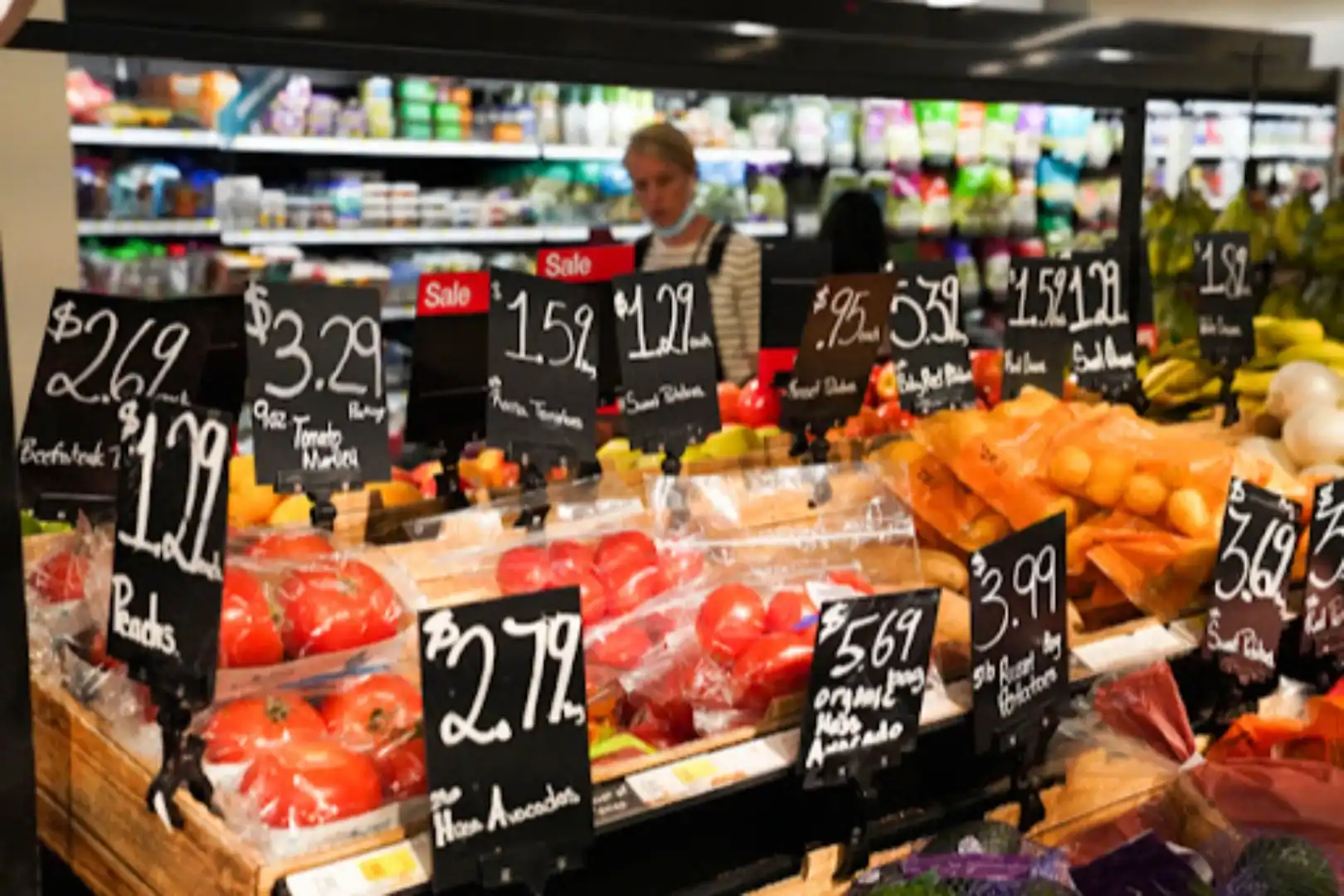
A Federal Reserve analysis from the St. Louis Fed argues that AI optimism itself is a driver of inflation. The "news shock" of AI's revolutionary potential causes households and businesses to increase spending and investment in anticipation of future gains, pushing demand beyond current supply and creating inflationary pressure. This is supported by a Deutsche Bank experiment where AI models (dbLumina, Claude, ChatGPT-5.2) assessed a 20-40% probability that AI would raise inflation in the next year, citing surging demand for data centers, semiconductors, and electricity. They saw only a 5% chance of AI significantly reducing inflation. Massive capital expenditure underscores this demand. Amazon, Microsoft, Google, and Meta are projected to spend a combined ~$663B in 2026, a fourfold increase in four years. A significant portion funds power-hungry data centers. For example, OpenAI's "Stargate" project plans a 10-gigawatt capacity, equivalent to the entire electricity load of 16 Vermont states. U.S. data center electricity consumption is forecast to triple by 2030. While AI could eventually boost productivity and be disinflationary long-term, current data shows no such productivity jump. The U.S. economy now faces a cycle: massive AI investment fuels inflation, delays interest rate cuts, raises financing costs—yet the investment continues to accelerate. The outcome hinges on whether these AI models will ultimately make the economy more efficient, a question that remains unanswered.

marsbit04/02 11:03

$700 Billion Poured into AI, Americans Taste the Bitter Fruit of Inflation First

marsbit04/02 11:03

Soaring Oil Prices No Longer Drive Up Interest Rates, What Is the Market Afraid Of?

Oil prices surged nearly 60% in March 2026—the steepest monthly rise since Brent crude's inception in 1988—after the Strait of Hormuz closed, cutting off 17.8 million barrels per day of oil flow. Historically, such spikes pushed inflation expectations and bond yields higher, but this time, the 10-year Treasury yield fell sharply from 4.44% to 3.92% in late March, signaling a decoupling. This divergence reflects a market shift: growth risks now outweigh inflation concerns. Bond markets are betting on recession rather than persistent inflation. Historical oil shocks—like those in 1973, 1979, 1990, and 2008—often preceded economic downturns. The sole exception was the 2022 spike, which triggered severe inflation instead. Market expectations pivoted rapidly. Earlier, traders anticipated rate cuts, but by late March, weak consumer confidence and manufacturing data drove bets toward Fed dovishness. Chair Powell emphasized monitoring whether the supply shock is temporary, but the bond market has already priced in recession risks. If stagflation emerges—as during 1973–1982—real assets like gold and commodities may outperform, while stocks and bonds could suffer. The 60/40 portfolio would be particularly vulnerable. Analysts project Brent could average $115–125 in April, with a peak of $150 possible if the Strait remains closed. The bond market’s verdict is clear: fear of recession dominates.

marsbit03/31 03:05

Soaring Oil Prices No Longer Drive Up Interest Rates, What Is the Market Afraid Of?

marsbit03/31 03:05

Gold Has Stabbed Everyone in the Back

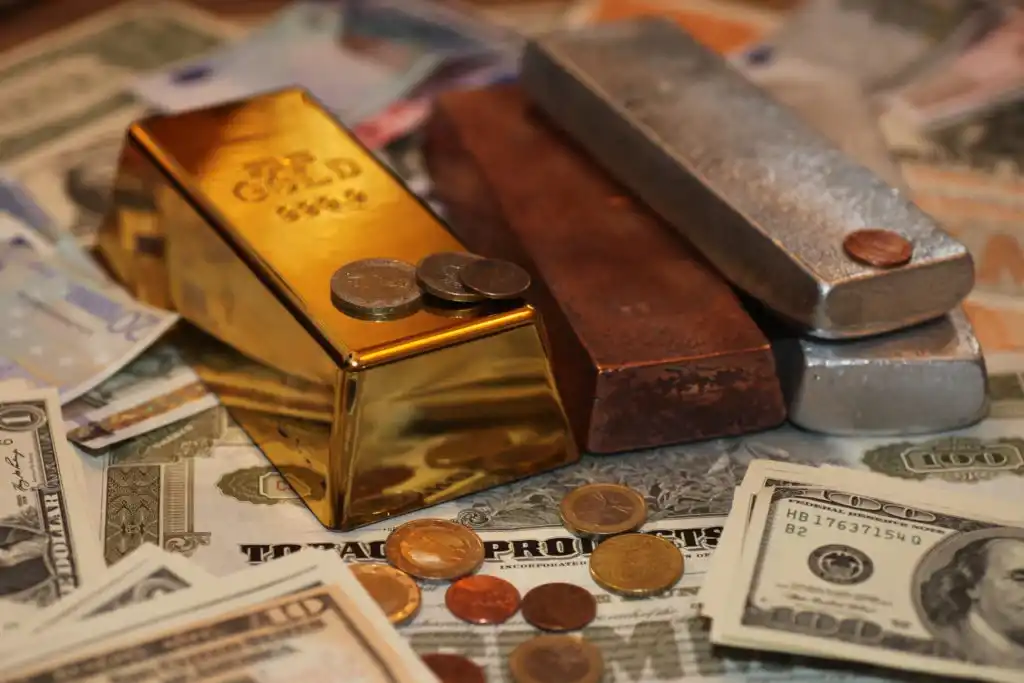
The price of gold has experienced a severe decline, dropping over 27% from its all-time high of $5,600 to around $4,100, marking its worst performance since 1983. This contradicts the conventional wisdom that gold acts as a safe-haven asset during crises, such as the ongoing conflict in the Middle East, which has driven oil prices above $100 and closed the Strait of Hormuz. Analysis reveals that gold's behavior over the past three years has resembled that of a risk asset, not a hedge. It moved inversely to inflation and correlated strongly with U.S. stocks, challenging traditional narratives. While central bank purchases provided a foundation, the surge was fueled by speculative institutional investors using leveraged derivatives, where paper gold claims vastly outnumbered physical supply. This created a bubble vulnerable to liquidation. The recent crash was triggered by expectations that persistent inflation and high oil prices would delay Fed rate cuts, strengthening the dollar and reducing gold's appeal. Leveraged positions were forced to unwind, sparking a downward spiral similar to the March 2020 liquidity crisis. The future remains uncertain. If the war continues and stagflation sets in, gold could rebound as in the 1979 oil crisis. Alternatively, further deleveraging may push prices lower. Regardless, the episode underscores that no asset is immune to liquidity demands during panics, and gold's role is now at a critical crossroads.

比推03/23 14:13

Gold Has Stabbed Everyone in the Back

比推03/23 14:13

活动图片