x402 Wish List

marsbitОпубликовано 2026-03-17Обновлено 2026-03-17

Введение

"x402 Wish List" explores the potential of x402 as a micro-payment and data aggregation protocol, based on a Galaxy Research report. It highlights a use case where an AI agent uses x402 to query weather data, book trips, and manage payments to various data sources. The author envisions x402 enabling new business models, such as pay-per-use "Skills Endpoints" for AI agents, replacing fixed fees with usage-based pricing. Other proposed applications include curated data streams for niche crypto news, aggregated ecosystem metrics, a tracker for media prediction performance, and a security/audit incident aggregator. The summary concludes by questioning the economic viability of micro-payments at scale and the legal challenges of data sourcing, noting that x402 V2's revenue-sharing features could help align incentives between data aggregators and original providers.

Written by: David Christopher

Compiled by: Block unicorn

While reading the recent report from Galaxy Research, I gained one of the clearest perspectives on the future value of x402.

One example caught my attention: a smart agent helping a user book a trip, querying high-quality weather data via x402 to find the best dates and destination, providing flight and hotel options, and then passing all the information to the booking process. Each query is equivalent to a micro-payment. Each data source gets paid. The smart agent integrates all the information and finally makes a booking decision.

What impressed me was the perfect combination of x402 with data aggregation and management. Someone integrates decentralized data sources into proprietary data, making it more useful than any single supplier, and sells access via x402. Data managers only bear the integration cost once. Callers pay per query. Everyone benefits (provided the data volume is large enough, which we will discuss later).
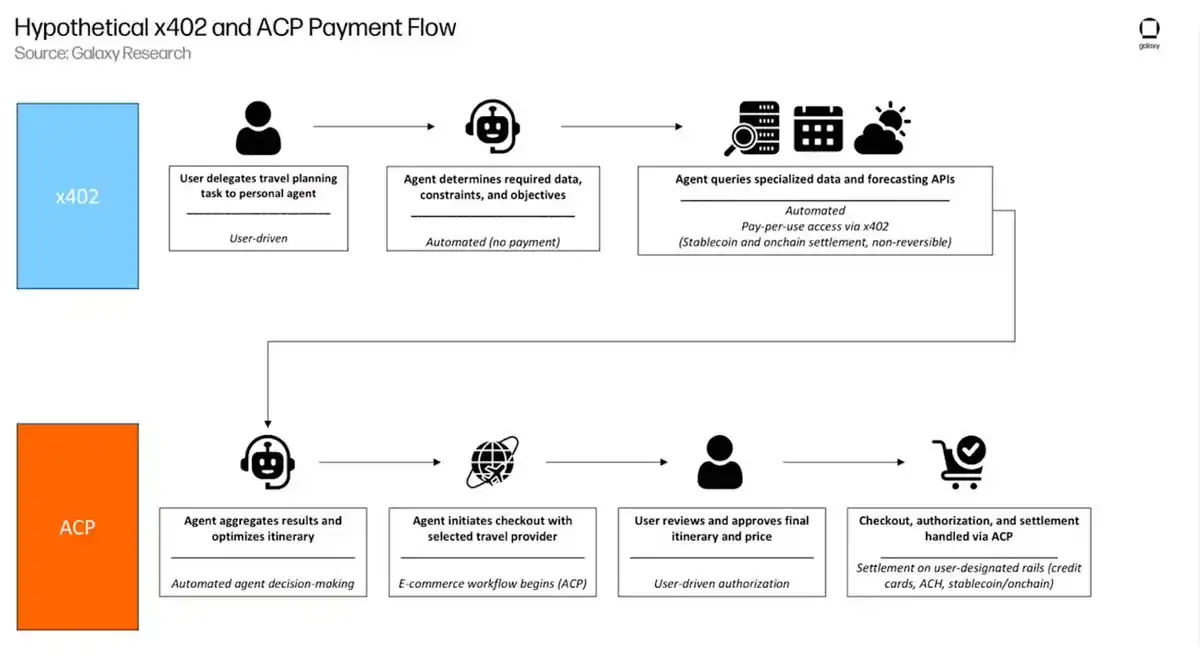
From Galaxy Research

Before such services become widespread, I still believe x402 is in its infancy. If you are a developer hoping to use x402 for development but struggling for inspiration, here are some theoretical products I would rush to try if I could use them immediately!

Skills Endpoint

Skills are carefully crafted sets of instructions written by humans for AI agents to perform specific tasks.

Currently, most skills markets adopt a fixed fee model: permanent access is priced at $5, $15, and $20 respectively. This model creates a misalignment of incentives. Occasional users overpay, while power users underpay, and skill creators cannot capture value proportional to usage. A truly useful skill, like a truly useful advisor (if such a thing exists), should be worth far more than a one-time $15.

x402 offers an alternative. Skill creators can publish their work through an x402 interface and price it based on reality: pay-per-use (one-time use), monthly subscription (a new feature in x402 V2), or both. The payment system supports both models. A skill called thousands of times a month can generate ongoing revenue for the creator. Less frequently used skills do not require users to pay upfront.

Niche Crypto News Aggregation Package

Crypto news is scattered across platforms like Twitter, Telegram groups, podcasts, RSS feeds, and Substacks. The problem is even more challenging if you want to track a specific ecosystem. Tracking all the dynamics of Sui or Starknet means monitoring a dozen sources and checking daily.

An ecosystem-specific x402 data stream can solve this. Someone aggregates Twitter user feeds, articles from website RSS feeds, and Telegram messages into a curated information stream for a specific ecosystem via an API. The agent queries: "What happened on Starknet in the last 24 hours?" and receives a structured reply. No more switching between tabs and apps.

Aggregated Ecosystem Data

Developer activity has always been difficult to measure accurately.

Electric Capital's annual report and its continuously updated dashboard are excellent open-source resources, but they also have limitations. For example, I just looked at the ecosystems with the top developer growth over the past year, and the results showed PancakeSwap, Monad, and Aleo. Of course, this is because I only filtered on one metric—but it also reflects a broader problem: developer activity data in the crypto space is very fragmented, and no single data source provides the complete picture.

If there were an x402 data source that aggregated Electric Capital data, GitHub activity, Artemis metrics, and protocol-specific data sources into a quality-weighted developer activity stream, it would fill a real gap. Agent query: "What has Solana's developer momentum been like over the past quarter?" and gets more useful information than raw commit counts.

Newsletter and Podcast Performance Tracker

An idea I would personally use: a service that clearly tracks the viewpoints proposed in podcasts or newsletters and measures their development over time.

Citron does something similar for the stock market, releasing scorecards for its annual predictions and their performance at the end of the year. But for most newsletters and podcasts, if you want to know if a media outlet's predictions have yielded returns over time, you have to research manually.

An x402 service could fill this gap by benchmarking a media outlet's predictions. Just provide the newsletter or podcast, and it tracks every prediction, adds timestamps, follows subsequent price movements, and scores the media outlet's past performance. Agent query: "How has X's asset predictions performed over the past year?" and gets a verified answer.

Security and Audit Tracker

Protocols often don't proactively announce when they are attacked. And the news cycle moves fast; if you weren't online the day the exploit happened, you might have completely missed it. By the time you need to take action, an event that should have been highly concerning is already buried under weeks of news coverage.

The situation with security reviews isn't much better. Audit reports are scattered across auditors' websites, protocol documentation, and GitHub repositories. Checking a protocol's audit history is more difficult than it should be.

It would be great to have an x402 information stream that aggregates this information into a queryable endpoint, where users could pay a few extra cents to access it before deciding on yield allocation, especially when operating through an agent interface.

Is This Really Feasible?

Everything I mentioned above faces two questions: Can the economics support the building of these streams? Can they be developed legally?

From an economic perspective, history is not optimistic. Pay-per-item models have struggled since the early days of the internet. The cognitive cost of deciding whether something is worth paying for often exceeds the cost of the payment itself. This is why the internet shifted to subscription models: predictable billing, avoiding decision fatigue, and reducing churn.

But agents change this. You top up your wallet, the agent spends on your behalf, and you top up again when the balance is low. API credits work similarly. The question shifts from "Is this few cents worth it?" to "Can the endpoint provider recoup costs at scale?" This depends on traffic volume.

In terms of legality, x402 handles payment and metering. It doesn't change the copyright issues of upstream data. If you're using licensed APIs, public data, or first-party X402 endpoints, then it's straightforward product development. But if you rely on web scraping or operate in the gray areas of terms of service, persistence and scale may be limited. Once upstream providers notice and object, you're in dangerous territory.

x402 V2 introduces dynamic payment routing, enabling revenue sharing. Data managers can return a portion of the revenue to the original data providers, aligning incentives and turning potential terms-of-service conflicts into partnerships, though this does reduce profit margins.

Whether both the economics and legality can hold up at scale remains to be seen. But if they do, these are the data streams I would pay to use.

Whether this economic and legal mechanism can work simultaneously at scale remains to be seen. But if it does, these are the data streams I would pay to use.


Связанные с этим вопросы

QWhat is the core value proposition of x402 as described in the article?

AThe article presents x402's core value proposition as a perfect fit for data aggregation and management. It enables the monetization of data through micro-payments per query, allowing data sources to be compensated, data to be bundled into more useful proprietary sets, and accessed on-demand without large upfront costs.

QHow does x402 change the economic model for 'Skills' compared to traditional marketplaces?

ATraditional skills marketplaces use a fixed-fee model (e.g., $5, $15 for permanent access), which misaligns incentives. x402 offers an alternative with pay-per-use fees and/or monthly subscriptions (a V2 feature), allowing creators to earn ongoing revenue proportional to usage instead of a one-time fee.

QWhat problem does a niche crypto news aggregation package via x402 solve?

AIt solves the problem of crypto news being scattered across platforms like Twitter, Telegram, podcasts, and RSS feeds. An x402 data stream can aggregate these disparate sources into a single, structured feed for a specific ecosystem, allowing a user or agent to query for events without switching between apps.

QWhat are the two major challenges for the feasibility of the x402 data streams mentioned in the article?

AThe two major challenges are economic viability (whether the economics can support the teams building these streams) and legality (whether they can be built legally, especially concerning data sourcing issues like web scraping and terms of service conflicts).

QHow does x402 V2's dynamic payment routing attempt to address legal concerns?

Ax402 V2's dynamic payment routing enables revenue sharing. Data managers can send a portion of the proceeds back to the original data providers, which helps align incentives and can turn potential terms-of-service conflicts into cooperative partnerships, though it may reduce profit margins.

Похожее

Диалог с Далио: Сейчас мы находимся в пузыре ИИ, 1% моего инвестиционного портфеля — это биткоин

Источник: интервью Рэя Далио, основателя Bridgewater Associates, для подкаста "The Diary Of A CEO". Далио, предсказавший кризис 2008 года, обсуждает "большой цикл" — концепцию, охватывающую долговые проблемы, растущее неравенство и геополитические сдвиги. Он указывает, что текущий ажиотаж вокруг ИИ демонстрирует классические признаки пузыря, который может лопнуть из-за высокой долговой нагрузки, роста процентных ставок и чрезмерной эмиссии акций, что способно привести к рецессии. Для защиты личного капитала в неопределенные времена Далио советует диверсификацию: вместо хранения наличных инвестировать в акции, золото, облигации. Сам он держит около 1% портфеля в биткоине, считая его "твердыми деньгами", но предпочитает физическое золото из-за его статуса резервного актива и независимости от технологических рисков. Говоря о влиянии ИИ, Далио отмечает, что технология заменяет не только физический труд, но и элементы мышления, что увеличит разрыв между капиталом и трудом. Ключевыми останутся человеческие качества — эмоции и интуиция, а успеха добьются те, кто научится работать в партнерстве с ИИ. На геополитической арене, по его мнению, мир движется к регионализации с центрами в виде США и Китая. Вовлечение США в конфликты, подобные иранскому, обнажает снижение их абсолютного влияния. Внутренние вызовы, такие как дебаты о налогах на богатство, риск капитального бегства и низкая производительность, также ставят под вопрос стабильность традиционных держав в текущей фазе цикла.

marsbit3 ч. назад

Диалог с Далио: Сейчас мы находимся в пузыре ИИ, 1% моего инвестиционного портфеля — это биткоин

marsbit3 ч. назад

7.2 трлн вон за один день: иностранные инвесторы установили рекорд чистых покупок в пятницу! Уолл-Стрит: встречный ветер в плане ликвидности на южнокорейском рынке уже утих

Капиталы возвращаются на южнокорейский рынок акций. 31 июля иностранные инвесторы осуществили чистые покупки акций KOSPI на рекордные 7,2 трлн вон за один день, что стало самым высоким показателем в истории. По данным Citigroup, эта цифра знаменует собой кардинальный разворот после месяцев масштабного оттока средств нерезидентов. В июле чистые продажи иностранными инвесторами значительно сократились до 9,8 трлн вон по сравнению с 48,4 трлн и 44,5 трлн вон в июне и мае соответственно. Одновременно внутренние пенсионные и инвестиционные фонды в июле вернулись к чистым покупкам на 1,0 трлн вон. Дополнительным фактором снижения волатильности стали новые правила Комиссии по финансовым услугам (FSC), ужесточившие с 31 июля доступ розничных инвесторов к ETF с плечом на отдельные акции. После введения норм торговый оборот таких инструментов упал примерно вдвое. Citigroup сохраняет целевую точку для KOSPI на уровне 10000 пунктов, отмечая ослабление давления со стороны движения капиталов. Аналитики видят поддержку рынку в устойчивости фундаментальных показателей сектора чипов памяти, низких оценках KOSPI, сильной экономике и благоприятной политике властей, включая возможные меры по поддержке ликвидности.

marsbit3 ч. назад

7.2 трлн вон за один день: иностранные инвесторы установили рекорд чистых покупок в пятницу! Уолл-Стрит: встречный ветер в плане ликвидности на южнокорейском рынке уже утих

marsbit3 ч. назад

Как стать человеком, которого искусственный интеллект никогда не сможет заменить

В статье рассматривается вопрос о том, как остаться незаменимым в эпоху искусственного интеллекта. Автор утверждает, что вместо страха перед ИИ следует сосредоточиться на развитии качеств, которые машины не смогут заменить. Он критикует «зарплатное рабство» — зависимость от работы, не приносящей удовлетворения, и предлагает путь к финансовой независимости через создание собственного дела. Ключ к успеху — развитие пяти элементов: самостоятельности (агентности), вкуса, умения убеждать, упорства и способности к итерациям. Главное — не просто создавать что-либо (сегодня это может каждый), а создавать что-то ценное, востребованное и уметь это продвигать. Автор считает, что наиболее важным навыком будущего является создание контента (медиа), а не просто написание кода, поскольку ценность контента субъективна и требует уникального человеческого вкуса и суждения. ИИ может помочь в производстве, но не заменит оригинальность мысли и связь с аудиторией. В качестве практического шага предлагается упражнение: за 15 минут ответить на вопросы, чтобы обнаружить свои уникальные знания, опыт и точку зрения, которые станут основой для личного бренда и дела жизни. Первый шаг — немедленно опубликовать свою основную идею, чтобы получить обратную связь от реального мира и начать процесс роста. Цель — стать «непригодным для найма», построив жизнь вокруг собственного творчества и экспертизы.

marsbit5 ч. назад

Как стать человеком, которого искусственный интеллект никогда не сможет заменить

marsbit5 ч. назад

Благодаря броскам кубиков ключи от биткоинов хранятся в автономном режиме, но не все будут этим заниматься

Статья посвящена практике генерации сид-фраз для биткоин-кошельков с помощью бросков кубиков в свете уязвимости, обнаруженной в аппаратных кошельках Coldcard. Подчеркивается, что физический бросок кубика (дающий около 2.6 бит энтропии за бросок) создает высококачественную случайность, поскольку предсказать результат практически невозможно из-за множества переменных. Для создания стандартной сид-фразы из 12 слов (128 бит энтропии) требуется около 50 бросков, а для повышенной безопасности рекомендуется 99 и более. В связи с инцидентом Coldcard, когда неисправный генератор случайных чисел в прошивке (2021-2026 гг.) мог создавать предсказуемые ключи, выяснилось, что сид-фразы, сгенерированные вручную через кубики, были защищены от этой уязвимости. Однако исследование показало, что другие функции устройства (создание бумажных кошельков, ключей для мультиподписи, паролей и т.д.) по-прежнему использовали скомпрометированный генератор, подвергая риску владельцев даже с безопасной основной сид-фразой. Автор отмечает, что, хотя метод с кубиками криптографически надежен, он непрактичен для массового использования из-за трудоемкости, высокой вероятности ошибок при вводе и необходимости строгой дисциплины для сохранения секретности процесса. Делается вывод, что будущее безопасности лежит в создании надежных аппаратных генераторов случайных чисел и понятных интерфейсов, а ручные методы остаются нишевым инструментом для опытных пользователей. Владельцам Coldcard рекомендуется обновить прошивку и проверить/заменить все ключи, сгенерированные уязвимыми функциями.

cryptonews.ru8 ч. назад

Благодаря броскам кубиков ключи от биткоинов хранятся в автономном режиме, но не все будут этим заниматься

cryptonews.ru8 ч. назад

Торговля

Спот
活动图片




