Why Does the Automated Market Maker (AMM) Mechanism Fail in the Prediction Market Field?

marsbitОпубликовано 2026-04-14Обновлено 2026-04-14

Введение

The article explores why Automated Market Makers (AMMs), particularly the x*y=k model popularized by Uniswap, fail in prediction markets despite their success in decentralized finance (DeFi). AMMs excel in DeFi by enabling permissionless liquidity provision and continuous trading for tokens that fluctuate indefinitely. However, prediction markets involve binary outcomes where assets settle to either $1 or $0 at expiration. This structural difference causes inherent flaws: liquidity providers (LPs) inevitably suffer losses as pools automatically rebalance toward the losing side upon settlement—making "impermanent loss" permanent. Additionally, AMMs distort price discovery for probability-based markets due to slippage and low liquidity. Early prediction platforms like Polymarket and Augur experimented with AMMs but abandoned them for Central Limit Order Books (CLOBs), which better handle precise probabilistic pricing and binary settlements. The article concludes that while AMMs revolutionized token swaps, their mechanics are mismatched for prediction markets, requiring alternative infrastructure that accommodates binary outcomes and mandatory settlement.

Author: Melee

Compiled by: AididiaoJP, Foresight News

In July 2017, Hayden Adams was laid off by his employer Siemens, where he worked as a mechanical engineer. His college roommate Karl Floersch was working at the Ethereum Foundation at the time and often told him about smart contracts. Adams had previously paid no attention. Now unemployed and looking for something to do, he decided to listen.

The Birth of the Automated Market Maker (AMM)

Floersch recommended a blog post by Vitalik Buterin about running an on-chain exchange using a mathematical formula instead of an order book. The principle was not to match buyers and sellers, but to allow traders to exchange with a pool of assets, with the price automatically set based on the ratio of tokens in the pool. No working version existed at the time. Adams took it on as a learning project, received a $65,000 grant from the Ethereum Foundation, and launched Uniswap in November 2018.
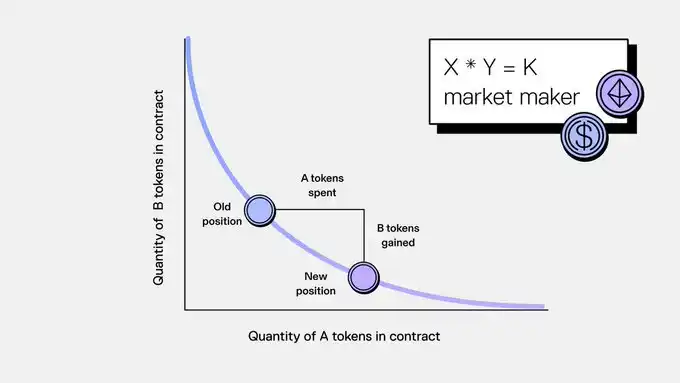
Its formula was deceptively simple: x * y = k.

Two tokens are placed in a pool, and the product of their quantities remains constant. When someone buys one token, they must deposit the other token, changing the ratio within the pool and adjusting the price accordingly. No order book, no matching engine, no professional market makers needed. Anyone can deposit tokens into the pool and earn fees from every transaction.

The automated market maker thus became the cornerstone of decentralized finance. Uniswap, Curve, Balancer, and dozens of other protocols handle billions of dollars in trading volume. On-chain order books are slow and expensive, and traditional market makers have no interest in tokens with only two hundred holders. Automated market makers allow anyone to create a liquid market for any asset at any time. Before AMMs, listing a new asset required permission and infrastructure. After AMMs, all you need is a liquidity pool.

The benefits were obvious. So, prediction markets naturally tried to adopt them too.

Automated Market Makers and Prediction Markets

Prediction markets face the same cold-start problem as token markets. You need liquidity before people are willing to trade, and you need traders before people are willing to provide liquidity. Little known is that Robin Hanson had proposed an automated market making solution for prediction markets years earlier in his 2002 Logarithmic Market Scoring Rule.

He thought he had theoretically solved the cold-start problem. However, in practice, the solution suffered from the same fundamental issue that every subsequent attempt to automate liquidity for prediction markets encountered: the formula couldn't distinguish between perpetually fluctuating tokens and equity certificates that expire.

Prediction market outcomes are binary. They ultimately settle to one or zero. In a token swap pool, both assets can fluctuate indefinitely, and the AMM formula works precisely because neither token is designed to go to zero.

Early Polymarket used an AMM based on the logarithmic market scoring rule. Augur also experimented with similar schemes. If automated liquidity pools worked for token swaps, they should, in theory, work for election betting too.

They didn't.

Why AMMs Fail in Prediction Markets

When a prediction market event settles, one side is worth one dollar, the other zero. For anyone providing liquidity to the pool, the mathematical outcome is nearly brutal. As the market moves towards settlement, the pool automatically rebalances towards the losing side.

Impermanent Loss

What decentralized finance traders call "impermanent loss" becomes completely "permanent" here. Every market settles, and every pool will eventually hold a pile of worthless shares.

In regular DeFi pools, trading fees can offset impermanent loss over time.
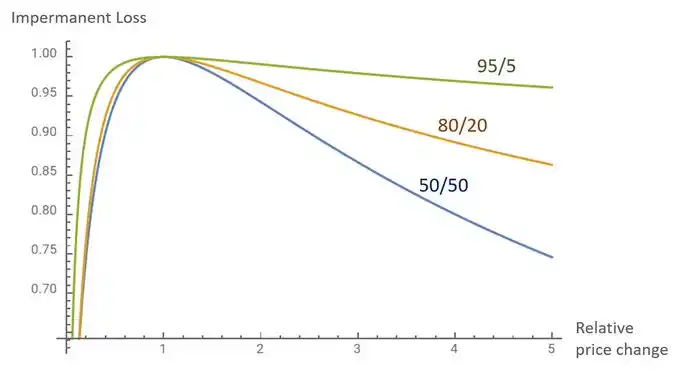
But in prediction markets, the loss is a structural certainty. The only question is how much the liquidity provider loses. Protocols have tried to persuade users to deposit assets into these pools through liquidity mining, reward programs, and various incentive structures. All of these are just different ways to subsidize users to lose money at a slower rate.

Price Discovery

Then there is the issue of price discovery. AMMs price assets based on the pool ratio and a fixed formula. For tokens, the "correct price" is a moving target, and a formula-driven approximation is sufficient. Prediction market prices are supposed to represent probabilities. The slippage introduced by the constant product curve distorts the signal, especially in low-liquidity markets, where a single trade can swing the implied probability by several basis points.

Is the Central Limit Order Book (CLOB) Better Than AMMs?

Polymarket realized this early on. In late 2022, the platform migrated from a logarithmic market scoring rule-based AMM to a central limit order book. AMMs were designed for continuous token swaps across a price range. Prediction markets require precise probability pricing on binary outcomes with known terminal values. They are entirely different problems.

The characteristics that made AMMs revolutionary for tokens—permissionless market creation, instant liquidity bootstrapping, no reliance on professional market makers—are exactly what prediction markets desperately need. The problem is that the specific mechanism, the constant function formula built for token swaps, breaks down when faced with the reality of binary outcomes and inevitable settlement.

The challenge for prediction markets is to replicate these effects with infrastructure that reflects how these markets actually settle.


Связанные с этим вопросы

QWhat is the core mathematical formula behind the Automated Market Maker (AMM) mechanism introduced by Uniswap?

AThe core mathematical formula is x * y = k, where x and y represent the quantities of two tokens in the pool, and k is a constant product.

QWhy do AMMs fail in the prediction market space according to the article?

AAMMs fail in prediction markets because these markets involve binary outcomes that eventually settle to $1 or $0, causing structural and certain losses for liquidity providers, unlike in token swaps where both assets can fluctuate indefinitely and fees can offset impermanent loss.

QWhat did early prediction market platforms like Polymarket and Augur experiment with?

AEarly platforms like Polymarket used an AMM based on Robin Hanson's Logarithmic Market Scoring Rule, and Augur also experimented with similar automated liquidity solutions.

QWhat is the key difference between token trading and prediction markets that makes AMMs unsuitable for the latter?

AToken trading involves assets designed to never go to zero and allows for continuous price fluctuations, while prediction markets have binary outcomes that definitively settle to $1 or $0, making AMM-induced losses certain rather than 'impermanent'.

QWhat solution did Polymarket eventually adopt to address the limitations of AMMs?

APolymarket migrated from an AMM based on the Logarithmic Market Scoring Rule to a Central Limit Order Book (CLOB) to better handle precise probability pricing and binary settlement in prediction markets.

Похожее

Goldman Sachs: в июле разрушили скученные сделки, бычий рынок на акциях США не прервался, но стало сложнее

По мнению аналитиков Goldman Sachs, июль на американском рынке акций характеризовался не крахом индексов, а масштабной ликвидацией перегруженных позиций. В то время как S&P 500 оставался стабильным, переживая узкий диапазон колебаний, наиболее спекулятивные и популярные сделки, такие как акции с высоким моментом и стратегии, связанные с искусственным интеллектом, подверглись резкой распродаже и снижению кредитного плеча. Это привело к значительной волатильности под поверхностью относительно спокойного рынка. Главный вывод заключается в том, что бычий тренд на рынке США не закончился — его поддерживают крепкая экономика, рост прибылей и масштабные капиталовложения в ИИ. Однако риск-доходность стала менее привлекательной, а потенциал для дальнейшего роста акций ослаб. Этап простой покупки и удержания закончился. Рынок переходит в фазу, где избыточный оптимизм и высокий леверидж наказываются, что требует от инвесторов большей избирательности, ликвидности и осторожности, особенно в условиях ужесточения коммуникации ФРС и давления со стороны долгосрочных процентных ставок.

marsbit56 мин. назад

Goldman Sachs: в июле разрушили скученные сделки, бычий рынок на акциях США не прервался, но стало сложнее

marsbit56 мин. назад

Ожидаемый закон о криптовалютах, известный как «Закон о ясности», находится на критическом этапе: Белый дом рассмотрит его в эти выходные

Закон CLARITY Act, определяющий полномочия SEC и CFTC на рынке криптовалют США, находится на решающем этапе. Его дальнейшая судьба зависит от согласия администрации Трампа с новым двухпартийным этическим предложением сенаторов Тиллиса и Гальего, которое передает право преследования федеральных чиновников за нарушение этических норм генеральным прокурорам штатов. Ожидается, что Белый дом рассмотрит это предложение в выходные. При достижении согласия возможен следующий шаг — голосование в Сенате, для которого, однако, пока не набраны необходимые 60 голосов. Законопроект, уже принятый комитетом Сената, создает всеобъемлющие правила для крипторынка, включая регулирование стейблкоинов. По этому вопросу достигнут компромисс, ограничивающий «процентные» выплаты за простое хранение токенов, но разрешающий вознаграждения за транзакции или лояльность. Если согласие по этическим нормам не будет найдено, продвижение закона снова застопорится, оставив неопределенность в регулировании стейблкоинов и реализации связанного с ними Закона GENIUS.

cryptonews.ru1 ч. назад

Ожидаемый закон о криптовалютах, известный как «Закон о ясности», находится на критическом этапе: Белый дом рассмотрит его в эти выходные

cryptonews.ru1 ч. назад

Интервью с руководителем Robinhood: Стратегия привлечения клиентов "гантели" через мемы и токенизированные акции, все направления бизнеса приносят миллиардные доходы

**Интервью с топ-менеджером Robinhood: стратегия "двойного привлечения" клиентов (мем-токены + токенизированные акции) и миллиардные доходы по всем направлениям** Johann Kerbrat, старший вице-президент Robinhood по криптовалютному и международному бизнесу, раскрыл стратегию новой блокчейн-сети компании — Robinhood Chain. Через три недели после запуска недельный объем торгов на DEX превысил $30 млрд при TVL более $3 млрд. Стратегия сети описана как "двойная": с одной стороны, поддержка мем-токенов для привлечения сообщества DeFi, с другой — фокус на токенизированных реальных активах (RWA), в первую очередь акций. Уже доступно более 90 токенизированных акций для пользователей из 120+ стран, что решает проблему глобального доступа к рынкам США. Главная цель — перенести на блокчейн 27 млн фондированных счетов Robinhood, упростив сложный пользовательский опыт DeFi (кошельки, приватные ключи). Продукты вроде Robinhood Earn позволяют получать доход от стейблкоинов прямо в основном приложении. Robinhood Chain построена на стеке Arbitrum для скорости, низких комиссий и безопасности Ethereum. Kerbrat подчеркивает, что сейчас важнее расширять общий рынок токенизированных активов, а не конкурировать за долю с Base от Coinbase. Партнеры (Morpho, Lighter, 0x и др.) выбираются по критериям комплаенса, способности создавать уникальный опыт и дифференциации. Что касается доходов, то сейчас сеть оптимизируется для массового внедрения, а не для максимизации прибыли. Все основные бизнес-направления Robinhood (акции, опционы, криптовалюты и т.д.) уже приносят доход на уровне сотен миллионов долларов.

marsbit3 ч. назад

Интервью с руководителем Robinhood: Стратегия привлечения клиентов "гантели" через мемы и токенизированные акции, все направления бизнеса приносят миллиардные доходы

marsbit3 ч. назад

Фидделити в отчете за 3-й квартал: BTC, ETH и SOL продолжают формировать дно. Как долго еще продлится текущий крипто-медвежий рынок?

Отчёт Fidelity за 3-й квартал 2026 года анализирует состояние рынка криптоактивов, отмечая, что BTC, ETH и SOL продолжают формировать дно. **Ключевые выводы:** * **Общий рыночный настрой:** Взвешенный показатель NUPL (чистая нереализованная прибыль/убыток) упал до -0.01, что указывает на то, что рынок в целом находится на грани безубыточности. Только BTC сохраняет нереализованную прибыль, выступая стабилизатором, в то время как ETH и SOL находятся в зоне убытков. * **Доминирование Bitcoin:** Доля BTC в общей капитализации рынка выросла до 68%, что говорит о консервативных настроениях инвесторов и отсутствии ротации капитала в альткойны. * **Падение цен:** За год BTC упал на ~45%, ETH на 37%, SOL на 53%. Рынок демонстрирует признаки капитуляции, включая рекордный отток средств из спотовых ETP. * **Прогноз по дну:** Ссылаясь на исторические циклы (около 300 дней в 2018 и 2022 гг.), в отчёте предполагается, что текущий медвежий период, длящийся уже около 203 дней, может пройти около двух третей своего пути. Октябрь 2026 года упоминается как потенциальный временной ориентир для наблюдения, но не как точный прогноз. **Оценка по активам:** * **Bitcoin:** NUPL (0.09) и Yardstick (показатель «стоимость/хэшрейт») оцениваются позитивно, что может указывать на привлекательную оценку. Однако импульс и динамика относительно золота остаются негативными. Хэшрейт снижается из-за давления на майнеров и конкуренции с AI-сектором. * **Ethereum:** NUPL (-0.43) глубоко в зоне капитуляции, что исторически связано с высокими последующими доходами. Импульс негативный. Объём переводов стейблкоинов (позитивно) остаётся высоким, но комиссии сети и активность базового слоя снижаются (нейтрально/негативно). * **Solana:** NUPL (-0.72) также в зоне капитуляции с высокой исторической волатильностью. Импульс негативный. При этом фундаментальные показатели использования и объёмы стейблкоинов остаются устойчивыми (позитивно), а сетевые комиссии, возможно, приближаются к дну (нейтрально). Отчёт подчёркивает, что рынок находится в фазе консолидации и поиска дна, где BTC демонстрирует относительную силу, в то время как настроения в целом остаются подавленными. Долгосрочным инвесторам текущие уровни могут предоставить привлекательные возможности, если тенденция внедрения базовых сетей сохранится.

marsbit3 ч. назад

Фидделити в отчете за 3-й квартал: BTC, ETH и SOL продолжают формировать дно. Как долго еще продлится текущий крипто-медвежий рынок?

marsbit3 ч. назад

Торговля

Спот
活动图片