Why Did Five Giants Jump In Within a Week to Open Bank Accounts for AI?

比推Опубликовано 2026-03-19Обновлено 2026-03-19

Введение

The article discusses a significant trend where five major companies—Stripe, Paradigm, Visa, Mastercard, and Coinbase—collectively launched initiatives within a week to enable AI systems to autonomously conduct financial transactions. Stripe and Paradigm introduced Tempo, a $5 billion blockchain project focused on machine-to-machine payments via its Machine Payments Protocol (MPP). Visa launched a command-line tool for AI agents to make credit card payments, while Coinbase upgraded its x402 protocol to support broader token payments. Mastercard acquired stablecoin firm BVNK for $1.8 billion to facilitate crypto-based transactions. World, co-founded by Sam Altman, released an identity verification toolkit for AI agents. The push stems from the growing capability of AI agents to perform complex tasks independently, creating a need for payment infrastructure that doesn’t require human intervention at every step. Traditional payment giants see an opportunity to leverage their existing networks, while crypto companies argue that blockchain-based systems offer a more seamless solution for non-human entities. Despite the high valuations and investments, current transaction volumes remain low (e.g., x402 recorded ~$65k in 24 hours). The situation parallels past infrastructure booms, where early investment outpaced immediate demand. The race to dominate AI payments is underway, but widespread adoption may take time.

Author: David, Deep Tide TechFlow

Original Title: This Week, Everyone Is Helping AI Open Bank Accounts


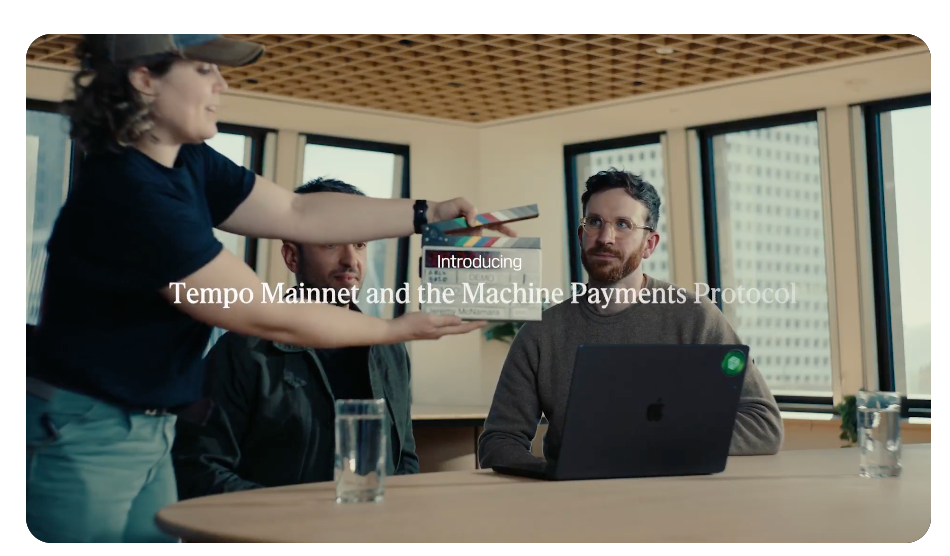
On March 18, another blockchain mainnet went live.

It's called Tempo, backed by Stripe and Paradigm. Stripe is one of the world's largest online payment companies, handling $1.9 trillion in transactions last year; Paradigm is one of the largest venture capital firms in the crypto industry. The two jointly invested $500 million in Tempo last year, valuing the project at:

$5 billion.

A $5 billion blockchain, not trading cryptocurrencies, not doing DeFi, not issuing memes. On the day of the mainnet launch, Tempo's most high-profile product was:

Enabling machines to pay machines.

This sounds abstract, but you can think of it as AI now costing money for every step. Calling an API costs money, buying computing power costs money, pulling data from a database costs money...

But existing payment systems are all designed for humans. Bank accounts require ID cards, credit cards require facial recognition, Alipay requires SMS verification codes.

AI can't pass any of these.

It can complete an entire workflow for you, but when it comes to payment, it has to stop and wait for a human to press "Confirm."

So, along with the mainnet launch, an open protocol called MPP (Machine Payments Protocol), co-authored by Stripe, was released.

Simply put, it sets rules for transactions between machines, including how to request payments, authorize, settle, etc.

The envisioned scenario is that AI can autonomously spend money within preset limits without needing human approval for every transaction. On launch day, over 100 service providers had already integrated, including OpenAI, Anthropic, and Shopify.

But Tempo isn't the only one doing this this week.

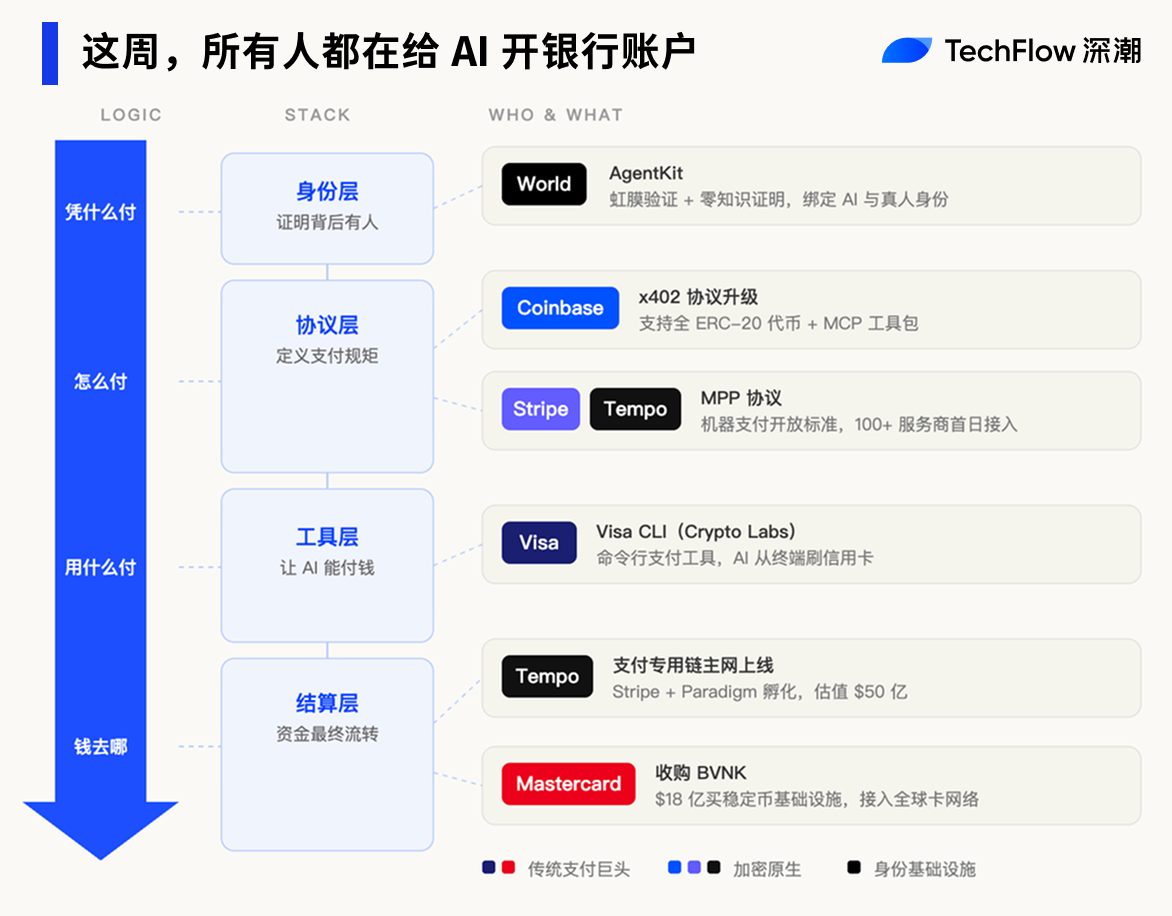
Within five days, Visa established a new department and launched an AI payment tool, Coinbase's payment protocol underwent a major upgrade, Mastercard spent $1.8 billion to acquire a stablecoin company, and Sam Altman's World released a toolkit specifically for AI identity verification.

Five giants crowded into the same door within a week, rushing to open bank accounts for AI.

Two Paths, One Door

Tempo is helping AI with settlements. But settlement is just one part of the payment system. For an AI Agent to truly spend money autonomously, it also needs payment tools, funding channels, and identity verification.

Here, traditional payment companies and crypto companies are competing for the cake using their respective strengths.

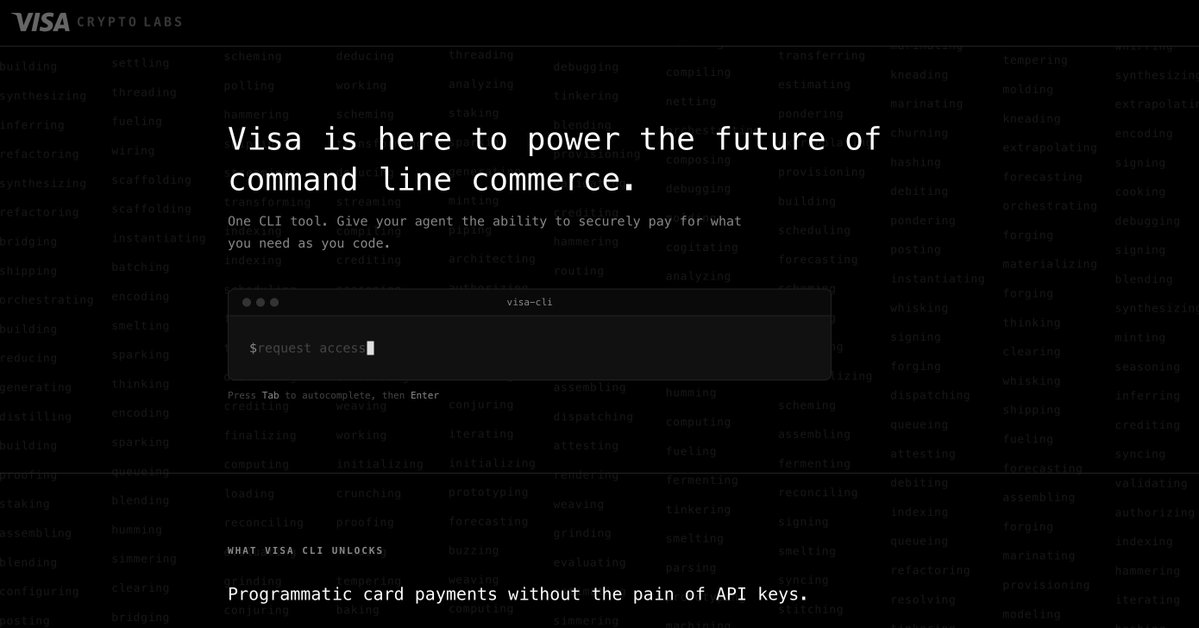
On March 18, the same day Tempo's mainnet launched, payment giant Visa also moved. Its newly established Crypto Labs department released its first product: Visa CLI, a tool that allows AI Agents to initiate credit card payments directly from the terminal.

No API key needed, no pre-registration required. If an AI needs to buy a service while running a task, it can pay with a single command. Visa calls this "command-line commerce."

Visa's global card network connects billions of cards and tens of millions of merchants. If AI payments can run on this existing network, it doesn't need to wait for any new infrastructure to mature.

Visa is extending the old path. Its competitor Mastercard chose another way: buying the path outright.

On March 17, Mastercard announced the acquisition of London-based stablecoin infrastructure company BVNK for $1.8 billion. This is the largest stablecoin acquisition in the history of the crypto industry.

The purpose of this acquisition is straightforward: if AI payments are to use stablecoins, then let those stablecoins flow through my pipes.

On the crypto-native side, actions were equally密集.

Coinbase's x402 protocol completed a major upgrade, expanding its payment scope from a few stablecoins to all ERC-20 tokens, while releasing the MCP toolkit, allowing developers to integrate AI tools into the payment network with one click.

The two sides seem to start from different points, but their actions point in the same direction: traditional payment companies are embracing crypto, and crypto companies are embracing AI. Ultimately, crypto infrastructure is becoming the underlying pipeline for AI payments.

One环节 remains. AI can spend money, but how does the merchant know if there's a human responsible behind the AI spending the money?

On March 17, World, co-founded by Sam Altman, released AgentKit, integrated with Coinbase's x402. It does only one thing: allow AI to prove, while paying, that there is a verified real person behind it. The merchant can confirm that someone is responsible for the transaction but cannot see who that person is.

Five days, five companies. Settlement,通道, tools, protocols, identity—every环节 has been staked out.

AI Cake Divided, Only the Cashier Left

Over the past three years, most positions on the AI industry chain have been taken.

The model layer is the table for OpenAI, Anthropic, Google, and a number of Chinese companies. Computing power is locked down by NVIDIA. The application layer, from programming assistants to search engines, is a bloody red ocean...

Every layer is crowded, and the competitive barriers in each layer are getting higher.

But the payment layer is still relatively vacant.

It's not that no one thought of it; the timing wasn't right. AI Agent payment has a prerequisite: AI must first have the ability to independently complete an entire task chain. If it can only chat, doesn't need to call APIs, doesn't need to buy computing power, doesn't need to hire other Agents to work, then payment is not a rigid demand.

Over the past year, this prerequisite has slowly been met.

OpenClaw allows AI to directly operate computers, the MCP protocol allows AI to access external services, and the Agent capabilities of various large models saw concentrated breakthroughs in the second half of 2025. AI has changed from a "conversation tool" to a "tool that gets work done," and getting work done costs money...

The demand for spending money has arrived, but the infrastructure for spending money does not yet exist.

This is why Stripe, Visa, Mastercard, and Coinbase acted simultaneously. For traditional payment companies, this is the first time they have gained a home-field advantage in the entire AI wave. They can't make models, they can't make chips, but payment is what they've been doing for decades.

Visa's global card network connects billions of cards and tens of millions of merchants, Mastercard covers over 200 countries, and Stripe processed $1.9 trillion in transactions last year. If every AI expenditure flows through these pipes, the more capable AI becomes, the more money they make.

For crypto companies, the logic is somewhat different.

Coinbase CEO Brian Armstrong once said something very direct: "AI can own a crypto wallet, but it can't open a bank account."

Every step of the traditional financial system confirms "who you are." Opening a bank account requires an ID card, applying for a credit card requires facial recognition, every transaction requires an SMS verification code. AI is software, not a person; it can't pass any of these checkpoints.

But crypto wallets don't need these. A private key is an account. For an AI Agent, on-chain payment is the path of least resistance.

Crypto or not, AI payment will be a new infrastructure-level market. The difference lies only in whose pipeline is more suitable for machines.

Road Built, Cars Haven't Arrived

The story seems all set here, with the five giants各就各位.

But there's one number worth looking at.

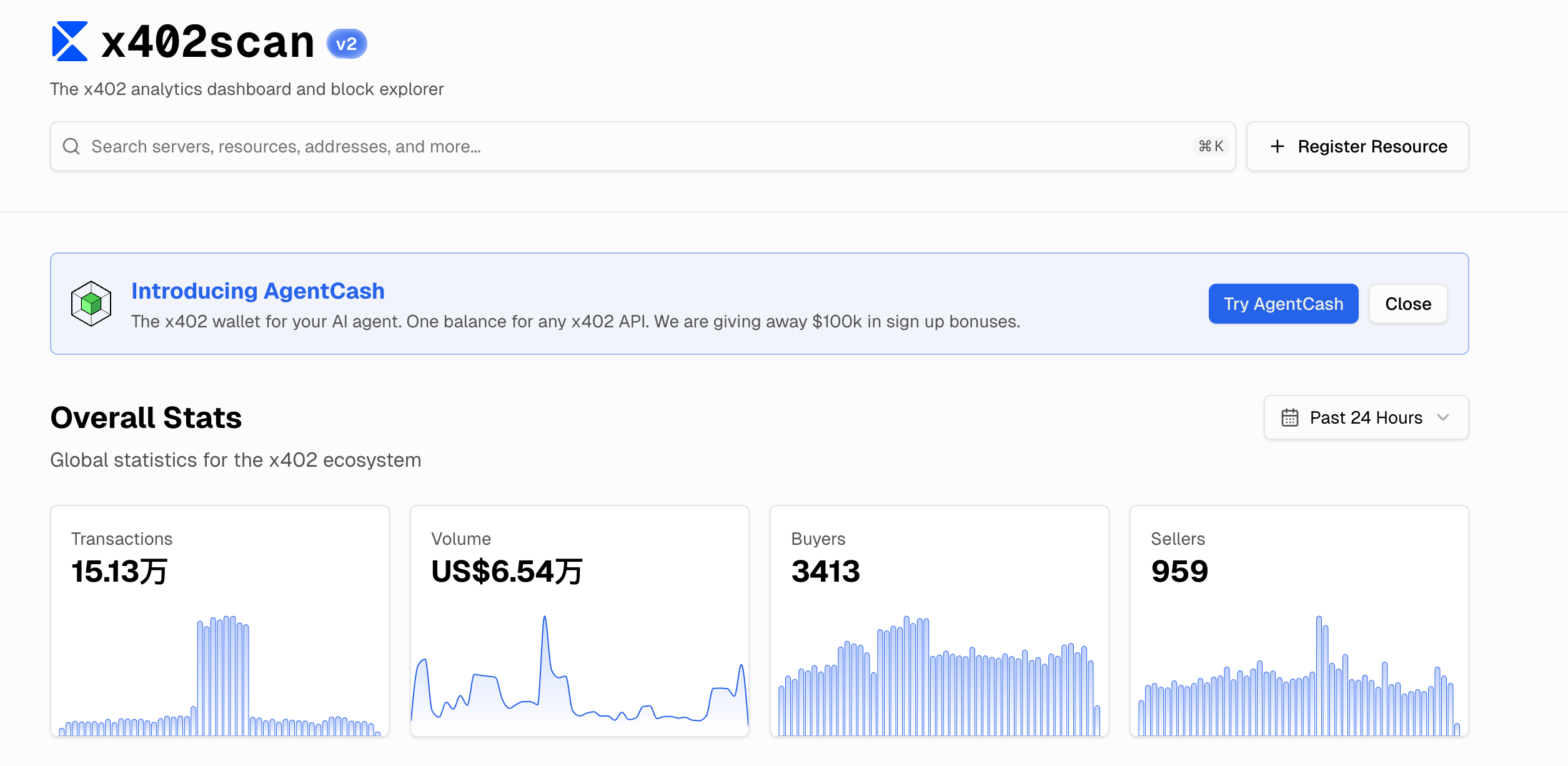
Coinbase's x402 protocol is currently the earliest and most widely adopted AI payment protocol. According to x402scan data, the total transaction volume across the entire ecosystem in the past 24 hours was $65,400. 150,000 transactions, averaging less than 50 cents per transaction.

What infrastructure is paired with this number? Tempo is valued at $5 billion, Mastercard spent $1.8 billion acquiring BVNK, Visa专门 established a new department, and Stripe亲自下场 wrote the protocol.

Billions in valuation infrastructure, serving a daily transaction volume comparable to a roadside bubble tea shop.

All infrastructure businesses seem to have this常态.

On the eve of the dot-com bubble in 2000, telecom companies laid millions of kilometers of fiber optic cables under the sea. After laying them, they found that global internet traffic used only 5% of them. Most of those companies went bankrupt, but the cables remained.

A decade later, video streaming and mobile internet filled those pipes. The road pavers didn't make money, but the road was real.

AI payment is at this stage now. The demand logic is sound: AI Agents are indeed becoming more capable, they确实 need to spend money autonomously, and they确实 need a new financial infrastructure.

Everyone is on the starting line, but after the starting gun fires, they find that, for now, only they are on the track.

As for whose road ultimately succeeds, and when the first真正的 autonomous AI transaction happens in your life, it might be faster than everyone expects, or it might be slower than everyone expects.

The only certainty is that this battle has begun, and your wallet and mine might be the last to know.


Original link:https://www.bitpush.news/articles/7621254

Связанные с этим вопросы

QWhy did five major companies rush to provide bank accounts for AI within a week?

ABecause AI agents are becoming capable of independently completing tasks that require payments, but existing payment systems are designed for humans and lack infrastructure for machines. Companies like Stripe, Visa, Mastercard, Coinbase, and World are positioning themselves to capture this emerging market by building or adapting payment solutions for AI.

QWhat is Tempo, and what problem does it solve for AI?

ATempo is a $5 billion blockchain project backed by Stripe and Paradigm. It introduces the Machine Payments Protocol (MPP), which enables machines to pay each other autonomously without human intervention for each transaction, addressing the gap in payment systems designed for humans.

QHow are traditional payment companies like Visa and Mastercard adapting to AI payments?

AVisa launched a command-line tool (Visa CLI) for AI agents to initiate credit card payments directly, while Mastercard acquired stablecoin infrastructure company BVNK for $1.8 billion to facilitate AI payments using stablecoins. Both are leveraging their existing networks to support machine-to-machine transactions.

QWhat role does cryptocurrency play in AI payments according to the article?

ACryptocurrency provides a frictionless path for AI payments because crypto wallets only require a private key, unlike traditional banking systems that need human identification (e.g., ID cards, facial recognition). Companies like Coinbase are upgrading protocols (e.g., x402) to allow AI to use crypto for payments.

QWhat is the current state of AI payment transactions despite the infrastructure investments?

ADespite billions invested in infrastructure, actual AI payment volumes are still very low. For example, Coinbase's x402 protocol recorded only $65,400 in transactions over 24 hours, with an average transaction under $0.50, indicating that the market is in early stages with minimal usage compared to the scale of investments.

Похожее

For Hedging, Buy Gold and Oil; For Explosive Growth, Buy AI; Bitcoin, the 'Outdated' Asset, Enters a Bear Market

Bitcoin’s price has recently fallen sharply, hitting a two-month low near $66,000, with Ethereum also dropping to a three-month low. While surface explanations point to ETF outflows, geopolitical tensions, and corporate selling, a deeper issue is emerging: Bitcoin is losing a crucial asset competition. For years, Bitcoin thrived in a low-rate environment where investors sought alternatives amid inflation fears and dissatisfaction with traditional options. Now, the market landscape has shifted, leaving Bitcoin stuck in an "awkward middle ground," facing challenges on three fronts: 1. **As an inflation hedge, gold is winning.** Investors worried about persistent inflation are turning to tangible assets like gold, energy stocks, and commodity producers, which offer more direct pricing power and physical backing. 2. **For growth exposure, AI is winning.** Those seeking high growth now favor AI-related companies with actual revenues and profits, an area where Bitcoin's lack of cash flow puts it at a disadvantage. 3. **Within crypto, infrastructure and stablecoins are winning.** Even investors wanting crypto exposure have alternatives like exchanges, stablecoin issuers, and tokenization firms, whose performance is directly tied to real-world adoption and offers clearer operational leverage. The recent market reaction to inflation warnings highlights this shift. Instead of boosting Bitcoin as "digital gold," such news now drives flows toward traditional inflation-sensitive assets. Therefore, recent events like ETF outflows and corporate selling are seen not as causes, but as symptoms of this new reality. Capital has more compelling options, and investors are becoming more selective. The emerging bear case for Bitcoin is no longer about it being a fraud or failed technology, but rather that **scarcity alone is no longer enough**. It is no longer seen as the best hedge, the best growth asset, or the only crypto play.

marsbit10 мин. назад

For Hedging, Buy Gold and Oil; For Explosive Growth, Buy AI; Bitcoin, the 'Outdated' Asset, Enters a Bear Market

marsbit10 мин. назад

SaaS Battle Royale: The Survivors Who Win All Share One Common Trait

**Summary** The AI revolution has triggered a "SaaS apocalypse," forcing a brutal market shakeout. The key dividing line is the pricing model. Companies like Snowflake and Datadog, which charge based on consumption (e.g., data processed or compute used), are thriving. AI workloads actively *generate* more demand for their services, fueling growth. Datadog's accelerating revenue is a prime example. Microsoft and Palantir, as platform/ecosystem players, also benefit by acting as essential channels for AI deployment. In contrast, traditional SaaS firms built on per-seat or per-task licensing (e.g., Intuit, Adobe) face direct pressure, as AI threatens to automate the very human tasks their software supports. Companies like Salesforce, a per-seat giant, are caught in the middle. While showing strong AI monetization (e.g., its Agentforce platform) and experimenting with consumption-based "Flex Credits," its stock remains under pressure, illustrating that the market rewards *completed* transitions, not just the intent. The recent Microsoft Build conference underscored key trends: AI is evolving from an assistant to an autonomous "agent," and platform providers like Microsoft are consolidating their control. The market's recovery is highly selective, focused on identifying which companies are "fed by AI" versus "eaten by AI." Future focus will be on the diffusion of this recovery to transforming companies and the real-world adoption data of AI agents like Microsoft Copilot.

marsbit27 мин. назад

SaaS Battle Royale: The Survivors Who Win All Share One Common Trait

marsbit27 мин. назад

Trend in US Stocks: Jensen Huang's One Sentence Triggers $47 Billion Surge; Google Raises Funds for First Time in 20 Years

U.S. markets reached record highs on June 2nd, but the real story was the intensifying AI arms race, now pivoting from chip supremacy to a scramble for capital to fund compute infrastructure. The day highlighted two stark realities: Nvidia CEO Jensen Huang's endorsement of Marvell Technology as the "next trillion-dollar company" at Computex fueled a historic 32.5% surge, adding $47 billion to its value. Conversely, Alphabet announced its first equity raise in two decades—an $80 billion plan—signaling that even its massive cash flow can't keep pace with soaring AI capital expenditures, forecast to exceed $180 billion in 2026. While the S&P 500 closed above 7,600 for the first time, led by tech and semiconductor stocks (SOXX +5.79%), sector performance was mixed. Alphabet's 4% drop dragged down communications services, illustrating market anxiety over the unsustainable cost of the AI buildout. Hewlett Packard Enterprise soared 25% on stellar earnings, proving AI's benefits extend beyond chip designers to infrastructure providers. Beneath the index highs, concerns linger over extreme concentration in a few AI stocks and geopolitical tensions. The focus now shifts to upcoming economic data, particularly Friday's nonfarm payrolls, which could challenge the market's current "ignore rates, chase AI" mentality.

marsbit59 мин. назад

Trend in US Stocks: Jensen Huang's One Sentence Triggers $47 Billion Surge; Google Raises Funds for First Time in 20 Years

marsbit59 мин. назад

Торговля

Спот
Фьючерсы

Популярные статьи

Неделя обучения по популярным токенам (2): 2026 может стать годом приложений реального времени, сектор AI продолжает оставаться в тренде

2025 год — год институциональных инвесторов, в будущем он будет доминировать в приложениях реального времени.

1.8k просмотров всегоОпубликовано 2025.12.16Обновлено 2025.12.16

Неделя обучения по популярным токенам (2): 2026 может стать годом приложений реального времени, сектор AI продолжает оставаться в тренде

Обсуждения

Добро пожаловать в Сообщество HTX. Здесь вы сможете быть в курсе последних новостей о развитии платформы и получить доступ к профессиональной аналитической информации о рынке. Мнения пользователей о цене на AI (AI) представлены ниже.

活动图片