Why Crypto Cards Are Doomed to Fail?

marsbitОпубликовано 2025-12-12Обновлено 2025-12-12

Введение

Crypto cards are a temporary solution designed to bridge traditional payment systems with the cryptocurrency world, but they are ultimately doomed to fail. They rely on centralized banking infrastructure, depend on compliance with traditional financial regulations, and lack the privacy and decentralization that are core to crypto values. These cards function as an abstraction layer, adding extra fees and complexity while still being controlled by entities like Visa or Mastercard. They do not replace traditional payment systems but instead reinforce them. Most crypto cards operate like liquidity bridges, converting crypto to fiat for spending, which incurs taxable events and additional costs. They also fail to provide true financial inclusivity, as users from restricted countries cannot access them, contradicting crypto’s ethos of equality. While companies continue developing crypto cards to lock users into their ecosystems (e.g., MetaMask using Linea), these efforts are largely superficial, relying on third-party services like Rain for infrastructure. The only model that aligns with crypto principles is EtherFi, which allows users to spend against crypto collateral without selling assets, avoiding taxable events and embodying a true DeFi-TradFi hybrid. Ultimately, crypto cards are a flawed transitional product, not a long-term innovation.

Editor's Note: Crypto cards were once seen as a bridge connecting the traditional payment system with the crypto world, but as the industry develops, the limitations of this model have become increasingly apparent: centralization, reliance on compliance, lack of privacy, additional fees, and even a departure from the core spirit of cryptocurrency.

This article provides an in-depth analysis of the nature of crypto cards, pointing out that they are merely transitional solutions, not true innovations in decentralized payments. At the same time, the article presents EtherFi as one of the few models that aligns with crypto values, demonstrating the potential for DeFi and TradFi integration.

Below is the original text:

My overall view is that crypto cards are only a temporary solution to address two problems we all know well: first, bringing cryptocurrency to the masses; second, ensuring that cryptocurrency can be accepted as a payment method globally.

Crypto cards are still cards after all. If someone truly identifies with the core values of cryptocurrency but believes that the future will be dominated by cards, then you might need to rethink your vision.

All Crypto Card Companies Will Eventually Fail


In the long run, crypto cards will likely die out, but traditional cards will not. Crypto cards just add a layer of abstraction; they are not pure cryptocurrency use cases. The card issuer is still a bank. Yes, they may have different logos, different designs, different user experiences, but as I said before, this is just abstraction. Abstraction makes things more convenient for users, but the underlying process hasn't changed.

Different public chains and Rollups have been obsessed with comparing their TPS and infrastructure to Visa and Mastercard. This goal has existed for years: either "replace" or, more aggressively, "disrupt" Visa, Mastercard, AmEx, and other payment processors.

But this goal cannot be achieved through crypto cards—they are not replacements; instead, they bring more value to Visa and Mastercard.

These institutions are still the critical "gatekeepers." They have the power to set rules, define compliance standards, and even ban your card, company, or even bank if necessary.

Why would an industry that has always pursued "permissionless" and "decentralized" ideals now hand everything over to payment processors?

Your card is Visa, not Ethereum. Your card is a traditional bank, not MetaMask. You are spending fiat, not cryptocurrency.

Your favorite crypto card companies have done almost nothing except put their logo on the card. They are just riding the narrative and will disappear in a few years, and those digital cards issued until 2030 won't actually function by then.

I'll explain later how easy it is to make a crypto card now—in the future, you might even make one yourself!

The Same Problems + More Fees

The best analogy I can think of is "Application-Specific Sequencing." Yes, it's cool that applications can process transactions themselves and profit from it, but it's only temporary: infrastructure costs are falling, communication is maturing, and the economic issues exist at a higher level, not a lower one. (If you're interested, check out @mvyletel_jr's great talk on ASS.)

The same goes for crypto cards. Yes, you can top up with cryptocurrency, and the card will convert it to fiat for payment, but the problems of centralization and permissioned access remain.

It does help in the short term: merchants don't need to adopt new payment methods, and crypto spending is almost "invisible."

But this is just a transitional step toward what most crypto believers truly want:
Demand: Pay directly with stablecoins, Solana, Ethereum, Zcash
No need: The indirect path of USDT → Crypto Card → Bank → Fiat

Adding a layer of abstraction adds a layer of fees: spread fees, withdrawal fees, transfer fees, and sometimes even custody earnings. These fees may seem insignificant, but they compound: a penny saved is a penny earned.

Using a Crypto Card Doesn't Mean You Are "Unbanked" or "Debanked"

Another misconception I've observed is that people think using a crypto card means they are unbanked or debanked. Of course, this isn't true. Under the label of a crypto card, there is still a bank, and the bank must report some of your information to the local government. Not all data, but at least some key data.

If you are an EU citizen or resident, the government will know your bank account earnings, large suspicious transactions, certain investment income, account balances, etc. If the underlying bank is in the US, they know even more.

From a crypto perspective, this has both pros and cons. The pro is transparency and verifiability, but the same rules apply when you use a standard debit or credit card from your local bank. The con is that it is not anonymous or pseudonymous: the bank still sees your name, not an EVM or SVM address, and you still need to do KYC.

Limitations Still Exist

You might say that crypto cards are great because they are really easy to set up: download the app, complete KYC, wait 1–2 minutes for verification, top up with cryptocurrency, and then you're ready to use it. Yes, this is indeed a killer feature, extremely convenient, but not everyone can use it.

Russia, Ukraine, Syria, Iraq, Iran, Myanmar, Lebanon, Afghanistan, and half of Africa—citizens of these countries cannot use cryptocurrency for daily spending without residency in another country.

But hey, it's only 10–20 countries that don't qualify, what about the other 150+ countries? The issue is not whether the majority can use it, but the core value of crypto: a decentralized network with equal nodes, financial equality, and equal rights for all. This does not exist in crypto cards because they are not "crypto" at all.

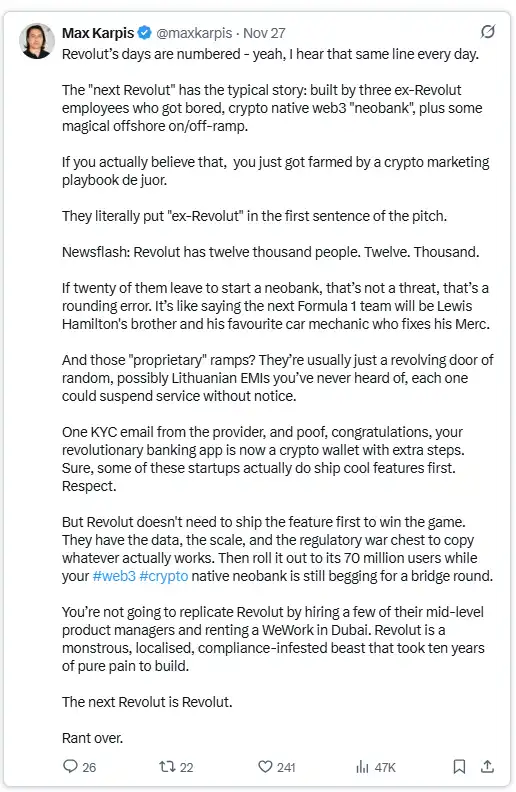
Max Karpis perfectly explains here why "neo-banks" are doomed to fail from the start.
For reference, a real scenario where I used cryptocurrency for payment was when booking a flight on Trip.com. They recently added an option to pay with stablecoins, directly from your wallet, and of course, it's available to anyone in the world.

This is the real cryptocurrency use case and a true crypto payment. I believe the final form will be like this: wallets will be specifically optimized for the user experience of payments and spending, or (less likely) wallets will evolve into crypto cards, if crypto payments are somehow widely adopted.

Crypto Cards Function Similarly to Liquidity Bridges (Rain)

I have an interesting observation: self-custody crypto cards operate very similarly to cross-chain bridges.

This only applies to self-custody cards: cards issued by centralized exchanges (CEX) are not self-custody, so exchanges like Coinbase have no obligation to make users think the funds are under their control.

A legitimate use case for CEX cards is that they can serve as proof of funds for government, visa applications, or similar scenarios. When you use a crypto card tied to your CEX balance, you are still within the same ecosystem.

Self-custody crypto cards are different: they operate like liquidity bridges, where you lock funds (cryptocurrency) on chain A (crypto balance), and then unlock funds (fiat) on chain B (the real world).

This "bridge" in the crypto card space is like the shovel during the California Gold Rush: it is the key secure channel connecting crypto-native users and businesses that want to issue their own cards.

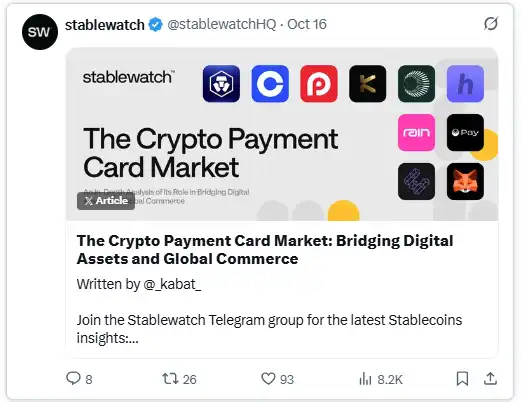
@stablewatchHQ's analysis of this bridge is spot-on, considering it essentially a Card-as-a-Service (CaaS) model. This is the most overlooked aspect by everyone discussing crypto cards. These CaaS platforms provide the infrastructure for businesses to launch their own branded cards.
Rain: How Crypto Cards Are Born

About half of your favorite crypto cards are probably powered by @raincards, and you may never have heard of it. Rain is one of the most fundamental protocols in the neo-banking system because it handles almost all the core components behind crypto cards. All that's left for the remaining companies to do is slap their logo on it (sounds harsh, but it's close to the truth).
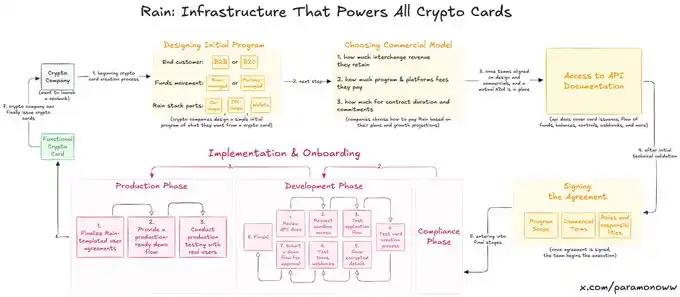
Rain enables companies to quickly launch their own crypto cards, and frankly, Rain's execution capabilities could even allow it to exist long-term outside the crypto space. So, stop fantasizing that teams need to raise tens of millions of dollars to issue a crypto card—they don't need that capital; they just need Rain.

The reason I emphasize Rain so much is that people generally overestimate the effort required to issue a crypto card. Maybe I'll write a separate article about Rain in the future because it is truly a severely underestimated technology.

Crypto Cards Have No Privacy or Anonymity

The lack of privacy or anonymity in crypto cards is not a problem with the cards themselves, but rather an issue deliberately ignored by those promoting them, hiding behind so-called "crypto values."


Privacy is not a widely used feature in the crypto space; pseudoprivacy (pseudonymity) does exist because we see addresses, not names. However, if you are ZachXBT, Wintermute's Igor Igamberdiev, Paradigm's Storm, or someone else with strong on-chain analysis capabilities, you can significantly narrow down the real identity corresponding to an address.

Of course, crypto cards don't even have the pseudonymity of traditional cryptocurrencies because you must complete KYC to activate a crypto card (actually, you're not activating a crypto card; you're opening a bank account).

If you are in the EU, the company providing the crypto card will still send some of your data to the government for tax purposes or other reasons the government needs to know. Now, you've given regulators a new opportunity to track you: linking your crypto address to your real identity.

Personal Data: The Currency of the Future

Cash still exists (the only form of anonymity, except the seller seeing you) and will exist for a long time. But eventually, everything will be digitized. The current digital system does not offer any benefits to consumers in terms of privacy: the more you spend, the higher the fees you pay, and in exchange, they know more about you. What a "great deal"!


Privacy is a luxury, and in the crypto card space, it will remain so. An interesting idea is that if we achieve truly good privacy, even to the point where businesses and institutions are willing to pay for it (not like Facebook, but with our consent), it could become the currency of the future, or even the only currency in a jobless, AI-driven world.

If Everything Is Doomed to Fail, Why Are Tempo, Arc Plasma, Stable Still Being Built?

The answer is simple—to lock users into the ecosystem.

Most non-custodial cards choose L2s (e.g., MetaMask uses @LineaBuild) or independent L1s (e.g., Plasma Card uses @Plasma). Due to high costs and finality issues, Ethereum or Bitcoin are generally not suitable for such operations. Some cards use Solana, but this is still a minority.

Of course, companies choose different blockchains not only for infrastructure but also for economic benefits.

MetaMask uses Linea not because Linea is the fastest or most secure, but because both Linea and MetaMask belong to the ConsenSys ecosystem.

I specifically use MetaMask as an example because it uses Linea. Everyone knows that almost no one uses Linea; it is far behind Base or Arbitrum in the L2 competition.

But ConsenSys made a smart decision to put Linea underneath their card because it locks users into the ecosystem. Users get accustomed to a good user experience through something they use daily. Linea naturally attracts liquidity, trading volume, and other metrics, rather than relying on liquidity mining campaigns or begging users to bridge.

This strategy is similar to what Apple did when it launched the iPhone in 2007, keeping users on iOS until they become so habituated they can't switch to another ecosystem. Never underestimate the power of habit.

EtherFi Is the Only Viable Crypto Card

After all this thinking, I've concluded that: @ether_fi is probably the only crypto card that truly aligns with the crypto spirit (this research is not sponsored by EtherFi, and even if it were, I wouldn't mind).

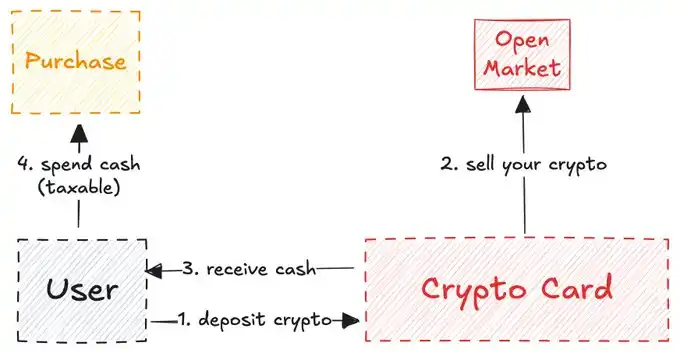
In most crypto cards, the cryptocurrency you top up is sold, and then your balance is replenished with cash (similar to the liquidity bridge I described earlier).

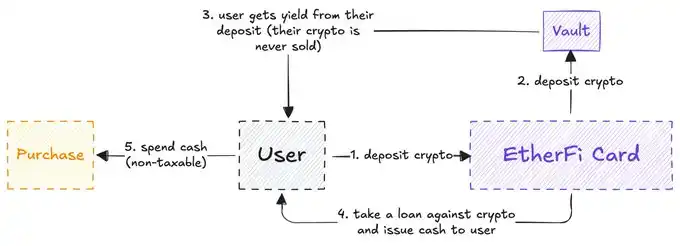
EtherFi is different: the system never sells your cryptocurrency; instead, it gives you a cash loan and uses your crypto assets to earn yield.

EtherFi's model is similar to Aave. Most DeFi users dream of seamlessly taking out cash loans collateralized by their crypto assets, and this capability has emerged. You might ask: "Isn't this the same? I can top up with crypto and spend with a crypto card like a normal debit card; is this extra step necessary?"
The problem is that selling your cryptocurrency is a taxable event, sometimes even more taxable than daily spending. And in most cards, every operation you do might be taxed, leading to you paying more taxes (again, using a crypto card does not mean being debanked).

EtherFi solves this problem to some extent because you are not actually selling cryptocurrency; you are just using it as collateral for a loan.

For this reason alone (plus no foreign exchange fees on USD, cashback, and other benefits), EtherFi becomes the best example of the convergence of DeFi and TradFi.

Most cards try to pretend they are crypto products but are actually just liquidity bridges, while EtherFi is truly for crypto users, not just for bringing cryptocurrency to the masses: it allows crypto users to spend locally until the masses realize how cool this model is. Among all crypto cards, EtherFi might be the only one that can survive long-term.

I think crypto cards are an experimental field, but unfortunately, most teams you see are just riding the narrative without giving due recognition to the underlying systems and developers.

Let's see where progress and innovation take us. Currently, we are seeing the globalization of crypto cards (horizontal growth), but there is a lack of vertical growth, which is precisely what this payment technology needs in its early stages.


Трендовые криптовалюты

Связанные с этим вопросы

QWhy does the author believe that crypto cards are ultimately doomed to fail?

AThe author argues that crypto cards are merely a temporary solution that adds a layer of abstraction without addressing the core values of cryptocurrency, such as decentralization and permissionless access. They rely on traditional banking systems and payment processors like Visa and Mastercard, which centralize control, impose fees, and require KYC, contradicting crypto's foundational principles.

QWhat is the fundamental issue with the privacy and anonymity of crypto cards?

ACrypto cards lack privacy and anonymity because they require KYC (Know Your Customer) verification, linking users' real identities to their transactions. Unlike pseudonymous crypto transactions using addresses, crypto cards expose personal data to banks and governments, eliminating any form of financial privacy.

QHow does the author describe the operational model of most self-custody crypto cards?

AThe author compares self-custody crypto cards to liquidity bridges: users lock funds in cryptocurrency on one chain (e.g., a blockchain), and the card unlocks fiat currency in the real world for spending. This model involves intermediaries and fees, similar to a cross-chain bridge, rather than enabling direct crypto payments.

QWhat makes EtherFi's crypto card different from others according to the author?

AEtherFi's card differs by not selling users' cryptocurrency for fiat. Instead, it provides cash loans collateralized by crypto assets, allowing users to spend without triggering taxable events. This model aligns with DeFi principles, such as earning yield on locked assets, and avoids the pitfalls of traditional crypto cards that rely on selling crypto.

QWhy do companies build crypto cards despite their perceived limitations and inevitable failure?

ACompanies build crypto cards primarily to lock users into their ecosystems, leveraging habit and convenience to retain them. For example, MetaMask uses Linea to integrate users into ConsenSys' ecosystem. This strategy mimics Apple's approach with iOS, fostering user dependency rather than genuinely advancing crypto payment innovation.

Похожее

Торговый турнир WEEX TradFi стартовал с призовым фондом в 50 000 USDT. Успей первым! Открытие позиции = мгновенный бонус 5 USDT

Крипторынок переживает циклическую коррекцию, однако криптобиржа WEEX избежала типичного для медвежьего рынка спада активности благодаря взрывному росту токенизации традиционных финансовых активов (TradFi). WEEX открывает доступ к гигантскому миру традиционных активов на сумму 400 триллионов долларов, позволяя через единый аккаунт торговать акциями ведущих компаний (SpaceX, NVIDIA, Apple, Tesla и др.), ETF, товарами (золото, нефть) и даже долями Pre-IPO компаний, таких как OpenAI и Anthropic. С 9 по 23 июля WEEX запускает торговый турнир TradFi с призовым фондом 50 000 USDT. Участники могут получить три вида наград: 1. **Новички**: при пополнении от 100 USDT и совершении определённых сделок — 200 USDT. 2. **Все пользователи**: за достижение порогов объёма торгов от 5 000 USDT — каскадные бонусы до 50 USDT (можно суммировать). 3. **Поощрительный бонус**: 5 USDT за любую сделку с контрактами TradFi. Максимальная сумма бонусов для одного участника — 268 USDT. Все бонусы имеют коэффициент использования 20%. **Преимущества TradFi на WEEX:** * **Диверсификация и хеджирование**: Возможность переключаться между криптоактивами и традиционными активами (например, акциями AI-компаний) для защиты от волатильности крипторынка. * **Доступность**: Использование USDT для мгновенных расчётов, дробные акции (сделки от 5$), отсутствие необходимости в зарубежных банковских счетах. * **Гибкость**: Круглосуточная торговля, включая внебиржевые часы, и возможность использовать контракты с плечом до 100x для хеджирования позиций по акциям. Турнир предлагает удобный способ познакомиться с экосистемой TradFi на WEEX, которая стирает границы между крипто- и традиционными финансами.

marsbit2 мин. назад

Торговый турнир WEEX TradFi стартовал с призовым фондом в 50 000 USDT. Успей первым! Открытие позиции = мгновенный бонус 5 USDT

marsbit2 мин. назад

Смена блокчейна для нового старта: поможет ли это "изменить судьбу"?

В последнее время несколько проектов объявили о миграции на новые блокчейны, совмещая это с изменением направления деятельности, что можно назвать "перезапуском". Такие проекты, как Sophon (перешел с ZKsync на Base), Moonbeam (с Polkadot на Base) и Secret Network (с Cosmos на Arbitrum), стремятся сократить издержки и найти новые точки роста, часто фокусируясь на сценариях, связанных с ИИ и потребительскими приложениями. Однако реакция сообщества часто скептична, как показал пример Secret Network, чей токен упал на 30% после объявления о миграции. Хотя смена блокчейна может быть практичным решением, она редко становится "спасительным кругом". История знает примеры, как y00ts (мигрировал с Solana на Polygon, а затем на Ethereum) или Synthetix, где миграция не принесла ожидаемого эффекта. В текущих рыночных условиях, когда пользователи стали более рациональными, а многие нарративы потеряли актуальность, простой смены блокчейна для возрождения проекта недостаточно. Основная задача теперь — не просто привлечь мигрирующие проекты, а создать реальные, востребованные приложения, которые удержат пользователей.

marsbit7 мин. назад

Смена блокчейна для нового старта: поможет ли это "изменить судьбу"?

marsbit7 мин. назад

Можно ли изменить судьбу, сменив блокчейн и начав заново?

Недавно несколько проектов объявили о миграции на новые публичные блокчейн-экосистемы. В отличие от прошлых случаев смены сети для следования трендам или по соображениям безопасности, на этот раз проекты совмещают миграцию со сменой бизнес-модели, что похоже на перезапуск стартапа в новом месте. Однако реакция криптосообщества на такие «перезапуски» часто скептическая. Например, после объявления Secret Network о планах перехода на Arbitrum его токен упал на 30% за 24 часа. Base и Arbitrum стали основными направлениями для миграции старых проектов, таких как Sophon (перешел с ZKsync на Base для снижения затрат) и Moonbeam (мигрирует с Polkadot на Base, смещая фокус на децентрализованный AI). Secret Network планирует перейти с Cosmos на Arbitrum, исследуя сочетание инфраструктуры приватности с AI. Общая черта этих миграций — проекты были самостоятельными блокчейнами, а после перехода ищут новые нарративы, связанные с AI и реальным потреблением. Это также отражает трудности таких экосистем, как Polkadot и Cosmos, которые теряют проекты. Может ли смена цепи кардинально изменить судьбу проекта? Исторически это редко срабатывает. Примеры вроде y00ts (мигрировал с Solana на Polygon, затем на Ethereum) или Synthetix (вернулся на главную сеть Ethereum после мультичейн-эксперимента) показывают, что миграция часто не оправдывает ожиданий. В текущих рыночных условиях, где пользователи стали более рациональными, а многие нарративы оказались несостоятельными, «перезапуск» через смену цепи стал ещё сложнее. Критический вызов сейчас стоит не только перед проектами, но и перед самими блокчейнами: важно не просто привлечь мигрирующие проекты, а создать реальные приложения, которые удержат пользователей.

链捕手12 мин. назад

Можно ли изменить судьбу, сменив блокчейн и начав заново?

链捕手12 мин. назад

Транзакции в июне выросли вдвое: экосистема x402 продолжает расширяться, нарратив о монетизации контента проходит ключевое испытание

x402 в июне демонстрирует стремительный рост. Объем транзакций протокола удвоился по сравнению с маем, при этом основная активность сконцентрирована на сервисе маршрутизации AI-инференса BlockRun. В экосистему интегрировались новые поставщики услуг: Apify (веб-автоматизация и сбор данных), Exa (AI-поиск) и Seal (платформа для создания монетизируемых AI-агентов). Со стороны корпораций Amazon и Cloudflare анонсировали поддержку протокола для монетизации контента на своих платформах. Ключевые технические обновления включают введение Builder Codes (для отслеживания происхождения платежей и партнерских программ) и функцию пакетного расчета (Batch Settlement), что делает микроплатежи для частых AI-запросов практичными и экономичными. Наиболее значимым направлением развития считается монетизация контента. Cloudflare открыл лист ожидания для своего шлюза, позволяющего владельцам сайтов взимать плату с ботов и AI-агентов за доступ к данным через x402. Это потенциально может изменить экономику интернета, компенсируя владельцам ресурсов трафик от парсеров. Однако, как отметил CEO Cloudflare Мэттью Принс, для масштабирования этого сценария необходимо преодолеть ограничения пропускной способности текущих блокчейнов. Успех этого направления станет решающей проверкой для x402 как инфраструктурного протокола.

Foresight News37 мин. назад

Транзакции в июне выросли вдвое: экосистема x402 продолжает расширяться, нарратив о монетизации контента проходит ключевое испытание

Foresight News37 мин. назад

Может ли большая модель писать промышленные алгоритмы оптимизации? MIT предлагает FrontierOR для тестирования ИИ

Заголовок: Могут ли большие языковые модели создавать промышленные алгоритмы оптимизации? MIT представляет FrontierOR, тестирующий ИИ в этой области. В последние годы крупные языковые модели (LLM) добились значительных успехов в переводе естественного языка в математические модели и код для решателей, демонстрируя начальные способности к оптимизационному моделированию. Однако для реальных промышленных задач этого недостаточно. Основная сложность заключается в проектировании масштабируемых, точных и быстрых алгоритмов для больших экземпляров задач, а не просто в формулировке ограничений. Исследователи из Массачусетского технологического института и других учреждений представили бенчмарк FrontierOR, который оценивает способность LLM самостоятельно разрабатывать эффективные алгоритмы для сложных задач оптимизации, аналогично экспертам по исследованию операций. В отличие от существующих тестов, проверяющих лишь умение строить модель или вызывать решатель, FrontierOR фокусируется на создании специализированных алгоритмов (декомпозиция, эвристики, локальный поиск, гибридные методы) для крупномасштабных задач, где универсальные решатели (например, Gurobi) часто неэффективны. Бенчмарк создан на основе 180 реальных задач из научной литературы по исследованию операций (1992–2025 гг.) и включает подмножество Hard из 50 особенно сложных задач. Оценка проводится в два этапа: проверка выполнимости и качества на малых экземплярах, а затем оценка на больших экземплярах по четырём метрикам, включая комплексный показатель QTE (качество-время-эффективность). Результаты тестирования современных моделей (GPT-5.3-Codex, Gemini 3.1 Pro, Claude Opus 4.6) показали, что они достигли высокого уровня выполнимости генерируемого кода (Execution rate до 0.98). Однако ключевые показатели — Feasibility (выполнимость на больших задачах), Solution quality (качество решения) и QTE — остаются значительно ниже. Это указывает, что главным препятствием теперь является не синтаксис кода, а глубина и качество алгоритмического проектирования. Более сильные модели демонстрируют большее разнообразие в выборе методов (меньше reliance на чистый вызов решателя), что коррелирует с лучшими результатами. Эксперименты с автоэволюцией (самоулучшением) алгоритмов, где модели имеют возможность итеративно улучшать исходный код на основе feedback (фреймворки CORAL, OpenEvolve, EoH), показали значительный прогресс. На самых сложных задачах показатель QTE удалось поднять с 0.15 (one-shot) до 0.50. Это демонстрирует потенциал LLM как систем, способных к итеративному алгоритмическому поиску. FrontierOR намечает путь к созданию "ИИ-инженеров алгоритмов" — систем, которые смогут автоматически проектировать эффективные методы оптимизации для таких областей, как логистика, энергетика и транспорт, объединяя способности LLM к пониманию структуры задачи с мощью традиционных решателей для локальной оптимизации.

marsbit1 ч. назад

Может ли большая модель писать промышленные алгоритмы оптимизации? MIT предлагает FrontierOR для тестирования ИИ

marsbit1 ч. назад

Торговля

Спот

Популярные статьи

Как купить S

Добро пожаловать на HTX.com! Мы сделали приобретение Sonic (S) простым и удобным. Следуйте нашему пошаговому руководству и отправляйтесь в свое крипто-путешествие.Шаг 1: Создайте аккаунт на HTXИспользуйте свой адрес электронной почты или номер телефона, чтобы зарегистрироваться и бесплатно создать аккаунт на HTX. Пройдите удобную регистрацию и откройте для себя весь функционал.Создать аккаунтШаг 2: Перейдите в Купить криптовалюту и выберите свой способ оплатыКредитная/Дебетовая Карта: Используйте свою карту Visa или Mastercard для мгновенной покупки Sonic (S).Баланс: Используйте средства с баланса вашего аккаунта HTX для простой торговли.Третьи Лица: Мы добавили популярные способы оплаты, такие как Google Pay и Apple Pay, для повышения удобства.P2P: Торгуйте напрямую с другими пользователями на HTX.Внебиржевая Торговля (OTC): Мы предлагаем индивидуальные услуги и конкурентоспособные обменные курсы для трейдеров.Шаг 3: Хранение Sonic (S)После приобретения вами Sonic (S) храните их в своем аккаунте на HTX. В качестве альтернативы вы можете отправить их куда-либо с помощью перевода в блокчейне или использовать для торговли с другими криптовалютами.Шаг 4: Торговля Sonic (S)С легкостью торгуйте Sonic (S) на спотовом рынке HTX. Просто зайдите в свой аккаунт, выберите торговую пару, совершайте сделки и следите за ними в режиме реального времени. Мы предлагаем удобный интерфейс как для начинающих, так и для опытных трейдеров.

1.6k просмотров всегоОпубликовано 2025.01.15Обновлено 2026.06.02

Как купить S

Sonic: Обновления под руководством Андре Кронье – новая звезда Layer-1 на фоне спада рынка

Он решает проблемы масштабируемости, совместимости между блокчейнами и стимулов для разработчиков с помощью технологических инноваций.

2.3k просмотров всегоОпубликовано 2025.04.09Обновлено 2025.04.09

Sonic: Обновления под руководством Андре Кронье – новая звезда Layer-1 на фоне спада рынка

HTX Learn: Пройдите обучение по "Sonic" и разделите 1000 USDT

HTX Learn — ваш проводник в мир перспективных проектов, и мы запускаем специальное мероприятие "Учитесь и Зарабатывайте", посвящённое этим проектам. Наше новое направление .

1.9k просмотров всегоОпубликовано 2025.04.10Обновлено 2025.04.10

HTX Learn: Пройдите обучение по "Sonic" и разделите 1000 USDT

Обсуждения

Добро пожаловать в Сообщество HTX. Здесь вы сможете быть в курсе последних новостей о развитии платформы и получить доступ к профессиональной аналитической информации о рынке. Мнения пользователей о цене на S (S) представлены ниже.

活动图片