VVV Surges Over 10x This Year, Is the Base Ecosystem the Last Hope for Crypto AI?

marsbitОпубликовано 2026-05-29Обновлено 2026-05-29

Введение

The article highlights the surge of AI concepts within the Base blockchain ecosystem, positioning it as a focal point for crypto-AI activity. It spotlights several key projects driving this trend. Venice AI's token VVV is noted as a leader, having surged over 10x year-to-date, supported by its dual-token model with DIEM and real business revenue for buybacks. Other significant projects include Virtual, a major AI agent launchpad; Clanker, an AI token launch platform originating from Farcaster; Freysa AI, experimenting with sovereign AI agents; Elsa, an AI-powered DeFi execution layer; and Warden Protocol, a modular L1 for an "agent internet." The piece observes that Base has become a rare active hub for crypto-AI, fueled by the growth of AI agents and related payment ecosystems. While mentioning the volatility of AI-themed meme coins on Base, the article concludes that the ecosystem's potential to realize a fully "on-chain AI world" remains an open question.

Original|Odaily Planet Daily(@OdailyChina)

Author|Wenser(@wenser 2010 )

The AI boom continues to surge, and in the crypto field, the Base ecosystem has become the "last hope for the village" for AI concepts.

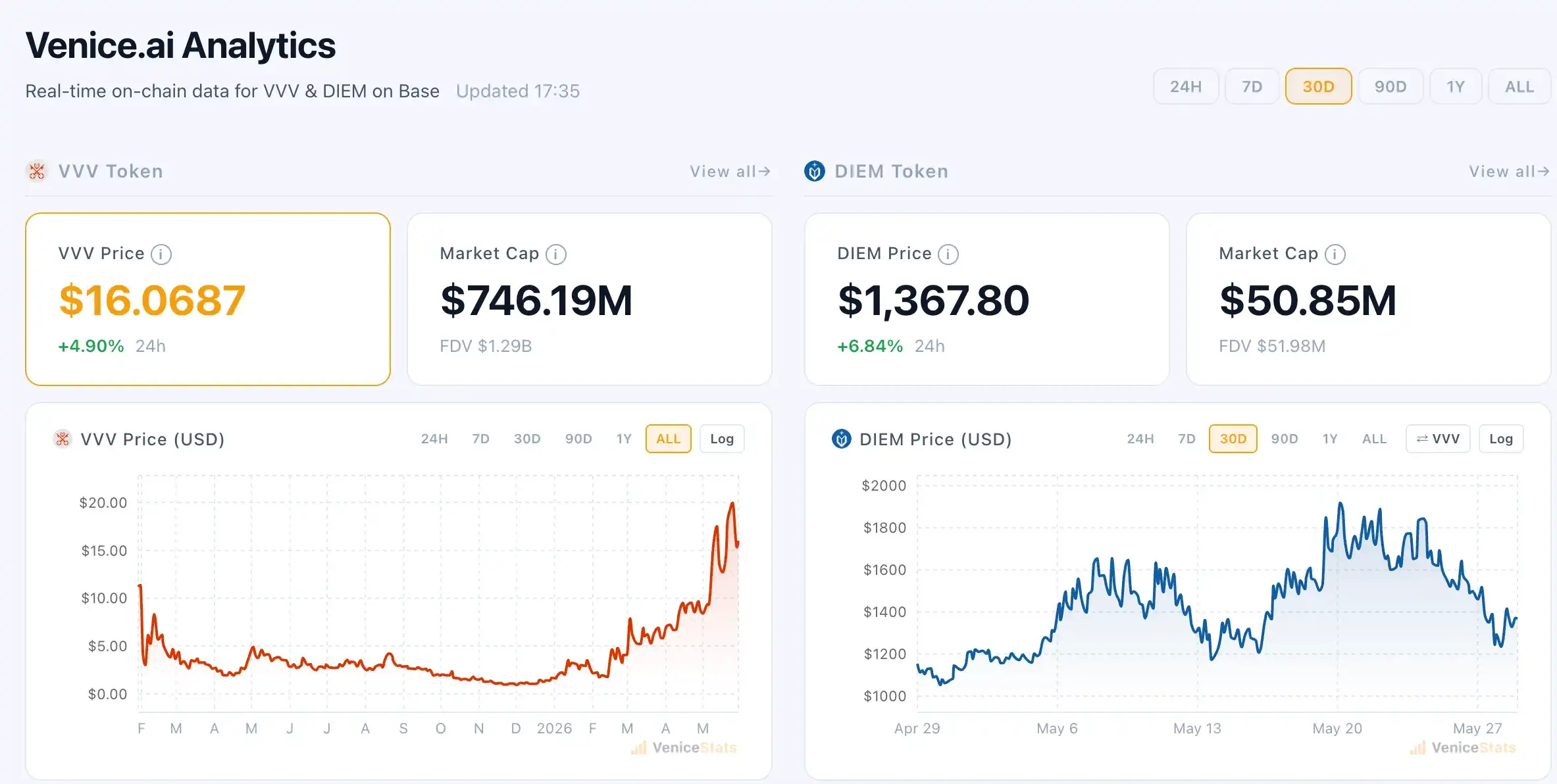
Aside from VVV rising 1076% this year, Virtual and Clanker are also steadily building; the x402 protocol related to AI Agent payments is still developing steadily; L1s, operating systems, wallets, social platforms, and others based on real business related to AI Agents are constantly emerging.

Odaily Planet Daily has compiled information on several AI-related tokens in the Base ecosystem, including VVV, for readers' reference.

VVV: The Unquestionable AI King of the Base Ecosystem

Odaily Planet Daily has previously conducted multiple follow-up introductions to VVV, including the article "What is VVV (Venice), Which Quickly Reached a $2 Billion Market Cap Upon Listing on Coinbase?" released when the token launched in January, and the article "OpenClaw Backs Venice.ai, VVV Token Surges Over 500% in a Month" when the price surged over 500% in March.

Since then, the dual-token asset model composed of "VVV & computing power token DIEM" paired with the real business revenue of Venice AI (used for token buyback and burn), which focuses on the "privacy AI" concept, has propelled the VVV token to continue rising, reaching around $18. Previously, Venice.ai officially updated the Agentic Chat feature on the 22nd; it also synchronized and launched an update after the Claude 4.8 opus model was released.

According to GMGN data, VVV is currently trading around $16.

According to Venice data website information, VVV's current circulating market cap is approximately $740 million, with an FDV of about $1.3 billion; DIEM is currently priced around $1367, with a circulating market cap of about $50 million and an FDV of approximately $52 million.

VIRTUAL: A Top Launchpad in the Base Ecosystem

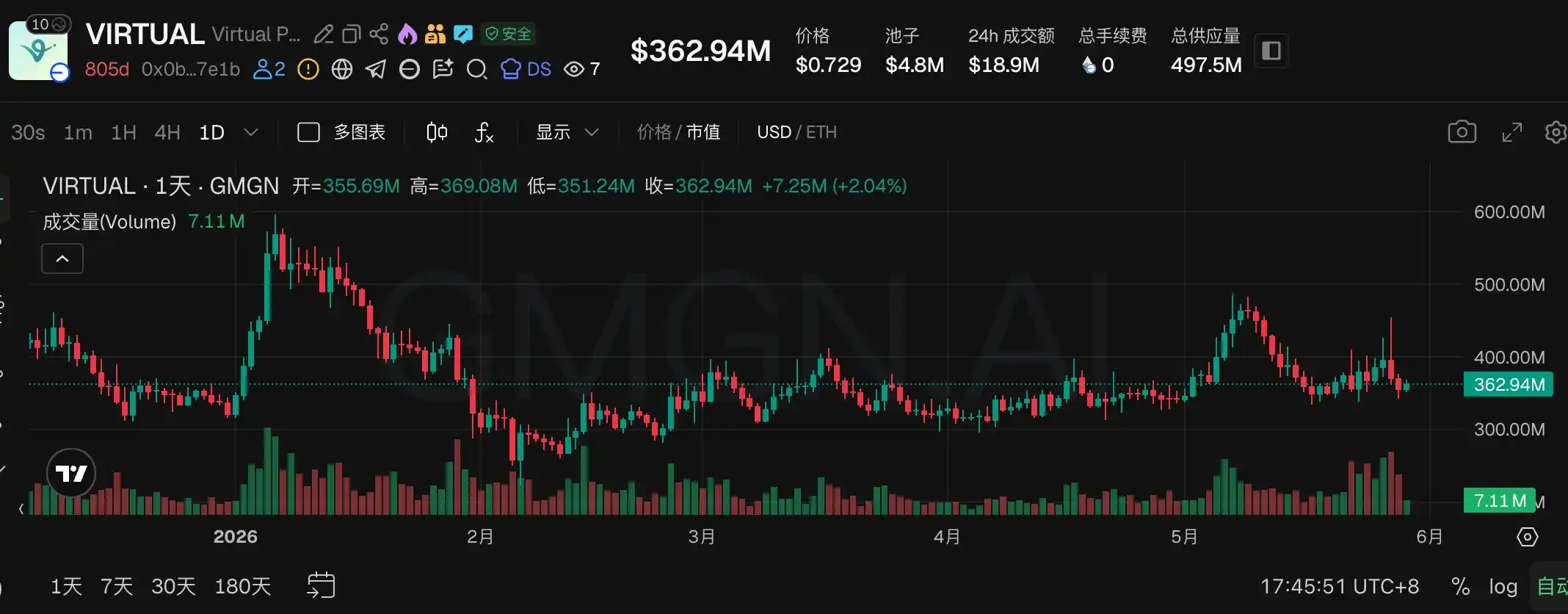
As a top launchpad in the Base ecosystem, Virtual's platform token VIRTUAL remains one of the leading projects in the AI track. Currently, the main positioning of the Virtual platform is an "AI Agent Co-ownership Layer + Launchpad," supporting token creation, asset tokenization, and monetization of autonomous AI Agents. Each Agent has its own independent token, trades in pools like Uniswap V3, and generates real revenue through inference calls and social/gaming/DeFi activities. Currently, the platform supports over 15,800 AI projects, with an aGDP (AI Agent economic output) scale of $477 million.

According to GMGN data, VIRTUAL is currently priced around $0.7, with a market cap of about $360 million.

Clanker: An AI Launchpad Originating from Farcaster

This AI launch platform initially emerged from the Farcaster ecosystem and later expanded to the Base ecosystem. Its main mechanism is AI Agent token launches, where just one Farcaster/X message can prompt Clanker to deploy a new token directly on Uniswap V3, with permanently locked token liquidity; 60% of the 1% trading fee is used for automatic buyback and burning of CLANKER tokens.

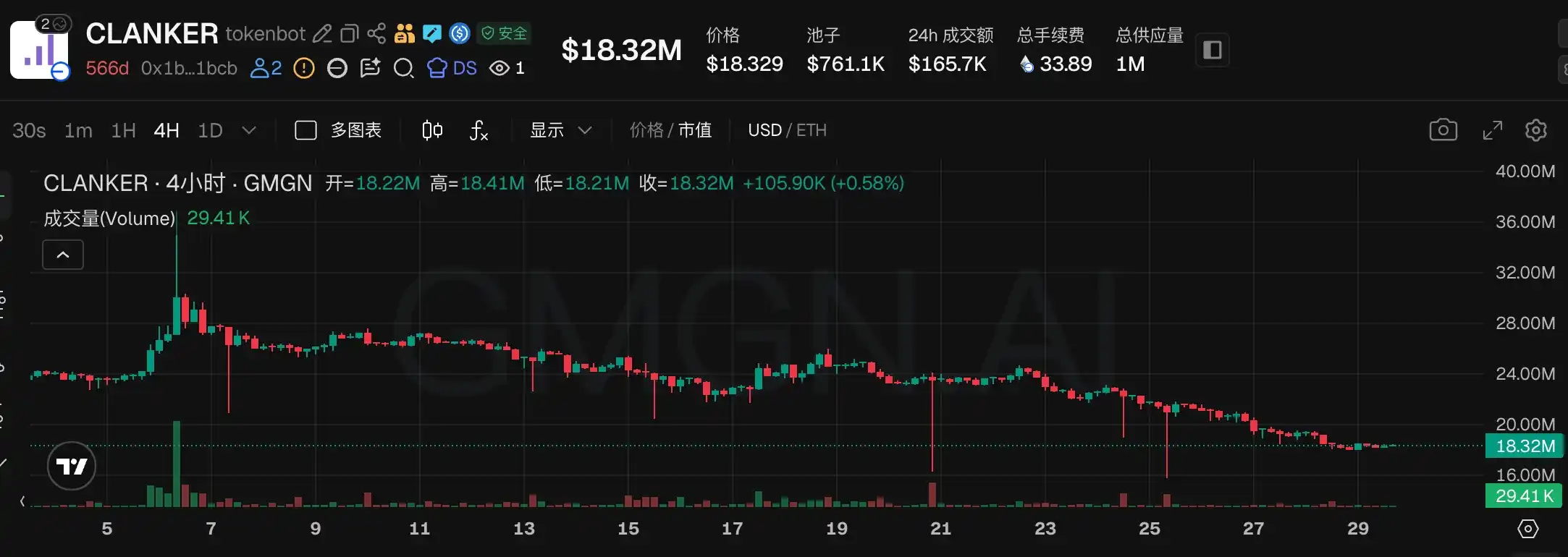
The platform previously achieved a record of launching 21,870 new tokens in a single day, after which activity declined somewhat.

Official account: https://x.com/clanker_world

According to GMGN data, the CLANKER token is currently priced around $18, with its market cap falling to around $18 million.

FAI: Sovereign AI Agent Concept Project

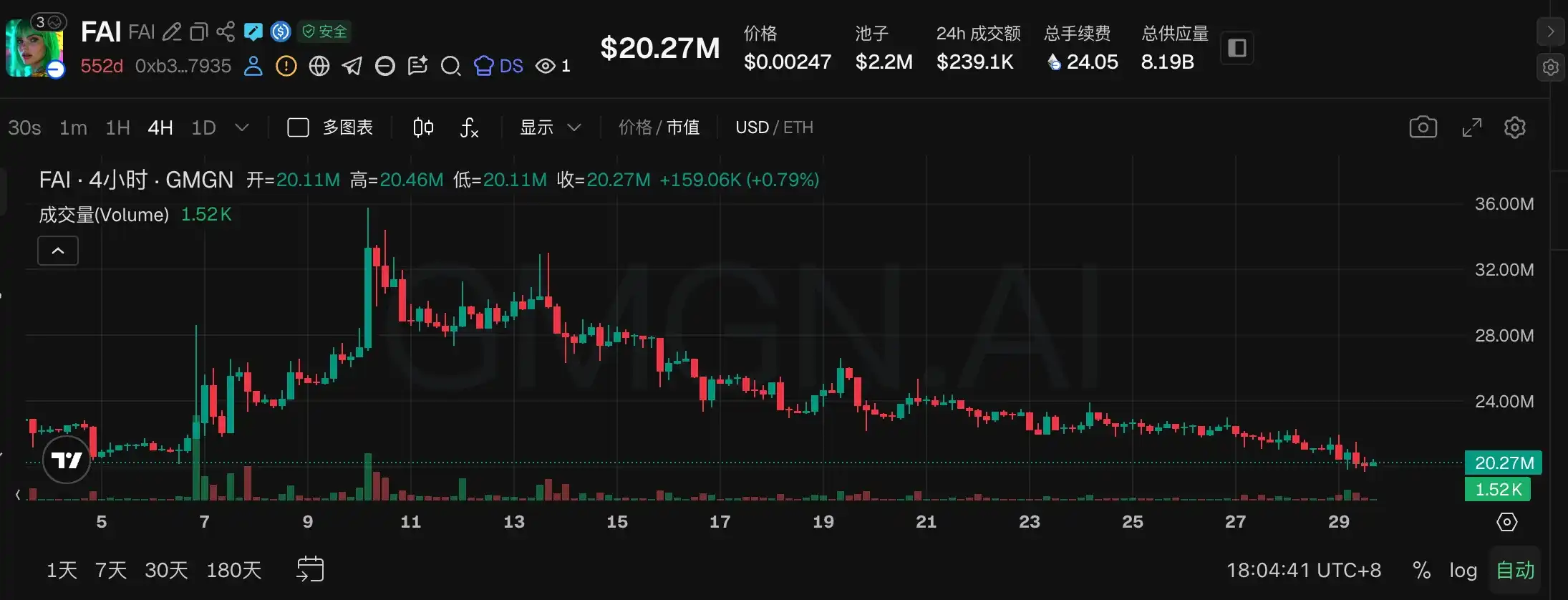
Freysa AI, the first experimental project for an "evolving Sovereign AI Agent" on the Base chain. The core idea is to create a truly autonomous AI agent without human-controlled keys and memory: the AI autonomously controls crypto wallets, assets, and decisions, constantly evolving through interaction with global users via the Sovereign Agent Framework (SAF). The project is positioned as a personal AI product suite, emphasizing human agency, liquid democracy, and decentralized ownership. Previously, the project's market cap once soared past $660 million and even received a reply tweet from Musk, but it is now in a quiet phase.

Official account: https://x.com/freysa_ai

According to GMGN data, FAI is currently priced around $0.002, with a market cap of approximately $20 million.

ELSA: AI Agent Execution Layer in the Base Ecosystem

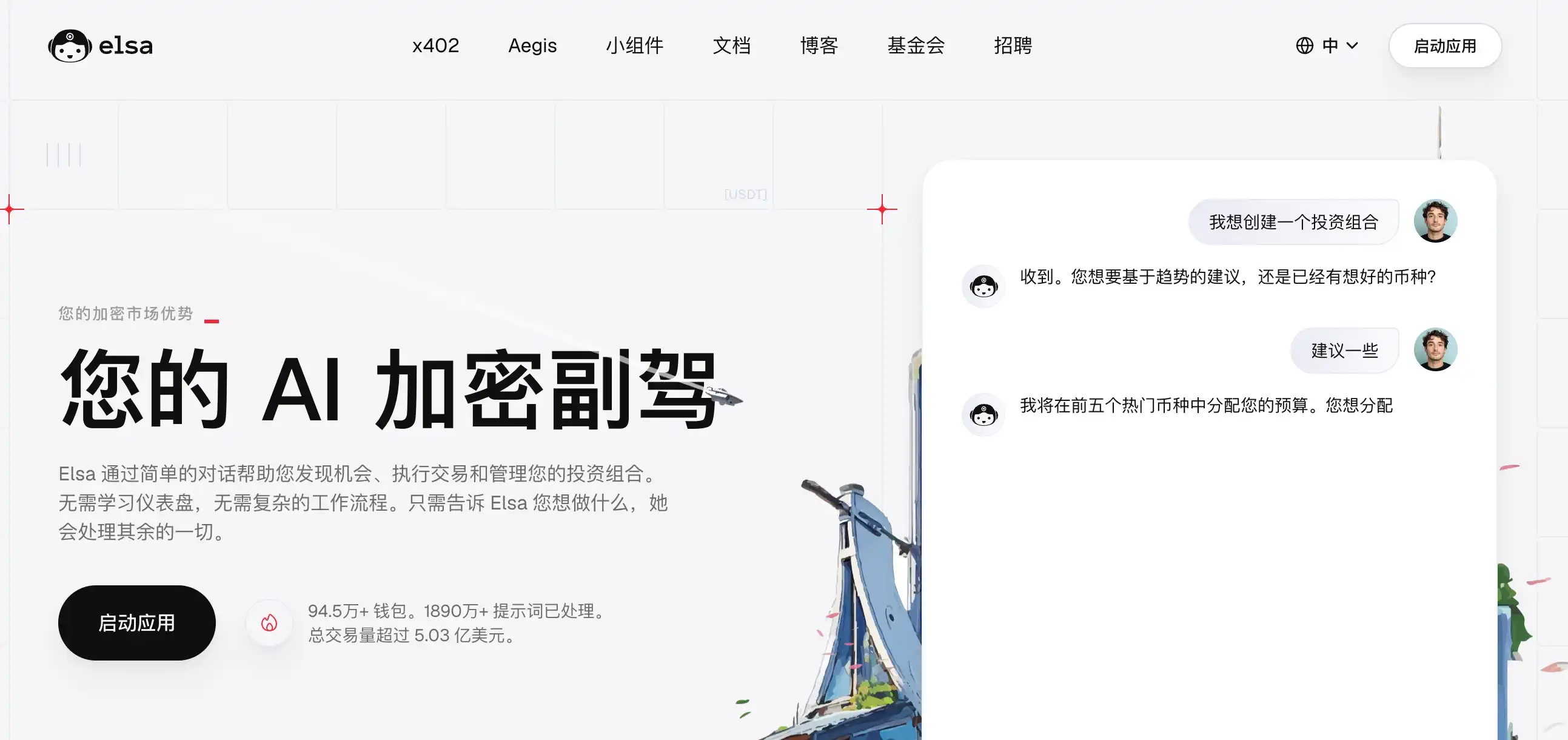
The project is positioned as an "AI-powered DeFi Super Assistant + On-chain Agent Infrastructure." Its core function is to directly convert natural language instructions into secure, autonomous on-chain operations, allowing users to implement various DeFi management and application operations without needing to understand complex on-chain concepts. In June last year, the project completed a $3 million seed funding round led by M31 Capital, with participation from Coinbase Ventures' Base ecosystem fund. Currently, according to official data, the Elsa ecosystem covers nearly 95 wallets, with a total transaction volume exceeding $500 million.

Official account: https://x.com/HeyElsaAI

According to GMGN data, ELSA is currently priced around $0.06; its market cap is about $63 million.

WARD: Modular L1/OS for the Agentic Internet

Warden Protocol, primarily focusing on decentralized AI, supports functions such as Warden Studio (creating an Agent in <60 seconds), SPEx verifiable AI execution, cross-chain intent execution, and AI Agent wallets. According to official statements, it has served 20 million users and processed over 60 million tasks. It previously received $4 million in strategic funding from projects like Messari and Venice.AI.

Official account: https://x.com/wardenprotocol

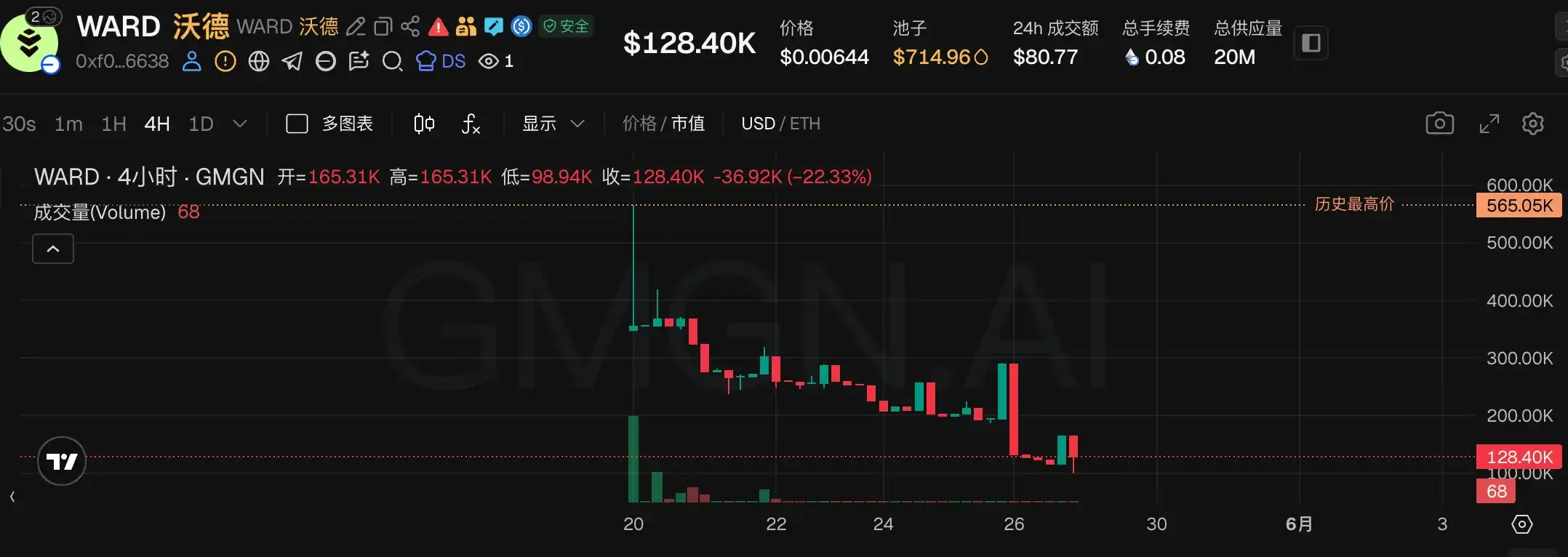
According to GMGN data, the WARD token price has fallen to around $0.006, with the Base ecosystem token market cap only about $128,000; the BSC ecosystem token market cap is approximately $2.4 million.

In addition to the above projects, AI concept meme coins in the Base ecosystem are also quite hot. Recently, Base ecosystem tokens like KellyClaude and GITLAWB saw their market caps surge several times in a short period, but as the hype shifted or celebrity effects faded, they quickly fell into a death spiral again, so they will not be elaborated on here.

In summary, thanks to the development of AI Agents and the prosperity of the AI Agent payment ecosystem, the Base ecosystem has become one of the few active ecosystems for crypto AI. However, whether it can truly achieve the "on-chain AI world" mentioned by the Base team remains an unknown.

Связанные с этим вопросы

QAccording to the article, why is the Base ecosystem considered the 'last hope' for the AI concept in crypto?

AThe article states that due to the development of AI Agents and the prosperity of the AI Agent payment ecosystem, the Base ecosystem has become one of the few active ecosystems for crypto AI, making it a focal point or 'last hope' for the concept.

QWhat is the primary function or role of the VIRTUAL platform as described in the article?

AThe VIRTUAL platform is described as a top launchpad on Base, with its main positioning being an 'AI agent co-ownership layer + launch platform'. It supports token creation, asset tokenization, and monetizing autonomous AI Agents, where each Agent has its own token.

QWhat are the two tokens mentioned that constitute Venice AI's dual-token asset model, and what is the real-world business concept for Venice AI?

AThe two tokens are VVV and the computing power token DIEM. Venice AI's real-world business concept focuses on 'privacy AI', and the revenue from this business is used for token buybacks and burns.

QWhich Base ecosystem AI project received a $300 million seed round funding led by M31 Capital and backed by Coinbase Ventures, and what is its core function?

AThe project is ELSA. It completed a $300 million seed round led by M31 Capital with Coinbase Ventures' Base Ecosystem Fund participating. Its core function is transforming natural language instructions directly into secure, autonomous on-chain operations, acting as an AI-driven DeFi super assistant and on-chain Agent infrastructure.

QWhat was the main reason mentioned in the article for the brief surge and subsequent decline of AI meme coins like KellyClaude and GITLAWB in the Base ecosystem?

AThe article suggests these meme coins saw rapid price surges primarily due to hype or celebrity effects. However, they quickly declined into a 'death spiral' once the hype faded or the celebrity influence waned.

Похожее

STRC Breaks Below $95: Why Does It Continue to Depeg? Is There Default Risk?

"STRC Falls Below $95: Why the Persistent Depegging and Is There Default Risk?" The article discusses the recent decline in the price of STRC, a perpetual preferred stock issued by Strategy (MSTR) designed to trade around a $100 par value. As of publication, STRC traded at $94.65, raising market concerns. STRC is described as a high-yield cash flow product, offering an 11.50% annual dividend paid monthly. Its "preferred" status grants it priority over common stock for dividends and in liquidation. Key reasons cited for the price depegging include: 1. **Bitcoin's Price Drop:** MSTR's assets are heavily tied to Bitcoin (BTC), which fell over 21% from its recent high, pressuring all Strategy-related products. 2. **Competitive Pressure:** Rival Strive Asset Management's similar product, SATA, offers daily dividends and has maintained its $100 par value with a ~13% yield. In response, Strategy has proposed changing STRC's dividend frequency from monthly to bi-weekly, pending shareholder vote. 3. **Technical Selling:** A break below $100 may have triggered algorithmic selling and stop-losses, exacerbating the decline. Regarding default risk, the analysis suggests it is currently low. Strategy founder Michael Saylor confirmed the June 2026 dividend rate remains at 11.50% with no cuts or suspensions. The company's massive reserve of 843,706 BTC provides a significant backstop for its obligations. Industry opinions are mixed. Some analysts view the BTC holdings as reliable support for dividends, while critics like Peter Schiff warn of potential dividend cuts leading to price crashes and lawsuits. Others highlight inflation risk and the company's ability to reduce dividends without a formal default. In summary, STRC's drop is attributed to BTC volatility, competition, and technical factors. While immediate default risk appears contained, the product faces challenges from market conditions and competitive dynamics.

marsbit10 мин. назад

STRC Breaks Below $95: Why Does It Continue to Depeg? Is There Default Risk?

marsbit10 мин. назад

AI Trading Cools, South Korean Stocks Plunge 1.8%, Spot Gold Rises 1%, Bitcoin Dives

A sell-off in AI-related stocks, triggered by Broadcom's disappointing earnings forecast, sent shockwaves through global markets. South Korea's KOSPI led Asia's decline, plunging 1.8% as the risks from concentrated chip stock gains and surging leveraged investments came to the fore. The tech-heavy Nasdaq 100 futures fell 0.5% following Broadcom's 14% after-hours plunge, which signaled a slower-than-expected transition to AI clients. This pullback extended Wall Street's weakness, halting the S&P 500's nine-day rally amid hawkish Fed signals and renewed Middle East tensions. South Korean authorities convened an emergency meeting, pledging "immediate measures" against market volatility and warning of record-high stock margin debt. The adjustment rippled across assets: Bitcoin fell to around $64,000, its lowest since February, while safe-haven gold rose 1% on bargain hunting. Oil prices dipped on Middle East ceasefire news. Market analysts noted the sell-off was driven by profit-taking after massive gains, particularly in chip stocks like Samsung and SK Hynix, which now dominate the KOSPI. Wall Street banks are divided on Korea's outlook, with Goldman Sachs raising its target while Citigroup and others warn of overvaluation and a potential bubble. Bridgewater's Ray Dalio noted that great technological shifts often create bubbles. Meanwhile, Fed officials' hints at potential future rate hikes added to the cautious mood ahead of key U.S. jobs data.

华尔街日报36 мин. назад

AI Trading Cools, South Korean Stocks Plunge 1.8%, Spot Gold Rises 1%, Bitcoin Dives

华尔街日报36 мин. назад

Seeking Alpha's Hot Article: Why Might the U.S. Stock Market Crash in June?

In a recent Seeking Alpha article, financial professor and analyst Damir Tokic argues that the US stock market may be poised for a significant crash in June 2026. The core thesis centers on a "mega-bubble" in equities, particularly within the technology sector, which has driven the S&P 500 to near-record valuations, with a Shiller P/E ratio exceeding 40—a level comparable to the 2000 dot-com bubble. Tokic identifies two primary catalysts for a potential collapse. First, he points to unsustainable market exuberance fueled by what he terms the "Trump Stimulus"—massive AI capital expenditure by tech giants, which he believes is politically driven and cannot last. Second, and more urgently, he highlights the escalating Iran war as a critical threat. The ongoing closure of the Strait of Hormuz has created a severe global energy supply crunch. Strategic petroleum reserves are projected to hit critically low operational levels by June, potentially causing oil prices to spike above $200 per barrel and triggering a severe, supply-driven inflationary shock. This scenario, Tokic warns, would force the Federal Reserve's hand. Despite currently maintaining a dovish bias, the Fed would likely be compelled to officially pivot to a hawkish stance at its June FOMC meeting to combat soaring inflation and bond yields. He contends that such a shift—or even a failure to act, which would destroy Fed credibility—could be the trigger that punctures the market bubble. The resulting downturn, he concludes, could rival the bear markets of 2000 and 2008, advising investors to prepare for a major correction.

marsbit59 мин. назад

Seeking Alpha's Hot Article: Why Might the U.S. Stock Market Crash in June?

marsbit59 мин. назад

Торговля

Спот
Фьючерсы

Популярные статьи

Неделя обучения по популярным токенам (2): 2026 может стать годом приложений реального времени, сектор AI продолжает оставаться в тренде

2025 год — год институциональных инвесторов, в будущем он будет доминировать в приложениях реального времени.

1.8k просмотров всегоОпубликовано 2025.12.16Обновлено 2025.12.16

Неделя обучения по популярным токенам (2): 2026 может стать годом приложений реального времени, сектор AI продолжает оставаться в тренде

Обсуждения

Добро пожаловать в Сообщество HTX. Здесь вы сможете быть в курсе последних новостей о развитии платформы и получить доступ к профессиональной аналитической информации о рынке. Мнения пользователей о цене на AI (AI) представлены ниже.

活动图片