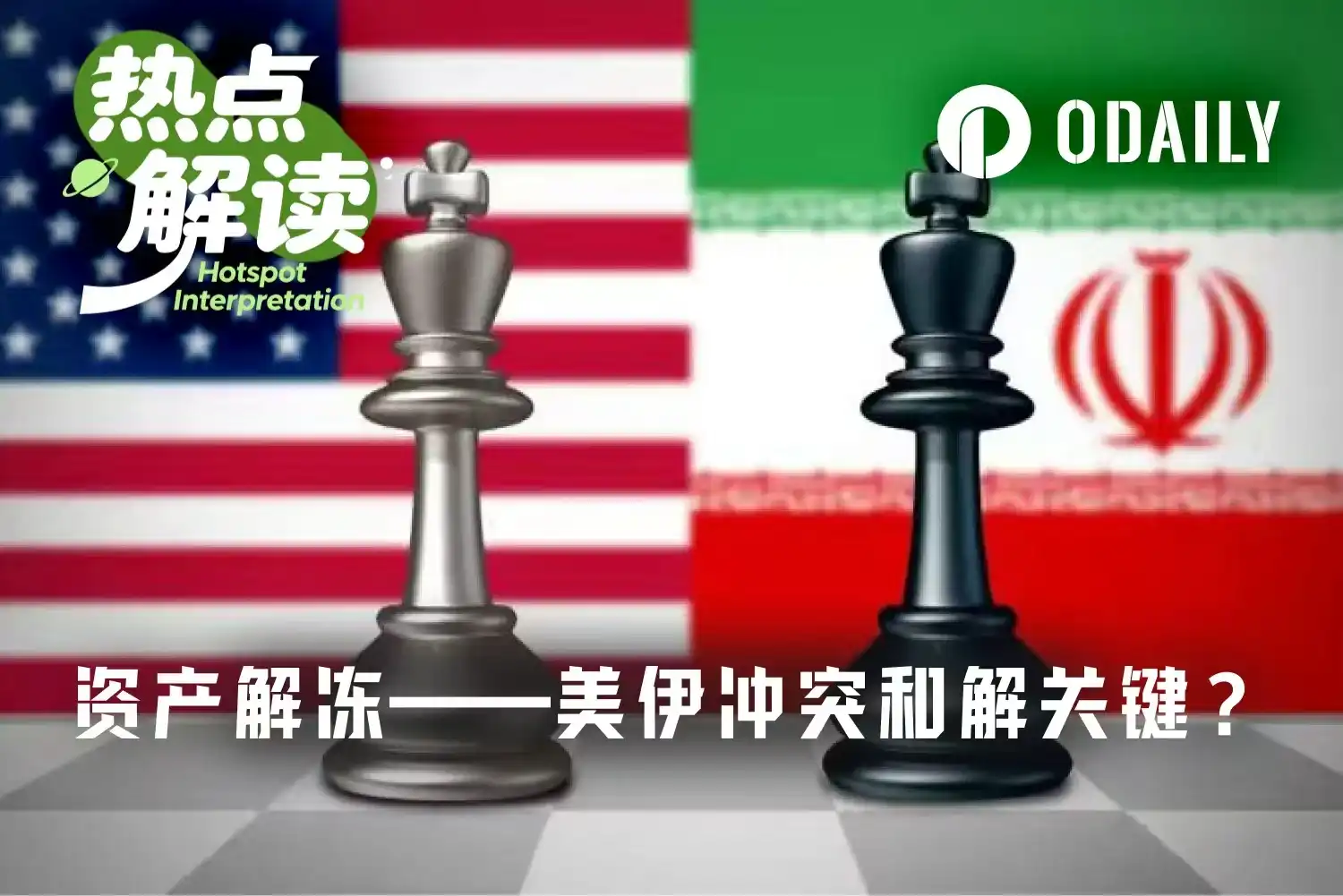
U.S.-Israel-Iran Conflict Surpasses 100 Days: Is Asset Unfreezing a Key to Reconciliation?

marsbitОпубликовано 2026-06-10Обновлено 2026-06-10

Введение

**Title: U.S.-Israel-Iran Conflict Surpasses 100 Days; Key to Reconciliation Lies in Unfreezing Assets?** **Summary:** As the conflict between the U.S./Israel and Iran enters its 103rd day, peace talks remain stalled. A central sticking point in the negotiations is the fate of approximately $240 billion in Iranian assets frozen by the United States. This includes around $1 billion in cryptocurrency assets, such as USDT, BTC, and ETH, which were seized as part of U.S. sanctions. Iran has outlined a four-phase plan for a potential deal, with the second phase demanding the immediate unfreezing of at least 50% of its assets upon signing an initial agreement, and the remainder within one to two months. However, the U.S., particularly President Trump, has firmly rejected any preemptive release of funds, viewing them as crucial leverage for future negotiations on Iran's nuclear program. The Trump administration's approach is described as unpredictable, mixing tough rhetoric with offers of talks. Meanwhile, the U.S. is reportedly considering using the frozen Iranian assets to fund reconstruction in affected Gulf countries. While both sides express a desire to end the conflict, the deep-seated issue of the frozen assets, alongside broader geopolitical tensions, suggests a prolonged period of "fighting while talking" is likely to continue. The article concludes that the conflict's primary impact on cryptocurrency markets is macro-level, with minimal direct selling pressure on spec...

Original | Odaily Planet Daily (@OdailyChina)

Author | Wenser (@wenser 2010 )

June 10th, the 103rd day since the outbreak of the U.S.-Israel-Iran war, U.S.-Iran negotiations remain difficult with no conclusion in sight.

Today, following Israel's strike against Iran, according to U.S. officials, the U.S. has also launched its third round of strikes against Iran, which concluded swiftly. Behind this century-long conflict, the key to reconciliation lies not only in deeper issues of Iranian nuclear weapons and uranium enrichment materials, but also in a major current sticking point: the frozen Iranian assets held by the U.S., totaling $24 billion, including approximately $1 billion in cryptocurrency assets.

Where do these assets come from? What cryptocurrency assets are included? Can the U.S. and Iran reach an agreement on this matter? These are the main topics of discussion in this article.

Trump's Baffling 'Hot and Cold' Approach: Toughness and Compromise Coexist

Whether the U.S.-Iran conflict can end through negotiations naturally hinges on key figure U.S. President Trump. However, Trump, a businessman by background, is particularly shrewd and, compared to politician-type presidents, more focused on practical benefits. Therefore, his public image is also extremely contradictory: on one hand, his public statements vary between tough and soft; on the other hand, he is accustomed to sowing confusion, using talks of negotiation, reconciliation, and "imminent agreement" as excuses to mislead Iran and even global news media, thereby achieving goals such as "manipulating capital markets" and other undisclosed objectives.

According to CNN reports, since the outbreak of the Iran conflict on February 28th, Trump has made statements similar to "a U.S.-Iran agreement is about to be reached" over 30 times on social media, in public appearances, and in telephone interviews with media journalists (Odaily Planet Daily Note: some sources say at least 37 times).

In light of this, Iran has not harbored illusions of a "one-step" negotiation but has envisioned it as a four-stage plan.

On June 4th, according to Iranian media Fars News, Iran outlined a four-stage plan for reaching an agreement with the United States:

  • The first stage focuses on a comprehensive cessation of military operations on all fronts, including Iran, the U.S., and the Axis of Resistance;
  • The core of the second stage is implementing measures on four key issues, including: the Strait of Hormuz and related mechanisms, lifting the blockade, canceling oil restrictions and sanctions, and unfreezing part of Iran's assets;
  • The third stage will initiate broader negotiations on sanctions and nuclear issues after objective and verifiable measures are implemented;
  • The fourth stage involves establishing a supervisory committee to oversee the implementation of the agreement and track compliance by all parties.

Previously, the U.S. and Iran had already ceased hostilities, but efforts in the first stage were temporarily broken due to Israel's renewed attacks on Iran and the turbulent situation in Lebanon; the second stage is now the main sticking point in the U.S.-Iran negotiations.

Specific Amount of Frozen Iranian Assets: Iran Claims $24 Billion, U.S. Confiscated $1 Billion in Crypto Assets

Previously, according to CNN, a U.S. official familiar with the negotiations stated that one of the remaining key sticking points in the U.S.-Iran talks is the issue of economic compensation, as Trump is eager to reach a deal perceived as superior to the one reached during the Obama administration.

The official stated that Iran has conveyed to mediators that once both sides agree on a preliminary memorandum of understanding, they want to receive some form of economic compensation as quickly as possible, rather than postponing it to a future date. However, officials in the Trump administration worry that unfreezing funds at such an early stage could alleviate the economic damage inflicted on Iran—this might remove, or at least weaken, a key leverage Washington holds over Tehran. This leverage would be crucial for the U.S. entering the second stage of negotiations to discuss specific details of Iran's nuclear program. Trump has made it clear to his team that he wants any agreement to appear much tougher than the 2015 deal and to avoid any action that could be interpreted as "delivering large amounts of cash"—a phrase Trump used to criticize Obama's decision to provide economic compensation to Iran.

On June 6th, media reports indicated that a potential U.S.-Iran agreement depends on whether the U.S. agrees to release $24 billion in frozen Iranian assets. This figure was later confirmed by Iranian officials.

That same day, according to Iran's Tasnim News Agency, Iran's Deputy Foreign Minister for Legal and International Affairs, Kazem Gharibabadi, stated that at least 50% of Iran's frozen financial assets must be unfrozen immediately upon signing any memorandum of understanding with the United States. He added that the remaining funds should be "unfrozen within a limited period of one to two months after the agreement is signed." Gharibabadi stated that these assets belong to Iran and were "illegally frozen" by the U.S., and unfreezing them is a core requirement of any potential understanding. He said the remaining details of the fund access mechanism, including technical and financial arrangements, would be negotiated further during the 60-day implementation period following the signing of the memorandum.

However, this demand was promptly met with strong rejection from Trump, who stated he would not unfreeze Iranian assets or lift any sanctions in advance as part of any agreement.

In late May, U.S. Treasury Secretary Scott Bessent stated in an interview with Fox News that the U.S. had seized approximately $1 billion in Iranian cryptocurrency assets. Bessent said the action was part of sanctions against the Iranian regime and its proxy networks, and the related funds had been frozen. This includes about $344 million worth of USDT stablecoins frozen by stablecoin issuer Tether in April this year, as well as other cryptocurrencies like BTC and ETH.

He stated that before the U.S. Treasury intervened, the Iranian regime was stealing $400 to $500 million monthly, distributing this money to dozens of senior officials. "We are working with allies across Europe to seize various villas, houses, and properties," Bessent explained. "And this money was actually stolen from the Iranian people." Additionally, according to Bitcoin News analysis, the figure Bessent initially disclosed in late April was "close to $500 million," while the latest figure as of May 29th had surpassed the $1 billion mark, indicating that the enforcement intensity of the operation, codenamed "Operation Economic Fury," continues to increase.

It is worth noting that, according to Wikipedia, the U.S. previously even seized a Manhattan skyscraper belonging to the Iranian government (valued at over $1 billion) and its accumulated rent (approximately $50 million).

Furthermore, according to the latest media reports, the U.S. is considering using frozen Iranian assets to fund reconstruction and repair work in Gulf countries affected by the "U.S.-Israel-Iran conflict." According to informed sources, U.S. Treasury Secretary Scott Bessent has directed relevant teams to assess the damage caused by Iran to Gulf allies. Additionally, the U.S. is also considering using frozen Iranian assets to compensate for potential future losses.

Based on the above information, although Trump stated last night that he is "very close to reaching a very good, strong, and powerful agreement," it remains difficult for the U.S., Israel, and Iran to achieve reconciliation before determining compensation and how to handle the frozen assets.

As for the impact on cryptocurrency assets, it is mainly focused on the macro-situation's influence on the overall cryptocurrency market, with minimal direct selling pressure on specific coins like BTC and ETH.

For the foreseeable future, although both sides wish to end this conflict quickly, constrained by disputes of interest and the international situation, "fighting while talking, talking while fighting" may remain the norm for the U.S., Iran, and perhaps Israel.

Связанные с этим вопросы

QWhat is one of the key obstacles to a US-Iran peace agreement according to the article?

AOne key obstacle is the handling of frozen Iranian assets, totaling $240 billion, including around $10 billion in crypto assets. Iran demands these be unfrozen, while the US is reluctant to release this economic leverage early in negotiations.

QHow many phases did Iran outline for a potential agreement with the United States?

AIran outlined a four-phase plan for a potential agreement with the United States.

QWhat specific cryptocurrency assets did the US Treasury reportedly seize from Iran?

AThe US Treasury reportedly seized about $344 million in USDT stablecoins from Tether, along with other cryptocurrencies like BTC and ETH.

QAccording to the article, why is the US hesitant to unfreeze Iranian assets early in the negotiation process?

AThe US is hesitant because officials fear that unfreezing funds early would reduce the economic pressure on Iran, weakening a key bargaining chip needed for later negotiations on details like Iran's nuclear program.

QWhat potential alternative use for the frozen Iranian assets is mentioned in the article?

AThe article mentions that the US is considering using the frozen Iranian assets to fund reconstruction and repair work in Gulf countries affected by the conflict.

Похожее

Partner at Pantera Capital: How Tokenization Can Restructure the Private Equity and Early-Stage Investment Ecosystem?

"Tokenized Startups: Rebalancing Access to High-Growth Companies" by Jay Yu, compiled by Jiahuan, ChainCatcher The article explores how tokenization could democratize access to high-growth private companies, addressing a market gap created as firms like Stripe and SpaceX stay private for over a decade, depriving public investors of early growth returns. It identifies three converging trends enabling this shift: the explosive growth of Special Purpose Vehicles (SPVs) as makeshift liquidity tools, the rise of tokenized real-world assets (RWA), and the breakdown of the "token vs. equity" consensus where project tokens often fail to capture value. The landscape of tokenized startup platforms is analyzed across two dimensions: investment mechanisms (from equity-holding SPVs like PreStocks to perpetual futures like TradeXYZ) and company stage (early-stage to pre-IPO giants). A key finding is a strong power-law concentration, with most platform volume driven by a few high-profile pre-IPO names like SpaceX and Anthropic. Platforms providing direct equity exposure (e.g., Robinhood Ventures) currently see higher volumes than pure synthetic/perpetual platforms. The discussion highlights major challenges and opportunities: 1. **Founder/Team Alignment:** Gaining company consent for tokenization is critical, as seen when Anthropic and OpenAI objected. Proposed solutions include tokenized startup baskets, accelerator models (e.g., Street, MetaDAO helping startups grow), and community token distributions to align incentives. 2. **Non-U.S. Jurisdictions:** Tokenization offers significant potential in regions with less efficient capital markets (e.g., South Korea), providing global liquidity and better valuations for local champions. 3. **Price Discovery for Perpetuals:** Synthetic/perpetual platforms avoid consent issues but face price discovery challenges for illiquid private assets. TradeXYZ's success with Cerebras Systems' pre-IPO perpetual, which accurately predicted the IPO price, showcases potential but scalability remains unproven. 4. **Legal & Regulatory Structure:** Regulatory treatment varies. Issuer-sponsored tokens are treated as traditional securities. Third-party tokens face complex classifications—custodial tokens represent claims on held shares, while synthetic tokens (perpetuals, linked notes) are separate securities subject to strict rules, often restricting U.S. retail access. In conclusion, tokenized startup mechanisms represent an attempt to restore the public market's historical function of providing early, liquid exposure to high-growth companies. For crypto tokens, successfully capturing real economic upside in startups could resolve their current identity crisis and fulfill their original promise.

marsbit28 мин. назад

Partner at Pantera Capital: How Tokenization Can Restructure the Private Equity and Early-Stage Investment Ecosystem?

marsbit28 мин. назад

Partner at Pantera Capital: How Tokenization Could Reshape the Private Equity and Early-Stage Investment Ecosystem?

The article discusses how tokenization could reshape private equity and early-stage investment. Historically, public markets allowed early access to high-growth companies, but today's leading tech firms (e.g., Stripe, SpaceX) remain private for over a decade, with private capital capturing their growth phase. Temporary fixes like SPVs and secondary markets have emerged but are not fundamental solutions. Tokenized venture assets present a potential solution, converging three trends: the explosive growth of SPVs, the rapid expansion of tokenized real-world assets (RWA), and the breakdown of the "token vs. equity" consensus, where project tokens have become subordinate to equity in value capture. This creates an opportunity for tokenized startups to offer public, liquid exposure to venture-scale returns. The landscape includes various models: equity-backed tokens via SPVs or funds (e.g., PreStocks, Robinhood Ventures) and synthetic perpetual futures offering only price exposure (e.g., TradeXYZ, Ventuals). Trading volume is heavily concentrated in late-stage, pre-IPO companies like SpaceX and Anthropic and shows a power-law distribution across platforms. Key challenges and opportunities include aligning with founder/team interests, which can be addressed through models like tokenized startup baskets, accelerator models, or community token distributions. Expanding into non-U.S. jurisdictions with less efficient capital markets offers another path. For perpetual futures models, the central challenge is accurate price discovery for private assets without reliable oracles; TradeXYZ's success with Cerebras Systems pre-IPO pricing demonstrates potential. Regulatory and legal structures for these tokenized instruments remain nascent and untested. In conclusion, tokenization represents an effort to restore the early, liquid access to high-growth companies that public markets once provided. It could also resolve the identity crisis of project tokens by granting them genuine claims on venture-scale upside, potentially fulfilling crypto's original promise with more mature infrastructure.

链捕手47 мин. назад

Partner at Pantera Capital: How Tokenization Could Reshape the Private Equity and Early-Stage Investment Ecosystem?

链捕手47 мин. назад

SpaceX's Core Window for Listed Trading: July 7th Nasdaq Inclusion Date and Post-Q2 Earnings Lockup Expiration

SpaceX is set for its historic IPO on June 12 at $135 per share, with a paper valuation of $1.75 trillion. A key insight from analyst Alexandra Mertz highlights the IPO's unique structure, where an extremely low initial public float of only 4.3% is expected to create a significant supply vacuum. This scarcity is set to collide with massive forced buying from index funds like Vanguard, CRSP, and FTSE Russell, which are scheduled to start adding SpaceX to their indices as early as June 18/22 and July 7 (NASDAQ 100 inclusion). This could propel the stock price sharply higher, with AI models like Grok predicting a potential doubling from the IPO price around July 7. Another critical date is the post-Q2 earnings call (estimated late July), when early insider shareholders (excluding Elon Musk, who has a 366-day lock-up) become eligible to sell. However, actual selling pressure may be only 10-15% of shares, as major holders like Ron Baron and BlackRock have expressed intentions to hold or buy more. The discussion introduces a compelling "Goldilocks scenario": a potential stock-for-stock merger announcement between SpaceX and Tesla in the window between the July 7 price peak and the late-July unlock period. This timing could help Elon Musk manage a personal $7 billion tax liability related to exercising Tesla stock options by August 15, while leveraging high valuations for both companies. Furthermore, the inclusion of former Tesla adversaries like Charles Schwab, Morgan Stanley, and J.P. Morgan as SpaceX IPO underwriters is seen as a strategic move to secure their "yes" votes for a potential Tesla merger approval in a November shareholder vote. The rationale for SpaceX acquiring Tesla, rather than the reverse, centers on SpaceX's superior governance structure, which offers Musk stronger control through super-voting shares and mandatory arbitration clauses, protecting the combined entity from activist investors and legal challenges.

marsbit1 ч. назад

SpaceX's Core Window for Listed Trading: July 7th Nasdaq Inclusion Date and Post-Q2 Earnings Lockup Expiration

marsbit1 ч. назад

Торговля

Спот
Фьючерсы
活动图片