Understanding x402 and MPP: Two Approaches to Agent Payments

marsbitОпубликовано 2026-03-22Обновлено 2026-03-22

Введение

Stripe's MPP and x402 represent two competing approaches to enabling machine-to-machine payments, both leveraging the long-dormant HTTP 402 status code ("Payment Required"). x402, led by Coinbase, is a minimalist protocol that embeds payment directly into HTTP requests. It requires no accounts, API keys, or intermediaries. A server returns a 402 response with payment details; the client pays on-chain and resubmits the request with a proof. It's open-source, chain-agnostic (currently supporting Base, Polygon, Solana), and designed for open, permissionless systems. However, current usage is low, with small microtransactions. MPP, developed by Stripe and Tempo, is a full-stack solution built for high-frequency agent transactions. Its core innovation is sessions, allowing an agent to pre-authorize a spending limit and make numerous micro-payments within it without repeated on-chain transactions. It runs on the Tempo blockchain, optimized for high throughput and sub-second confirmations. Crucially, it integrates with Stripe's existing compliance, risk, and fiat infrastructure, including support for credit cards via Shared Payment Tokens (SPTs). While x402 offers simplicity and decentralization, MPP provides scalability and enterprise-grade features. Stripe supports both, aiming to capture agent payment flows regardless of the underlying protocol. The ecosystem is still experimental, but major players like Google, Visa, and Anthropic are involved. The choice depends on the use ...

Original Title: Stripe's MPP vs. x402: What Actually Happened Today
Original Author: Nick Sawinyh,defiprime.com
Compiled by: Peggy,Blockbeats

Editor's Note: Regarding the question of how agents should pay, x402 and MPP present two almost opposite approaches.

x402 takes a minimalist protocol approach: embedding payment directly into HTTP requests, achieving pay-per-request in the simplest way. No accounts, no intermediaries, more like the open, permissionless design of the early internet, suitable for long-tail developers and decentralized scenarios.

MPP is a maximalist system approach: addressing high-frequency transactions, risk control, and fiat integration through sessions, streaming payments, and a compliance framework. It doesn't pursue purity but prioritizes meeting real-world business needs, making it more suitable for enterprise-level and large-scale applications.

The difference between the two is essentially two solutions to the same problem: whether to make payment part of the protocol or a layer of the system.

Therefore, they are not entirely competitive but rather distributed across different segments: x402 covers the long-tail needs of the open network, while MPP handles high-frequency and commercial traffic. In an yet-to-be-formed Agent economy, this divergence is perhaps inevitable.

Below is the original text:

The HTTP status code 402 has been waiting for a use case since it was defined in the HTTP/1.1 specification in the late 1990s. It means Payment Required. The original idea was to embed payment capabilities into the protocol layer of the Web, allowing machines to purchase resources as easily as requesting a webpage.

But this vision largely did not materialize. Over the years, this status code has only occasionally appeared in edge cases, such as Shopify's rate-limiting responses or Apple Mobile Me's billing errors, but no one ever truly built the micro-payment future it hinted at. Instead, credit cards, subscription paywalls, and API Key mechanisms took over, systems essentially designed for humans with manual operation.

Today, two competing implementations of this future emerged, both announced on the same day. Next, I want to梳理 what they are, their differences, and why Stripe is betting on both paths simultaneously.

x402: The Simpler Solution
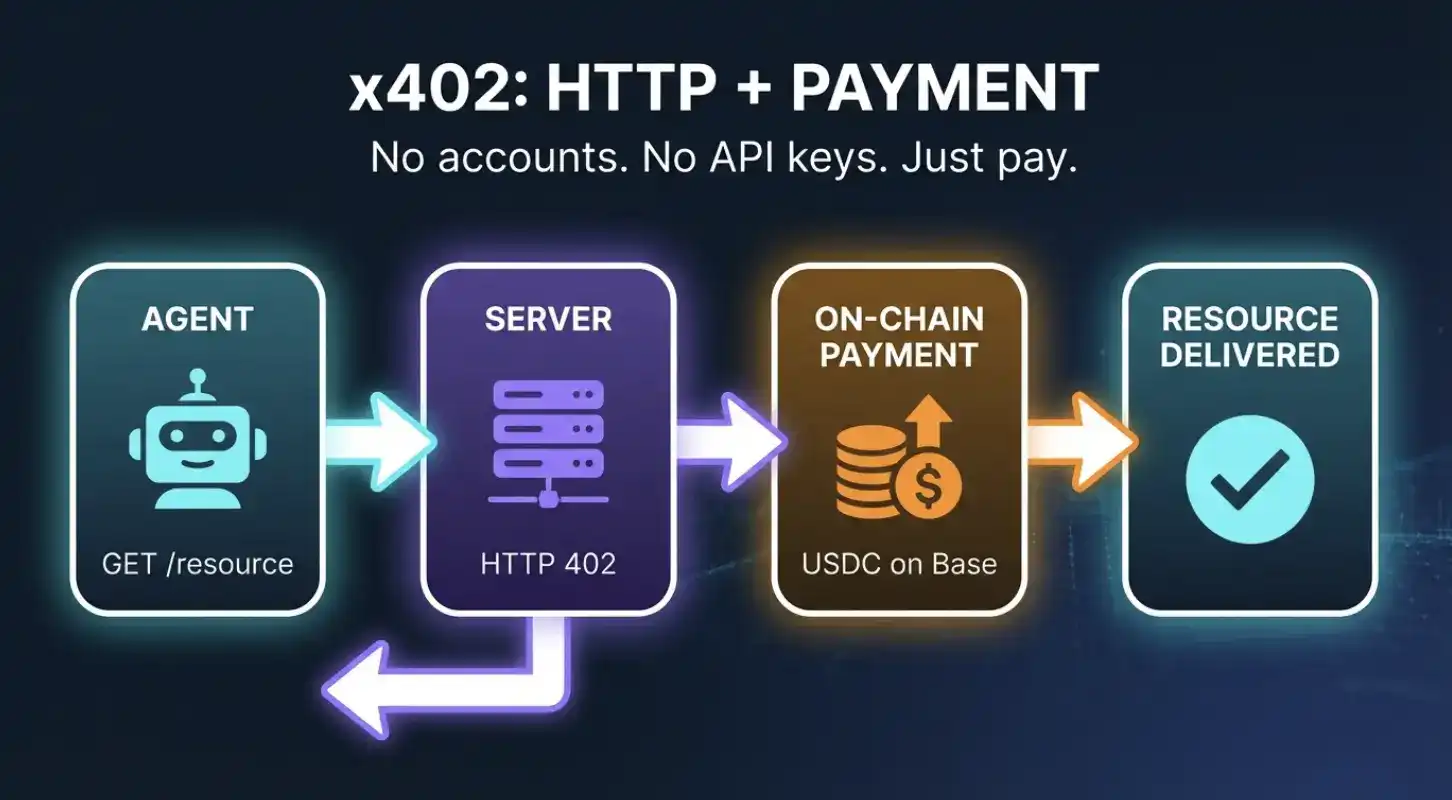
Coinbase officially launched x402 in May 2025. Its core idea is almost radically minimalist. A client requests a resource; the server returns HTTP 402, informing the client: how much to pay, which token to use, and on which chain to complete the payment. The client completes the payment on-chain, attaches the payment proof to the re-initiated request, and the server delivers the resource.

It's that simple. No account system, no API Key, no subscription mechanism. Just one HTTP request round trip, with a payment inserted in the middle.

Stripe now provides native support for x402 in its payment system, allowing merchants to receive such payments directly through their existing backend. However,本质上, x402 is still a protocol led by Coinbase, governed by the x402 Foundation co-founded by Coinbase and Cloudflare in September 2025. The protocol is fully open source (Apache 2.0 license) and provides multi-language SDKs like TypeScript, Go, and Python.

In terms of support, Coinbase's official documentation shows current support for ERC-20 payments on Base, Polygon, and Solana. Meanwhile, the ecosystem is exploring expansion to other chains like Avalanche, Sui, and Near, but maturity varies.

Looking at adoption data, it gets slightly more complex. Coinbase states that x402 has processed over 50 million transactions through its Agentic Wallet infrastructure. Sounds impressive, but according to CoinDesk on March 11th, citing Artemis on-chain analysis data: daily transaction volume is about 131,000, total amount about $28,000, average payment per transaction is only about $0.20, and about half of them seem more like testing or gamification rather than real commercial transactions.

But this might not be a bad thing. Because this protocol is designed for a market that doesn't truly exist yet—a world where AI agents make micro-payments (even below 1 cent) for API calls and data queries. And the services serving this market are just beginning to emerge.

For example, Google's Agentic Payments Protocol (AP2, part of the A2A framework) has integrated x402; Lowe's Innovation Labs demonstrated a demo where an AI agent can complete the entire process from product discovery, research to placing an order in one flow. Also, World (initiated by Sam Altman) released AgentKit this week, adding human identity verification capabilities to x402 wallets.

The core assumption is: if you make payments as lightweight as HTTP requests, use cases will naturally emerge. Whether this holds true remains to be seen.

MPP: The Full-Stack Solution

Stripe and Tempo have chosen a different path. The Machine Payments Protocol (MPP) was released today alongside the Tempo mainnet launch. Unlike x402, which is a lightweight wrapper on existing blockchains, MPP is specifically designed for the scenario of high-frequency trading agents.

Its core mechanism is sessions. Instead of initiating an on-chain transaction for every resource request, an agent can pre-authorize a spending limit and then make continuous micro-payments within that limit. If you are an AI that needs to query thousands of sources per hour, you absolutely do not want to sign and broadcast an on-chain transaction each time, and sessions are designed to solve this problem.

The Tempo chain is also built around this need. It supports tens of thousands of transactions per second, has sub-second confirmation times, and has no native gas token. Users can pay fees directly with stablecoins, eliminating the hassle of having to buy some random token just to make a transfer.

Another component worth understanding is: Stripe's Agentic Commerce Suite includes Shared Payment Tokens (SPTs). This is not part of MPP itself, but an extension mechanism from Stripe that can work with it. SPTs allow an agent to securely pass a user's bank card or wallet credentials to a merchant without exposing the real data. These credentials are single-use and time-limited, essentially a programmable, self-destructing authorization. In practice, this means an agent paying via MPP can use either USDC on Tempo or the user's linked Visa card, or even a combination of both.

According to the Tempo mainnet launch blog, its partners include Anthropic, DoorDash, Mastercard, Nubank, OpenAI, Ramp, Revolut, Shopify, Standard Chartered, and Visa. The Block reported that the MPP launch payment directory already includes over 100 services, including Alchemy, Dune Analytics, Merit Systems, and Parallel Web Systems. Matt Huang, co-founder of Tempo and Paradigm, told Fortune in an interview that this field is still in its early stages, and MPP is designed to eventually scale to environments beyond Tempo.

Why Stripe Supports Both

If you are already integrated with Stripe, the most practical answer is: you don't need to choose between them.

Stripe supports x402 and MPP through two separate integration paths, rather than abstracting them into a unified interface. For x402, its documentation mainly covers the process of generating deposit addresses, monitoring the chain, and settling funds into Stripe accounts—you are responsible for returning the 402 response, while the underlying crypto payment infrastructure is handled by Stripe. Currently supports USDC on Base, with more to come. For MPP, merchants can use the same PaymentIntents API to receive session-based streaming payments.

Stripe's Agentic Commerce Suite, released in December 2025, is built on these two payment rails. Merchants simply upload their product catalog, select the AI agents they want to connect with, and Stripe handles product discovery, checkout flow, fraud prevention, and tax processing. Currently used by URBN, Etsy, Coach, Kate Spade, and Ashley Furniture, with platforms like Wix, WooCommerce, BigCommerce, Squarespace, and commercetools already integrated.

The strategy is actually quite clear: control the abstraction layer and let the underlying protocols compete freely.

Comparison

Macroscopically, these two protocols are doing the same thing: enabling machines to pay for resources via HTTP. But the real differences lie in the details.

x402 (Led by Coinbase) vs MPP (Stripe + Tempo)

Standardization
x402: Fully open source (Apache 2.0), promoted by the x402 Foundation with multi-party participation (Coinbase, Cloudflare, Visa, Google).
MPP: Open standard, jointly defined by Stripe and Tempo, part of the Stripe Agentic Commerce Suite.

HTTP Mechanism
x402: Revives HTTP 402, initiates requests via PAYMENT-REQUIRED header, uses PAYMENT-SIGNATURE for retry.
MPP: Also uses a challenge-response mechanism, but employs the Payment HTTP Authentication Scheme (IETF draft), binding challenge ID via HMAC.

Payment Rails
x402: Designed to be chain-agnostic, currently supported on Base, Polygon, Solana, exploration ongoing for other chains.
MPP: Based on the Tempo blockchain—an L1 optimized for payments, supporting 10k+ TPS, sub-second confirmation, no native gas token; long-term goal is cross-chain compatibility.

Payment Methods
x402: Pure stablecoins, fully on-chain.
MPP: Supports USDC on Tempo + SPT (Stripe's mechanism), enabling crypto-fiat hybrid (card, wallet, BNPL).

Settlement
x402: On-chain settlement (~200ms to several seconds), validation and settlement handled by facilitators like Coinbase.
MPP: Tempo sub-second confirmation, Stripe automatically credits accounts and handles compliance.

Merchant Integration
x402: Open-source middleware (Express, Hono, Next.js, etc.), can self-host or use a facilitator.
MPP: Direct integration with Stripe's PaymentIntents API, risk control, tax, refunds, reporting all built-in.

Core Innovation
x402: Extreme simplicity, no vendor lock-in,类似支付领域的 Unix 哲学 (like the Unix philosophy for payments).
MPP: High throughput + fiat integration,实现流式支付、微支付聚合 (enables streaming payments, micro-payment aggregation) via session, and programmable spending control based on SPT.

Key Partners
x402: Coinbase, Cloudflare, Google (A2A/AP2), Visa, World, Anthropic (MCP).
MPP: Stripe, Visa, Lightspark, Anthropic, DoorDash, Mastercard, OpenAI, Shopify, Revolut, Standard Chartered.

x402 is more like your首选方案 when building open systems: indie developer APIs, decentralized data markets, or any service that doesn't want to rely on a payment processor. Its spec can be written in a whitepaper, integration just requires middleware and a wallet address. This purity is attractive—though the纯加密的限制 (purely crypto limitation) also means its audience is narrower.

MPP is a completely different paradigm. If your agent needs to make hundreds or even thousands of transactions in one session without going on-chain each time, then it's the more reasonable choice. The session mechanism keeps most interactions off-chain until final settlement; Stripe's compliance system handles risk and taxes; and the hybrid model with SPT allows agents to go beyond stablecoins and directly call the user's payment methods. It's less elegant but closer to reality.

Interestingly, they are not entirely competitive. x402 covers long-tail open scenarios, MPP covers enterprise-level high-frequency traffic. Stripe's strategy is also clear: don't bet on a single protocol, but ensure that no matter which path wins, funds ultimately flow into Stripe's account system.

Reality Check: Where Are We Actually At Now?

Honestly, there is almost no real scaled transaction volume yet.

According to Coinbase's x402 launch information, early partners include Hyperbolic (GPU inference payment) and Anthropic (MCP protocol integration). Stripe's blog mentions agent scenarios paying per API call (e.g., CoinGecko). Tempo's launch directory has 100+ services. Cloudflare's Agents SDK natively supports x402, and some small projects on Base L2 are also trying to use x402 as a payment gateway.

But overall: transaction volume is small, merchant count is limited, most activity is still in the experimental stage.

This is not surprising. Any new payment infrastructure is like this early on. So-called partner lists sometimes have a big gap between signing a letter of intent and being in production, and these announcements usually don't特别区分.

What's more值得关注 is the heavyweight players behind the infrastructure. Stripe processed $1.9 trillion in payments in 2025, with total volume growing 34% year-over-year. Meanwhile, Coinbase, Cloudflare, Visa, Google, and Tempo's entire partner network have entered the field.

In other words, the rails are laid. The only question left is: In 2026, will AI agents really need to transact on these rails at scale? Or is this more like laying fiber optics in 1998—demand isn't here yet, but infrastructure comes first.

Which One Should You Choose?

If you are building an open, permissionless system—x402 is the more natural choice. No platform registration, no payment processor integration, just import middleware, bind a wallet, and start receiving payments. The cost is handling compliance, risk control, and fiat settlement yourself.

If you are already within the Stripe ecosystem and want to接入 agent traffic—MPP is more suitable. Sessions, streaming payments, crypto+fiat hybrid, and a full compliance system are essentially more like a configuration upgrade than a system重构.

If you only care about one thing: no matter which protocol the agent uses, I can get paid. Then the answer is simply: use Stripe. It supports both.

HTTP 402 has finally found its use. It just took about 27 years.

Трендовые криптовалюты

Связанные с этим вопросы

QWhat is the core difference between x402 and MPP in terms of their approach to agent payments?

Ax402 follows a protocol-minimalist approach, embedding payment directly into HTTP requests with no accounts or intermediaries, ideal for open, permissionless, and long-tail decentralized scenarios. MPP is a full-stack, system-maximalist solution that uses sessions, streaming payments, and a compliance framework to handle high-frequency transactions and fiat integration, prioritizing real-world commercial needs and enterprise-scale applications.

QHow does the x402 protocol work in a simple transaction flow?

AA client requests a resource. The server returns an HTTP 402 status code, specifying the required payment amount, token, and blockchain. The client completes the payment on-chain, attaches the payment credential to a new request, and the server then delivers the resource. There are no accounts, API keys, or subscriptions.

QWhat key innovation does MPP introduce to solve the problem of high-frequency agent transactions?

AMPP introduces the concept of 'sessions.' Instead of initiating a separate on-chain transaction for every resource request, an agent can pre-authorize a spending limit and then perform numerous micro-payments within that session off-chain, only settling finally on-chain. This enables high throughput and sub-second confirmations.

QWhy is Stripe supporting both the x402 and MPP protocols simultaneously?

AStripe's strategy is to control the abstraction layer and let the underlying protocols compete. By offering separate integration paths for both x402 and MPP, they ensure that regardless of which protocol gains traction for different use cases (open web vs. enterprise), the funds ultimately flow into Stripe's account system and compliance framework.

QWhat is the current state of adoption and transaction volume for these agent payment protocols?

AAs of the article's information, adoption is still in its early experimental phase. x402 handles around 131,000 daily transactions with a total value of approximately $28,000, many of which are tests. MPP launched with a directory of over 100 services. While infrastructure from major players is in place, widespread,规模化 commercial transactions from AI agents are not yet a reality.

Похожее

Майкл Сэйлор: «Мы никогда не говорили, что никогда не будем продавать биткоины»

Председатель стратегической комиссии Майкл Сэйлор прокомментировал сообщения о новом разрешении компании Strategy на продажу биткоинов. Он заявил, что данное разрешение не является новым — оно было объявлено ещё 29 июня в рамках системы управления капиталом компании. Соглашение позволяет продавать BTC на сумму до 5 миллиардов долларов для определённых целей, но не обязывает компанию к продаже. Сэйлор подчеркнул, что Strategy никогда официально не брала на себя обязательство никогда не продавать свои биткоины, хотя и рассчитывает оставаться чистым покупателем BTC в долгосрочной перспективе. Он назвал текущие новости «старыми», переподанными как новые, и подтвердил, что программа монетизации биткоинов компании не предполагает обязательной продажи её активов.

cryptonews.ru36 мин. назад

Майкл Сэйлор: «Мы никогда не говорили, что никогда не будем продавать биткоины»

cryptonews.ru36 мин. назад

«Летняя пила» продолжается: пробой $67 000 станет началом роста биткоина

Цена биткоина продолжает консолидироваться в диапазоне $58 000–$67 000 с начала июня. 1 августа актив снизился до $62 217. Аналитики расходятся в краткосрочных прогнозах: некоторые, как Crypto Candy, ожидают тестирования уровня $60 000 или ниже, пока цена находится под $66 000. Другие, как Jelle, видят в боковом движении «летнюю пилу» и придерживаются стратегии усреднения. Ключевым для определения дальнейшего направления считается уровень $67 000. По мнению Daan Crypto Trades, его пробой необходим для выхода из затянувшейся паузы. Roman полагает, что уверенный пробой с объемом может быстро запустить рост к $70 000–$80 000 и выше. С долгосрочной точки зрения, макроаналитик Герт ван Лаген рассматривает текущую фазу как накопление в рамках масштабной формации «чаша с ручкой». Он отмечает, что долгосрочные держатели не спешат продавать актив, о чем говорит показатель NUPL. Таким образом, рынок находится в решающей фазе, где пробой либо поддержки $60 000, либо сопротивления $67 000 задаст тренд на ближайшее будущее.

cryptonews.ru51 мин. назад

«Летняя пила» продолжается: пробой $67 000 станет началом роста биткоина

cryptonews.ru51 мин. назад

На неделе с 3 по 9 августа стоит обратить внимание: Закон CLARITY, возможно, будет поставлен на голосование в Сенате; SpaceX и Circle опубликуют финансовые отчеты

**Важные события на следующей неделе (3–9 августа 2026 г.)** **Ключевые даты:** * **3 августа:** Публикация отчетов American Bitcoin за Q2. Полное закрытие сервисов DeFi-трекера Zapper и кошелька Ctrl Wallet. LayerZero прекратит поддержку ретрансляторов v1. Upbit прекратит торговлю токенами AQT и AERGO. * **4 августа:** Публикация финансовых отчетов SpaceX и Hut 8 за второй квартал 2026 года. * **5 августа:** Circle опубликует отчет за Q2. Начинается предварительное ценовое консультирование для IPO компании Unitree Tech (Ушу Цзишу) в Китае. * **6 августа:** Первая крупная разблокировка акций SpaceX — до 12% от общего капитала. * **7 августа:** Выход важных данных по рынку труда США (отчет о занятости за июль). Предельный срок для Сената США — получить 60 голосов в поддержку **Закона CLARITY** (билль о регулировании криптовалют и этике). Ожидается выпуск Grok 4.6 от xAI. * **8 августа:** Начало принудительной подачи сигналов в сети Bitcoin согласно предложению BIP-110. * **На неделе (дата уточняется):** Ожидается голосование полного состава Сената США по **Закону CLARITY**. Выход нового релиза XRP Ledger (v3.3.0) с новыми функциями, такими как конфиденциальные данные и пакетные транзакции. **Основные темы недели:** корпоративная отчетность (SpaceX, Circle), регулирование (CLARITY Act), рыночные события (разблокировка акций SpaceX, отчет по занятости в США) и обновления в технологиях блокчейна.

marsbit1 ч. назад

На неделе с 3 по 9 августа стоит обратить внимание: Закон CLARITY, возможно, будет поставлен на голосование в Сенате; SpaceX и Circle опубликуют финансовые отчеты

marsbit1 ч. назад

Акции упали сильнее, чем криптовалюты. Куда делись деньги?

Автор: Кэти,白话区块链 28-29 июля, Сеул. Индекс Kospi впервые в истории Южной Кореи два дня подряд срабатывал на приостановку торгов. Первый день: падение на 10.84%, второй день: -5.98%. SK Hynix, крупнейшая по весу акция, потеряла за два дня около 23%. Падение Nasdaq, глобальный обвал акций полупроводниковых компаний, массовые потери на кредитных ETF. За два дня откат Kospi от пика июня достиг 40%. Июль угрожает стать худшим месяцем в истории индекса. Все ранее перегретые сделки были перевернуты, как стол. Это не локальный негатив по одной акции, а глобальное принудительное снижение кредитного плеча. Самое парадоксальное: на этот раз больше всего на «криптовалютное» падение похожи именно акции. Спот: прибыль SK Hynix за второй квартал достигла рекордных 60.54 трлн вон, но из-за несоответствия прогнозу в 64.22 трлн акция подверглась жесткой распродаже. Хорошие новости не растут — это уже плохая новость. Производные инструменты пострадали еще сильнее. Кредитный ETF с плечом 2x на SK Hynix упал на 83% с пика, потеряв в стоимости более 1 трлн гонконгских долларов. Эмитент был вынужден изменить правила продукта. Неожиданно: Биткоин, известный высокой волатильностью, с 1 июля вырос почти на 15%, в то время как акции демонстрировали «криптовалютную» динамику. Это не паника всего рынка, а точечный сброс перегретых позиций. Триггеры: отчет SK Hynix и фактор Китая — крупнейшее IPO ChangXin Memory, направленное на расширение производства DRAM, создало конкуренцию для нарратива о дефиците памяти для ИИ. Дополнительное давление — нормализация политики Банка Японии и потенциальное сокращение кэрри-трейда в иенах. Эксперт Дэн Найлз считает, что это не крах логики ИИ, а «краткосрочное дно», вызванное принудительными ликвидациями мелких инвесторов и хедж-фондов. Промышленная логика не мертва — умерло кредитное плечо. Перетекли ли деньги из акций в Биткоин? Нет. «Устойчивость» Биткоина объясняется тем, что он уже прошел фазу распродаж раньше. В мае-июне американские спотовые BTC-ETF зафиксировали рекордный отток средств. К июлю продавать было уже нечего. Небольшой приток в июле — лишь частичное восстановление. Настоящие «защитные» деньги пошли в золото. Коэффициент корреляции между Биткоином и золотом упал до -0.88. Нарратив о «цифровом золоте» разбит: золото — для сохранения капитала, Биткоин — для роста. Деньги придут в криптоактивы при выполнении трех условий: смягчение глобального давления на ликвидность; снижение ставок ФРС без рецессии; принятие закона CLARITY, устраняющего регуляторные неопределенности. Пока Биткоин — не убежище, а актив, который раньше других прошел очистку. Но когда шторм утихнет и глобальный капитал снова начнет распределяться, Биткоин займет место в первых рядах очереди. Место уже зарезервировано.

marsbit1 ч. назад

Акции упали сильнее, чем криптовалюты. Куда делись деньги?

marsbit1 ч. назад

Диалог с Далио: Сейчас мы находимся в пузыре ИИ, 1% моего инвестиционного портфеля — это биткоин

Источник: интервью Рэя Далио, основателя Bridgewater Associates, для подкаста "The Diary Of A CEO". Далио, предсказавший кризис 2008 года, обсуждает "большой цикл" — концепцию, охватывающую долговые проблемы, растущее неравенство и геополитические сдвиги. Он указывает, что текущий ажиотаж вокруг ИИ демонстрирует классические признаки пузыря, который может лопнуть из-за высокой долговой нагрузки, роста процентных ставок и чрезмерной эмиссии акций, что способно привести к рецессии. Для защиты личного капитала в неопределенные времена Далио советует диверсификацию: вместо хранения наличных инвестировать в акции, золото, облигации. Сам он держит около 1% портфеля в биткоине, считая его "твердыми деньгами", но предпочитает физическое золото из-за его статуса резервного актива и независимости от технологических рисков. Говоря о влиянии ИИ, Далио отмечает, что технология заменяет не только физический труд, но и элементы мышления, что увеличит разрыв между капиталом и трудом. Ключевыми останутся человеческие качества — эмоции и интуиция, а успеха добьются те, кто научится работать в партнерстве с ИИ. На геополитической арене, по его мнению, мир движется к регионализации с центрами в виде США и Китая. Вовлечение США в конфликты, подобные иранскому, обнажает снижение их абсолютного влияния. Внутренние вызовы, такие как дебаты о налогах на богатство, риск капитального бегства и низкая производительность, также ставят под вопрос стабильность традиционных держав в текущей фазе цикла.

marsbit5 ч. назад

Диалог с Далио: Сейчас мы находимся в пузыре ИИ, 1% моего инвестиционного портфеля — это биткоин

marsbit5 ч. назад

Торговля

Спот

Популярные статьи

Как купить S

Добро пожаловать на HTX.com! Мы сделали приобретение Sonic (S) простым и удобным. Следуйте нашему пошаговому руководству и отправляйтесь в свое крипто-путешествие.Шаг 1: Создайте аккаунт на HTXИспользуйте свой адрес электронной почты или номер телефона, чтобы зарегистрироваться и бесплатно создать аккаунт на HTX. Пройдите удобную регистрацию и откройте для себя весь функционал.Создать аккаунтШаг 2: Перейдите в Купить криптовалюту и выберите свой способ оплатыКредитная/Дебетовая Карта: Используйте свою карту Visa или Mastercard для мгновенной покупки Sonic (S).Баланс: Используйте средства с баланса вашего аккаунта HTX для простой торговли.Третьи Лица: Мы добавили популярные способы оплаты, такие как Google Pay и Apple Pay, для повышения удобства.P2P: Торгуйте напрямую с другими пользователями на HTX.Внебиржевая Торговля (OTC): Мы предлагаем индивидуальные услуги и конкурентоспособные обменные курсы для трейдеров.Шаг 3: Хранение Sonic (S)После приобретения вами Sonic (S) храните их в своем аккаунте на HTX. В качестве альтернативы вы можете отправить их куда-либо с помощью перевода в блокчейне или использовать для торговли с другими криптовалютами.Шаг 4: Торговля Sonic (S)С легкостью торгуйте Sonic (S) на спотовом рынке HTX. Просто зайдите в свой аккаунт, выберите торговую пару, совершайте сделки и следите за ними в режиме реального времени. Мы предлагаем удобный интерфейс как для начинающих, так и для опытных трейдеров.

1.8k просмотров всегоОпубликовано 2025.01.15Обновлено 2026.06.02

Как купить S

Sonic: Обновления под руководством Андре Кронье – новая звезда Layer-1 на фоне спада рынка

Он решает проблемы масштабируемости, совместимости между блокчейнами и стимулов для разработчиков с помощью технологических инноваций.

2.4k просмотров всегоОпубликовано 2025.04.09Обновлено 2025.04.09

Sonic: Обновления под руководством Андре Кронье – новая звезда Layer-1 на фоне спада рынка

HTX Learn: Пройдите обучение по "Sonic" и разделите 1000 USDT

HTX Learn — ваш проводник в мир перспективных проектов, и мы запускаем специальное мероприятие "Учитесь и Зарабатывайте", посвящённое этим проектам. Наше новое направление .

1.9k просмотров всегоОпубликовано 2025.04.10Обновлено 2025.04.10

HTX Learn: Пройдите обучение по "Sonic" и разделите 1000 USDT

Обсуждения

Добро пожаловать в Сообщество HTX. Здесь вы сможете быть в курсе последних новостей о развитии платформы и получить доступ к профессиональной аналитической информации о рынке. Мнения пользователей о цене на S (S) представлены ниже.

活动图片















