Автор:798.eth
В последние пару дней в экосистеме Bitcoin довольно популярна платформа Bound, ранее известная как Radfi. Ранее это была монета стратегии NodeStrategy Monkey, платформа, которой я начал пользоваться в конце 2025 года, а теперь она обновилась и сменила название на Bound Exchange. На этой платформе есть особый актив — по сути, стратегия Monkey, маховик Node Monkey, обеспеченный базовыми активами. Ключевой вопрос в том, смогут ли базовые активы выдержать эту нагрузку.
Сегодня в основном поговорим о логике ввода/вывода активов и торговли. Но прежде чем углубляться в механизмы, кратко расскажу о различиях между обновленным Bound и оригинальным Radfi.
I. Прошлое и настоящее: от Radfi до Bound
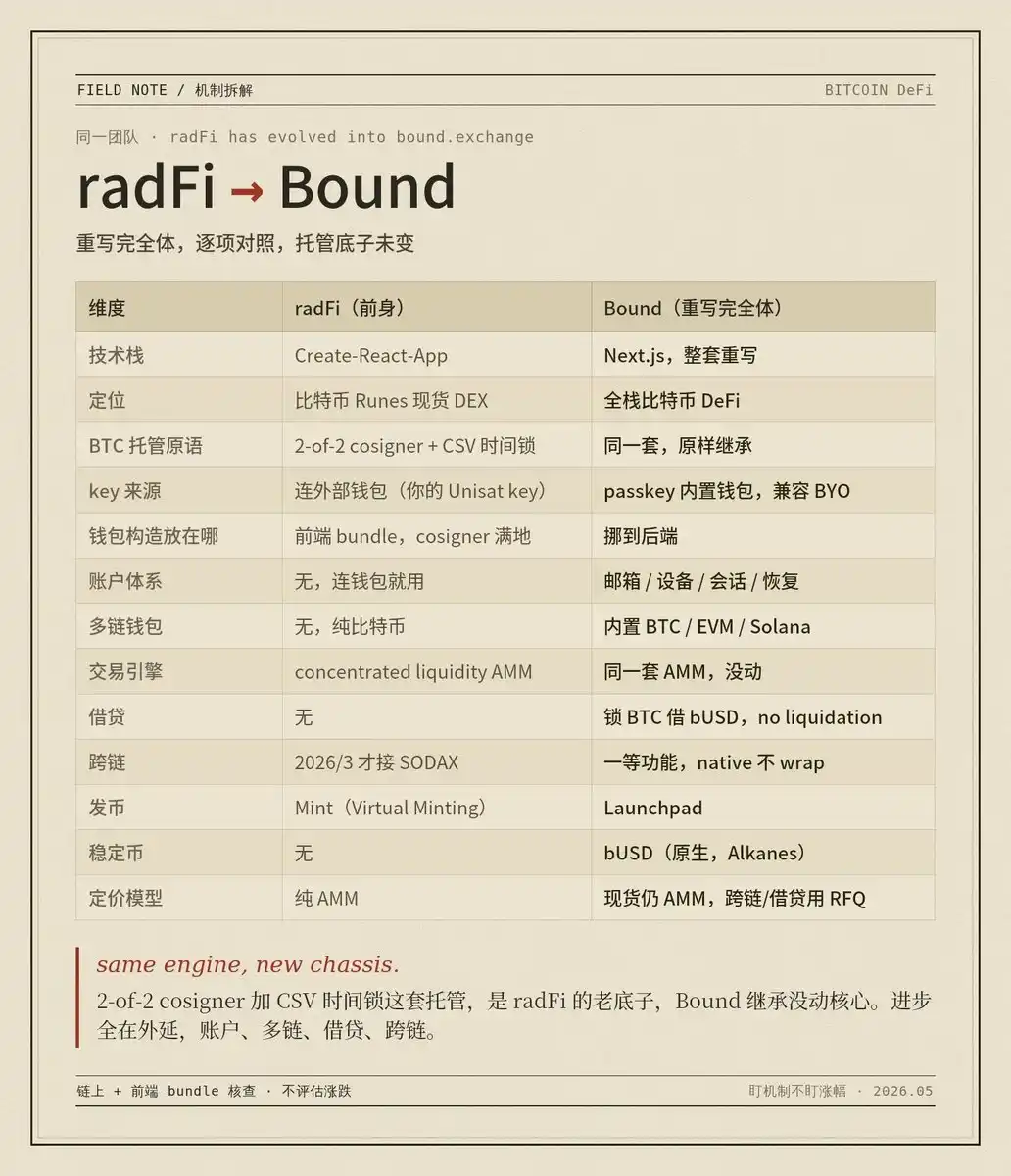
Bound — не что-то возникшее из ниоткуда, это полная переработка radFi. На официальном сайте radFi теперь висит строка: «radFi has evolved into bound.exchange». Та же команда, технологический стек сменился с Create-React-App на Next.js, полная перезапись.
Bound по-настоящему добавила встроенный многокриптовалютный кошелек passkey, срочные кредиты под залог Bitcoin в bUSD, а также SODAX для кросс-чейн операций. Торговый движок остался от radFi — это тот же concentrated liquidity AMM, обмен Runes не тронут.
В этой продуктовой линейке есть две системы 2-of-2 с временной блокировкой (timelock). Первая на уровне аккаунта защищает вас — через три месяца вы сможете обойтись без Bound; вторая в кредитовании защищает кредиторов — по истечении grace period кредитор напрямую забирает ваш залог. (Сравнение radFi → Bound см. на рисунке)
II. Ключевой механизм: ввод/вывод активов и условный депозит 2-of-2
Поняв его позиционирование, рассмотрим логику управления активами. Есть два основных момента: условный депозит с множественной подписью 2-of-2 и защита с обратным отсчетом временной блокировки (timelock) на случай прекращения работы платформы.
Сначала зададим сценарий. У вас есть BTC, и вы хотите торговать на платформе. Традиционный способ — отправить монеты на кошелек платформы, которая будет хранить их за вас. Проблема в том, что монеты больше не находятся под вашим контролем. Если платформа закроется или будет взломана, монеты пропадут — так случилось с FTX и Celsius. Bound пытается решить это противоречие: получить скорость исполнения ордеров уровня централизованной биржи (CEX), но не отдавать контроль над монетами.
Первый шаг: что такое deposit.
После регистрации Bound дает вам Bitcoin-адрес, начинающийся с bc1p. Чтобы торговать, вы сначала переводите BTC со своего кошелька на этот адрес. Обычная Bitcoin-транзакция, 3 подтверждения, примерно полчаса. Пока что все как с обычным кошельком. Настоящий дизайн скрыт в следующем вопросе.
Второй шаг: кому на самом деле принадлежит приватный ключ от этого адреса.
Это ядро всей системы. Есть только два простых способа: приватный ключ только у платформы — это условный депозит, возврат к старой проблеме FTX; приватный ключ только у вас — тогда платформа не может помочь с быстрым исполнением, каждая ваша сделка требует ручной подписи, это медленно.
Решение Bound: у этого адреса не один ключ, а два. Чтобы переместить монеты с него, нужны обе подписи. Это и есть множественная подпись 2-of-2.
Третий шаг: кому принадлежат эти два ключа.
Один — ваш, хранится на вашем устройстве, вызывается через passkey, приватный ключ никогда не покидает устройство. Другой — в бэкенде Bound. При обычной торговле вы подписываете через passkey, бэкенд Bound автоматически добавляет вторую подпись, обе подписи собраны — исполнение за секунды.
Здесь стоит остановиться и осмыслить. У Bound только один ключ, в одиночку она не может переместить ваши монеты, поэтому это не условный депозит, она не может использовать ваши монеты для собственных операций или кредитования. Но вместе вы можете мгновенно исполнять сделки, возвращая скорость. Это и есть желаемый эффект 2-of-2: безопасность и скорость одновременно.
Четвертый шаг: для какой проблемы нужна временная блокировка (timelock).
2-of-2 создает новую проблему. Раз нужны два ключа, что если Bound закроется, перестанет работать, будет отключена? Если ключ из бэкенда навсегда потерян, у вас останется только один ключ, не застрянут ли монеты навсегда на этом адресе?
Временная блокировка (timelock) закрывает эту лазейку. Правило простое: совместная подпись Bound действительна 3 месяца. В течение 3 месяцев для перемещения монет нужны обе подписи. По истечении 3 месяцев вы можете забрать все монеты одной своей подписью, больше не нуждаясь в Bound.
Ключевой момент: это не устное обещание Bound, а прописанное в Bitcoin-скрипте и принудительно исполняемое сетью Bitcoin. Согласие Bound не требуется, по истечении времени вы можете уйти с одной подписью. Вот в чем заключается основа для заявлений о self-custodial (самохранилище).
Пятый шаг: теперь понятен процесс withdraw.
Нормальный вывод: вы подписываете через passkey, бэкенд Bound добавляет совместную подпись, обе подписи собраны — мгновенный вывод. Аварийный вывод: если Bound исчезнет, вы ждете истечения 3-месячной временной блокировки, затем используете свою единственную подпись, чтобы отправить монеты на любой адрес.
Соединив эти пять шагов, изначальные четыре термина выстраиваются в цепочку: вы вносите монеты на адрес 2-of-2 — это deposit; в повседневной жизни вы и Bound вместе тратите средства — это быстрый путь withdraw; подпись Bound истекает через 3 месяца — это timelock; после истечения вы можете уйти с одной подписью — это аварийный выход для withdraw.
III. Базовая логика: упорядочение сделок на Bound ex
Разобравшись с вводом активов, поговорим об упорядочении сделок на Bound ex.
В Bitcoin нет смарт-контрактов. Тогда где происходит согласование в нативном Bitcoin DEX AMM, и кто решает, какая ваша сделка будет исполнена по счету? По сути, это бэкенд согласования CEX, подключенный к блокчейну Bitcoin как уровень расчетов. Разберем по шагам:
-
Во-первых, кривая AMM не находится в блокчейне. На BTC L1 нет контрактов, состояния, такие как резервы, тики, диапазоны ликвидности, негде хранить, их можно размещать только в базе данных бэкенда Bound. UTXO в блокчейне — это лишь результат условного депозита и расчетов LP.
-
Во-вторых, сделки в блокчейне — это лишь расчетные квитанции. Я изучил историю сделок в этом пуле, каждая операция ввода/вывода имеет фиксированную сумму, сама по себе не содержит никаких расчетов по кривой. Вся математика вдоль кривой выполняется в бэкенде до попадания в блокчейн. В блоке может быть двадцать с лишним исполненных сделок, каждая использует свои UTXO, не связанные друг с другом, именно потому, что цена уже определена вне блокчейна, а попадание в блокчейн — это лишь фиксация заранее рассчитанного набора чисел.
-
В-третьих, как устанавливается цена для отдельной сделки. Когда вы хотите купить/продать через интерфейс, интерфейс запрашивает котировку у бэкенда. Бэкенд вычисляет по поддерживаемой им кривой concentrated liquidity, ваша сделка поглощает ликвидность вдоль тика, вычитается комиссия, вам выдается число. Вы подписываете PSBT, фиксируя это число, бэкенд проверяет и, если все верно, добавляет совместную подпись и транслирует, одновременно сдвигая свою внутреннюю кривую на один шаг. Кривая живет только в бэкенде.
-
В-четвертых, упорядочение математически вытекает из этой кривой, его нельзя обойти. У кривой есть состояние, в любой момент времени есть только одна текущая позиция. Каждая приходящая сделка, поглощая часть ликвидности, сдвигает кривую в новую позицию, следующая сделка может исполниться только в новой позиции. Это означает, что все сделки по своей природе не могут быть рассчитаны одновременно, они должны быть выстроены в строгую последовательность. Первая сделка исполняется в исходной позиции, сдвигая кривую на шаг, вторая — в новой позиции, сдвигая еще на шаг, и так далее.
-
В-пятых, но кто определяет порядок и по какому принципу — это другой вопрос. Здесь нужно различать два порядка. Один — реальное время, когда вы нажимаете подтверждение, другой — порядок обработки, который бэкенд фактически использует для сдвига кривой. Ни в блокчейне, ни в протоколе нет ничего, гарантирующего их соответствие. Ваша сделка попадает в очередь бэкенда Bound. Объявляет ли он об этом, обрабатывает ли в порядке поступления, выдвигает ли кого-то вперед или отодвигает назад — все это его внутреннее дело, вы этого не видите.
-
В-шестых, это точка входа для MEV оператора, еще более острая, чем обычный внутриблочный MEV. Порядок исполнения на обычном DEX, по крайней мере, отражен в блоке, кто опередил, кто зажал — можно проанализировать постфактум. У Bound этот порядок возникает вне блокчейна, и после попадания результатов в блок не остается даже следов очередности, двадцать с лишним сделок не связаны друг с другом, по блокчейну невозможно определить, какая была первой. Но в момент, когда вы нажимаете подтверждение, цена уже рассчитана на основе точки на кривой. Просто порядок, под каким номером в блоке она окажется, вам неизвестен.
Поэтому у Bound не отсутствует порядок — порядок математически обязательно существует, он просто полностью заключил право определять этот порядок в черный ящик. На уровне основного капитала это действительно self-custodial, 2-of-2 + timelock, платформа не может переместить ваши монеты. Но по какой цене и в каком порядке исполнится ваша сделка — это учет, который она ведет вне блокчейна в одиночку. В конечном счете, это бэкенд согласования CEX, подключенный к крупнейшему в мире блокчейну для расчетов, с фиксацией примерно каждые десять минут в блоке, который после подтверждения становится необратимым.
IV. Практические советы и обратная связь по опыту использования
В заключение — две практические детали, чтобы избежать ошибок. Этот адрес 2-of-2 принимает только BTC и Runes. Отправка туда BRC-20, Alkanes или монет с других сетей приведет к их безвозвратной потере. Также вы можете не использовать систему Bound, а напрямую подключить свой Unisat или Xverse. В этом случае не будет ни 2-of-2, ни временной блокировки, монеты всегда будут в вашем кошельке с одной подписью, но ценой этого будет необходимость вручную подписывать каждую сделку.
Судя по текущему опыту, есть небольшие проблемы. Я проверил: одна сделка уже получила два подтверждения блока, но интерфейс Bound все еще показывает «pending», из-за чего следующая сделка не позволяет разместить ордер. Надеюсь, официальные представители @Bound_Exchange обратят внимание на эту проблему.