Примечание редактора: В статье рассматривается авиаудар, нанесенный вооруженными силами США в районе Ормузского пролива по целям в Иране рано утром 10 июня по пекинскому времени. Дин Бланделл в резко саркастическом тоне критикует непоследовательную политику администрации Трампа по иранскому вопросу: американский вертолет AH-64 «Апач» разбился вблизи Ормузского пролива, два пилота спасены, причины инцидента остаются спорными; Трамп сначала назвал это событие «незначительным», но затем в Truth Social охарактеризовал его как «сбитие» иранцами американского вертолета и на этом основании нанес удар по прибрежным ПВО, радарам и наземным пунктам управления Ирана.
Истинная критика статьи направлена не только на этот военный ответ, но на то, как администрация Трампа снова и снова создает информационную дымовую завесу в виде «скоро подпишем соглашение». С одной стороны, заявляя, что переговоры вышли на «заключительную стадию» и соглашение можно будет подписать «за два-три дня», а с другой — наращивая военные действия и публично унижая Иран, так называемые дипломатические переговоры больше похожи на политическое шоу, обслуживающее новостной цикл. Тем временем, так называемый «пропорциональный ответ» США спровоцировал ответные удары Ирана по американским базам в регионе, Ормузский пролив по-прежнему не нормализован, давление на цены на нефть и рынки сохраняется. Автор напоминает читателям, что когда «очень близко» раз за разом подменяет реальный прогресс, самая рациональная реакция, возможно, не верить, а записывать и предполагать, что реальность, скорее всего, прямо противоположна.
Далее следует оригинальный текст:
Начнем с хронологии, потому что сама эта хронология и есть сердцевина всей аферы.
В понедельник вечером американский армейский ударный вертолет AH-64 «Апач» упал в Ормузском проливе у побережья Омана. Оба пилота выжили и не пострадали — их спасли в течение двух часов с помощью беспилотного катера. Признаем, это действительно крутая военная техника и единственная часть всей истории, которая работала как надо.
Но есть часть, которую Трамп не напишет в своих постах в соцсетях заглавными буквами: американский чиновник сообщил Associated Press, что этот «Апач» упал после столкновения с иранским дроном, и пока неясно, было ли это столкновение преднамеренным. Сам Трамп говорил The Wall Street Journal, что вся история «не имеет большого значения» и что «пилоты в порядке».
Итак, запомните это: ничего серьезного. Пилоты в порядке. Причина все еще выясняется. Возможно, просто несчастный случай.
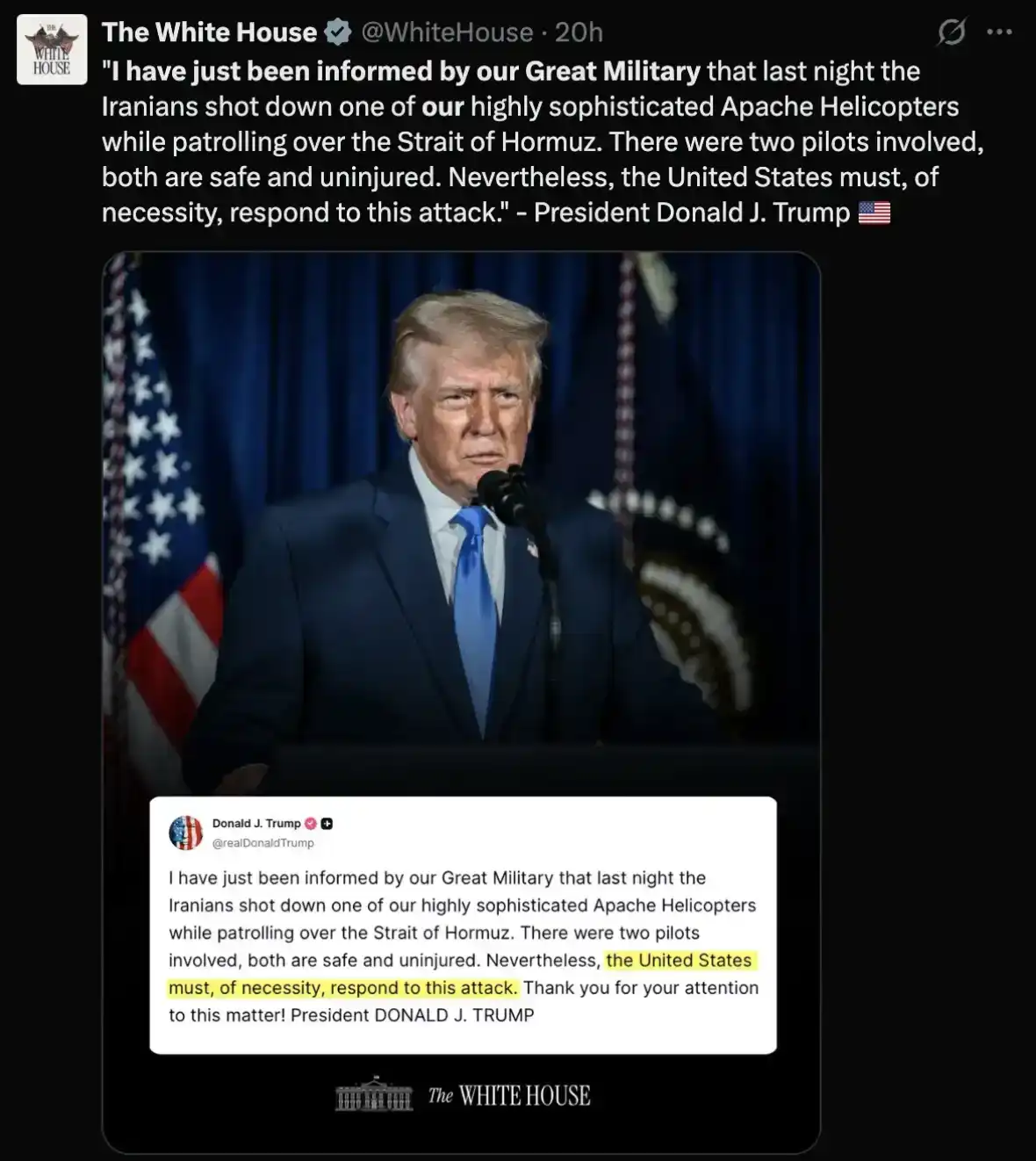
Во вторник утром тот же человек, но уже в другом настроении. Он снова лезет в Truth Social и пишет: «Только что получил уведомление от нашего великолепного военного командования, что прошлой ночью иранцы, патрулируя воздушное пространство Ормузского пролива, сбили наш высокоразвитый вертолет «Апач»... США должны дать ответ на эту атаку. Спасибо всем за внимание к этому вопросу!»
От «ничего серьезного» до «необходимо дать ответ» — всего один новостной цикл. Этот человек опроверг сам себя менее чем за 24 часа, а мы, по-видимому, должны принять это как некую форму государственного управления.
В ночь со вторника на среду Центральное командование ВС США начало наносить удары по прибрежным районам Ирана. Операция продолжалась с 22:00 по Гринвичу во вторник до примерно 01:00 в среду, по примерно 20 целям, включая системы ПВО, наземные контрольные пункты и радиолокационные станции наблюдения, на территории острова Кешм, Горука, порта Абас, Джаска, Сирика и Минаба, вдоль всего Ормузского пролива и вглубь него. Пентагон назвал это «ударами самообороны», «пропорциональным ответом» на «неспровоцированную агрессию Ирана».
А согласно сообщениям иранского государственного телевидения, результат этого «пропорционального ответа» на земле таков: в районе Сирика были поражены два резервуара для воды, что привело к прерыванию водоснабжения примерно 20 тысяч человек в районе Баммани. В следующий раз, услышав слова «хирургический удар», вспомните эту картину.
Той же ночью Иран нанес ответный удар. Корпус стражей исламской революции заявил, что они нанесли 21 удар по американским целям в регионе — дроны атаковали Пятый флот США в Бахрейне, базу Али Салим в Кувейте, а дальнобойные ракеты были выпущены по авиабазе Эз-Зарка в Иордании; там, по их утверждению, был уничтожен ангар для F-35. Иордания сообщила, что сбила 5 ракет. Министр иностранных дел Ирана Алакчи заявил с таким тоном сдерживания, который, как Трампу кажется, есть у него: «Хотите безопасности — убирайтесь из нашего региона». Спикер иранского парламента Галибаф сказал: «Мы предпочитаем использовать дипломатический язык, но другим языком мы владеем свободнее».
Утро среды. И вот здесь — именно здесь — наступает ключевой момент. Трамп снова возвращается в Truth Social, и этот «ведущий мастер сделок» полностью сбрасывает маску:
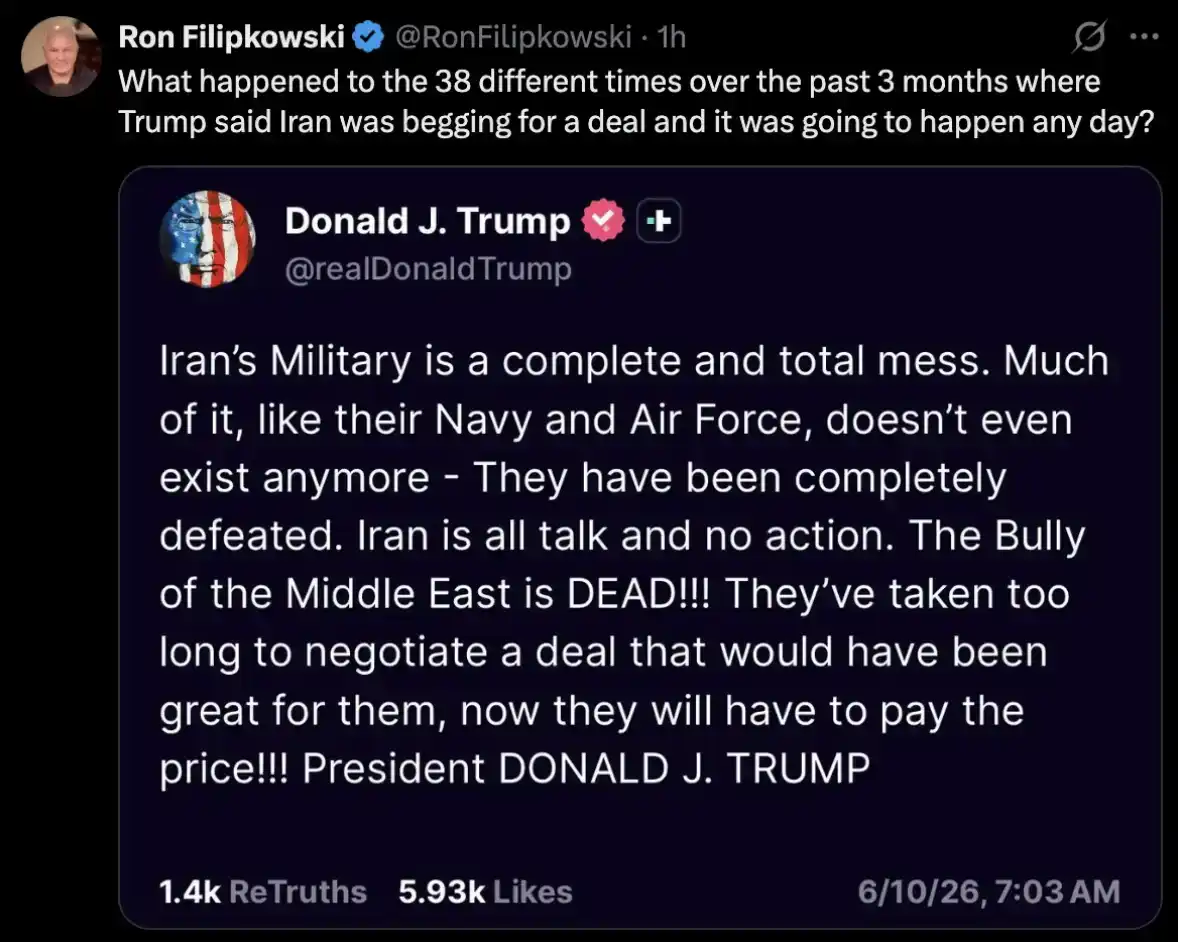
«Иранские вооруженные силы полностью деморализованы. Большая часть их сил, например, флот и авиация, даже не существуют — они полностью разбиты. Иран только говорит, но ничего не делает. Ближневосточный задира мертв!!! Они слишком долго тянули с переговорами по соглашению, которое было бы для них чрезвычайно выгодным, теперь они должны заплатить цену!!!»
«Они слишком долго вели переговоры.»
Слишком долго. Говорит это человек, который еще утром во вторник заявлял, что соглашение находится на «заключительной стадии» и может быть подписано «за два-три дня». Тот же самый, кто в понедельник вечером, выйдя с финала НБА, говорил, что стороны находятся на последней стадии «очень, очень хорошего соглашения», которое после подписания «немедленно» откроет Ормузский пролив.
«Два-три дня» — промышленно-политический комплекс
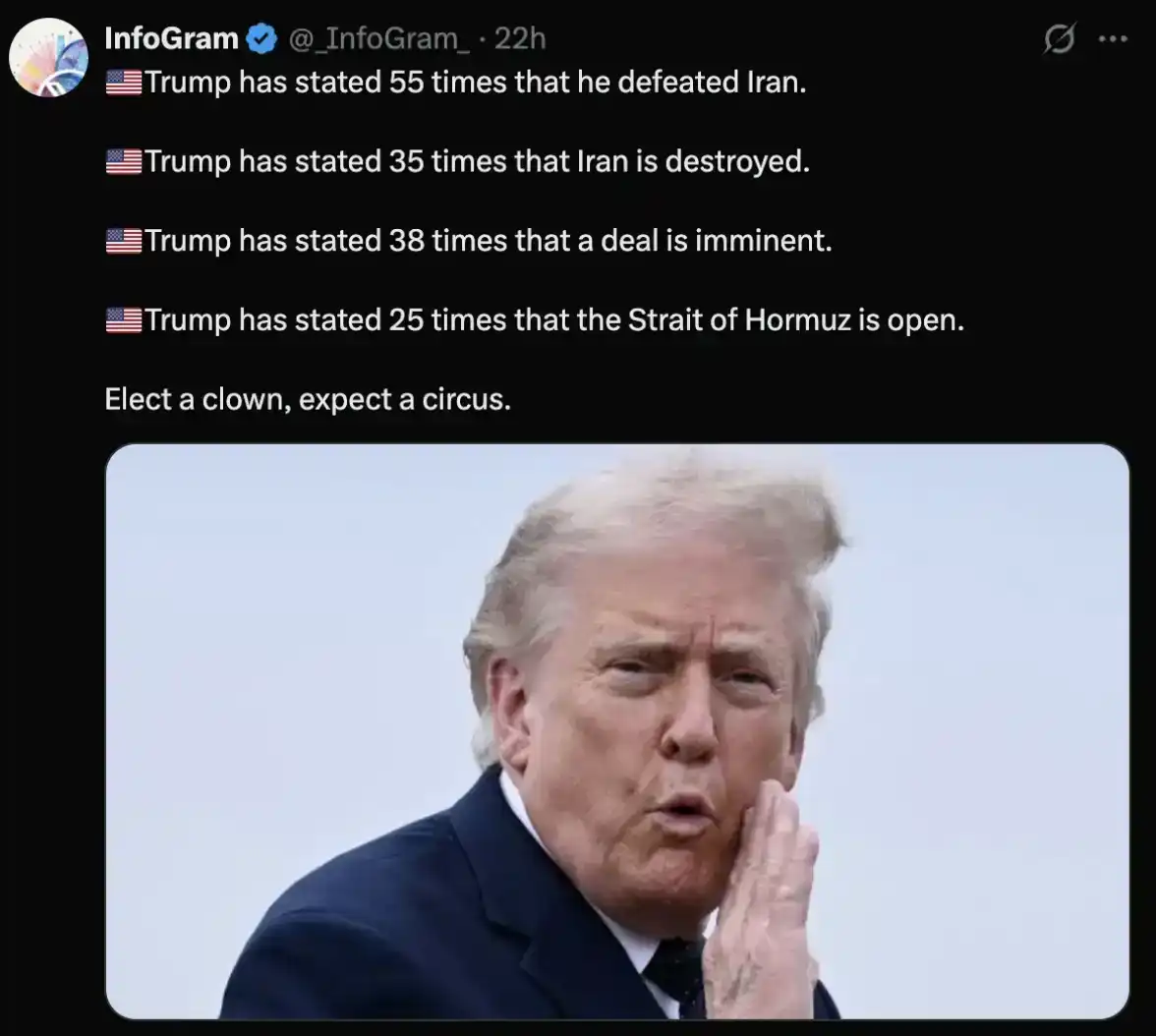
Хочу, чтобы вы серьезно об этом подумали. На протяжении всей этой войны Трамп нам говорил: соглашение вот-вот будет. К воскресенью война длится уже более 100 дней. По моим подсчетам — да, я записывал каждый раз, потому что кто-то должен это делать — с начала конфликта в конце февраля Трамп обещал вот-вот заключенное, блестящее, близкое соглашение более тридцати раз.
Достанем наугад несколько «квитанций из ящика»:
23 марта: объявил о «очень хороших и плодотворных переговорах» и отложил на пять дней ранее угрожавшие удары по электростанциям. Ответ Ирана? Они прямо отрицали факт каких-либо переговоров. Цены на нефть сначала упали, а затем отскочили вверх после того, как Тегеран разоблачил его заявления.
Конец марта: угрожал «уничтожить» электростанции Ирана в течение 48 часов, если они не откроют пролив. Они не открыли. Он тоже ничего не сделал.
Апрель: объявил «10-дневную паузу в периоде уничтожения энергетических объектов». Было объявлено перемирие. Затем переговоры в Пакистане при посредничестве Исламабада, закончившиеся ничем.
На этой неделе: «Заключительная стадия.» «Два-три дня.» «Откроется сразу после подписания.»
Среда: «Они слишком долго тянули. Должны заплатить цену.»
Это не переговоры. Это однорукий бандит, который выдает лишь медийное внимание. Каждый раз, когда дергаешь за рычаг, на экране выпадают те же три вишни: соглашение почти готово, противник слаб, верьте мне.
И каждый раз Джей Ди Вэнс стоит рядом и подтверждает его слова — в воскресенье он сказал CBS, что администрация «очень близка» к достижению соглашения. Очень близка. Возможно, два наиболее злоупотребляемых слова в этой администрации, лишь немногим уступающие «идеальному звонку».
Снимем маску
Вот что скрывается за «чувак, поверь мне».
Если ты действительно контролируешь переговоры, тебе не нужно взрывать водохранилища, чтобы доказать, что ты выигрываешь. Если ты действительно контролируешь переговоры, другая сторона не выпустит по твоим трем базам 21 ракету за одну ночь. Если ты действительно контролируешь переговоры, твоя дипломатическая позиция не будет меняться как цветовое кольцо-настроение за 18 часов от «очень, очень хорошего соглашения» до «ближневосточный задира мертв» — и единственной причиной для такого поворота, судя по всему, является его настроение в отношении репортажей по кабельному телевидению.
Та блокада, которой он все хвастается — по его собственным словам, «самая успешная блокада в истории морских войн» — не остановила Иран от атак по всему региону, не открыла Ормузский пролив и не привела ни к какому соглашению. Владелец магазина в Тегеране на этой неделе даже сказал CBS, что полки в его магазине все еще полны. Но, конечно, это все еще можно называть «самым успешным в истории». И он даже написал «Аллах акбар» — у меня по этому поводу много вопросов, но это тема для другой статьи.
Вот где настоящая улика: пролив все еще закрыт. Единственная конкретная цель, ради которой, якобы, ведется эта война — вновь открыть канал, через который проходит пятая часть мировых поставок нефти — так и не достигнута спустя более 100 дней. За это время были десятки «скоро заключенных» соглашений, морская блокада и теперь новый раунд ударов. Цены на нефть выросли почти на 2%. Рынки падают. А человек в центре всего этого все еще постит заглавными буквами, заявляя, что «задира» мертв.
Это не торг. Это человек, который с марта уже потерял контроль и улетел с дороги, но потратил три месяца, настаивая, что он изначально собирался вписать машину в отбойник.
Суть
То, что два пилота живы и невредимы, конечно, хорошо, и это единственный чистый результат во всей этой истории. Но сегодня вечером 20 тысяч человек на юге Ирана остались без питьевой воды, по трем союзникам США были нанесены ракетные удары, ангар для F-35 в Иордании, возможно, превратился в дымящиеся руины, а человек, который должен нести за это ответственность, разыгрывает все это как промо перед матчем по рестлингу.
Каждое «два-три дня» — либо ложь, либо бред. А сейчас разница между ними уже не важна. Нельзя во вторник говорить, что соглашение на «заключительной стадии», а в среду — что «они слишком долго тянули», и при этом ожидать, что любой человек с нормальной памятью продолжит верить твоей оценке ситуации на четверг.
Так что в следующий раз, когда вы услышите «мы очень близки», независимо от того, кто это говорит — Трамп, Вэнс или кто-либо еще из них, сделайте единственное, что еще можно считать разумным.
Посчитайте. Запишите. И исходите из того, что факты прямо противоположны.
Потому что «чувак, поверь мне» перестало быть внешней политикой примерно после двенадцатого обещания соглашения. А сейчас мы уже давно перевалили за тридцать.
Это стоит помнить.





















