Эта статья написана Tiger Research. Одним из определяющих нарративов 2026 года является «конфиденциальность». Поскольку институциональные игроки доминируют в криптовалютном пространстве, конфиденциальность стала ключевой технологической характеристикой, связывающей блокчейн с реальным бизнесом.
Ключевые моменты
- Ключевое преимущество блокчейна — прозрачность — может раскрывать коммерческие тайны и инвестиционные стратегии компаний, создавая для них существенные риски.
- Полностью анонимные модели конфиденциальности, такие как Monero, не поддерживают KYC или AML, что делает их непригодными для регулируемых институтов.
- Финансовым учреждениям нужна выборочная конфиденциальность, которая защищает данные транзакций, оставаясь совместимой с регуляторными требованиями.
- Финансовые учреждения должны определить, как подключиться к открытым рынкам Web3 для расширения.
1. Почему конфиденциальность в блокчейне необходима?
Одной из ключевых характеристик блокчейна является прозрачность. Любой может в реальном времени проверять транзакции в цепочке, включая то, кто отправил средства, кому, какую сумму и когда.
Однако с институциональной точки зрения эта прозрачность создает очевидные проблемы. Представьте сценарий, при котором рынок может наблюдать, сколько денег NVIDIA перевела Samsung Electronics, или точное время развертывания капитала хедж-фондом. Такая видимость коренным образом изменила бы конкурентную динамику.
Уровень раскрытия информации, который могут терпеть частные лица, отличается от уровня, приемлемого для предприятий и финансовых учреждений. История транзакций компаний и сроки институциональных инвестиций представляют собой высокочувствительную информацию.
Следовательно, ожидать, что институты будут работать в блокчейне, где вся их деятельность полностью раскрыта, нереалистично. Для этих участников система без конфиденциальности — это скорее абстрактный идеал с ограниченным практическим применением, чем практическая инфраструктура.
2. Формы конфиденциальности в блокчейне
Конфиденциальность в блокчейне обычно делится на две категории:
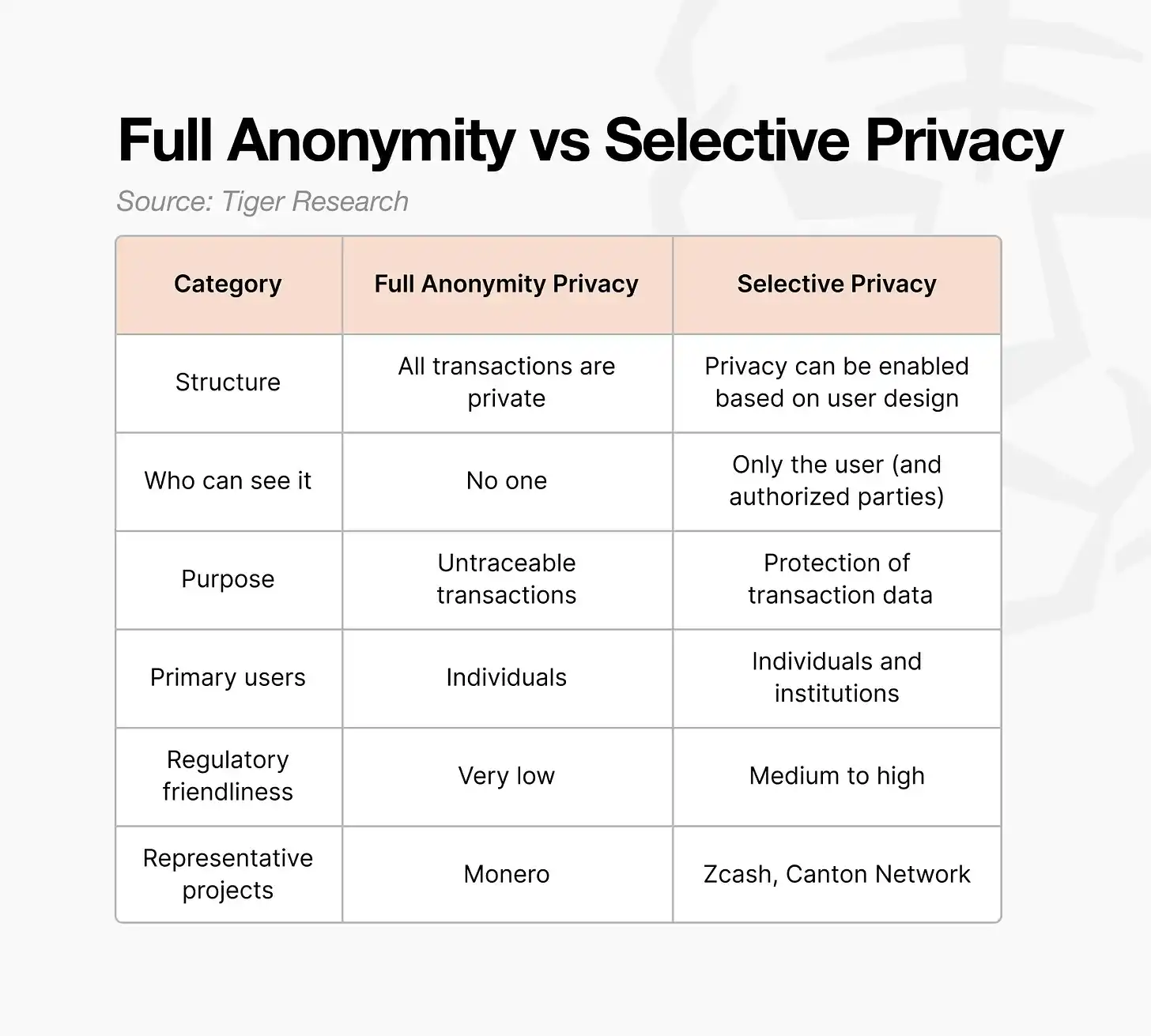
- Полная анонимность
- Выборочная конфиденциальность
Ключевое отличие заключается в том, может ли информация быть раскрыта, когда это необходимо для проверки другой стороной.
2.1. Полная анонимность
Полная анонимность, проще говоря, это скрыть всё.
Отправитель, получатель и сумма транзакции скрыты. Эта модель прямо противоположна традиционному блокчейну, который по умолчанию отдает приоритет прозрачности.
Основная цель полностью анонимных систем — предотвратить наблюдение третьих сторон. Они не предназначены для выборочного раскрытия, а aimются полностью помешать внешним наблюдателям извлекать meaningfulную информацию.
Источник: Tiger Research
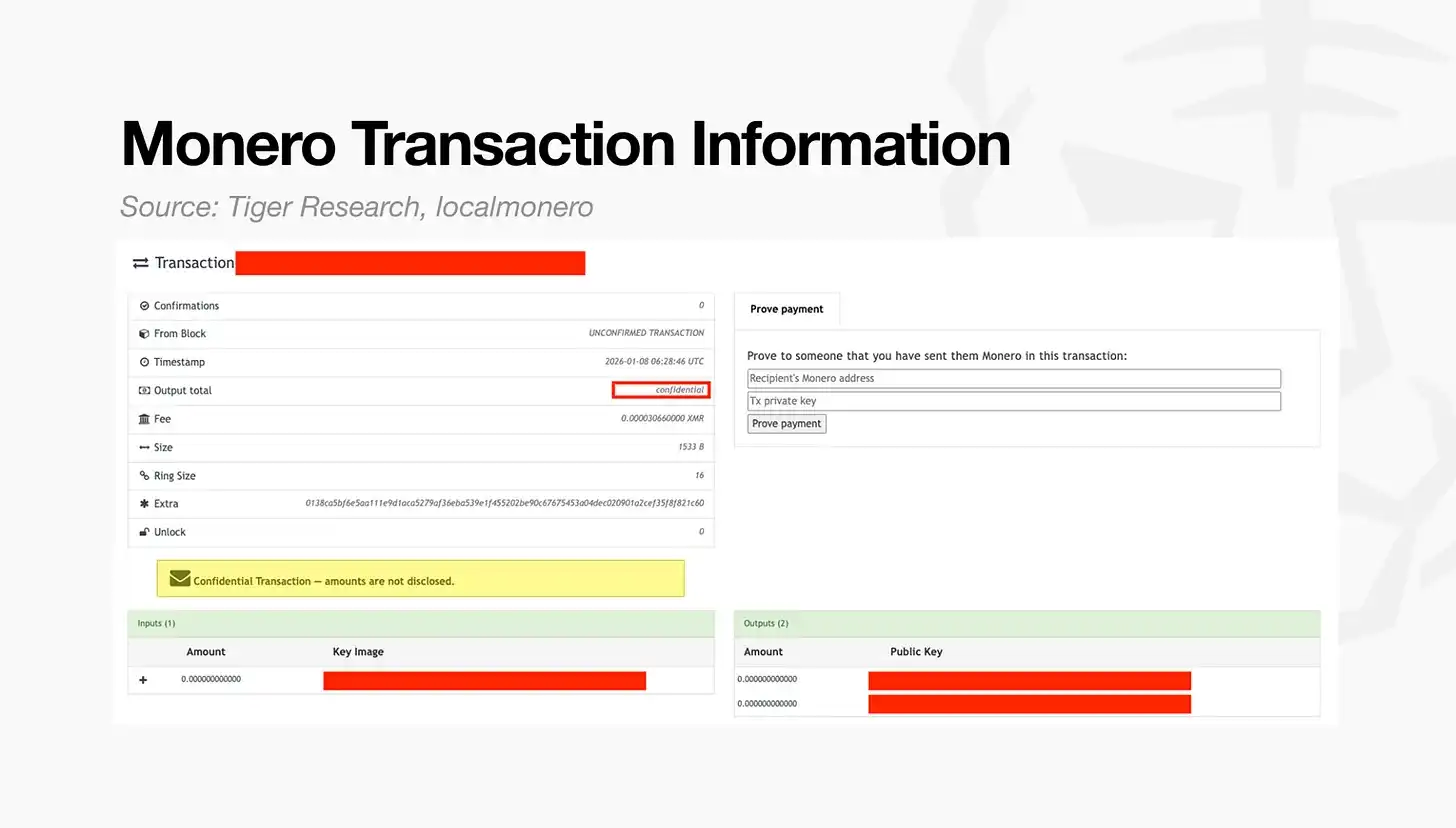
На рисунке выше показана запись транзакции Monero, являющаяся representativeным примером полной анонимности. В отличие от прозрачного блокчейна, такие детали, как сумма перевода и контрагент, не видны.
Две характеристики иллюстрируют, почему эта модель считается полностью анонимной:
- Общая сумма выходов: Реестр не показывает конкретные цифры, а отображает значение как «конфиденциально». Транзакции записываются, но их содержание не может быть прочитано.
- Размер кольцевой подписи: Хотя транзакцию инициирует один отправитель, реестр смешивает ее с несколькими приманками, создавая видимость, что несколько сторон одновременно отправляют средства.
Эти механизмы гарантируют, что данные транзакций остаются непрозрачными для всех внешних наблюдателей без исключения.
2.2. Выборочная конфиденциальность
Выборочная конфиденциальность работает на основе других предположений. Транзакции по умолчанию являются публичными, но пользователи могут выбрать, сделав определенные транзакции приватными, используя designatedнные адреса с включенной конфиденциальностью.
Zcash предоставляет наглядный пример. При инициации транзакции пользователи могут выбрать между двумя типами адресов:
- Прозрачные адреса (t-адреса): Все детали транзакции видны публично, аналогично Bitcoin.
- Защищенные адреса (z-адреса): Детали транзакции зашифрованы и скрыты.

Источник: Tiger Research
На рисунке выше показано, какие элементы Zcash может шифровать при использовании защищенных адресов. Транзакции, отправленные на защищенные адреса, записываются в блокчейн, но их содержание хранится в зашифрованном состоянии.
Хотя факт существования транзакции все еще виден, следующая информация скрыта:
- Тип адреса: Используется защищенный (Z) адрес вместо прозрачного (T) адреса.
- Запись о транзакции: Реестр подтверждает, что транзакция произошла.
- Сумма, отправитель, получатель: Все зашифрованы и не могут быть observed извне.
- Права на просмотр: Только стороны, которым предоставлен ключ просмотра, могут проверять детали транзакции.
В этом суть выборочной конфиденциальности. Транзакция остается в цепочке, но пользователь контролирует, кто может видеть ее содержимое. При необходимости пользователь может поделиться ключом просмотра, чтобы доказать детали транзакции другой стороне, в то время как все другие третьи стороны по-прежнему не будут иметь доступа к этой информации.
3. Почему финансовые учреждения предпочитают выборочную конфиденциальность
Большинство финансовых учреждений несут обязательства по знанию своего клиента (KYC) и противодействию отмыванию денег (AML) по каждой транзакции. Они должны хранить данные о транзакциях внутри и немедленно реагировать на запросы регуляторов или надзорных органов.
Однако в среде, построенной на основе полной анонимности, все данные транзакций необратимо скрыты. Поскольку информация ни при каких условиях не может быть доступна или раскрыта, институты структурно не могут выполнить свои complianceные обязательства.
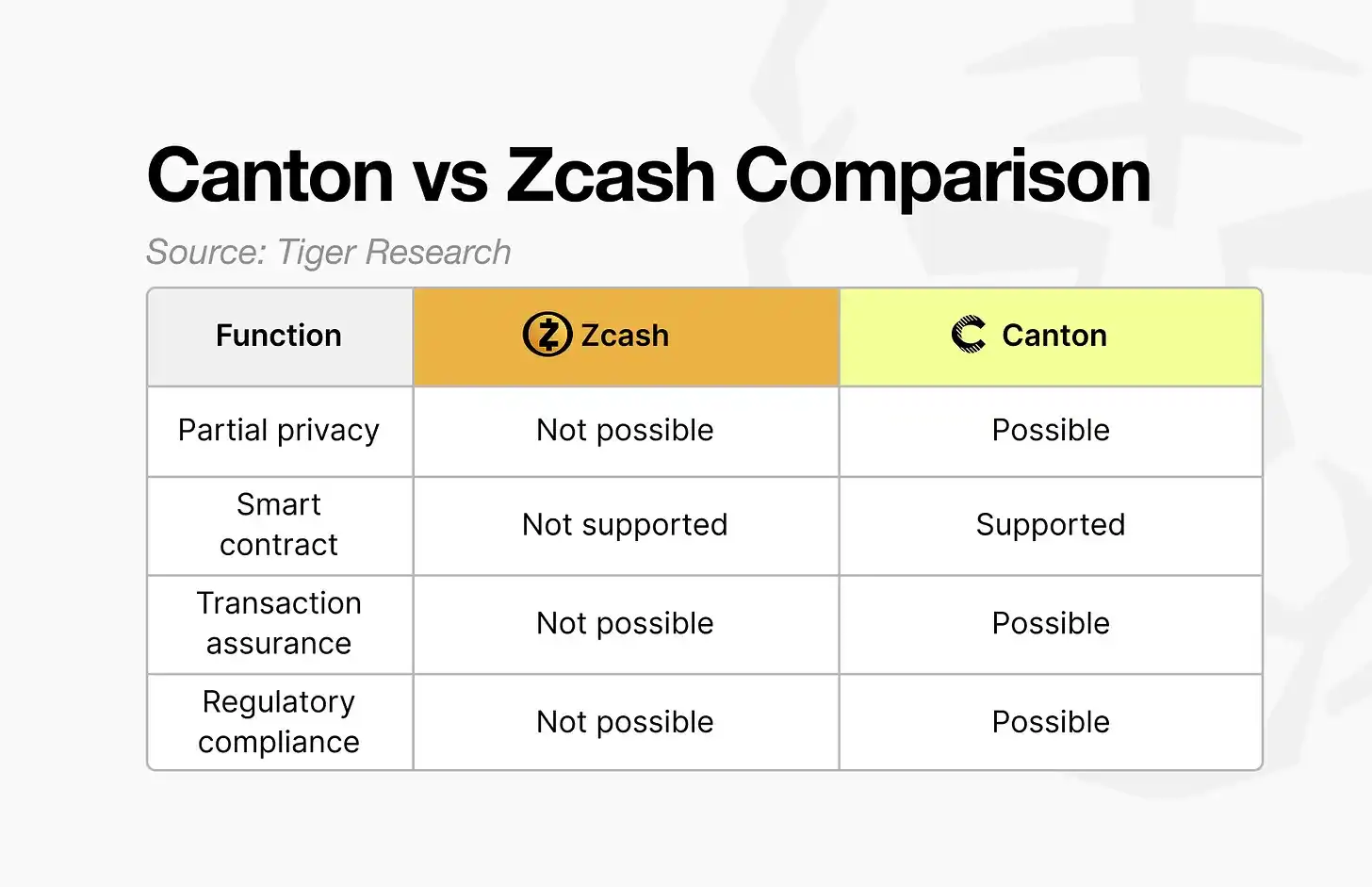
Representativeным примером является Canton Network, который был принят Depository Trust & Clearing Corporation (DTCC) и в настоящее время используется более чем 400 компаниями и институтами. Для сравнения, Zcash, хотя и являющийся проектом выборочной конфиденциальности, имеет ограниченное adoptionние институтами в реальном мире.
В чем причина этого различия?
Источник: Tiger Research
Zcash предоставляет выборочную конфиденциальность, но пользователи не могут выбрать, какую информацию раскрывать. Вместо этого они должны выбрать, раскрывать ли всю транзакцию полностью.
Например, в транзакции «А отправляет B 100 долларов» Zcash не позволяет скрыть только сумму. Сама транзакция должна быть либо полностью скрыта, либо полностью раскрыта.
В институциональных транзакциях разные участники нуждаются в разной информации. Не все участники нуждаются в доступе ко всем данным одной транзакции. Однако структура Zcash вынуждает делать бинарный выбор между полным раскрытием и полной конфиденциальностью, что делает ее непригодной для институциональных workflowов транзакций.
В contrast, Canton позволяет разделять информацию о транзакции на отдельные components для управления. Например, если регулятор требует только сумму транзакции между A и B, Canton позволяет учреждению предоставить именно эту конкретную информацию. Эта функция реализована через язык смарт-контрактов Daml, используемый в Canton Network.
Другие причины adoptionния Canton институциями более подробно описаны в предыдущем исследовании Canton.
4. Блокчейны конфиденциальности в эпоху институтов
Блокчейны конфиденциальности развиваются вместе с изменением потребностей.
Ранние проекты, такие как Monero, были designedны для защиты личной анонимности. Однако по мере того, как финансовые учреждения и предприятия начали выходить в среду блокчейна, значение конфиденциальности изменилось.
Конфиденциальность больше не определяется как сокрытие транзакций ото всех. Вместо этого основной целью стало защитить транзакции, при этом все еще удовлетворяя регуляторным требованиям.
Этот сдвиг объясняет, почему модели выборочной конфиденциальности, такие как Canton Network, получили attentionние. Институтам нужно не просто technology конфиденциальности, а инфраструктура, designedнная для соответствия workflowам реальных финансовых транзакций.
В ответ на эти потребности продолжает появляться больше проектов конфиденциальности, ориентированных на институты. В перспективе ключевым differentiatingным фактором будет то, насколько эффективно technology конфиденциальности может быть применена в реальных transactionных средах.
Могут появиться альтернативные формы конфиденциальности, противоположные currentным институциональным trendам. Однако в краткосрочной перспективе блокчейны конфиденциальности, вероятно, продолжат развиваться вокруг институциональных транзакций.
Источник: Tiger Research